
Cheap flights to Manchester
Set your departure airport and maximum budget: SniperAir tracks prices to Manchester and alerts you the moment a deal matching your criteria appears.
Quick summary
Country
United Kingdom
Continent
Europe
Airport
MAN
Currency
Pound sterling (GBP)
Time zone
UTC+0 (UTC+1 during summer time)
Deals already spotted to Manchester
Real flight examples detected by SniperAir, with their reference price.
Loading examples…
Why track Manchester with SniperAir
You do not need to compare prices every day
Choose your departure
Enter your departure airport and your maximum budget for a flight to Manchester (MAN).
SniperAir keeps watch
Our systems continuously compare new prices with the real price history of the route. SniperAir monitors prices and alerts you: it does not sell or book tickets.
You receive an alert
As soon as a price matches your criteria, you are notified, without having searched for anything yourself.
Airport and getting into town
A big airport to the south, linked to the centre by train
Manchester Airport (MAN)
Manchester Airport lies to the south of the city, at Ringway, about 14 km from the centre according to Wikivoyage (FR). Wikivoyage (EN) calls it Britain's largest airport outside London, with flights to over 200 destinations including North America, the Gulf and the Far East. It has its own railway station: trains reach Manchester Piccadilly and Oxford Road in around 20 minutes per Wikivoyage (EN), and some carry on to Edinburgh and Glasgow without a change. The Metrolink tram also serves the airport, and Wikivoyage (ES) notes that bus 43 runs through the night. Liverpool John Lennon (LPL), served by budget airlines, is an alternative, 45 to 90 minutes by coach depending on the Wikivoyage edition (EN, FR).
Distances and times are approximate, based on Wikivoyage (EN, FR, DE, ES); sources differ and timetables change, so check them before you travel. We do not quote fares.
Manchester is a city in North West England at the heart of Greater Manchester, about 260 km from London according to Wikipedia (FR). Its population is somewhere between 570,000 and 590,000 depending on the Wikipedia edition (EN, FR, DE), with around 2.9 million in the wider urban area. It began as the Roman fort of Mamucium, built around AD 79 where the Irwell and Medlock meet, and grew into what Wikipedia (EN) calls the world's first industrialised city, thanks to cotton. Wikivoyage (EN) describes a young, lively and proud city where people talk to strangers, and locals are called Mancunians, or Mancs.
Landmarks
Town Hall, John Rylands Library, the Castlefield canals and the Victorian centre
Manchester owes its look to the 19th century: red brick, converted cotton warehouses, grand neo-Gothic facades and industrial canals. Wikipedia (FR) notes that public buildings and churches from 1850 to 1914 are mostly neo-Gothic. The places below are illustrated; the cathedral, the Chinese and gay quarters and day trips are described at the end of the section.
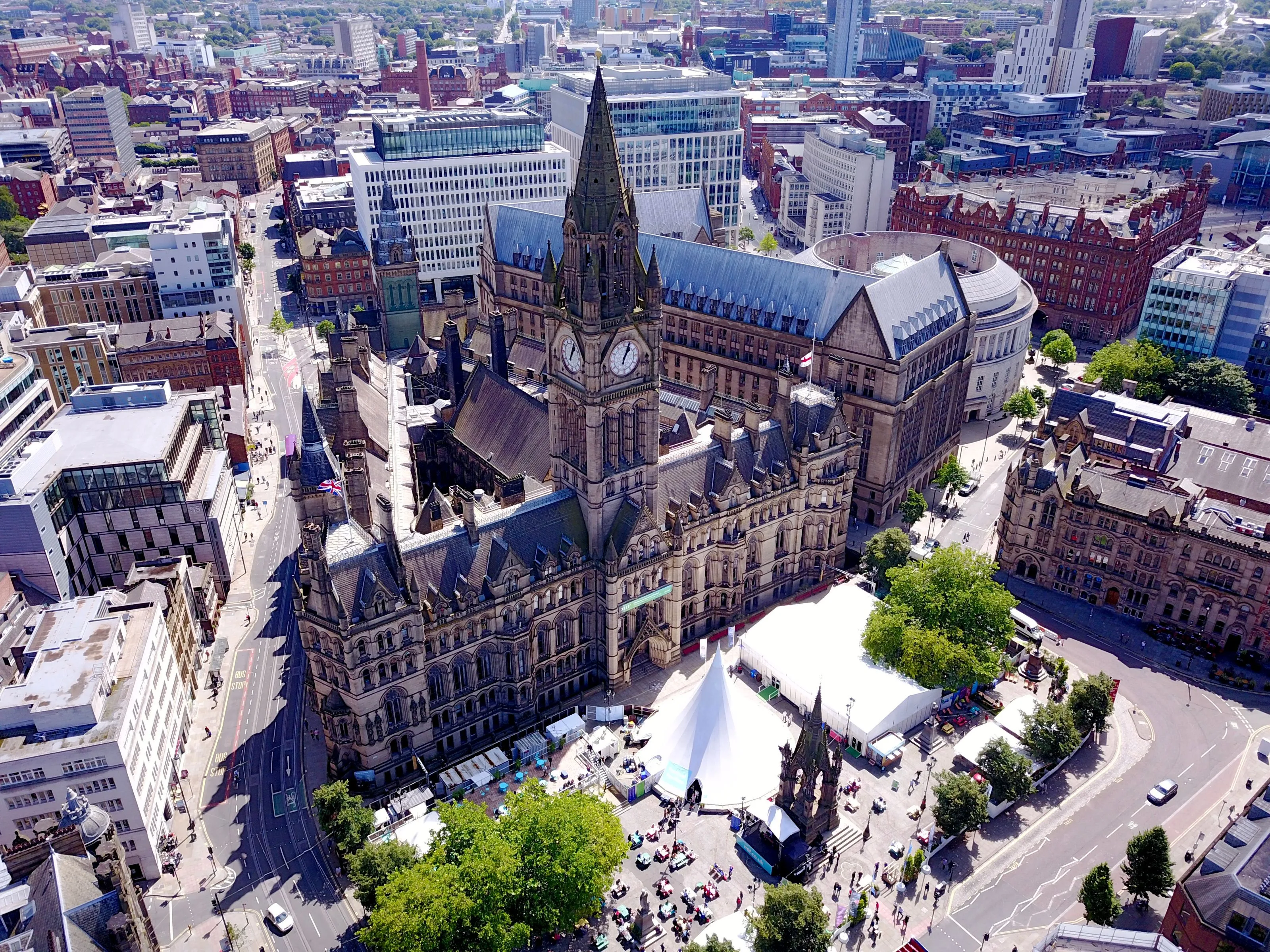
Town Hall and Albert Square
Alfred Waterhouse's neo-Gothic masterpiece is described by Wikivoyage (EN) as a symbol of the wealth and power of Manchester during the Industrial Revolution. It overlooks Albert Square, a wide cobbled area reached from St Peter's Square tram stop. The same source says the building was closed to the public for renovation until 2026, so check visiting conditions before you go. Nearby, the round 1930s Central Library has reopened after a major renovation.
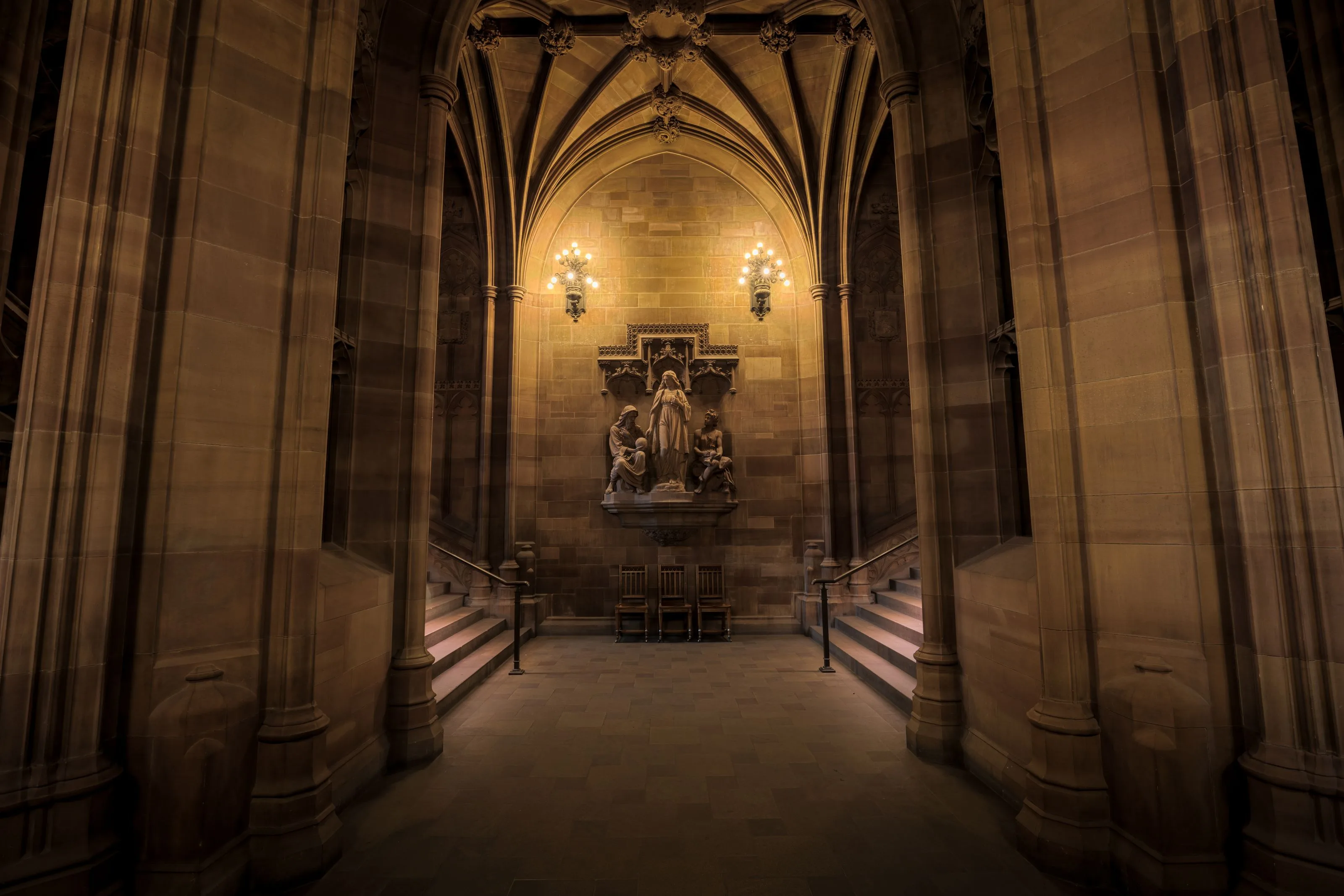
The John Rylands Library
On Deansgate, this neo-Gothic library designed by Basil Champneys is called the last building built in the perpendicular Gothic style by Wikivoyage (EN). It holds the Manchester Fragment, the earliest known fragment of the New Testament, a papyrus from the second century. Wikivoyage (FR) says the setting alone is worth the trip. It is now run by the University of Manchester; tours can be booked around lunchtime and there is a cafe on the ground floor.
Castlefield and the canals
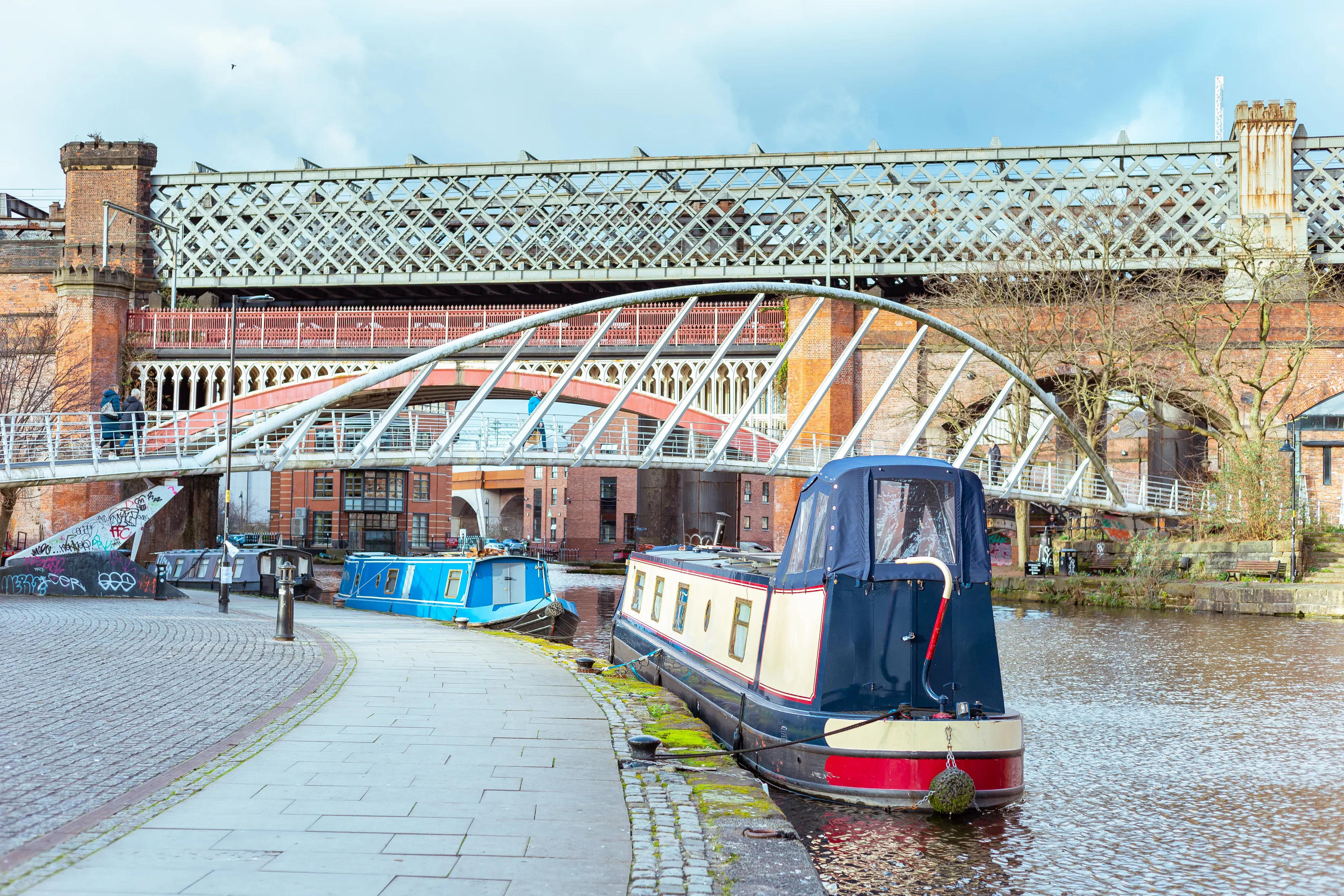
Castlefield is the site of the Roman fort of Mamucium and the centre of Manchester's canal network, according to Wikivoyage (EN, ES). The Castlefield Basin joins the Rochdale and Bridgewater canals, the latter the first cut canal in Britain. Iron viaducts cross the water, narrowboats moor along the banks, and pubs line the towpaths. The nearby Science and Industry Museum holds Liverpool Road station, called the world's first passenger railway station.
The Victorian centre
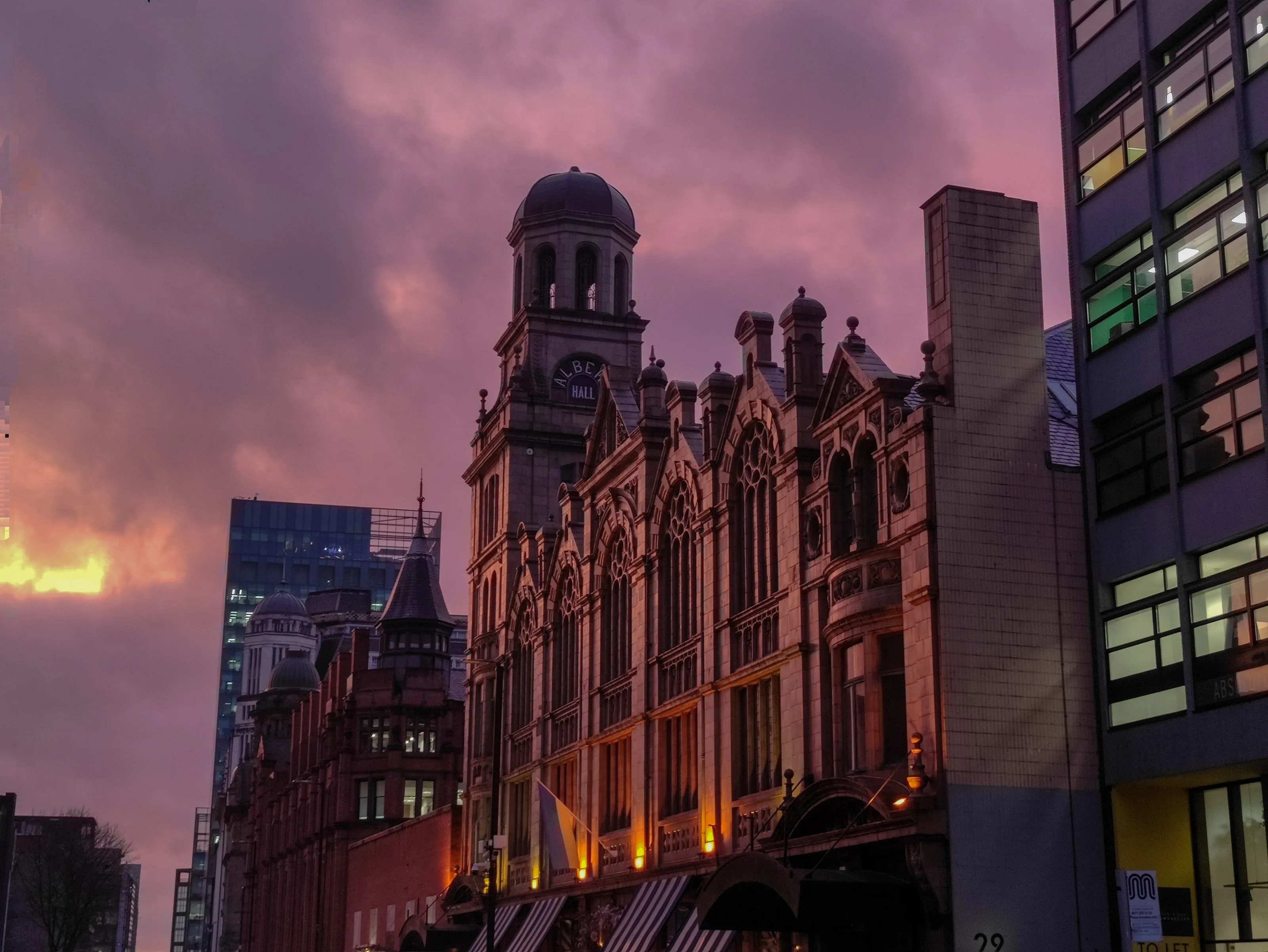
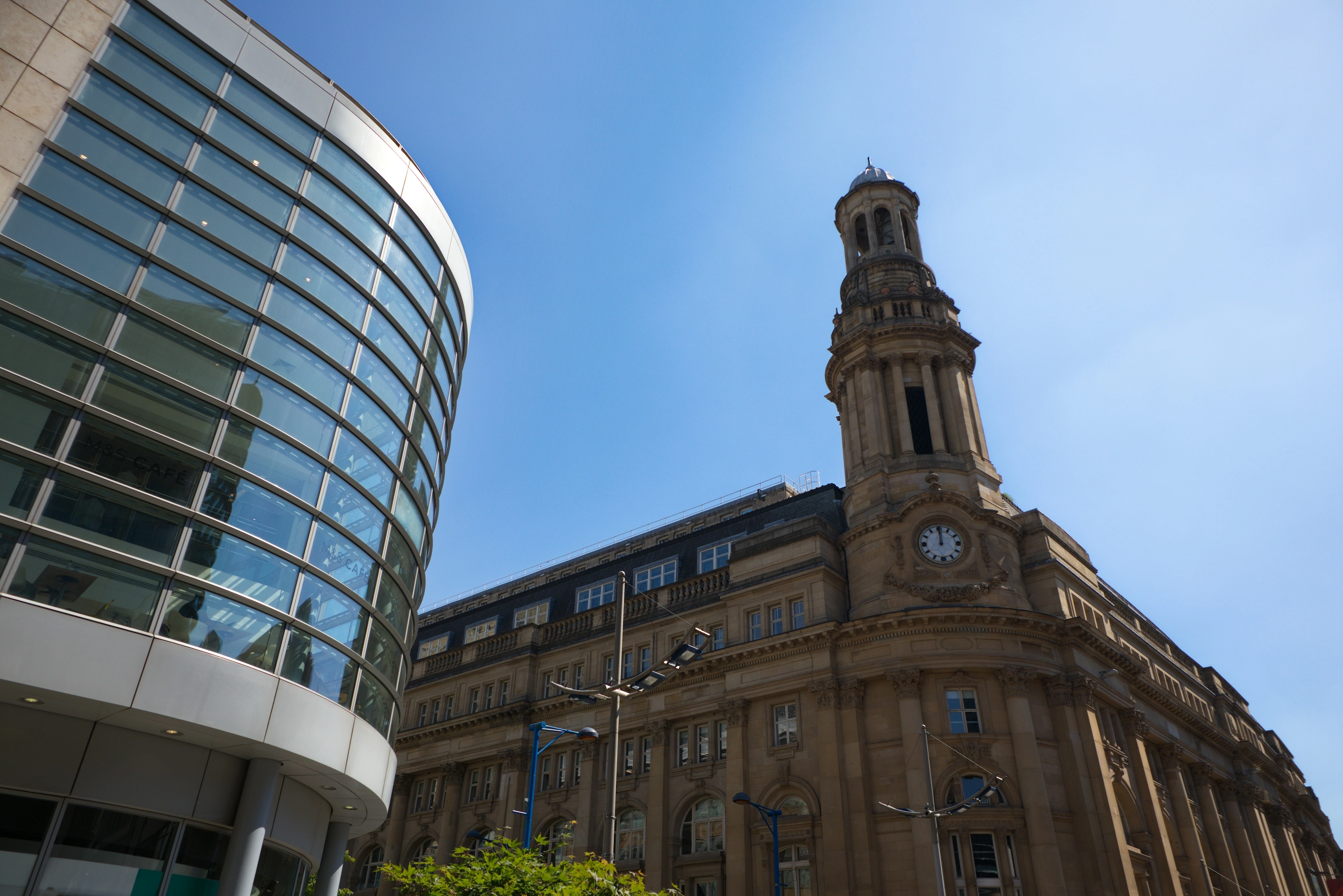
The city centre keeps plenty of Victorian buildings of pale stone, with turrets, ornate facades and domed towers, standing next to recent glass towers. Wikivoyage (EN) describes Manchester as a city where there is always something happening, and its skyline keeps changing. A walk from Deansgate to Spinningfields shows how old and new sit side by side.
Cathedral and churches
Manchester Cathedral, in the Millennium Quarter, is the widest cathedral in England according to Wikivoyage (EN), with notable carved choir stalls; its origins go back to the collegiate church founded in 1421 per Wikipedia (FR). St Ann's Church on St Ann's Square offers a quiet refuge in the middle of the city.
Neighbourhoods and day trips
Chinatown, around George Street and Faulkner Street since the late 1970s according to Wikivoyage (EN, ES), and the Gay Village around Canal Street liven up the evenings; the Northern Quarter is full of bars, live-music venues and independent shops. Chester is 1 to 1.5 hours by train per Wikivoyage (DE), and Liverpool is nearby.
Museums and culture
Museums, theatres, the music scene and football
Art and history museums
Manchester Art Gallery, designed by Sir Charles Barry, has a fine collection of pre-Raphaelite paintings per Wikivoyage (EN, DE); the Whitworth Art Gallery on Oxford Road shows modern and historic art. Manchester Museum, also on Oxford Road, displays a fossil Tyrannosaurus rex skeleton and Egyptology collections. The People's History Museum tells the story of social struggles, and the National Football Museum is housed in an all-glass building.
Science, war and theatre
The Science and Industry Museum in Castlefield is popular with families and, per Wikivoyage (FR, 2016), free apart from temporary exhibitions: check current conditions. The Imperial War Museum North at The Quays was designed by Daniel Libeskind. The Lowry, on the waterfront, shows the paintings of L. S. Lowry. The city also has the Opera House, the Royal Exchange, HOME and the Bridgewater Hall, home of the Halle Orchestra.
Music, football and festivals
Wikipedia (FR) ties the 1980s independent rock scene to the Haçienda club, and Wikipedia (DE) lists Oasis, The Smiths and New Order among the bands from here. Two Premier League clubs bear the city's name, Manchester City and Manchester United, whose Old Trafford stadium lies in Trafford. The Manchester International Festival is biennial and usually held in July, with a dedicated venue, Factory International, opened in 2023. We do not quote fares or timetables.
Food and drink
The Curry Mile, Chinatown, independent cafes and pubs
World food
Wikivoyage (DE) observes that there is no typical local cuisine, but countless options thanks to immigration. The Curry Mile, an 800-metre stretch of Wilmslow Road in Rusholme, lines up Indian restaurants, sari shops and jewellers, per Wikivoyage (EN, DE). Chinatown has dozens of restaurants, including Japanese ones, and its neon lights come on after dark.
Areas to explore
Wikivoyage (EN) points to West Didsbury and Chorlton for small independent restaurants, to Didsbury for a smarter evening out, and to the Northern Quarter for cafes, bars and music venues. The pubs around the Castlefield canals are pleasant in good weather, with plenty of al fresco drinking.
Cheap bites
There are hundreds of kebab and pizza shops on Oxford Road and in Fallowfield, per Wikivoyage (EN). In the Northern Quarter and central Deansgate, old curry cafes offer a novel twist on the traditional British cafe. We do not recommend individual restaurants.
Getting around
Metrolink trams, free buses and two main stations
Stations and trams
Manchester has two main stations: Piccadilly in the south, for most trains from around the UK, and Victoria in the north, says Wikivoyage (EN). The Metrolink tram network runs through the centre at St Peter's Square, Deansgate-Castlefield and Cornbrook, then fans out to Salford Quays, the airport, Altrincham, Bury and Ashton-under-Lyne. Wikivoyage (ES) notes that zone-based fares have applied since 2019; we do not give amounts.
Buses and walking
Free buses link the two stations with sites such as Deansgate Locks, HOME, Spinningfields and Chinatown, per Wikivoyage (DE); timetables may have changed. Piccadilly Gardens is the main bus hub. The centre can be covered on foot or by bike, and Wikivoyage (EN) also mentions night buses.
Car and beyond
A ring road, the M60, circles the conurbation 1 to 2 km beyond the city limit, says Wikivoyage (DE). For longer trips to Chester, Liverpool or Leeds the train is the easiest option.
Budget and precautions
A budget that varies with concerts, matches and festivals
Price level
None of the sources we consulted gives a current, comparable price level: fares in the Wikivoyage editions date from 2016 to 2025 and differ. We therefore give no amounts. Concerts, matches and the festival can push accommodation prices up.
Flying and precautions
SniperAir monitors prices to MAN and compares them with the route's price history, but it does not sell or book tickets. Also keep an eye on Liverpool (LPL) and Birmingham. The UK is outside the Schengen area and uses the pound sterling: check entry formalities for your nationality with the official authorities.
Safety
As in any big city, watch for pickpockets in crowds and on transport. Wikivoyage (EN) describes the locals instead as friendly and chatty. The emergency number in the UK is 999.
When to go
A mild, damp maritime climate with no real season to avoid
Winter (December to February)
Mild but short: darkness falls soon after 15:45 and the sun rises almost at 8:30, per Wikivoyage (EN). The nearby Pennines are sometimes under snow per Wikipedia (FR).
Spring (March to May)
Cool and changeable, with lengthening days. Terraces return with the first fine days.
Summer (June to August)
Daytime highs around 20 degrees C and lows around 13 degrees C per Wikivoyage (EN); days above 26 degrees C are uncommon. Daylight lasts from about 4:45 to 21:30.
Autumn (September to November)
Days shorten and rain becomes more frequent. Indoor attractions come into their own.
The climate is temperate maritime according to Wikipedia (FR, ES) and Wikivoyage (EN). The city gets about 807 mm of rain a year against around 1,125 mm for the UK average, per Wikipedia (FR, ES), with 140 rainy days a year according to Wikipedia (FR). Wikivoyage (EN) thinks the reputation as a very wet city is overstated and says there is never a period to avoid. Monthly averages are not given because the Wikipedia editions differ. Pack a light waterproof all year round.
By length of stay
What to do in Manchester depending on how long you stay
The essentials
The Town Hall and Albert Square, the John Rylands Library, the cathedral, the Northern Quarter and a museum.
Canals and culture
Castlefield and the Science and Industry Museum, Salford Quays, the Whitworth, Chinatown and a concert.
Day trips
Chester, Liverpool, the Pennines or a football match.
In pictures
Manchester in pictures
You might also like
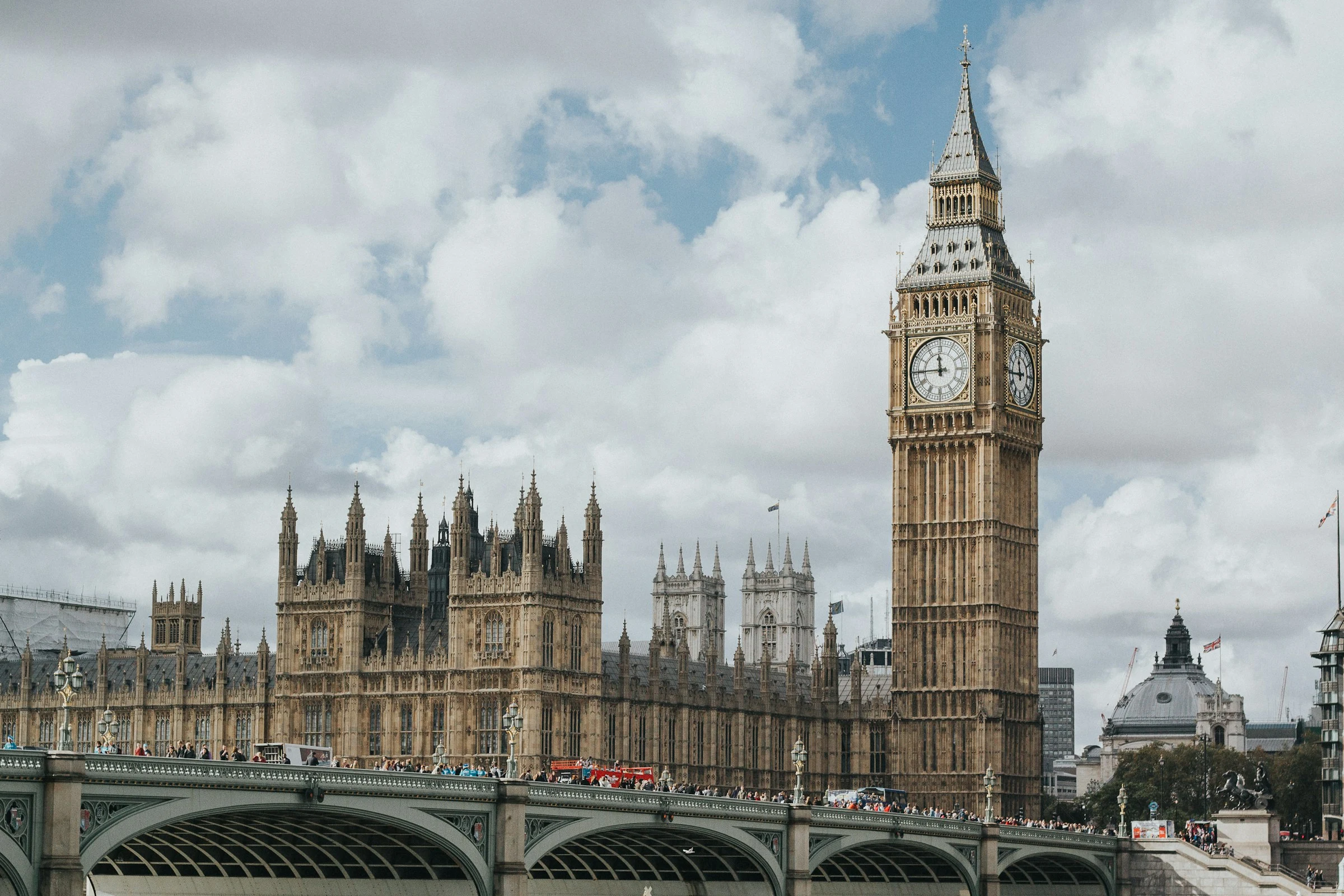
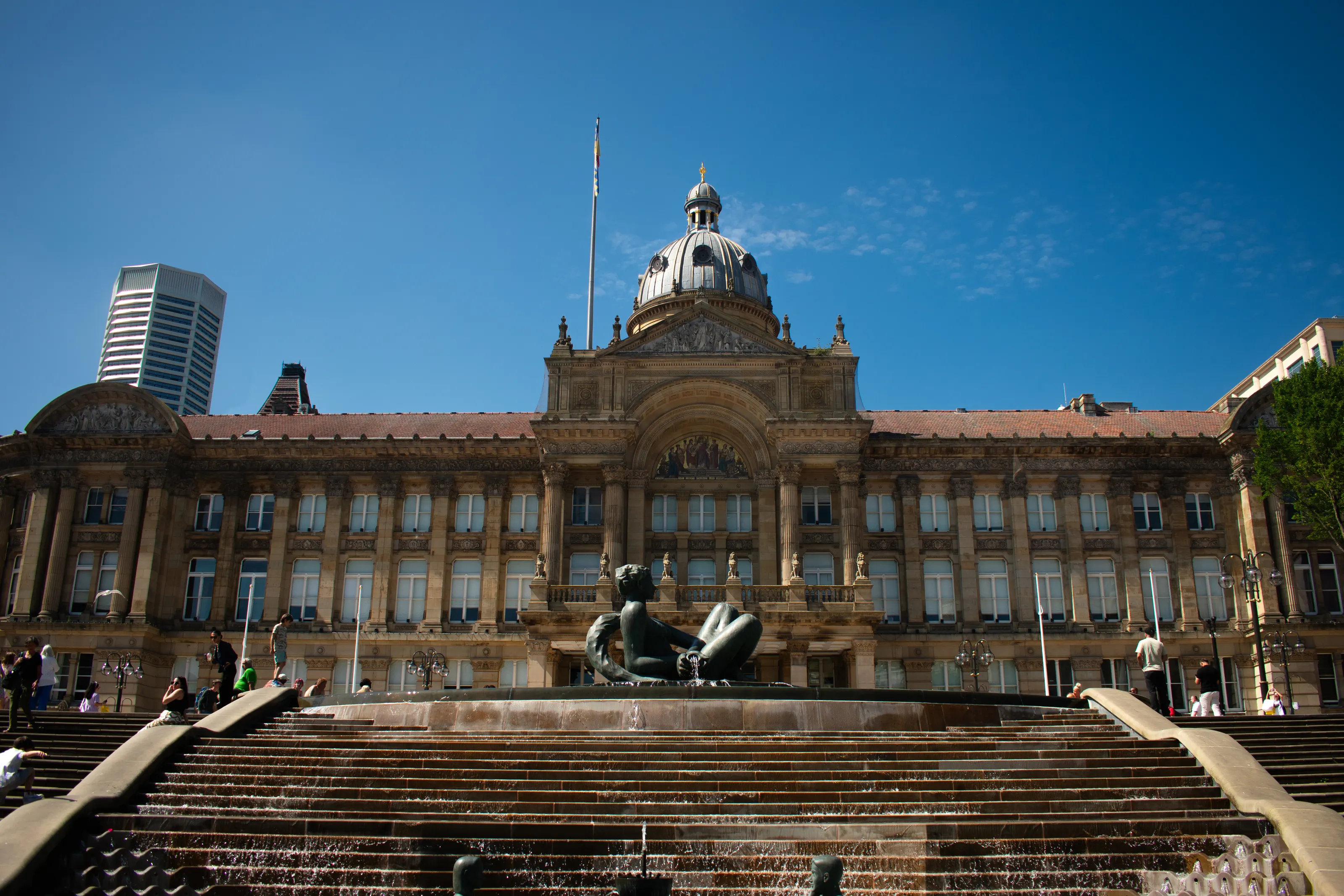
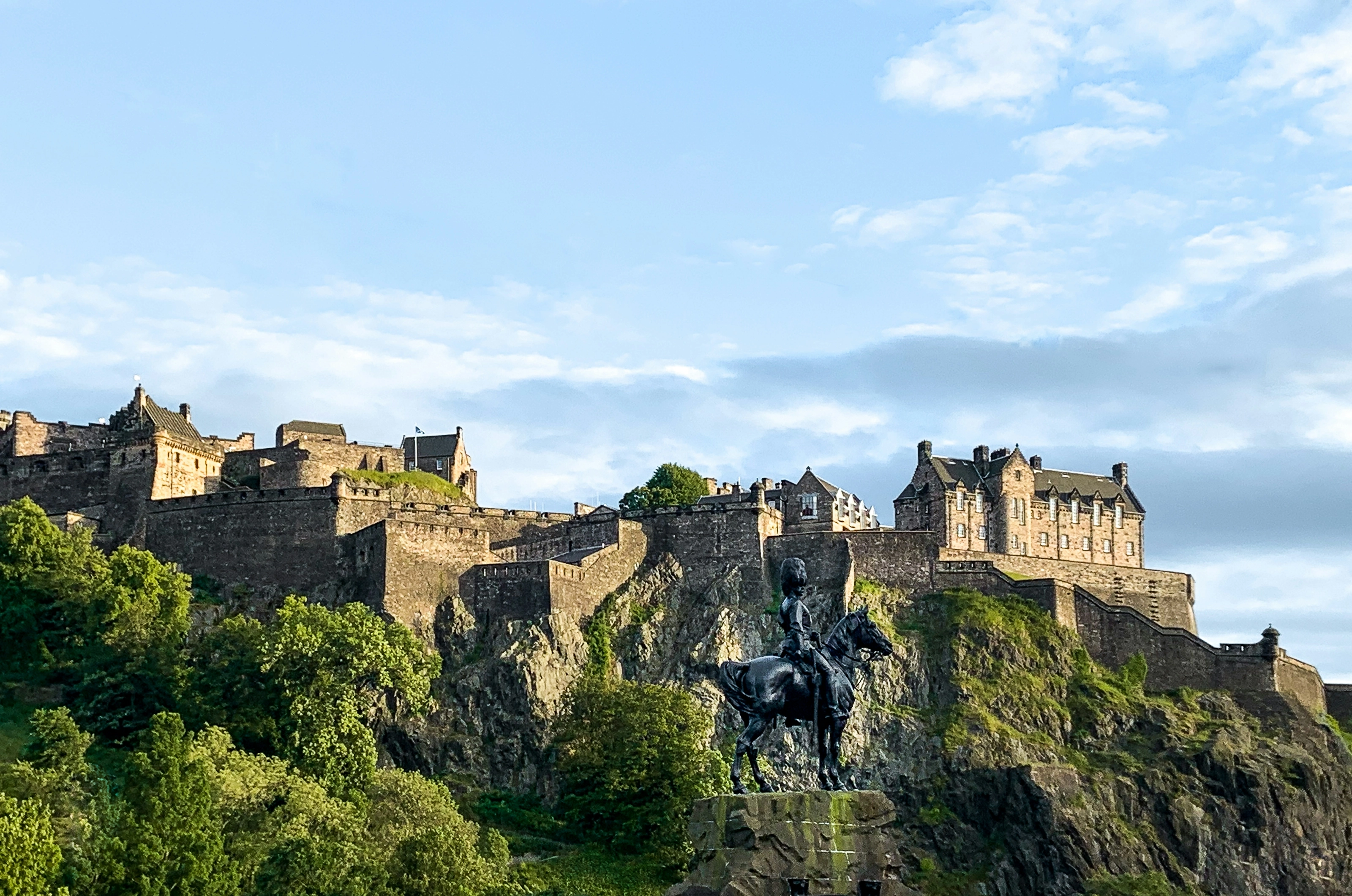
Similar destinations
FAQ
Frequently asked questions about flights to Manchester
How do I get from Manchester Airport to the city centre?
The airport (MAN) is about 14 km from the centre. Trains reach Piccadilly and Oxford Road in around 20 minutes, and the Metrolink tram also serves the airport. Check timetables before you travel.
When is the best time to visit Manchester?
May to September for terraces and canalside walks, but the city works all year: Wikivoyage (EN) says there is no period to avoid. Bring a waterproof.
How long should I stay in Manchester?
Two days for the Town Hall, the John Rylands Library and the Northern Quarter; four days if you add Castlefield, the museums and a day trip.
Is Manchester expensive?
The sources we consulted give no reliable price level, so we do not quote amounts, as we could not cross-check them against two independent sources.
What should I eat in Manchester?
A curry on Rusholme's Curry Mile, a meal in Chinatown, the small restaurants of West Didsbury or Chorlton, and a drink in a Castlefield pub.
Do I need a visa for Manchester?
The UK is outside the Schengen area and entry rules depend on your nationality. Check with the official authorities before booking.
How much does a flight to Manchester usually cost?
The price depends mainly on your departure city, the time of year and how far ahead you book. The "opportunities" section above shows real examples of prices SniperAir has already detected to this destination.
How do I get alerted when a flight to Manchester drops below my budget?
Create an alert profile with your departure airport, Manchester as the destination and your maximum budget. You are notified automatically as soon as a matching price is detected.
Ready to head to Manchester?
Set your budget and let SniperAir monitor fares for you.
Create my alert