
Cheap flights to Fort-de-France
Set your departure airport and maximum budget: SniperAir tracks prices to Fort-de-France and alerts you the moment a deal matching your criteria appears.
Quick summary
Country
Martinique
Continent
North America
Airport
FDF
Currency
Euro (EUR)
Time zone
UTC-4 (no daylight saving time)
Deals already spotted to Fort-de-France
Real flight examples detected by SniperAir, with their reference price.
Loading examples…
Why track Fort-de-France with SniperAir
You do not need to compare prices every day
Choose your departure
Enter your departure airport and your maximum budget for a flight to Fort-de-France (FDF).
SniperAir keeps watch
Our systems continuously compare new prices with the real price history of the route. SniperAir monitors prices and alerts you: it does not sell or book tickets.
You receive an alert
As soon as a price matches your criteria, you are notified, without having searched for anything yourself.
Airport and getting into town
An airport in Le Lamentin, about ten kilometres from the centre
Martinique Aimé Césaire (FDF)
Martinique Aimé Césaire International Airport is in Le Lamentin, a suburb of Fort-de-France. It opened in 1950 and was renamed in 2007 after the writer and politician Aimé Césaire; it has a single 3,000 m runway (Wikipedia EN). Wikivoyage (EN) says most visitors to Martinique arrive here. French-language sources put the airport about ten kilometres from the centre, linked by the A1, the only motorway in French overseas territories. Flights serve France, other Caribbean islands and North America.
Travel time depends heavily on traffic, which builds at rush hour on the roads into the city. We do not publish taxi fares: check them before you travel.
Fort-de-France is the capital of Martinique, an overseas department and region of France. The commune has 75,506 inhabitants in 2023 (French and German Wikipedia), and the conurbation around it, with Le Lamentin, Schoelcher, Saint-Joseph and Case-Pilote, is considerably larger. The town sits on the west coast, on a narrow plain between the hills and the sea at the northern entrance to the bay, and stretches uphill towards the mountain road to the Pelée volcano.
From the airport
A bus rapid transit line links the Pointe Simon terminal in the city centre with Le Lamentin and the airport; the French Wikipedia says it has operated since 13 August 2018. A taxi or a rental car is simplest with luggage. Check timetables and pick-up points before you go, as they change.
French territory
Martinique is part of France and of the European Union. Entry rules depend on your nationality and where you are travelling from: check the official sites before you book.
Landmarks
A fort, a colourful library, an iron cathedral and a mountain garden
Central Fort-de-France is a grid laid out in the late 17th century on former marshland. It is easy to walk around in half a day: the fort, the Savane park, the library and the cathedral are a few minutes apart, and the covered market is close by. Wikivoyage (EN) describes a centre that is always somewhat crowded and runs down to a seaside promenade with bars and restaurants in a typically French atmosphere.
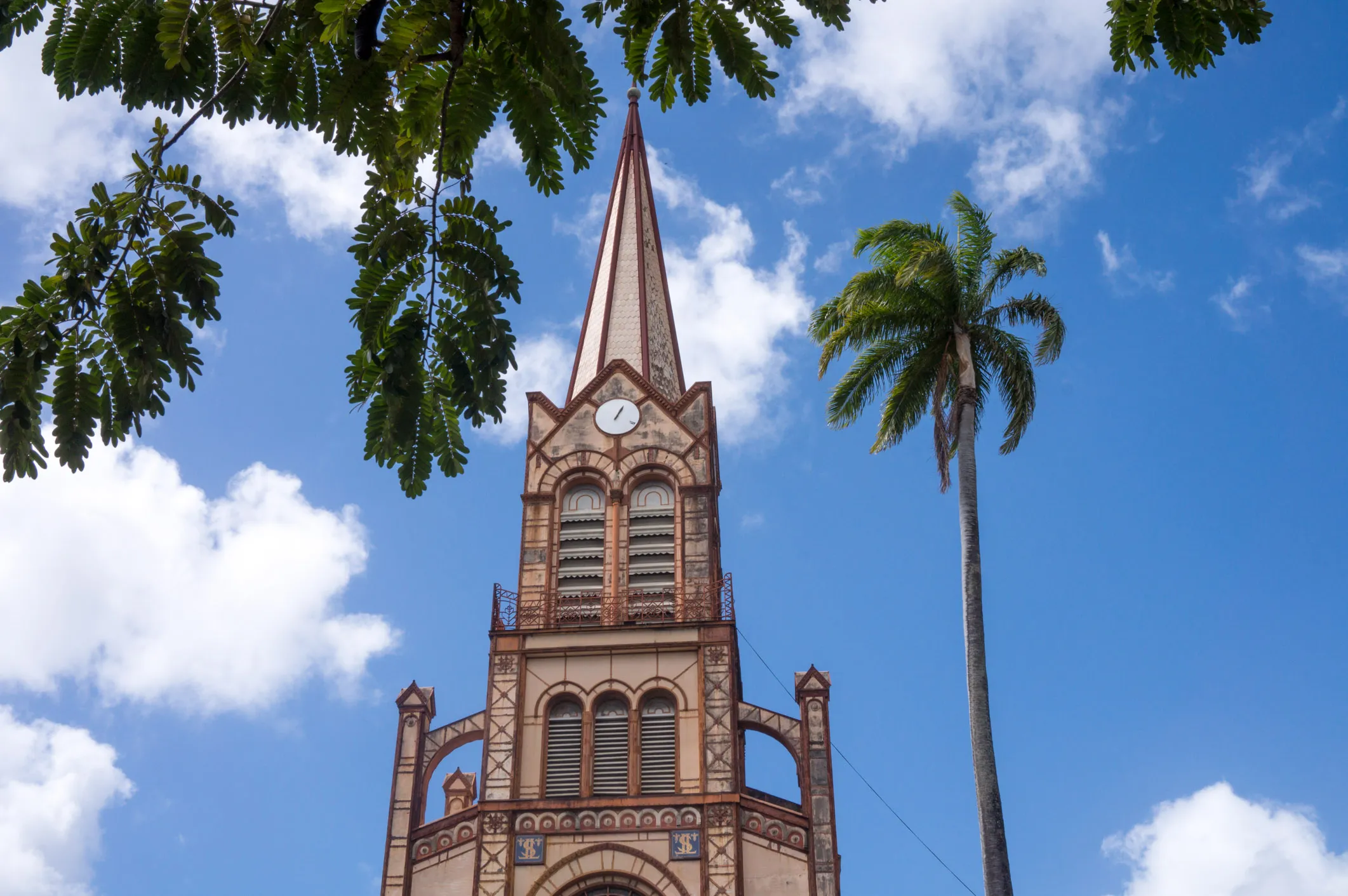
Saint-Louis Cathedral
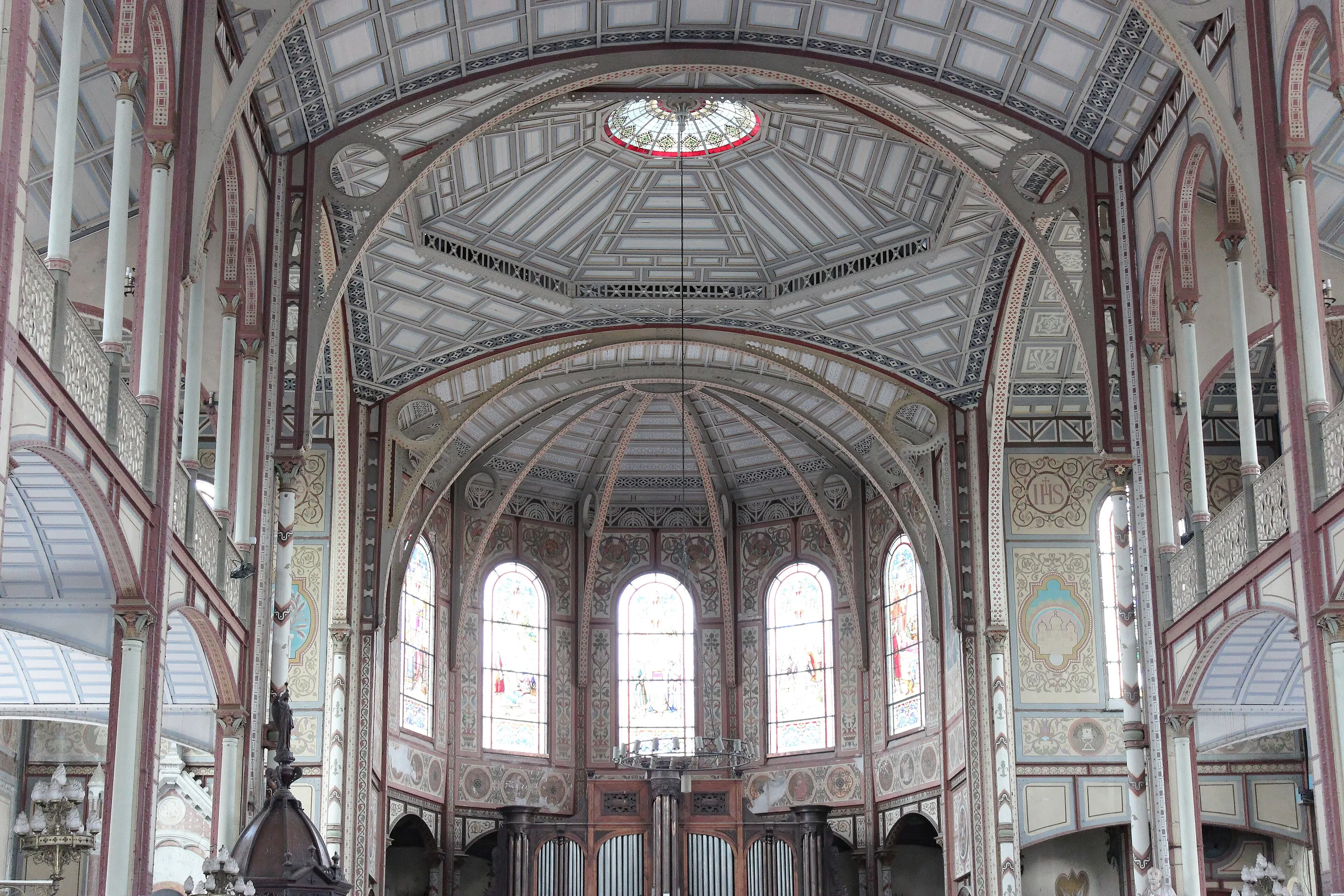
A place of worship is first recorded here in 1671. The building has been damaged and rebuilt several times after fires and earthquakes, and the present iron-framed church dates from the 1890s: Wikivoyage (EN) says 1890, German Wikipedia says 1895, so the work evidently ran over several years. It is a listed monument. The French Wikipedia notes that the west front and spire were being restored, so the exterior may look different depending on when you visit.
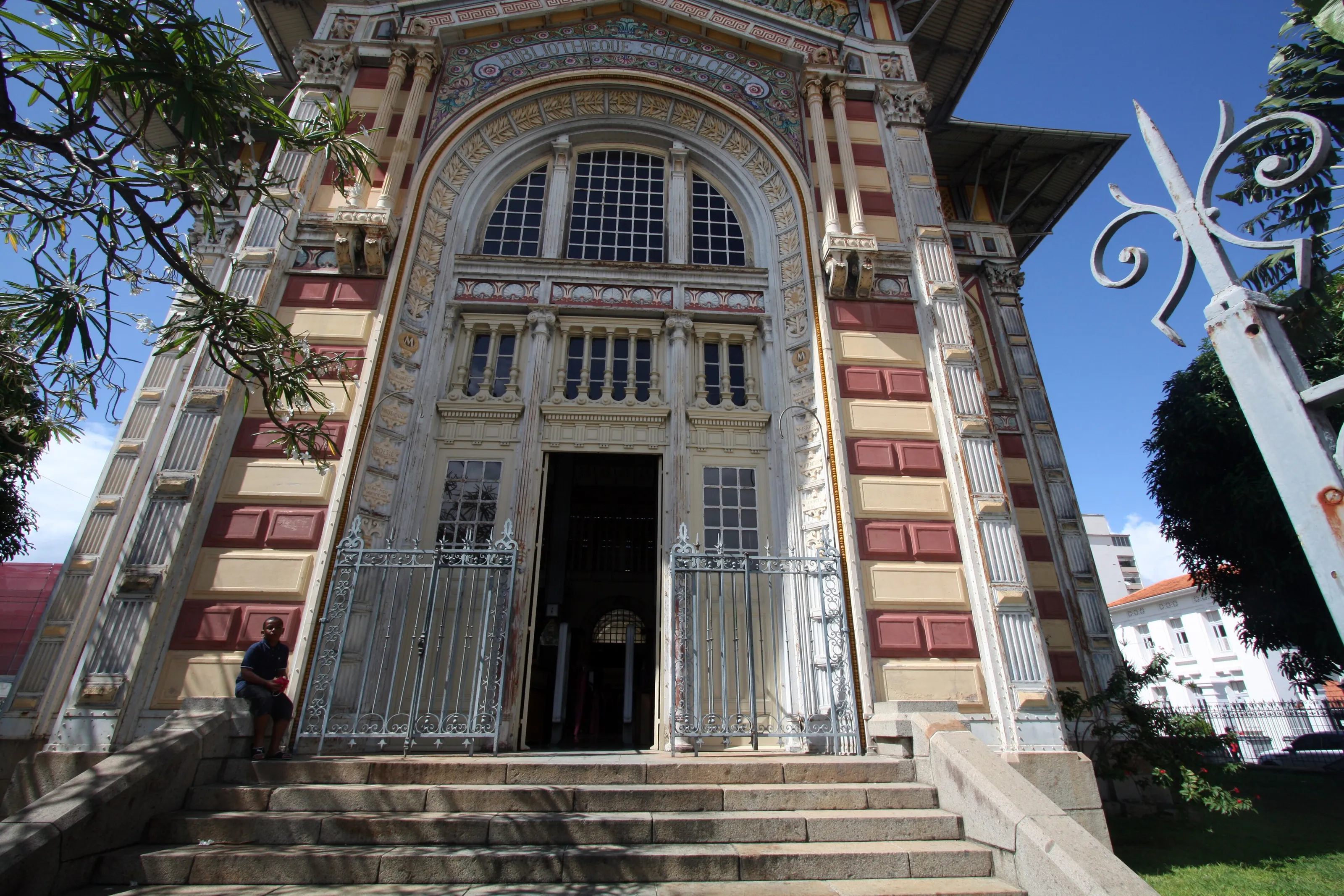
The Schoelcher Library
Facing the Savane, it is one of the nicest colonial buildings in town according to Wikivoyage (EN). Designed by the architect Pierre-Henri Picq, it was first put up in Paris in the Tuileries gardens in 1886-1887, then dismantled, shipped across the Atlantic and rebuilt in Fort-de-France (French Wikipedia; English Wikipedia mentions the 1889 Paris Exposition). It is named after Victor Schoelcher, who left his books to Martinique on condition that they be open to everyone, in particular to former slaves. The building is a listed monument.
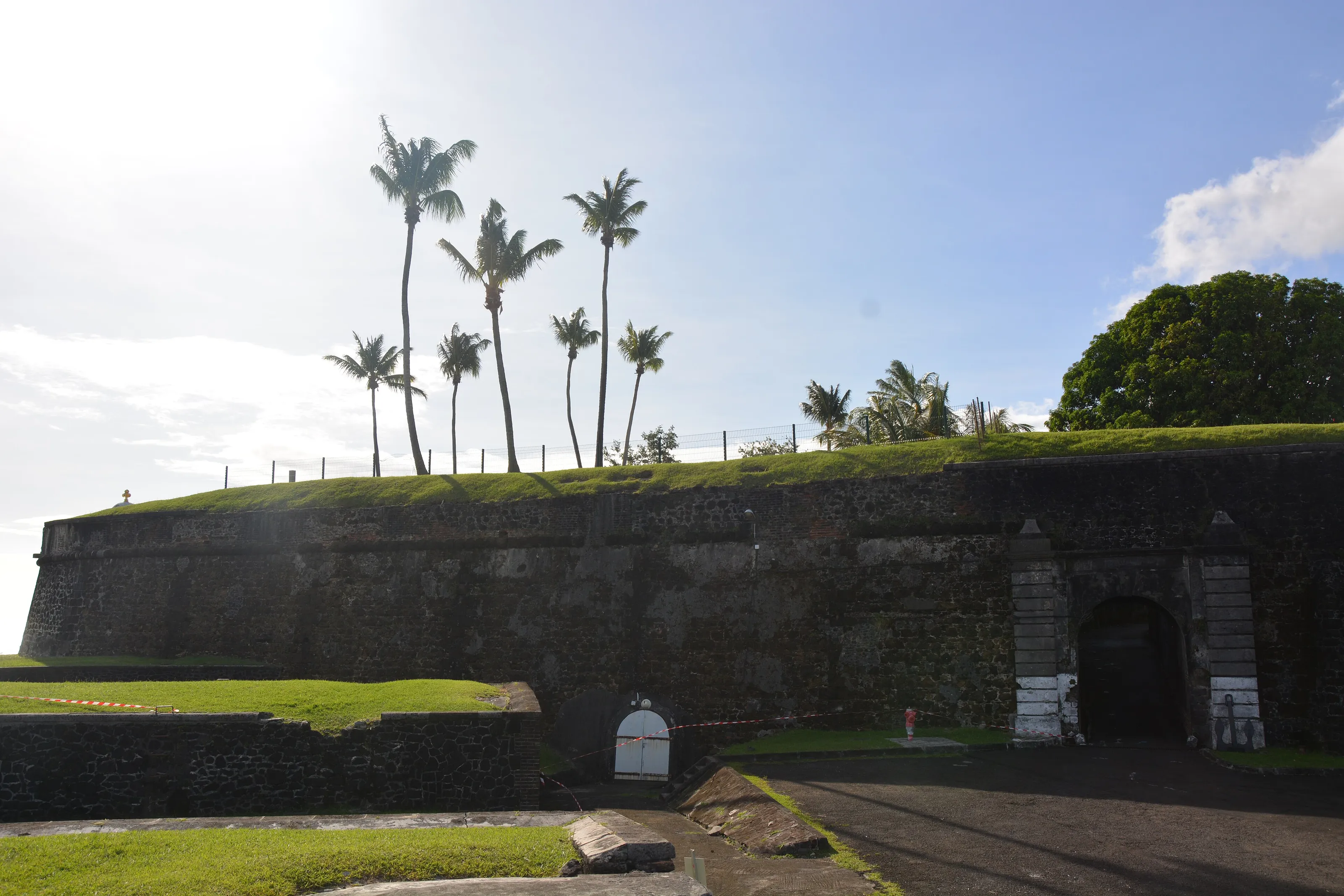
Fort Saint-Louis
A Vauban-style fortress built on the rocky peninsula that juts into the bay, it has protected the town's anchorage since the 17th century and is still a French naval base (French Wikipedia). Wikivoyage (EN) says parts of it are open as a museum. In 1674 the Dutch fleet of Admiral de Ruyter failed to take the town in a battle that is a landmark of local history.
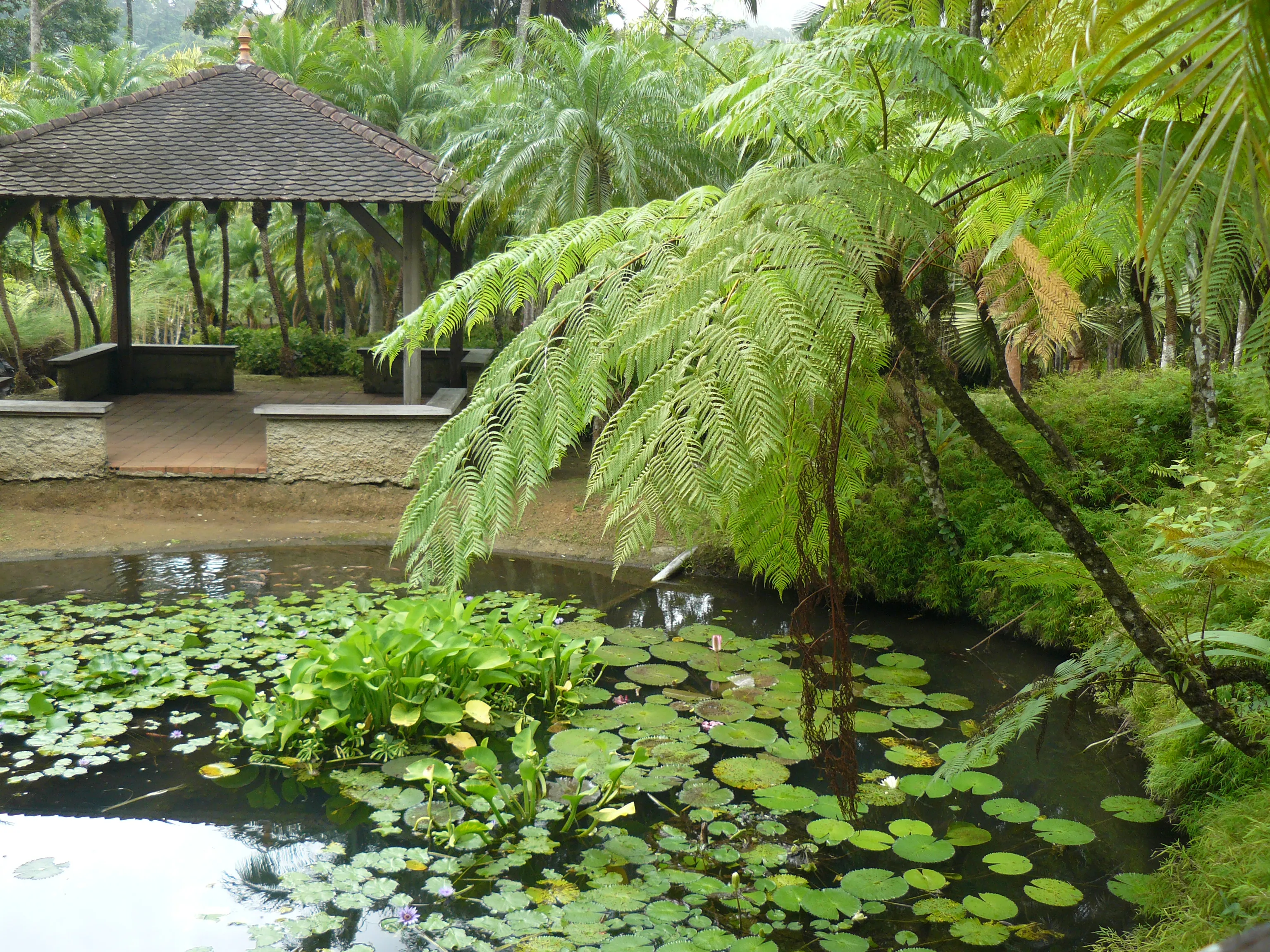
Balata garden
About ten kilometres from the centre, on the road to the north, Balata is a botanical garden that opened to the public in 1986 (French Wikipedia); Wikivoyage counts more than 200 species of plants and flowers. A little higher up, the Sacré-Coeur de Balata church, a replica of the one in Montmartre built in 1925, offers a good view over the town and the bay. The Absalon waterfall just beyond the garden is described as easy to reach, with a swimming basin; take care on slippery steps.
La Savane
The Savane park of about 5 hectares lies between the fort and the library. It was formerly the King's Garden and holds the statue of Joséphine de Beauharnais, born on the island: the statue was beheaded in 1991 and has not been restored as it was, a reminder of the debate that still surrounds her legacy. The park is a pleasant place for an evening walk.
The covered market
On rues Blénac and Isambert, the iron market hall gathers spices, fruit, vegetables, flowers, liqueurs and madras fabric (Wikivoyage FR and EN). It is the best place to pick up local souvenirs. Days and hours vary, so check on the spot. The shopping street rue Victor Hugo is close by.
Street art
The town has many murals, including more than 20 painted during three editions of the mural art festival held between 2019 and 2022, by Martinican and foreign artists (French Wikipedia).
Museums and culture
Colonial history, Amerindian prehistory and a lively cultural scene
Fort-de-France is where most of the island's cultural offer is concentrated. The pointers below come from Wikipedia and Wikivoyage; we give no prices or opening times because they change, so check them before you visit.
Regional Museum of History and Ethnography
It tells the story of Martinique and its people, from the colonial period to Creole society. The French Wikipedia lists it among the museums of the town.
Departmental Museum of Pre-Columbian Archaeology and Prehistory
Devoted to the island's first inhabitants, it shows objects from the Amerindian peoples who preceded European settlers. The French Wikipedia also mentions the 2018 discovery of the Châteaubœuf petroglyphs, the third known site of Amerindian rock carvings on the island.
Father Pinchon Museum and the Dillon distillery
The Father Pinchon museum is on the route de Didier. At the historic Dillon estate, a small museum explains how rum is made (Wikivoyage FR and EN), a good introduction before you visit distilleries elsewhere on the island.
Stage and festivals
The Aimé Césaire Theatre, set in the former town hall, and Tropiques Atrium host theatre, concerts, cinema and exhibitions throughout the year. The Fort-de-France cultural festival takes place every year in June and July (French Wikipedia). Martinique's carnival, which brings the town to life at the end of winter, is one of the highlights of the calendar.
Food and drink
Colombo, accras, Creole black pudding and agricultural rum
Specialities
The French Wikipedia lists Creole dishes: black pudding and white fish pudding, cod or shrimp accras, stuffed crab, smoked meat and colombo, all based on seafood and exotic fruit and vegetables. Avocado féroce, octopus stew and crab matoutou complete the island's classics.
Markets
The covered market is the place to smell the spices, taste the fruit and leave with jams, liqueurs or spices in bags. Street stalls around the centre add fritters and fresh fruit juices.
Drinks
Agricultural rum and ti-punch are the emblems of Martinique. We do not recommend any specific address: ask your host or the tourist office, and use a distillery visit to understand the difference between agricultural rum and molasses rum.
Where to eat
The centre and the waterfront concentrate the terrace restaurants. Many businesses close early in the evening, so plan your dinner ahead, especially on Sundays.
Getting around
Buses, shared taxis and boats across the bay
On foot
The centre is easily explored on foot. Between the fort, the Savane, the library, the cathedral and the market, distances are short. The town is built on several hills, which makes the residential districts harder going on foot (Wikivoyage DE).
Buses and shared taxis
The Mozaïk urban buses serve Fort-de-France, Schoelcher, Le Lamentin and Saint-Joseph (French Wikipedia). Shared taxis, which reach most towns on the island, leave from the Pointe Simon station (French Wikipedia and Wikivoyage FR). Wikivoyage (EN) says buses do not take cash on board and need a ticket bought beforehand or a mobile app, so find out before you board.
Boats to Trois-Îlets
A boat crossing links Fort-de-France with Les Trois-Îlets (Wikivoyage FR and EN). It is a pleasant way to avoid the traffic and to reach Pointe du Bout, the marina and the beaches on the south shore of the bay. Operators and timetables change, so check with the company.
Rental car
There are few main roads and they clog at rush hour; demonstrations can block them (Wikivoyage DE). A car is useful for the southern beaches, Mount Pelée and Saint-Pierre, but not for the centre.
Budget and precautions
French price levels, with imported goods costing more
Price level
The currency is the euro. Prices are close to French levels, with imported goods often costing more on the island according to our research. We do not publish price ranges because we could not cross-check them with two independent sources; museum entrance fees and boat fares should be checked before your visit.
Flights
The flight remains the most variable item in the budget. SniperAir monitors prices to FDF and compares them with the route's history, but it does not sell or book tickets.
Caution and hurricanes
In town, usual urban caution applies: keep valuables discreet, especially in the evening, and check your own government's official advice. The Atlantic hurricane season runs from June to November, and the island is also in an earthquake zone, with a major quake in 1839 and a deadly cyclone in 1891 in the town's history. Follow forecasts, keep your dates flexible and consider travel insurance.
When to go
A drier Lent season from February to April, a wetter summer and autumn
February to April
The Lent season, the driest: trade winds carry less moisture, skies are clearer, with a few showers (60 to 90 mm a month according to the French Wikipedia). High tourist season, with carnival.
May to June
Shoulder season: higher temperatures and a gradual return of the rains; some months can bring exceptional rain episodes.
July to October
The wet season: hotter, with more and heavier showers, and the period of tropical cyclones; between disturbances the weather is fine.
November to January
Shoulder season: the end of the cyclone period and a return towards the dry season, with year-end holidays in high demand.
Fort-de-France has a tropical rainforest climate with an annual mean temperature of 26.5 °C and around 1,950 mm of rain a year (French Wikipedia). The hottest months run from August to October (about 31 °C by day), the coolest in January and February (29 °C). Sources disagree on the exact dates of the rainy season (July to October for the French Wikipedia, other sources saying May to November), so we publish broad periods.
By length of stay
What to do in Fort-de-France depending on how long you stay
The centre on foot
Saint-Louis Cathedral, the Schoelcher Library, the Savane, Fort Saint-Louis, a Creole lunch at the market, then a walk along the waterfront in the late afternoon.
Culture and the heights
The archaeology and history museums, the Dillon distillery, then the Balata garden, the Sacré-Coeur church and the Absalon waterfall on the road north.
Around the bay
A boat crossing to Trois-Îlets, then the south of the island (Le Diamant, Sainte-Anne), or the Caribbean north with Saint-Pierre and Mount Pelée by car.
In pictures
Fort-de-France in pictures
You might also like
Similar destinations
FAQ
Frequently asked questions about flights to Fort-de-France
How do I get from Martinique airport to the centre of Fort-de-France?
Aimé Césaire airport (FDF) is in Le Lamentin, around ten kilometres from the centre and linked by the A1 motorway. A taxi or rental car is simplest; a bus rapid transit line also serves the airport from Pointe Simon. Check timetables before you travel.
What is there to see in Fort-de-France?
Fort Saint-Louis, the Schoelcher Library, Saint-Louis Cathedral, the Savane park, the covered market, the archaeology and history museums, then the Balata garden in the hills.
Is Fort-de-France a beach town?
No, it is an administrative and cultural capital on a bay. The best-known beaches lie further south, around Les Trois-Îlets, Le Diamant and Sainte-Anne, reached by boat or by car.
How do I cross the bay to Trois-Îlets?
A boat service links Fort-de-France with Les Trois-Îlets. Timetables and operators vary, so check with the carrier before you go.
When is the best time to visit Fort-de-France?
Mostly between February and April, during the driest Lent season. The Atlantic hurricane season runs from June to November, so keep your dates flexible and follow forecasts.
Do I need a visa for Martinique?
Martinique is French territory and part of the European Union, but entry rules depend on your nationality and where you travel from. Check official sources before booking.
How much does a flight to Fort-de-France usually cost?
The price depends mainly on your departure city, the time of year and how far ahead you book. The "opportunities" section above shows real examples of prices SniperAir has already detected to this destination.
How do I get alerted when a flight to Fort-de-France drops below my budget?
Create an alert profile with your departure airport, Fort-de-France as the destination and your maximum budget. You are notified automatically as soon as a matching price is detected.
Ready to head to Fort-de-France?
Set your budget and let SniperAir monitor fares for you.
Create my alert