
Cheap flights to Honolulu
Set your departure airport and your maximum budget: SniperAir tracks prices to Honolulu and alerts you the moment an opportunity matching your criteria appears.
Quick summary
Country
United States
Continent
North America
Airport
HNL
Currency
US dollar (USD)
Time zone
UTC-10
Opportunities already detected to Honolulu
Real flight examples spotted by SniperAir, with their reference price.
Loading examples…
Identity
The most isolated big city on Earth
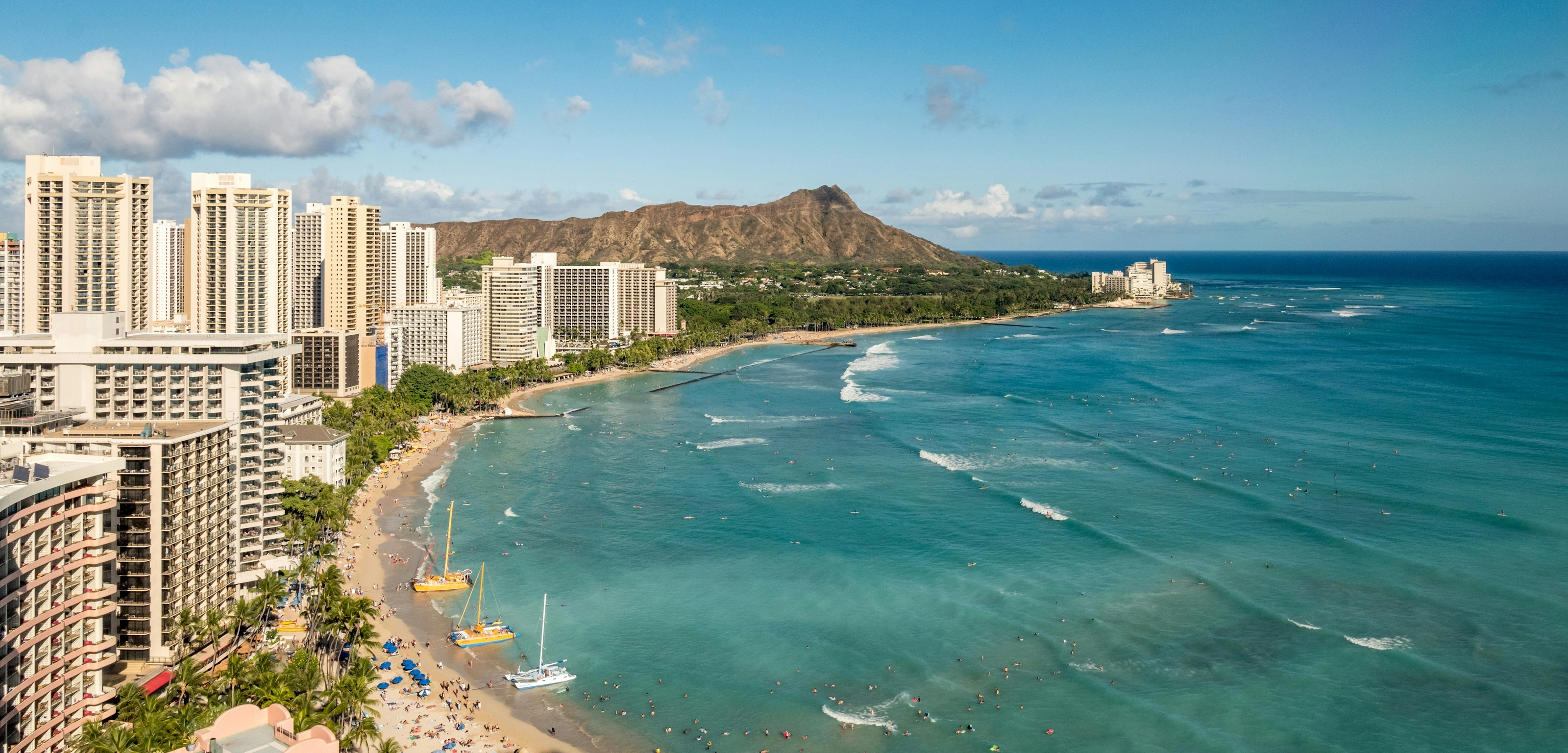
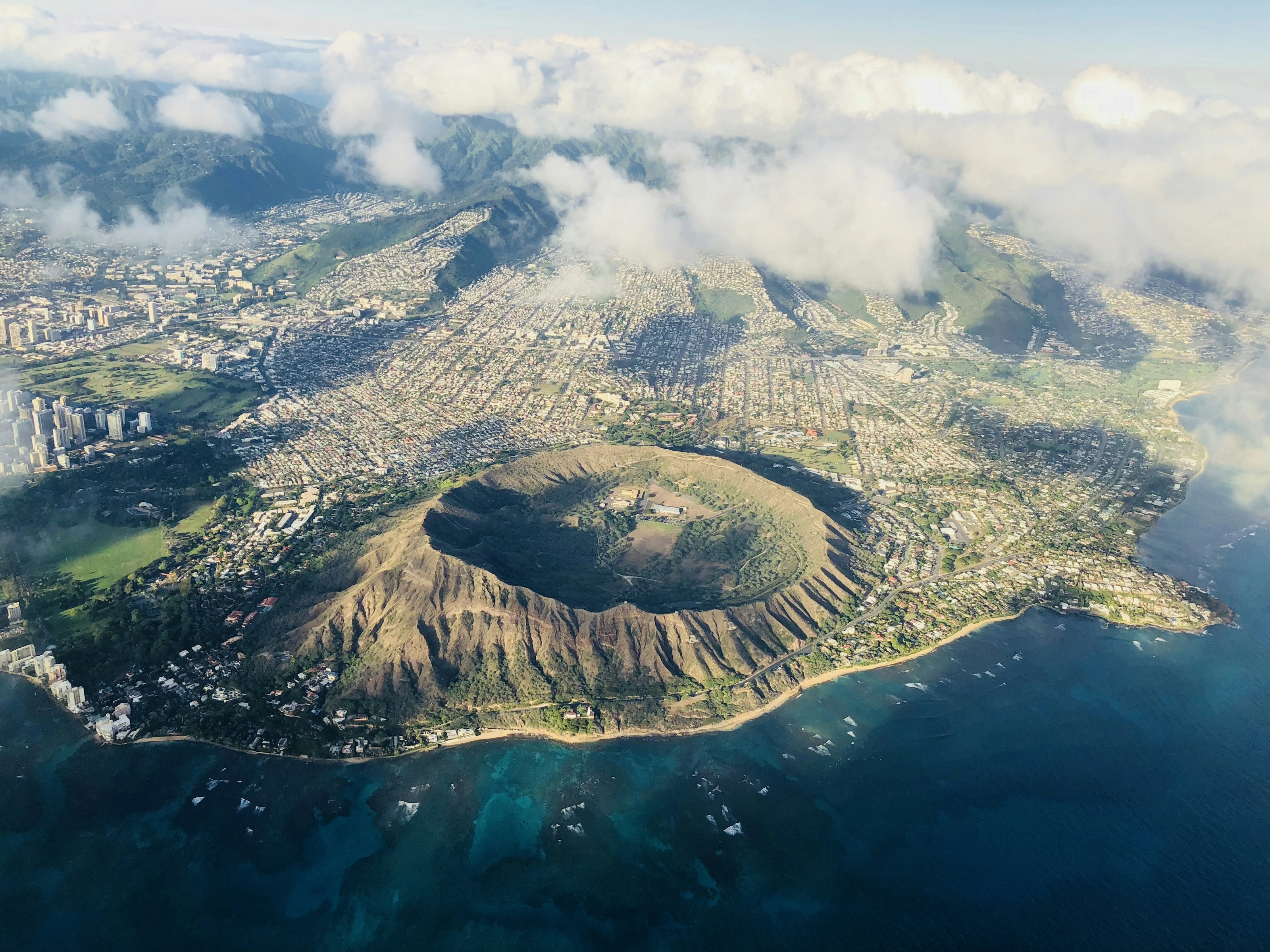
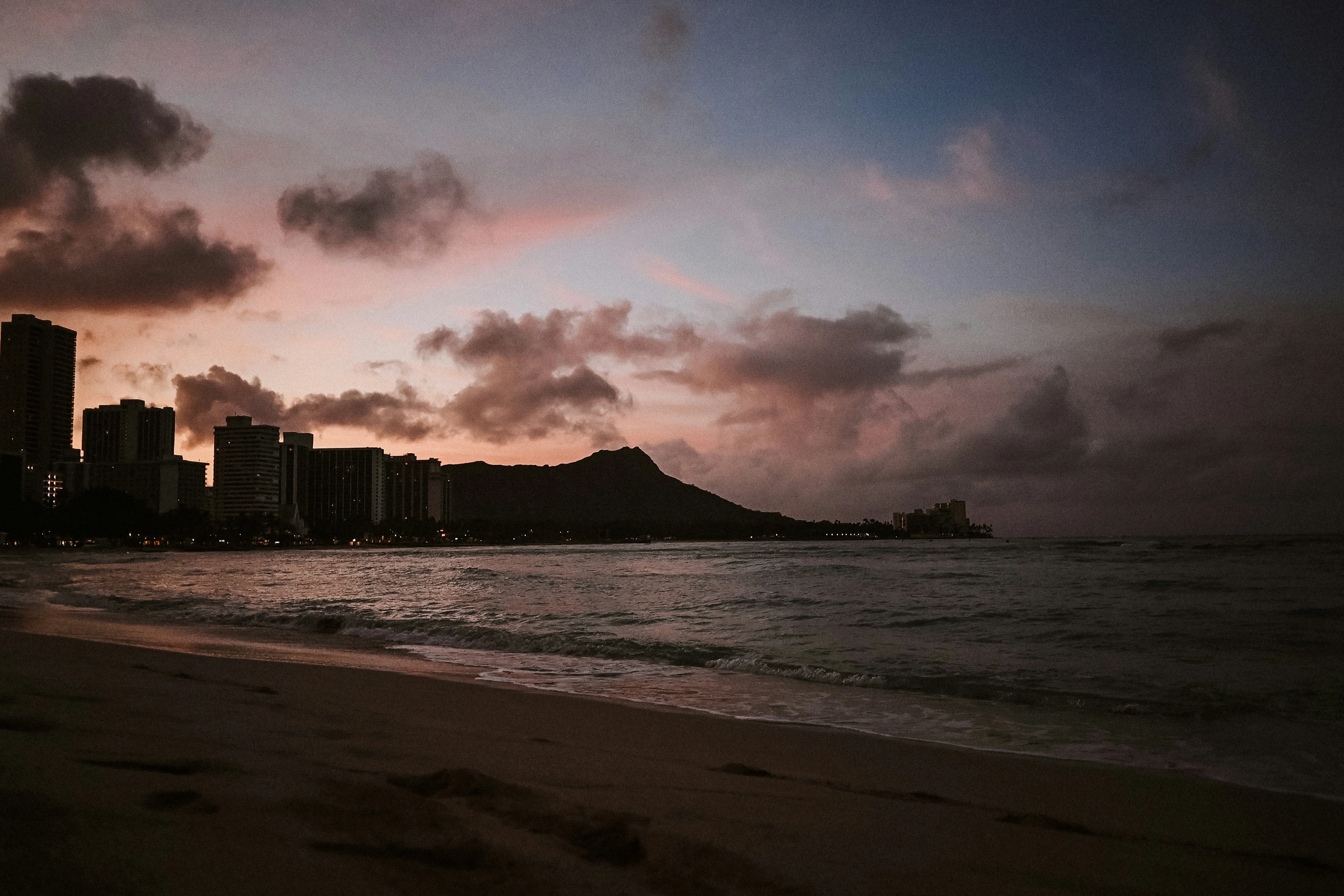
Honolulu sits on the southern shore of Oahu, between the Pacific Ocean and the volcanic Koolau range. It is by far the most populous city in the Hawaiian Islands and the main air gateway to the archipelago. The name means "sheltered bay" in Hawaiian, a reference to its natural harbor, which long made it a strategic stopover in the middle of the Pacific. Far from everything, it is one of the most geographically isolated major cities in the world.
From royal capital to Pacific gateway
Honolulu became the official capital of the Kingdom of Hawaii in 1845 under King Kamehameha III, who moved the seat of government here from Lahaina. The last monarchs, King Kalākaua and his sister and successor Queen Liliʻuokalani, ruled from ʻIolani Palace until the overthrow of the monarchy in 1893. Hawaii became a US territory in 1898 and the 50th state in 1959. Waikiki, today a world-famous beach district, was earlier used by the aliʻi (Hawaiian chiefs) for fishponds and canoeing, and they were already surfing there.
Why track Honolulu with SniperAir
You don't need to compare prices every day
Pick your departure
Tell us your departure airport and maximum budget for a flight to Honolulu.
SniperAir watches
Our systems continuously compare new prices against the route's real price history. SniperAir tracks prices and alerts you: it does not sell or book tickets.
You get an alert
The moment a price matches your criteria, you're notified, with no searching on your end.
Honolulu airport
An airport about 14 km from Waikiki, but very far from everything else
Daniel K. Inouye International
On the island of Oahu, about 14 km (20 to 30 minutes by car, longer at rush hour) from Waikiki. It is the main air gateway for the entire Hawaiian archipelago. To get into town: the public bus TheBus (route W) serves the airport, runs through downtown and on to Waikiki, but large luggage is not allowed on board; shuttles to Waikiki hotels, regulated-fare taxis and ride-hailing complete the offer.
Distances and times are indicative, cross-checked on Wikivoyage (EN, FR); they vary with traffic. Fares are not quoted because they change.
The distance matters more here than for most destinations. From the US West Coast, a nonstop flight to Honolulu typically takes 5 to 6 hours; from the East Coast, expect 10 to 11 hours. From Europe there are no direct flights: routings connect through a West Coast hub, and total travel time usually runs 17 hours or more door to door.
Getting around
TheBus, the Waikiki Trolley and the car
TheBus
Oahu's public network covers the whole island and is the cheapest way to reach Ala Moana Center or trailheads like Manoa Falls from Waikiki. A local reloadable card exists, and cash payment requires exact change; check the network's website before you travel.
The Waikiki Trolley
A tourist bus with several themed lines and stops at the main sights: Diamond Head, Ala Moana, Chinatown, Pearl Harbor depending on the line.
Car, taxi and ride-hailing
You can stay in south Oahu without a car. It becomes useful for the North Shore or to explore the rest of the island. Rush hours are busy, and parking in popular areas is controlled and expensive; lock the vehicle and leave no valuables inside, especially at heavily visited viewpoints.
To discover
Waikiki, Hawaii's most famous beach
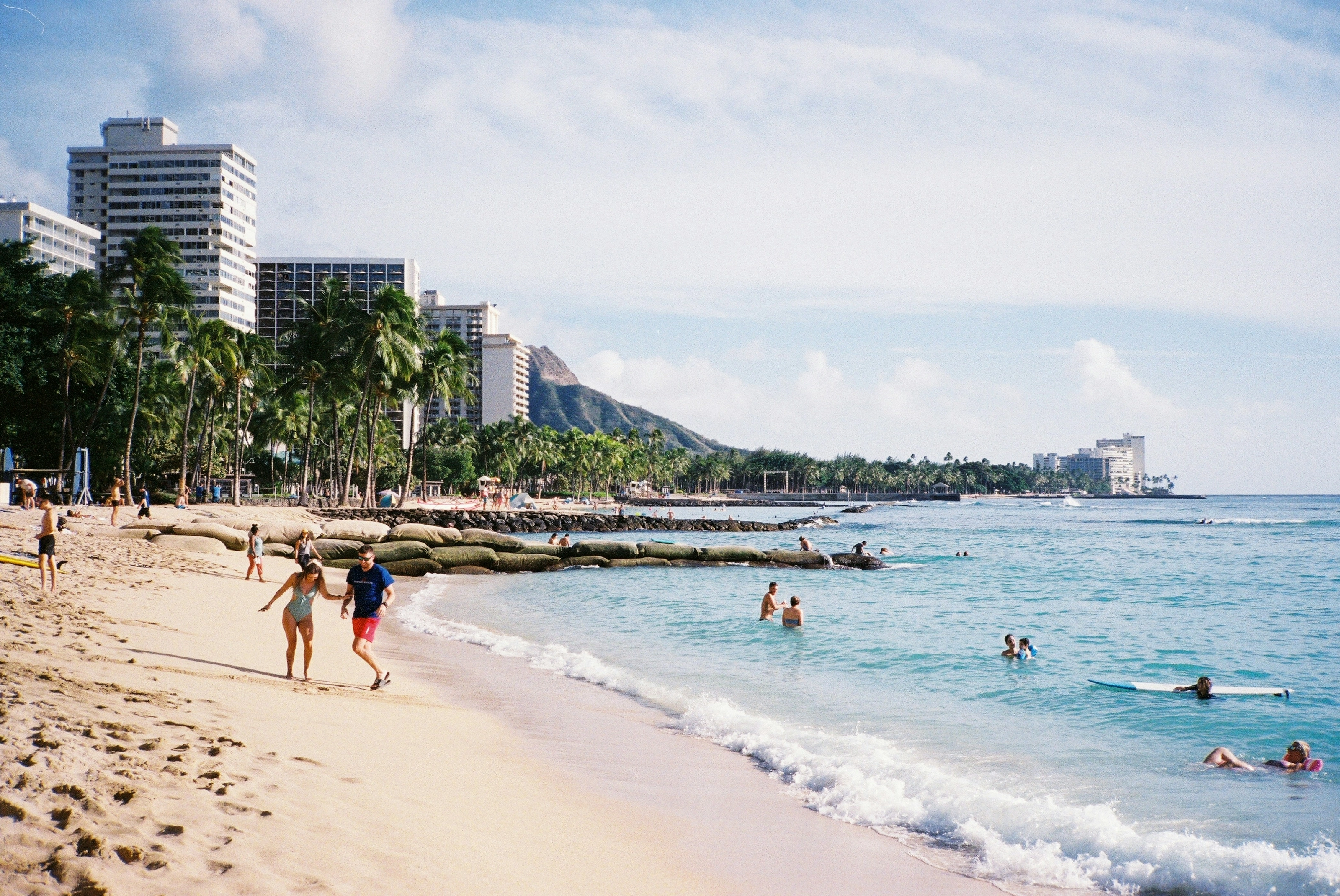
Waikiki is really a string of connected beaches, including Waikiki Beach, Kuhio Beach, Grays Beach, Fort DeRussy Beach and Kahanamoku Beach, stretching about two miles (3.2 km) along Oahu's south shore, with mostly gentle surf that has drawn beginner surfers for well over a century. It was here that Duke Kahanamoku, the Olympic swimming champion who is credited with popularizing modern surfing worldwide, first learned to swim and ride waves. Rising behind the skyline is Diamond Head (Lēʻahi), an extinct volcanic crater estimated at around 300,000 years old.
Kalākaua Avenue and Kapiolani Park
Kalākaua Avenue lines up luxury boutiques, restaurants and seafront entertainment, while Kapiolani Park, at the eastern end of Waikiki, is a greener escape with a direct view of Diamond Head and a good starting point for the crater trail.
Must-do activity
Hiking Diamond Head
Hiking to the summit of Diamond Head is one of the most popular things to do on Oahu: about 0.8 miles (1.3 km) one way, with roughly 560 feet (170 m) of elevation gain, usually done in under an hour. The trail includes stairs and an unlit tunnel, winds through former military fortifications and opens onto a 360-degree view over Waikiki, Honolulu and the Pacific. There is very little shade: start early, carry water and protect yourself from the sun. Reservations are required to enter the state monument and time slots are limited.
Sea and beaches
Beyond Waikiki: sunsets, swimming and snorkeling
Ala Moana Beach Park, less crowded than Waikiki, is liked by locals for swimming, and Hanauma Bay, with calm water, is a well-known snorkeling site. Sunsets over the Pacific are among the highlights of a stay.
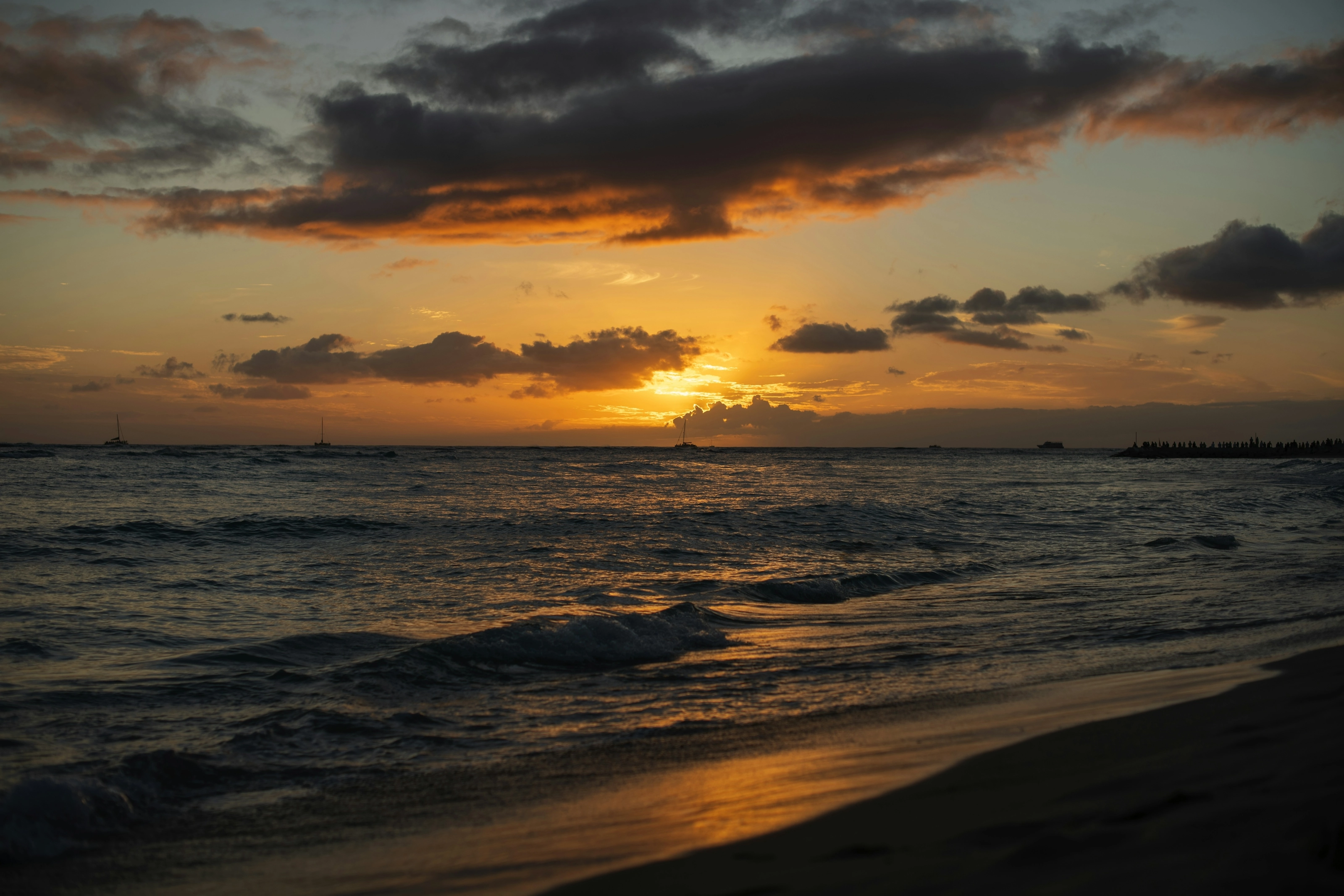
Safety in the water
Conditions vary a lot from one beach to another: some have no lifeguards and waves can be strong, especially in winter. Swim at guarded beaches, respect signs and flags, and check the state of the sea.
History
Pearl Harbor National Memorial
About 20 minutes west of downtown, Pearl Harbor National Memorial preserves the site of the December 7, 1941 attack that brought the United States into the Second World War. The complex includes the USS Arizona Memorial, reached by boat over the sunken hull, the battleship USS Missouri where Japan's surrender was signed in 1945, the USS Bowfin submarine, and an aviation museum covering the Pacific War. Plan for at least half a day, and book ahead: timed entries sell out regularly, even outside peak season.
Museums
The Bishop Museum and Honolulu's museums
Bishop Museum
Founded in 1889 by businessman Charles Reed Bishop in memory of his wife, Princess Bernice Pauahi Bishop, the last direct descendant of the Kamehameha royal line, it is the state's largest museum and holds the world's largest collection of Hawaiian and Pacific artifacts. Its Hawaiian Hall displays feather cloaks, royal jewelry, canoes and early surfboards, and a planetarium has run public shows since 1961. Allow a few hours.
Other museums
ʻIolani Palace, former seat of the monarchy, is the only official royal residence on US soil and is open to visitors. The Honolulu Museum of Art holds large Asian and Western collections. Check opening hours, closing days and any booking requirement; we do not quote fares, which change.
To discover
Downtown, Chinatown and Ala Moana Center
Chinatown
West of downtown, Chinatown packs fish and flower markets, Buddhist temples, art galleries and a dense mix of Chinese, Vietnamese and Filipino restaurants into a walkable historic core, one of Honolulu's best-preserved historic districts.
Ala Moana Center
A few minutes by bus from Waikiki, Ala Moana Center has been open since 1959 and is regularly cited as the largest open-air shopping center in the world, mixing local boutiques with international brands and a huge choice of restaurants.
Food
What to eat in Honolulu
The plate lunch sums up the islands' multicultural history, a legacy of the shared meals of sugar-plantation workers from Asia and the Pacific.
| Dish | Description |
|---|---|
| Plate lunch | Two scoops of rice, macaroni salad and a protein such as kalua pork, teriyaki beef, chicken katsu or mahi-mahi. |
| Poke | Cubed raw fish, classically ahi tuna, marinated and served over rice, now found in countless variations across the city. |
| Loco moco | Rice topped with a hamburger patty, a fried egg and brown gravy, a comfort-food classic across the state. |
| Shave ice | Finely shaved ice soaked in bright fruit syrups, a beachside institution best enjoyed on a hot afternoon. |
Day trip
North Shore, the world capital of big-wave surfing
Under an hour's drive north of Honolulu, Oahu's North Shore turns into the winter proving ground for the world's best big-wave surfers, roughly from November through February (sometimes March), when Pacific storms send swell after swell into breaks like the Banzai Pipeline and Waimea Bay. The Pipe Masters, the finale of the world surfing championship, is held here every year, and Waimea Bay hosts The Eddie, a competition that only runs when waves top 30 feet (about 9 m). Come summer, the same waters turn calm and are far better suited to swimming and snorkeling. The small town of Haleiwa, at the North Shore's entrance, is worth a stop for shave ice or a plate of garlic shrimp.
Budget and entry
A high price level, among the most expensive destinations in the US
Price level
Almost everything has to be shipped to the islands, and day-to-day living costs in Honolulu run well above the US average. Accommodation, especially in Waikiki, is the biggest item. Simple meals like the plate lunch, markets and TheBus help keep costs down. We give no figures, because prices vary with the season and exchange rate.
Flights
The long-haul flight is the most variable cost, and the trip from Europe is long. SniperAir tracks prices to HNL and compares them with the route's history.
Entry and precautions
The United States generally requires an electronic authorization (ESTA) or a visa depending on nationality: check the official US government websites well before departure. Also consult your home country's official travel advice. On the ground, usual common sense is enough in town; in nature, respect the sea, the sun and the trails. Tipping is customary in restaurants and for many services because service is generally not included in the bill, and taxes are added to displayed prices.
By length of stay
What to do in Honolulu depending on how long you stay
The essentials
Waikiki Beach, the Diamond Head hike, then Ala Moana Center for dinner and shopping.
Go deeper
Add Pearl Harbor in the morning, then downtown, Chinatown, the Bishop Museum and ʻIolani Palace.
Beyond Honolulu
A full day on the North Shore, between beaches and legendary surf breaks like Waimea Bay, or a hop to another island of the archipelago.
When to go
When to visit Honolulu
Dry season (April to October)
Steady tropical warmth and little rain: the most popular period with visitors. Midsummer is the hottest and driest stretch.
Wet season (November to March)
More frequent but usually brief showers, with temperatures that stay mild; peak tourist season and surf season on the North Shore.
Whale season (December to April)
Humpback whales migrate through Hawaiian waters, a natural attraction unique to this period.
Shoulder seasons (April to June, September to October)
Warm, dry days, fewer crowds and generally lower hotel rates than midsummer or the winter holidays.
The tropical climate is very stable: temperatures barely change from month to month, with highs generally between 27 and 32 C all year. The sea stays pleasant in every season.
You might also like
Similar destinations
FAQ
Frequently asked questions about flights to Honolulu
What is Honolulu's airport?
Daniel K. Inouye International (HNL), on the island of Oahu, about 14 km from Waikiki, which is 20 to 30 minutes by road depending on traffic. TheBus (route W), shuttles, taxis and ride-hailing connect it with town.
How long is a flight to Honolulu from Europe?
There are no direct flights from Europe: expect 17 hours or more in total, with a stopover on the American mainland.
How much does a flight to Honolulu usually cost?
It mostly depends on your departure city, the season and how far ahead you book. The "deals" section above shows real examples of prices already detected by SniperAir for this destination.
Is Honolulu expensive to visit?
Yes: the price level is high, especially for accommodation. TheBus, simple meals and markets help keep the budget in check.
When is the best time to visit Honolulu?
The climate is stable all year. The dry season, April to October, is the most popular; winter is peak season, with humpback whales and North Shore surf.
How many days do you need in Honolulu?
Two to three days for Waikiki, Diamond Head, Pearl Harbor and downtown; four to five with the North Shore.
Do I need a car in Honolulu?
Not necessarily if you stay in south Oahu: TheBus serves the whole island and the Waikiki Trolley covers the main tourist sights. A car becomes useful for the North Shore or a deeper exploration of the island.
What should I eat in Honolulu?
The plate lunch, poke, loco moco and shave ice, plus the Asian cuisines of Chinatown.
Is Waikiki just hotels and shops?
No: it is first of all a historic beach, once the playground of Hawaiian chiefs and the cradle of modern surfing, with Diamond Head as a backdrop.
Do I need a reservation to hike Diamond Head or visit Pearl Harbor?
Yes, both sites work with limited time slots: booking online in advance is strongly recommended, especially in high season.
How do I get alerted when a flight to Honolulu drops below my budget?
Create an alert profile with your departure airport, Honolulu as the destination and your maximum budget. You'll be notified automatically the moment a matching price is detected.
Ready to head to Honolulu?
Set your budget and let SniperAir track fares for you.
Create my alert