
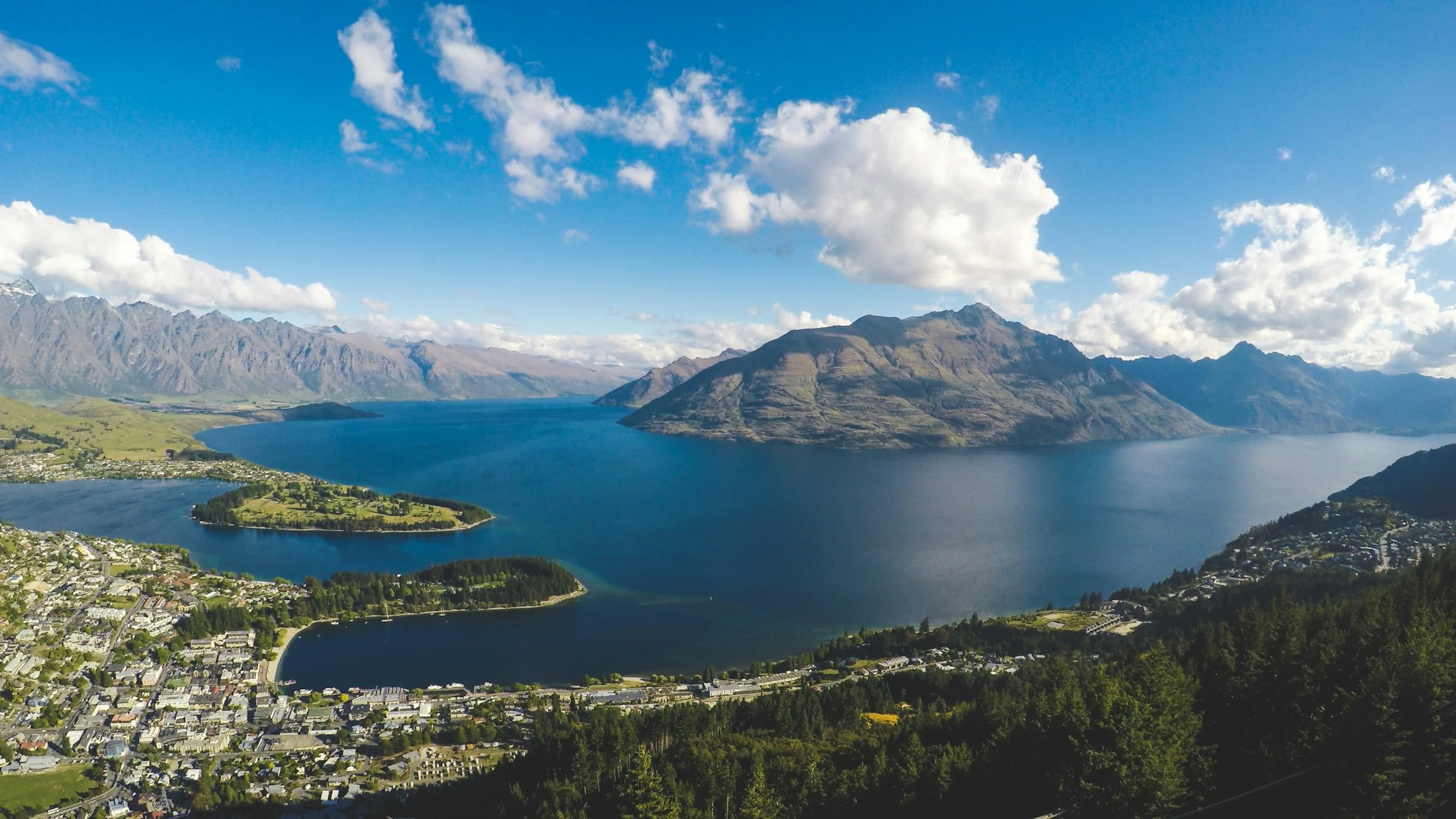
Cheap flights to Queenstown
Set your departure airport and maximum budget: SniperAir tracks prices to Queenstown and alerts you the moment a deal matching your criteria appears.
Quick summary
Country
New Zealand
Continent
Oceania
Airport
ZQN
Currency
New Zealand dollar
Time zone
UTC+12 (UTC+13 during austral daylight saving time)
Deals already spotted to Queenstown
Real flight examples detected by SniperAir, with their reference price.
Loading examples…
Why track Queenstown with SniperAir
You do not need to compare prices every day
Choose your departure
Enter your departure airport and your maximum budget for a flight to Queenstown (ZQN).
SniperAir watches
Our systems continuously compare new fares with the route's real price history. SniperAir tracks prices and alerts you: it does not sell or book tickets.
You receive an alert
As soon as a fare matches your criteria, you are notified, without having searched for anything yourself.
Airport and getting into town
An airport in Frankton, a few kilometres from the centre, at the foot of the mountains
Queenstown (ZQN)
Queenstown Airport is in Frankton, on the edge of the Lake Wakatipu basin, a few kilometres from the centre: the access road is about 9 km according to the sources consulted, a short trip by bus, taxi or shuttle. Orbus route 1 links the airport with the centre at regular intervals; taxis and shared shuttles wait outside the terminal. It is the country's fourth-busiest airport by traffic, with direct flights from several Australian and New Zealand cities. From Europe, the journey almost always involves at least one connection, often several.
Indicative distance and journey, cross-checked on Wikipedia (EN, ES) and Wikivoyage; the airport is ringed by mountains and some flights depend on the weather. Fares are not given because they change.
Queenstown is a mountain resort town in the Otago region, in the south-west of New Zealand's South Island. It grew up on the shore of Lake Wakatipu, a long S-shaped glacial lake, at about 310 m above sea level. It is best known for adventure tourism and winter sports, and is often nicknamed the adventure capital of the world. Its Māori name, Tāhuna, means "shallow bay". The centre is easy to explore on foot, but several very famous sites, such as Milford Sound and Glenorchy, lie outside the town; their distances are given below.
Landmarks
An alpine lake, snowy peaks and famous sites outside the town
Queenstown owes much to its setting: a lake ringed by mountains, including the Remarkables range rising to the south-east of the town. The six places below come with photos; the Skyline gondola, the TSS Earnslaw steamship and the bungy sites are described in text only.
Lake Wakatipu and The Remarkables
Lake Wakatipu is the country's third-largest lake by surface area, and the town sits on its north-western shore, where the Frankton Arm joins the lake. The Remarkables dominate the view to the south-east and can be seen from almost anywhere in town. A lakeside walk and the gardens on the peninsula let you enjoy the view with little effort; you can also take the gondola up Bob's Peak for an all-round panorama.
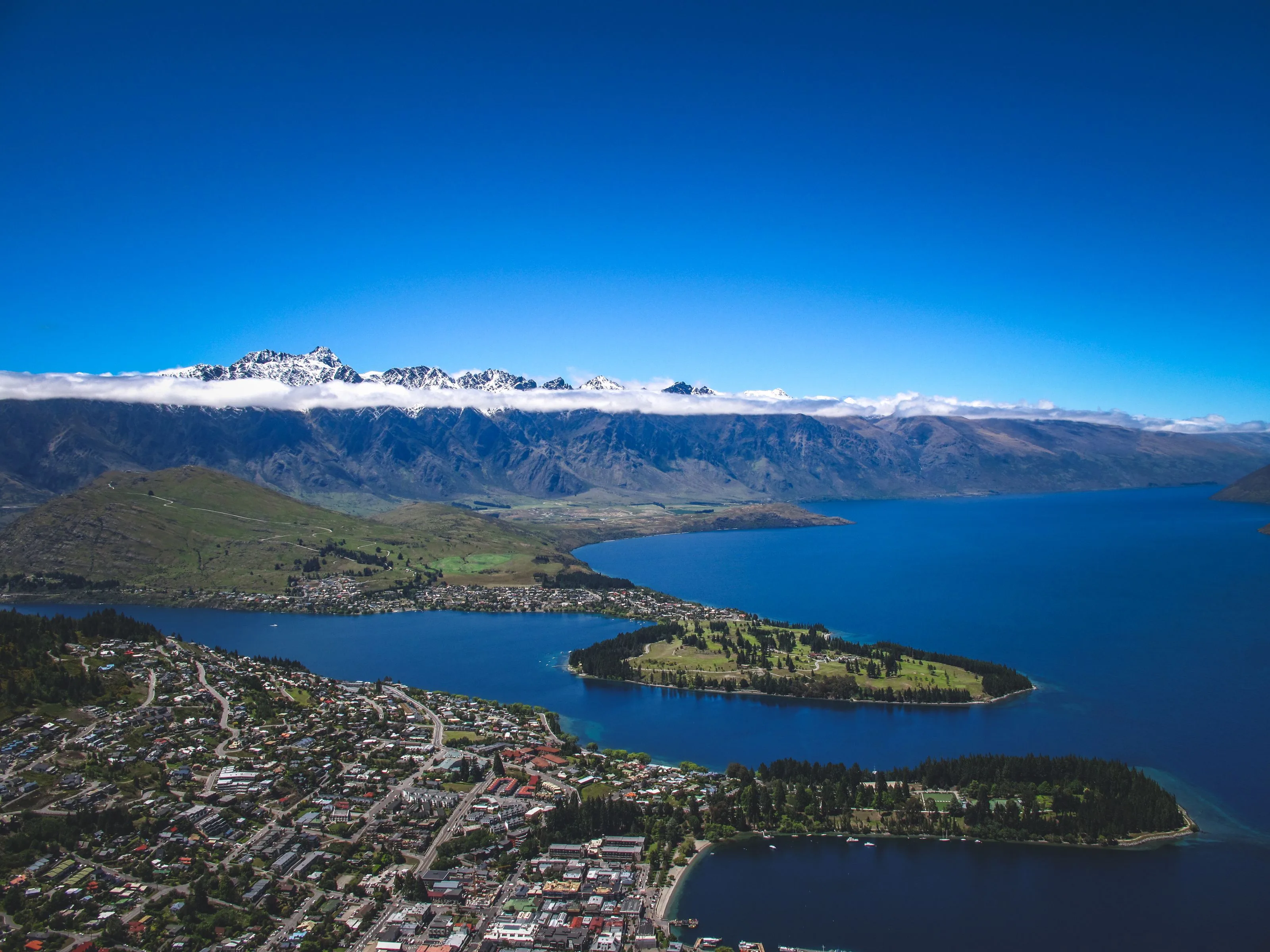
The Remarkables, snow and river
The jagged crests of the Remarkables are covered in snow in winter and often dusted in spring. The range holds one of the region's ski areas and can be seen from the plain and from the rivers beside it, where jet boats race along. Mountain conditions change fast: check the local weather before any outing at altitude.
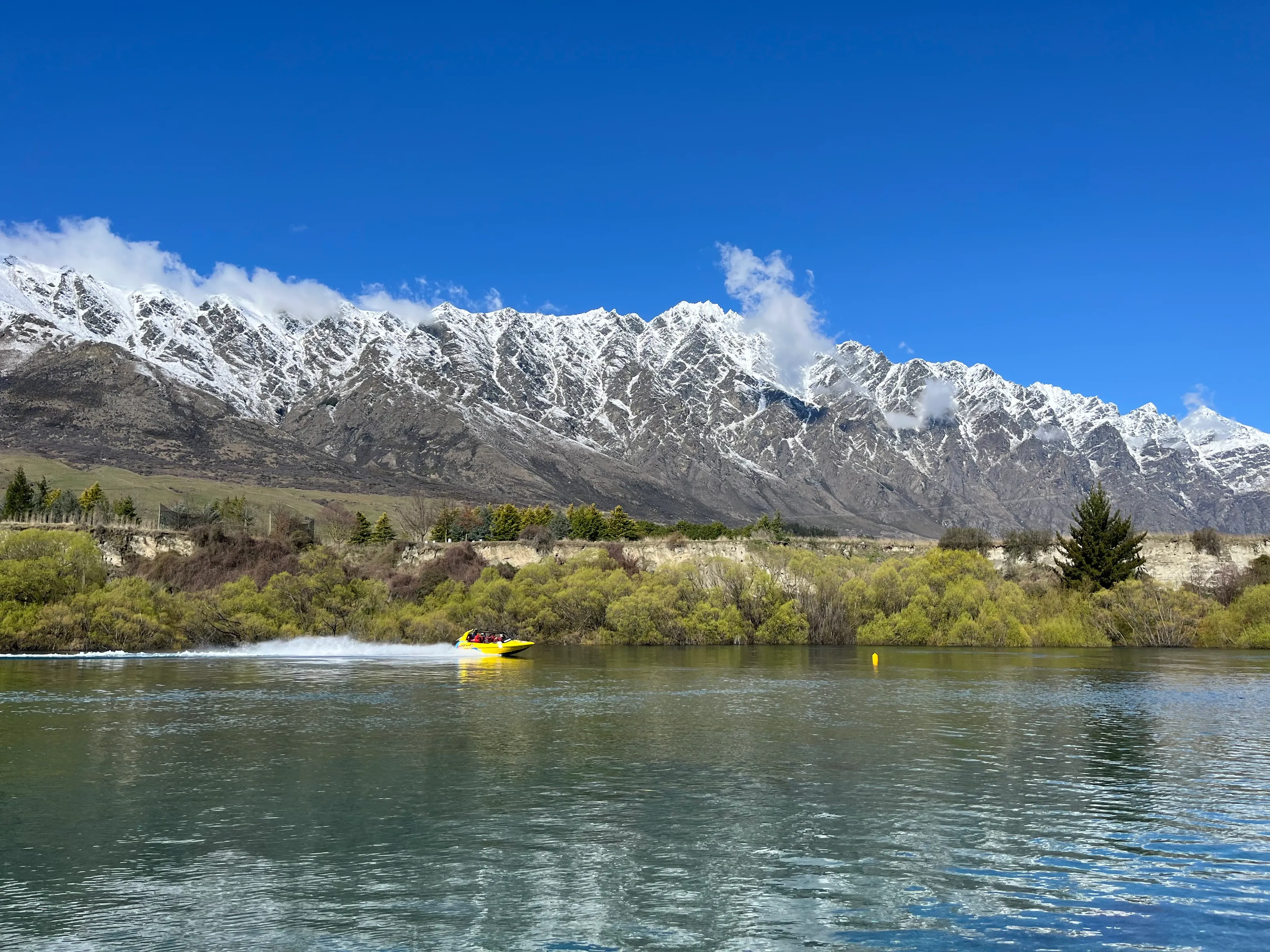
The lake towards Glenorchy
The road along the lake's northern shore towards Glenorchy is rated among the world's most scenic drives, with drops above the water and, on calm days, reflections of clouds and mountains on the lake. It is narrow and winding in places: drive carefully and plan stops at the lookouts. The photo shows a stretch of the lake without a specific location.
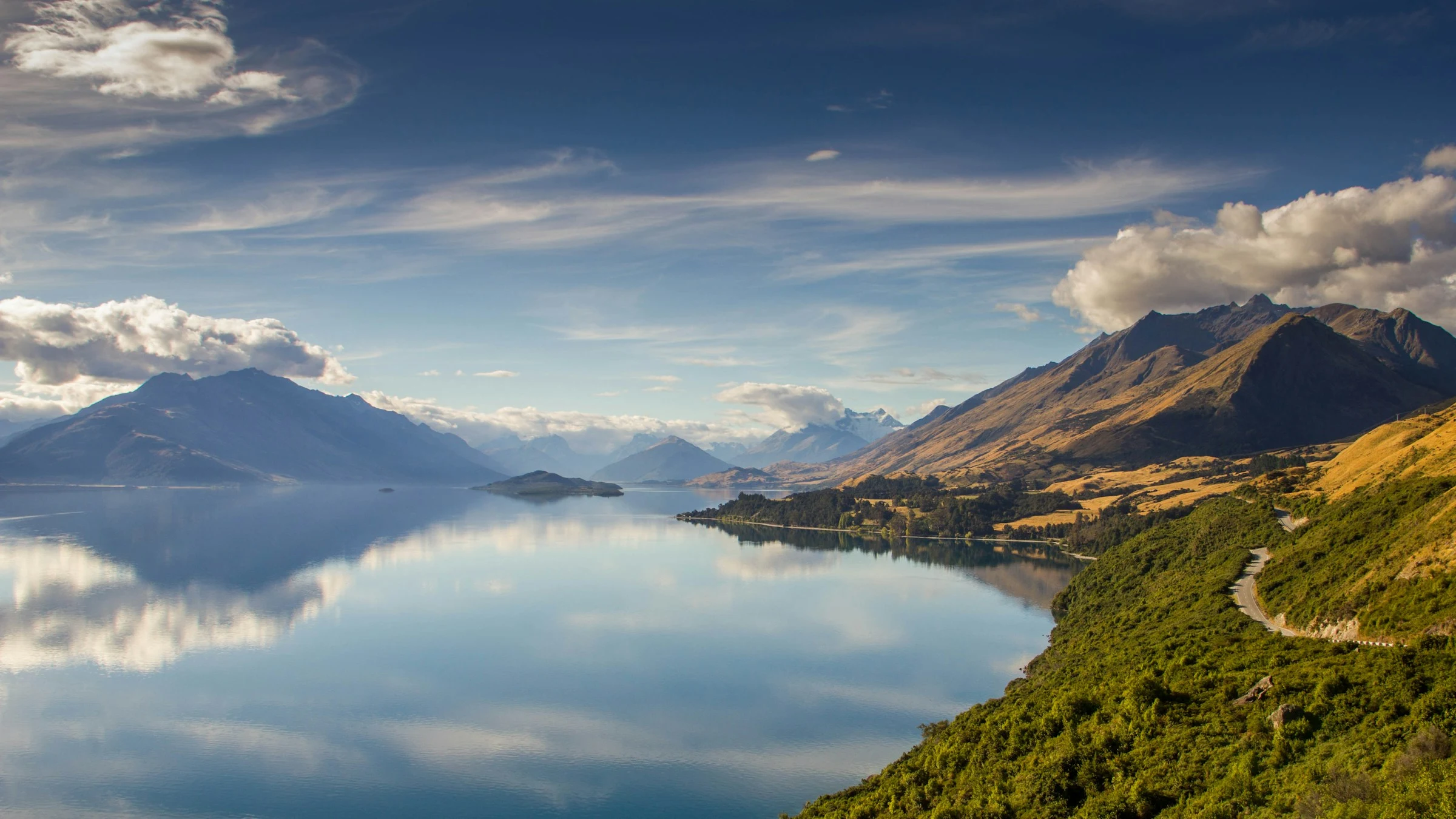
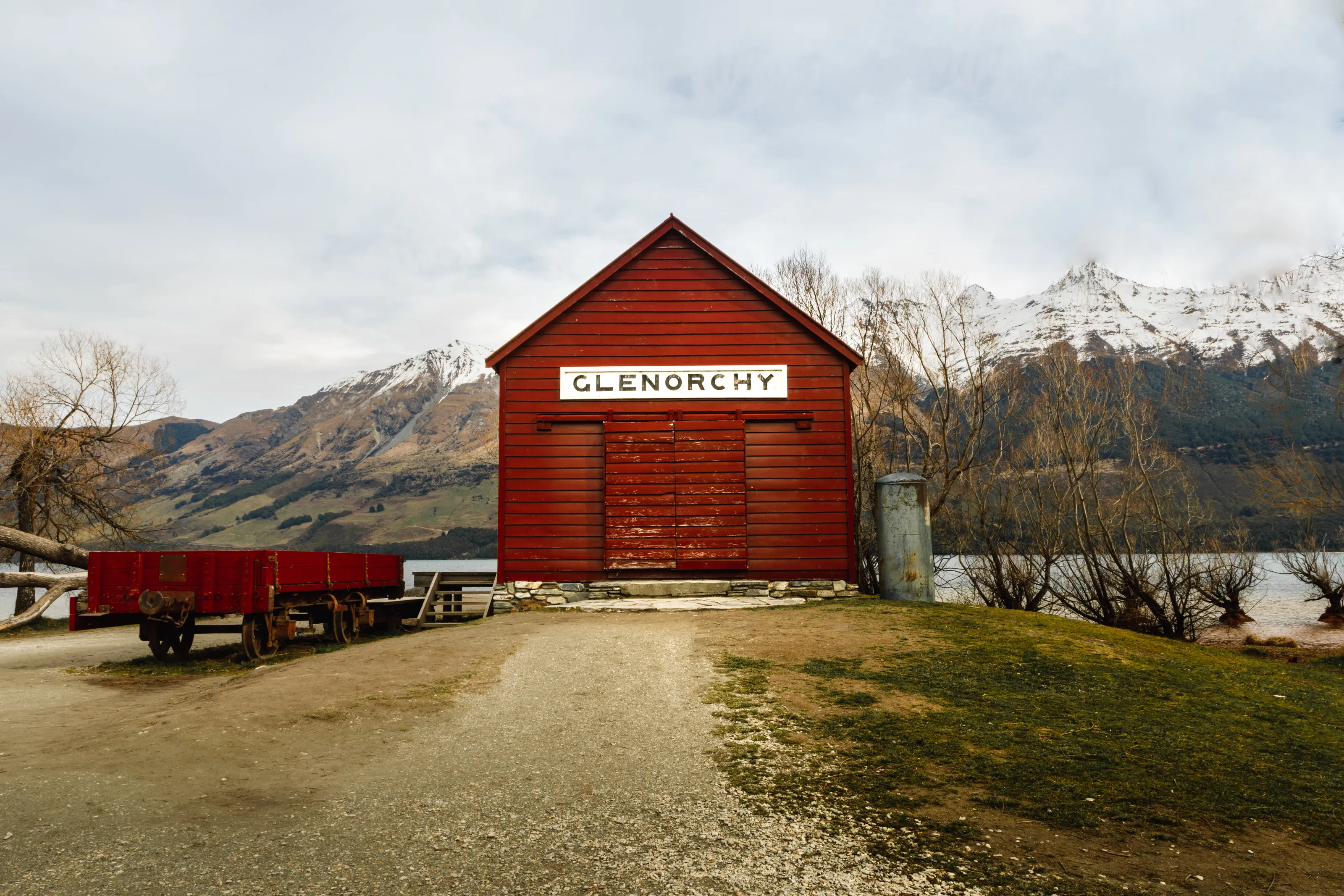
Glenorchy and its red shed
Glenorchy lies at the northern end of Lake Wakatipu, about 50 minutes by road from Queenstown: it is not a district of the town but a separate village at the foot of the mountains. Its red wooden shed, with the village name on the front, is a classic photo of the region. The surroundings have been used as film locations, including for The Lord of the Rings trilogy, and are also the starting point of several hiking trails.
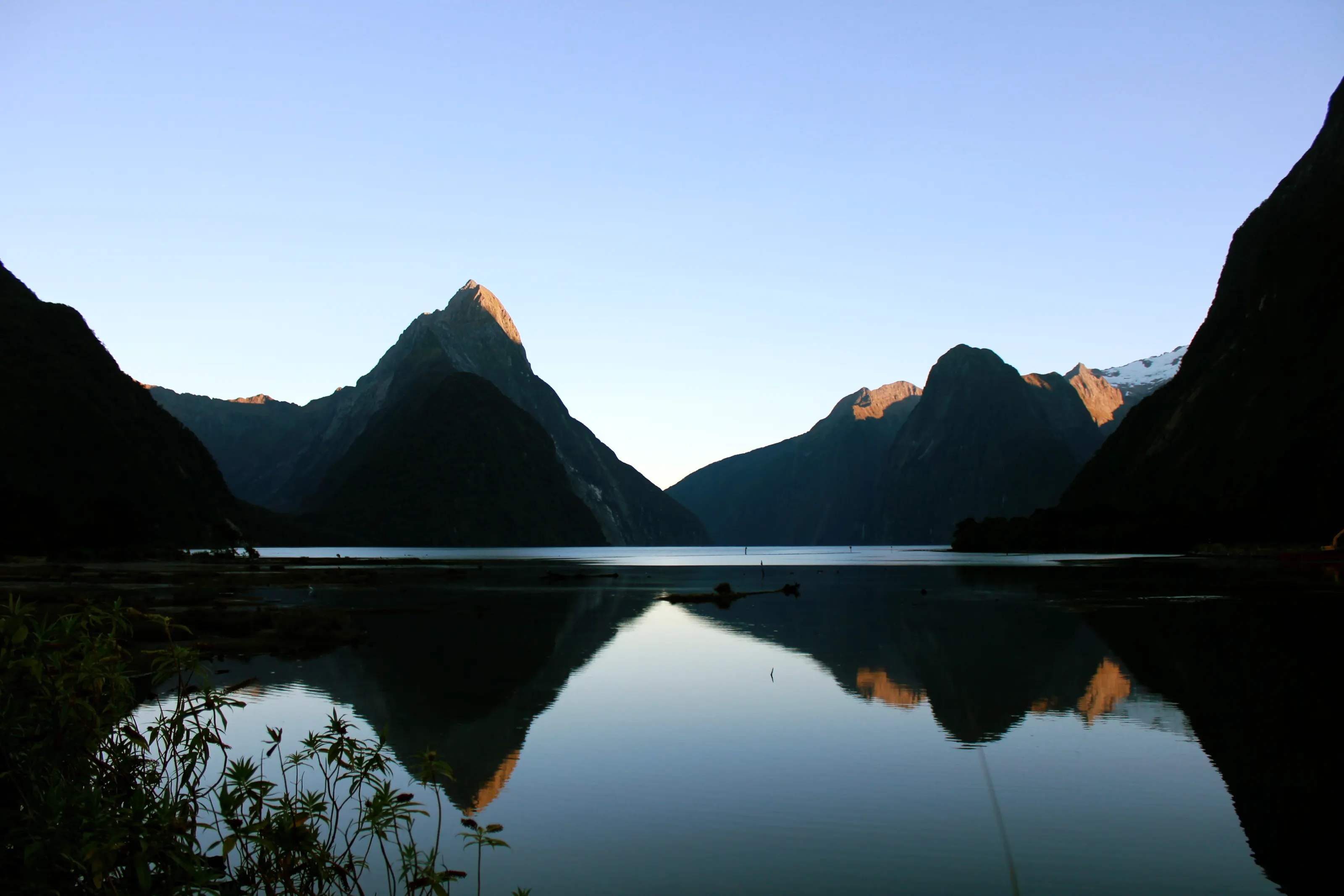
Milford Sound (Piopiotahi)
Milford Sound is not in Queenstown: it lies in Fiordland National Park, about 290 km by road according to the figures given, a long day by coach (around 12 hours round trip including a cruise); a scenic flight by plane or helicopter shortens the day considerably. The fjord, dominated by Mitre Peak, is part of Te Wāhipounamu, a UNESCO World Heritage area. The cruise on the fjord is the main activity.
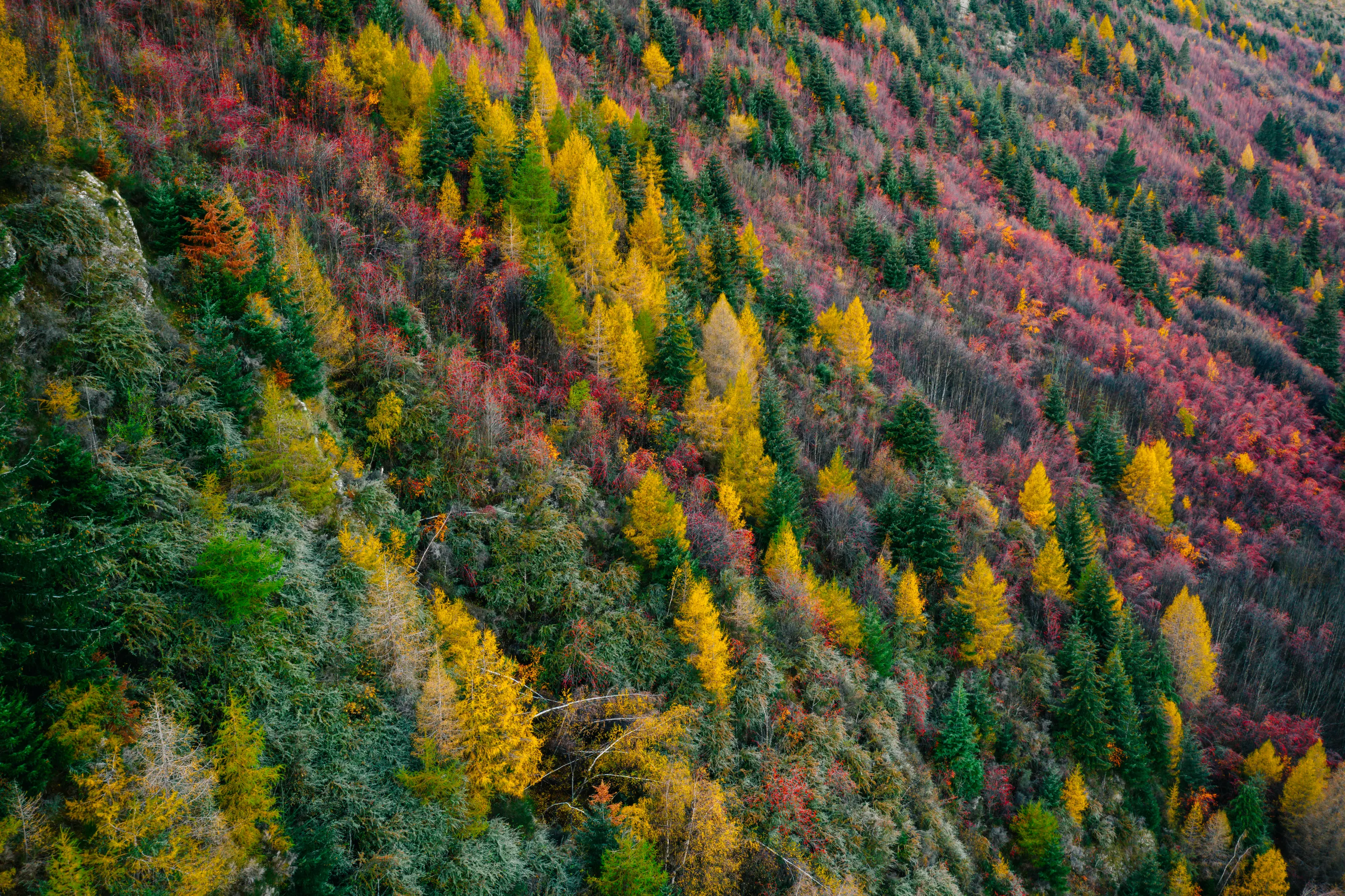
Autumn colours in the mountains
Austral autumn (April-May) transforms the hillsides: yellow larches, red broadleaf trees and dark conifers mix on the slopes. The region's historic villages, including Arrowtown (a former gold-rush town), are known for this spectacle. The image is an aerial view of a hillside with no specific place; we do not tie it to any particular site.
Excursions and nature
Hikes, skiing, water sports and big day trips
Skiing and snowboarding: Coronet Peak and The Remarkables
The region has several ski areas: Coronet Peak, about 20 minutes by road from the centre, The Remarkables, Cardrona and Treble Cone. The season runs roughly from June to September, depending on snow. The areas are at moderate altitude and reached by mountain roads: check road conditions and winter equipment requirements.
Bungy, jet boats and adventure sports
Queenstown is linked to the birth of commercial bungy jumping, which began in the Kawarau Gorge, east of the town. Jet boating, rafting, paragliding, skydiving, canyoning and mountain biking are also on offer. We do not name operators or give prices, which change; always check safety conditions and health or age restrictions before booking.
Hikes: Ben Lomond, Queenstown Hill, Routeburn
Above the town, Queenstown Hill and Ben Lomond offer panoramas after a few hours' walk. The Routeburn, one of the country's Great Walks, crosses the mountains between Fiordland and the Glenorchy area and needs serious preparation. In the mountains the weather can swing from sunshine to snow within hours, even in summer: carry warm layers and water, and check forecasts and advice from local authorities before setting out.
Arrowtown and Central Otago
Arrowtown, a former gold-miners' village, is a classic excursion, especially in autumn. Further east, the Central Otago region, the southernmost wine region in the world, produces mainly pinot noir. The Crown Range road, which leads towards Wānaka, is the highest paved road pass in the country and can be slippery in winter.
Culture and heritage
Few large museums, but gold-rush, lake and Māori heritage
The gold-rush historic precinct
Queenstown was born from the 1862 gold rush on the Arrow River. Several streets recall that era, and a small historic precinct gathers old buildings, including William's Cottage, the former police station and St Peter's Anglican church. The town has no large museum comparable to those of New Zealand's big cities: heritage is mostly discovered on foot, and we do not name a museum whose opening hours we could not confirm.
The TSS Earnslaw steamship and the gardens
The TSS Earnslaw, a coal-fired steamship from 1912, still sails on Lake Wakatipu and is one of the town's heritage symbols. The Queenstown Gardens, a botanical garden on a peninsula in the lake, offer exotic and native trees, a pond and paths facing the mountains. We do not give prices, which change.
Māori culture, film and festivals
The region is an old place of passage and food gathering for Māori, and Ngāi Tahu (Kāi Tahu), the South Island iwi, keep a historic bond with the lake and the pounamu (greenstone) routes: a useful reminder that these landscapes are also places of memory. Film has made much use of the surroundings, including The Lord of the Rings trilogy. Among events, a winter festival in June and a jazz festival in October mark the year.
Food and drink
Regional cooking, Central Otago pinot noir and famous burgers
Regional produce on the plate
Queenstown is known for its restaurants, which feature lamb, seafood (mussels, oysters, blue cod), game and regional cheeses. Restaurant bills add up quickly: small fish-and-chip shops and supermarkets help to eat more cheaply. We do not name businesses.
Central Otago pinot noir
The Central Otago wine region is the southernmost in the world. It is known for its pinot noir, tasted at cellar doors near the town and in restaurants. If you visit wineries, plan a designated driver or an organised tour: people drive on the left and roads are winding.
Burgers, cafés and nightlife
A very popular central burger place, often cited in guides, draws queues at peak times; we do not name it, for neutrality. Cafés, craft breweries and bars are concentrated in the pedestrian centre, around the lakefront and nearby streets, with notable buzz in ski season.
Getting around
Buses, taxis, rental cars and the gondola
In town
The centre of Queenstown is compact and easy to walk; parking is limited. The small Orbus bus network serves the suburbs and the airport. Taxis and ride-hailing complete the offer, and shuttles also link the ski areas in season.
Rental car and excursions
For Arrowtown, Glenorchy, the Central Otago wineries or mountain roads, a rental car is practical; people drive on the left and roads can be narrow, snowy or icy in winter. Organised tours or scenic flights are an option for Milford Sound, far from town.
Gondola, boats and bikes
A gondola climbs Bob's Peak above the town, and a project for a new cable car has been announced for the end of the decade. Boats leave from the central wharf, and a cycle path runs along part of the lake and the river towards Arrowtown. From Christchurch the road is long (about 6.5 hours according to Wikivoyage): allow a full day.
Budget and precautions
An expensive destination with two high seasons: summer and winter
Price level
Queenstown is an expensive destination compared with many European countries, especially for accommodation in high season (summer and the ski season) and for adventure activities. We give no figures: prices vary with season and exchange rate, and we could not confirm them from two independent sources.
Flights
The long-haul flight remains the most variable cost, and Queenstown Airport is served by a limited number of connections. SniperAir tracks prices to ZQN and compares them with the route's history, but it does not sell or book tickets.
Entry requirements and precautions
New Zealand generally requires a travel authorisation or a visa depending on nationality: check the official New Zealand government websites. Also consult the official recommendations of your country of departure. When hiking, mountain weather can change very fast: tell someone your itinerary. The country lies in a seismic zone: find out about local guidance.
When to go
Reversed seasons: skiing from June to September, golden autumn in April and May
Austral summer (December to February)
Long, mild days, with average highs around 22 °C and warmer peaks; a good time for lakes, hikes and cycling. It is a high season.
Austral autumn (March to May)
Cooler temperatures, often clear skies and golden colours in April-May, especially around Arrowtown: a period much loved for photos.
Austral winter (June to August)
Cold, with average highs of about 8 °C and night frosts; this is the ski season on the Remarkables and Coronet Peak, from June to September depending on snow.
Austral spring (September to November)
Changeable weather, from about 5 to 16 °C, with lingering snow at altitude and green landscapes by the lakes.
Mind the reversed seasons: New Zealand is in the southern hemisphere, so austral summer runs from December to February and winter from June to August, the opposite of Europe.
Queenstown has a mountain oceanic climate, drier and more continental than the west coast: about 700 to 750 mm of rain a year depending on the source, mild summers and cold winters with frequent frost and snow in town, partly sheltered by the Southern Alps. Daytime temperature swings are large: pack several layers.
By length of stay
What to do in Queenstown depending on the length of your stay
The essentials
The lakefront, the gardens, a gondola ride or a climb up Queenstown Hill, and a cruise on the lake.
Around the lake
Arrowtown, the Glenorchy road and a day of skiing (in winter), hiking or wine tasting in Central Otago.
Milford Sound and beyond
A full day for Milford Sound (coach or scenic flight), or a trek such as the Routeburn if you are well prepared.
In pictures
Queenstown and its surroundings in pictures
You might also like
Similar destinations
FAQ
Frequently asked questions about flights to Queenstown
How do I get from Queenstown Airport to the centre?
The airport (ZQN) is in Frankton, a few kilometres from the centre (about 9 km by road according to the sources consulted). The Orbus bus (route 1), taxis and shuttles cover the trip; the time varies with traffic.
When is the best time to visit Queenstown?
Austral summer (December to February) for hikes and lakes, autumn (April-May) for colours, winter (June to September) for skiing. The seasons are reversed compared with Europe.
Is Queenstown expensive?
The price level is high, especially for accommodation in high season and for adventure activities. Supermarkets and simple meals help keep the budget under control.
How long should I stay in Queenstown?
Two days for the town and the lake, four days with Arrowtown, Glenorchy and skiing or hiking, and one more day for Milford Sound.
How do I get around Queenstown and the area?
On foot in the centre, by Orbus bus for the suburbs and the airport, by taxi or rental car for Arrowtown and Glenorchy. People drive on the left.
What should I taste in Queenstown?
Regional produce (lamb, seafood, cheese) and Central Otago pinot noir, the southernmost wine region in the world.
How much does a flight to Queenstown usually cost?
The price depends mainly on your departure city, the period and the booking date. The "opportunities" section above shows real examples of prices already detected by SniperAir for this destination.
How do I get alerted when a flight to Queenstown drops below my budget?
Create an alert profile with your departure airport, Queenstown as the destination and your maximum budget. You are notified automatically as soon as a matching fare is detected.
Ready to head to Queenstown?
Set your budget and let SniperAir monitor fares for you.
Create my alert