
Cheap flights to Vava'u
Set your departure airport and maximum budget: SniperAir tracks prices to Vava'u and alerts you the moment a deal matching your criteria appears.
Quick summary
Country
Tonga
Continent
Oceania
Airport
VAV
Currency
Tongan pa'anga (TOP)
Time zone
UTC+13
Deals already spotted to Vava'u
Real flight examples detected by SniperAir, with their reference price.
Loading examples…
Why track Vava'u with SniperAir
You do not need to compare prices every day
Choose your departure
Enter your departure airport and your maximum budget for a flight to Vava'u (VAV).
SniperAir watches
Our systems continuously compare new fares with the route's real price history. SniperAir tracks prices and alerts you: it does not sell or book tickets.
You receive an alert
As soon as a fare matches your criteria, you are notified, without having searched for anything yourself.
Airport and getting into town
A small airport near Neiafu, reached from Tongatapu
Vava'u Airport (Lupepau'u, VAV)
Vava'u Airport, at Lupepau'u, is a few kilometres from Neiafu, the archipelago's capital, roughly ten minutes by road by taxi or shuttle depending on arrangements. International flights generally arrive at Tongatapu, the island of the capital Nuku'alofa, about 250 km to the south; domestic connections to Vava'u are limited in frequency and capacity, and their schedules change: check them and book early. At certain times boats also link the islands, taking much longer; ask locally.
Distances and times are approximate: air and sea links, their timetables and fares change. We do not quote fares.
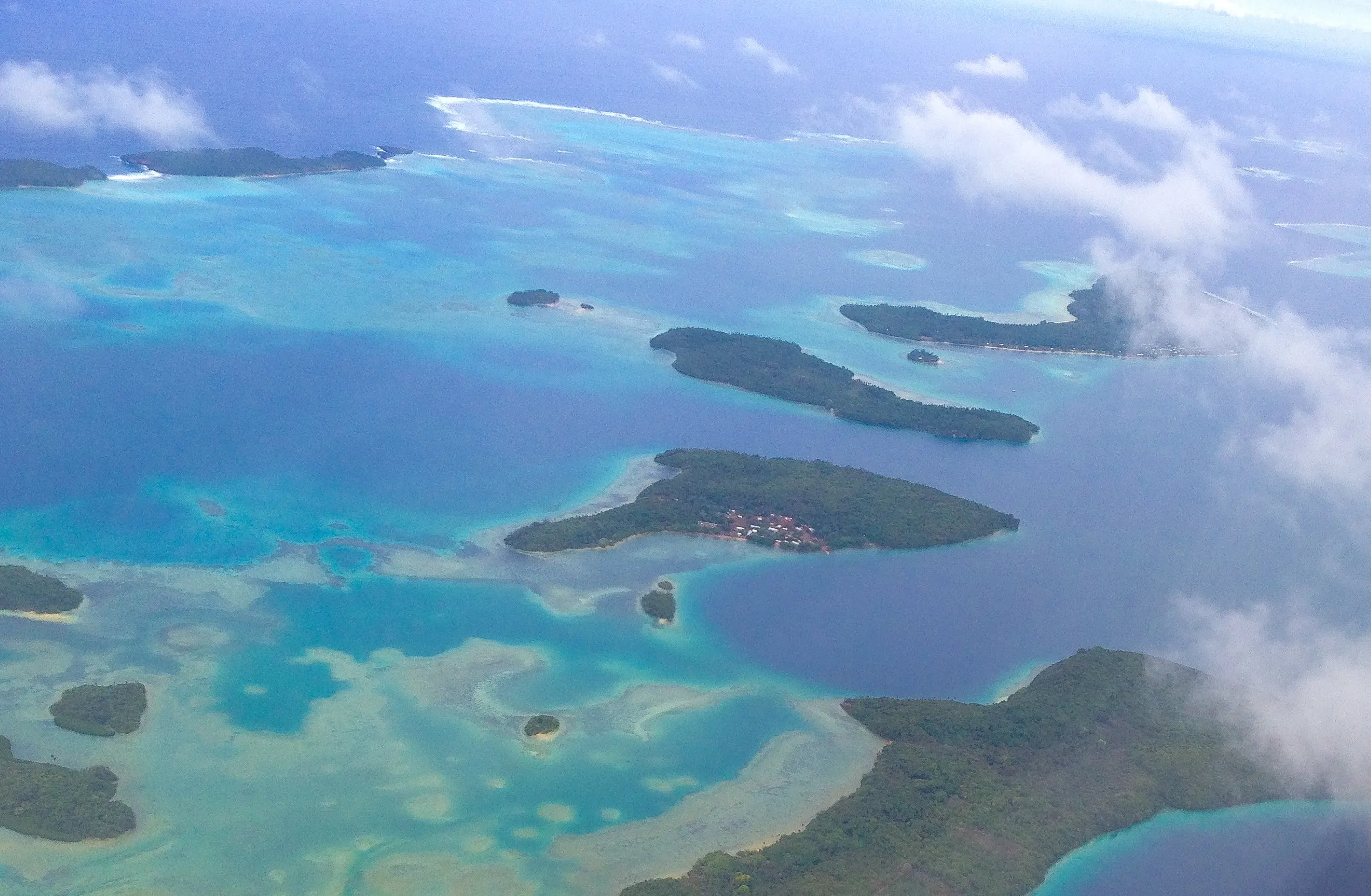
Vava'u is an archipelago in northern Tonga, made up of one main island, 'Utu Vava'u, and more than forty smaller islands, raised coral islands whose northern cliffs reach about 200 m. The group stretches about twenty kilometres east to west and about 25 km north to south. Neiafu, its only town, has some 5,000 inhabitants: it is the second-largest town in the country. The fjord-like Ava Pulepulekai channel, about ten kilometres long, leads to its harbour, nicknamed the Port of Refuge.
The archipelago is known for its clear water, humpback whales and anchorages. Isolation is part of the charm: you come here for the sea, not for nightlife.
Neiafu and the harbour
The archipelago's capital and its yacht harbour
Neiafu stretches along one of the most sheltered bays in the South Pacific. Every season, from June to October, several hundred yachts call here; the town is the official port of entry for yachts visiting the archipelago. You will find banks, a supermarket, a market, restaurants, cafés and excursion agencies. We do not illustrate it: it is described in text only.
Sights on foot
St Joseph's Cathedral overlooks the harbour. The Utakalongalu market sells fruit and fresh fish. About 2 km from the centre, Mount Talau National Park protects one of the last patches of original forest on the island: a trail of about 1 km leads to a viewpoint over the harbour, at about 130 m altitude.
A town without a beach
Neiafu has no beach. Neighbouring islands fringed with white sand are reached by boat, which is easy to arrange through agencies or directly with boatmen.
Humpback whales
Watching whales in sheltered waters
From about June to November, depending on the source, humpback whales come to give birth and mate in the calm waters of the archipelago, sheltered by a chain of islands and reefs; the heart of the season is between July and October. You can sometimes hear the males singing underwater. Excursions leave from Neiafu; Hunga Island, about half an hour by boat, is one of the areas where you see the most.
Respecting the animals
Watching, and sometimes entering the water to swim near whales, is regulated: it is done with licensed operators, in small groups and at a distance, following the guide's instructions. Never approach an animal on your own, especially a female with her calf. No trip is guaranteed; weather and sea decide.
Choose an operator that explains clearly the rules for respecting wildlife and let the animals decide the distance. The whales you meet are not tame.
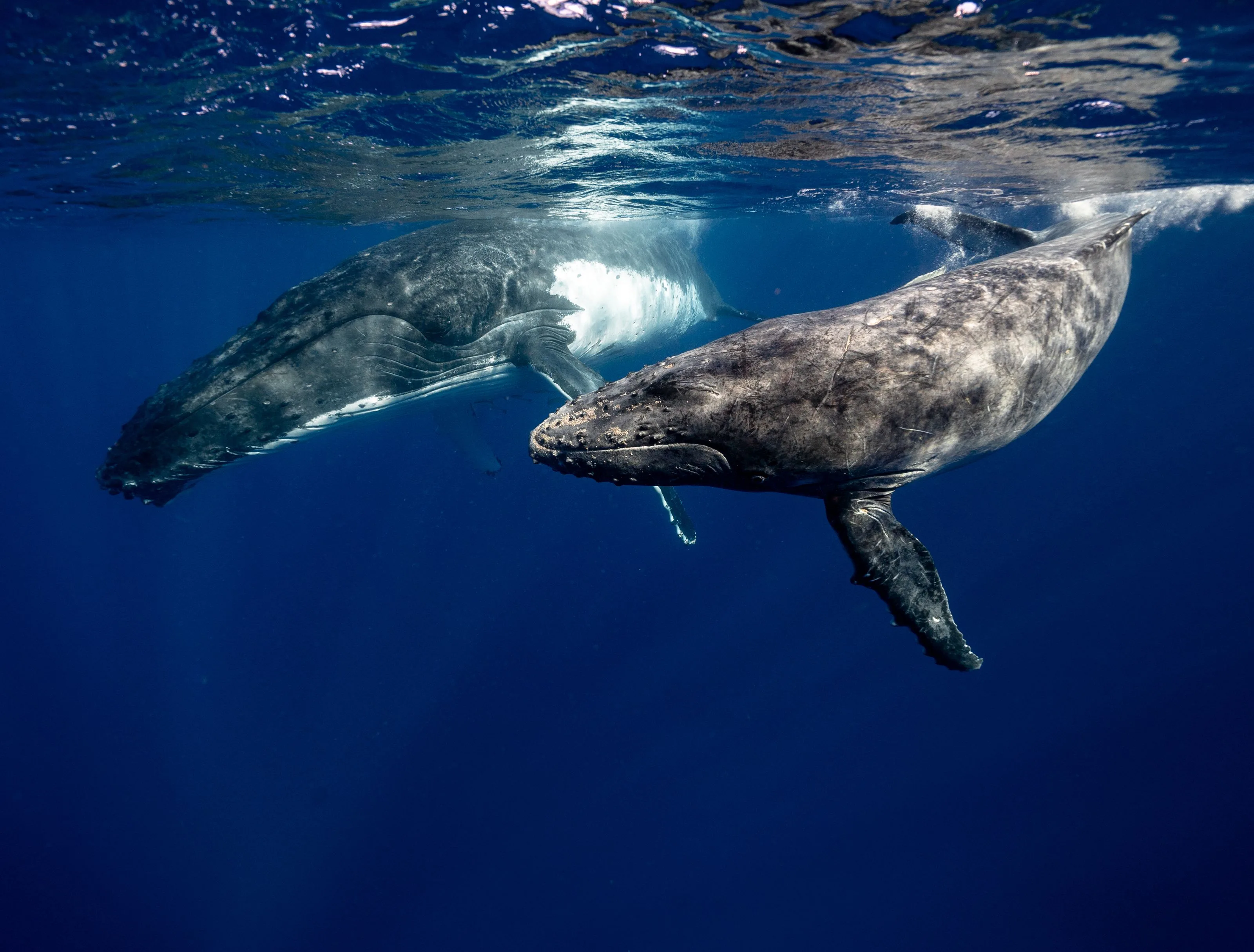
Two humpback whales
Two adults glide beneath the surface in deep-blue water. The image gives an idea of the size of these animals, which can reach about fifteen metres.
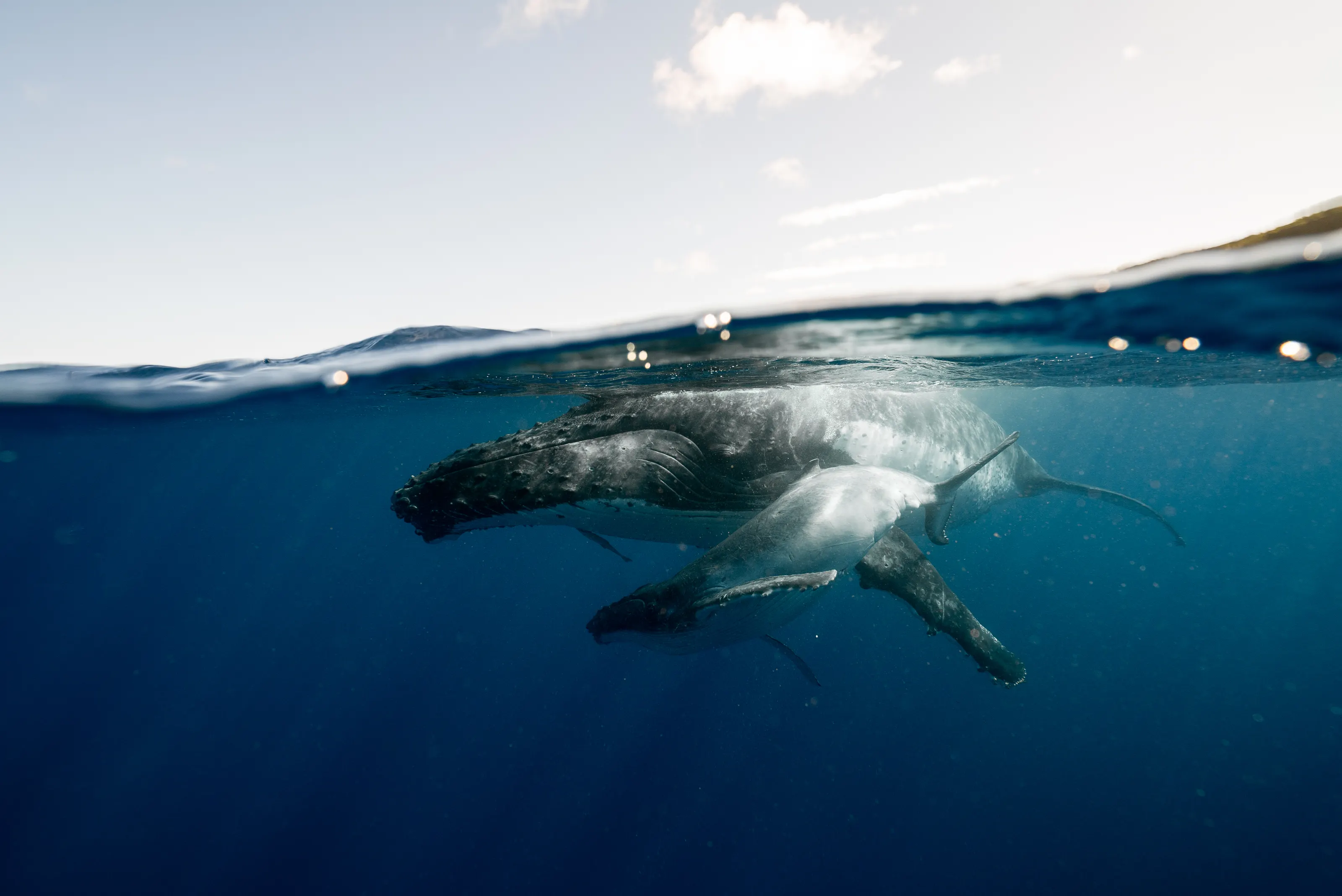
A whale and her calf
The mother and her young swim just below the surface: the calf stays close to her in the first months. This scene is typical of the season, when whales come to give birth in the archipelago.
Caves, snorkelling and diving
Swallows Cave and the clear waters
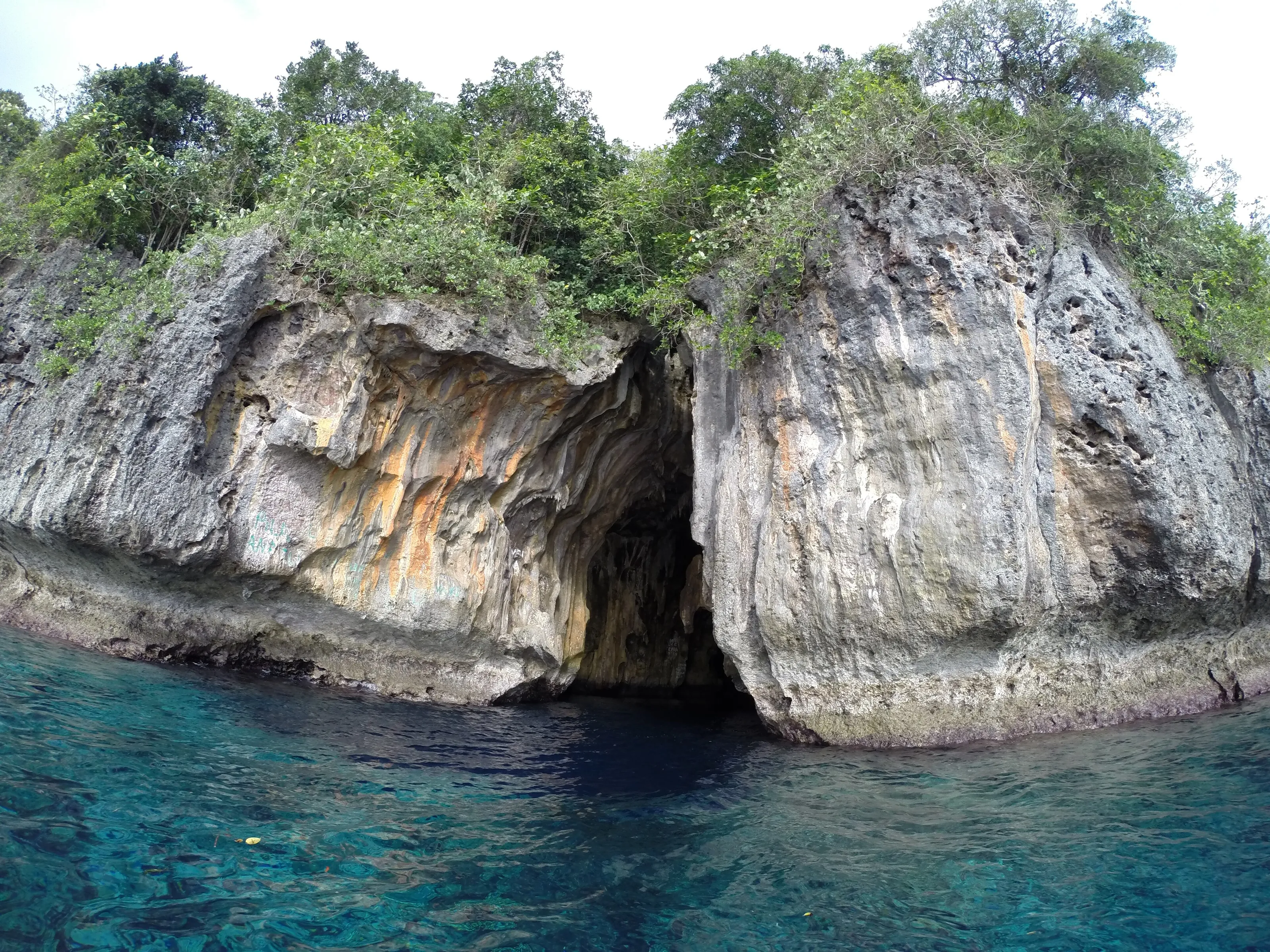
Swallows Cave
Swallows Cave, on Kapa Island, is cut into the cliff: you enter it by boat and often swim there with a mask and snorkel, in very clear water. It is one of the classic stops of day excursions. Another cave, Mariner's Cave, has an underwater entrance: a legend is attached to its name; it should only be visited with an experienced guide, because the underwater entrance is dangerous.
Snorkelling and diving
The waters of the archipelago are known for their visibility, which a travel guide says reaches about forty metres. Divers and snorkellers find hard and soft corals, walls, caves and arches. Several dive centres offer equipment and trips; ask about certification and gear.
Beaches and islets
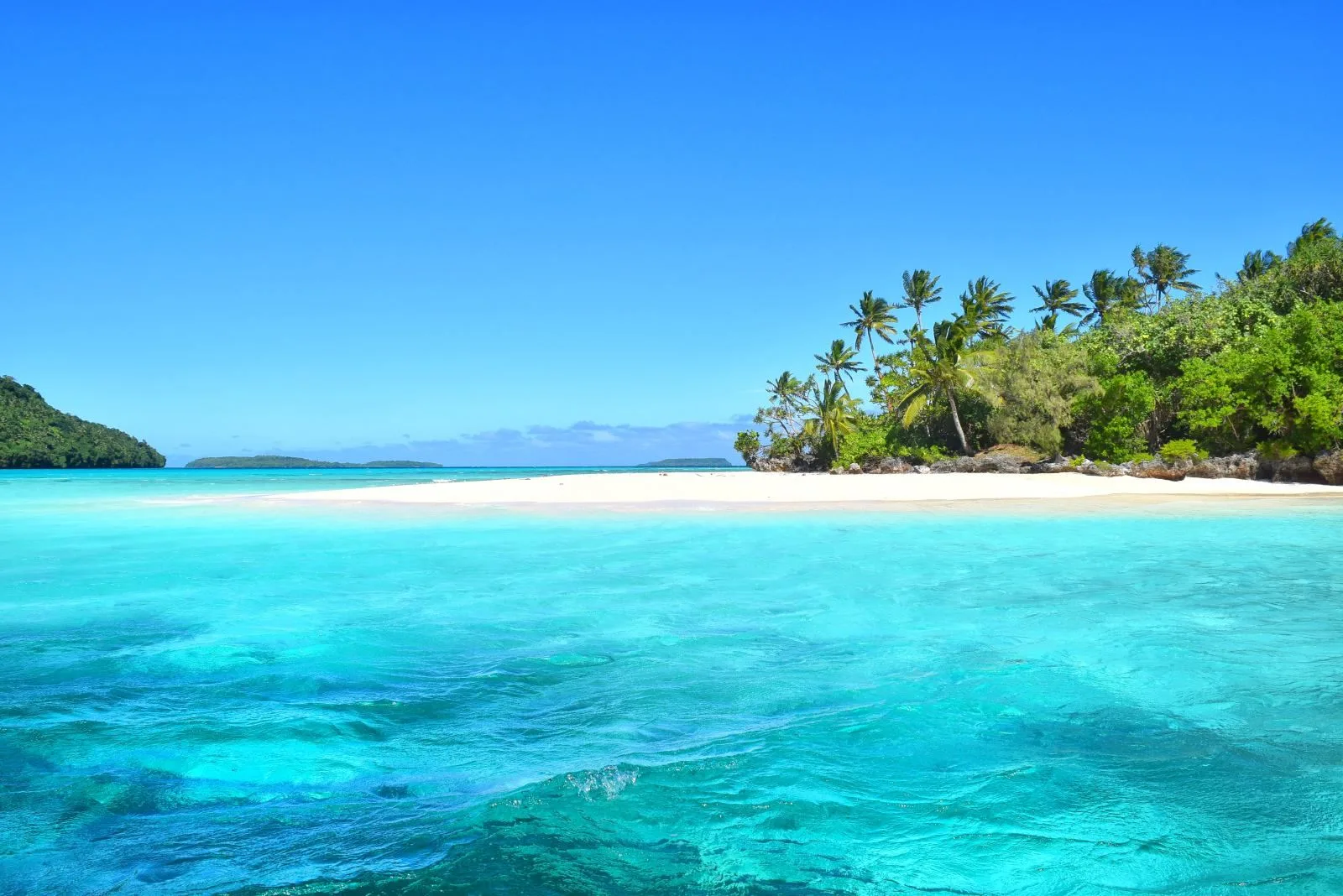
Around Neiafu, islets fringed with white sand and shallow lagoons offer empty beaches. Depending on the tide, some sandbanks appear and disappear: follow the boatman's advice. The sun is strong, so bring sun protection.
Swallows Cave
The entrance opens in a limestone cliff covered in vegetation: the walls show orange streaks and the intensely turquoise sea flows into the cave. Excursions stop here to swim.
A sandbank and a lagoon
White sand, a turquoise lagoon and an islet covered in palms evoke the islets of the archipelago. We cannot say exactly where this image was taken.
Sailing and the sea
A great playground for cruising
Vava'u is one of the most popular cruising destinations in the South Pacific: the islands are close together, the anchorages sheltered and the water clear. You can charter a sailboat with or without a skipper, for a few days or more, or book a day trip. We do not name companies; compare several offers and check the insurance and the experience required.
Other activities
Sea kayaking lets you explore the islands at your own pace, big-game fishing targets marlin and tuna, and kitesurfing is practised on some stretches of water. Before any trip to sea, check the weather and follow the safety instructions.
Tongan culture
A Polynesian kingdom, an island of traditions
Tonga is a Polynesian kingdom; Vava'u has a special place in its history: it was here that King George Tupou I promulgated the Vava'u Code in 1839, one of the country's first legal texts. Fragments of Lapita pottery show that Polynesians have lived in the archipelago for close to 3,000 years.
Customs and respect
Sunday is a day of rest and church: most shops and activities are closed, and choir singing is a highlight. Dress modestly in villages and at church, and ask before photographing people.
Crafts and vanilla
Women of the archipelago weave baskets and mats from pandanus and make tapa, a bark cloth. Vava'u is a vanilla-growing area, a crop that demands a great deal of hand labour. Kava, a traditional drink, is part of ceremonies and social life; take part with respect.
Food
Raw fish, umu and tropical fruit
Raw fish and local dishes
The emblematic dish is 'ota 'ika, raw fish marinated in lime juice and coconut milk, served fresh. The catch of the day, grilled or steamed, is the basis of many meals.
Umu and feasts
The umu is an earth oven in which meat, fish and root vegetables cook under leaves; Tongan feast meals often include it. Several places host evenings with a traditional meal and dancing: ask about days and booking.
Fruit, market and cafés
Neiafu's market sells tropical fruit, root vegetables and fish. Cafés and restaurants around the harbour serve local food, pizzas and traveller dishes; local vanilla flavours cakes and coffee.
Getting around
On foot, by boat and by taxi
On the main island
Neiafu is walkable. Taxis cover the villages of the main island, and you can rent bicycles, scooters or boats from accommodations and agencies. There is no large public transport network: allow time for getting around.
Between the islands
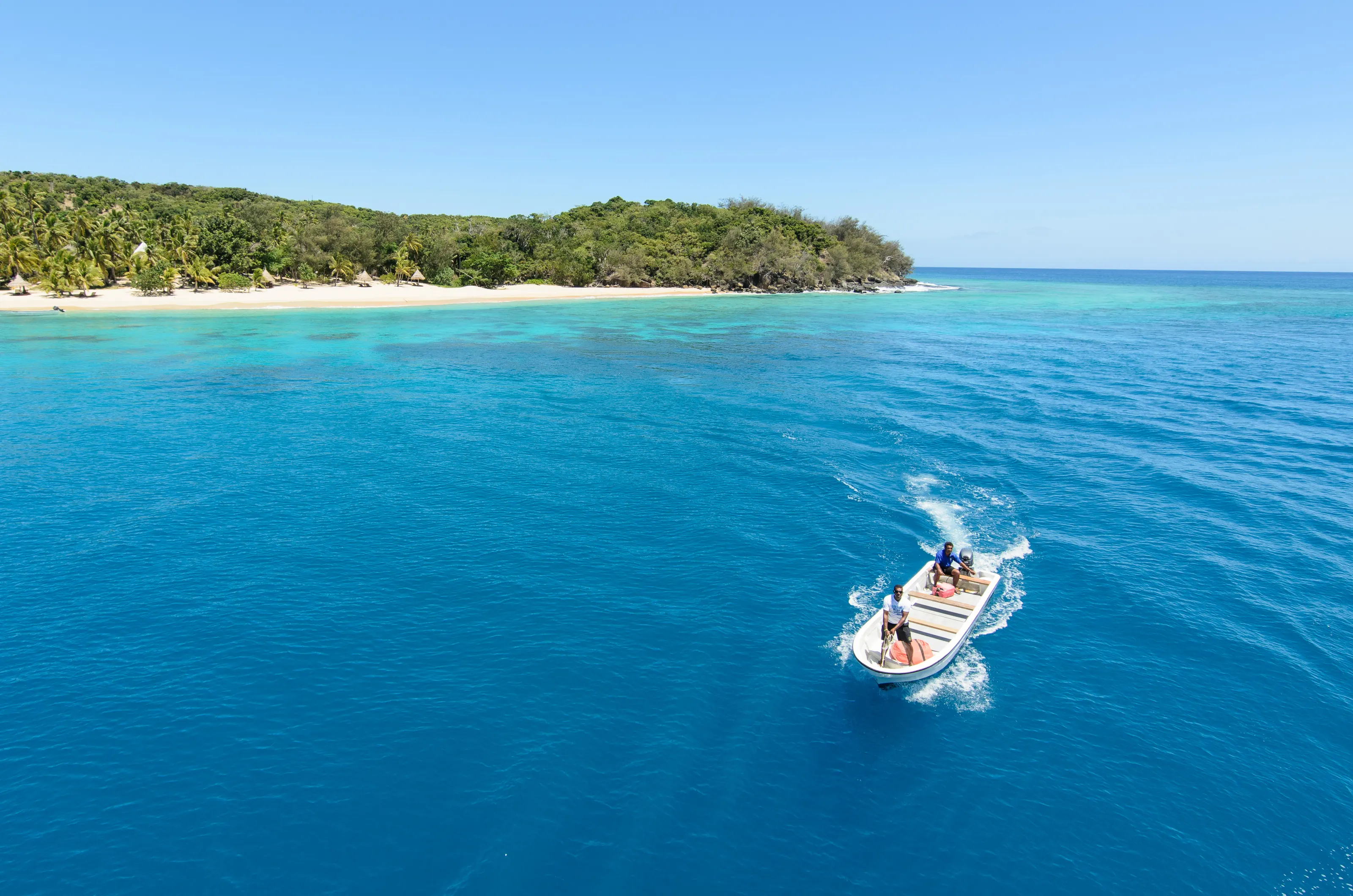
Boats are the normal means of transport: water taxis, day excursions, cruising sailboats. Times and prices are negotiated case by case; check the safety of the boat and the life jackets.
Connectivity and payment
Connections are slow and concentrated in a few cafés and accommodations. The currency is the pa'anga; cash is useful and cards are not accepted everywhere: ask before you go.
Budget and precautions
A medium to high budget and sea precautions
Price level
Vava'u is a medium to high-budget destination compared with many countries: everything imported is expensive, and boat excursions weigh on the budget. You can limit spending with simple accommodation and by eating at the market. We give no figures, as we could not cross-check them on two independent sources.
Flights
The flight remains the most variable item, especially with the domestic connection. SniperAir tracks prices to VAV and compares them with the route's history, but it does not sell or book tickets.
Entry requirements and precautions
Entry requirements for Tonga depend on your nationality: check them on official websites. Also consult the official advice of your country of departure. Medical care is limited on the archipelago: travel insurance with evacuation cover is advisable. At sea, follow instructions, watch the weather and cyclone warnings in the wet season.
When to go
Dry season from May to October, wet season and cyclones from November to April
Cool, dry season (May to October)
This is the southern winter: temperatures are pleasant, in the order of 24 °C in June, with south-easterly trade winds. It is the high season, for humpback whales and yachts.
Whale peak (July to October)
The heart of the season for watching humpback whales in the calm waters of the archipelago.
Hot, wet season (November to April)
This is the southern summer: hotter, around 29 °C in January, more humid, with thunderstorms and a risk of cyclones. Few visitors come, and many agencies and restaurants close.
In between (April-May, November)
The transitions can be pleasant, but the weather is less predictable.
Tonga is in the southern hemisphere: the seasons are reversed compared with Europe. The European winter corresponds to the archipelago's summer, hot and humid, with the cyclone period; the European summer corresponds to the southern winter, cooler and dry. For whales and sailing, aim for July to October; check the weather before booking, as cyclones can disrupt flights and excursions.
By length of stay
What to do in Vava'u depending on how long you stay
The essentials
Neiafu, a snorkelling trip with Swallows Cave and a sandbank, and a day with humpback whales in season.
Islands and culture
A sailing cruise of a few days, a walk up Mount Talau and a traditional meal.
Longer
Diving, kayaking between the islands and stops in the villages, or a stay in Nuku'alofa on Tongatapu.
In pictures
Vava'u in pictures
You might also like
Similar destinations
FAQ
Frequently asked questions about flights to Vava'u
How do I get from Vava'u Airport to Neiafu?
The airport (VAV), at Lupepau'u, is a few kilometres from Neiafu, roughly ten minutes by road by taxi or shuttle. International flights generally arrive at Tongatapu, then a domestic connection serves Vava'u: check the timetables.
When is the best time to visit Vava'u?
From May to October, in the dry season, with humpback whales mainly from July to October. From November to April it is the wet season, with a risk of cyclones and many services closed.
Is Vava'u expensive?
The budget is medium to high: imported goods and boat excursions weigh on it. Simple accommodation and meals at the market help limit spending.
How long should I stay in Vava'u?
Three to four days for the essentials (Neiafu, a snorkelling trip, whales in season); a week to add a sailing cruise and walks.
How do I get around Vava'u?
On foot in Neiafu, by taxi on the main island, and above all by boat between the islands, with water taxis, day excursions or cruising sailboats.
What should I eat in Vava'u?
'Ota 'ika (raw fish in coconut milk), the catch of the day, tropical fruit and, if the occasion arises, a meal cooked in an umu; local vanilla flavours desserts.
How much does a flight to Vava'u usually cost?
The price depends mainly on your departure city, the period and the booking date. The "opportunities" section above shows real examples of prices already detected by SniperAir for this destination.
How do I get alerted when a flight to Vava'u drops below my budget?
Create an alert profile with your departure airport, {n} as the destination and your maximum budget. You are notified automatically as soon as a matching fare is detected.
Ready to head to Vava'u?
Set your budget and let SniperAir monitor fares for you.
Create my alert