
Cheap flights to Saint-Denis
Set your departure airport and maximum budget: SniperAir tracks prices to Saint-Denis and alerts you the moment a deal matching your criteria appears.
Quick summary
Country
Réunion
Continent
Africa
Airport
RUN
Currency
Euro (EUR)
Time zone
UTC+4 (no daylight saving time)
Deals already spotted to Saint-Denis
Real flight examples detected by SniperAir, with their reference price.
Loading examples…
Why track Saint-Denis with SniperAir
You do not need to compare prices every day
Choose your departure
Enter your departure airport and your maximum budget for a flight to Saint-Denis (RUN).
SniperAir keeps watch
Our systems continuously compare new prices with the real price history of the route. SniperAir monitors prices and alerts you: it does not sell or book tickets.
You receive an alert
As soon as a price matches your criteria, you are notified, without having searched for anything yourself.
Airport and getting into town
An airport about ten kilometres east of the centre
La Réunion Roland-Garros (RUN)
Roland Garros Airport, formerly Gillot, is the island's main international airport. It is in Sainte-Marie, 7 kilometres (4 miles) east of Saint-Denis according to Wikipedia (EN), 8 km according to Wikivoyage (EN, DE) and about ten kilometres according to German Wikipedia and our country sheet. Air France and Air Austral fly daily to Paris and other destinations in France; there are no direct flights from other European countries, but connecting flights from Mauritius and other regional hubs. Paris is about 9,345 km away, roughly ten hours' flying time (French Wikipedia).
Distances differ between sources (7, 8 or 10 km). Wikivoyage calls taxis expensive and we publish no fares: check the trip before you travel.
Saint-Denis is the capital of Réunion, on the north of the island, on a coastal strip backed by the slopes of the Piton des Neiges massif. With 155,634 inhabitants at the 2023 census (French and German Wikipedia) it is the largest city in France's overseas territories and the island's main economic hub. The highest point of the commune is the Roche Écrite, at 2,276 m.
From the airport
A Car Jaune shuttle links the airport with the central bus station, L'Océan, near the Barachois, in about 20 minutes (Wikivoyage EN and DE). Taxis (expensive according to Wikivoyage) and several car rental companies are available on site. Check the shuttle timetable before you go, as it changes.
French territory
Réunion is part of France and of the European Union, but not of the Schengen area. Entry rules depend on your nationality and where you travel from: check the official sites before you book.
Landmarks
A cannon-lined waterfront, colourful churches and Creole villas
Central Saint-Denis is a grid inherited from the plan drawn in 1777 by Chevalier Banks (French and German Wikipedia). The main sights line up along Avenue de la Victoire and Rue de Paris, close to one another: Wikivoyage (EN, DE) recommends visiting them on foot. The contrast between restored buildings and weathered facades is a feature of the centre.
Saint-Denis Cathedral
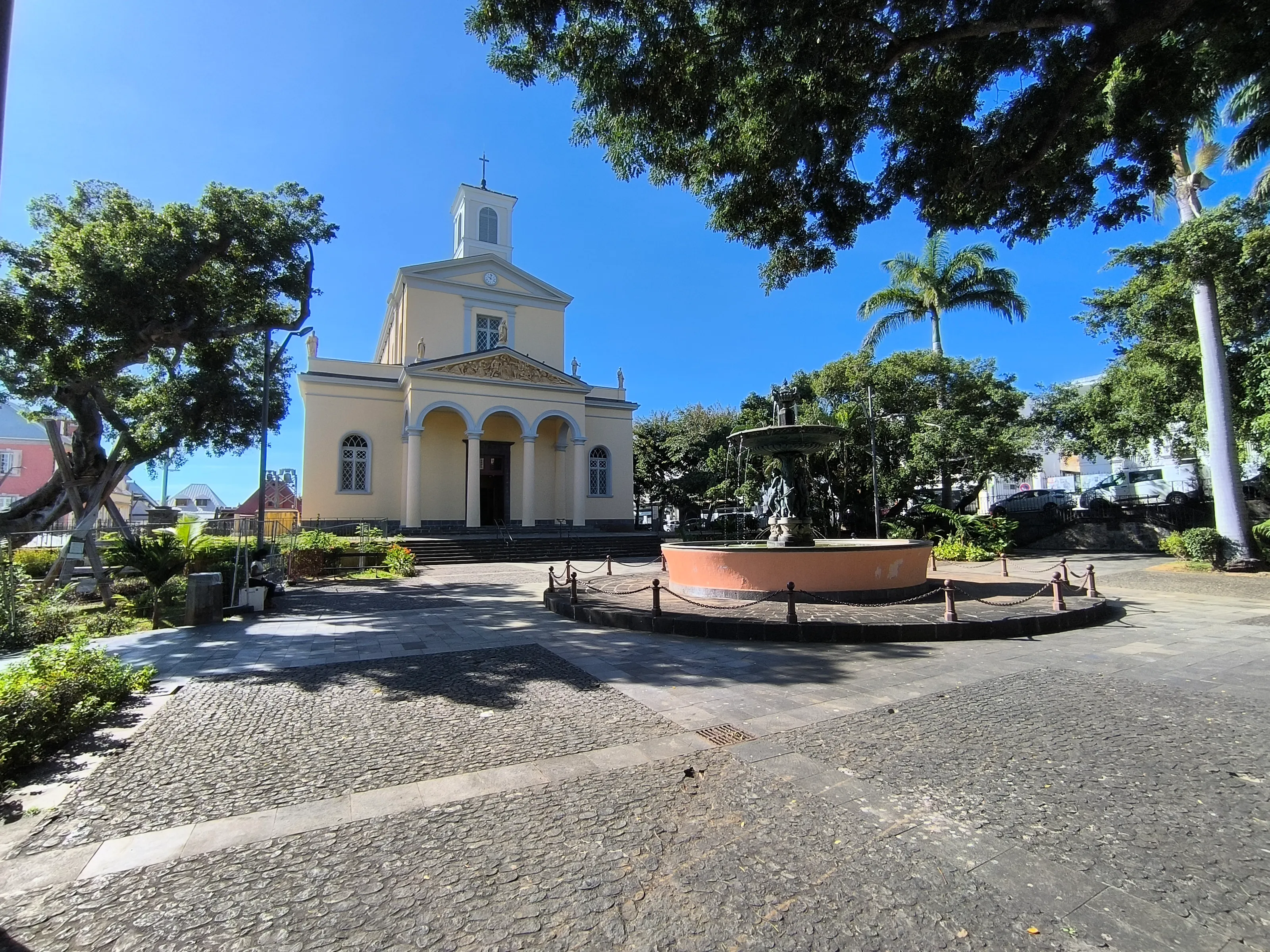
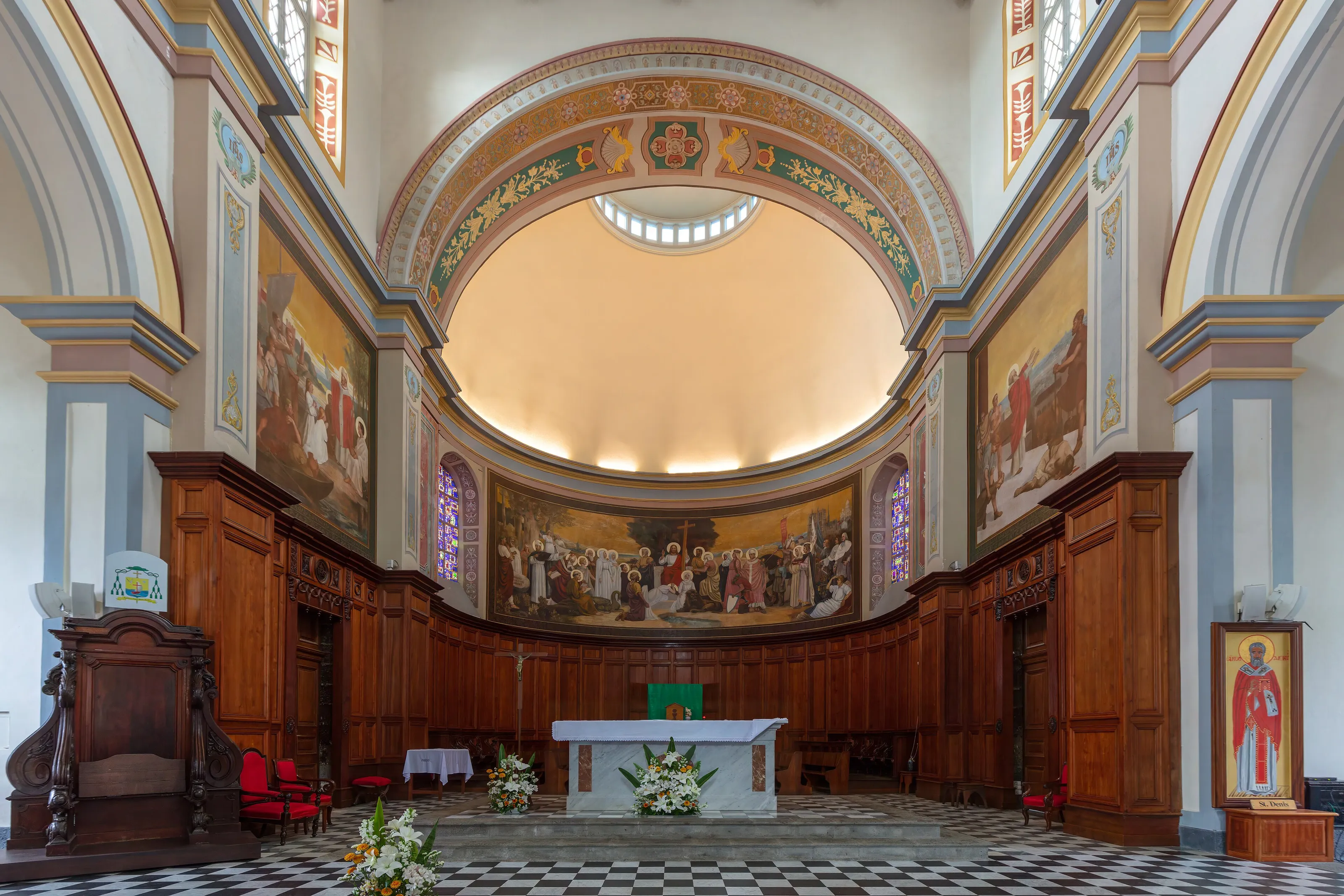
Built between 1829 and 1832 according to Wikivoyage (EN and FR) and listed as a historic monument, it became a cathedral in 1850 and was extended between 1856 and 1860. Its pale yellow facade overlooks a paved square with a fountain, a sober setting that contrasts with the painted interior. It stands on Rue de la Victoire, at the corner of Rue Alexis de Villeneuve.
Notre-Dame-de-la-Délivrance
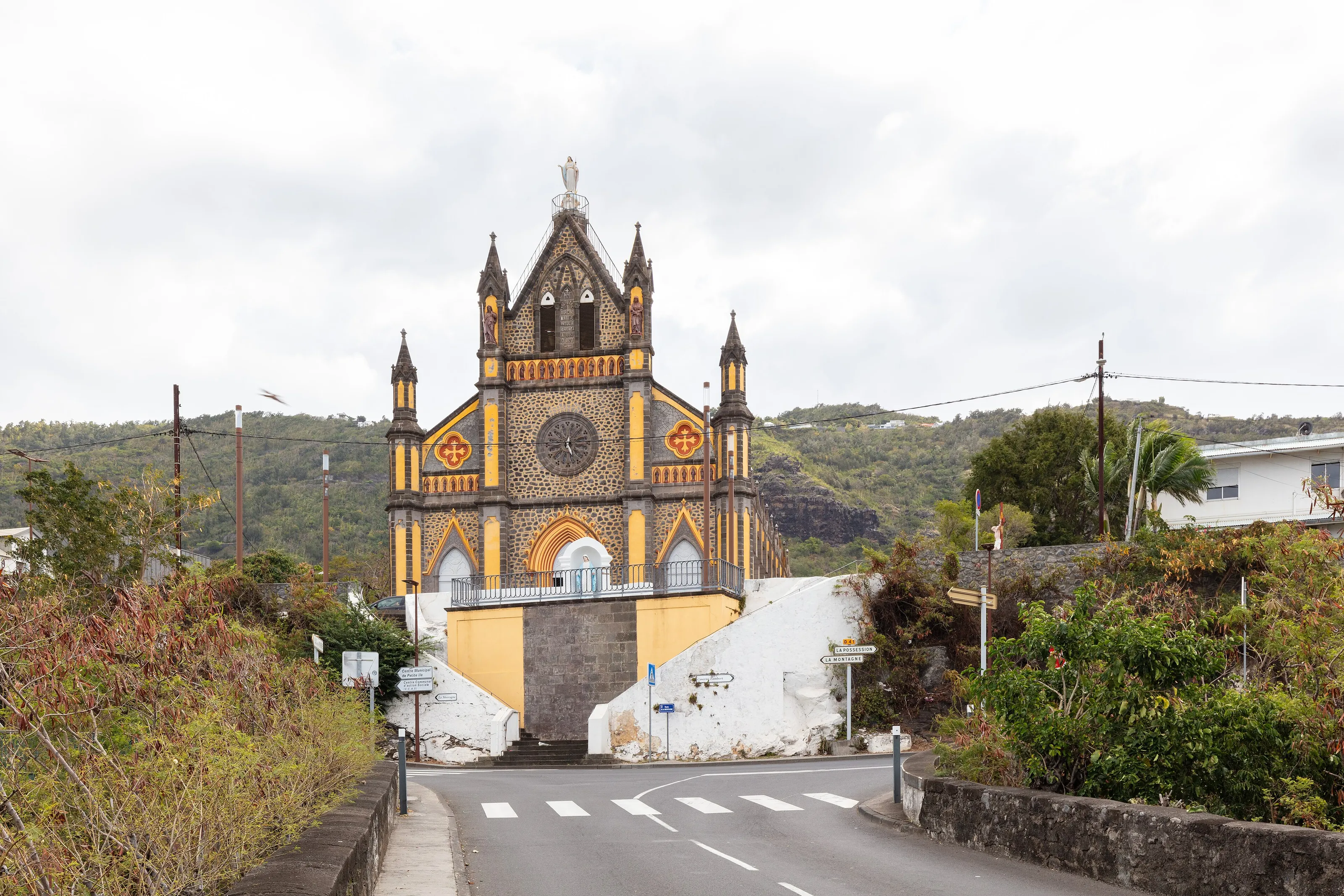
Built from 1893 to 1897 or 1898 depending on the source, this neo-Gothic church can be recognised from afar by its yellow and grey facade, which sometimes serves as a postcard motif (Wikivoyage EN). The interior is even more colourful. It is a listed monument on Place de la Délivrance, slightly west of the centre and the Saint-Denis River.
The Barachois
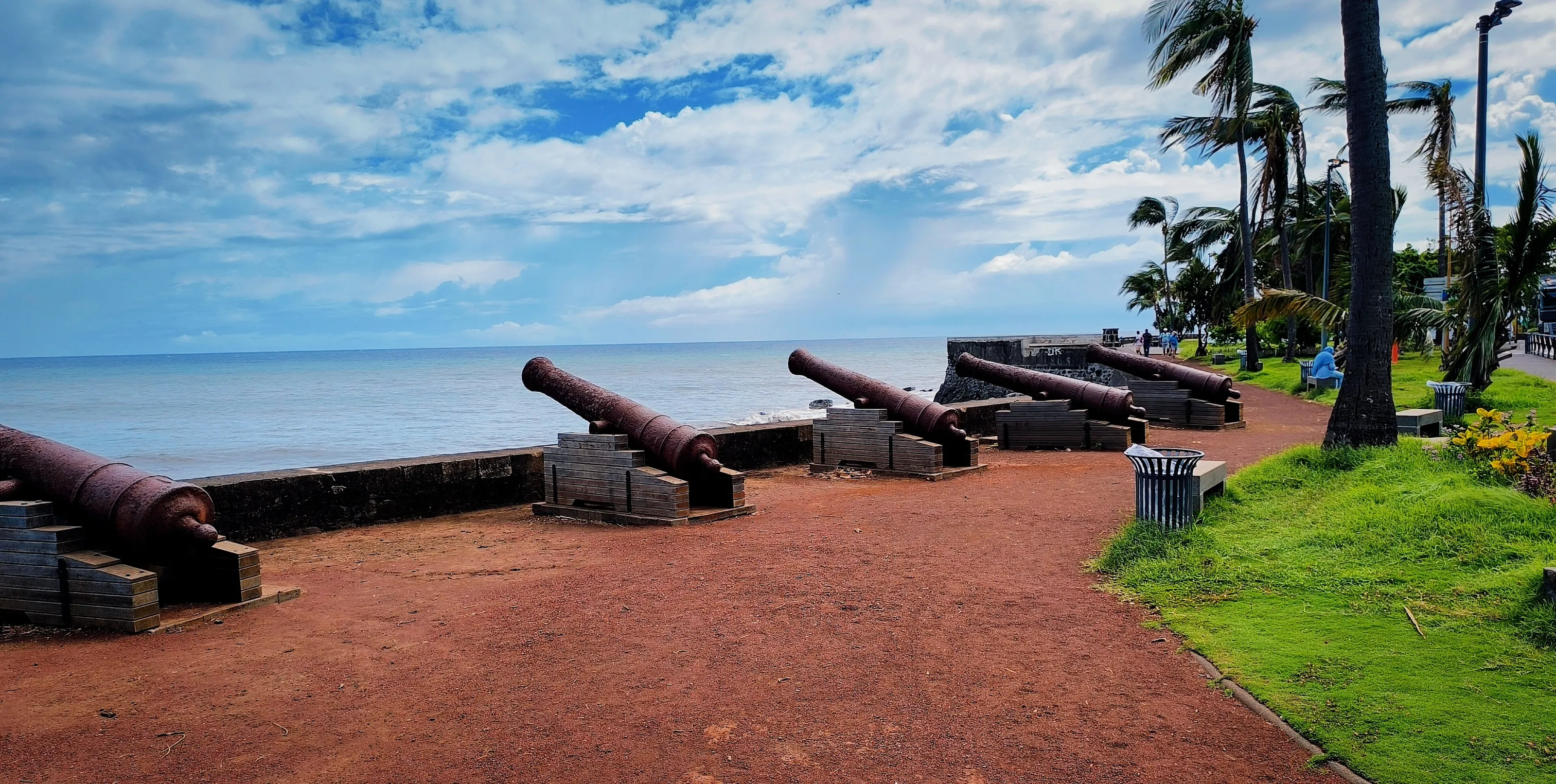
The waterfront at the start of Avenue de la Victoire takes its name from a small harbour (a 'barachois'). Its battery of cannon dates from the early 19th century, when the island feared a British invasion during the Napoleonic wars (Wikivoyage EN, DE). There are monuments to the Réunion-born aviator Roland Garros, to Governor Mahé de La Bourdonnais and to General de Gaulle.
The coast below the mountain
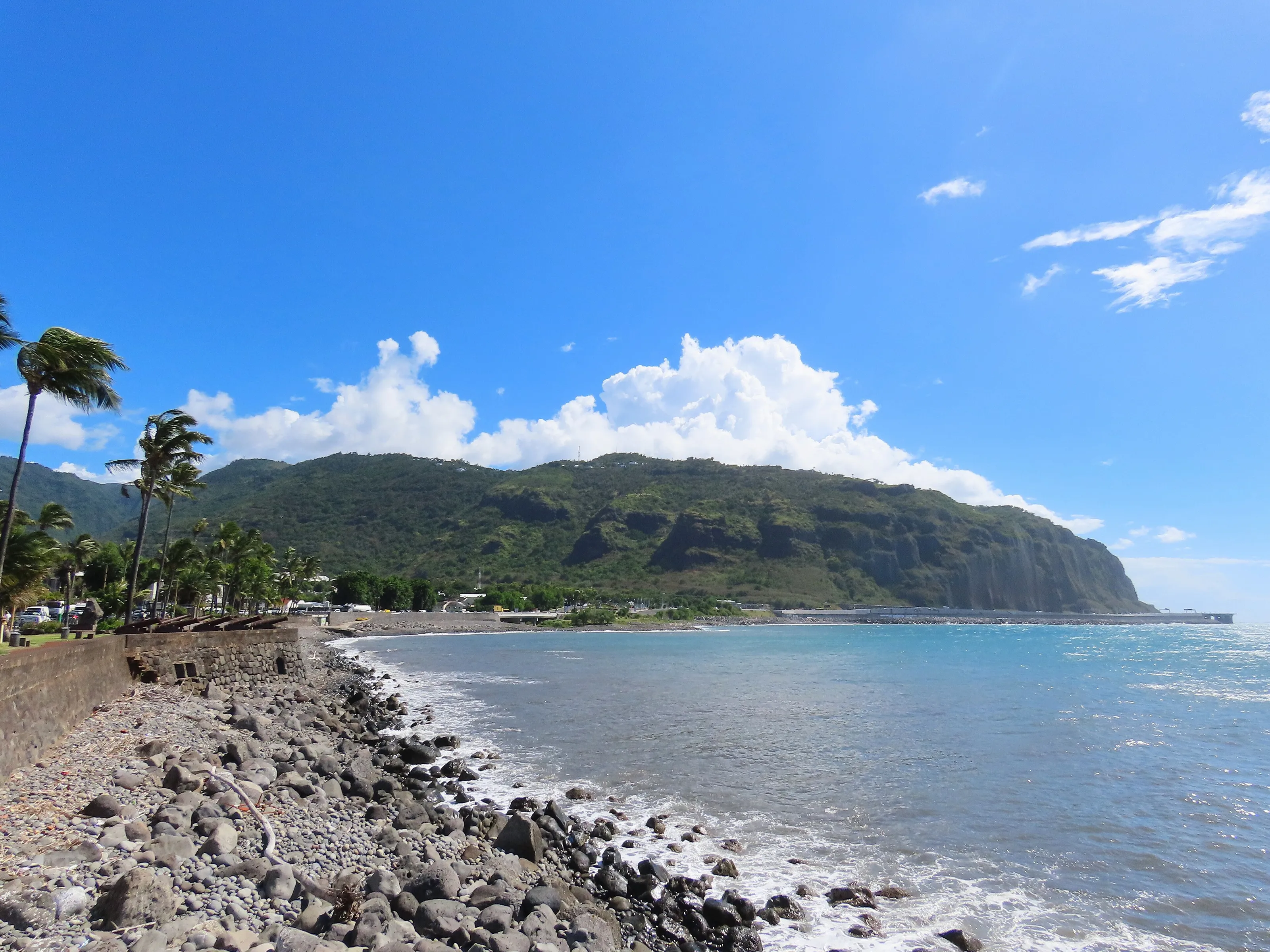
West of the Barachois, the pebble shore continues at the foot of a green cliff. The coastal road that links Saint-Denis with La Possession between an unstable cliff and the sea is exposed to rockfall and can be reduced to two lanes when it rains (Wikivoyage EN, ES and DE). Swimming is not the town's strong point: you come here for the promenade rather than for the beach.
The Creole villas of Rue de Paris
Large Creole villas line Rue de Paris: the listed Villa Déramond-Barre, birthplace of Raymond Barre (French Wikipedia, Wikivoyage FR), the Villa du Département (Maison Mas) and the Villa du Général. The Banque de La Réunion, completed in 1858, is the oldest operating enterprise on the island according to Wikivoyage (EN).
A town of every faith
All of the island's major religions are represented: cathedral, churches, Hindu temples such as the Kalikambal temple, Chinese pagodas (Lisi Tong, Guan Di) and the great Noor al Islam mosque. Wikivoyage (EN) says the mosque is open to men and women outside prayer hours, with no shoes. Sources disagree on its date of construction, so we do not publish one.
The Jardin de l'État
At the end of Rue de Paris, this historic botanical garden, created between 1767 and 1773, covers about 5 hectares (Wikivoyage EN). Fountains, palms and shaded paths make it the place to catch your breath in the middle of town; the natural history museum stands within its grounds.
Museums and culture
Modern art, natural history and a historic botanical garden
Saint-Denis is the cultural hub of the island. The pointers below come from Wikipedia (FR, DE) and Wikivoyage; we give no prices or opening times because they vary, so check them before you visit.
Léon Dierx Museum
Housed in the Villa Manès, the former residence of the bishops, on Rue de Paris, it holds an important collection of modern art: works by local artists alongside those of Picasso, Renoir, Gauguin, Vlaminck or Bourdelle, partly from the donation of the art dealer Ambroise Vollard (French Wikipedia, Wikivoyage EN and DE). Sources give 1911 or 1912 for its opening, so we simply call it an early 20th-century museum.
Natural History Museum
In the heart of the Jardin de l'État, the museum presents the fauna and flora of the island and the Indian Ocean (French Wikipedia, Wikivoyage FR).
Artothèque
At 26 Rue de Paris, this contemporary art space changes its exhibitions at regular intervals; Wikivoyage (EN) says admission is free, to be confirmed on site.
Stage and festivals
The town hosts several music festivals, notably Électropicales and Kaloo Bang (French Wikipedia), and a Chinese festival, Guan Di, in August (Wikivoyage FR and EN). The Théâtre du Champ-Fleuri and the Théâtre Vollard round out the offer.
Food and drink
Cari, rougail saucisse, samosas and the town-centre markets
Specialities
Réunion cooking is built around cari (Creole curry), rougail saucisse and massalé, with starters of samosas, bouchons and chilli fritters, and sides of rice, beans, leafy greens and achards (the island's official tourist site, via our country sheet). Rum arranged with fruit and spices, and punch, end the meal.
Markets
The Grand Marché and the Petit Marché, on Rue Maréchal Leclerc and Rue Sainte-Anne, are the shopping heart of the centre; the Camélias market and the Chaudron street market complete the offer (Wikivoyage FR, DE). A pedestrian zone, the Carré Piéton, surrounds Rue Maréchal Leclerc.
Quick bites
Around the Barachois, stalls sell the local sandwich in all its forms (Wikivoyage DE). Higher-end restaurants are often found in hotels. We do not recommend a specific address.
In the evening
Saint-Denis has a varied nightlife, from a casino to cinemas, theatres, bars and clubs, spread around the centre and the Barachois (Wikivoyage DE). On Sundays the town is almost deserted, so plan dinner ahead.
Getting around
On foot in the centre, Citalis buses and Cars Jaunes for the island
On foot
The centre is very compact: from the sea to the west of the Jardin de l'État everything is covered on foot along Avenue de la Victoire and Rue de Paris. During the week traffic is heavy and parking scarce; on Sundays many shops are closed (Wikivoyage EN, DE).
City buses and cable car
The Citalis network serves the town and neighbouring communes from 6 am to 8.30 pm (French Wikipedia). An urban cable car, Papang, has linked the Chaudron district with Bois-de-Nèfles since 2022 according to French Wikipedia. Timetables and routes change, so check them.
Cars Jaunes
To reach other towns, the Cars Jaunes leave from L'Océan station: the west coast as far as Saint-Pierre in about an hour and a half, the east coast as far as Saint-Benoît (Wikivoyage EN, DE). Buses start early on weekdays and run much less on Sundays.
Rental car
A rental car is very handy for leaving town, especially for the volcano and the cirques. The coastal road remains exposed to rockfall and closures, so follow official instructions before you drive.
Budget and precautions
French price levels, with a high cost of living
Price level
The currency is the euro. French Wikipedia mentions a high cost of living in Réunion, and prices are close to French levels, with imported goods costing more. We do not publish price ranges because we could not cross-check them with two independent sources; museum fees and shuttle fares should be checked before your visit.
Flights
The flight remains the most variable item in the budget, because the island is far from everywhere. SniperAir monitors prices to RUN and compares them with the route's history, but it does not sell or book tickets.
Caution and cyclones
In town, usual urban caution applies: keep valuables discreet, especially in the evening, and check your own government's official advice. The Indian Ocean cyclone season runs from November to April; follow forecasts, keep your dates flexible and consider travel insurance.
When to go
A dry austral winter from May to November, a hot wet summer
May to August
The austral winter, dry and cooler, with trade winds; generally the recommended period to visit and hike.
September to November
The driest months, with September and October the least rainy (French Wikipedia); the heat builds gradually.
December to February
The austral summer: hot, humid and very rainy, with thunderstorms; January to March are the wettest months.
March to April
The end of the hot season and of the cyclone period (until April); showers are still frequent.
Saint-Denis has a humid tropical climate: about 25 °C on average, with a summer maximum of 35 °C and a winter minimum of 13 °C, and around 1,700 mm of rain a year, most of it in the austral summer (French Wikipedia). Mornings are usually clear, and cloud builds up during the day. Spanish Wikipedia gives slightly different values, so we publish broad windows.
By length of stay
What to do in Saint-Denis depending on how long you stay
The centre on foot
The Barachois, the cathedral, Notre-Dame-de-la-Délivrance, Rue de Paris and its villas, the Jardin de l'État, with a Creole lunch at the Grand Marché.
Museums and cultures
The Léon Dierx museum, the natural history museum, the mosque, pagodas and temples, with an evening concert or play.
Beyond the town
The Roche Écrite from Le Brûlé, the cirques (Salazie, Mafate, Cilaos) and the volcano by car or on foot, then the west coast and its beaches.
In pictures
Saint-Denis in pictures
You might also like
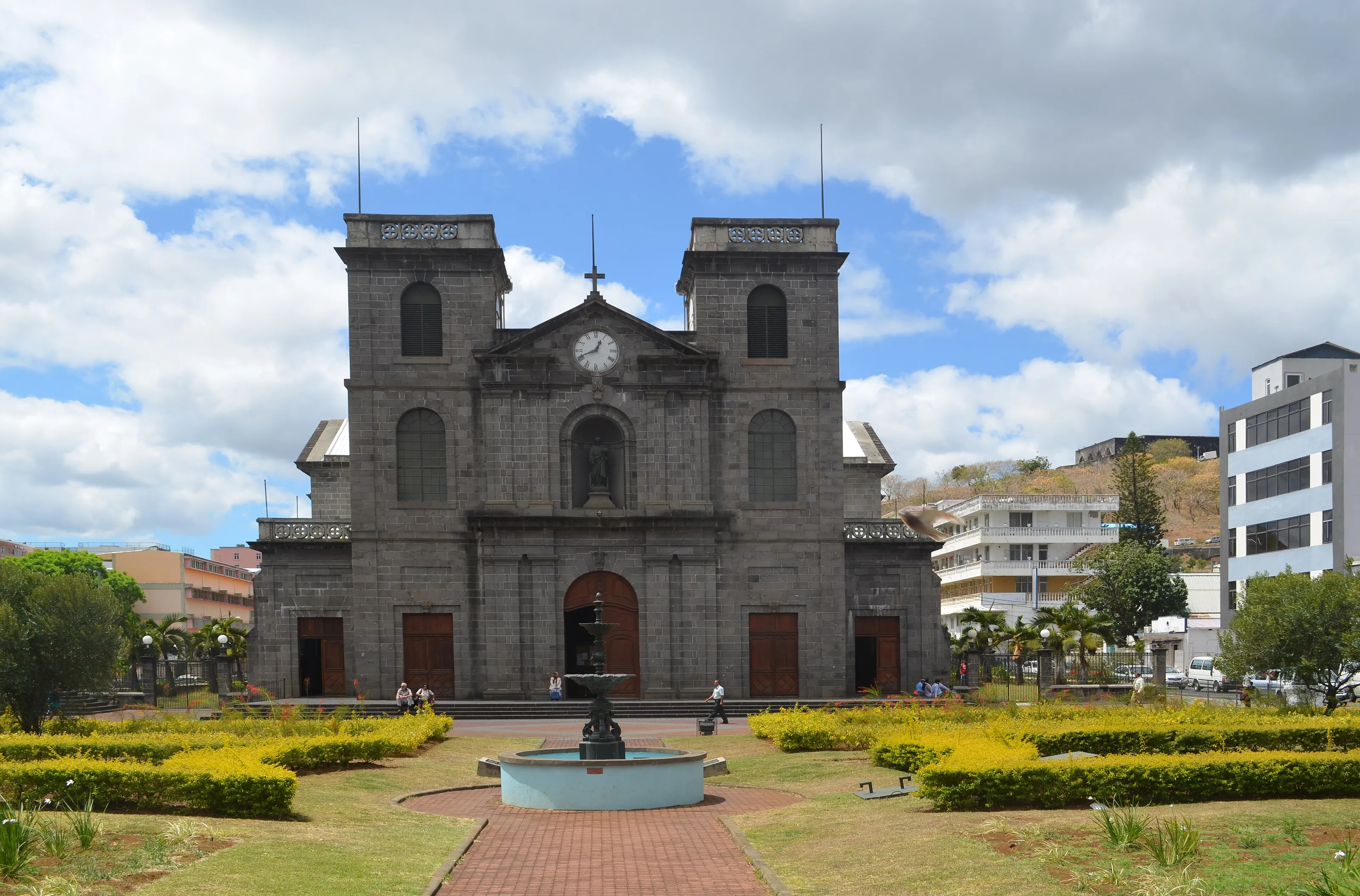
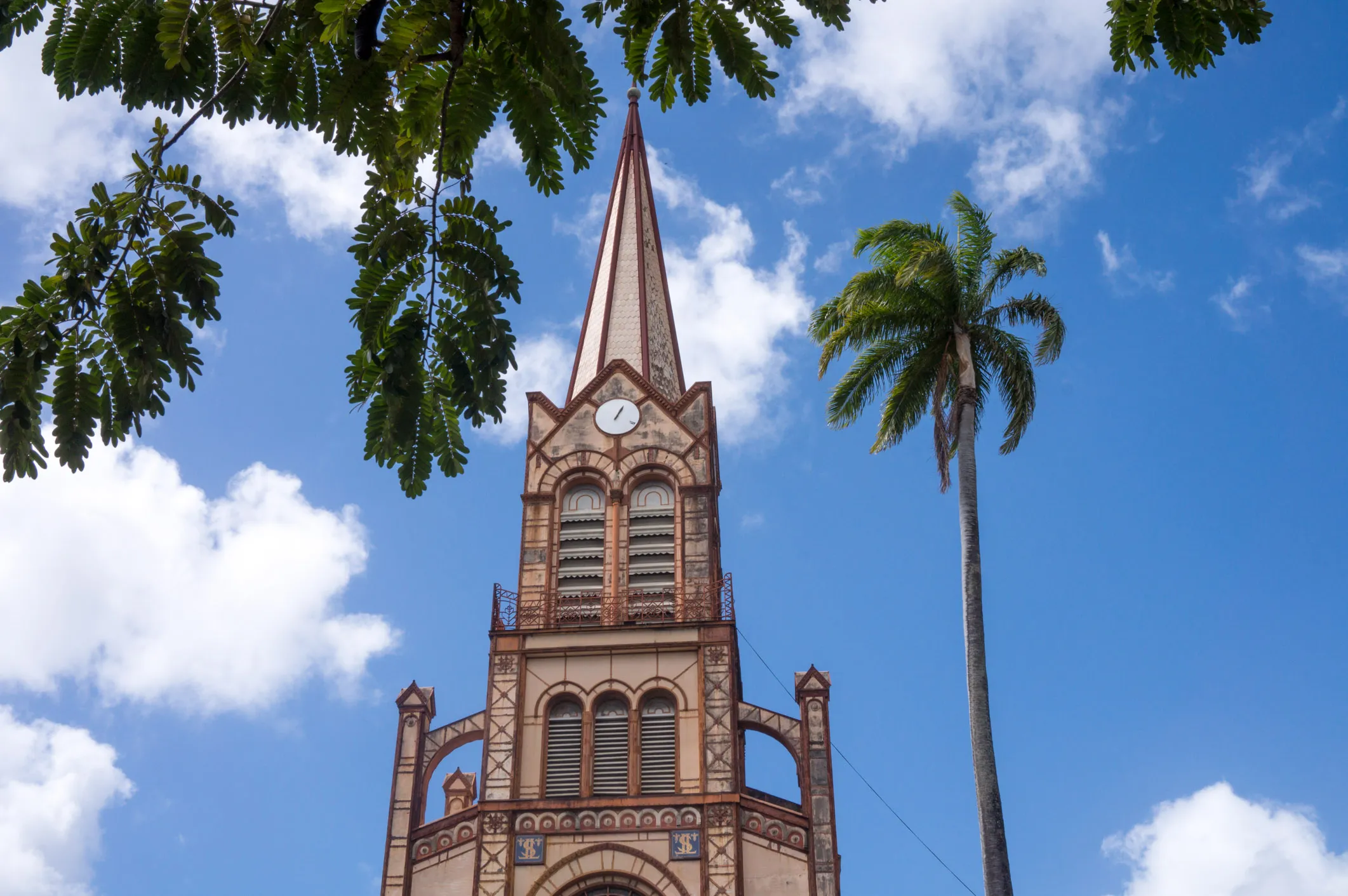
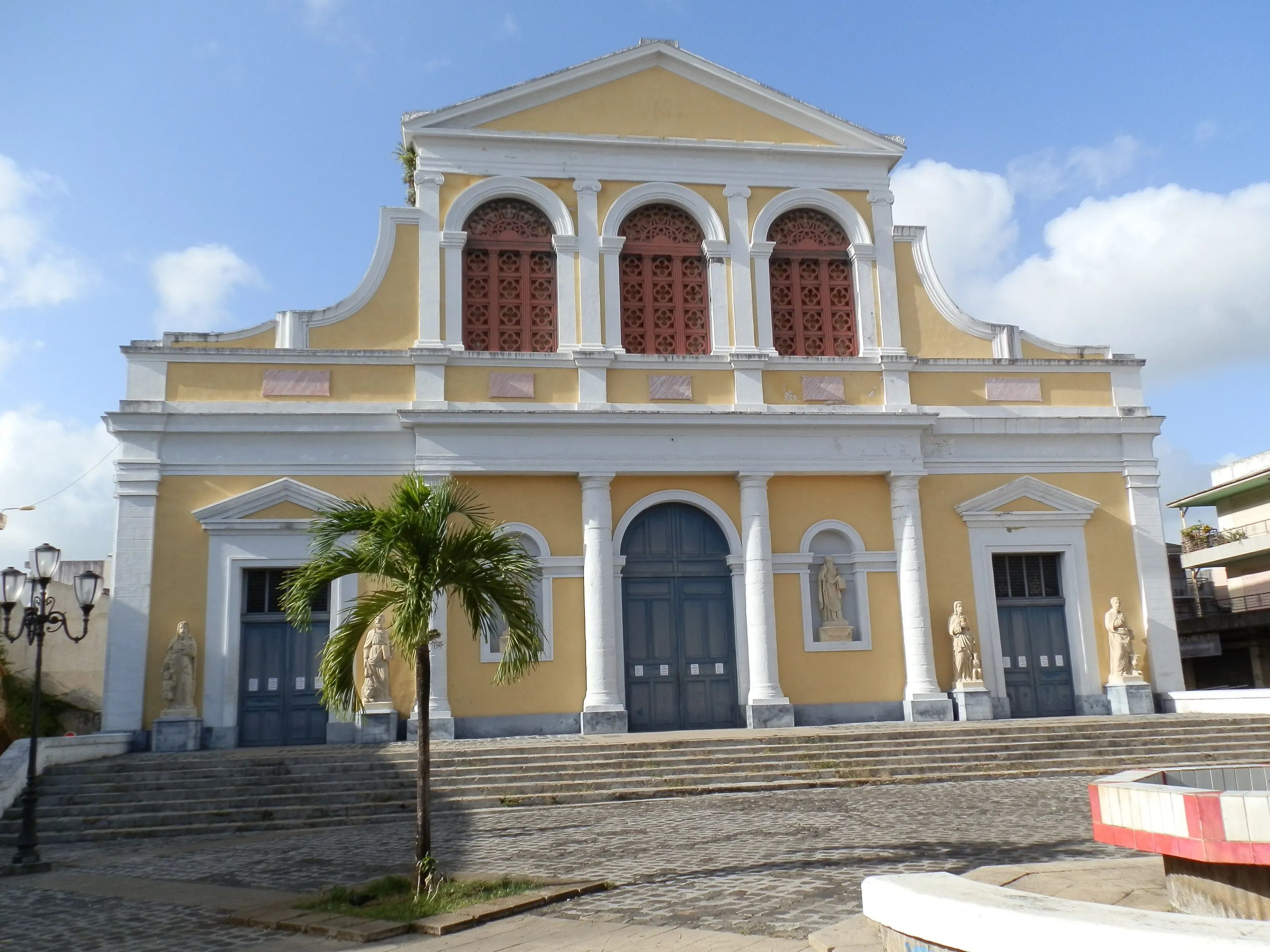
Similar destinations
FAQ
Frequently asked questions about flights to Saint-Denis
How do I get from Réunion airport to the centre of Saint-Denis?
Roland Garros airport (RUN) is 7 to 10 km east of the centre depending on the source. A Car Jaune shuttle reaches L'Océan station in about 20 minutes; taxis and car rental are also available. Check timetables before you travel.
What is there to see in Saint-Denis?
The Barachois, the cathedral, Notre-Dame-de-la-Délivrance, the Creole villas of Rue de Paris, the Jardin de l'État, the Léon Dierx museum and the natural history museum.
Is Saint-Denis a beach town?
No: it is an administrative and cultural capital on a pebble coast. The beaches and the lagoon are mostly on the west coast, further south, reached by car or bus.
How can I get around Saint-Denis without a car?
On foot in the centre, with the Citalis bus network in town and the Cars Jaunes for other communes. A rental car is still useful for the volcano and the cirques.
When is the best time to visit Saint-Denis?
Mostly from May to November, during the drier austral winter. The Indian Ocean cyclone season runs from November to April: keep your dates flexible and follow forecasts.
Do I need a visa for Réunion?
Réunion is French territory and part of the European Union, but not of the Schengen area. Entry rules depend on your nationality and where you travel from: check the official sites before you book.
How much does a flight to Saint-Denis usually cost?
The price depends mainly on your departure city, the time of year and how far ahead you book. The "opportunities" section above shows real examples of prices SniperAir has already detected to this destination.
How do I get alerted when a flight to Saint-Denis drops below my budget?
Create an alert profile with your departure airport, Saint-Denis as the destination and your maximum budget. You are notified automatically as soon as a matching price is detected.
Ready to head to Saint-Denis?
Set your budget and let SniperAir monitor fares for you.
Create my alert