
Cheap Flights to Busan
Set your departure airport and maximum budget: SniperAir tracks prices to Busan and alerts you the moment a deal matching your criteria appears.
Quick summary
Country
South Korea
Continent
Asia
Airport
PUS
Currency
South Korean won (KRW)
Time zone
UTC+9 (KST)
Population
~3.2-3.5M
Deals already spotted for Busan
Real flight examples detected by SniperAir, with their reference price.
Loading examples…
Identity
South Korea's wartime capital, still seeking UNESCO recognition
Busan's identity is inseparable from its role as the country's number-one harbor city — a fact that shaped its history as much as its economy. When Seoul fell early in the Korean War, the South Korean government declared Busan the provisional wartime capital on August 18, 1950, a status it held for 1,023 days. The city's population swelled from about 300,000 to roughly a million as refugees poured in from across the country, many arriving through Pier 1 of Busan Port. That sudden influx produced some of Busan's most distinctive urban landscapes — dense, tiered housing built straight into steep mountain slopes to house the overflow — the same social history that later gave rise to Gamcheon Culture Village. Busan is now pursuing UNESCO World Heritage status for its "Sites of the Busan Wartime Capital of Korea," an active tentative-list nomination as of 2026.
Don't miss
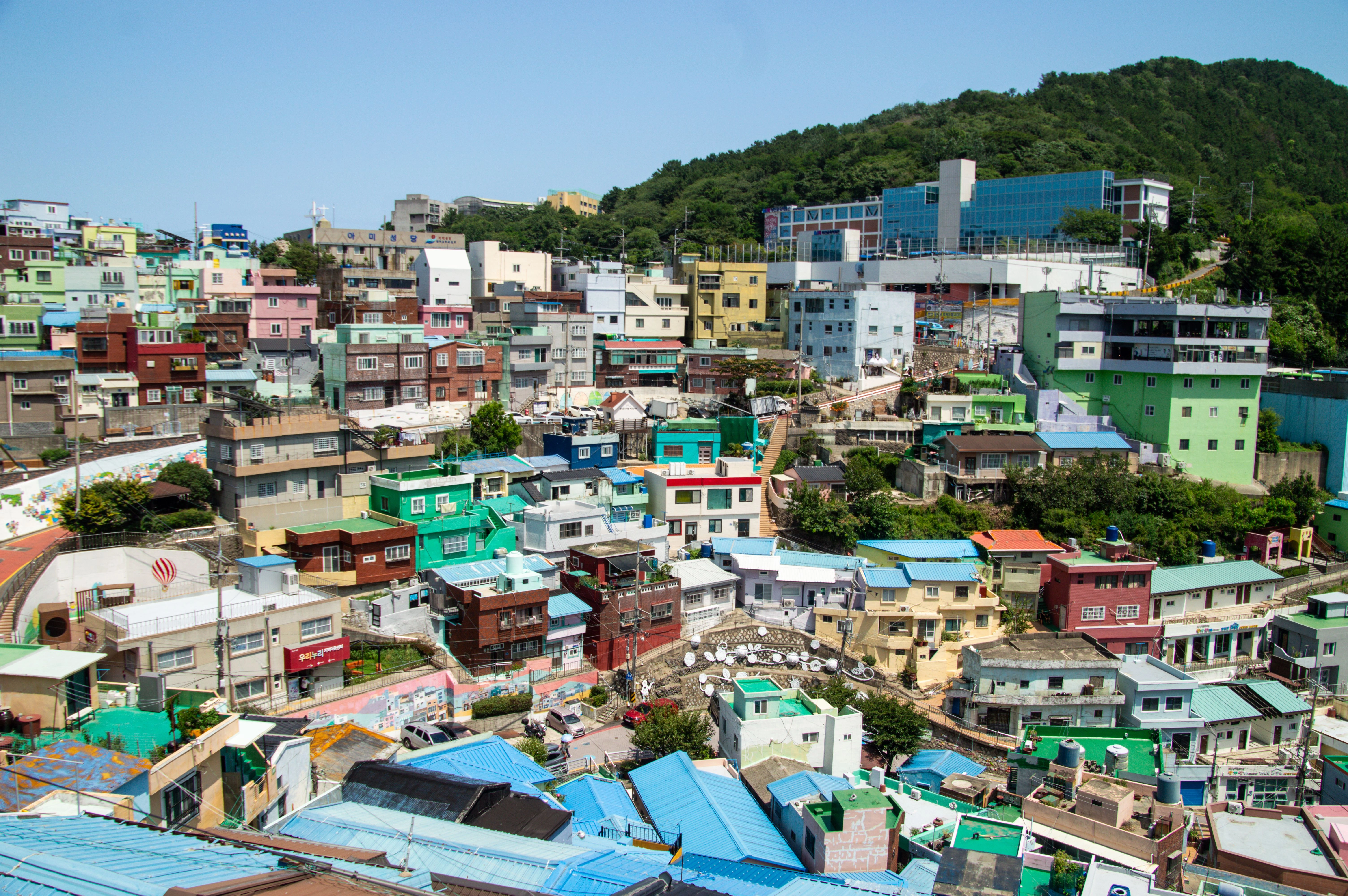
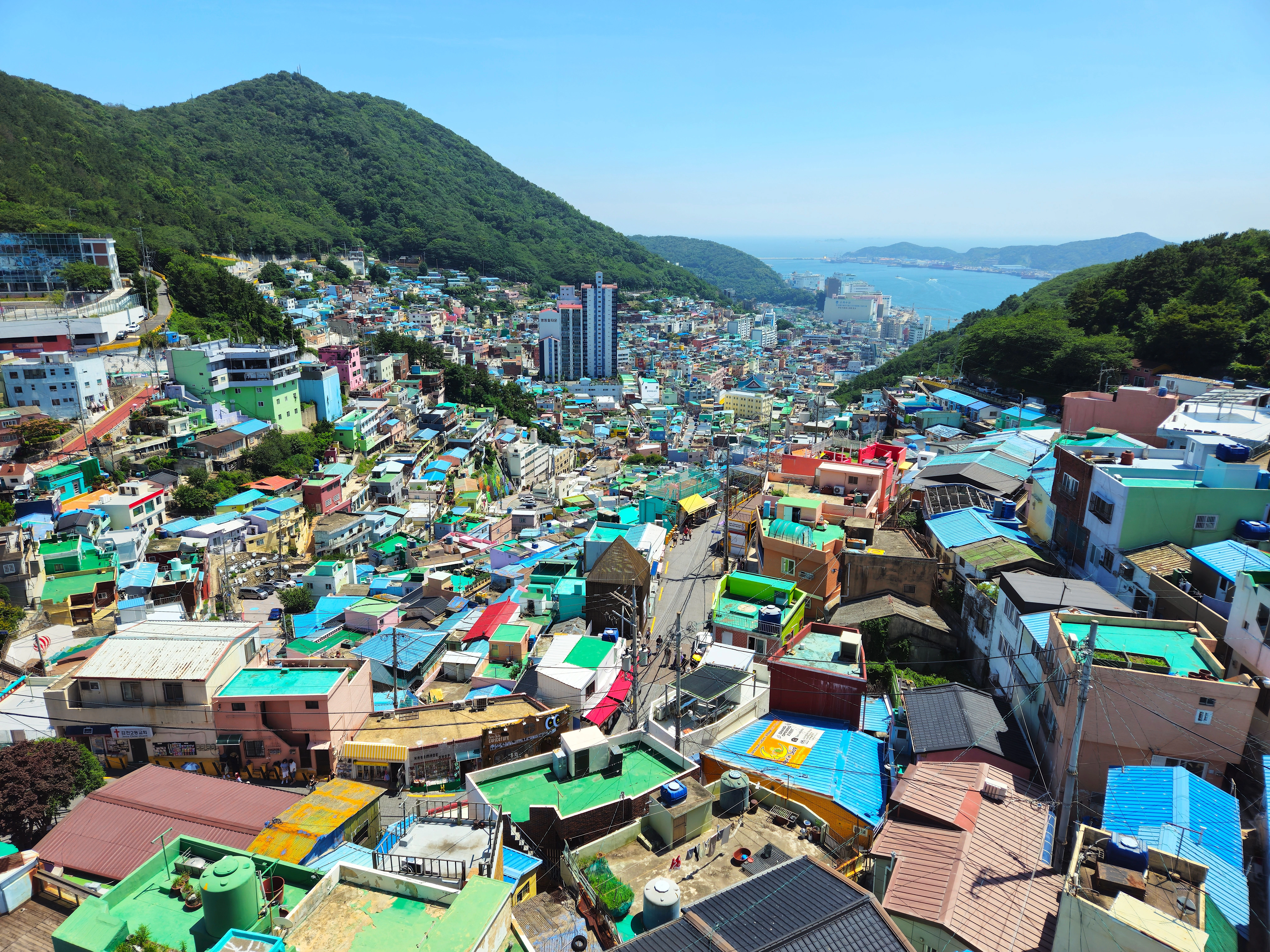
Gamcheon, from relocation housing to open-air gallery
Gamcheon's origins go back to the 1920s-30s, when the city relocated its poorer residents to a hillside area — close enough to supply labor to the port, but tucked out of view of it. A public art project launched in 2009 transformed the same terraced neighborhood into today's pastel-colored "Machu Picchu of Busan," covered in murals, small galleries and installation art, with panoramic views down the tiered rooftops to the sea. It remains a lived-in neighborhood rather than a museum piece — one reason it feels different from similarly photogenic spots elsewhere.
To discover
Jagalchi, Korea's largest fish market
The market's name comes from "jagal" (gravel), a reference to the gravel-covered shore it originally stood on. Its modern identity crystallized during the Korean War, when refugee women known as the "Jagalchi ajumma" began selling seafood to support their families — a tradition still visible today between the outdoor stalls and the modern indoor complex rebuilt in 2006. Upstairs, tank-to-table restaurants let you pick your seafood live before it's cooked, about as fresh a meal as the city offers.
To discover
Haeundae and Gwangalli, two very different beaches
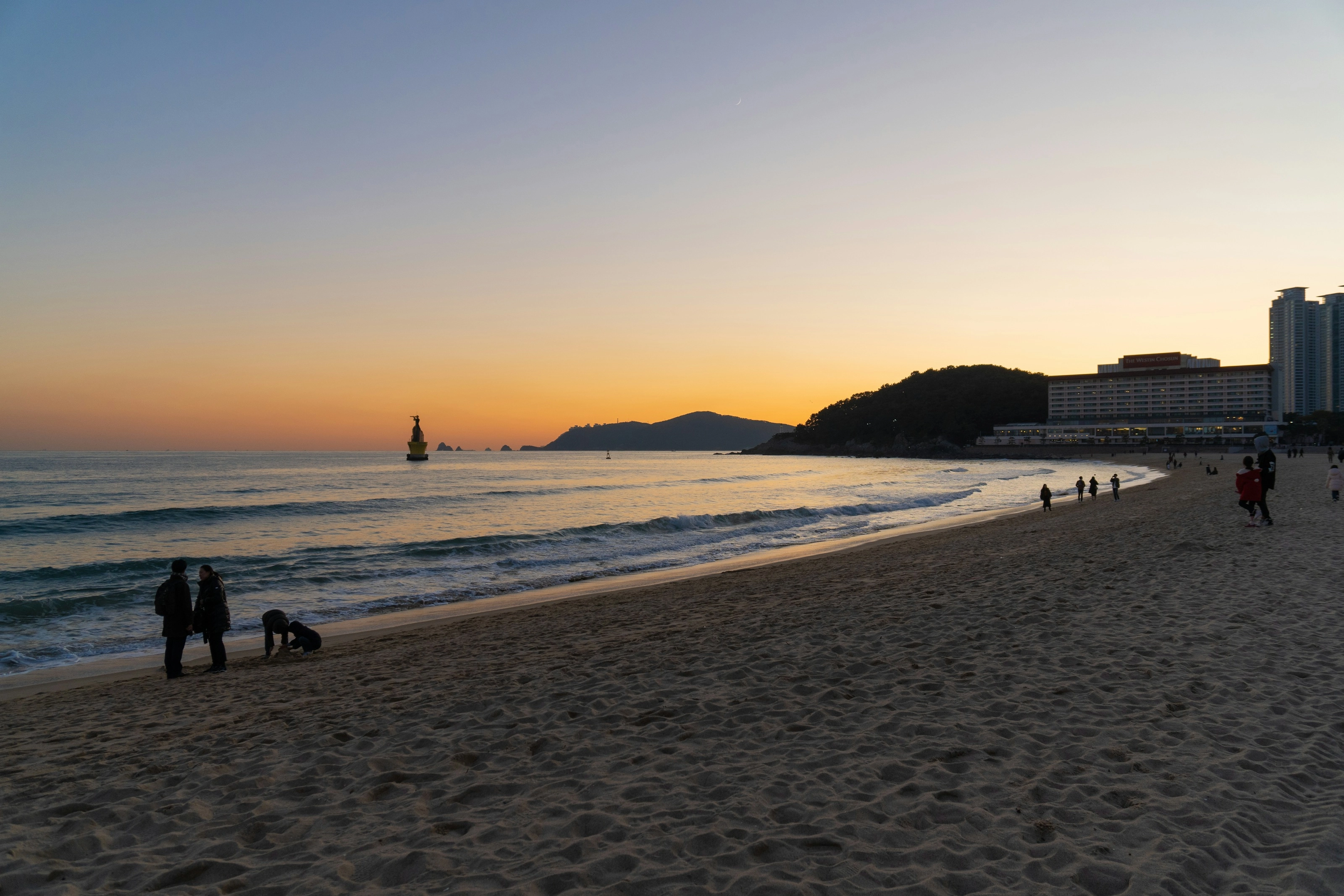
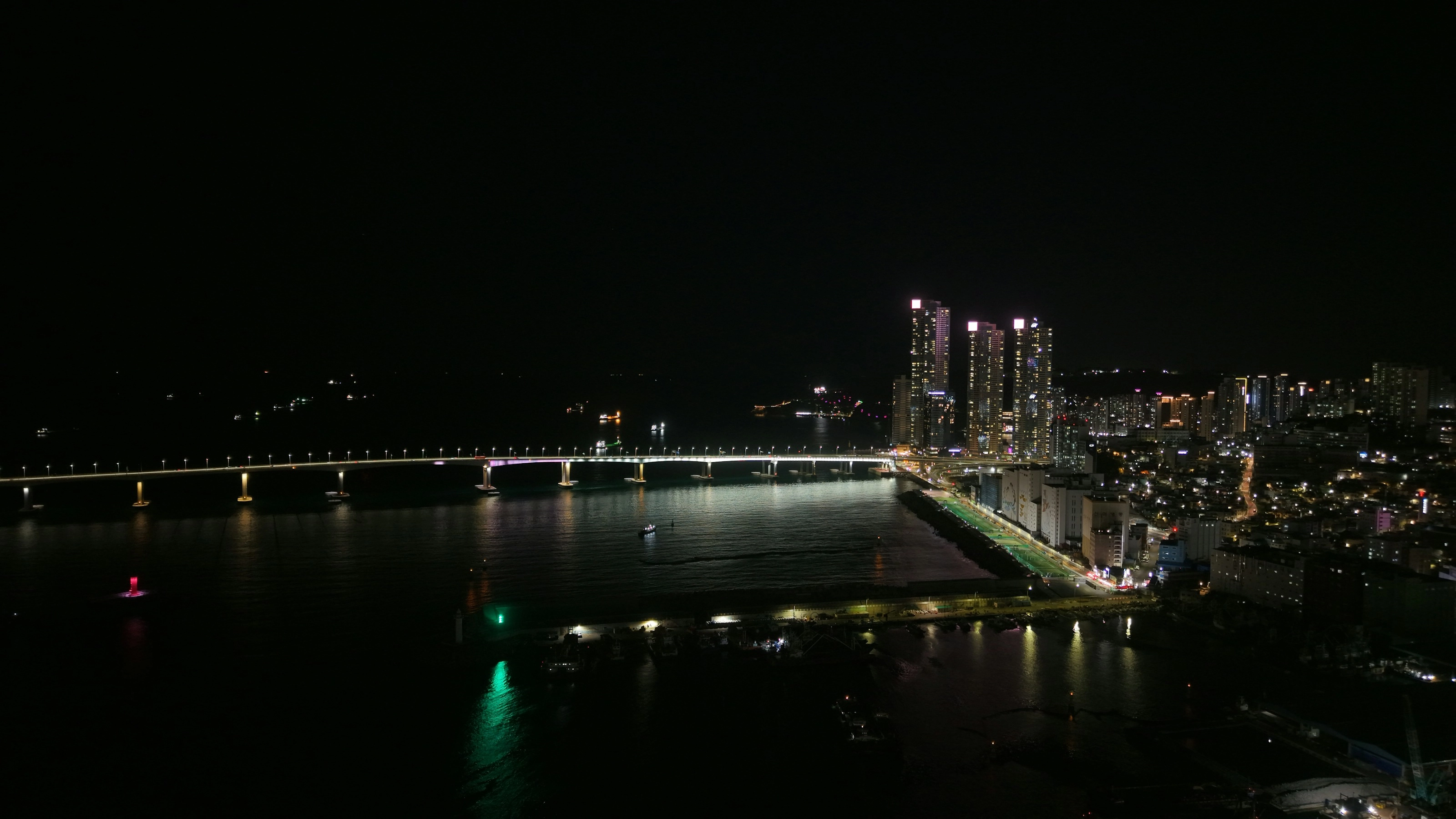
Haeundae, Busan's flagship urban beach, draws over 10 million visitors a year to its 1.5 km of white sand, backed by hot springs, the Oryukdo Islands viewpoint, the scenic Dalmaji-gil coastal road and the Sea Life Busan Aquarium. Gwangalli, the beach closest to downtown, has a younger, more local energy, its cafés and restaurants facing directly onto the illuminated Gwangandaegyo (Diamond) Bridge after dark — arguably Busan's most photographed view. For something quieter, Taejongdae Resort Park, named after Silla-era King Taejong, offers cliff-top hiking, a lighthouse and small temples above the sea, well away from either beach's crowds.
Food
Dwaeji gukbap, a dish born of hard times
Busan's signature comfort food, dwaeji gukbap — a pork bone and rice soup — traces its popularity partly back to the wartime refugee period, when it offered a cheap, filling meal for a city suddenly swollen with newcomers. It's still a genuinely inexpensive meal today, alongside bibimbap and ssiat hotteok, a seed-stuffed sweet pancake sold streetside. Busan's food identity overall stays close to its port-and-refugee history: cheap, seafood-forward and hearty, a noticeably different character from Seoul's broader, more varied culinary scene.
Getting around & budget
From Gimhae Airport into the city
Gimhae International Airport sits somewhere between 15 and 25 km west of downtown depending on the source, connected to the city via the Busan-Gimhae Light Rail Transit, which links into the subway network for a combined journey of 21-32 minutes. A taxi to City Hall Station takes about 17 minutes and costs $16-20. Overall daily costs run around $42 for a budget traveler, $145 mid-range and up to $408 for luxury — food alone averages about $44 a day, though a bowl of dwaeji gukbap or bibimbap runs closer to $6.63, and street snacks start from ₩3,000. Busan is generally cited as roughly 5% cheaper than Seoul, particularly on transport and accommodation.
When to go
When to visit Busan?
Late April to June
Cherry blossoms give way to beach weather, with festivals throughout May.
June to August
Warm and humid, July is the wettest month with monsoon-driven downpours possible.
September to November
The best window overall — mild, dry, and home to the Busan International Film Festival in October.
December to February
Milder than the rest of South Korea, generally 0-10°C, snow rare.
Busan's airport
Gateway to the southeast of Korea
Gimhae International Airport
The country's second city's airport, also a starting point for a day trip to Gyeongju.
In pictures
Busan in pictures
FAQ
Frequently asked questions about flights to Busan
What's the best airport for arriving in Busan?
Gimhae International Airport (PUS) serves the country's second city.
Is Busan worth more than a day trip?
Yes. Gamcheon Culture Village, Jagalchi Market, Haeundae and Gwangalli beaches and Taejongdae Resort Park are too spread out to see properly in a few hours — plan for at least 2-3 days.
Why was Busan South Korea's provisional capital?
During the Korean War, Busan was the only major South Korean city never to fall to North Korean forces, serving as a refuge and rear base for 1,023 days from August 1950 — a status the city is now pursuing UNESCO recognition for.
How much does a flight to Busan usually cost?
The price mainly depends on your departure city, the season and how far ahead you book. The deals section above shows real examples of prices already detected by SniperAir for this destination.
How do I get alerted when a flight to Busan drops below my budget?
Create an alert profile with your departure airport, Busan as destination and your maximum budget. You'll be notified automatically the moment a matching price is detected.
Ready to track prices to Busan?
Set your budget and let SniperAir watch the fares.
Create my alert