
Cheap flights to Tirana
Set your departure airport and maximum budget: SniperAir tracks prices to Tirana and alerts you the moment a deal matching your criteria appears.
Quick summary
Country
Albania
Continent
Europe
Airport
TIA
Currency
Albanian lek (ALL)
Time zone
UTC+1 (UTC+2 during daylight saving time)
Deals already spotted to Tirana
Real flight examples detected by SniperAir, with their reference price.
Loading examples…
Why track Tirana with SniperAir
A young, colourful capital between Skanderbeg Square and the mountains
Choose your departure
Enter your departure airport and your maximum budget for a flight to Tirana (TIA).
SniperAir keeps watch
Our systems continuously compare new prices with the real price history of the route. SniperAir monitors prices and alerts you: it does not sell or book tickets.
You receive an alert
As soon as a price matches your criteria, you are notified, without having searched for anything yourself.
Tirana is the capital and largest city of Albania. According to Wikipedia (EN) and Wikivoyage (EN), it was founded in 1614 by the Ottoman Albanian nobleman Sulejman Pasha, who built a mosque, a bakery and a bathhouse, and it has been the capital since 1920. It lies in a basin ringed by hills, with Mount Dajti rising to the east. Today it is a lively city where Ottoman heritage, broad boulevards from the 1930s and communist-era architecture sit side by side, with brightly repainted apartment blocks, cafés everywhere and a nightlife district called Blloku. It was European Youth Capital in 2022 according to Wikipedia (EN). Flight prices to Tirana move with the season and the departure city: a SniperAir alert saves you from checking every day. You set your budget, we compare new prices with the real history of the route and we let you know.
Airport and getting into town
Mother Teresa Airport, north-west of the capital
Tirana Nënë Tereza (TIA)
Tirana International Airport Nënë Tereza (TIA), at Rinas, is the main air gateway to the country according to Wikipedia (EN) and is named after Mother Teresa. It lies north-west of the centre, roughly twenty kilometres away depending on the source. Wikivoyage (EN) says buses link the airport with Tirana, Durrës, Shkodër and Fier, and Wikipedia (ES) puts the taxi ride between the centre and the airport at 20 to 30 minutes. Wikivoyage (DE) adds that the terminal, opened in 2007, has been extended several times and that electronic boarding passes have been accepted since 2025 for flights within the Schengen area. There is neither a metro nor a passenger train in the city according to Wikivoyage (EN) and (DE).
Sources disagree on the distance between the airport and the centre (11, 17 or 25 km), so we write "roughly twenty kilometres". No transfer fares are published; check bus times and fares with the airport.
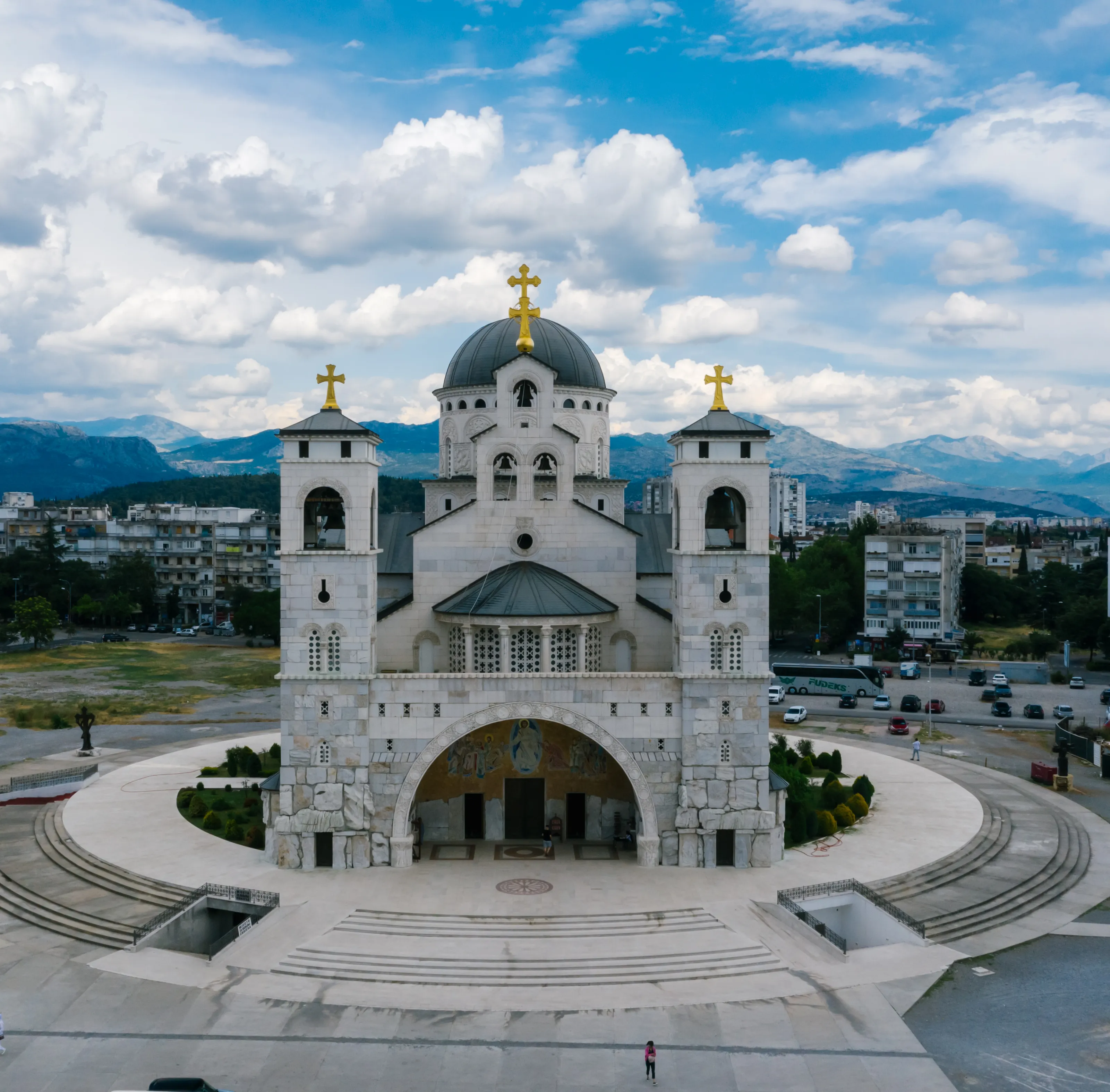
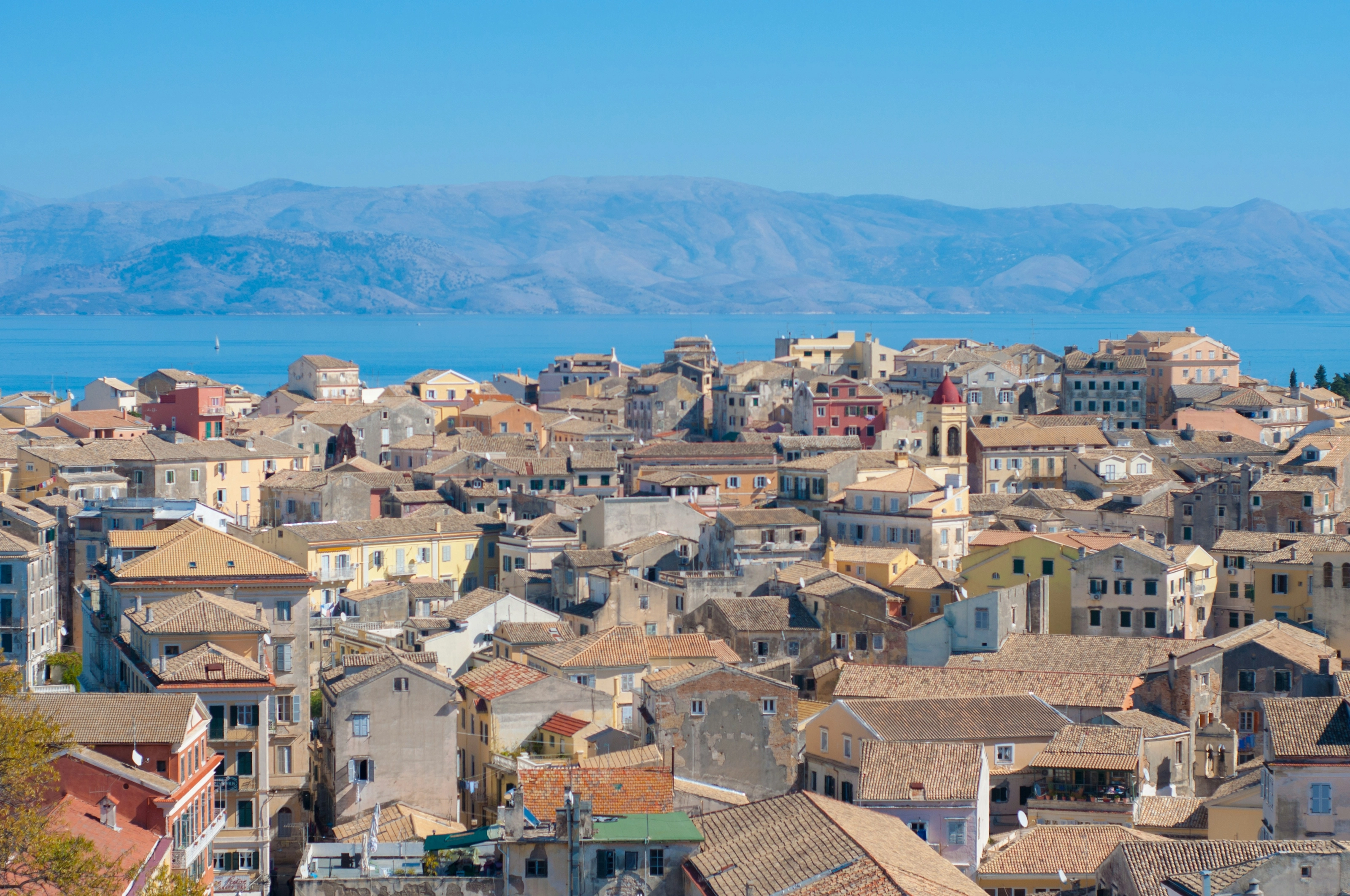
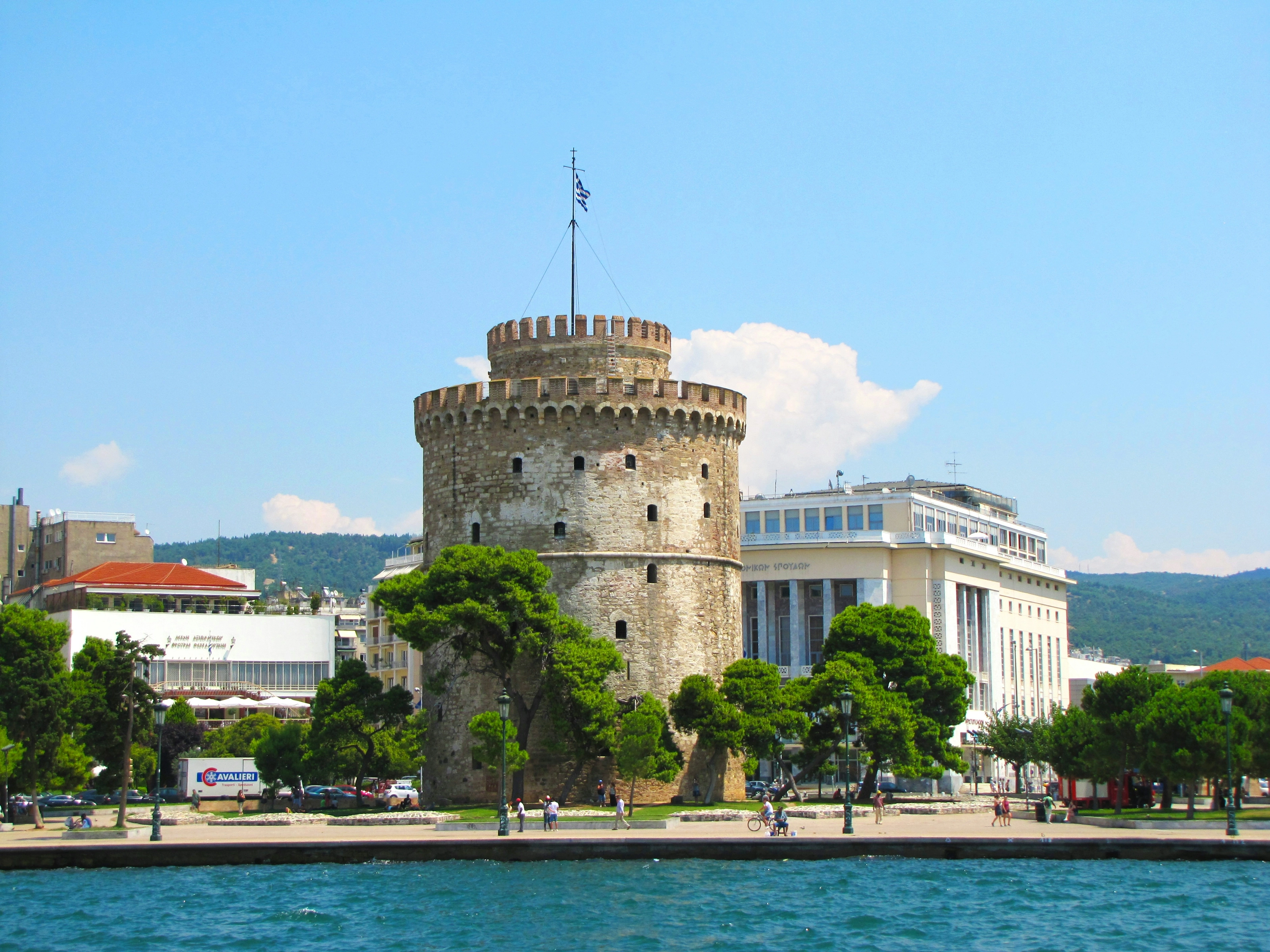
There are many connections to major European cities. For a regional trip you can also track Podgorica (TGD), Corfu (CFU) or Thessaloniki (SKG): these cities have their own SniperAir page and price alert.
Landmarks
Skanderbeg Square, the Great Mosque and Dajti
Central Tirana is easy to cover on foot around Skanderbeg Square, with a few trips out to the big parks and the mountain. The five images below show the places that come up most often on a first visit.
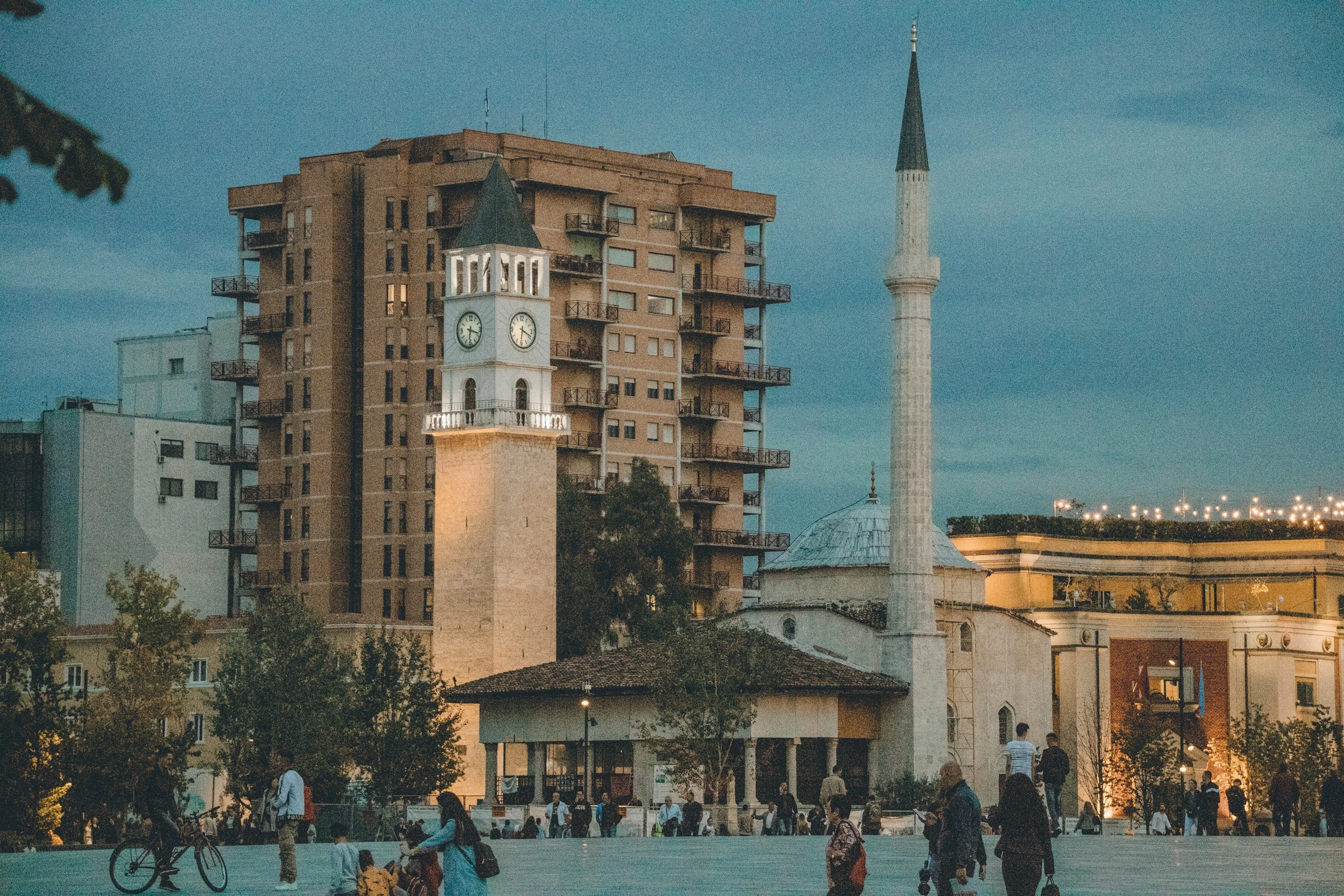
Skanderbeg Square, the Clock Tower and the mosque
Skanderbeg Square is the heart of the city: an equestrian statue of the national hero was raised here in 1968 according to Wikipedia (ES). Beside it, the Clock Tower and the Et'hem Bey Mosque, built from 1794 to 1821 according to Wikipedia (FR), make up the best-known image of Tirana. The mosque reopened in 2021 after a full restoration according to Wikivoyage (EN).
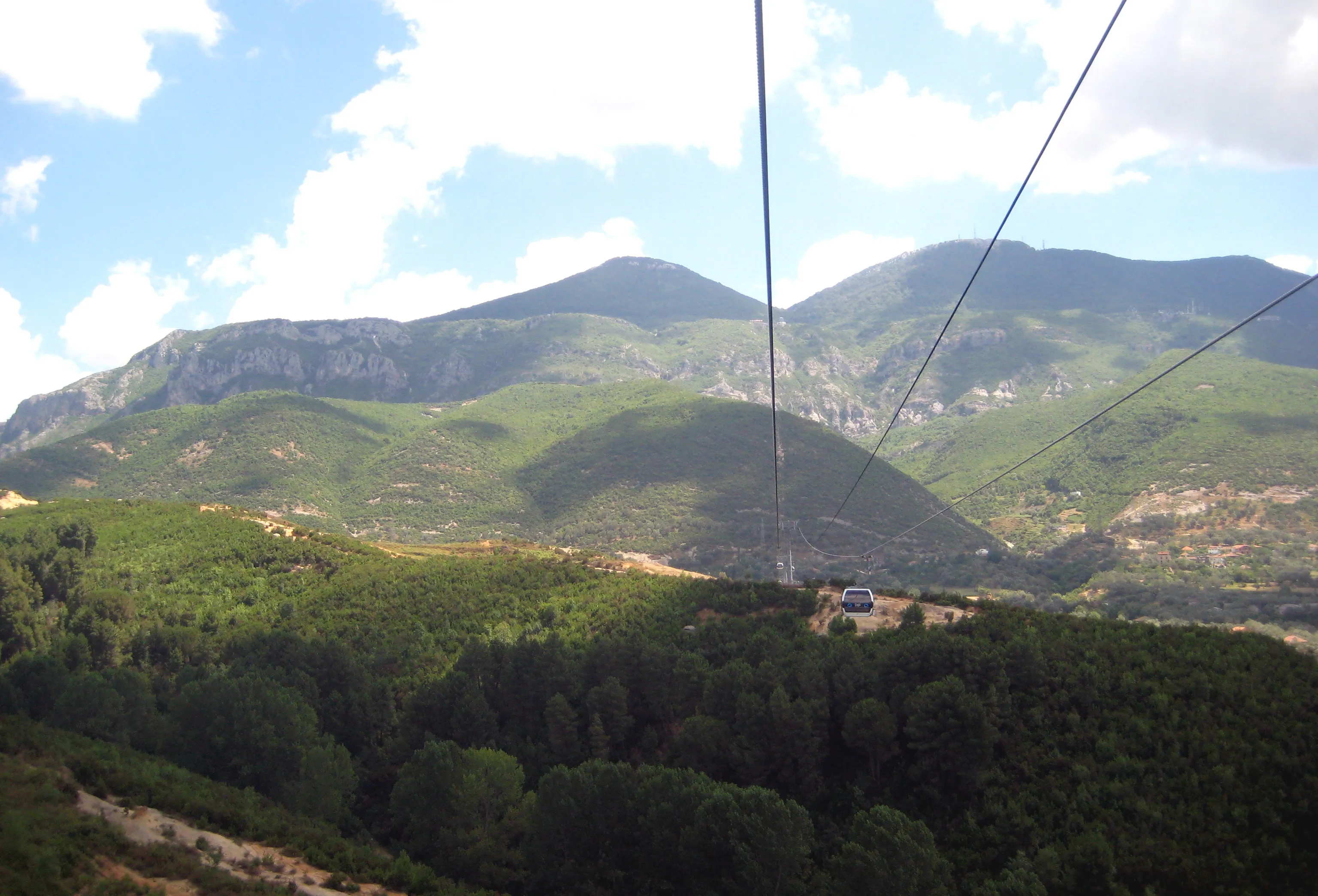
The Great Mosque of Tirana
Opened in 2022 according to Wikipedia (FR), the Great Mosque of Tirana stands over a central neighbourhood, its dome and white minarets set against the mountains. In a country with varied religious traditions, it stands alongside the Orthodox and Catholic cathedrals listed by Wikivoyage (EN).
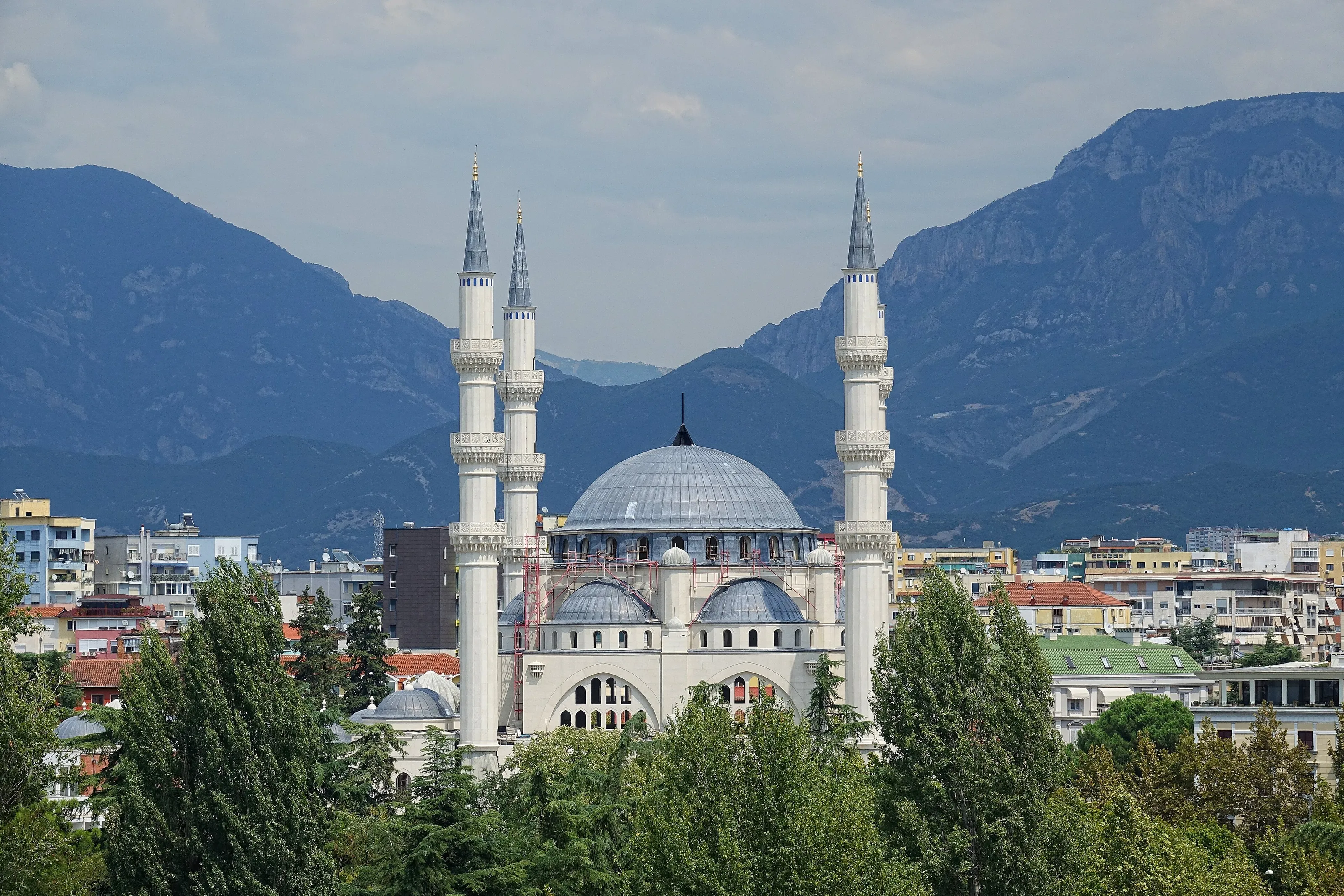
The painted arches of Et'hem Bey
The portico of the Et'hem Bey Mosque shows stone arches and painted decoration. Wikivoyage (EN) calls it one of the most beautiful mosques in Albania, with remarkable decoration and artwork inside. Dress modestly and be discreet, as in any place of worship.
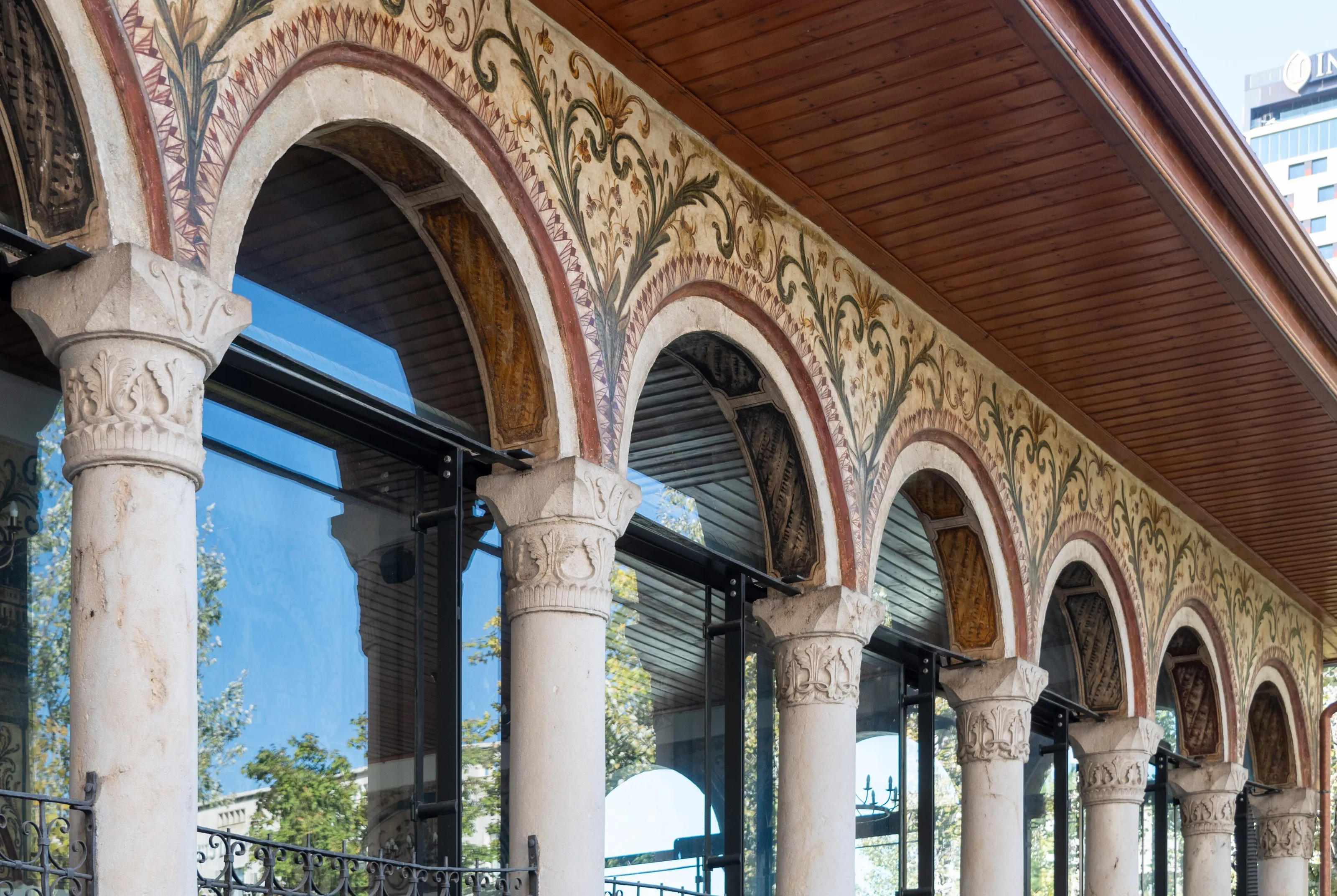
Mount Dajti
The Dajti Express, an Austrian-built cable car opened in 2005 according to Wikipedia (DE), climbs in about 15 minutes towards the mountain that overlooks the city, up to nearly 1,611 m according to Wikivoyage (EN). It is the easiest way out of town for fresh air and a view back over the city.
Towers and new neighbourhoods
Tirana is changing fast: new towers, repainted apartment blocks and new districts spread out at the foot of the mountains. Wikivoyage (FR) notes that many buildings have been repainted in bright colours, a sign of the renovation under way since the communist period.
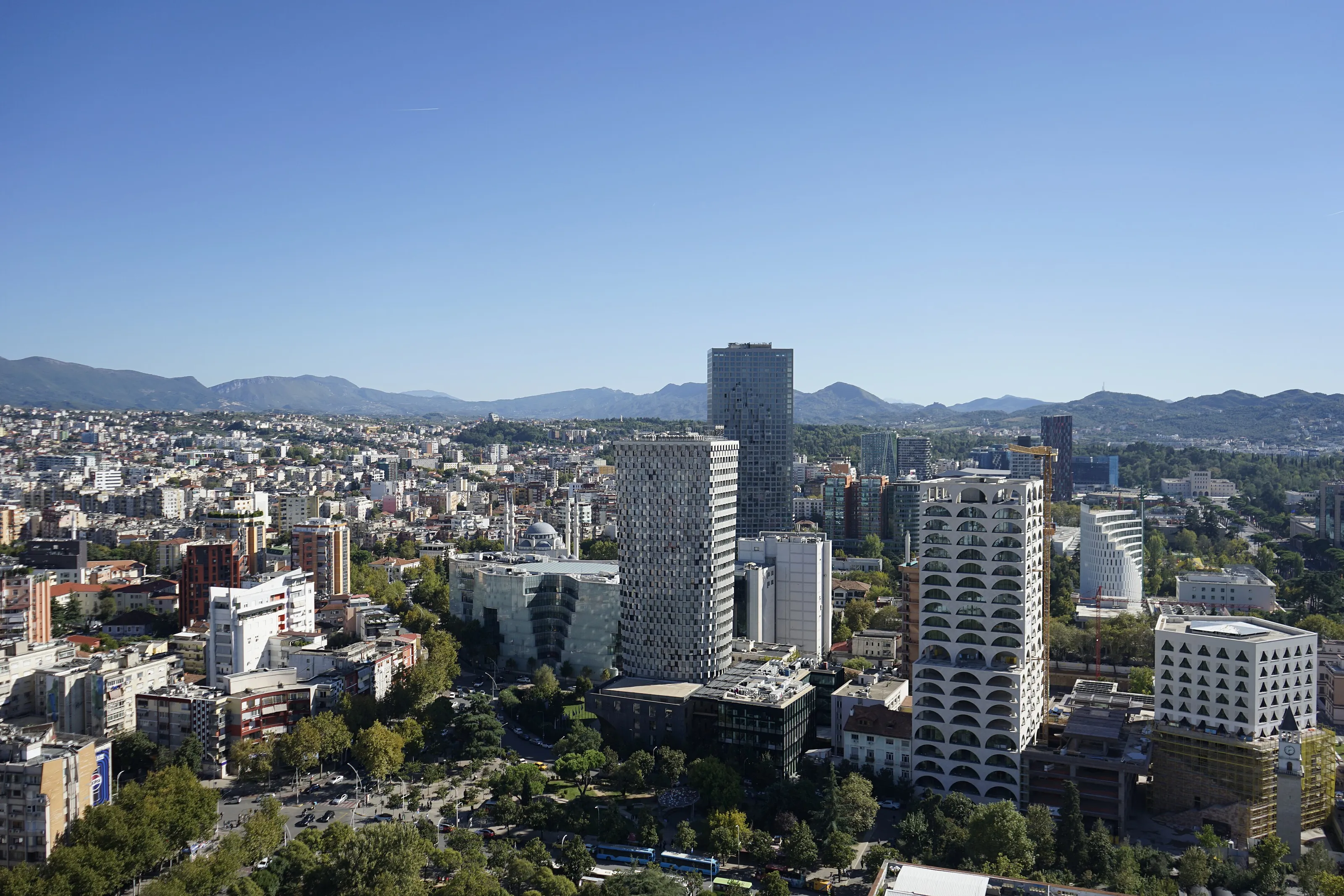
Other places are worth a detour: the Palace of Culture, home to the opera and the national library; the Pyramid of Tirana, opened in 1988 as a museum devoted to Enver Hoxha according to Wikipedia (DE); the broad Dëshmorët e Kombit boulevard, laid out in the 1930s; the Grand Park with its artificial lake; the Orthodox Cathedral of the Resurrection of Christ; and Blloku, once reserved for communist leaders and now a nightlife district according to Wikivoyage (EN).
Museums and culture
Museums: history, archaeology, bunkers and art
The National History Museum
It stands on Skanderbeg Square; the large mosaic above the entrance tells the story of the Albanian people's struggle according to Wikipedia (EN). It is the most representative museum in the capital.
The National Museum of Archaeology and the National Art Gallery
The first, founded in 1948 according to Wikipedia (EN), covers prehistory to the Middle Ages. The National Art Gallery holds the main collection of nineteenth- and twentieth-century Albanian art.
Bunk'Art and the Museum of Secret Surveillance
Bunk'Art 1 and 2 are former bunkers from the Enver Hoxha era turned into history and contemporary art museums. The Museum of Secret Surveillance, in the House of Leaves, reopened in 2017 according to Wikipedia (ES). They present the communist period in a documented way. No ticket prices or opening hours are published here: check the official websites.
Food and drink
Eating and drinking: fërgesë, byrek, coffee and an Italian touch
Dishes to try
Wikivoyage (EN) notes that Italian influence is everywhere, with pizza and pasta alongside Albanian dishes. Try fërgesë, a dish of peppers or liver typical of the Tirana area according to Wikipedia (EN), tavë dheu, qofte (grilled meatballs) and byrek, the savoury filled pastry sold everywhere. Salep, a thick hot drink, is popular in winter.
Cafés, Blloku and markets
Coffee is central to daily life: Wikipedia (EN) points out that Albania has a very high number of coffee houses per inhabitant. Blloku concentrates bars and restaurants in the evening. For fresh produce, Wikivoyage (EN) lists the Pazari i Ri (central market) and Tregu Dinamo, a large market popular with locals. No business names are given here.
Getting around
Getting around Tirana
On foot
The centre is small enough to explore on foot according to Wikivoyage (EN), but pavements can be narrow, holed or interrupted, so watch your step. Locals navigate by landmarks rather than street names.
Buses and taxis
There is no metro in Tirana. City buses cover the town; a ticket costs 40 lek, bought on board, according to Wikivoyage (EN) and (DE). Taxis are common and several local apps exist; Wikivoyage (EN) suggests asking for the meter or agreeing the price before you get in.
The Dajti Express and trips out of town
For the mountain, the cable car leaves from the east of the city. For Durrës, Shkodër or other Albanian towns, buses and minibuses leave from the bus terminals; schedules change, so check before you go. Driving in the city takes some getting used to according to Wikivoyage (EN).
Budget and precautions
Budget and precautions
Price level
Wikivoyage (EN) and (ES) describe Tirana as inexpensive by regional standards, even in the pricier places. Albania uses the lek, not the euro; cards are accepted in many places, but keep some cash. No price range is published here because the sources are not cross-checked. SniperAir alerts mainly help with the flight.
Precautions
According to Wikivoyage (EN), crime is rarely directed at foreigners, but driving can be erratic and pavements are damaged. Air pollution can be noticeable, especially in winter according to Wikipedia (DE). Albania is neither in the European Union nor in the Schengen area: check entry requirements for your nationality and read your own country's travel advice.
When to go
When to go to Tirana
Spring (March to May)
Temperatures rise quickly and days lengthen; rainfall eases from April. A good time to walk around town and head up Dajti.
Summer (June to August)
Hot, with a July average of about 24 °C according to Wikipedia (EN), (DE) and (ES); highs often pass 35 °C according to Wikipedia (ES). Rain is rarer, often falling as storms.
Autumn (September to November)
Days stay mild, then the rains return: November is the wettest month according to Wikipedia (DE). September and October are pleasant for the city.
Winter (December to February)
Cool and damp, with a January average of about 7 °C. Snow is rare in the city but common on the nearby mountains according to Wikipedia (EN).
Wikipedia (EN), (DE) and (ES) classify the climate as humid subtropical, with about 1,265 mm of precipitation a year according to Wikipedia (EN) and (DE), mostly from November to March. Aim for May to June or September to October for pleasant temperatures; July and August are hot.
By length of stay
How many days in Tirana
The centre and Skanderbeg Square
Two days cover Skanderbeg Square, the mosques, the National History Museum, the boulevard and an evening in Blloku.
Museums and Dajti
With three days, add Bunk'Art, the National Art Gallery, the Grand Park and a cable car ride up Dajti.
Day trips from the capital
With five days, head out to other Albanian towns such as Durrës on the coast, Shkodër or Berat, then return for a last evening in town.
In pictures
Tirana in pictures
You might also like
Similar destinations
FAQ
Frequently asked questions about flights to Tirana
Where is Tirana airport?
Nënë Tereza Airport (TIA) is at Rinas, north-west of the centre, roughly twenty kilometres away. Buses link the airport with Tirana according to Wikivoyage (EN).
What currency is used in Tirana?
Albania uses the lek (ALL), not the euro. Cash machines are plentiful; keep some cash for buses and small purchases.
What should I see first in Tirana?
Skanderbeg Square, the Clock Tower, the Et'hem Bey Mosque, the National History Museum, Blloku and the Dajti cable car.
When is the best time to visit Tirana?
May to June and September to October for mild weather. July and August are hot; winter is damp.
Does Tirana have a metro?
No: the city relies on buses, taxis and walking according to Wikivoyage (EN).
Is Tirana safe for travellers?
Wikivoyage (EN) describes crime as rarely directed at foreigners; the main risks are traffic and damaged pavements. Also read your own country's travel advice.
How much does a flight to Tirana usually cost?
The price depends mainly on your departure city, the time of year and how far ahead you book. The "opportunities" section above shows real examples of prices SniperAir has already detected to this destination.
How do I get alerted when a flight to Tirana drops below my budget?
Create an alert profile with your departure airport, Tirana (TIA) as the destination and your maximum budget. You are notified automatically as soon as a matching price is detected. SniperAir monitors and alerts, it does not sell or book tickets.
Ready to head to Tirana?
Set your budget and let SniperAir monitor fares for you.
Create my alert