Cheap Flights to Brussels
Set your departure airport and maximum budget: SniperAir tracks prices to Brussels and alerts you the moment a deal matching your criteria appears.
Quick summary
Country
Belgium
Continent
Europe
Airport
BRU
Currency
Euro
Time zone
UTC+1
Population
~1.26M
Deals already spotted for Brussels
Real flight examples detected by SniperAir, with their reference price.
Loading examples…
Identity
A marsh settlement that became the EU's de facto capital
Brussels traces its name to the old Frankish "Bruocsella," a settlement in the marshes, traditionally founded in 979 AD when Duke Charles I of Lorraine built a fortress on an island in the River Senne. Sitting where that river crossed a trade route linking the Rhine to Flanders, the city grew fast as a textile and crafts marketplace under the Dukes of Brabant, then became a capital of the Duchy of Burgundy under Philip the Good in the 15th century — a golden age of art and courtly culture — before passing to the sprawling Habsburg Empire. In August 1695, troops of Louis XIV bombarded the city for three straight days, reducing the medieval center to rubble; only the stone shell of the Gothic City Hall survived, and the Grand Place seen today was almost entirely rebuilt by the guilds within a few years of that disaster. Since 1830 it has been the capital of independent Belgium — and today it also holds the unusual status of de facto EU capital, hosting the European Commission, the Council of the EU and a European Parliament chamber, a concentration of political weight matched by almost nowhere else.
Don't miss
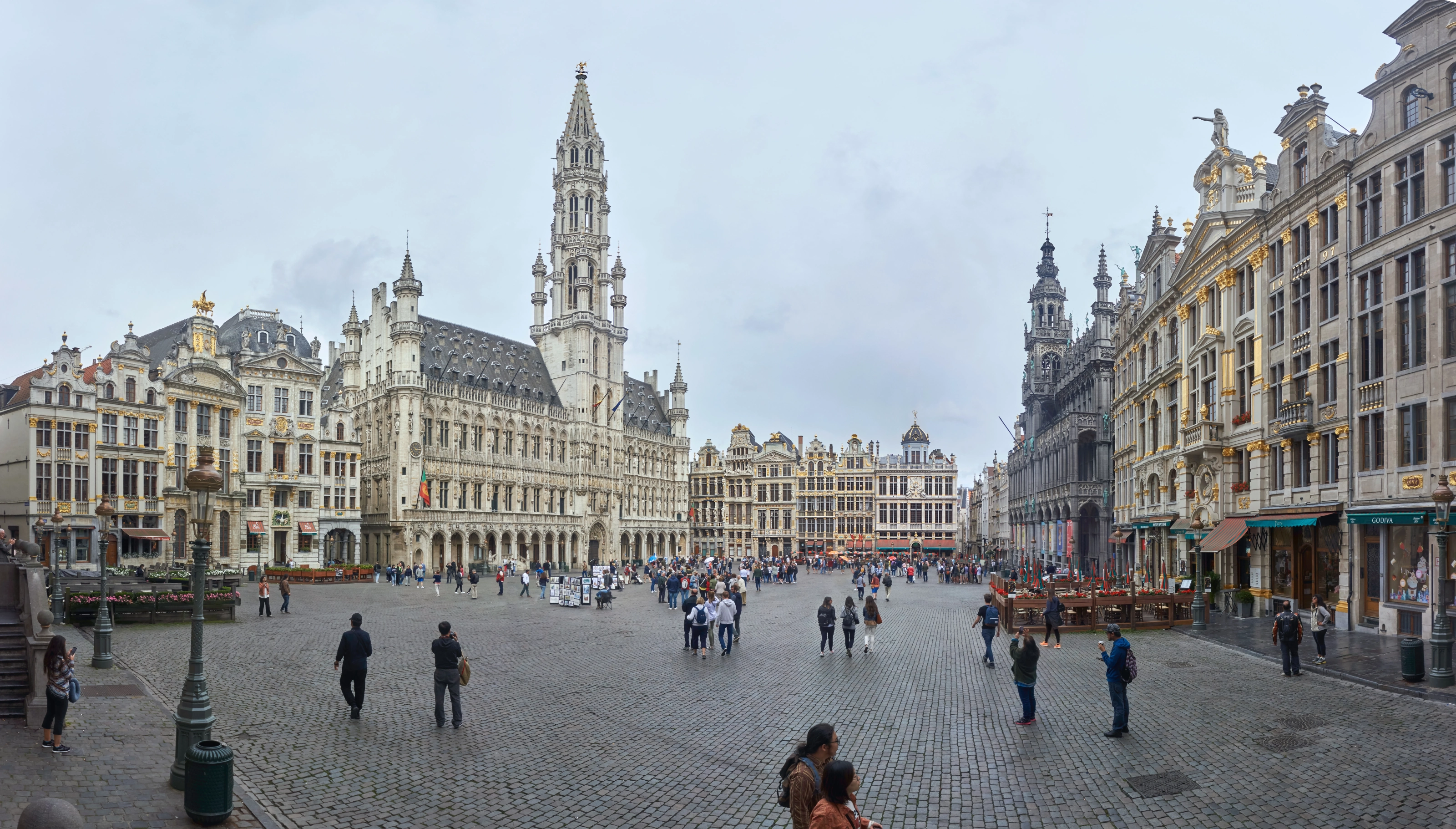
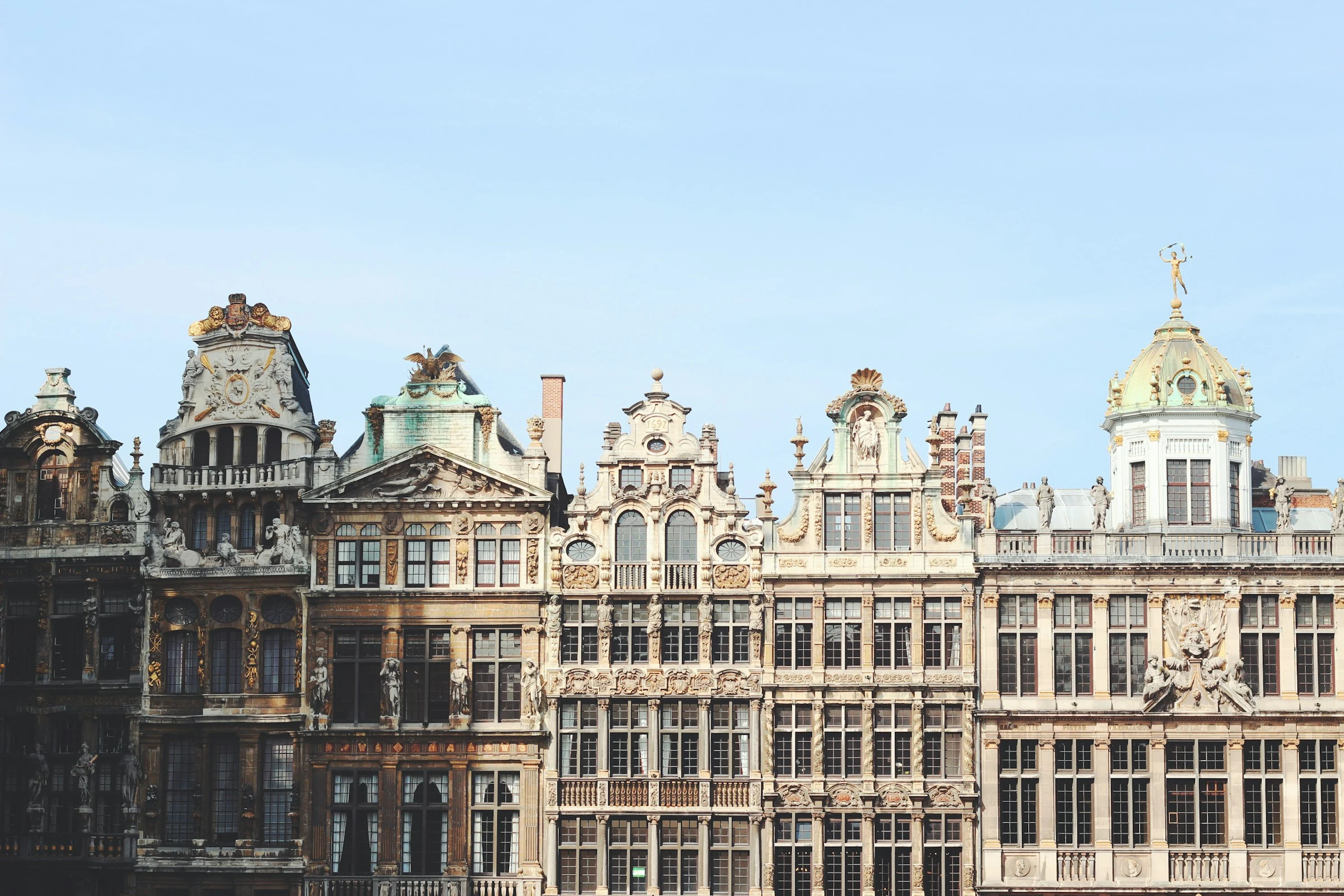
The Grand Place, rebuilt by the guilds
A UNESCO World Heritage site since 1998, the Grand Place mixes Baroque guildhouses, Gothic civic architecture and Louis XIV-era elegance across a roughly 68 by 110 metre square that grew out of a medieval market on drained marshland. The Gothic City Hall took from 1402 to 1455 to build, its slender 96-metre tower topped by a statue of Saint Michael, the city's patron. Nearly destroyed in the 1695 bombardment, the square was rebuilt by the guilds in the years that followed — what stands today is largely their reconstruction, not the untouched medieval original.
To discover
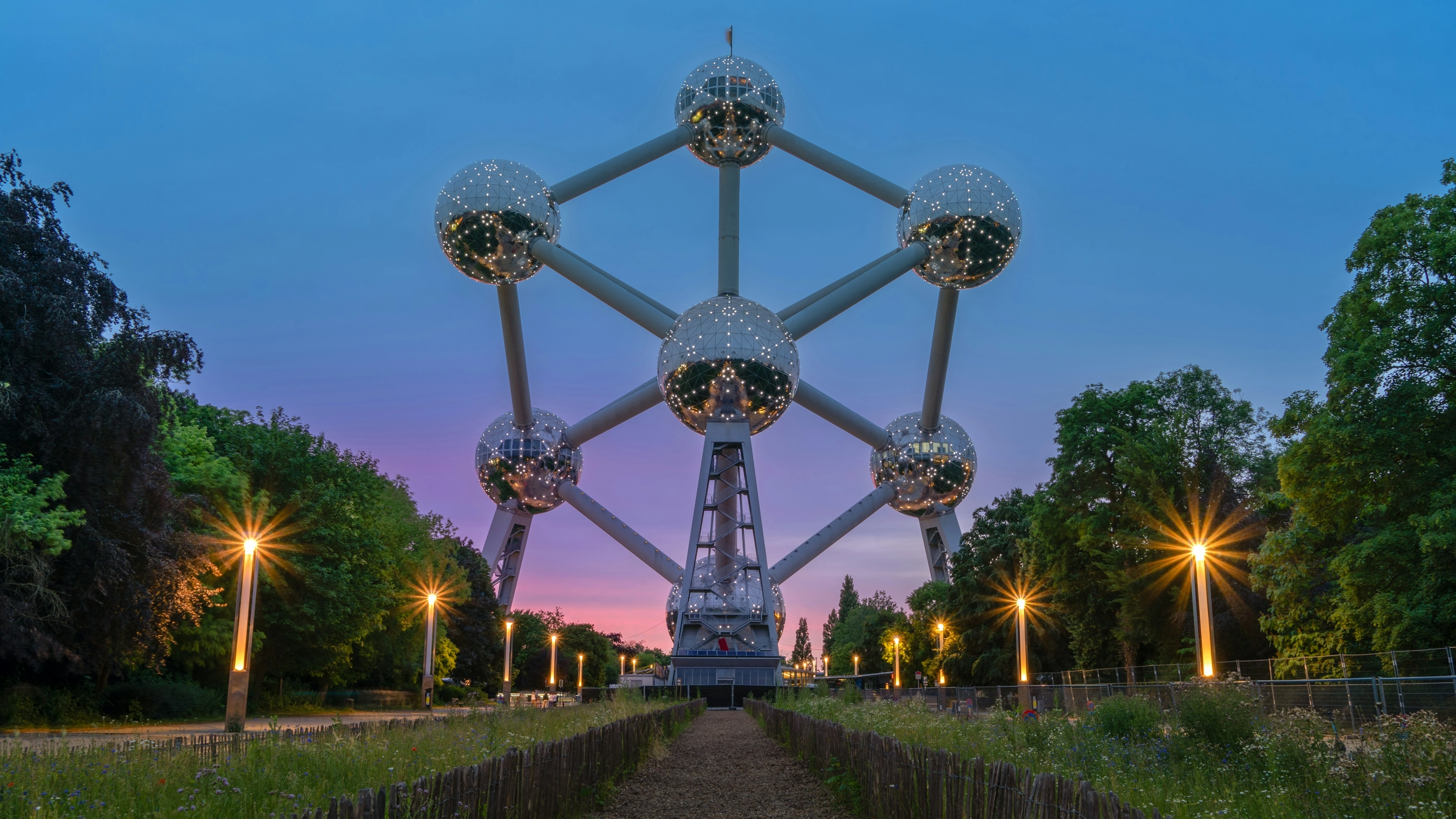
The Atomium and the ninth art
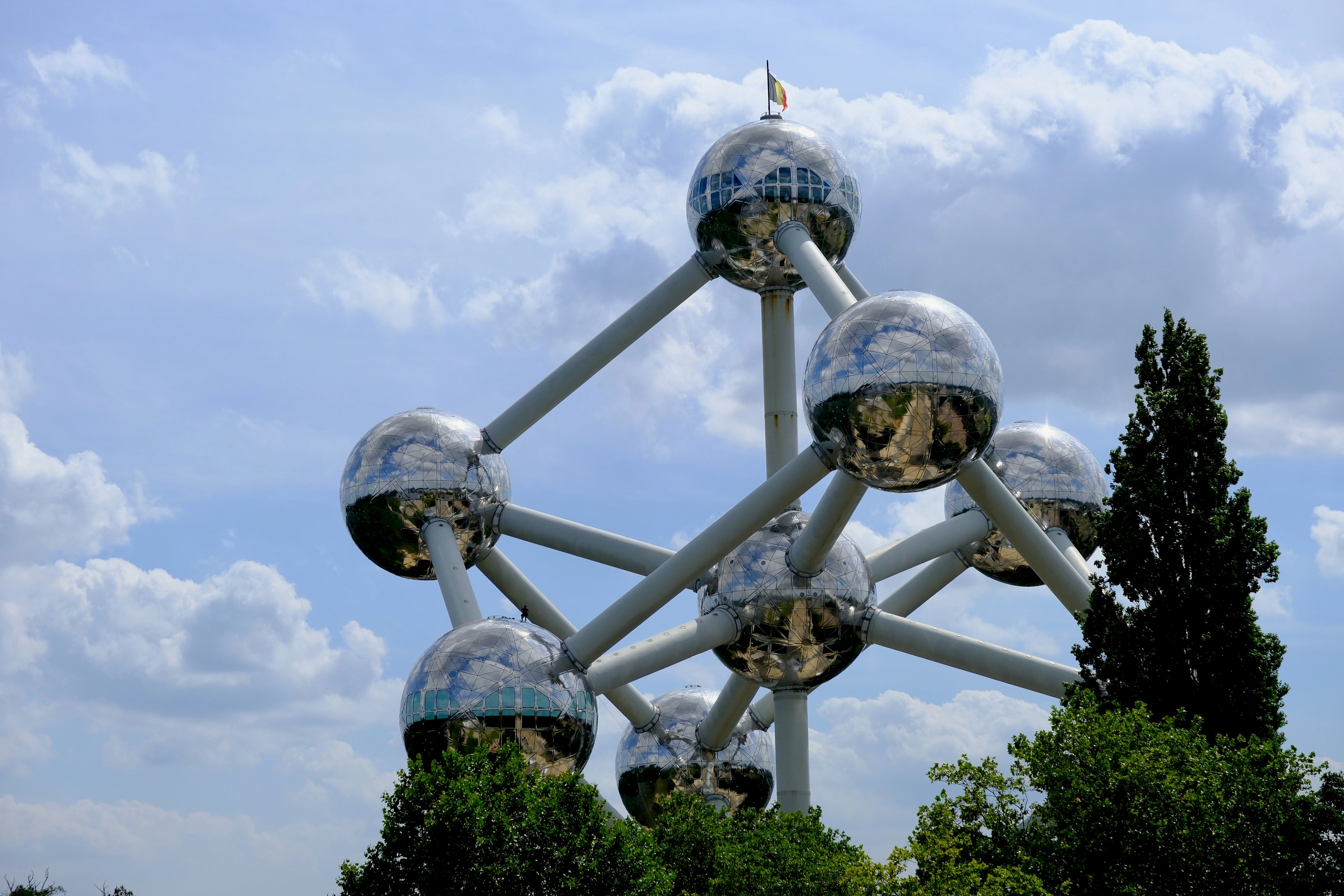
Built for the 1958 World's Fair and meant to stand for only six months, the Atomium became a permanent city icon instead. Engineer André Waterkeyn and architects André and Jean Polak designed it to represent an iron crystal magnified 165 billion times, its nine steel spheres linked by tubes — some fitted with escalators — leading up to a top sphere with panoramic city views. Brussels' other defining art form gets its own dedicated home nearby: the Belgian Comic Strip Center occupies a former textile warehouse designed by Art Nouveau master Victor Horta in 1906, a building that fuses the city's two signature contributions to culture — curving Art Nouveau ironwork and homegrown comics icons like Tintin, the Smurfs and Lucky Luke.
To discover
Manneken Pis and the Art Nouveau townhouses
A small bronze fountain of a urinating boy might seem like an odd national symbol, but Manneken Pis has survived since before the 1695 bombardment and become a genuine point of local pride — dressed in an ever-growing wardrobe of costumes donated by visiting delegations and rotated regularly, with past outfits kept on display at the nearby City Museum. Scattered through the Ixelles and Saint-Gilles neighborhoods, several of Victor Horta's private townhouses (a handful UNESCO-listed) showcase the curving iron-and-glass style Brussels helped pioneer at the turn of the 20th century — a quieter, residential counterpoint to the grandeur of the Grand Place.
Food & drink
Chocolate, beer and moules-frites
Brussels invented the praline — Neuhaus, founded in the city, is generally credited with the creation in 1912 — and the artisanal chocolatier tradition it launched remains a serious pursuit here, not a tourist gimmick. The city's brewing heritage runs just as deep, from Trappist ales to sour lambics, with specialist beer bars concentrated around the historic center. Moules-frites (mussels with fries) is the closest thing to a signature Brussels dish, while Brussels-style waffles — rectangular, light and crisp, distinct from the denser Liège version — are sold on nearly every corner. The Sainte-Catherine district, built around a former fish market, is the best base for seafood specifically.
Getting around & budget
A compact, walkable capital
Brussels Airport (Zaventem) sits about 11 km from Brussels-Central station; direct trains run every 15 minutes and reach the center in as little as 17-18 minutes. Once in town, the STIB/MIVB network of metro, tram and bus covers the city well, though the historic core — Grand Place, Manneken Pis, the comics and Art Nouveau districts — is compact enough to explore mostly on foot, with a public transport day pass capped around €8.50. Daily budgets vary widely by style: roughly €66 for a budget traveler (hostel dorm, street food, free attractions), around €165 mid-range, up to €410 for a luxury stay — a typical mid-range day runs €120-170 for accommodation plus €35-45 for food.
When to go
When to visit Brussels?
Spring (Mar-May)
Cold start with occasional March snow, warming through April-May; cherry blossoms bloom in Cinquantenaire Park.
Summer (Jun-Aug)
The warmest and driest stretch, average highs around 23°C — the best window overall, mid-May to mid-September.
Autumn (Sep-Oct)
Mild and golden — a favorite for photographers thanks to Cinquantenaire Park's autumn foliage.
Winter (Dec-Feb)
Long, cold and often cloudy, but December brings the city's Christmas markets.
Brussels Airport
Belgium's main gateway
Brussels Airport (Zaventem)
About 11 km northeast of the city center, connected to Brussels-Central by direct train every 15 minutes.
In pictures
Brussels in pictures
You might also like
Similar destinations
FAQ
Frequently asked questions about flights to Brussels
What's the best airport for arriving in Brussels?
Brussels Airport (BRU), also known as Zaventem, is the country's main gateway, about 11 km from the city center.
Is Brussels walkable?
Yes — the historic core around the Grand Place, Manneken Pis and the comics/Art Nouveau districts is compact enough to explore mostly on foot, backed up by a dense metro, tram and bus network for anything further out.
What's the best time to visit Brussels?
Mid-May to mid-September offers the mildest weather, with late spring (May-June) particularly favorable before peak summer crowds.
How much does a flight to Brussels usually cost?
The price mainly depends on your departure city, the season and how far ahead you book. The deals section above shows real examples of prices already detected by SniperAir for this destination.
How do I get alerted when a flight to Brussels drops below my budget?
Create an alert profile with your departure airport, Brussels as destination and your maximum budget. You'll be notified automatically the moment a matching price is detected.
Ready to track prices to Brussels?
Set your budget and let SniperAir watch the fares.
Create my alert