
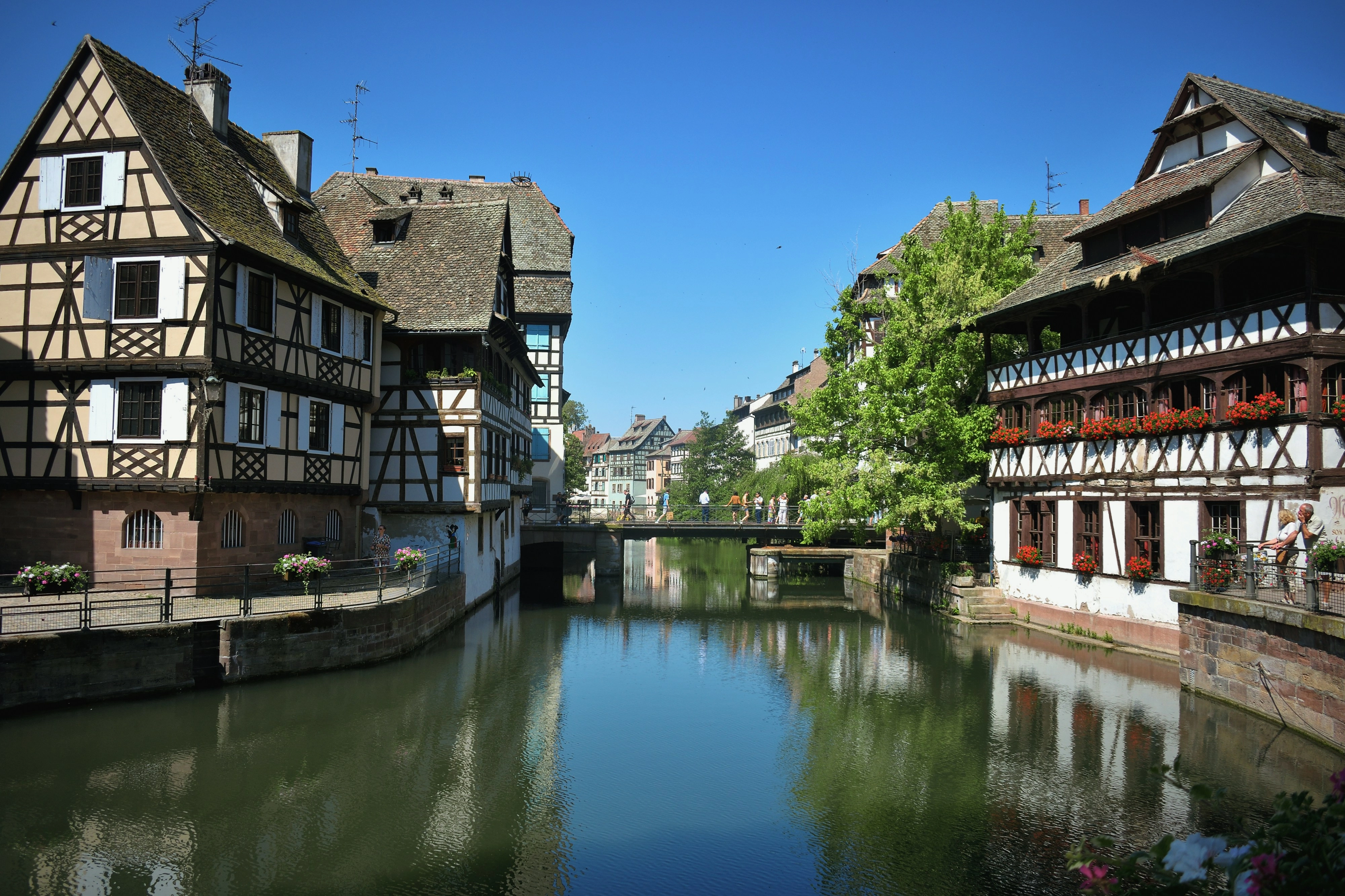
Cheap flights to Strasbourg
Set your departure airport and your maximum budget: SniperAir tracks prices to Strasbourg and alerts you as soon as an opportunity matching your criteria appears.
Quick summary
Country
France
Region
Alsace
Airport
SXB
Identity
Franco-German border capital
Time zone
UTC+1
Opportunities already spotted to Strasbourg
Real flight examples spotted by SniperAir, with their reference price.
Loading examples…
Identity
A border city with two faces depending on the season
Strasbourg is not visited quite the same way all year. In summer the half-timbered architecture, Petite France and the Alsace wine route dominate. In winter the Christmas market becomes the number-one reason to travel and changes the atmosphere of the whole city through December.
The city sits on the Rhine, the border with Germany: less than 400 metres separate the historic centre from Kehl on the far bank. Taken by France in 1681 under Louis XIV, annexed to the German Empire from 1871 to 1918 and again from 1940 to 1944, it carries that history in its Alsatian dialect, its timbered houses closer in style to the Black Forest than to central France, and its bilingual street signs.
To discover
Petite France and the Grande Île
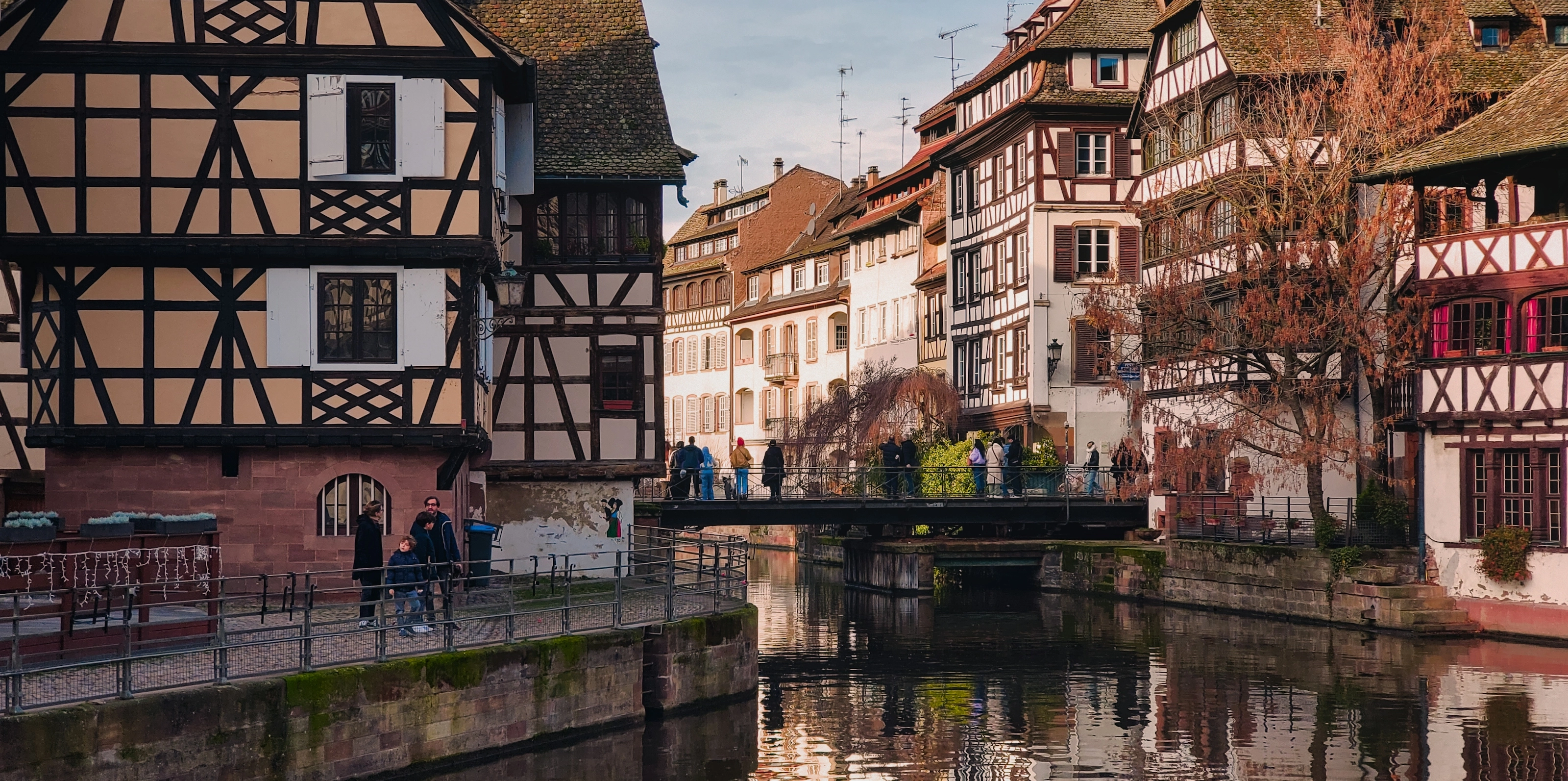
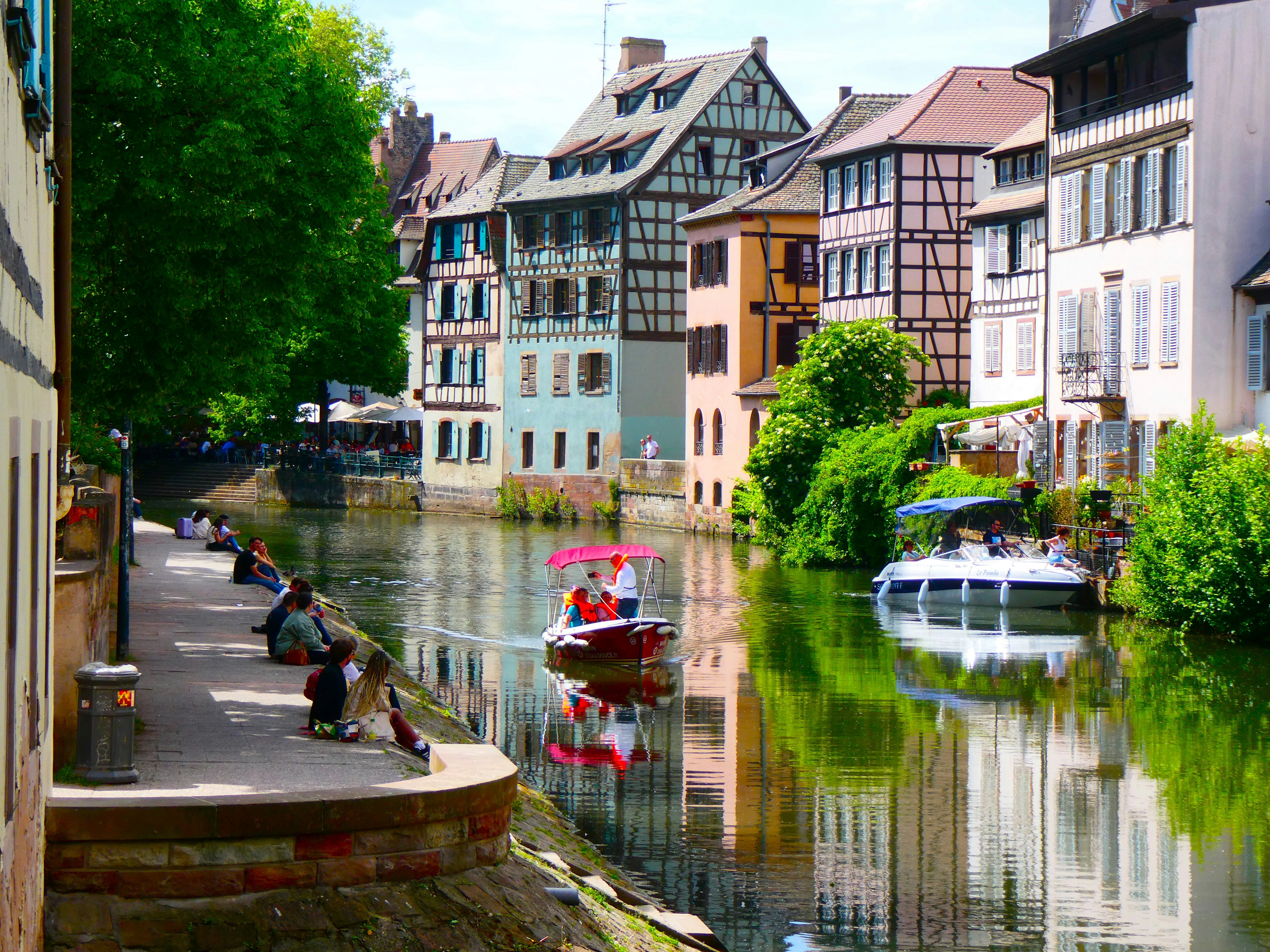
This historic district takes its name from a former military hospital, but it is best known for its 16th- and 17th-century half-timbered houses and its canals. The Barrage Vauban offers one of the best views over the rooftops, and a boat trip shows the district at façade level. In 1988 UNESCO listed the whole historic centre, the Grande Île, including Petite France: the first city centre listed in its entirety.
Not to miss
Strasbourg Cathedral
Built from the 12th to the 15th century in pink Vosges sandstone, the cathedral rises to 142 metres: from 1647 to 1874 it was the tallest building in the world. Its astronomical clock is one of the city’s busiest attractions, and its single spire, the planned second tower never having been built, can be seen from almost anywhere in Strasbourg.
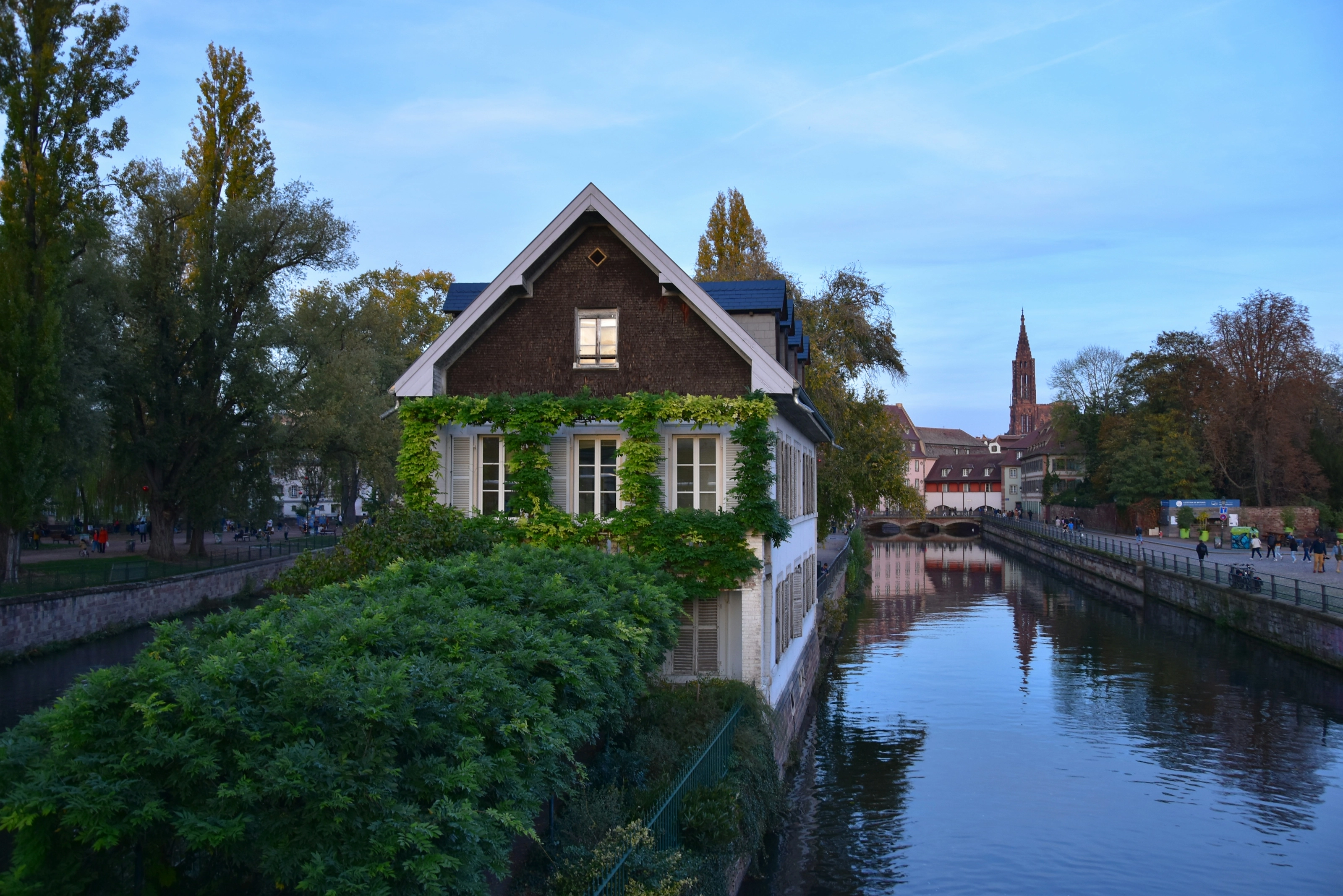
Access to the towers and the clock, and presentation times, vary with the season and with services: check the day’s information.
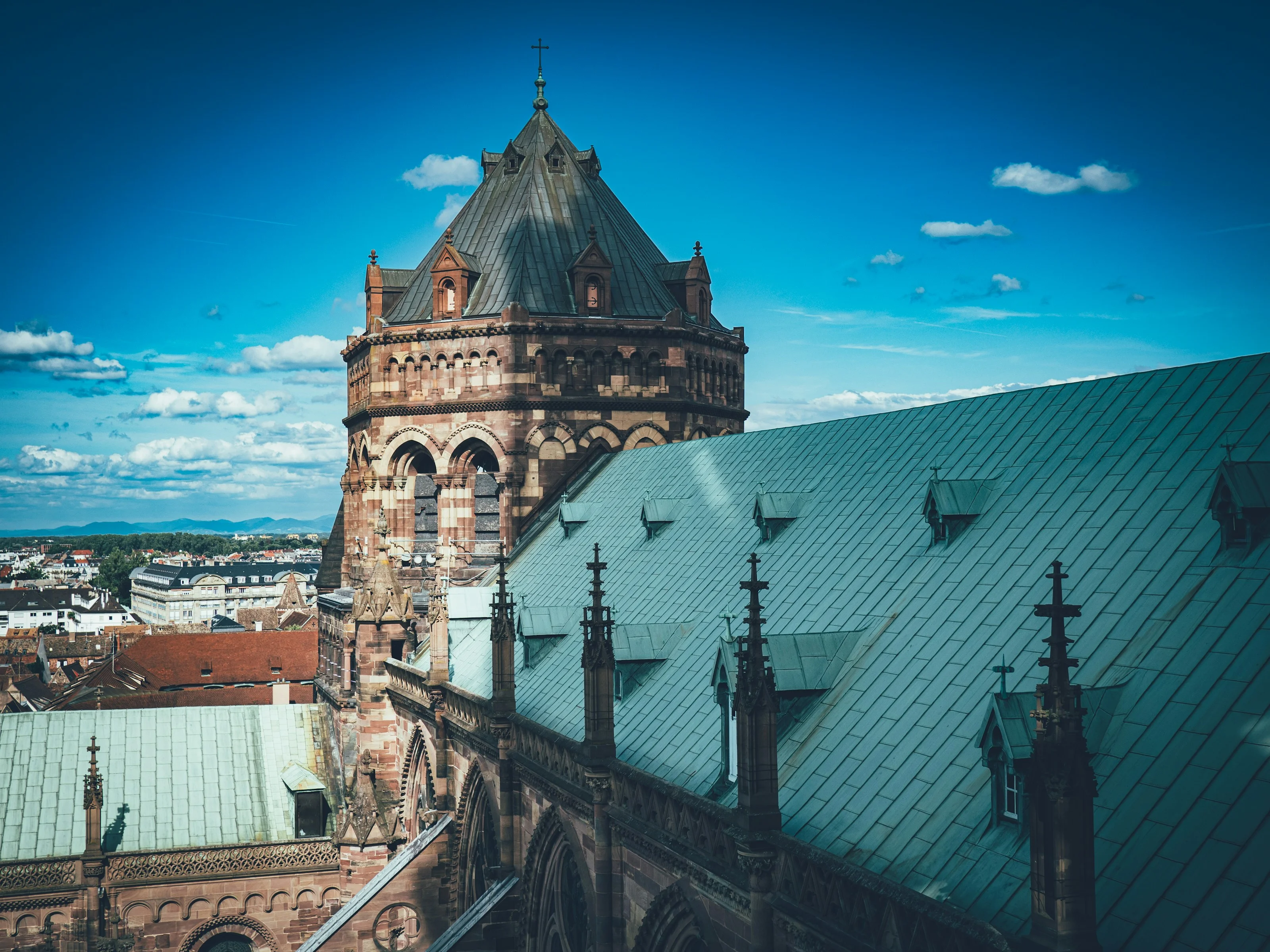
European capital
European Parliament and Council of Europe
After the Second World War Strasbourg was chosen as a symbol of Franco-German reconciliation: it has hosted the Council of Europe since 1949 and the European Parliament since 1958 (which also sits in Brussels). With Brussels and Luxembourg it is one of the cities that carry part of the institutional work of the European Union. The European quarter, north-east of the centre, is reached by tram; access to the buildings depends on the visiting rules in force, to be checked.
Seasonal event
The Christmas market, a reason to travel in itself
The Christkindelsmärik, the “Christ Child market”, dates back to 1570 and is regarded as France’s oldest Christmas market. It opens on the first Saturday of Advent and ends on the evening of 24 December, and dozens of smaller markets spread across the centre. With wooden chalets, mulled wine and gingerbread, it is one of the most visited tourist events in France: accommodation and transport need booking well ahead.
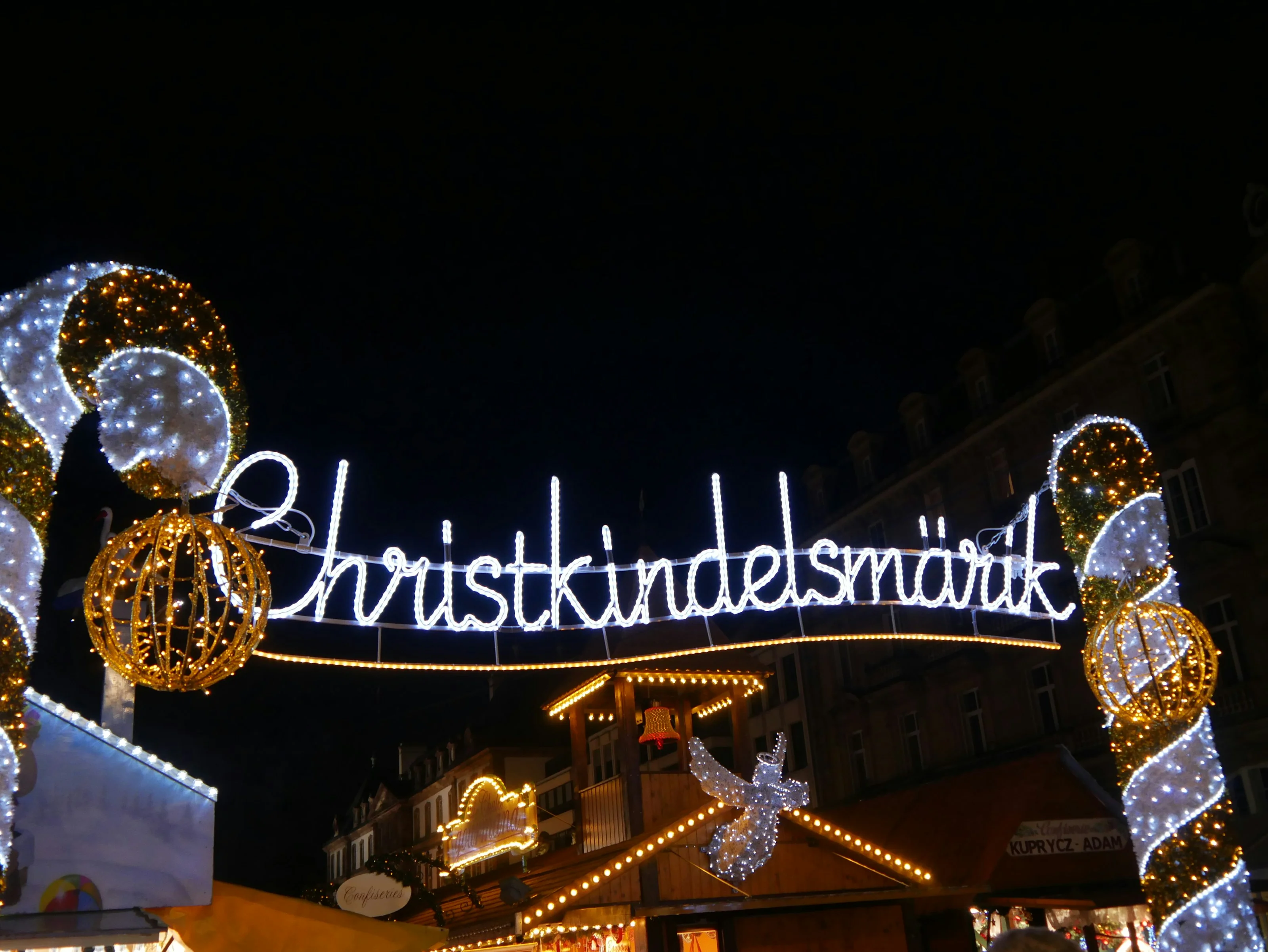
In the crowds, ordinary vigilance (bags, documents, children) is usually enough; follow the safety instructions posted and given by staff on site.
Food and drink
Winstubs, flammekueche, choucroute and Alsace wine
Alsatian cooking pairs Germanic-inspired ingredients with French presentation. Choucroute garnie, fermented cabbage slow-cooked with charcuterie, is the signature dish of the winstubs, the traditional taverns of the centre. Flammekueche (tarte flambée), a thin wood-fired dough topped with crème fraîche, onions and bacon, is the casual counterpart, often shared with a glass of white wine.
The Alsace vineyards, south and west of the city along the wine route, produce Riesling, Gewurztraminer and Pinot Gris among others. In December add bredele (small Christmas biscuits) and mulled wine. As anywhere, a short, seasonal menu beats a well-placed terrace.
Museums
Art, history and Alsatian traditions
| Museum | What you will see |
|---|---|
| Palais Rohan | Three museums in an 18th-century palace beside the cathedral: decorative arts, fine arts and archaeology |
| Musée de l’Œuvre Notre-Dame | Original cathedral sculptures, stained glass, altarpieces and Upper Rhine art up to 1681 |
| MAMCS | The museum of modern and contemporary art, opened in 1998 |
| Historical Museum | Urban, military and economic history of the city, in the former Grande Boucherie |
| Alsatian Museum | Folk arts and traditions: interiors, costumes and everyday objects from the 18th to the 20th century |
Opening hours, closing days and prices change, so check before you go.
Districts and evenings
A city centre that stays awake
Beyond the postcard image, Strasbourg is a lively student and institutional city in the evening. Place Kléber, the largest square in the centre, is the landmark and meeting point. The Krutenau district, south-east of the historic centre, gathers bars and restaurants in a younger mood; the Neustadt, built by the German authorities from 1880, was added to the UNESCO listing in 2017. At dusk the façades of Petite France light up and reflect in the canals.
Excursions
Colmar, Obernai, the wine route and Kehl
The Alsace wine route, the oldest in France, runs through half-timbered villages and medieval castles a short distance from Strasbourg. Obernai gives a condensed taste of traditional Alsace; Colmar deserves a day on its own for its colourful historic centre.
| Destination | From Strasbourg |
|---|---|
| Kehl (Germany) | a few minutes on foot over the Passerelle Mimram, or by tram D |
| Obernai | about 30 min (road or train, to be checked) |
| Colmar | about 1 h (road or train, to be checked): a full day |
| Basel (Switzerland) | about 1 h 25 by train according to Wikivoyage (to be checked) |
Rough figures; lines, timetables and journey times change, so check before you travel.
Strasbourg airports
An airport linked to the centre by train
Strasbourg-Entzheim
The city’s airport, west of Strasbourg at Entzheim. A train reaches the central station in around ten minutes, with frequent departures (to be checked).
EuroAirport Basel-Mulhouse
An alternative depending on routes, about 1 h 30 from Strasbourg by road or by bus then train (to be checked); also handy for combining the stay with a trip to Switzerland.
| Journey | Approximate time | Good to know |
|---|---|---|
| SXB to Strasbourg station by train | about 10 min | Frequent departures; a tram connection is possible to other districts |
| SXB by taxi | about 15 to 25 min depending on traffic (to be checked) | Handy with luggage |
| BSL to Strasbourg | about 1 h 30 to 2 h by bus then train (to be checked) | A short bus ride to Saint-Louis station, then a train |
| Paris to Strasbourg by TGV | about 1 h 50 station to station | Compare with a direct flight depending on your departure city |
| Frankfurt to Strasbourg by train | about 1 h 45 to 2 h 30 (to be checked) | An option for travellers coming from Germany |
Rough figures; lines, timetables and journey times change, so check before you travel.
Getting around
On foot, by tram, bus and bike
The historic centre can be walked in a day or two, and the flat terrain suits cycling (rental and shared bikes exist). The CTS tram has six lines (A to F); line D crosses the Rhine to Kehl, and buses complete the network. Regional trains serve Obernai, Colmar and the rest of Alsace. Lines, zones and fares change, so check before you travel.
Budget
What does Strasbourg cost?
Strasbourg is mid-range to expensive, higher in December when accommodation is in heavy demand and books up months ahead. The centre is walkable, which keeps transport costs down; winstubs and markets allow simple meals at reasonable prices, and some museums offer free access on certain dates or for certain visitors, to be checked.
We do not publish a price grid, which goes out of date quickly: the plane or train ticket is often the easiest cost to optimise, and that is where SniperAir’s monitoring helps.
When to go
When is the best time to visit Strasbourg?
Spring
Mild temperatures, ideal for Petite France and the wine route without the summer crowds.
Summer
The best season for the canals, terraces and trips into the vineyards; storms are possible.
Autumn
Grape harvest in the vineyards, special light on the timbered façades, more moderate crowds.
Winter
Cold winters; the Christmas market transforms the city: the busiest time of year, book early.
A semi-continental climate: about 640 mm of rain a year according to Wikipedia, spread through the year; pack layers in winter and a rain jacket in any season.
By length of stay
How long do you need in Strasbourg?
The essentials
Petite France, the cathedral and its astronomical clock, the historic centre.
Go deeper
Add a boat tour, a museum or two and the European quarter.
Day trips
The wine route, Obernai, or a full day in Colmar.
You might also like
Similar destinations
FAQ
Frequently asked questions about flights to Strasbourg
Do I need to book early for the Christmas market?
Yes: it is Strasbourg’s busiest time of year, and accommodation and transport are usually booked months ahead.
Is Strasbourg worth visiting outside the Christmas season?
Absolutely: the half-timbered architecture, the cathedral and the Alsace wine route can be visited all year, with far fewer crowds.
What’s the best airport for arriving in Strasbourg?
Strasbourg Airport (SXB) is the closest: a train reaches the station in around ten minutes. Depending on your departure city, EuroAirport Basel-Mulhouse (BSL) can also be worth comparing.
How many days do you need in Strasbourg?
One to two days for the essentials, three to add museums and a boat trip, four to five with Colmar, Obernai and the wine route.
When is the best time to visit Strasbourg?
May to September for canals and terraces, December for the Christmas market; autumn is calmer.
Is Strasbourg expensive?
Prices are mid-range to high, higher in December. The centre is walkable; check museums and transport separately.
How do you get around Strasbourg?
On foot in the centre, by tram (lines A to F, line D goes to Kehl), by bus and by bike. Check lines and fares before you travel.
What should I eat in Strasbourg?
Choucroute garnie and flammekueche in the winstubs, with a glass of Riesling or Gewurztraminer; bredele and mulled wine in December.
Which museums should I see in Strasbourg?
The Palais Rohan, the Musée de l’Œuvre Notre-Dame, the MAMCS, the Historical Museum and the Alsatian Museum, depending on your tastes.
How much does a flight to Strasbourg usually cost?
It mostly depends on your departure city, the season and how far ahead you book. The "deals" section above shows real examples of prices already detected by SniperAir for this destination.
How do I get alerted when a flight to Strasbourg drops below my budget?
Create an alert profile with your departure airport, Strasbourg as the destination and your maximum budget. You’ll be notified automatically as soon as a matching price is detected.
Ready to head to Strasbourg?
Set your budget and let SniperAir track the fares.
Create my alert