
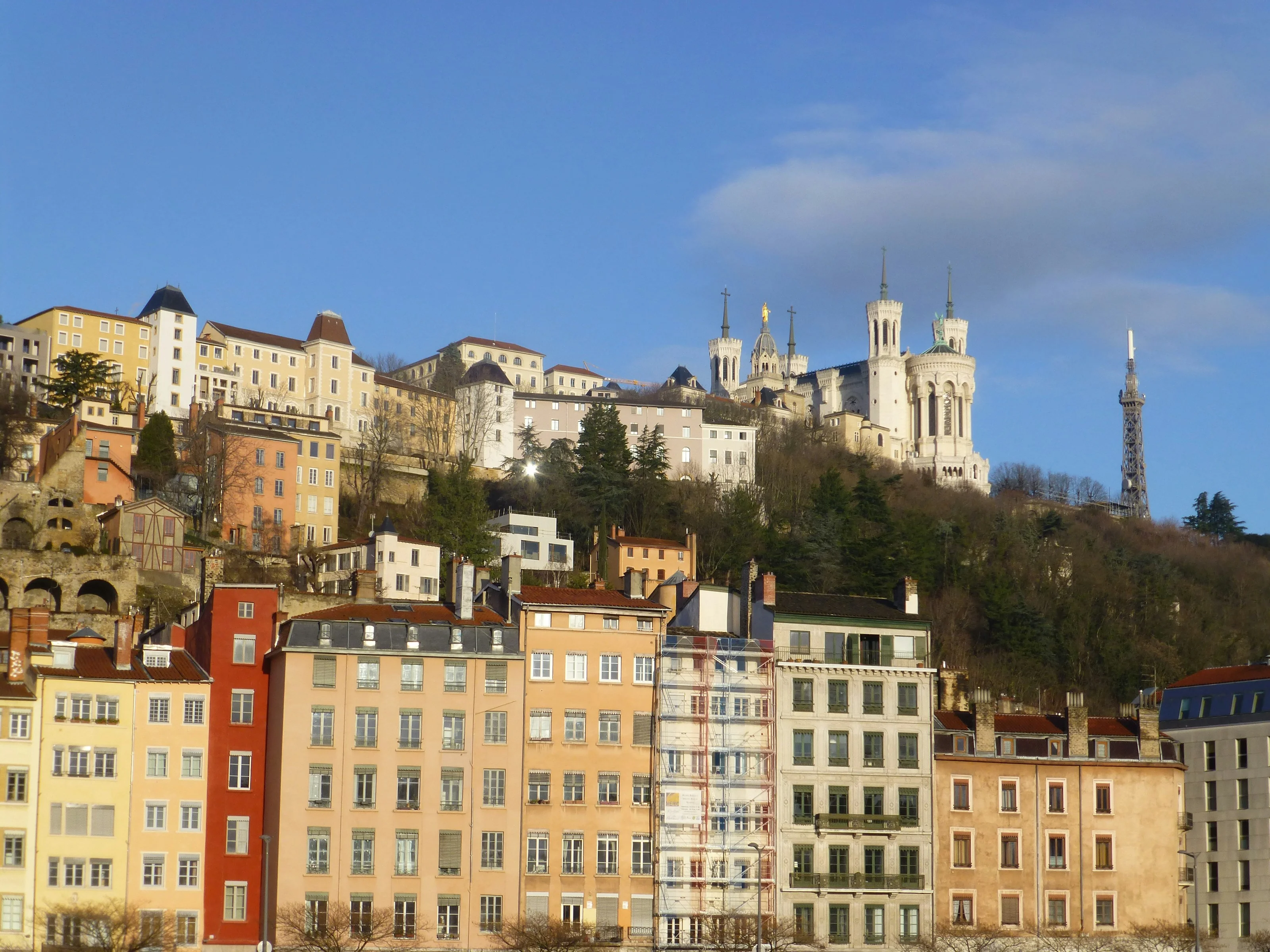
Cheap flights to Lyon
Set your departure airport and your maximum budget: SniperAir tracks prices to Lyon and alerts you as soon as an opportunity matching your criteria appears.
Quick summary
Country
France
Location
Rhône-Saône confluence
Airport
LYS
Known for
Gastronomy
Time zone
UTC+1
Opportunities already spotted to Lyon
Real flight examples spotted by SniperAir, with their reference price.
Loading examples…
2,000 years of history
From Lugdunum to modern Lyon
Lyon's story starts on the Fourvière hill, where the Roman governor Lucius Munatius Plancus founded the colony of Lugdunum in 43 BCE. The site already carried meaning before Rome arrived — a settlement dedicated to the Gallic god Lug once stood here. Lugdunum grew fast: by 27 BCE it was capital of the province of Gallia Lugdunensis, the only city outside Rome allowed to mint gold and silver coins, and home to one of the empire's most extensive aqueduct networks. At its peak the Roman city spread across roughly 350 hectares, one of the largest in Gaul.
That deep history is still walkable today. The Gallo-Roman theatre on Fourvière, built in the 2nd century, now doubles as a summer concert and opera venue, and the Lugdunum museum next to it lays out the finds. It's a rare thing: a European capital where you can stand on the exact ground where the city began, more than two thousand years ago.
UNESCO World Heritage
Vieux Lyon and its hidden traboules
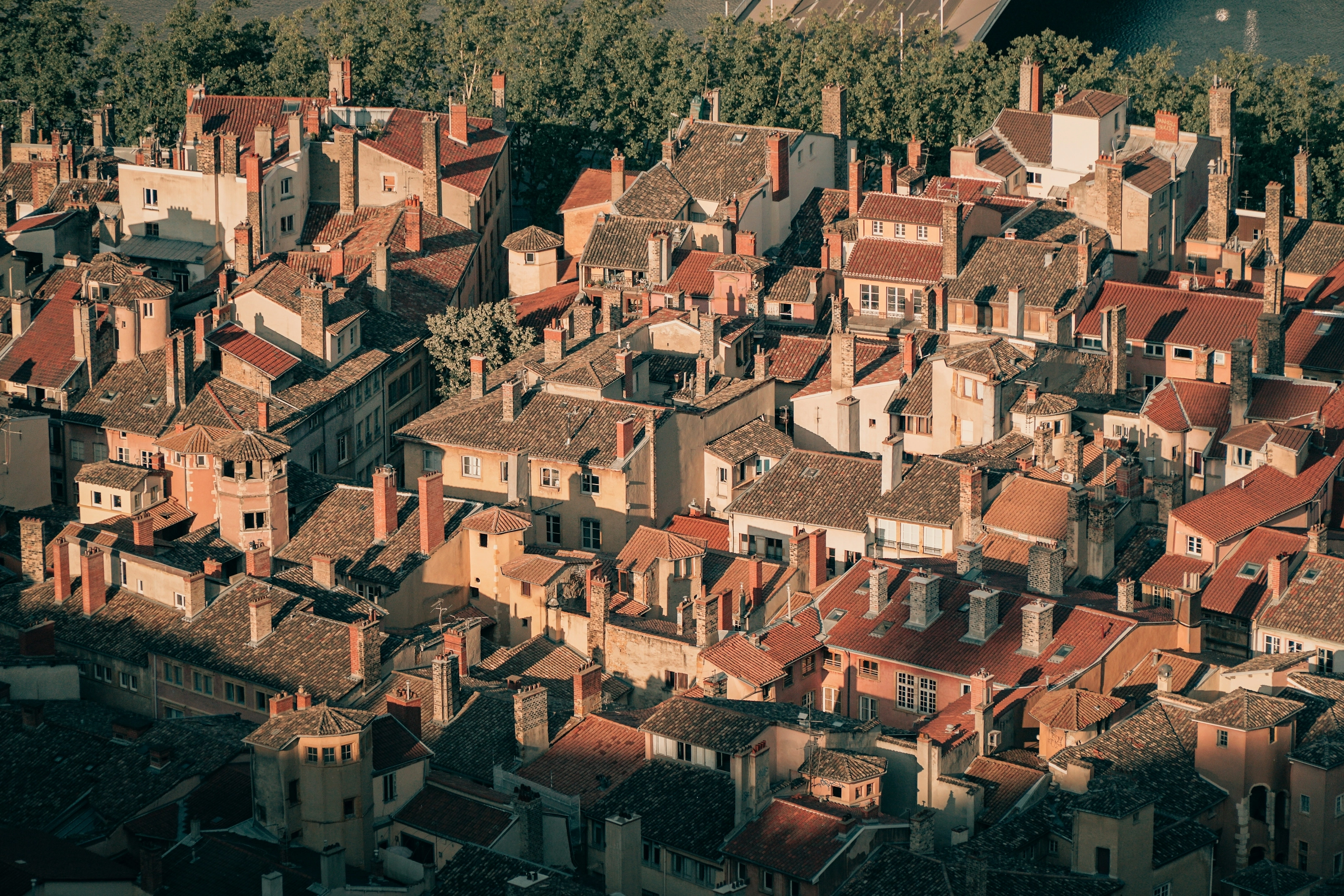
Since December 1998, some 427 hectares of central Lyon — including Vieux Lyon, the Presqu'île and the Fourvière and Croix-Rousse hillsides — have carried UNESCO World Heritage status. Vieux Lyon itself is a dense grid of Renaissance townhouses at the foot of Fourvière, and the best way to explore it is to lose the map: about half of the city's roughly 400 traboules — covered passageways cutting through buildings from one street or courtyard to the next — are concentrated here.
The traboules weren't built for tourists. Some date back to the Renaissance, when they gave residents a dry route down to the river; others took on new life during Lyon's 19th-century silk boom, when the canuts — the city's roughly 30,000 silk workers — used them to move bolts of fabric between workshops without exposing the fragile silk to rain. During the Second World War, the same hidden network served the Resistance. Many traboules stay open to the public during the day; look for small plaques marking the entrances.
The city's landmark
Notre-Dame de Fourvière, watching over Lyon
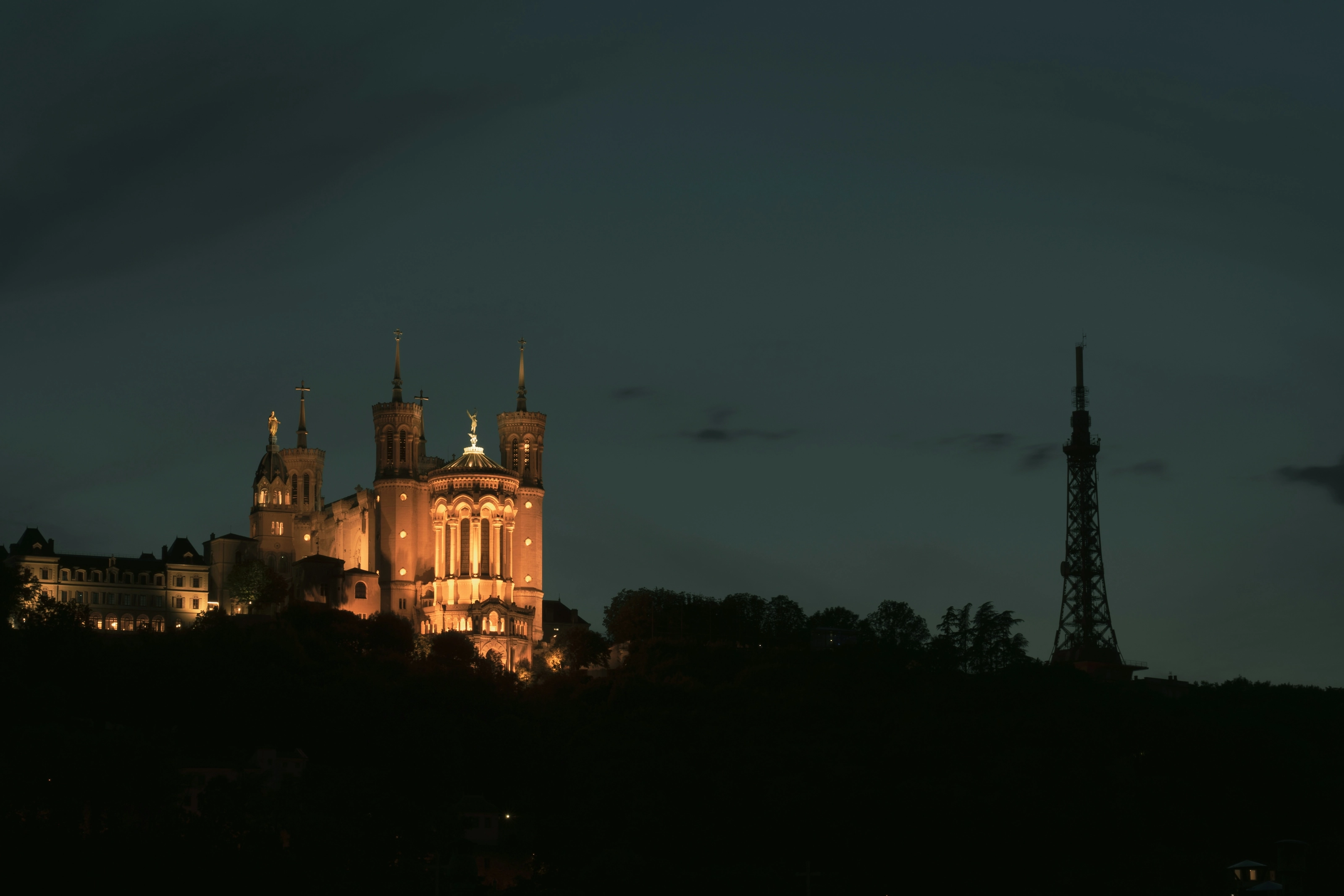
Built between 1872 and 1896 on the site of the old Roman forum, the basilica sits atop the same hill where Lugdunum began. Its ornate towers are visible from most of the city, and each evening the building is lit up — a signature Lyon sight even outside the December festival. Climb up (on foot, or by funicular) and the panorama takes in the Rhône-Saône confluence, the terracotta roofs of Vieux Lyon and, on a clear day, the outline of the Alps far to the east.
Geography
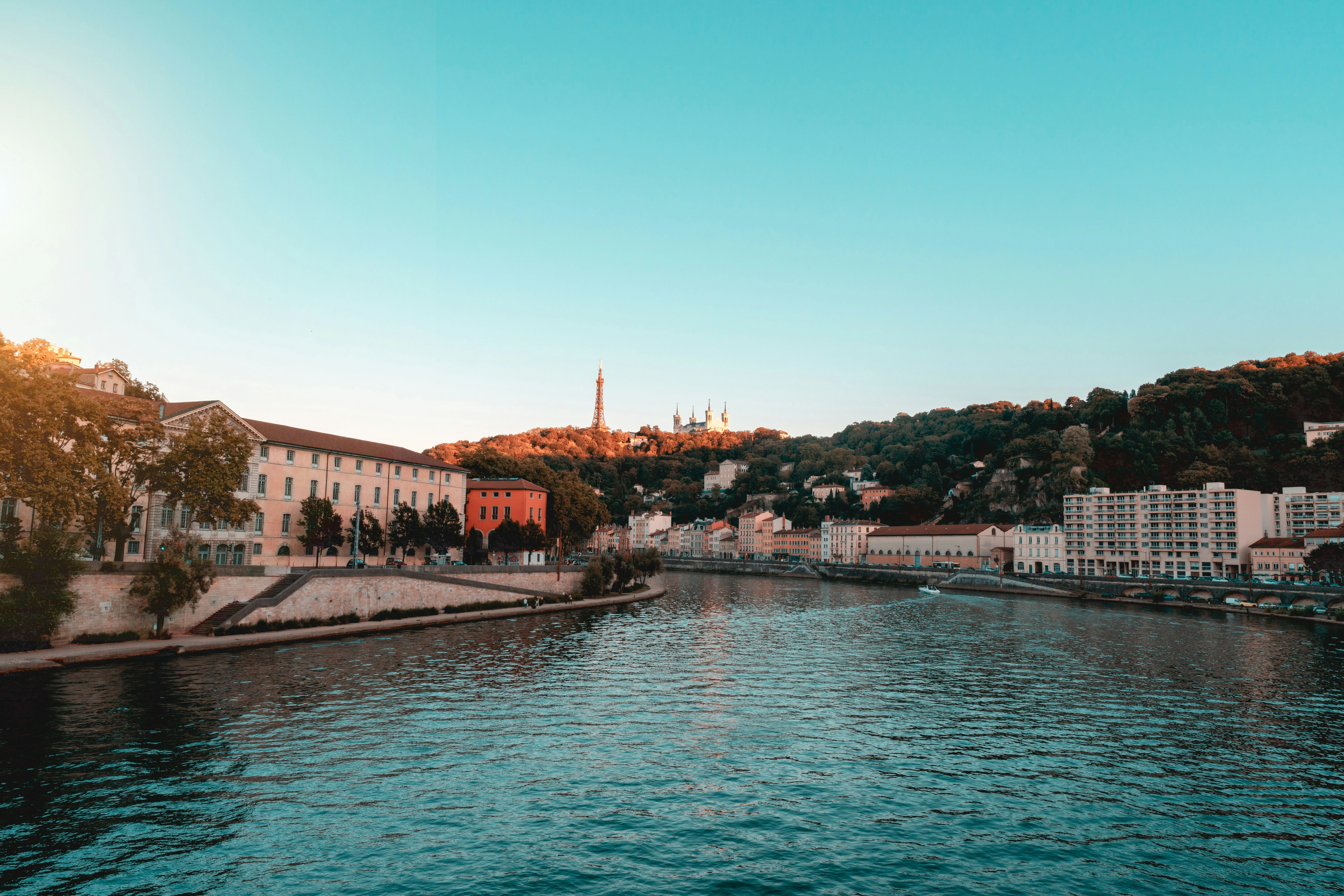
Where the Rhône and the Saône meet
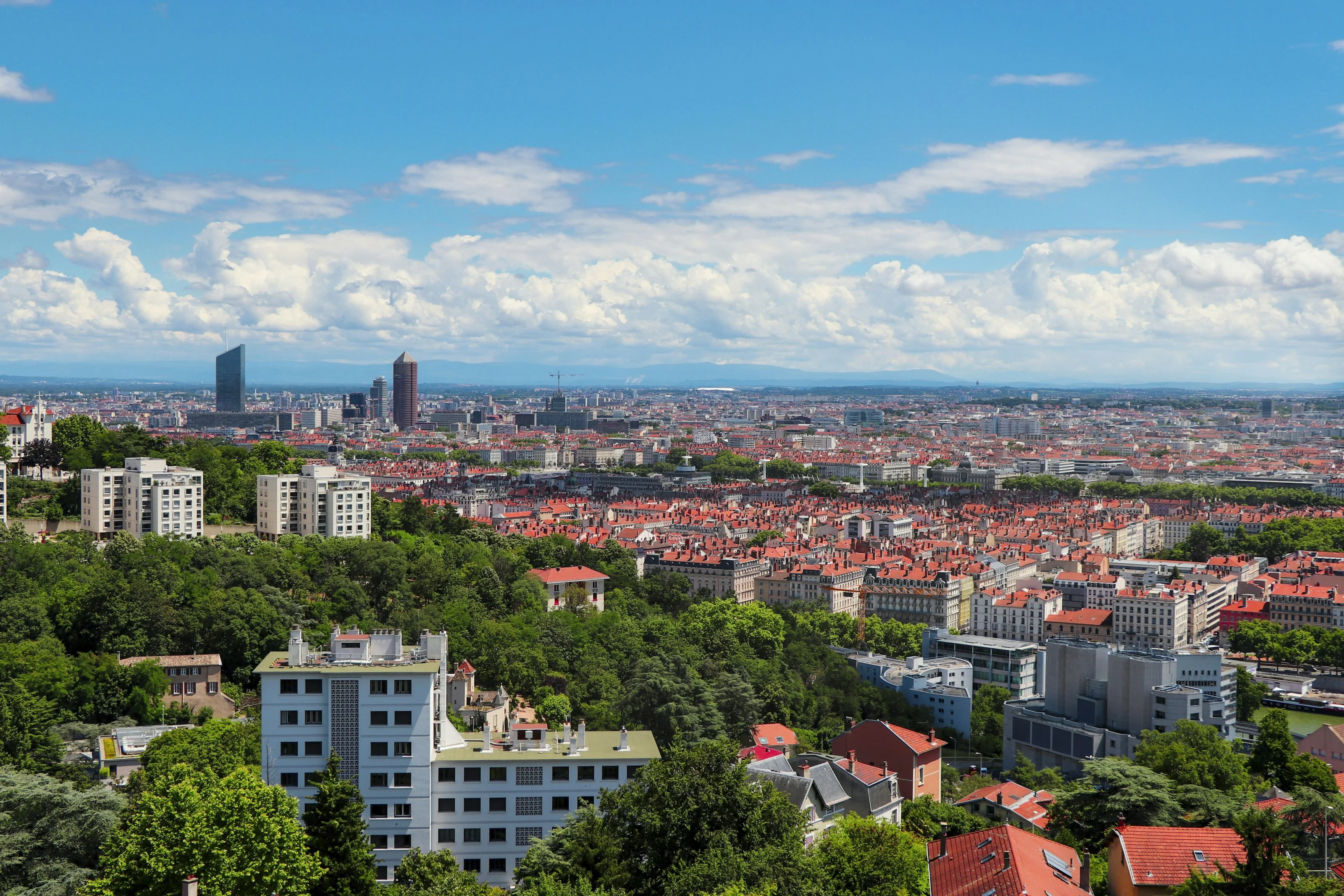
Lyon is built where the Rhône and the Saône join: the Presqu'île, between the two rivers, forms the center, flanked by the hills of Fourvière and Croix-Rousse. A boat ride on the Rhône or the Saône shows the city from another angle, and the landscaped riverbanks invite a stroll at any hour. The city is also a gateway to the Alps, about two hours away by road, and to the nearby Beaujolais vineyards.
Gastronomy
World capital of gastronomy: why critics crowned Lyon in 1935
In 1935, the influential food critic Curnonsky named Lyon "the world capital of gastronomy" — a title the city has defended ever since. Much of the credit goes back further, to the 19th century, when former cooks for Lyon's wealthy silk-trading families opened their own modest restaurants. Known as the "Mères Lyonnaises," these women essentially invented the bouchon lyonnais, the type of restaurant that still defines eating out in Lyon today: unfussy, generous, and built around local produce rather than technique for its own sake.
| Dish | What it is |
|---|---|
| Quenelle de brochet | A poached pike dumpling, usually served in a rich crayfish sauce, a bouchon signature. |
| Tablier de sapeur | Breaded and grilled beef tripe, one of Lyon's more adventurous classics. |
| Cervelle de canut | A herbed fresh cheese spread; despite the name, no brains involved. |
| Andouillette | Coarse pork sausage, a bouchon staple not for the faint-hearted. |
| Gratin de cardons with bone marrow | A winter specialty, typical of Lyon. |
The best way to understand all this in one stop is Les Halles de Lyon Paul Bocuse, the city's landmark covered food market. Renamed in 2006 in honor of chef Paul Bocuse — the "Pope of French cuisine" and a daily presence there for decades — it now brings together close to 60 butchers, cheesemongers, bakers, fishmongers and wine merchants under one roof, several of them with counter seating for lunch on the spot.
Early December
The Fête des Lumières
The story goes back to 1643, when Lyon's leaders pledged an annual tribute to the Virgin Mary in exchange for protection from the plague. That tradition finally converged with a stroke of luck in 1852: a new statue of Mary was due to be installed on Fourvière on 8 September, but flooding delayed the ceremony to 8 December. When the skies unexpectedly cleared that evening, residents spontaneously lit candles — lumignons — on their windowsills to mark the occasion, a gesture that became an annual ritual. Since 1989 it has grown into a four-day international light festival, drawing up to four million visitors to see building facades, squares and entire neighborhoods transformed by projections and installations, Fourvière itself the centerpiece.
Museums and neighborhoods
Beyond the old town
Where the Rhône and Saône meet stands the Musée des Confluences, its angular, futuristic architecture as much a draw as the natural-history and anthropology collections inside. The Musée des Beaux-Arts, set in a former Benedictine abbey near Place des Terreaux, holds one of France's largest fine-art collections outside the Louvre. And when evening comes, the bars and terraces of Croix-Rousse — the old silk-weavers' hill — and the Rhône riverbanks are where Lyon actually goes out. The Lugdunum museum on Fourvière hill presents Roman Lyon. Opening hours and closing days vary, so check before you go.
Day trips
Pérouges and the Beaujolais vineyards
About 35 km from Lyon, the walled medieval village of Pérouges is small enough to see in an afternoon and well preserved enough to have doubled as a film set more than once. In the other direction, the Beaujolais wine region starts as close as 25 km out and stretches north — an easy way to turn a Lyon trip into a day of vineyard visits and tastings without renting a car for long distances.
When to go
Lyon by season
Spring
Mild and green, with the riverbanks at their best for walking or cycling.
Summer
Warm, long days and busy bouchon terraces; it can get quite hot in July and August, so book restaurant tables ahead.
Autumn
A strong food season: game and richer dishes appear on bouchon menus.
Winter
Cool, but memorable: the Fête des Lumières transforms the whole city in early December.
The climate is temperate, with hot and sometimes stormy summers and cool, damp winters, with fog on some days. The most pleasant periods to visit are generally May-June and September-October.
Budget
What cost level to expect in Lyon?
Lyon is noticeably cheaper than Paris for the same standard, especially for food: a proper bouchon meal is affordable in a way Parisian bistros rarely are. Accommodation is the biggest expense, with prices rising during the Fête des Lumières and major trade fairs.
We do not publish a price grid, which would quickly go out of date: the plane ticket is often the easiest item to optimize, and that is where SniperAir's price tracking helps.
By length of stay
How long to spend in Lyon?
The essentials
Vieux Lyon, traboules, Fourvière and a first bouchon meal.
Going deeper
Add Les Halles Paul Bocuse, the Musée des Confluences, the fine-arts museum and a boat ride.
Day trips
Pérouges, a day in the Beaujolais vineyards, or the Fête des Lumières in December.
Getting around
Metro, tram, funiculars and bikes
The center is largely walkable. The metro has four lines (A to D), complemented by trams, buses and two funiculars, nicknamed the "ficelles", that climb to Fourvière from Vieux Lyon. Shared bikes are also available. The two main stations, Part-Dieu and Perrache, serve regional and high-speed trains to other cities. Lines, schedules and tickets change: check them before you travel.
Lyon airport
Lyon-Saint-Exupéry, linked to downtown by the Rhônexpress
Lyon-Saint-Exupéry
About 25 km east of the city center, connected to Lyon-Part-Dieu station by the Rhônexpress tram. The airport also has its own TGV station, Lyon-Saint-Exupéry.
| Mode | Approximate time | Good to know |
|---|---|---|
| Rhônexpress | about 29 min to Part-Dieu | Departures about every 15 min for much of the day |
| Taxi or ride-hailing | about 30 to 45 min | Depends on traffic; handy with luggage |
| Lyon-Saint-Exupéry TGV station | direct link to other cities | Station connected to the terminal; for central Lyon, the Rhônexpress is the most direct option |
Rough orders of magnitude from the information available; lines, schedules and fares change, so check before you travel.
You might also like
Similar destinations
FAQ
Frequently asked questions about flights to Lyon
Is Lyon worth visiting just for the food?
For a lot of travelers, yes: a couple of bouchon meals and a visit to Les Halles Paul Bocuse can justify the trip on their own, regardless of the sights.
How does the cost of a trip compare to Paris?
Noticeably lower, particularly for accommodation and for restaurant meals at a comparable level. Prices rise during the Fête des Lumières.
What airport do you fly into for Lyon?
Lyon-Saint-Exupéry (LYS), about 25 km from downtown, connected to Part-Dieu station by the Rhônexpress tram.
How long does it take to get from Lyon airport to the center?
The Rhônexpress takes about 29 minutes to Part-Dieu, with a departure about every 15 minutes; by taxi, allow 30 to 45 minutes depending on traffic.
What's the best time to visit Lyon?
May-June and September-October for weather and food; early December for the Fête des Lumières, which should be booked very early.
How many days do you need in Lyon?
Two days for the essentials (Vieux Lyon, traboules, Fourvière), three to four to add the museums and the Halles, more for day trips.
How do I get around Lyon?
On foot in the center, by metro, tram, bus and funicular, and by shared bike; Part-Dieu and Perrache stations serve other cities.
What should I eat in Lyon?
Quenelle de brochet, tablier de sapeur, cervelle de canut, andouillette and gratin de cardons, in a traditional bouchon.
How much does a flight to Lyon usually cost?
It mostly depends on your departure city, the season, and how far ahead you book. The "opportunities" section above shows real price examples already detected by SniperAir for this destination.
How do I get alerted when a flight to Lyon drops below my budget?
Create an alert profile with your departure airport, Lyon as the destination, and your maximum budget. You'll be notified automatically as soon as a matching price is detected.
Ready to head to Lyon?
Set your budget and let SniperAir track the fares.
Create my alert