
Cheap flights to Dubrovnik
Set your departure airport and maximum budget: SniperAir tracks prices to Dubrovnik and alerts you the moment a deal matching your criteria appears.
Quick summary
Country
Croatia
Continent
Europe
Airport
DBV
Currency
Euro (EUR)
Time zone
UTC+1 (UTC+2 in summer)
Deals already spotted to Dubrovnik
Real flight examples detected by SniperAir, with their reference price.
Loading examples…
Why watch Dubrovnik with SniperAir
A city that is costly once you land, so a cheap flight matters
Choose your departure
Enter your departure airport and your maximum budget for a flight to Dubrovnik (DBV).
SniperAir watches
Our systems continuously compare new prices with the route's real price history. SniperAir monitors prices and alerts you; it does not sell or book tickets.
You get an alert
As soon as a price matches your criteria, you are notified without having searched anything yourself.
Dubrovnik is one of the Adriatic's busiest destinations and, according to Wikivoyage, the most expensive city in Croatia. When rooms and restaurant tables already take a big share of the budget, the airfare is the part you can actually work on, and that is the part SniperAir watches.
Airport and getting into town
A south-east airport, no railway, served by shuttle and bus
Dubrovnik Airport (DBV)
Dubrovnik Airport sits south-east of the city near Čilipi, roughly 15 to 20 km from the centre depending on the source. Croatia Airlines runs a shuttle to the main bus station at Gruž, and from there local buses 1A, 1B and 3 reach Pile Gate at the edge of the Old Town. A taxi is quicker and costs more. There is no railway into Dubrovnik: trains stop at Split and the rest of the trip is by bus.
Distances and times are approximate, based on Wikivoyage (EN, DE, FR); shuttle times change with the season. We do not quote fares.
Coming from Split by road, the coast highway is spectacular but slow, around four hours out of season and up to six in high summer. The Pelješac Bridge, opened in July 2022, now bypasses the Bosnian corridor at Neum and has no toll, according to Wikivoyage. Long-distance coaches also link Dubrovnik with Zagreb, Mostar, Sarajevo and, in season, the Montenegrin coast.
Old town and landmarks
Walls, Stradun, palaces and forts above the sea
Dubrovnik's old town, a UNESCO World Heritage Site since 1979, fits inside a rectangle of stone ringed by walls. Much of it was rebuilt after the 1667 earthquake, which gives it its Baroque unity, and repaired again after the 1991 siege. The places below have photos; the Sponza Palace, the cathedral and Roland's Column are covered in text.
The city walls
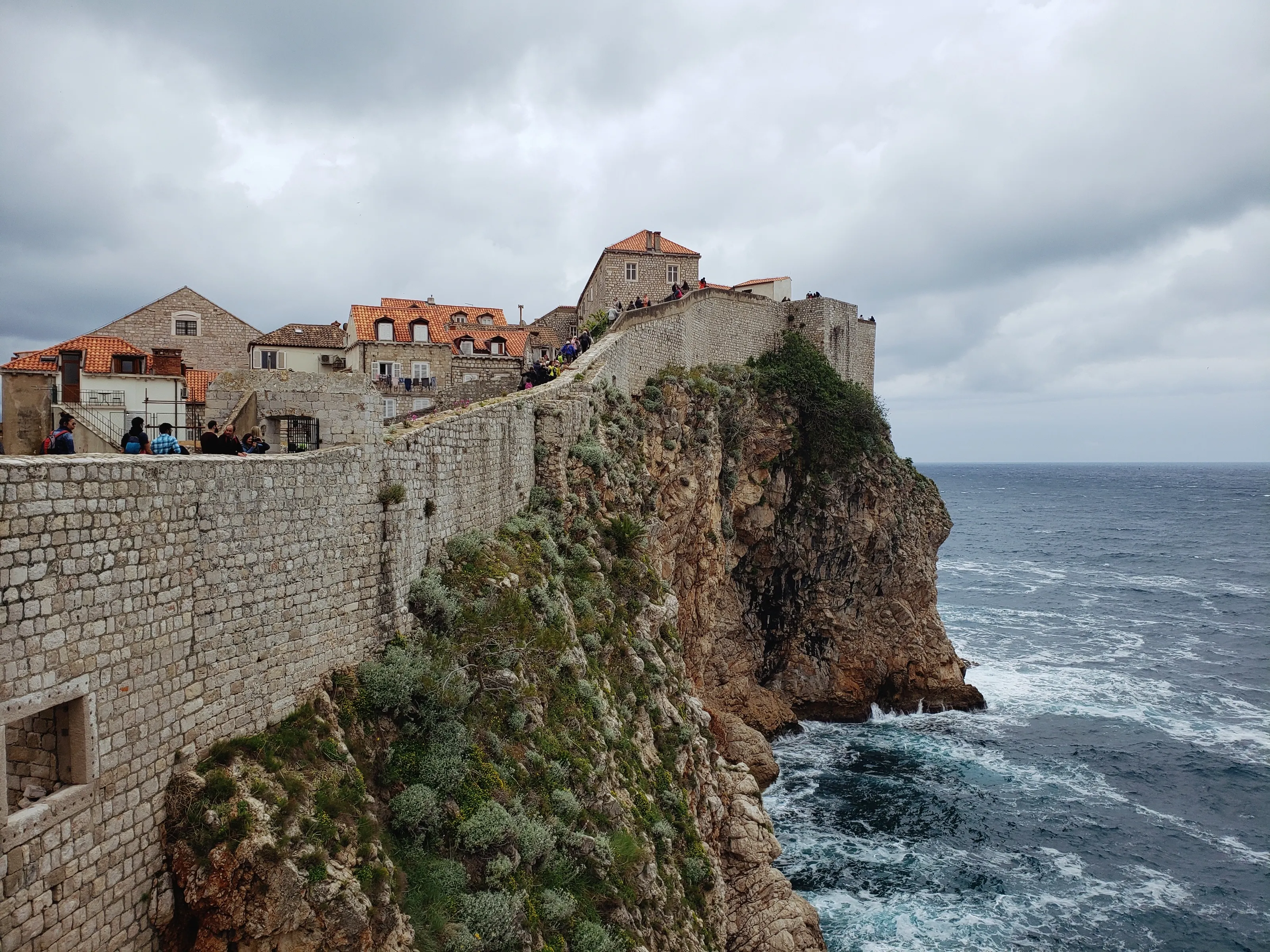
About two kilometres of walls, fully walkable, make one of Europe's best-known urban walks, with the sea on one side and the rooftops on the other. There are three entrances, one near Pile Gate. Wikivoyage notes the ticket includes Fort Lovrijenac; avoid the hottest hours of July and August.
The Stradun
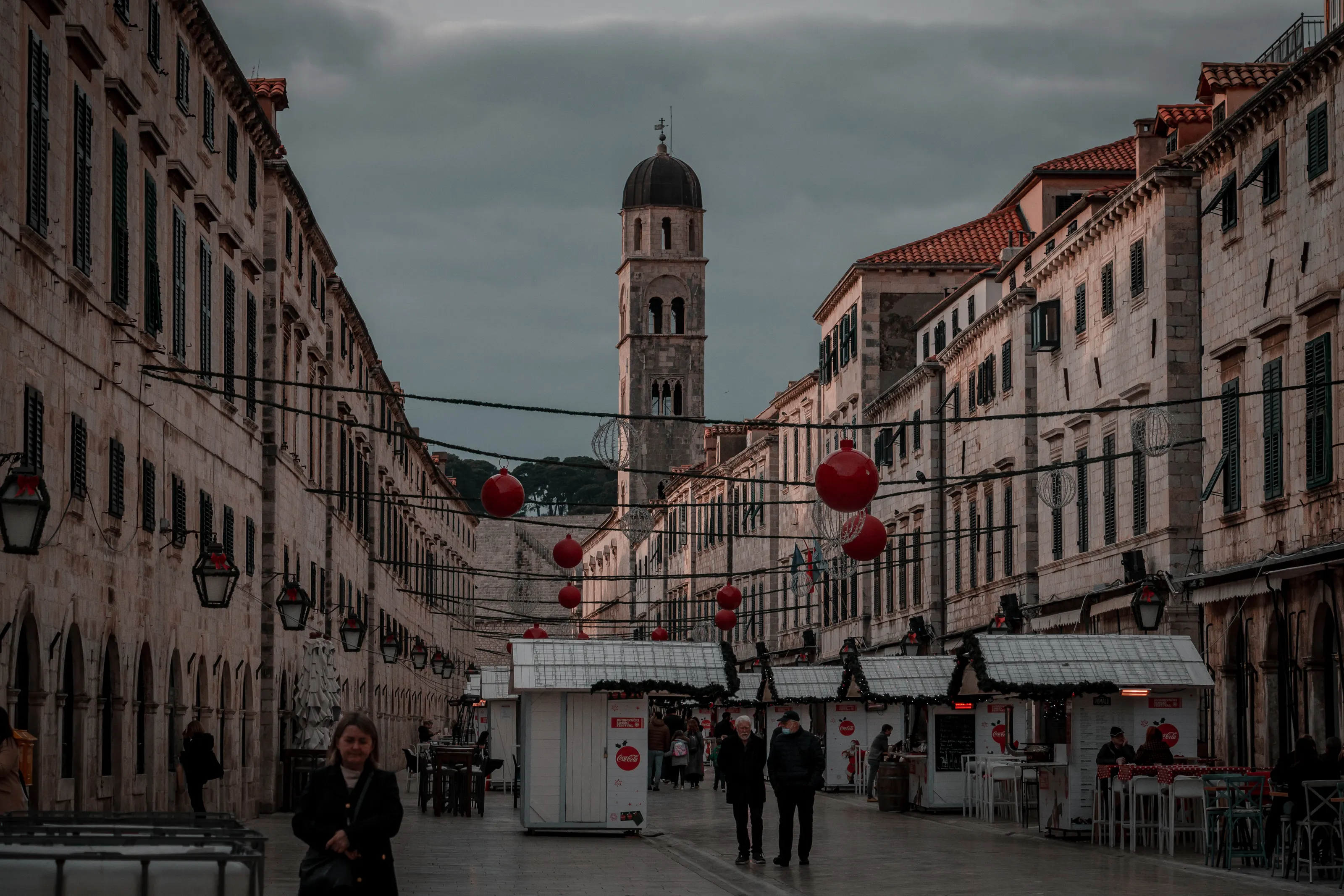
The wide paved street that crosses the city east to west, also called Placa, follows the line of a former channel or marsh filled in during the Middle Ages. Its uniform Baroque façades, with arched ground-floor entrances, come from the rebuilding after 1667. It is where the evening stroll and the big events happen.
Rooftops of the old town
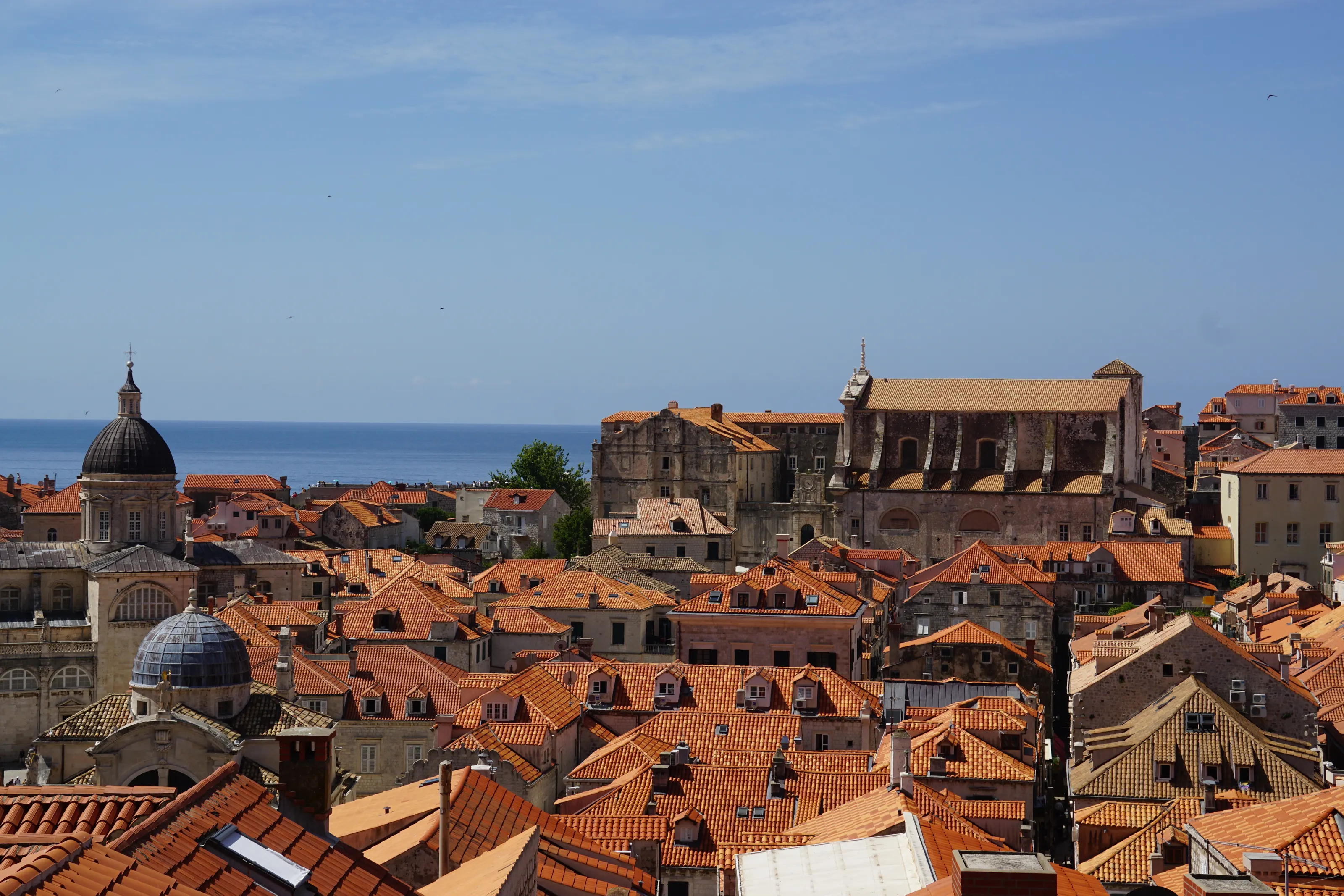
From above, red tiled roofs, domes and bell towers crowd down to the water. Mount Srđ, which overlooks the city, gives the best view; you can walk up in about an hour and a half or take the cable car, which reopened in 2010 after being destroyed in 1991.
Harbour and city at dusk
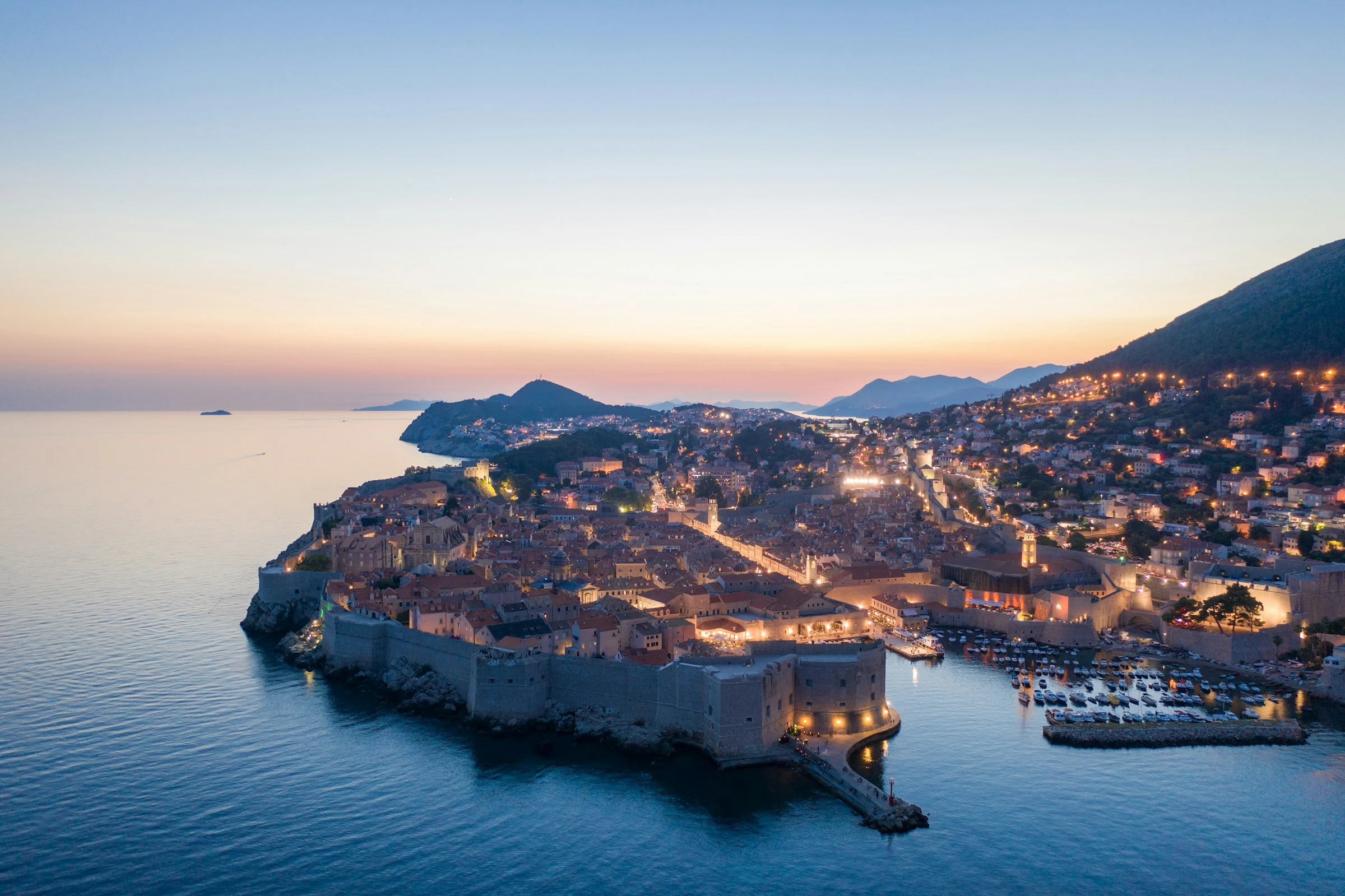
The old harbour, sheltered by Fort St John, opens onto the sea. In the evening, when the lights come on along the walls and the houses on the hillside, the city looks its best, whether seen from the heights or from a boat.
The Gruž bridge
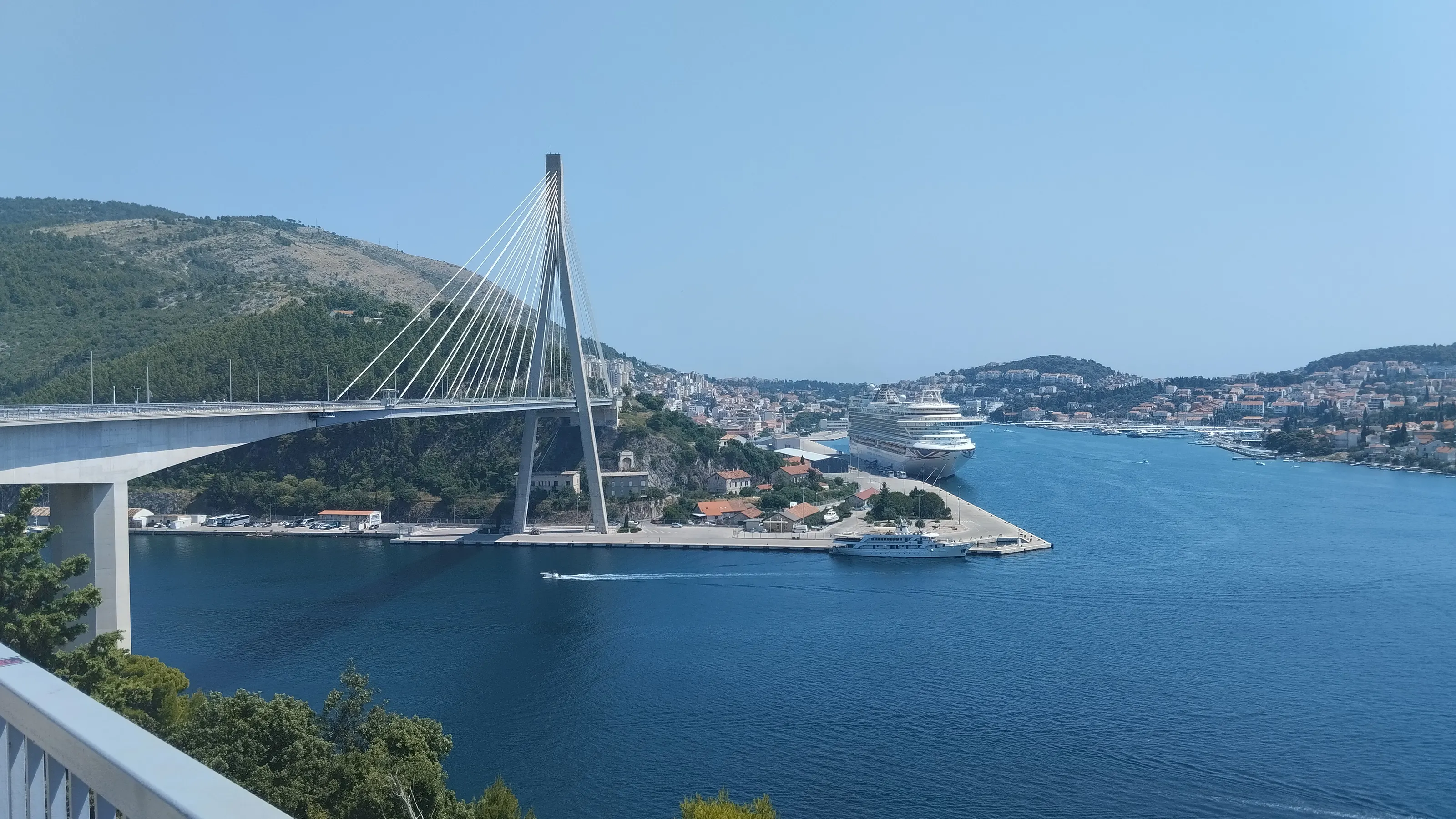
A little over two kilometres to the north-west, Gruž bay holds the ferry and cruise port, the main bus station and the large cable-stayed bridge across the inlet. Most travellers arriving by bus or boat land on this side.
Sponza, cathedral and Roland, in text
The Gothic-Renaissance Sponza Palace is one of the few buildings that predate the 1667 earthquake and holds the State Archives. The Cathedral of the Assumption is Roman Baroque, from the 18th century. Roland's Column, beside the Bell Tower, carries the flag that opens the Summer Festival each year; the festival has run since 1949, from 10 July to 25 August according to Wikivoyage. Fort Lovrijenac, on its rock, carries the city's motto: freedom is not sold for all the gold in the world.
Museums and culture
Republic history, an old pharmacy and Jewish heritage
Rector's Palace
Once the seat of government of the Republic of Ragusa, the palace houses the city museum, with historic rooms and an arcaded atrium. The first building dates from 1435, was rebuilt after gunpowder explosions and altered again after 1667.
The Franciscan monastery and pharmacy
Its Romanesque cloister is one of the calmest spots in the old town. The museum keeps items from a pharmacy described by Wikivoyage as among the oldest in the world.
Synagogue, maritime and icons
The synagogue, in the former ghetto on Žudioska street, is described by Wikivoyage as the second-oldest still in use in Europe, and a small museum tells the community's story. The Maritime Museum, the icon museum of the Serbian Orthodox church and the Natural History Museum round out the list. In Cavtat, Bukovac House shows the work of painter Vlaho Bukovac. We do not quote admission prices.
Food and drink
Seafood, rozata and Ston oysters
Ragusan dishes
Dubrovnik cooking is mild and traditional. Look for zelena menestra (cabbage and vegetables stewed with meat), pašticada, a slow-cooked beef dish, and dubrovačka rozata, a caramel custard dessert. Fish and seafood dominate the old-town menus, and there are a few wood-fired pizzerias.
Ston, oysters and salt pans
About an hour to the west, Ston is known for oysters, salt pans still in use and a five-kilometre stone wall. Many visitors make it a day trip and carry on to the Pelješac peninsula, a wine-growing area.
Tables and seasons
High old-town rents show up on menus. Between November and March many top-end restaurants close, according to Wikivoyage, so outside the season you may need to walk beyond the main streets for a good meal.
Getting around
Pedestrian old town, city buses and water taxis
On foot
The old town is entirely pedestrian: a main street east to west, then stepped alleys on both sides. Wheeled suitcases are discouraged and, according to Wikivoyage, can bring a fine since summer 2023; pack a soft bag.
Buses and boats
City buses run by Libertas link the old town with the Gruž bus station, the Lapad beaches and Babin Kuk. Water taxis leave from the harbour. Parking is the real problem in season, so leave the car at your lodging.
Day trips
From the bus station, coaches go to Zagreb, Split, Mostar and, in summer, the Montenegrin coast towns. Boats serve the Elaphiti Islands, Lokrum and Mljet.
Budget and precautions
An expensive destination, especially in summer
Price level
Dubrovnik is the most expensive city in Croatia and, per Wikivoyage, the most expensive in the Balkans outside the capitals; restaurant meals cost about twice what they do in Herceg Novi across the Montenegrin border. The currency is the euro. We do not quote amounts because we could not cross-check up-to-date figures from two independent sources.
By air
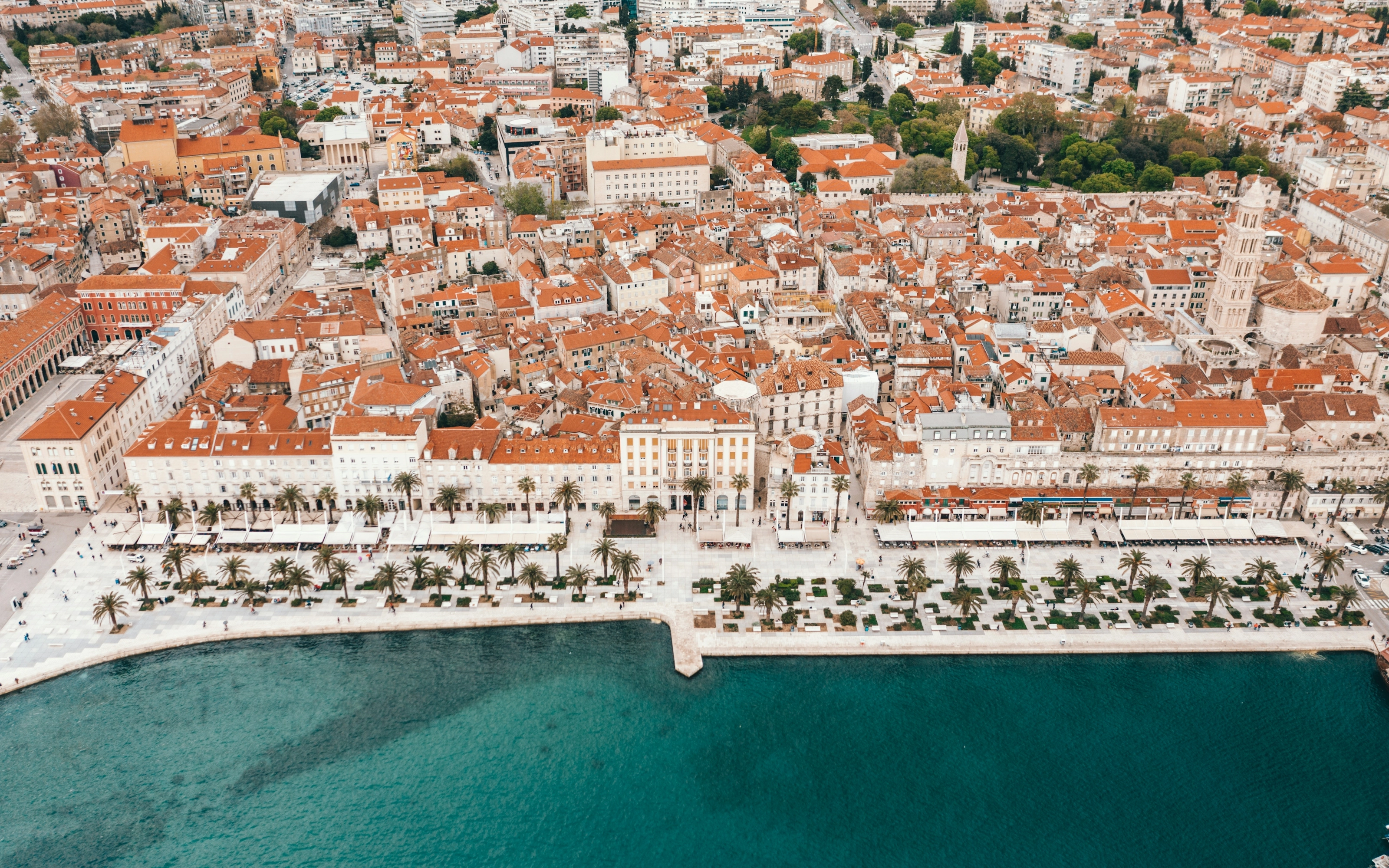
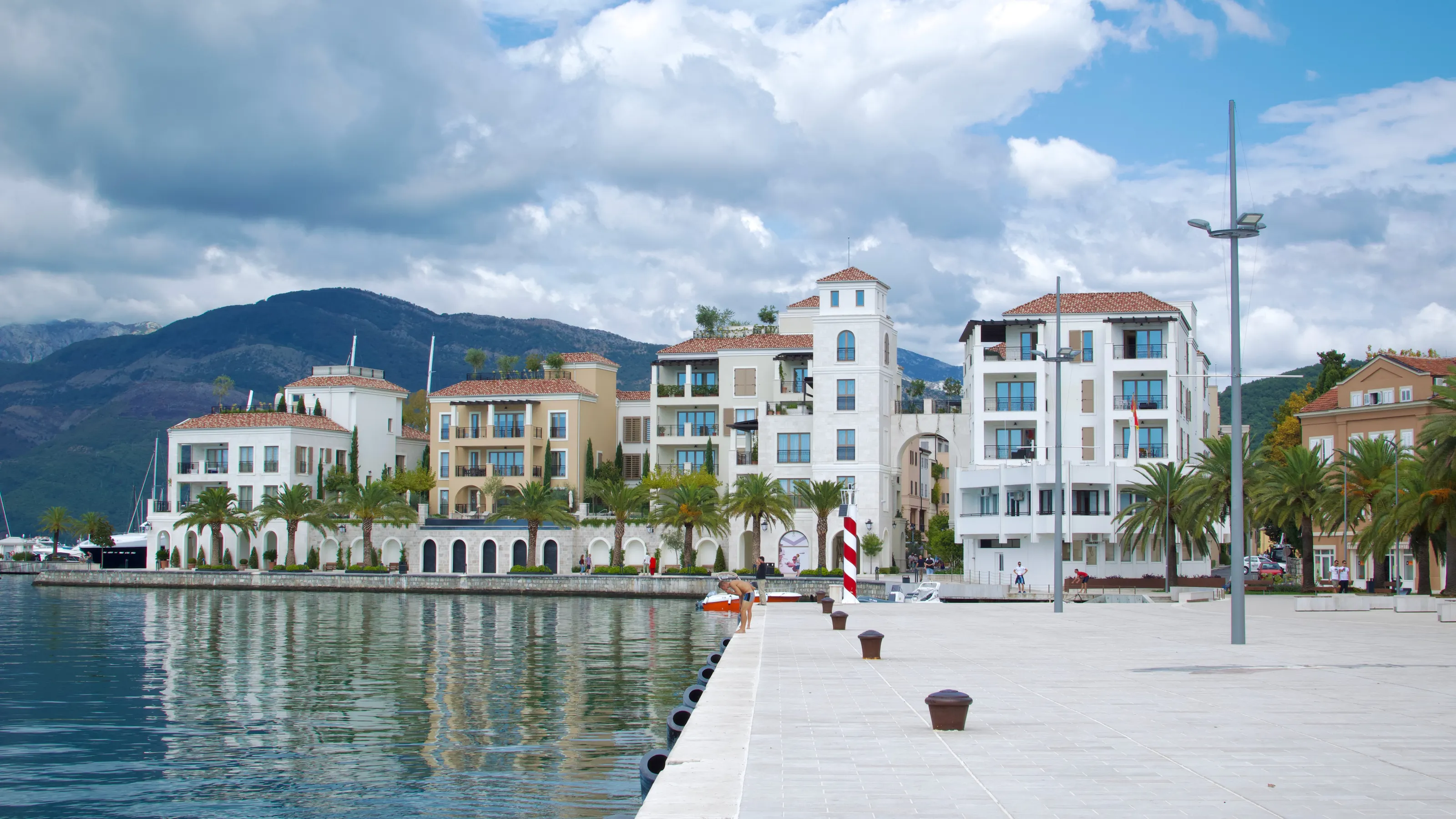
The flight is the most variable item. SniperAir monitors prices to DBV and compares them with the route's history, but it does not sell or book tickets. Split (SPU), Tivat (TIV) or Zagreb (ZAG) can be watched alongside.
Entry and safety
Croatia is in the Schengen area and the euro zone: entry rules depend on your nationality, so check official sources and your own government's travel advice. The city is safe; watch your belongings in crowds. The polished stone streets can be slippery.
Best time to go
Hot, lively summers and mild, quiet winters
Winter (December to February)
Mild and wetter, with the bora, a cold wind that blows between October and April. Few crowds, but many restaurants close.
Spring (March to May)
A pleasant time to walk the walls without the crowds; boat excursions start up again.
Summer (June to August)
Hot, fairly dry and very busy, with the Summer Festival from 10 July to 25 August. Thunderstorms are possible.
Autumn (September to November)
The sea is still warm in September and the crowds thin; November turns wetter.
The climate is Mediterranean, with hot summers and mild, wet winters, according to Wikipedia (EN, DE). We give no precise temperatures because they could not be cross-checked; look at the forecast before you go. May-June and September-October are often the best balance of weather and crowds.
By length of stay
What to do in Dubrovnik depending on how long you stay
The essentials
The walls, the Stradun, Rector's Palace, the harbour and sunset from Mount Srđ.
Islands and museums
A day on the Elaphiti Islands or Lokrum, Banje beach, the museums, Cavtat or the Konavle valley.
The south coast
Ston and Pelješac, Mljet, Korčula, the Bay of Kotor and Perast in Montenegro, or Mostar as a day trip.
In pictures
Dubrovnik in pictures
You might also like
Similar destinations
FAQ
Frequently asked questions about flights to Dubrovnik
How do I get from Dubrovnik Airport to the old town?
The airport (DBV) is roughly 15 to 20 km from the centre depending on the source. A shuttle bus runs to the Gruž bus station, where city buses 1A, 1B and 3 reach Pile Gate; a taxi is quicker. Check timetables before you travel.
When is the best time to visit Dubrovnik?
May-June and September-October give the best balance of weather and crowds. July-August is lively but hot and packed, with the Summer Festival; winter is quiet but many restaurants close.
Is Dubrovnik expensive?
Yes: according to Wikivoyage it is the most expensive city in Croatia. We do not quote amounts because we could not cross-check them; the flight is the part you can optimise with a price alert.
How long should I stay in Dubrovnik?
Two days for the old town and the walls; four to five days if you add the Elaphiti Islands, Ston, Cavtat or a trip into Montenegro.
How do I get around Dubrovnik?
On foot in the old town, which is pedestrian. City buses link Gruž, Lapad and Babin Kuk, and water taxis leave from the harbour. Wheeled suitcases are discouraged in the old town.
What should I eat in Dubrovnik?
Rozata (caramel custard), pašticada, zelena menestra, fish and seafood, and oysters from Ston on a day trip.
How much does a flight to Dubrovnik usually cost?
The price depends mainly on your departure city, the season and how far ahead you book. The opportunities section above shows real examples of prices SniperAir has already detected for this destination.
How can I be alerted when a flight to Dubrovnik drops below my budget?
Create an alert profile with your departure airport, Dubrovnik (DBV) as the destination and your maximum budget. You are notified automatically as soon as a matching price is detected. SniperAir monitors prices and alerts you; it does not sell or book tickets.
Ready to head to Dubrovnik?
Set your budget and let SniperAir monitor fares for you.
Create my alert