
Cheap flights to Larnaca
Set your departure airport and maximum budget: SniperAir tracks prices to Larnaca and alerts you the moment a deal matching your criteria appears.
Quick summary
Country
Cyprus
Continent
Europe
Airport
LCA
Currency
Euro
Time zone
UTC+2
Deals already spotted to Larnaca
Real flight examples detected by SniperAir, with their reference price.
Loading examples…
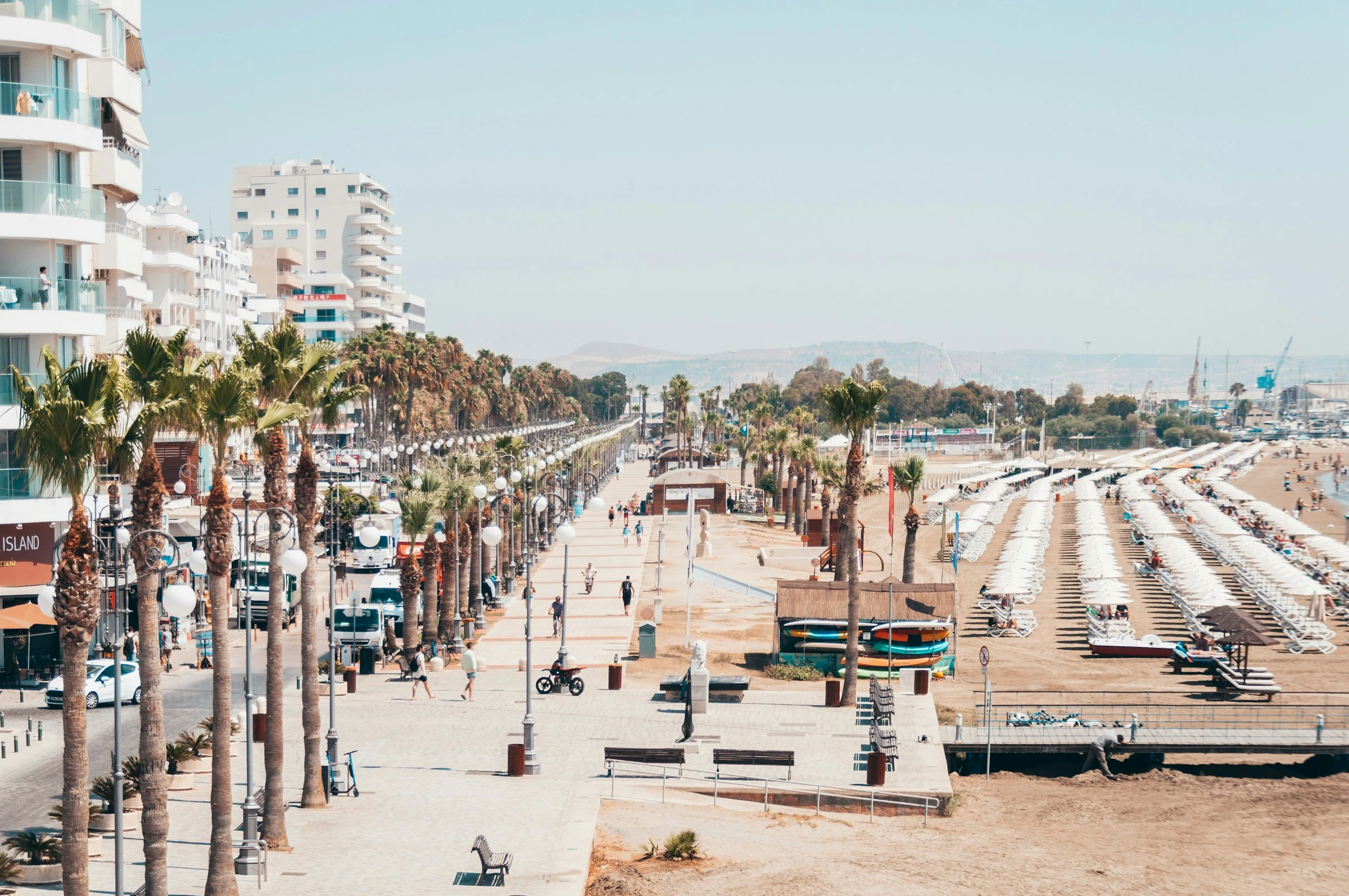
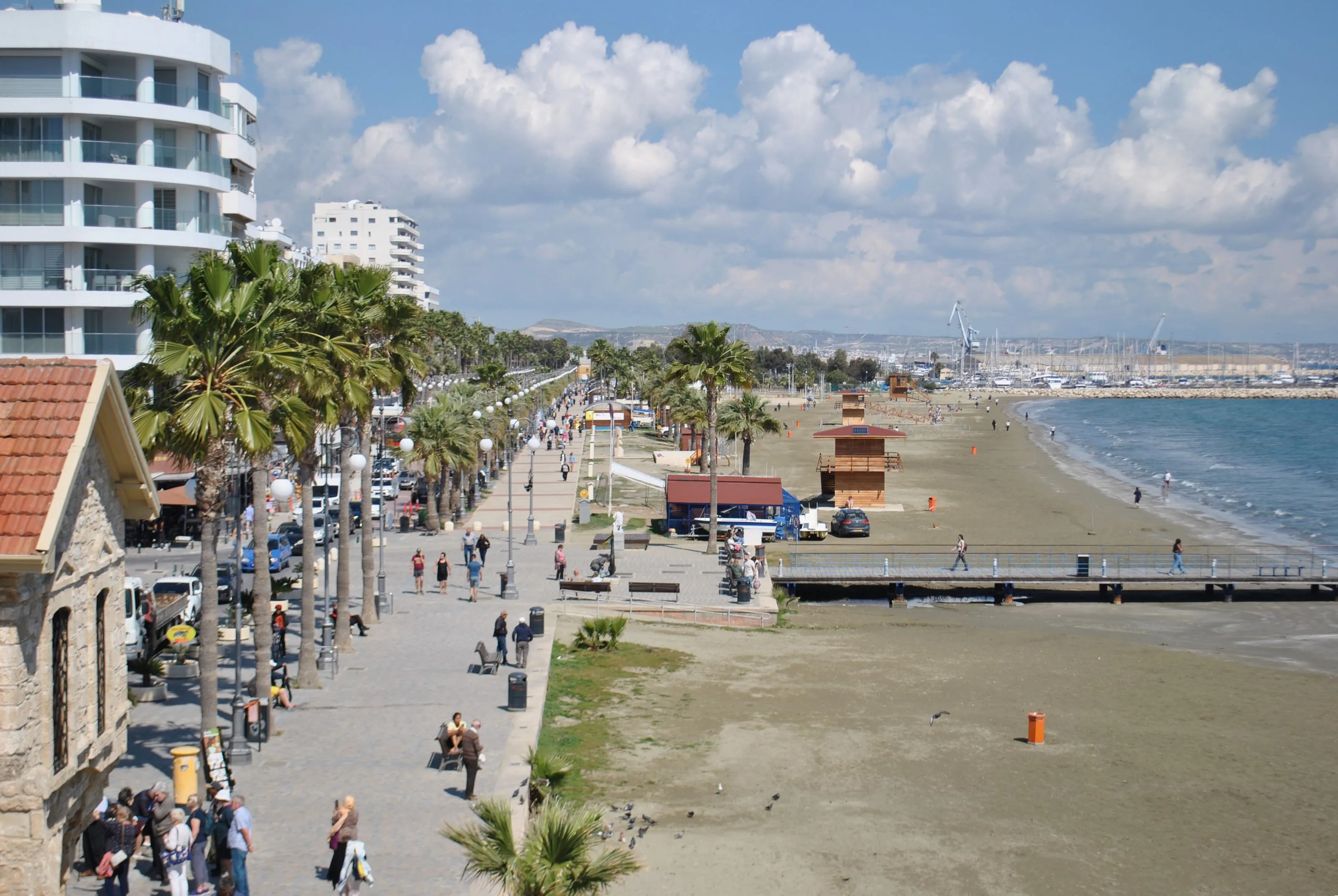
The seafront
Finikoudes, sand meets palm trees
The Finikoudes promenade ("little palm trees" in Greek) runs along the sandy beach right in the city center and anchors most of Larnaca's social life — cafés, restaurants and a marina. It ends at Larnaca Fort, a Byzantine-founded stronghold reinforced by the Ottomans, today a small museum and sea-view lookout.
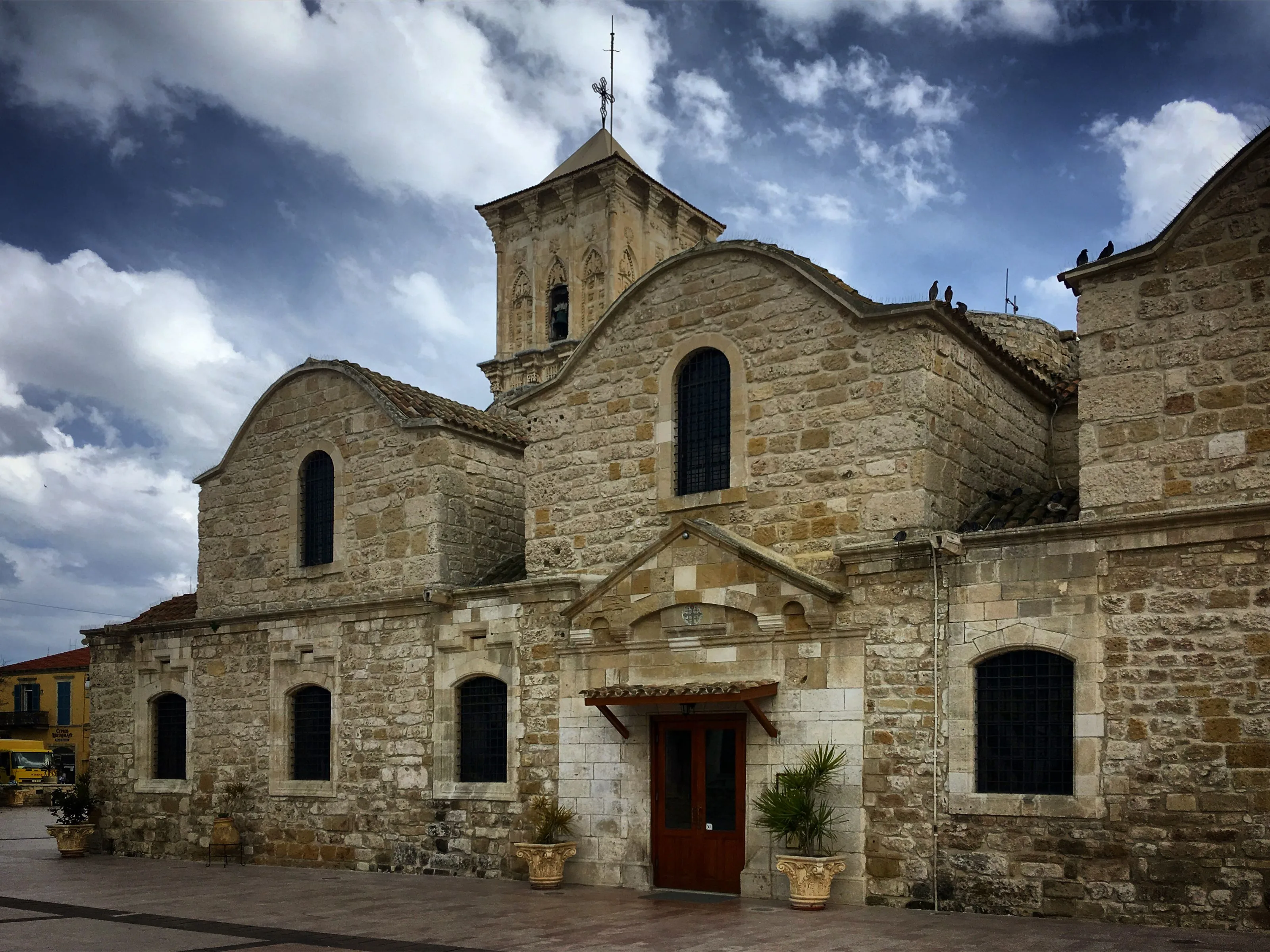
The Church of Saint Lazarus, a Byzantine gem
Built in the late 9th century over the presumed tomb of Lazarus of Bethany, the biblical figure raised from the dead by Jesus who, according to Orthodox tradition, lived and died in Larnaca after becoming its bishop, the church is one of the island's most important religious monuments. Its crypt can be visited.
Nature & antiquity
Flamingos, a wreck and the Neolithic
About 5 km from the center, Larnaca's Salt Lake fills with water each winter and draws migratory pink flamingos from November to March — one of the island's most photographed natural spectacles. On its shore stands the Hala Sultan Tekke mosque, believed to hold the tomb of Umm Haram, a relative of the Prophet Muhammad, and ranked among the holiest pilgrimage sites in Sunni Islam.
Kition and the Zenobia wreck
Right in the modern city center, the remains of ancient Kition — a Bronze Age city-kingdom with Mycenaean and Phoenician roots, Cyclopean walls included — testify to 6,000 years of continuous settlement. Offshore, the wreck of the Swedish cargo ship Zenobia, sunk in 1980 with its cargo of trucks still aboard, is considered one of the world's best wreck-diving sites.
Choirokoitia, a Neolithic excursion
About 30 km away, the UNESCO-listed site of Choirokoitia preserves one of the best-preserved Neolithic villages in the eastern Mediterranean, with reconstructed circular stone houses showing how the island's earliest farming communities lived some 9,000 years ago.
Museums and monuments
Pierides, Kition, the Church of Saint Lazarus and Hala Sultan Tekke
Larnaca has a small cluster of museums and sites, nearly all within walking distance of the seafront. Opening hours and closing days change, so check them before you go, especially for state-run sites, which are often closed at weekends.
Pierides Museum
A private collection of Cypriot antiquities assembled by Demetrios Pieridis (1811-1895), it is the best-known museum in town (Wikipedia EN, DE).
Larnaca District Archaeological Museum
Wikivoyage DE listed it as closed for renovation in 2022: check that it has reopened before you plan a visit.
Fort and medieval museum
The fort that ends the Finikoudes seafront houses a small museum and offers a sea view (Wikivoyage DE).
Kition and the natural history museum
The Kition archaeological site, whose remains go back to the 13th century BC (Wikipedia EN), is open on weekdays only according to Wikivoyage DE, which also lists a small natural history museum.
Church of Saint Lazarus
A 9th-century Orthodox church with free entry and a Byzantine museum next door (Wikivoyage DE, EN). Its crypt can be visited.
Hala Sultan Tekke
A mosque on the shore of the Salt Lake, open daily according to Wikivoyage DE; cover shoulders and legs and respect prayer times.
Saint Lazarus, a 9th-century Orthodox church
The Church of Saint Lazarus, in the city centre, is recognised by its tall baroque bell tower. It holds relics attributed to Lazarus of Bethany, who Orthodox tradition says died in Larnaca.
Food
Meze, halloumi, commandaria wine and seafront dining
Cypriot dining revolves around meze, a meal made of some fifteen to thirty small shared dishes (French Wikipedia). Expect halloumi, a goat and sheep cheese that is grilled, keftedes (meatballs with mint), koupepia (stuffed vine leaves) and afelia, pork marinated in red wine and coriander (French Wikipedia; Wikivoyage EN for halloumi).
To drink
Red wine traditionally goes with meze, white with fish. Among Cypriot specialities, commandaria is a strong, sweet wine akin to port and zivania is a powerful spirit (Wikivoyage EN). Most of the island's wines come from around Limassol (French Wikipedia).
Where to eat
The Finikoudes seafront has plenty of restaurants and cafes, but prices are often higher: Wikivoyage DE advises heading into the side streets where locals eat. Larnaca also has a port and a marina (Wikipedia EN), pleasant for an evening stroll.
Nearby
The village of Lefkara, about 30 km away, is known for its lace and silverware (Wikivoyage EN); a village meal fits naturally into the trip.
Why track Larnaca with SniperAir
You don't need to compare prices every day
Choose your departure
Enter your departure airport and your maximum budget for a flight to Larnaca.
SniperAir monitors
Our systems continuously compare new prices against the route's real price history.
You get an alert
The moment a price matches your criteria, you're notified — without lifting a finger.
Getting to Larnaca
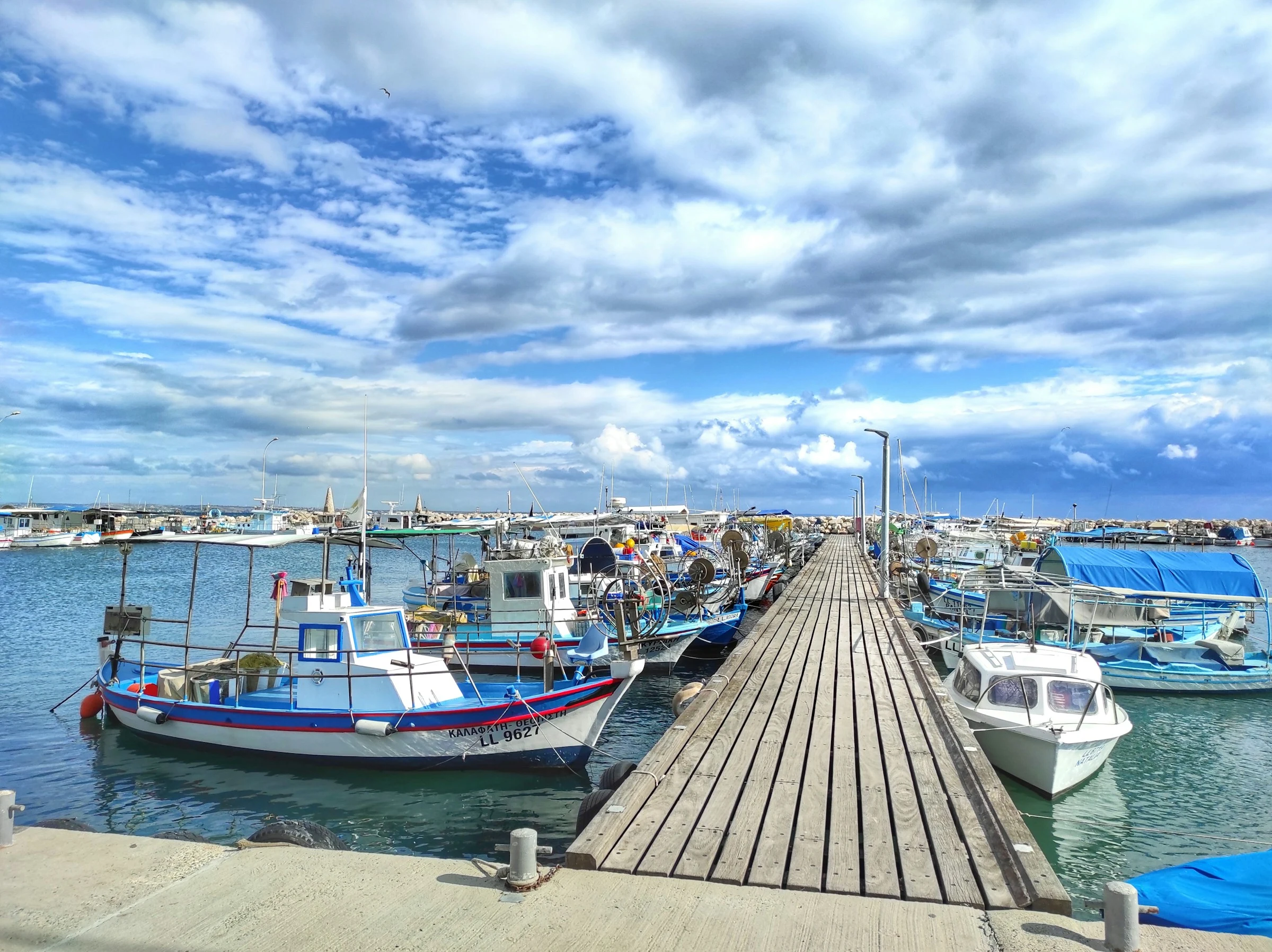
An airport close to the city centre
Larnaca International Airport
The airport lies south-west of the city, about 4 to 6 km from the centre depending on the source (Wikipedia EN, Wikivoyage EN, DE): around 15 minutes by taxi. It handled about 9.9 million passengers in 2025 (Wikipedia EN).
Bus 425 links the airport with the centre roughly every 20 minutes during the day for about 2.40 euros in cash (Wikivoyage EN, Wikipedia EN, 2025 fare). Shuttles also serve Nicosia, Limassol and Ayia Napa; the Nicosia one takes 30 to 45 minutes according to Wikivoyage EN. Taxis should use the meter, but some drivers refuse it: agree the price in advance.
| Landmark | Indicative distance or time |
|---|---|
| Airport to the centre | about 4 to 6 km, around 15 min by taxi |
| Finikoudes to the Church of Saint Lazarus | a few minutes on foot |
| Centre to the Salt Lake | about 5 km |
| Larnaca to Nicosia | about 40 km, 30 to 45 min by shuttle from the airport |
| Larnaca to Lefkara | about 30 km |
| Larnaca to Choirokoitia | about 30 km |
Getting around
On foot along the seafront, by bus and car for the rest
Larnaca's centre, around Finikoudes and the Church of Saint Lazarus, is easy to explore on foot. Cyprus has no railway, so public transport means buses (Wikivoyage EN, Wikipedia EN). The central bus station is near the port, with services to Nicosia, Limassol and Ayia Napa about every one to two hours (Wikivoyage DE).
City buses
City routes are slow and often stop between 7 pm and 9 pm according to Wikivoyage DE, whose data dates from 2016: check current timetables.
Shared taxis
Shared taxis link Larnaca with Nicosia and Limassol (Wikivoyage EN). They are less practical than a car for remote sites.
Rental car
It remains the best option for the Salt Lake, Choirokoitia, Lefkara or the Troodos. Cyprus drives on the left, a British legacy; Wikivoyage EN rates local driving as rough and notes that rental firms often ask for at least three days.
By length of stay
What to do in Larnaca depending on your trip length
The essentials
The Finikoudes promenade, the Church of Saint Lazarus and Larnaca Fort, with a stop at the remains of ancient Kition.
Go deeper
Add the Salt Lake and the Hala Sultan Tekke mosque (flamingos in season), then a dive session on the Zenobia wreck.
Day trip
A day at Choirokoitia and in the Troodos Mountains, or head to Paphos for the western half of the island.
When to go
When to visit Larnaca
Spring
April to early June, mild temperatures, ideal for walking and archaeological visits.
Summer
Hot and dry: July highs average about 33 degrees C and lows about 23 degrees C. Great for the beach, less so for midday sightseeing.
Autumn
September-October, still warm, less crowded than peak summer, with the sea still pleasant for a swim.
Winter
Mild on the coast: January highs average about 17 degrees C and lows about 8 degrees C. Flamingo season at the Salt Lake runs from November to March, with the December rains.
Larnaca receives about 350 mm of rain a year, mostly in winter, and almost none in summer (Wikipedia EN, DE, ES). Best time: April to June and September to October.
Budget
A mid-range stay, with higher prices on the seafront
Larnaca sits in the mid-range for southern Europe: the bus costs about 2.40 euros in cash, side streets in the centre offer more affordable tables than the Finikoudes promenade, while seaside lodging and a rental car weigh more heavily. Prices shift from year to year, so we do not publish detailed rates beyond this figure confirmed by two sources.
Keeping costs down
Visit outside July and August, eat on side streets, combine walking and buses, and rent a car only for excursion days.
In pictures
Larnaca in pictures
You might also like
Similar destinations
FAQ
Frequently asked questions about flights to Larnaca
Is Larnaca just about the beach?
No: the city combines a seafront, the Byzantine Church of Saint Lazarus, the ancient remains of Kition, the Pierides Museum and, nearby, the Salt Lake with its flamingos and the UNESCO Neolithic site of Choirokoitia.
What's the best airport for arriving in Larnaca?
Larnaca International (LCA) is Cyprus's main airport, about 4 to 6 km from the centre and linked by bus 425 and by taxi.
How much does a flight to Larnaca usually cost?
The price depends mainly on your departure city, the period and the booking date. The opportunities section above shows real examples of prices already spotted by SniperAir for this destination.
When can I see the pink flamingos in Larnaca?
From November to March, when the Salt Lake fills with water in winter and draws these migratory birds near the Hala Sultan Tekke mosque.
What's the best time to visit Larnaca?
April to June and September-October: mild temperatures and fewer crowds than in peak summer, when July highs average about 33 degrees C.
How many days do I need?
One to two days cover the seafront, Saint Lazarus and Kition; two to four days let you add the Salt Lake, diving on the Zenobia and an excursion to Choirokoitia.
Do I need a car in Larnaca?
Not for the centre and the seafront. For the Salt Lake, Choirokoitia or a Troodos excursion, a rental car is recommended: Cyprus has no train and drives on the left.
What should I eat in Larnaca?
Meze, grilled halloumi, keftedes and koupepia with a glass of local wine; the side streets of the centre are cheaper than the promenade.
How do I get alerted when a flight to Larnaca drops below my budget?
Create an alert profile with your departure airport, Larnaca as the destination and your maximum budget. SniperAir watches prices and notifies you as soon as a matching price is detected; it does not sell or book tickets.
Ready to head to Larnaca?
Set your budget and let SniperAir monitor fares for you.
Create my alert