
Cheap flights to Montpellier
Set your departure airport and maximum budget: SniperAir tracks prices to Montpellier and alerts you the moment a deal matching your criteria appears.
Quick summary
Country
France
Continent
Europe
Airport
MPL
Currency
Euro (EUR)
Time zone
UTC+1 (UTC+2 in summer time)
Deals already spotted to Montpellier
Real flight examples detected by SniperAir, with their reference price.
Loading examples…
Why track Montpellier with SniperAir
You don't need to compare prices every day
Choose your departure
Enter your departure airport and your maximum budget for a flight to Montpellier (MPL).
SniperAir keeps watch
Our systems continuously compare new prices with the real price history of the route. SniperAir monitors prices and alerts you: it does not sell or book tickets.
You receive an alert
As soon as a price matches your criteria, you are notified, without having searched for anything yourself.
Airport and getting into town
An airport 7 km east of town, a shuttle plus tram, and Paris about 3 hours away by TGV
Montpellier-Méditerranée (MPL)
Montpellier-Méditerranée Airport sits about 7 km east-south-east of the city according to Wikivoyage (FR). Wikivoyage (EN) describes a shuttle bus (route 620) to Place de l'Europe in Antigone, taking about 15 minutes; from there, tram line 1 runs to Place de la Comédie. Wikivoyage (FR) lists daily links with Paris, London, Lyon, Lille, Nantes and Strasbourg, plus regular services to other European and North African cities. The TGV is the other way in: Saint-Roch station is in the centre, and Sud de France station, opened in 2018, lies south-west of town.
Distances and times are approximate, from Wikivoyage (EN, FR, DE, ES) and Wikipedia; timetables change, so check them before you travel. We do not quote fares.
Montpellier had 310,240 inhabitants in 2023 according to Wikipedia (EN, FR, DE), making it the seventh-largest city in France according to Wikipedia (EN, FR); Wikivoyage (FR) still says eighth, an older figure. Paris is roughly 3 hours away by TGV according to Wikivoyage (EN) and 3 h 30 according to Wikivoyage (FR), so plan on something in between. Lyon is about 1 h 30 away, and the Mediterranean is only about 10 km from the city centre.
Landmarks
Peyrou, triumphal arch, aqueduct and the Antigone district
Montpellier has no Roman past: it first appears in documents in the late tenth century according to Wikipedia (EN, FR), which give 985 or 986, and it grew as a trading crossroads and later a city of medicine. According to Wikivoyage (EN), the old centre, the Écusson, is a tangle of streets under stone arches named after trades that no longer exist. Five places are illustrated below; the cathedral and Place de la Comédie are described in the text.
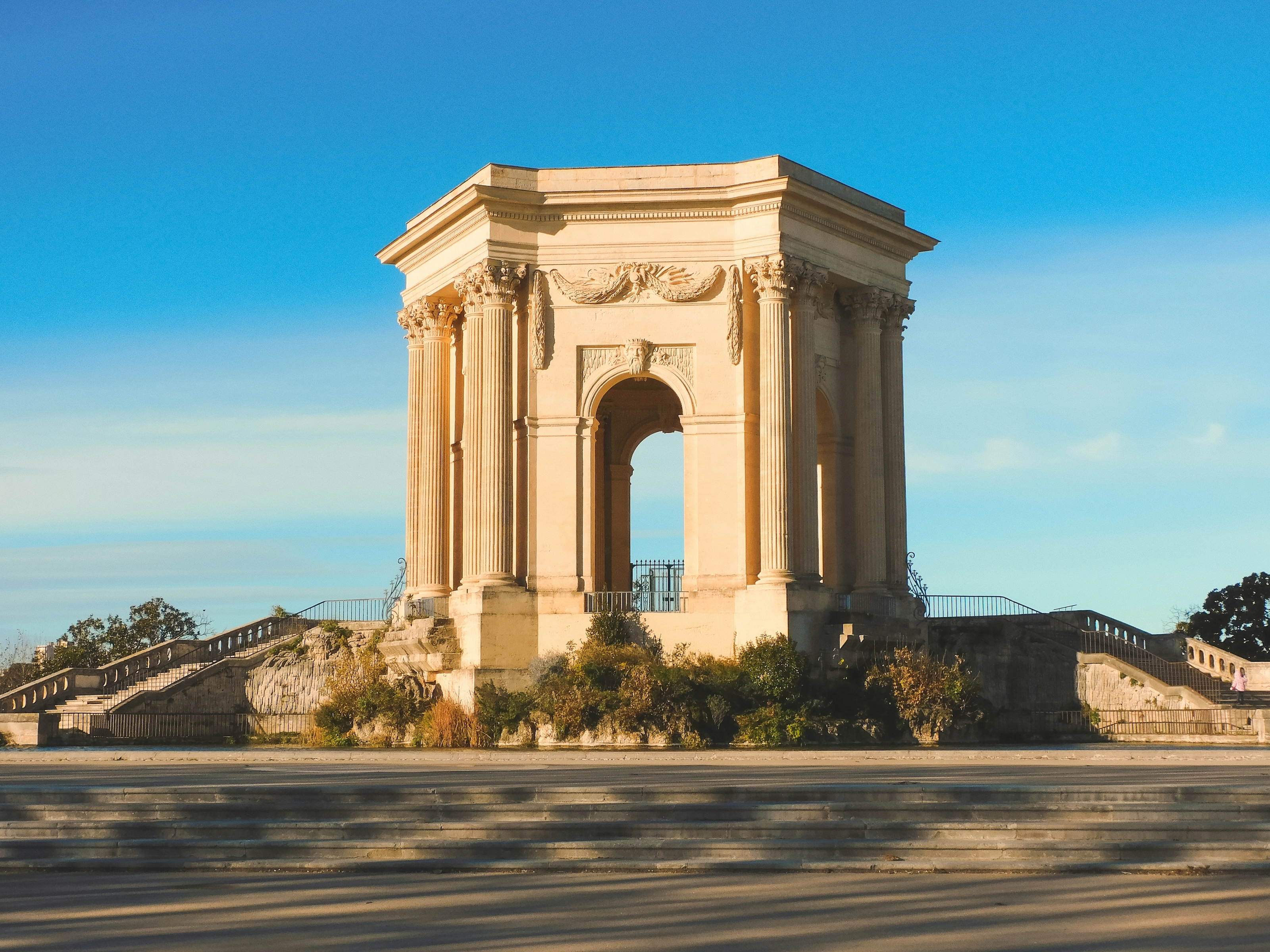
The Peyrou water tower
The Promenade du Peyrou is the high point of the old city according to Wikivoyage (FR). Its water tower, built between 1767 and 1774, looks like a Greek temple with its Corinthian columns and a double flight of stairs. Wikivoyage (FR) adds that on a clear day you can see the sea from the terrace, and a statue of Louis XIV on horseback stands at the centre of the esplanade.
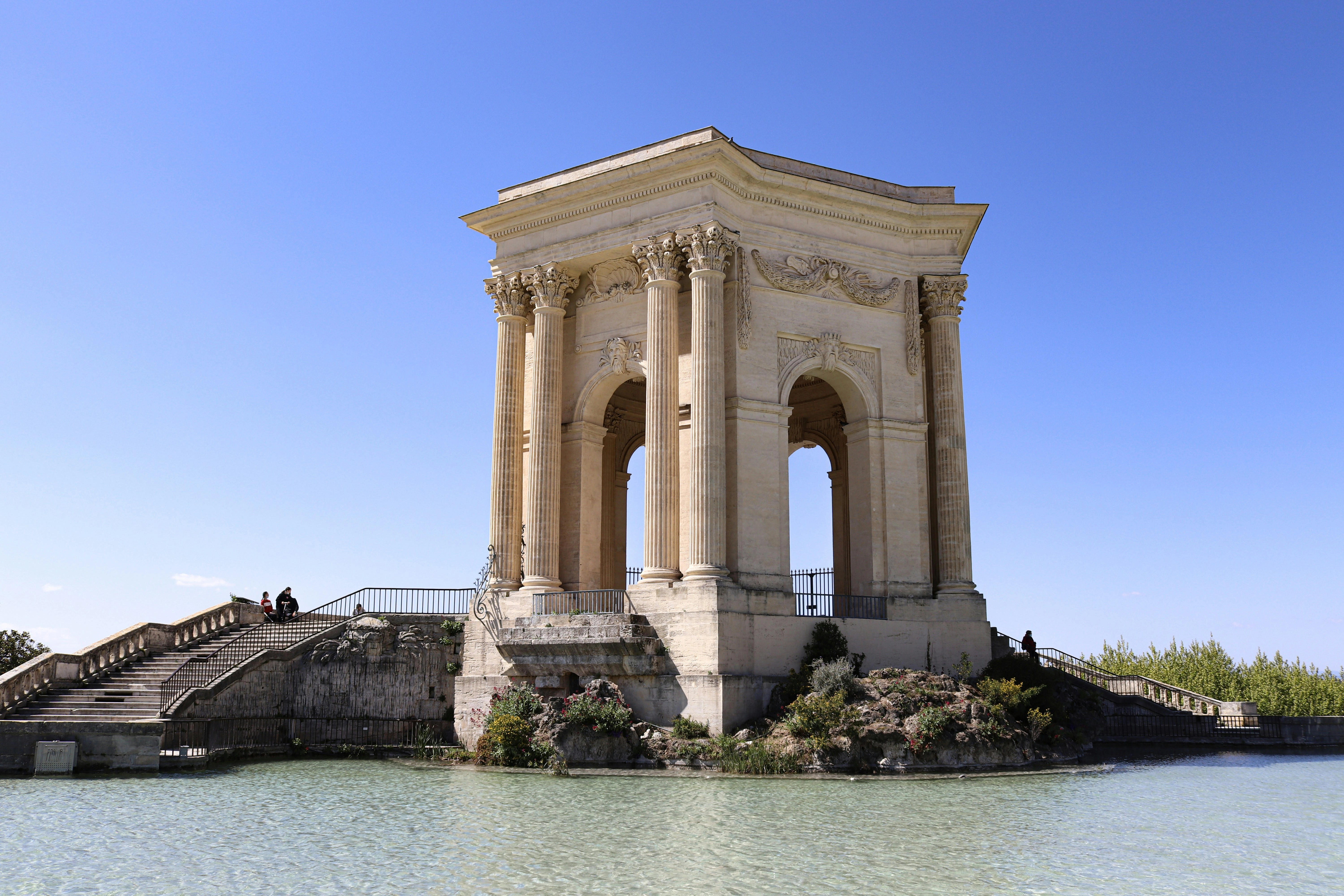
The pool and pavilion at the Peyrou
The pavilion mirrors itself in its basin at the end of a three-hectare esplanade laid out in 1689 according to Wikivoyage (EN). It is a pleasant place to sit in the shade of the magnolias, according to Wikivoyage (FR), and it offers a panorama over the city. The botanical garden, the oldest in France, is close by.
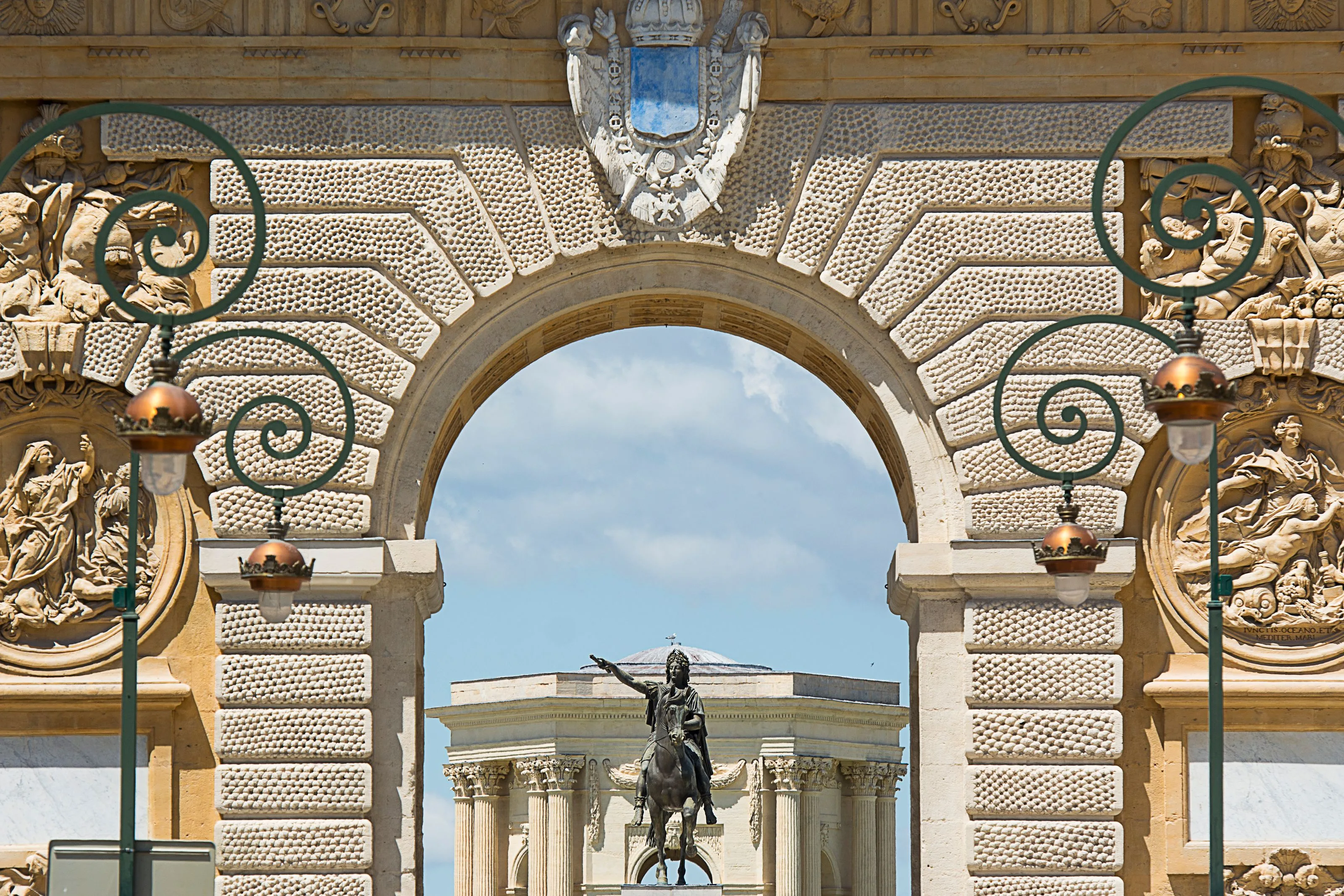
The triumphal arch
The triumphal arch, also called the Porte du Peyrou, opens onto the Écusson through Rue Foch, cut in the nineteenth century according to Wikivoyage (FR). Wikivoyage (EN) says it was inspired by the Porte Saint-Denis in Paris. The top is reachable only on a guided tour from the tourist office, with a view described as amazing; check the times.
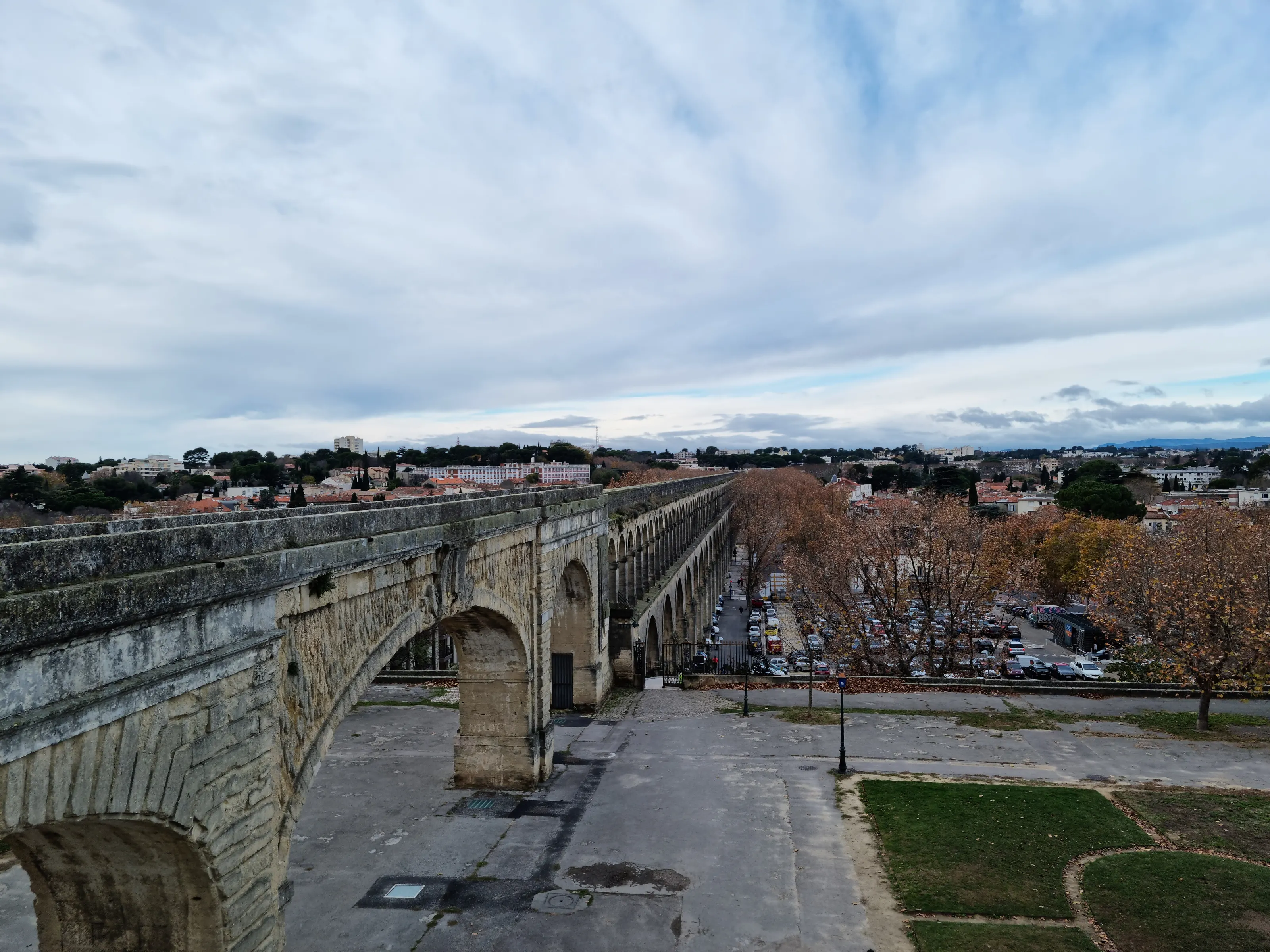
The Saint-Clément aqueduct and its Arceaux
Behind the water tower, the Arceaux aqueduct, built between 1754 and 1762 according to Wikivoyage (FR), once brought water up to the Peyrou. Its stacked stone arches can be walked alongside, and Wikivoyage (EN) notes that it sits right next to the promenade.
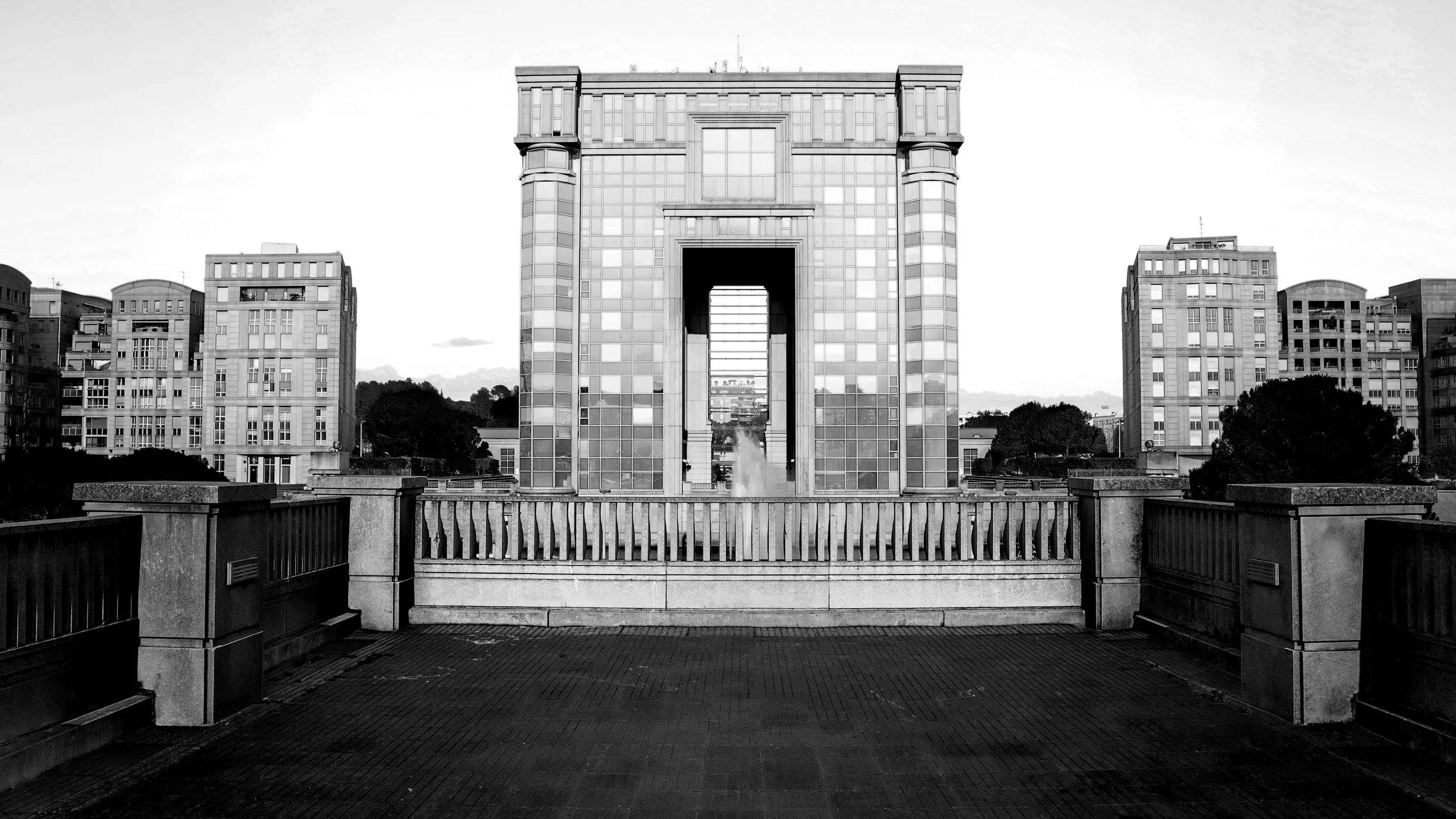
The Antigone district
Antigone, designed by architect Ricardo Bofill, is a neoclassical district built on the former Joffre barracks according to Wikivoyage (EN). Columns, pediments and long monumental vistas contrast with the maze of the old centre. The tram serves it, and it links the centre with the banks of the Lez.
Cathedral and Place de la Comédie
The Gothic Cathedral of Saint-Pierre is 113 m long and 28 m high according to Wikivoyage (FR), and it sits beside the oldest medical school still in operation in the world, according to Wikivoyage (EN, FR). Place de la Comédie, with the opera and the Three Graces fountain, is the heart of city life, and the tree-lined Esplanade Charles-de-Gaulle leads on to the Corum, as Wikivoyage (EN, FR) describe it.
Museums and culture
Fabre, the medical school, Carré Sainte-Anne and dance
The Fabre museum
The Musée Fabre is the city's main fine-arts museum. According to Wikivoyage (FR) it shows about 900 works from the fifteenth century to today, including paintings by Courbet, Soulages, Delacroix and Matisse; Wikipedia (DE) calls its painting collection one of the most important public ones in France. We do not quote admission prices.
The medical school and botanical garden
The faculty of medicine, next to the cathedral, is the oldest still operating in the world according to Wikivoyage (EN, FR) and Wikipedia (EN); the tourist office offers a paid visit. The Jardin des Plantes, founded in 1593, is France's oldest botanical garden according to Wikivoyage (EN, FR), with free entry according to Wikivoyage (FR).
Contemporary art, stage and dance
The Carré Sainte-Anne, a deconsecrated church turned contemporary art gallery, stands in the old Sainte-Anne quarter, according to Wikivoyage (EN, FR). Since 1981 the Montpellier Danse festival, founded by Dominique Bagouet, has hosted international dance according to Wikipedia (DE). Programmes change, so check before you go.
Food and drink
Fougasse, grisettes and sweet treats from Sète
Local specialities
Wikivoyage (FR) names fougasse aux grattons, best reheated, the grisettes of Montpellier and the zézette of Sète, a shortbread made with olive oil and Muscat de Frontignan. A little farther away, Sète and Palavas offer fish restaurants with rouille de seiches and tielle sétoise, and Pézenas has its petit pâté.
Markets and districts
The morning market at Plan Cabanne is a cheap place to eat and shop according to Wikivoyage (FR). Figuerolles is known for couscous and tagines, and Place Saint-Roch for its terraces according to Wikivoyage (EN, FR). Wikivoyage (EN) warns that restaurants on the main square mostly cater to people in a hurry, so walk a few streets away.
Languedoc wine
Wines from around Montpellier have been renowned since at least the thirteenth century according to Wikipedia (FR). The city is also cosmopolitan for its size, with many world cuisines according to Wikivoyage (EN).
Getting around
A colourful tram, bikes and a bus to the sea
Tram
The tram is the best way to see Montpellier according to Wikivoyage (FR): it links the old centre, Comédie, the newer districts and the residential areas, and works of art line the route. Wikivoyage (EN) says tram park-and-ride lots are the easiest option if you arrive by car.
Bike and bus
Wikivoyage (EN) describes a wide cycle network, with a cycle path to the beaches at Palavas-les-Flots and Carnon taking about an hour. Wikivoyage (EN, FR) mention Vélomagg bike rental. Bus 28, from Port Marianne to Palavas-les-Flots, is the simplest route to the beach according to Wikivoyage (EN).
On foot and by car
The old centre is best on foot. Driving in town takes patience: Wikivoyage (FR) says the centre is less and less accessible by car, and recommends underground car parks or tram park-and-ride lots.
Budget and precautions
Cheaper than the Riviera, with common-sense care at night
Price level
Wikivoyage (FR) describes the cost of living as still affordable, especially compared with Nice or Aix-en-Provence. The currency is the euro. We publish no figures, because sources differ and hotel prices vary strongly by season.
Plane or train?
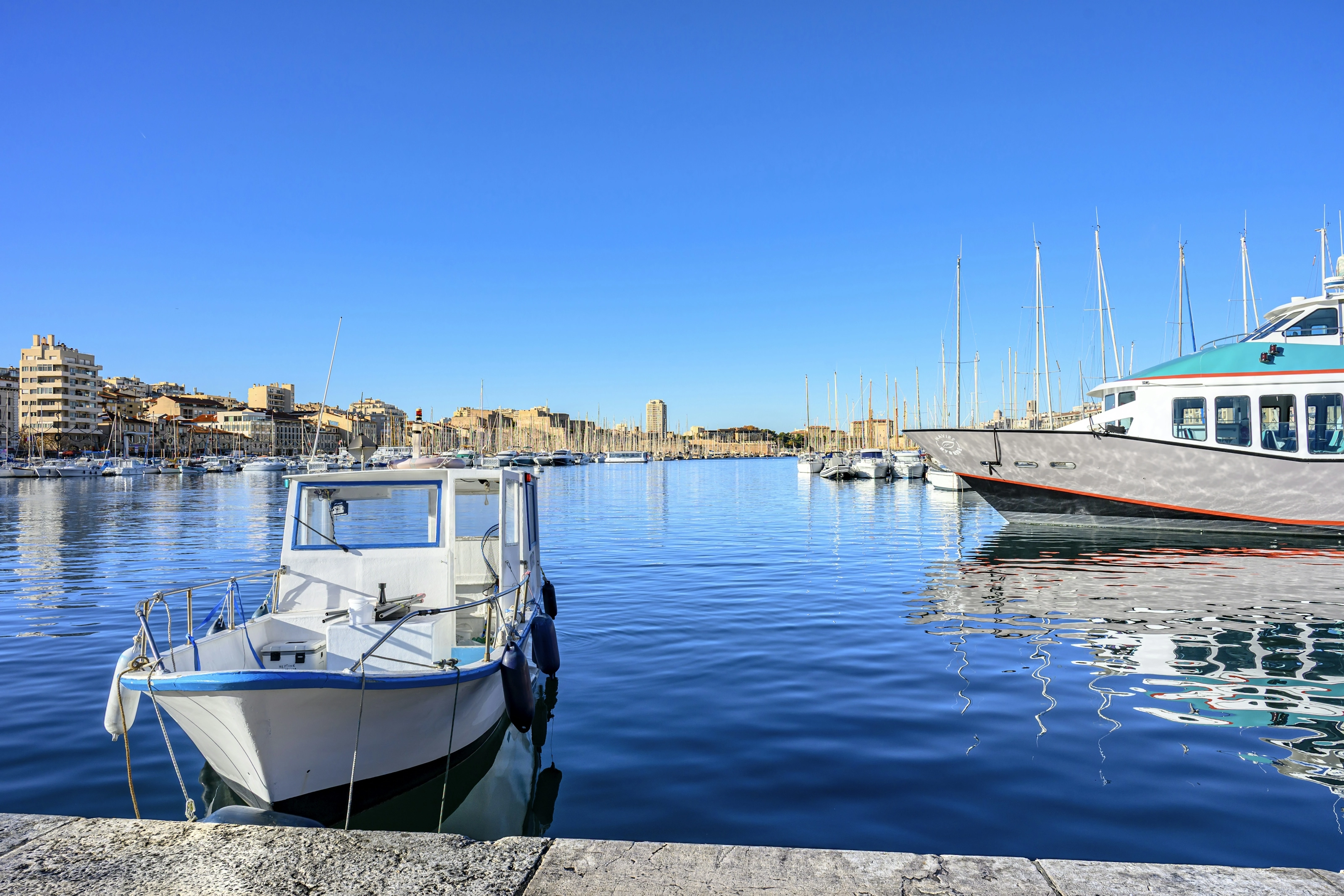
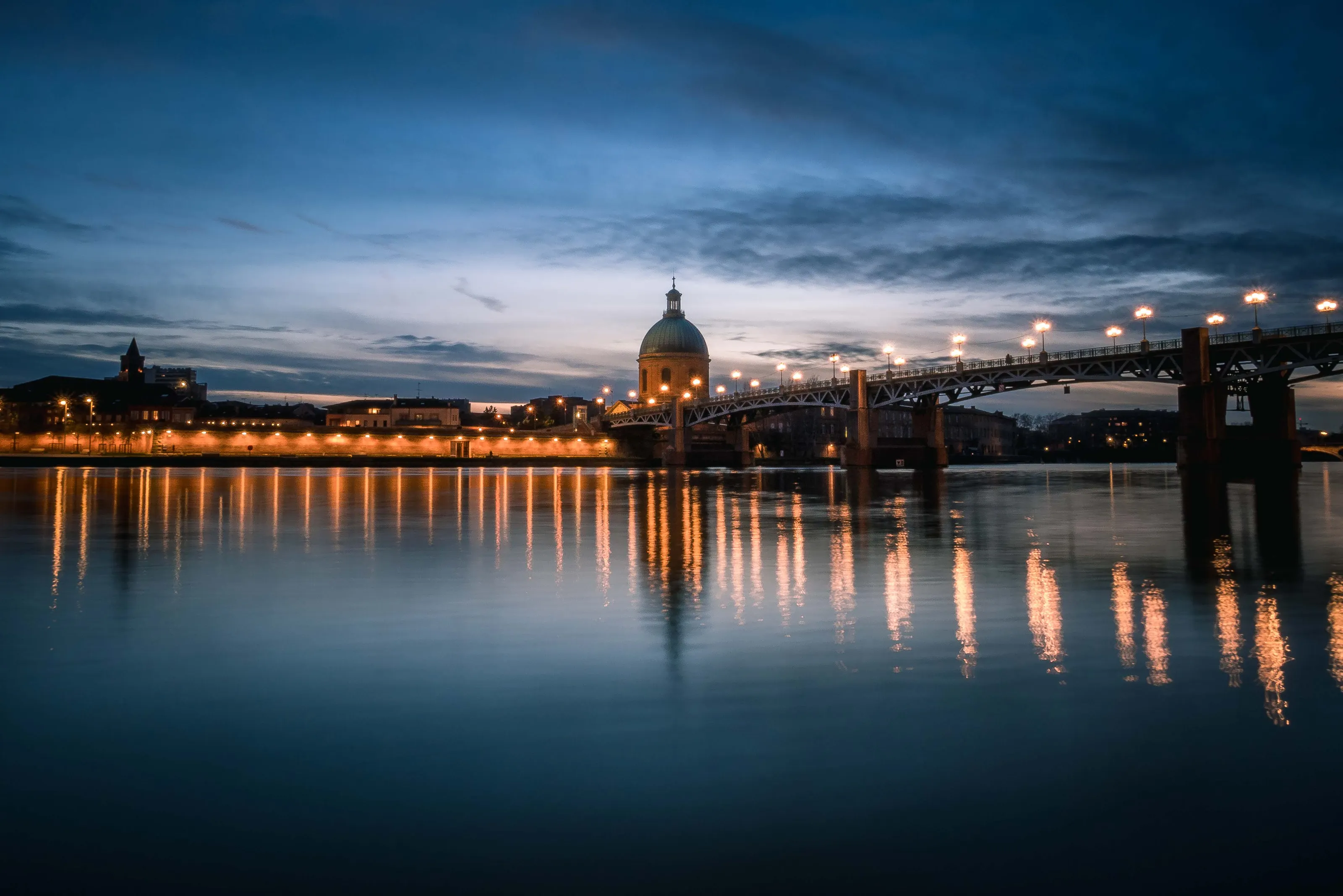
SniperAir monitors flight prices to MPL against the route's history, but it does not sell or book tickets. If you start from Paris or Lyon, the TGV is a real alternative according to Wikivoyage (EN, FR). Toulouse and Marseille are other airports you could watch.
Precautions
Wikivoyage (EN) advises staying in lit parts of the Esplanade at night, mentioning theft and drug dealing. Autumn rain can flood low-lying spots according to Wikipedia (FR), so follow local advice. Check entry rules for your nationality.
When to go
A sunny Mediterranean climate with sometimes violent autumn rain
Winter (December to February)
Mild and damp: January averages 7.2 °C according to Wikipedia (EN, FR). A good time to explore on foot without crowds.
Spring (March to May)
Terraces open and temperatures rise. Rain is lighter than in autumn.
Summer (June to August)
Hot and often dry: July averages 24.1 °C according to Wikipedia (EN, FR). The record of 43.5 °C was set on 28 June 2019 according to Wikipedia (EN, FR). The sea breeze takes the edge off, according to Wikipedia (FR).
Autumn (September to November)
Sometimes violent downpours between September and December, linked to Mediterranean or Cévennes weather according to Wikipedia (FR). The sea is still warm in September.
The climate is Mediterranean (Csa) according to Wikipedia (EN, FR). Montpellier has only 33 days a year without sun and 7 h 22 of sunshine a day on average according to Wikipedia (FR), with fewer than 60 rainy days; Wikipedia (EN) gives about 630 mm of rain a year. April to June and September to October are usually the nicest months.
By length of stay
What to do in Montpellier depending on how long you stay
The essentials
Place de la Comédie, the old centre, the Peyrou, the triumphal arch and lunch at a market.
Museums and districts
The Fabre museum, the medical school, the botanical garden, Antigone and the Lez riverbanks.
Beach and surroundings
Palavas-les-Flots and Carnon by bike or bus, then Sète and Pézenas for local specialities, according to Wikivoyage (EN, FR).
In pictures
Montpellier in pictures
You might also like
Similar destinations
FAQ
Frequently asked questions about flights to Montpellier
How do I get from Montpellier airport to the centre?
The airport (MPL) is about 7 km east-south-east of the city. A shuttle runs to Place de l'Europe in about 15 minutes according to Wikivoyage (EN), then tram line 1 goes to Comédie. Timetables change, so check them.
When is the best time to visit Montpellier?
Spring and September-October, with good light. Summer is hot and sunny (July averages 24.1 °C), and autumn downpours can be heavy.
Can I get to a beach from Montpellier?
Yes, the sea is about 10 km away. Bus 28 goes to Palavas-les-Flots according to Wikivoyage (EN), and a cycle path leads to the beaches at Palavas and Carnon.
Can I take the TGV from Paris?
Yes, the journey takes roughly 3 to 3 h 30 according to Wikivoyage (EN, FR). Saint-Roch station is central.
What should I taste in Montpellier?
Fougasse aux grattons, grisettes and the zézette of Sète, and tielle in Sète; the Plan Cabanne market is a good starting point.
What are the main sights?
The Peyrou and its water tower, the triumphal arch, Place de la Comédie, the Fabre museum and the botanical garden, France's oldest.
How much does a flight to Montpellier usually cost?
The price depends mainly on your departure city, the time of year and how far ahead you book. The "opportunities" section above shows real examples of prices SniperAir has already detected to this destination.
How do I get alerted when a flight to Montpellier drops below my budget?
Create an alert profile with your departure airport, Montpellier as the destination and your maximum budget. You are notified automatically as soon as a matching price is detected.
Ready to head to Montpellier?
Set your budget and let SniperAir monitor fares for you.
Create my alert