
Cheap flights to Marseille
Set your departure airport and maximum budget: SniperAir tracks prices to Marseille and alerts you the moment a deal matching your criteria appears.
Quick summary
Country
France
Continent
Europe
Airport
MRS
Currency
Euro (EUR)
Time zone
UTC+1 (UTC+2 in summer time)
Deals already spotted to Marseille
Real flight examples detected by SniperAir, with their reference price.
Loading examples…
Why track Marseille with SniperAir
You do not need to compare prices every day
Choose your departure
Enter your departure airport and your maximum budget for a flight to Marseille (MRS).
SniperAir keeps watch
Our systems continuously compare new prices with the real price history of the route. SniperAir monitors prices and alerts you: it does not sell or book tickets.
You receive an alert
As soon as a price matches your criteria, you are notified, without having searched for anything yourself.
Airport and getting into town
An airport at Marignane, a shuttle bus to Saint-Charles station and Paris in about three hours by TGV
Marseille Provence (MRS)
Marseille Provence Airport is at Marignane, north-west of the city. Sources disagree on the distance, from 15 to 35 km; about 30 km by road is the figure given by Wikivoyage (EN, FR, ES). Bus #91 runs to Saint-Charles station about every 15 to 20 minutes in roughly 25 minutes according to Wikivoyage (EN), and taxis make the same trip. For visitors coming from elsewhere in France or Europe, the TGV is a real alternative to flying: about three hours from Paris, around an hour and three quarters from Lyon and about two and a half hours from Nice, per Wikivoyage (EN). Intercity coaches use the bus station next to the train station, and ferries run from Corsica and, less often, from North Africa.
Distances and times are approximate, based on Wikivoyage (EN, FR, DE, ES) and Wikipedia; timetables change, so check them before you travel. We do not quote fares.
Marseille is the second most populous city in France with 886,040 inhabitants in 2023, according to Wikipedia (EN), and is often called the oldest city in the country: Greek settlers from Phocaea founded Massalia around 600 BC. Saint-Charles station, built in 1927 according to Wikivoyage (EN), is linked to both metro lines; it is a short but uphill walk from the Canebière and the Old Port.
Landmarks
Notre-Dame de la Garde, the Old Port, MuCEM and the Calanques
Marseille combines an ancient harbour, a big hilltop basilica and modern architecture facing the sea. It was European Capital of Culture in 2013, the year the MuCEM opened. The places below are illustrated; Le Panier, the Vieille Charité and the Palais Longchamp are described in the text.
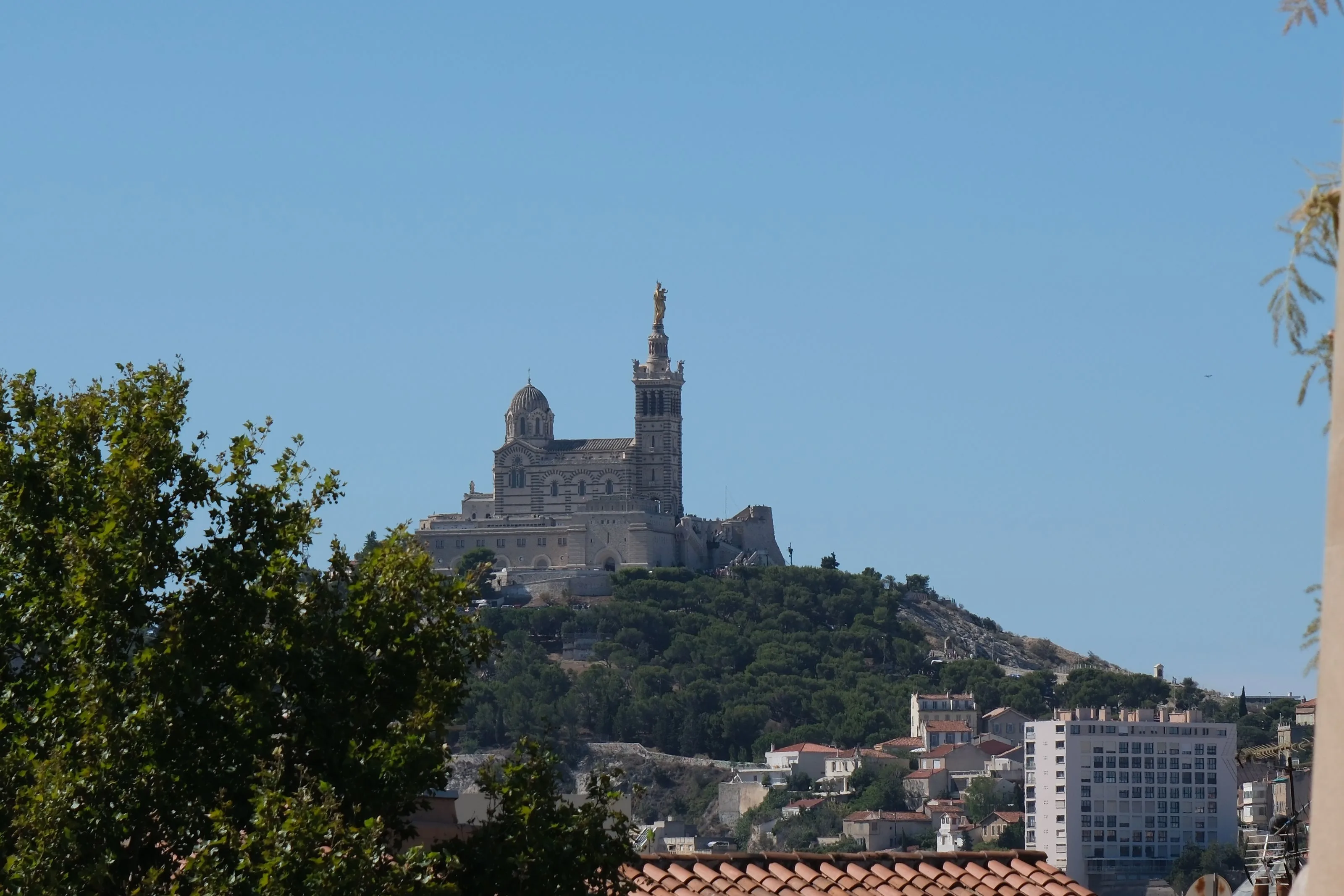
Notre-Dame de la Garde
This Romano-Byzantine basilica, built between 1853 and 1864 according to Wikivoyage (DE), watches over the city and the port from its hill, and locals call it "la Bonne Mère". It is a landmark from almost anywhere in town. The terrace has a panorama across the Old Port and the bay, and bus 60 goes there, according to Wikivoyage (DE).
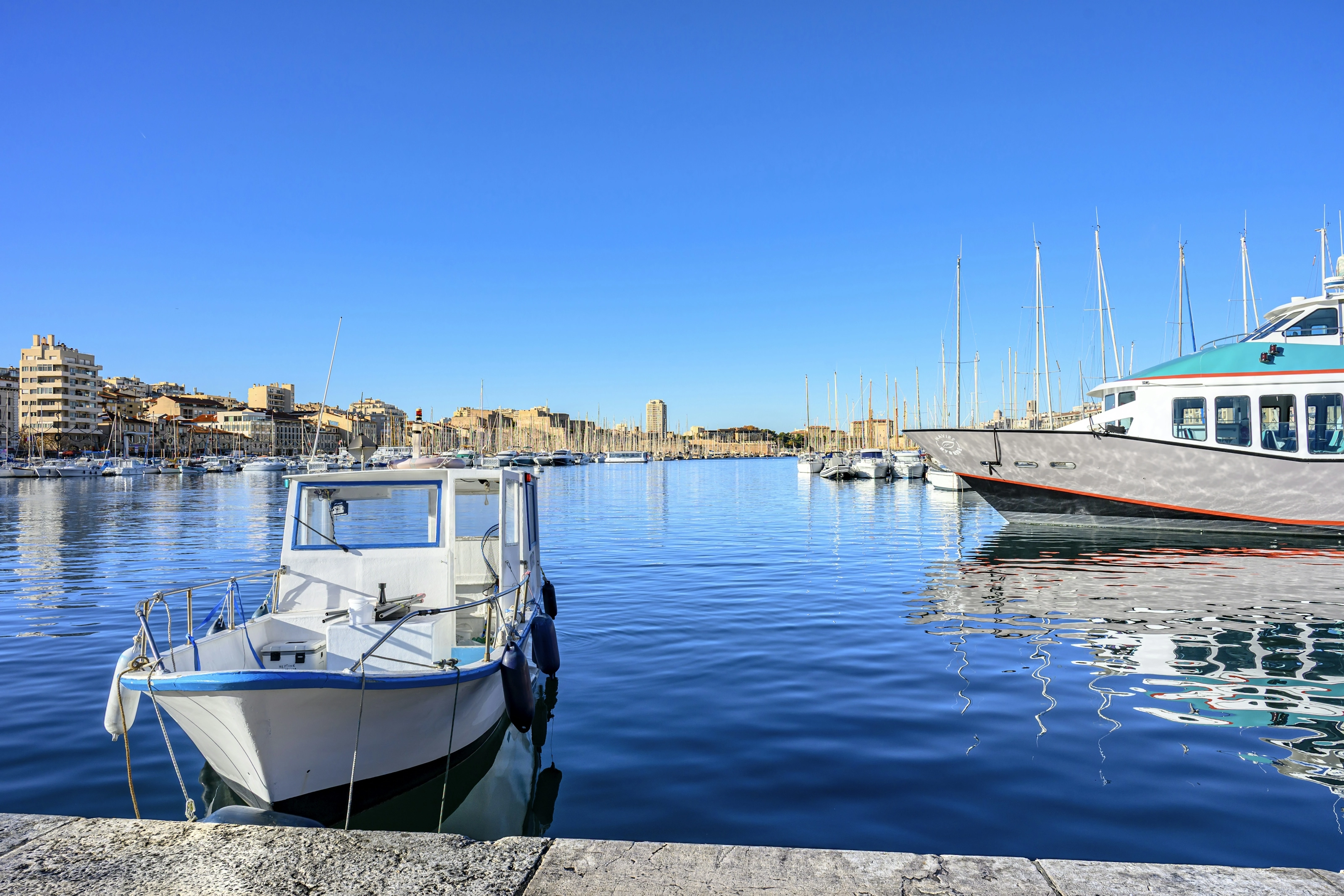
The Old Port
The Old Port was the Greek harbour and is still the heart of Marseille. A fish market is held every morning on the Quai des Belges, says Wikipedia (EN), and boats leave from here for the Frioul islands and the Château d'If. The little Old Port ferry, described by Wikivoyage (EN) as the shortest commercial boat ride in Europe, links the two quays.
MuCEM and Fort Saint-Jean
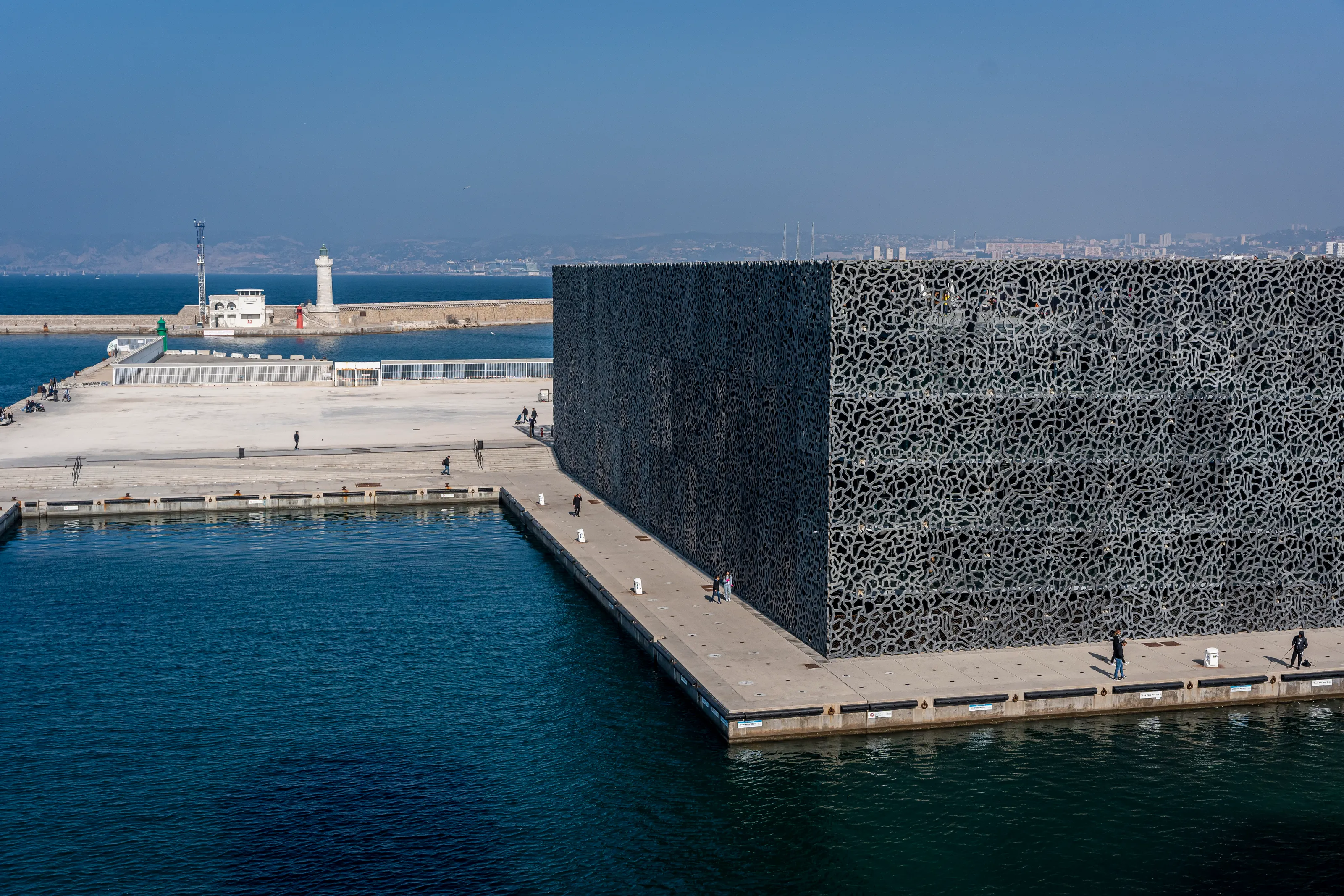
The MuCEM, Museum of European and Mediterranean Civilisations, opened in June 2013 at the mouth of the Old Port. Its black perforated cube sits on the water and is linked by footbridges to Fort Saint-Jean, a fortification at the harbour entrance with free access according to Wikivoyage (EN). Wikipedia (ES) says it drew more than two million visitors in 2013, the year it opened.
The MuCEM lattice
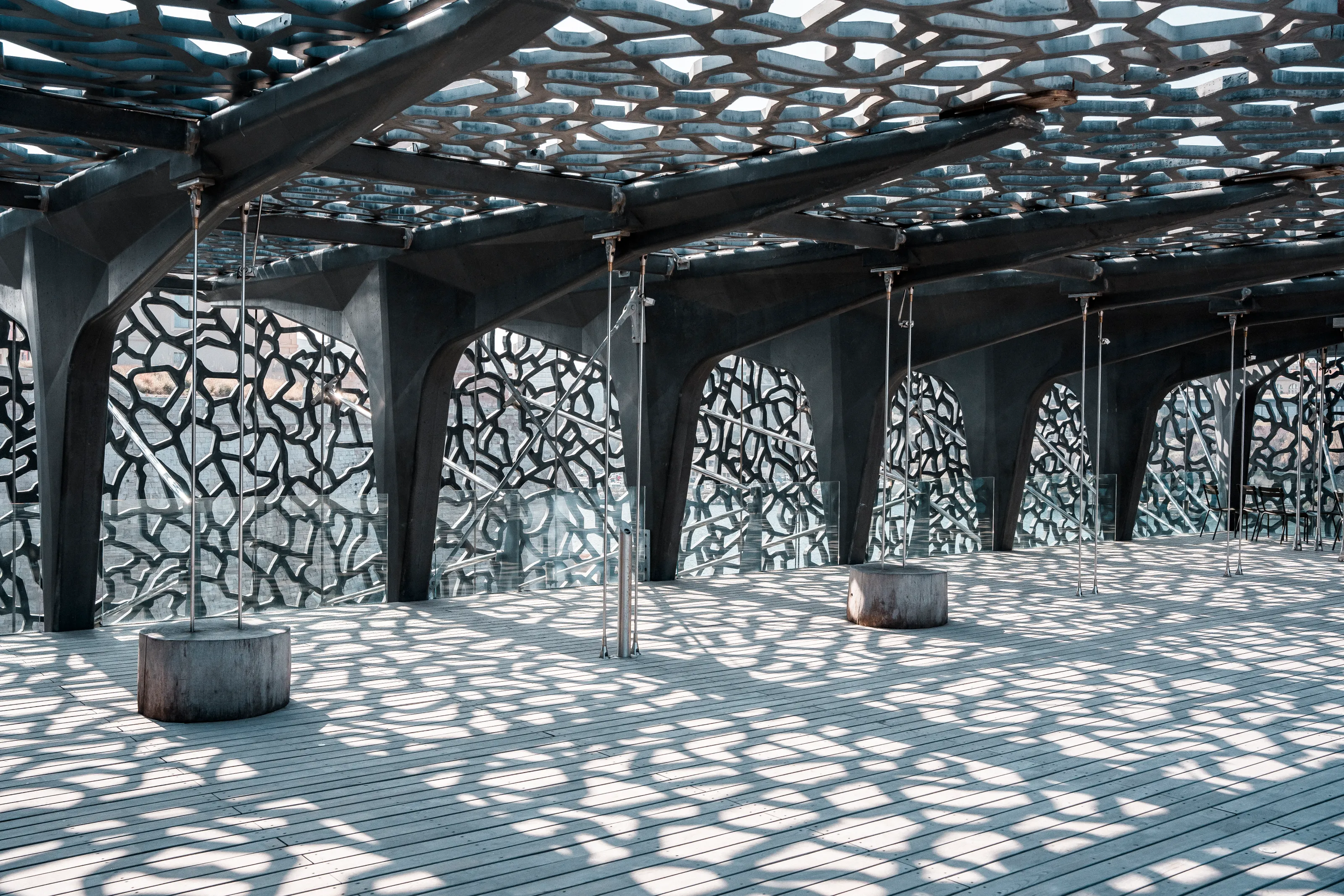
Up close, the MuCEM facade is a perforated screen that filters the light and throws lace-like shadows across the terraces. A raised walkway leads from the building to the fort and its gardens, with views of the sea on one side and the rooftops on the other. Opening times and tickets are on the museum's official website.
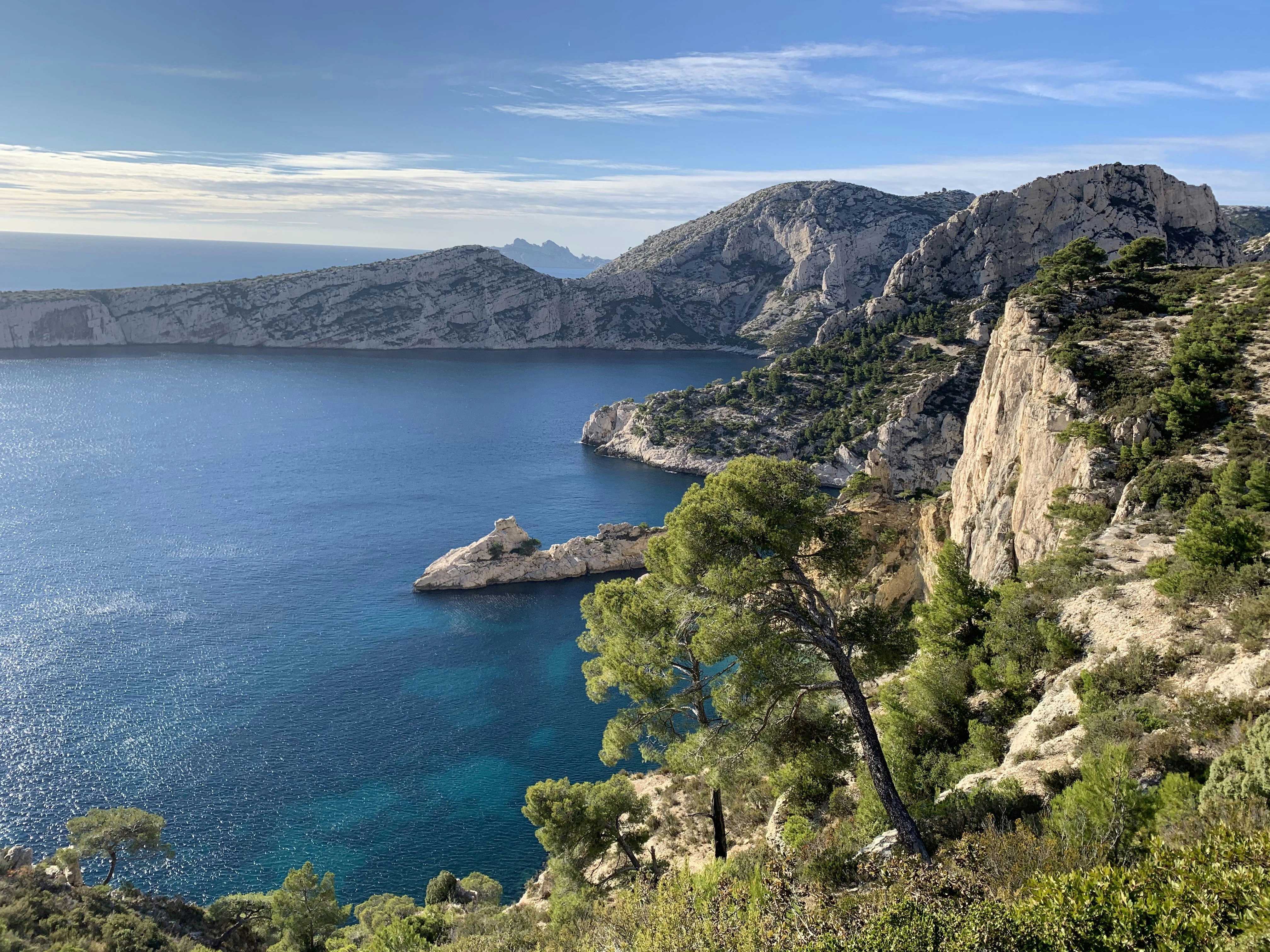
The Calanques
Calanques National Park, created in 2012, covers 11,100 hectares on land and 141,300 hectares at sea according to Wikipedia (FR), and Wikipedia (EN) notes that Marseille is the only large French city with a national park inside its limits. Pale limestone cliffs, pines and turquoise water follow one another; reach them on foot or by boat, and check access rules before you go, especially in summer.
Le Panier, Vieille Charité, Palais Longchamp and Le Corbusier
Le Panier is the oldest district, with steep, narrow streets. Next to it stands the Vieille Charité, a former almshouse turned cultural centre. The Palais Longchamp, finished in the nineteenth century, houses the fine arts and natural history museums. Le Corbusier's Unité d'Habitation belongs to the architect's work on the UNESCO World Heritage List, according to Wikipedia (FR).
Museums and culture
MuCEM, fine arts, modern art and the history of the city
The MuCEM
The national museum of European and Mediterranean civilisations looks at life on both shores of the sea. It runs temporary exhibitions alongside the collections, and the building, linked to Fort Saint-Jean, is a visit in itself.
Fine arts, Cantini and contemporary art
The Musée des Beaux-Arts occupies a wing of the Palais Longchamp. The Musée Cantini shows early twentieth-century modern art and the MAC contemporary art, according to Wikivoyage (EN, DE). The Vieille Charité houses a Mediterranean archaeology museum.
Marseille History Museum
The Marseille History Museum follows the city from Massalia, with ancient remains on show; the Roman Docks museum adds more. We do not quote prices: Wikivoyage (EN) says the permanent collections of the history museum are free, but conditions change.
Food and drink
Bouillabaisse, panisse, navettes and neighbourhood markets
Bouillabaisse
The signature dish is served in two stages, the broth first and then the fish, with rouille, aïoli and croutons. Wikivoyage (EN) advises booking ahead and being wary of cheap versions; fish soup is a more affordable alternative.
Panisse, navettes and pastis
At L'Estaque you can try panisse, chickpea-flour fritters, and chichis fregis. The navette, an orange-blossom biscuit shaped like a small boat, is sold at the Four des Navettes, founded in 1781 near the Abbey of Saint-Victor according to Wikivoyage (FR). Pastis, the aniseed drink of the city, goes with the aperitif.
Markets and districts
The Noailles market, La Plaine (Thursday and Saturday mornings) and the Prado market are good places for local produce. Kebab shops along the Canebière and couscous around Cours Belsunce are cheap options, says Wikivoyage (EN); for lunch near the Old Port, move away from the main quays.
Getting around
Metro, tram, bus and boats; driving is not recommended
Metro and tram
There are two metro lines, meeting at Castellane and Saint-Charles, and two or three tram lines depending on the source. The metro runs roughly from 05:00 to after midnight and trams until about 00:30, according to Wikivoyage (EN).
Buses and boats
The 74 bus lines are handy for the Corniche or Notre-Dame de la Garde, but delays are common and evening service is limited. Waterbuses reach L'Estaque, Les Goudes and La Pointe-Rouge when the sea is calm, and a boat links the Old Port with the Frioul and the Château d'If.
On foot, by bike and by car
The centre, from the Old Port to Le Panier, the Cours Julien and the Corniche, is best explored on foot. Cycle paths are few. Driving in the centre is not recommended (narrow streets, awkward parking), though a car is useful for the Calanques and nearby Provence.
Budget and precautions
An average price level for France, with cheap meals in the working-class districts
Price level
Marseille is around the French average: very cheap meals in popular districts, and starred restaurants at the other end. The currency is the euro. We do not publish figures because the sources are dated or disagree.
Flight or TGV?
SniperAir monitors prices on flights to MRS and compares them with the real history of the route, but it does not sell or book tickets. From Paris or Lyon the TGV is a serious alternative; from abroad, Nice and Montpellier airports may be worth watching too.
Precautions
Pickpockets work crowds, and the Saint-Charles area and the metro call for care, particularly at night. Visitors from outside the EU should check entry requirements for their nationality and their own government's travel advice.
When to go
Hot sunny summers, mild winters, and the mistral to watch for
Winter (December to February)
Mild by day, with highs of around 11 to 12 degrees C according to Wikipedia (DE, ES). The mistral can make the air sharp but usually brings clear skies.
Spring (March to May)
Spring warms up faster than in Nice according to Wikivoyage (EN), which makes it a good time to walk the Calanques without the summer crowds.
Summer (June to August)
Hot and very sunny, with highs close to 30 degrees C in July and August per Wikipedia (EN, ES). Access to the Calanques can be regulated in summer, so check before you go.
Autumn (September to November)
The sea stays pleasant in September, then clouds gather: Wikivoyage (EN) calls autumn generally the cloudiest season.
Marseille gets about 2,897 hours of sunshine a year according to Wikipedia (EN, ES), the most of any French city per Wikipedia (EN). The mistral, a cold dry wind from the Rhône valley, blows on average 93 days a year per Wikipedia (FR) and mostly in winter and spring. April to June and September to October are the most comfortable months for walking.
By length of stay
What to do in Marseille depending on how long you stay
The essentials
Notre-Dame de la Garde, the Old Port, MuCEM and Le Panier, followed by a bouillabaisse or some panisse.
Sea and districts
A hike or boat trip in the Calanques, the Palais Longchamp, the Corniche and a neighbourhood market such as Noailles or La Plaine.
Provence
Cassis, Aix-en-Provence and the Frioul islands as day trips, with Marseille as a base and the TGV or regional trains for the longer hops.
In pictures
Marseille in pictures
You might also like
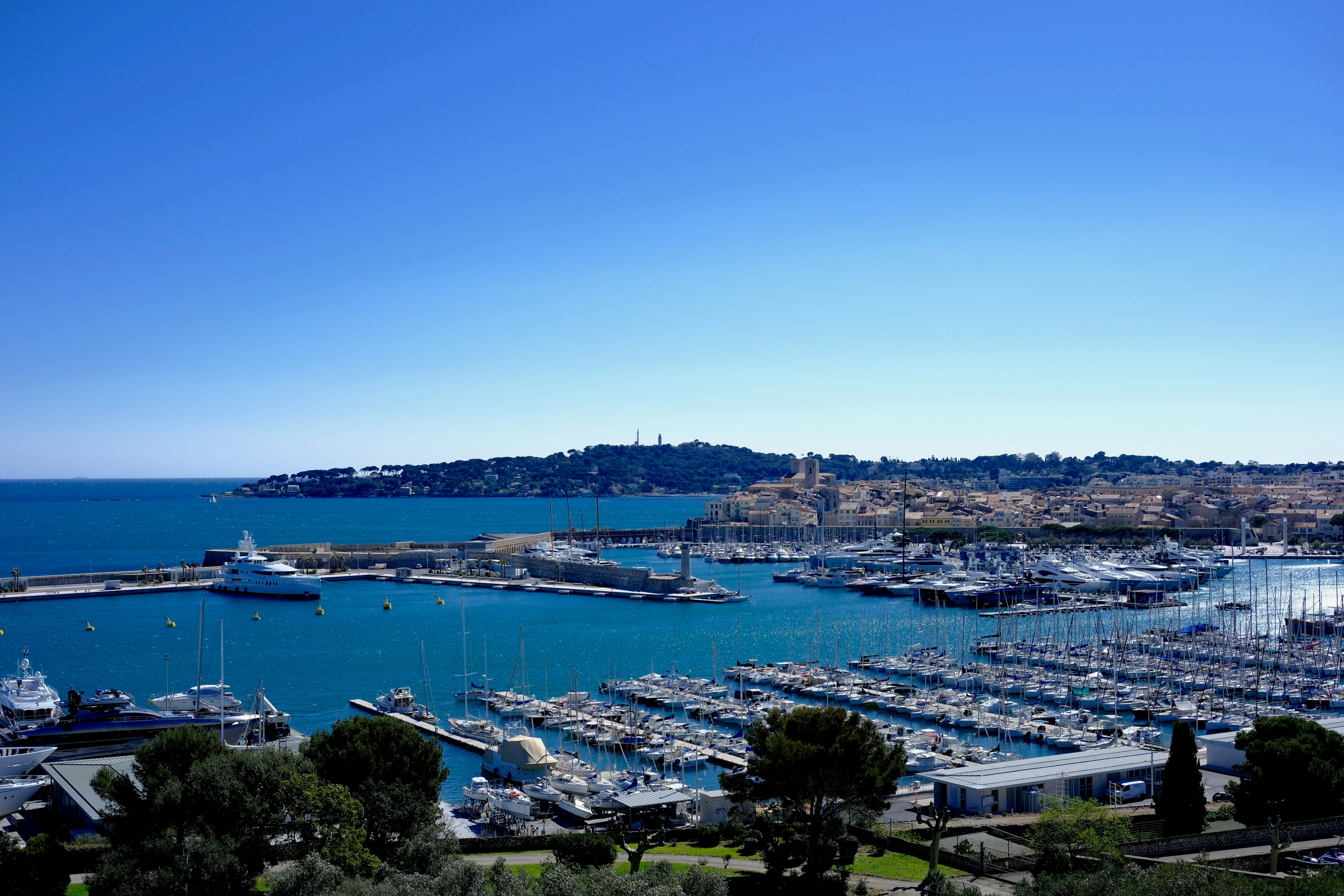
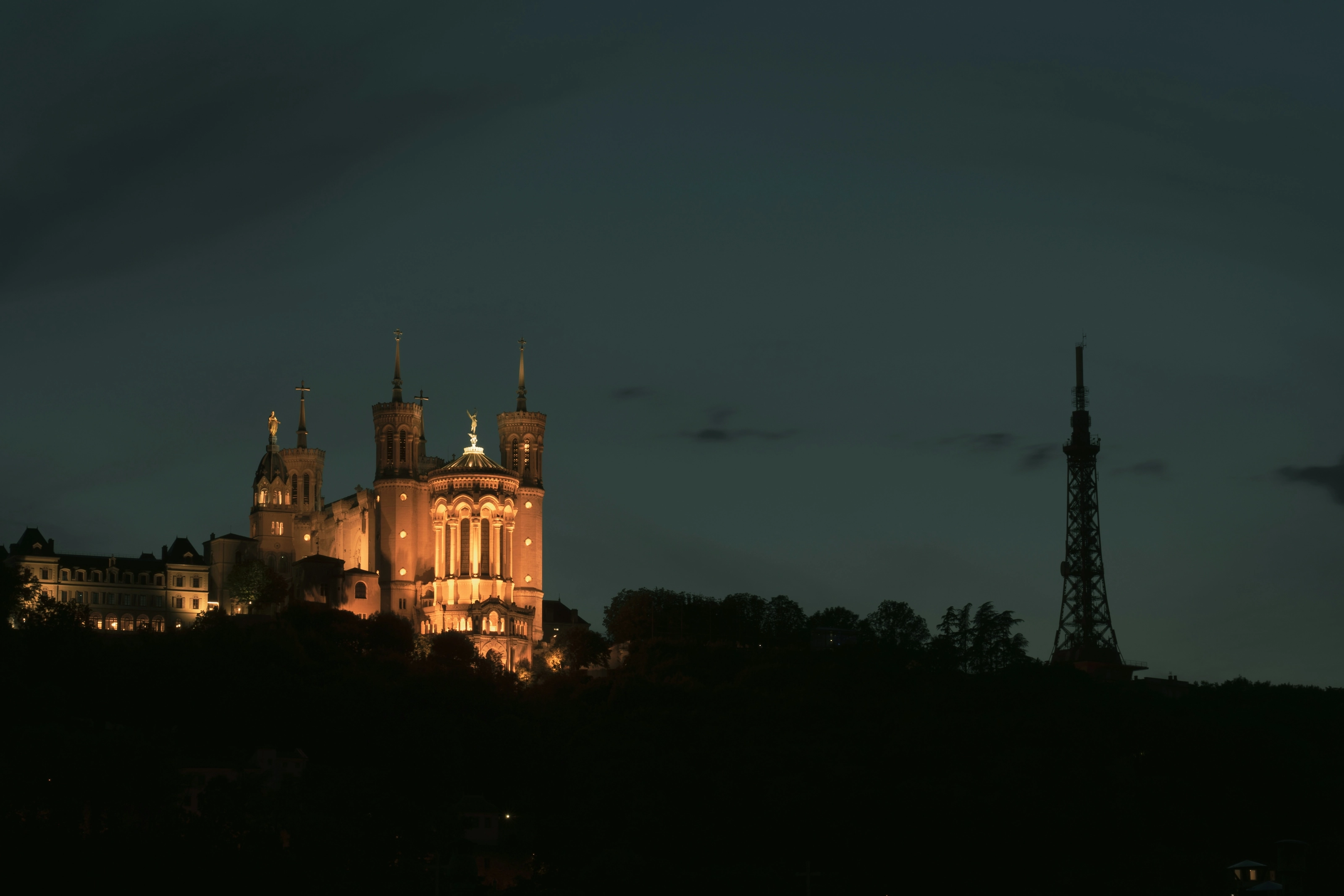
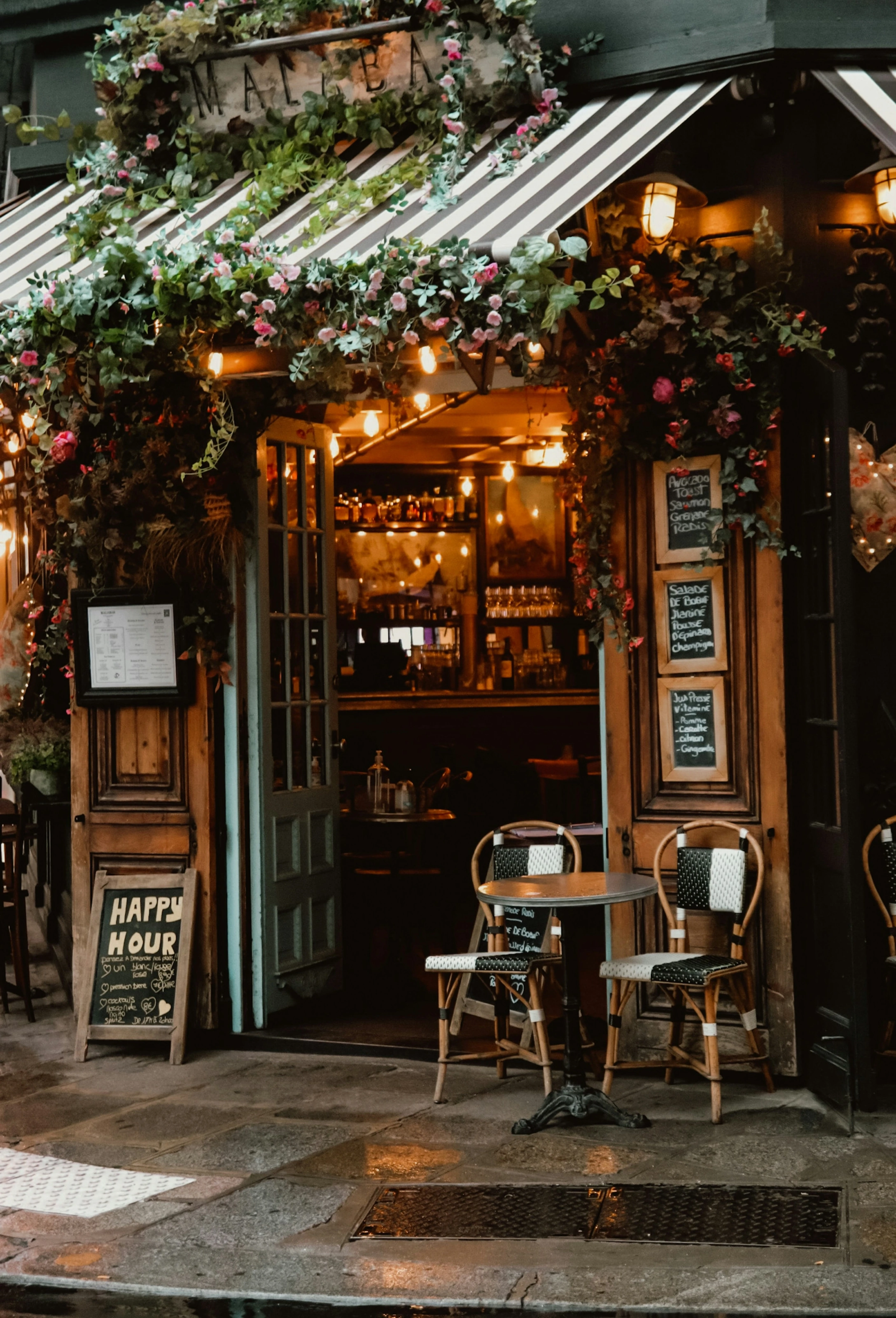
Similar destinations
FAQ
Frequently asked questions about flights to Marseille
How do I get from Marseille airport to the centre?
The airport (MRS) is at Marignane, about 30 km by road. Bus #91 reaches Saint-Charles station in roughly 25 minutes, about every 15 to 20 minutes, and taxis are an alternative. Timetables change, so check them before you travel.
When is the best time to visit Marseille?
April to June and September to October: warm without excess and the sea is pleasant. Summer is sunny but busier, with Calanques access sometimes regulated; the mistral blows mostly in winter and spring.
Is Marseille expensive?
It sits around the French average, with very cheap meals in working-class districts. We do not publish figures because the sources are dated or disagree.
Can I come by TGV from Paris?
Yes. Paris to Marseille Saint-Charles takes about three hours by TGV according to Wikivoyage (EN, FR, DE). From Lyon allow around an hour and three quarters, and about two and a half hours from Nice.
How do I get around Marseille?
On foot in the centre, by metro and tram for longer hops, by bus for the Corniche or Notre-Dame de la Garde and by boat for the Frioul. Driving in the centre is not recommended.
What should I eat in Marseille?
Bouillabaisse (book ahead), panisse, orange-blossom navettes and pastis; the Noailles and La Plaine markets are good places to start.
How much does a flight to Marseille usually cost?
The price depends mainly on your departure city, the time of year and how far ahead you book. The "opportunities" section above shows real examples of prices SniperAir has already detected to this destination.
How do I get alerted when a flight to Marseille drops below my budget?
Create an alert profile with your departure airport, Marseille as the destination and your maximum budget. You are notified automatically as soon as a matching price is detected.
Ready to head to Marseille?
Set your budget and let SniperAir monitor fares for you.
Create my alert