
Cheap flights to Belgrade
Set your departure airport and maximum budget: SniperAir tracks prices to Belgrade and alerts you the moment a deal matching your criteria appears.
Quick summary
Country
Serbia
Continent
Europe
Airport
BEG
Currency
Serbian dinar (RSD)
Time zone
UTC+1 (UTC+2 during daylight saving time)
Deals already spotted to Belgrade
Real flight examples detected by SniperAir, with their reference price.
Loading examples…
Why track Belgrade with SniperAir
A capital of rivers, ramparts and long evenings
Choose your departure
Enter your departure airport and your maximum budget for a flight to Belgrade (BEG).
SniperAir keeps watch
Our systems continuously compare new prices with the real price history of the route. SniperAir monitors prices and alerts you: it does not sell or book tickets.
You receive an alert
As soon as a price matches your criteria, you are notified, without having searched for anything yourself.
Belgrade, the White City, is the capital and largest city of Serbia. It sits where the Sava meets the Danube: according to Wikipedia (EN), the contiguous urban area has about 1.3 million inhabitants and the wider administrative area about 1.7 million. It is one of the oldest cities in Europe, ruled in turn by Romans, Byzantines, Hungarians, Ottomans and Habsburgs, and rebuilt many times. Today it combines a fortress above the two rivers, a long 19th-century pedestrian street, the bohemian Skadarlija quarter, varied museums and a nightlife that spills onto the water. Flights to Belgrade change price often, so a SniperAir alert saves you checking every day. You set your budget, we compare new prices with the real price history of the route and we let you know.
Airport and getting into town
Nikola Tesla Airport, west of the city
Belgrade Nikola Tesla (BEG)
Belgrade Nikola Tesla Airport (BEG) lies west of the centre, near the suburb of Surčin, according to Wikipedia (EN). It is the largest and busiest airport in Serbia and the hub of Air Serbia, the flag carrier; Wizz Air also has a base there. Wikivoyage (EN) notes that, in practice, there is a single terminal. To reach the city, minibus A1 runs to Slavija Square in about 30 minutes, while buses 72 and 600 serve the Novi Beograd and central stations. For taxis, Wikivoyage (EN) advises ordering by app or phone, or taking the fixed-price slip from the machine by baggage claim, and avoiding drivers who tout for fares in the arrivals hall.
Sources disagree on the distance between the airport and the centre, so no figure is given here. Minibus A1 to Slavija Square; buses 72 and 600 according to Wikivoyage (EN). No transfer fare is published.
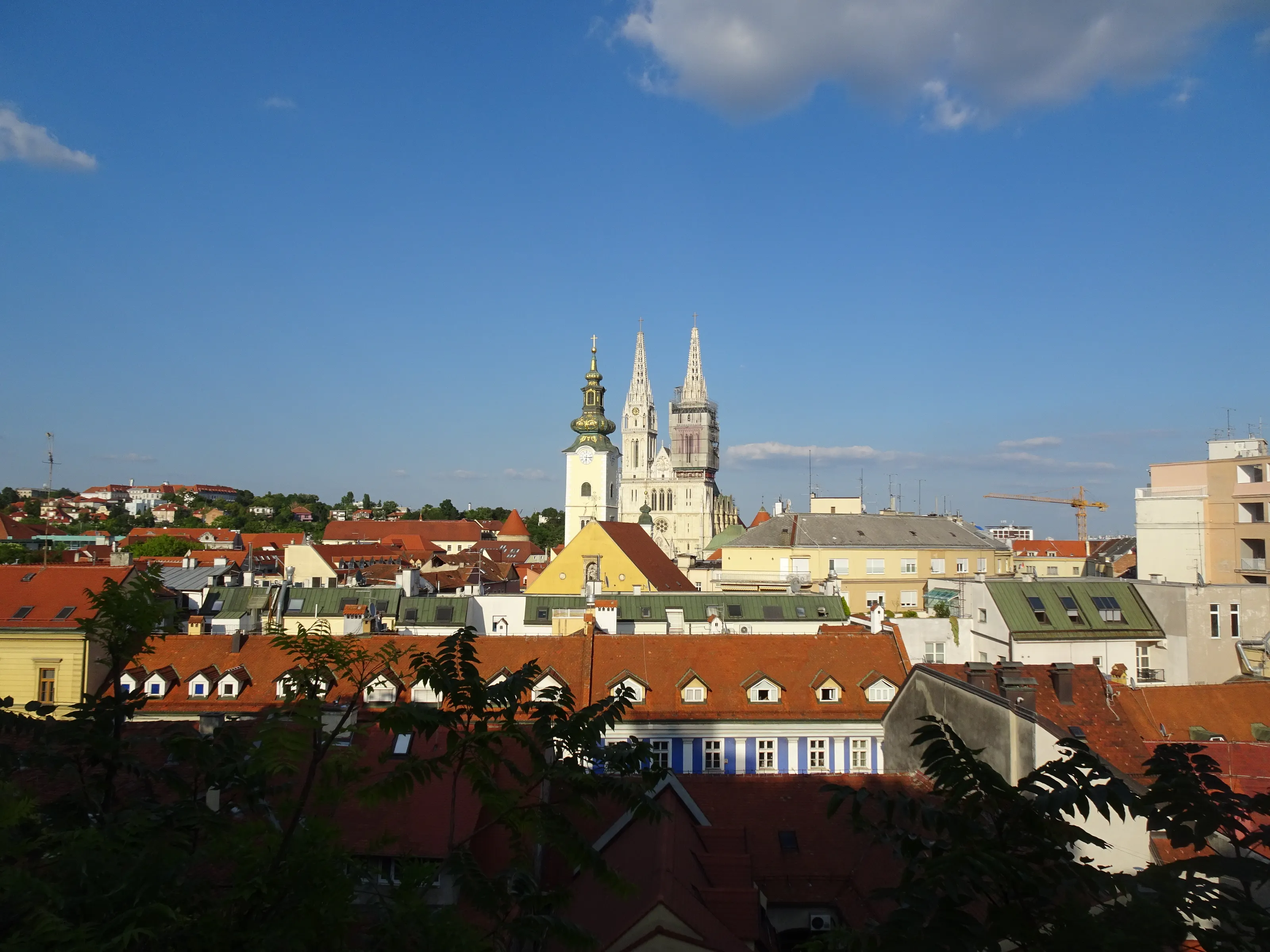
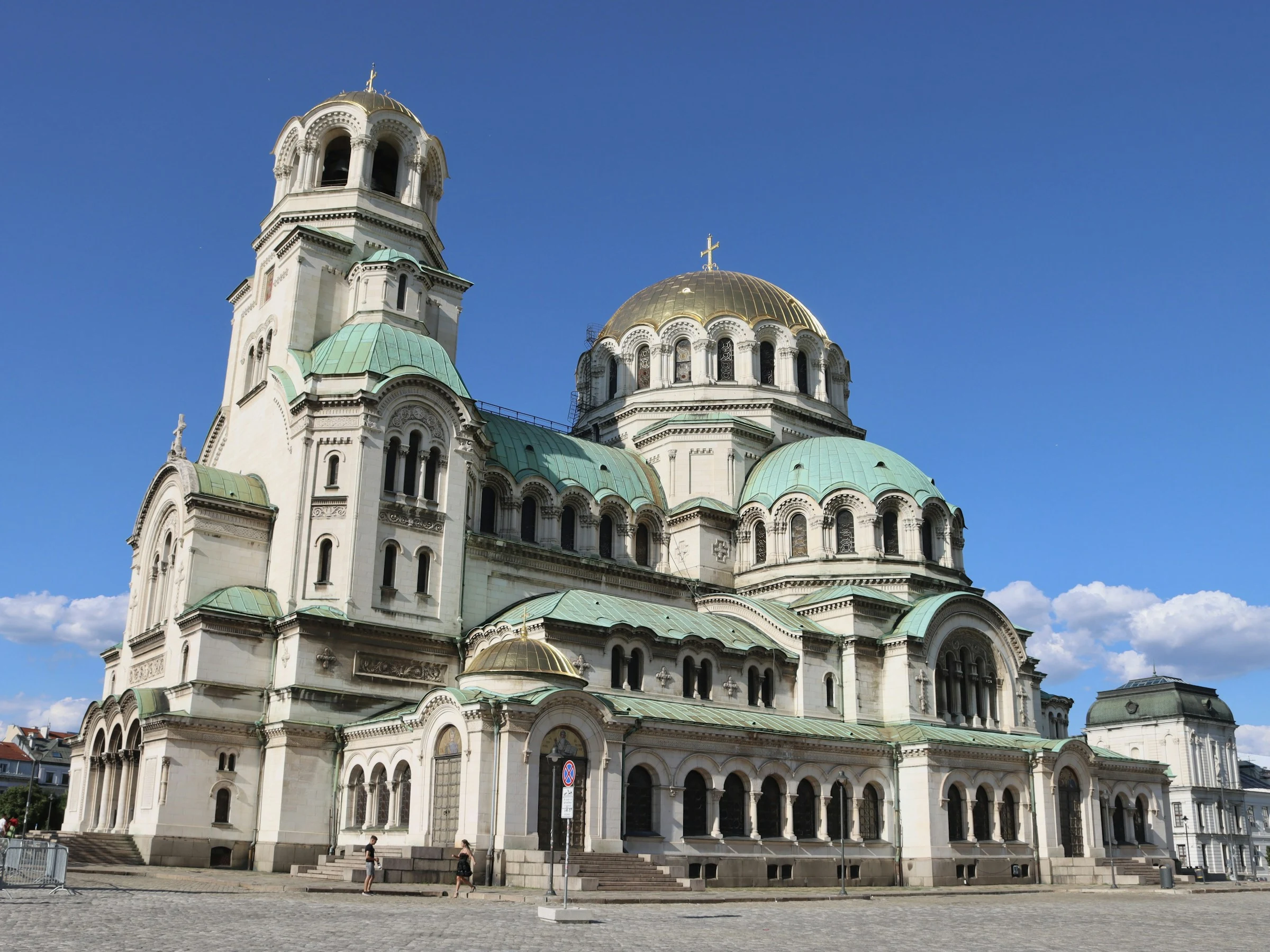
International links are shared between the national carrier and a few low-cost airlines. For a trip around the region you can also watch Zagreb (ZAG), Sofia (SOF) or Vienna (VIE): these cities have their own SniperAir page and price alerts.
Landmarks
Kalemegdan fortress, Saint Sava and the riverfront
Belgrade is best explored by alternating the heights of the fortress, the streets of the centre and the riverbanks. The six places below are illustrated with photos; more are described in text further down.
The Victor and the confluence
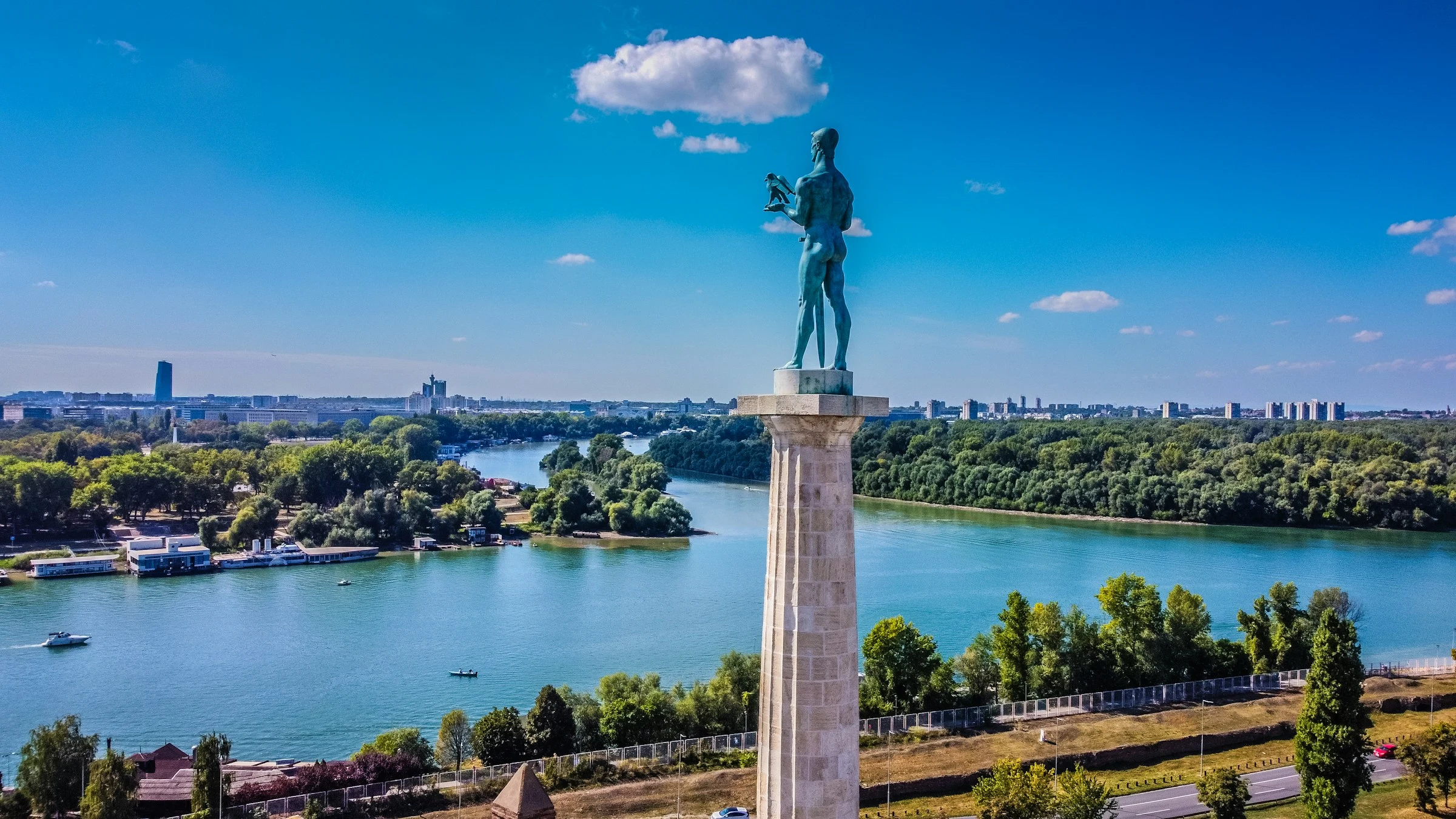
The statue of the Victor (Pobednik), by sculptor Ivan Meštrović and dated 1928 according to Wikipedia (DE), stands in Kalemegdan Park. It looks out over the point where the Sava joins the Danube, the best-known view in the city. The fortress grounds are free to enter at any hour according to Wikivoyage (EN).
The riverbanks and their boats
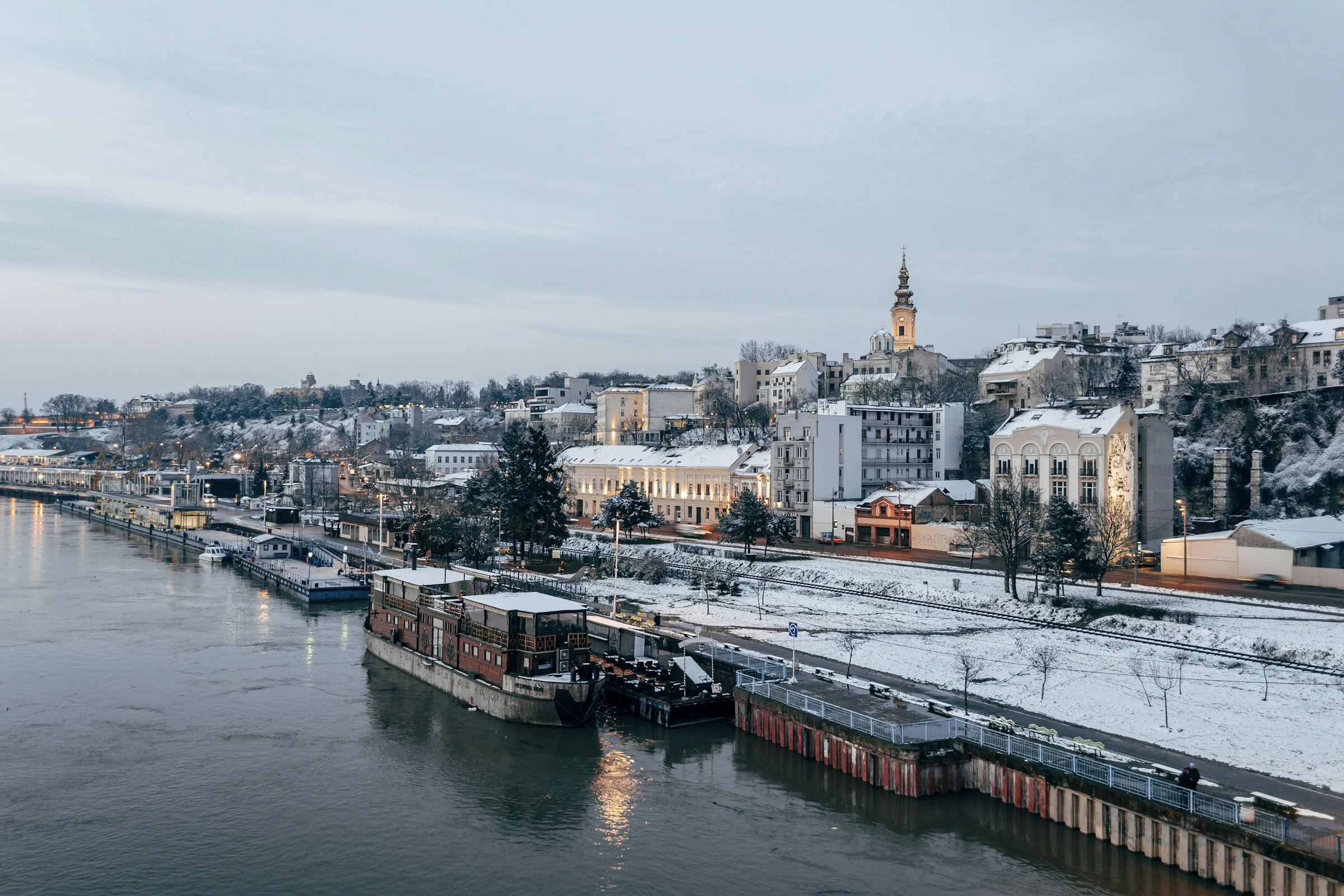
Both rivers run along the city on long embankments, where boats and floating restaurants known as splavovi are moored. Wikivoyage (EN) explains that some are quiet family restaurants by day before turning into bars or clubs at night; names and opening times change, so check before you go.
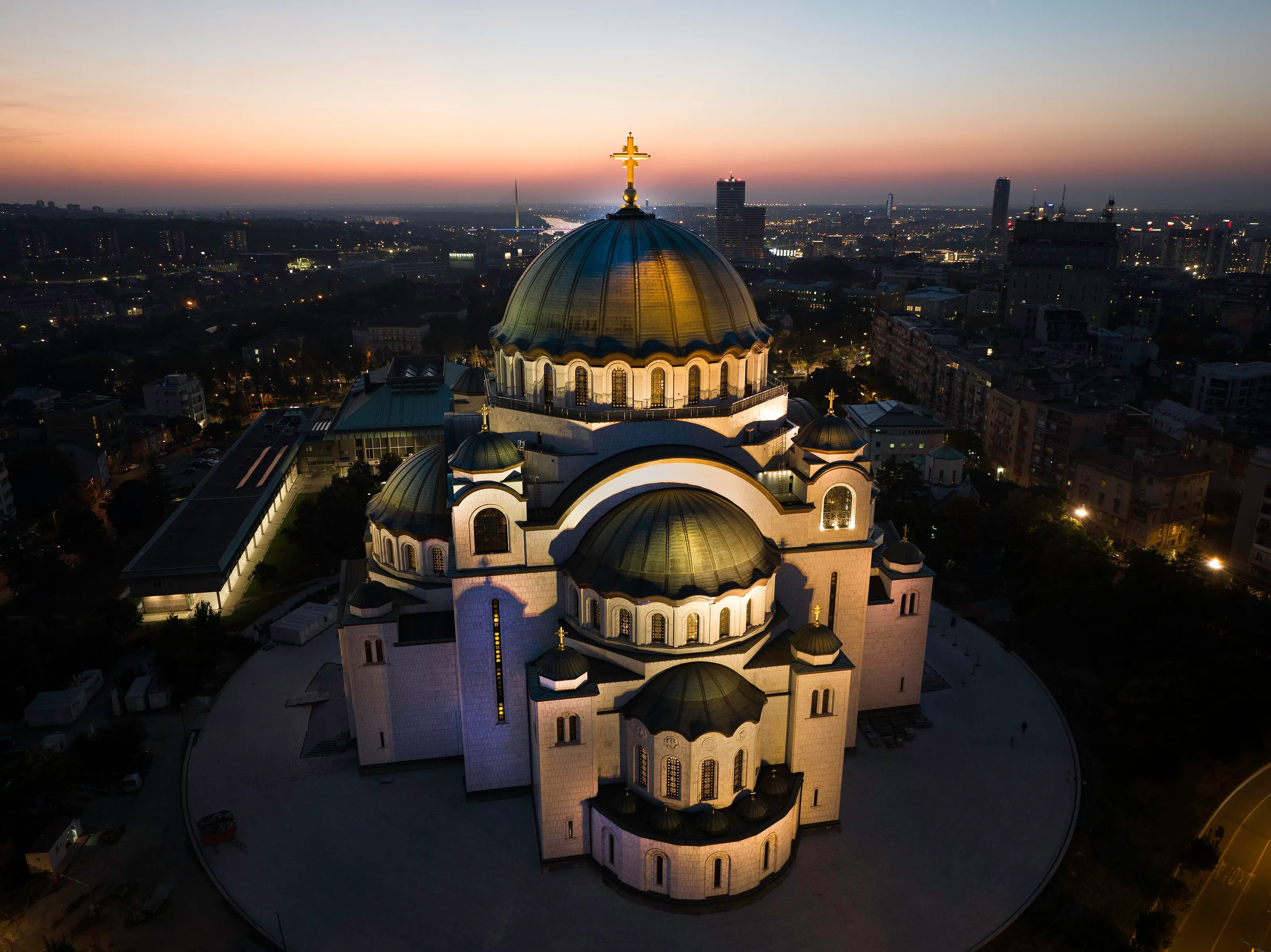
The Church of Saint Sava
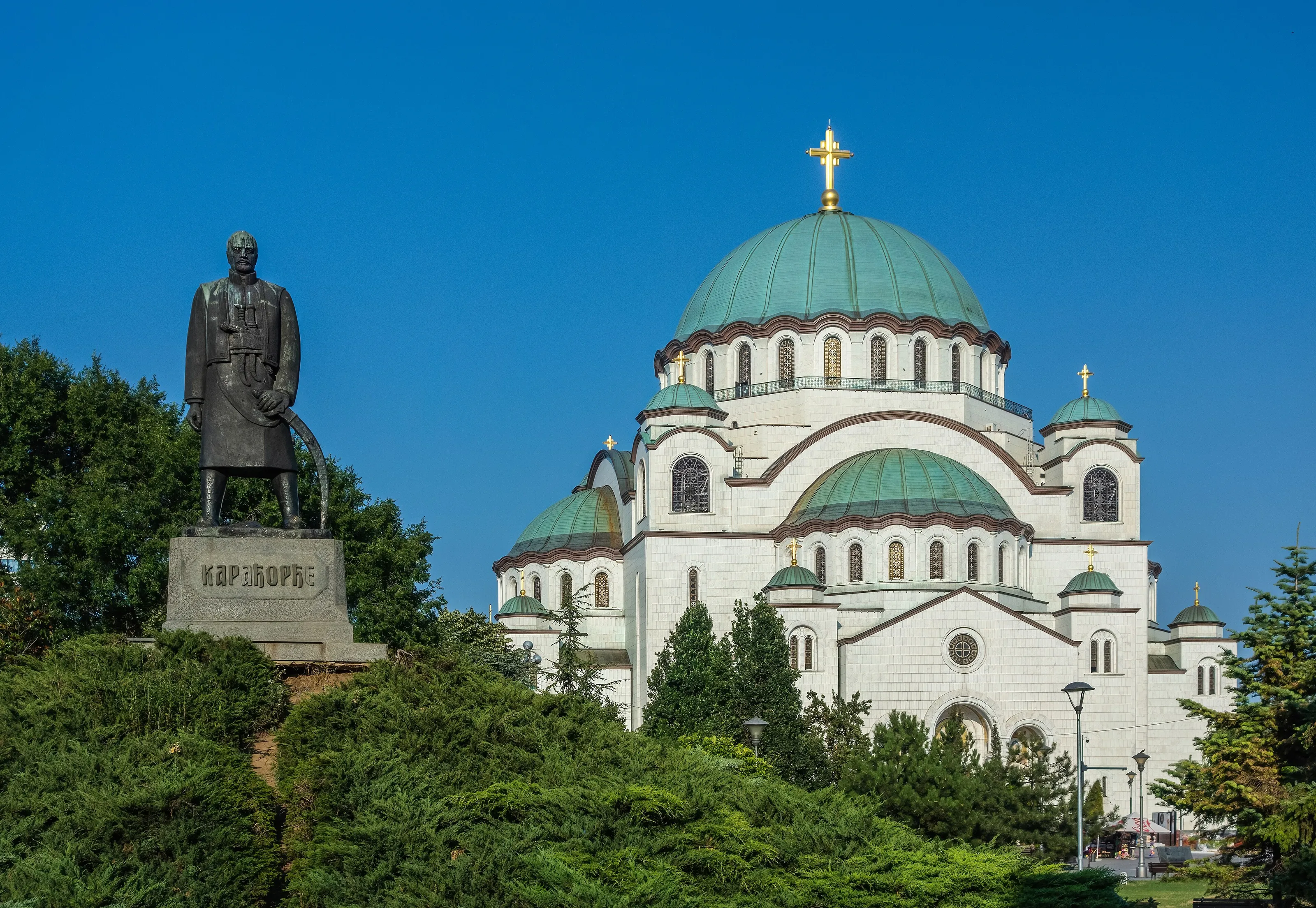
The Church of Saint Sava, on the Vračar plateau, is one of the largest Orthodox church buildings, according to Wikipedia (EN). It stands where, in 1594, the Ottoman authorities had the relics of Saint Sava burned, according to Wikipedia (EN). Its green domes can be seen from far away.
Gold mosaics inside
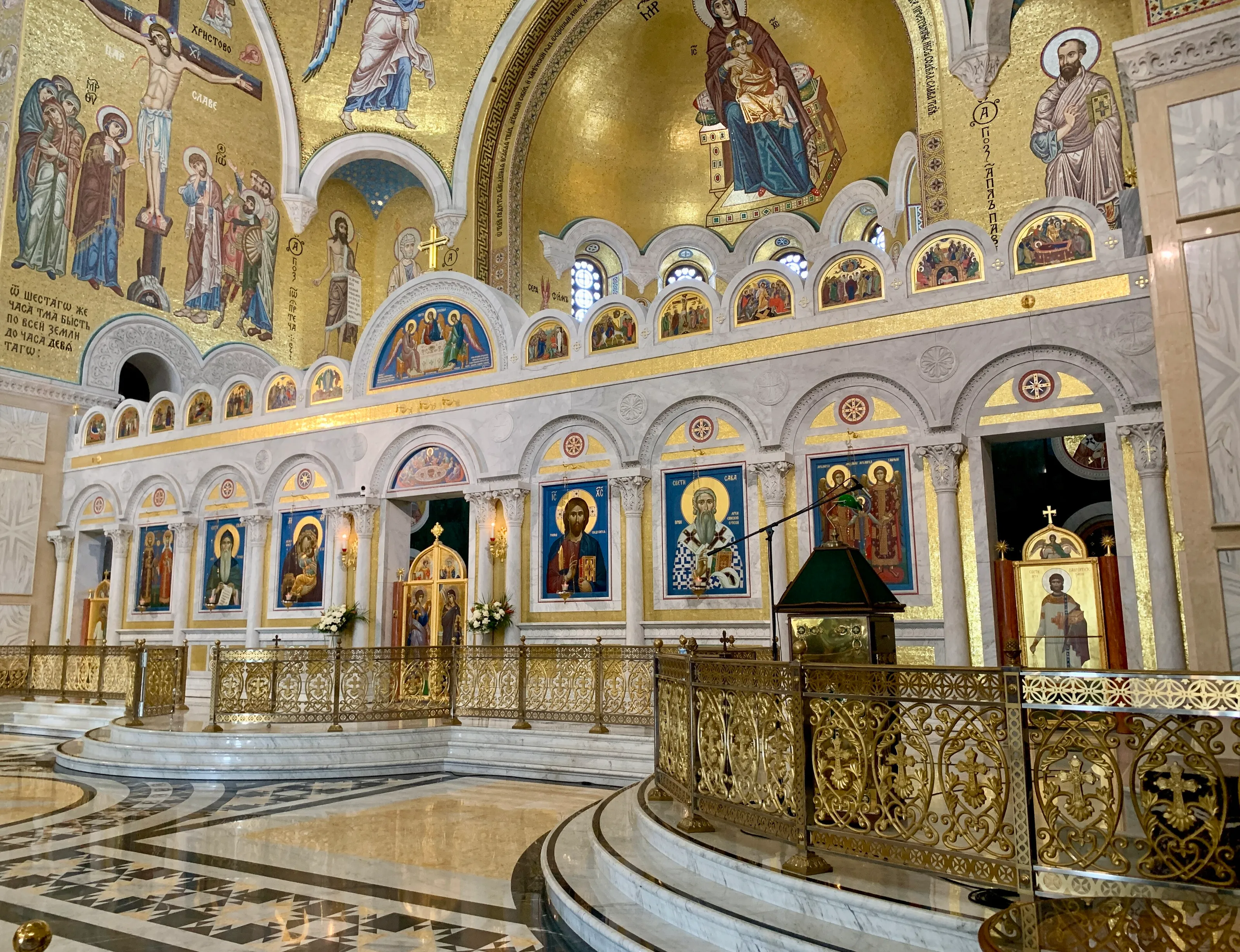
Inside, walls and vaults are covered with gold-ground mosaics, with an iconostasis and a marble floor. It is a very different experience from the plain white exterior: dress modestly, as in any Orthodox place of worship.
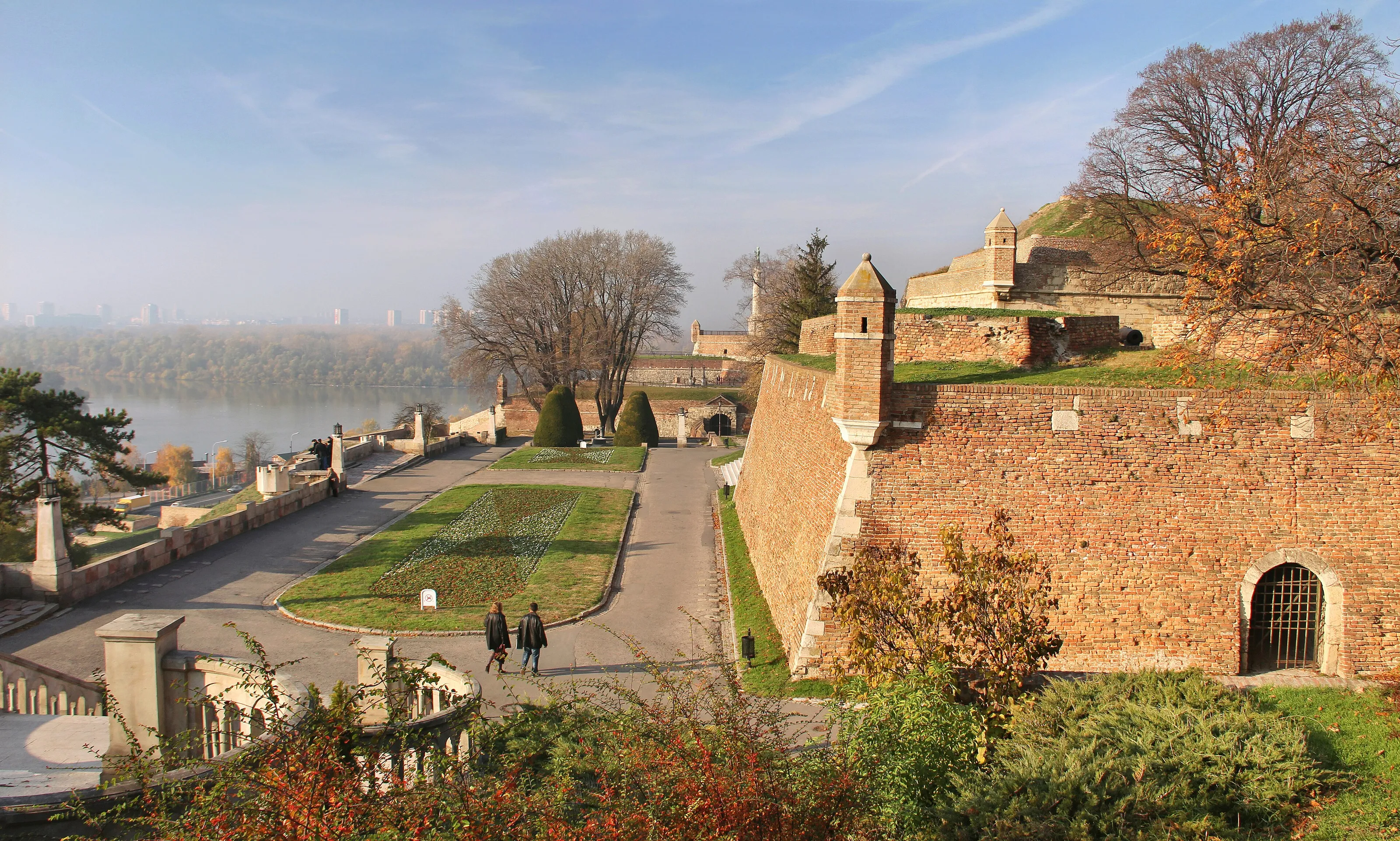
The ramparts of Kalemegdan
The fortress and park of Kalemegdan form the historic core of the city according to Wikipedia (FR). Its ramparts, gates and paths overlook the confluence; the grounds also hold the Military Museum, churches and a zoo according to Wikivoyage (EN).
Saint Sava at dusk
At dusk the church is lit up and its outline rises above the roofs of Vračar. Evening is a good time for a walk, once the summer heat eases and café terraces fill up.
Other places are worth a detour: Knez Mihailova, the pedestrian street opened in the 19th century linking Kalemegdan Park to Republic Square according to Wikipedia (FR); Skadarlija, the bohemian quarter where you hear starogradska music; Zemun, a former Austro-Hungarian town across the Sava with a Central European feel; and New Belgrade, with its modernist architecture.
Museums and culture
Museums: Tesla, weapons, ethnography and history
The Nikola Tesla Museum
Founded in 1952, it preserves the inventor's personal items and about 160,000 original documents according to Wikipedia (EN). It is a favourite stop for anyone interested in science.
The Military Museum
Founded in 1878 in Kalemegdan Park, it holds more than 25,000 objects, from ancient weapons to 20th-century uniforms, according to Wikipedia (EN).
The Ethnographic Museum
Created in 1901, it shows more than 150,000 pieces on everyday life, costume and traditions across the former Yugoslavia according to Wikipedia (FR).
The National Museum and the Aviation Museum
The National Museum, founded in 1844, is the city's large museum of archaeology and art on Republic Square according to Wikivoyage (EN). Near the airport, the Aviation Museum shows more than 200 aircraft according to Wikipedia (EN). No fares or opening hours are published here: check official sites.
Food and drink
Food and drink: grills, burek, river fish and rakija
Dishes to try
Serbian cooking is hearty and meat-heavy according to Wikivoyage (EN): ćevapi and pljeskavica (grilled minced-meat dishes) almost everywhere, karađorđeva šnicla and sarma (stuffed cabbage leaves), served with kajmak (a fermented cream), ajvar (a pepper relish) and fresh bread. At breakfast, flaky burek is eaten with drinking yoghurt. For a sweet tooth there are krempita, šampita and baklava.
River fish and floating restaurants
Where two rivers meet, Belgrade has a long tradition of freshwater fish: fish soup (riblja čorba), fish stew, grilled carp and zander. These are served on the splavovi, especially around Zemun and Ada Ciganlija.
Kafanas, markets and drinks
The kafanas, traditional taverns, are about atmosphere as much as food, with live music in the evening; the best known cluster in Skadarlija. The covered markets at Zeleni Venac and Bajloni are good places to browse according to Wikivoyage (EN). Rakija, a fruit brandy (plum, quince, pear), goes with strong Turkish-style coffee. No business names are given here.
Getting around
Getting around Belgrade
Buses, trams and trolleybuses
The GSP company runs the buses, trams and trolleybuses according to Wikivoyage (EN). Buses reach almost everywhere; some are packed at peak times. Trams converge on the Slavija area. Fares change, so check locally.
Suburban train and no metro
The BG:Voz suburban train crosses the city with stops at the central station (Prokop) and Vukov spomenik according to Wikivoyage (EN). Belgrade has no metro in service yet: line 1 is under construction according to the same source.
Taxis: order by app
Wikivoyage (EN) warns that taxi scams are common. The safest way is to book through an app, which records the route and shows the price. Take a taxi with a roof sign and city number, otherwise decline.
On foot
The centre, from Kalemegdan to Republic Square along Knez Mihailova, can be covered on foot. Some slopes are steep, so bring good shoes.
Budget and precautions
Budget and precautions
Price level
Belgrade is a capital where prices are generally lower than in Western Europe according to Wikivoyage (EN), although the best restaurants approach the prices of other capitals. Serbia does not use the euro but the dinar; cards are widely accepted. No figure is published here because the sources are not cross-checked. SniperAir alerts mainly help with the flight.
Precautions
According to Wikivoyage (EN), Belgrade is fairly safe, but watch for pickpockets on public transport and in crowds, taxi scams and quarrels late at night. Stray dogs are mentioned. Summer days can be very hot, and the košava, a cold wind, blows in winter. Serbia is neither in the European Union nor in the Schengen area: check the entry rules for your nationality and consult your government's travel advice.
When to go
When to go to Belgrade
Spring (March to May)
Short and rainy at first, it becomes pleasant in May: a good time to walk in Kalemegdan Park and along the embankments.
Summer (June to August)
Hot: July is the warmest month, averaging about 22 degrees C according to Wikipedia (FR), and some days can pass 40 degrees C according to Wikivoyage (EN). Locals swim at Ada Ciganlija.
Autumn (September to November)
Often mild and sunny: Wikipedia (DE) describes a true Indian summer. It is one of the best times to visit.
Winter (December to February)
Cold, with a January average around 0 degrees C according to Wikipedia (DE) and the košava wind. Days are short, but the city stays lively.
Belgrade has a temperate continental climate according to Wikipedia (FR), with an annual mean temperature of about 12 degrees C. Aim for May-June or September-October for mild weather; July and August are hot and very busy.
By length of stay
How many days in Belgrade
Kalemegdan and the centre
Two days are enough for the fortress, Knez Mihailova, Skadarlija and the Church of Saint Sava.
Museums and riverfront
With three days, add the Nikola Tesla Museum, the National Museum, Zemun and an evening on the floating restaurants.
Ada Ciganlija and day trips
With five days, add a day at Ada Ciganlija, New Belgrade and a trip out of the city, for example to Novi Sad.
In pictures
Belgrade in pictures
You might also like
Similar destinations
FAQ
Frequently asked questions about flights to Belgrade
Where is Belgrade airport?
Nikola Tesla Airport (BEG) is west of the centre, near Surčin. Minibus A1 links it to Slavija Square in about 30 minutes according to Wikivoyage (EN).
What currency is used in Belgrade?
Serbia uses the Serbian dinar (RSD), not the euro. Cards are widely accepted; change money at an exchange office or at the airport.
What should I see first in Belgrade?
Kalemegdan fortress and park, the Church of Saint Sava, Knez Mihailova Street, Skadarlija, the Nikola Tesla Museum and the banks of the Sava and the Danube.
When is the best time to visit Belgrade?
May-June and September-October for mild weather. July and August are very hot, and winter is cold with the košava wind.
Does Belgrade have a metro?
Not yet: line 1 is under construction according to Wikivoyage (EN). The city relies on buses, trams, trolleybuses and suburban trains.
Is Belgrade safe for travellers?
Fairly safe according to Wikivoyage (EN), with the usual care against pickpockets, touting taxi drivers and tense situations late at night. Check your government's travel advice too.
How much does a flight to Belgrade usually cost?
The price depends mainly on your departure city, the time of year and how far ahead you book. The "opportunities" section above shows real examples of prices SniperAir has already detected to this destination.
How do I get alerted when a flight to Belgrade drops below my budget?
Create an alert profile with your departure airport, Belgrade (BEG) as the destination and your maximum budget. You are notified automatically as soon as a matching price is detected. SniperAir monitors and alerts, it does not sell or book tickets.
Ready to head to Belgrade?
Set your budget and let SniperAir monitor fares for you.
Create my alert