
Cheap flights to Ljubljana
Set your departure airport and maximum budget: SniperAir tracks prices to Ljubljana and alerts you the moment a deal matching your criteria appears.
Quick summary
Country
Slovenia
Continent
Europe
Airport
LJU
Currency
Euro (EUR)
Time zone
UTC+1 (UTC+2 during daylight saving time)
Deals already spotted to Ljubljana
Real flight examples detected by SniperAir, with their reference price.
Loading examples…
Why track Ljubljana with SniperAir
A compact capital of river, castle and Alps
Choose your departure
Enter your departure airport and your maximum budget for a flight to Ljubljana (LJU).
SniperAir keeps watch
Our systems continuously compare new prices with the real price history of the route. SniperAir monitors prices and alerts you: it does not sell or book tickets.
You receive an alert
As soon as a price matches your criteria, you are notified, without having searched for anything yourself.
Ljubljana is the capital and largest city of Slovenia, with about 290,000 inhabitants according to Wikipedia (DE) and Wikivoyage (EN). It grew on the site of the Roman town of Emona, spent centuries under Habsburg rule, and has been the capital of independent Slovenia since 1991. Its centre is small enough to explore on foot: a castle on its hill, a river lined with cafe terraces, bridges, Baroque squares and the work of the architect Jože Plečnik, whose works in the city were added to the UNESCO World Heritage List in 2021 according to Wikivoyage (EN). The city was also named European Green Capital for 2016 according to Wikipedia (EN) and (ES). Flights to Ljubljana change price with the season and the departure city, so a SniperAir alert saves you from checking every day. You set your budget, we compare new fares with the real price history of the route, and we let you know.
Airport and getting into town
Jože Pučnik Airport, north of the city
Ljubljana Jože Pučnik (LJU)
Ljubljana Airport (LJU), also known as Brnik, is the largest airport in Slovenia according to Wikipedia (EN). It lies north of the capital, at the foot of the Kamnik-Savinja Alps. A new Terminal A opened in June 2021 and handles all scheduled flights, according to Wikivoyage (EN). To reach the city, a coach runs to Ljubljana's bus station, next to the railway station, in about 50 minutes, roughly every 30 minutes on weekdays according to Wikivoyage (EN); city bus route 64 also makes the trip. Shared shuttles and taxis are available; it is wise to compare and book ahead.
Sources disagree on the distance between the airport and the centre (about 24 to 27 km), so we write "about 25 km". Coaches and shuttles according to Wikivoyage (EN); no transfer fares are published here.
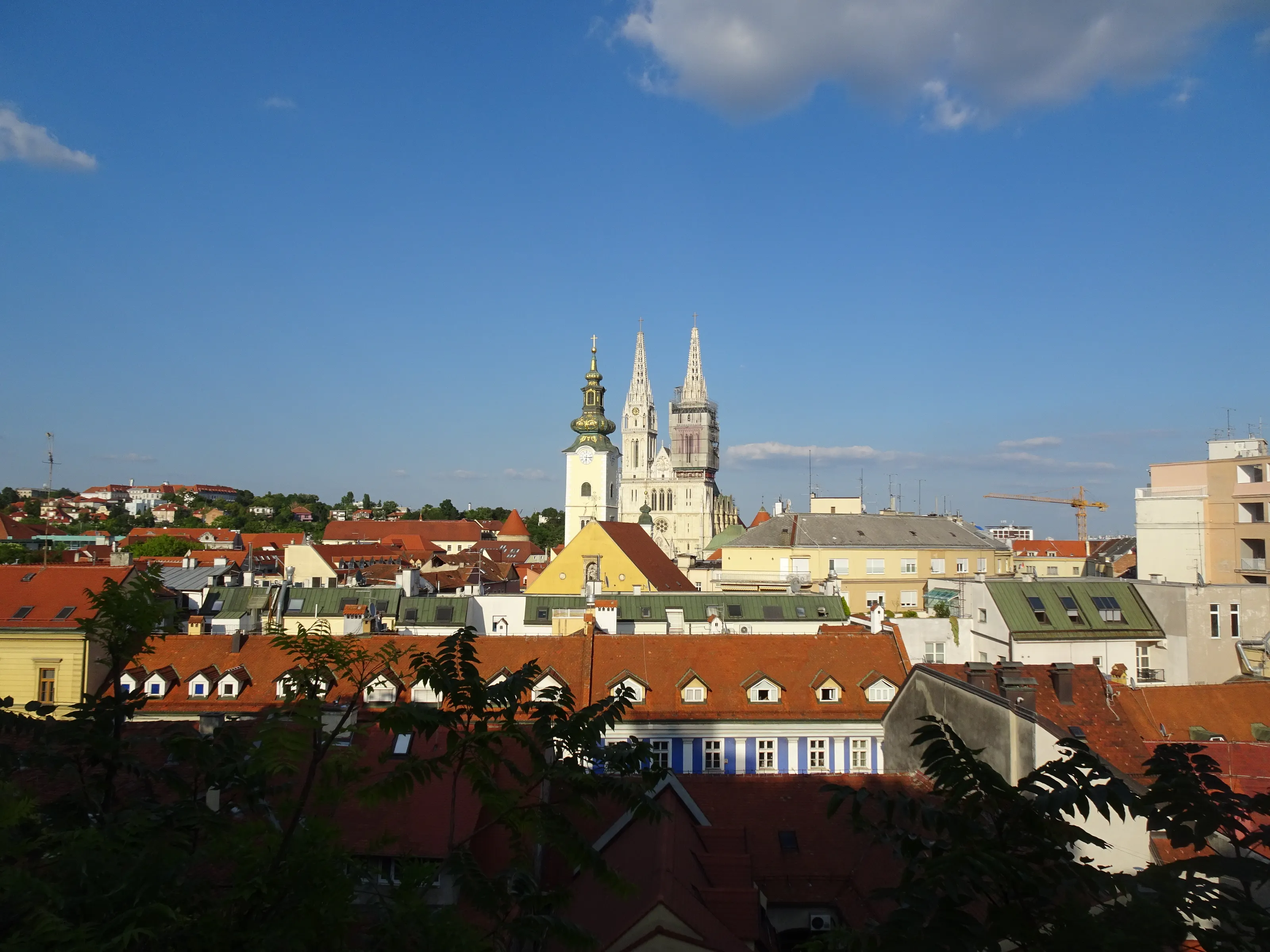
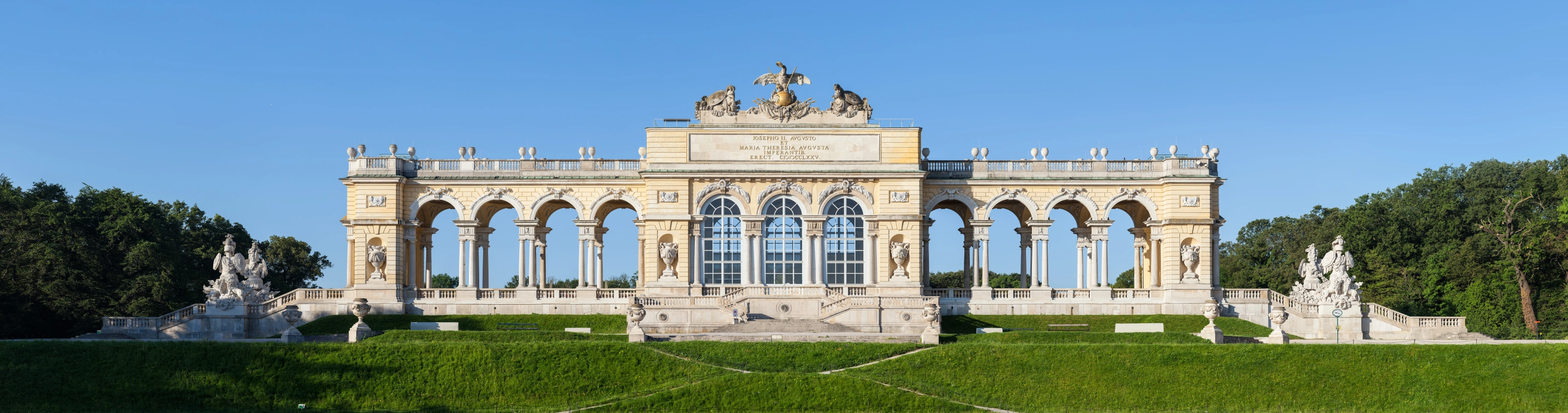
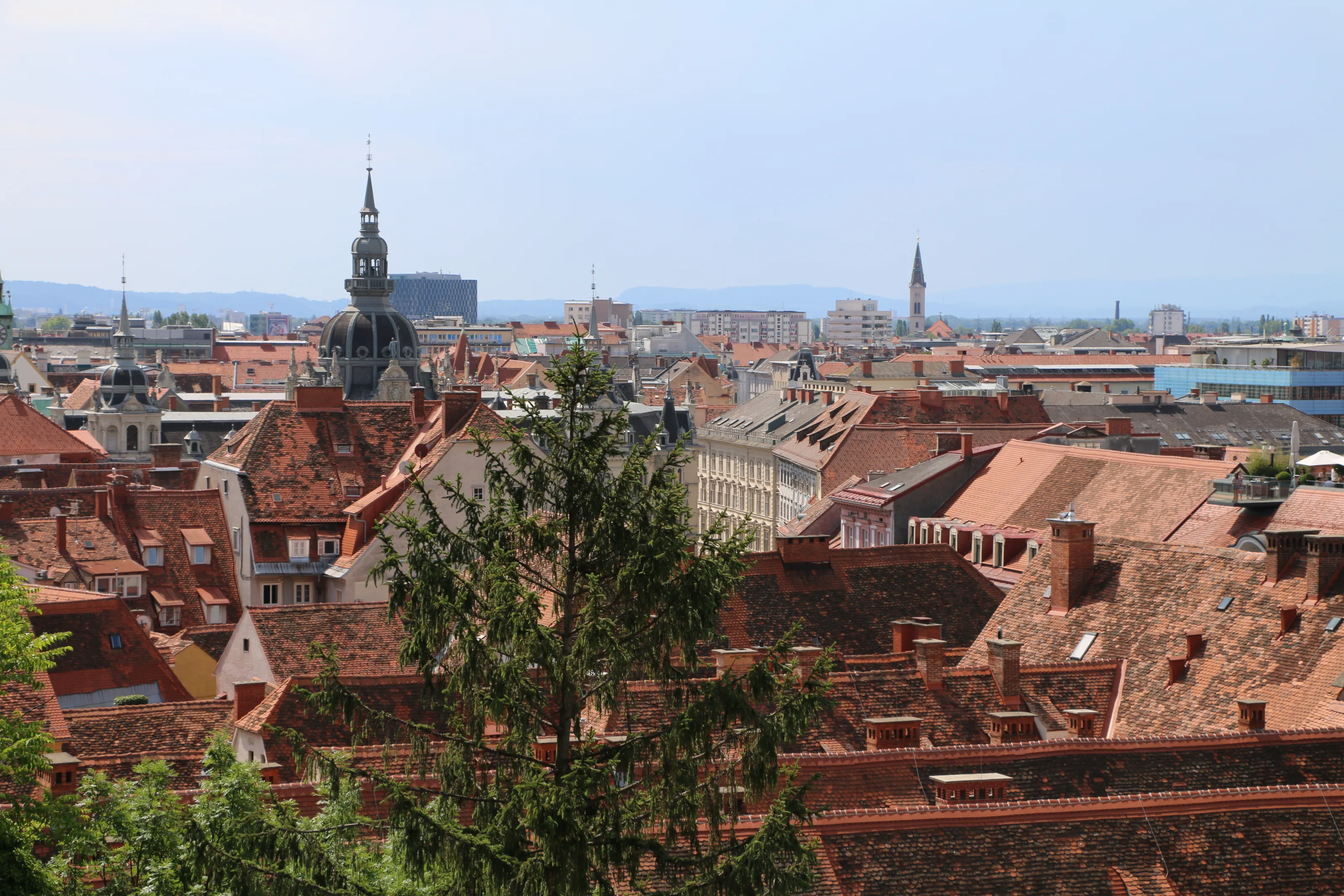
International links connect Ljubljana with many European capitals. To compare with neighbouring cities, you can also track Zagreb (ZAG), Vienna (VIE) or Graz (GRZ): these cities have their own SniperAir page and price alert.
Landmarks
Castle, Triple Bridge and the Ljubljanica riverbanks
Central Ljubljana is small: in a day on foot you can go from the castle hill to the bridges and on to the river embankments. The seven pictures below show the places that come up most often in travel accounts.
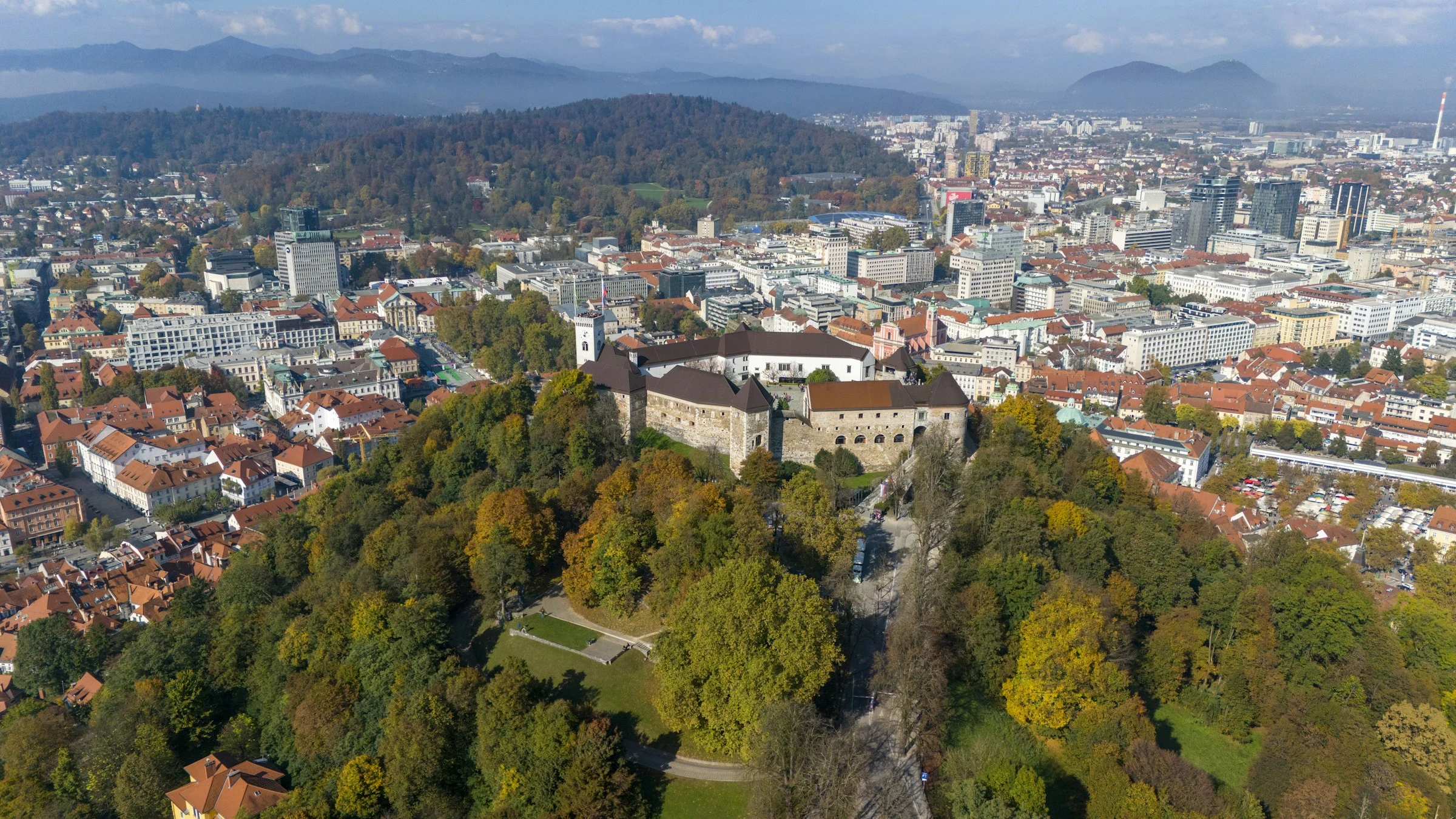
Ljubljana Castle
The castle overlooks the centre from its hill, 366 m above sea level according to Wikipedia (EN). Built in the 12th century, it combines Romanesque, Gothic and Renaissance elements; its viewing tower dates from 1848. A funicular has linked the city centre to the castle since 2006.
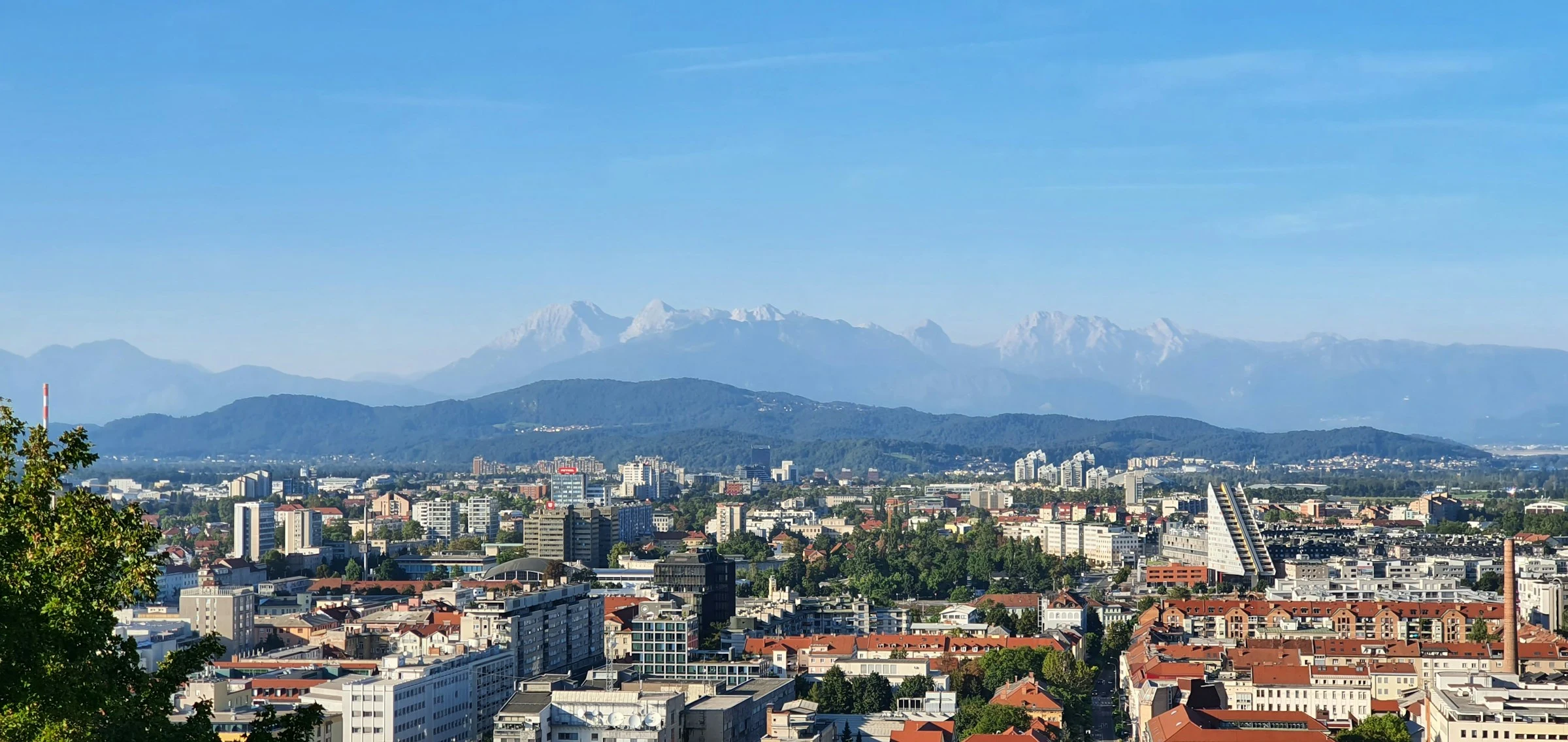
A view as far as the Alps
From the castle heights the eye travels over the city roofs to the surrounding mountains. Wikivoyage (EN) notes that the tower gives fine views over the city, the Sava and the Kamnik Alps on a clear day. Entry to the courtyard is free; the tower has a charge.
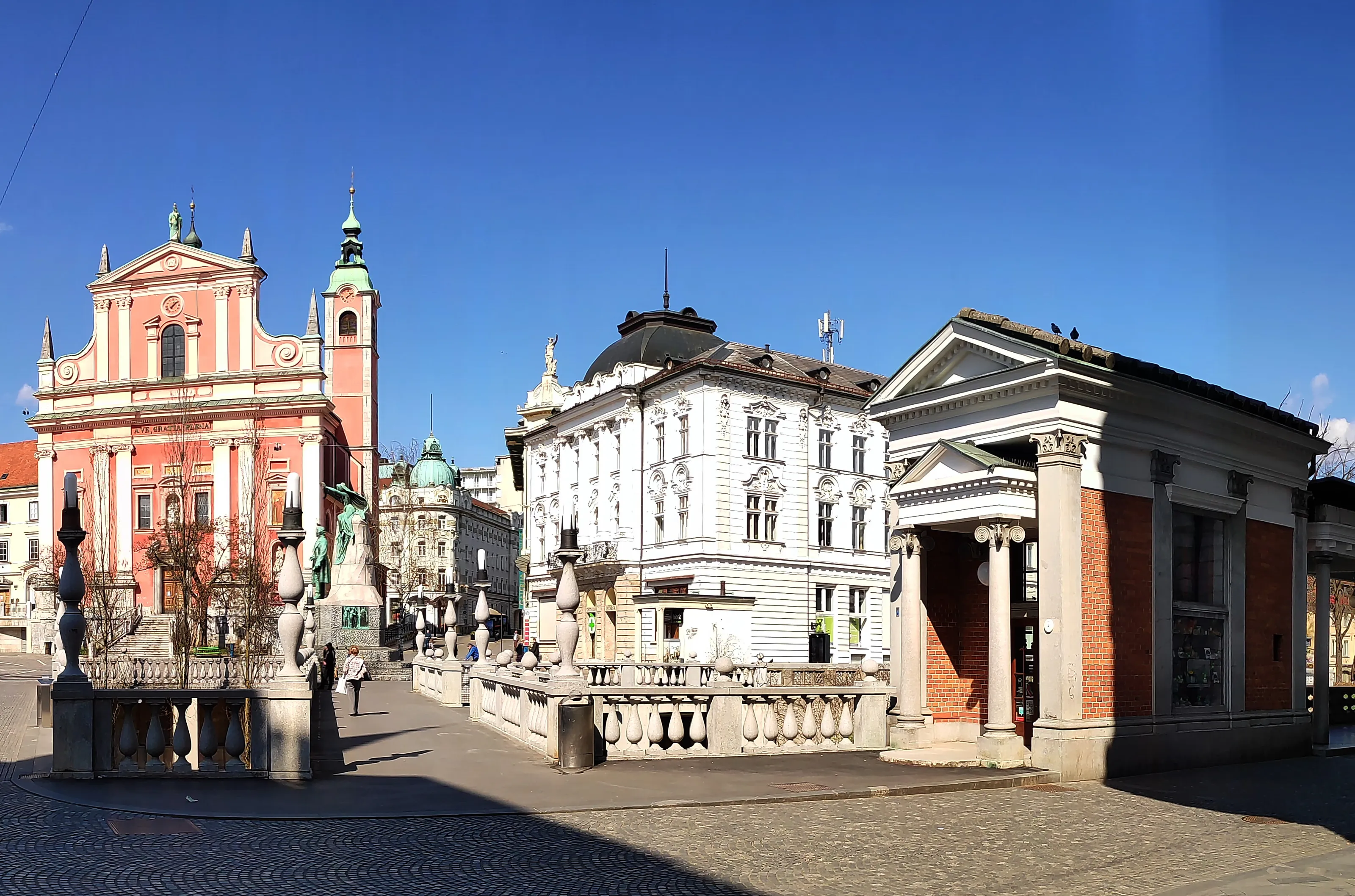
Prešeren Square
Prešeren Square is the obvious meeting point of the centre, according to Wikivoyage (EN). The Franciscan Church of the Annunciation, built between 1646 and 1660 according to Wikipedia (EN), anchors it with its pink facade. The statue of the poet France Prešeren, by Ivan Zajec and dated 1905, stands in the middle of the square, closed to traffic since 2007.
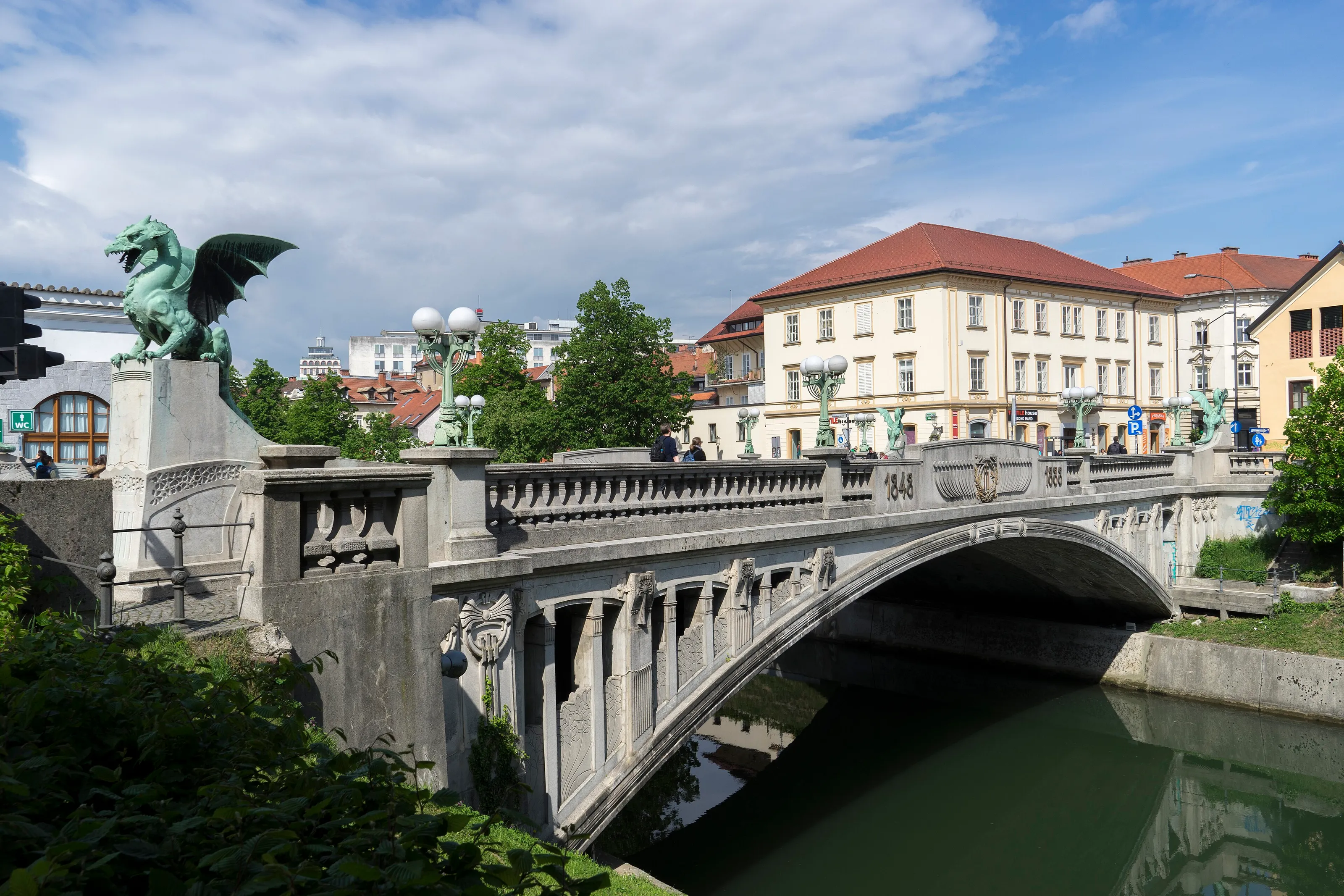
The Dragon Bridge
Completed in 1901 according to Wikivoyage (EN), the Dragon Bridge (Zmajski most) is guarded by four green bronze dragons, the emblem of the city. Wikipedia (FR) attributes its construction to Jurij Zaninović between 1900 and 1901. It stands at the end of the central market, just outside the pedestrian zone: watch out for traffic.
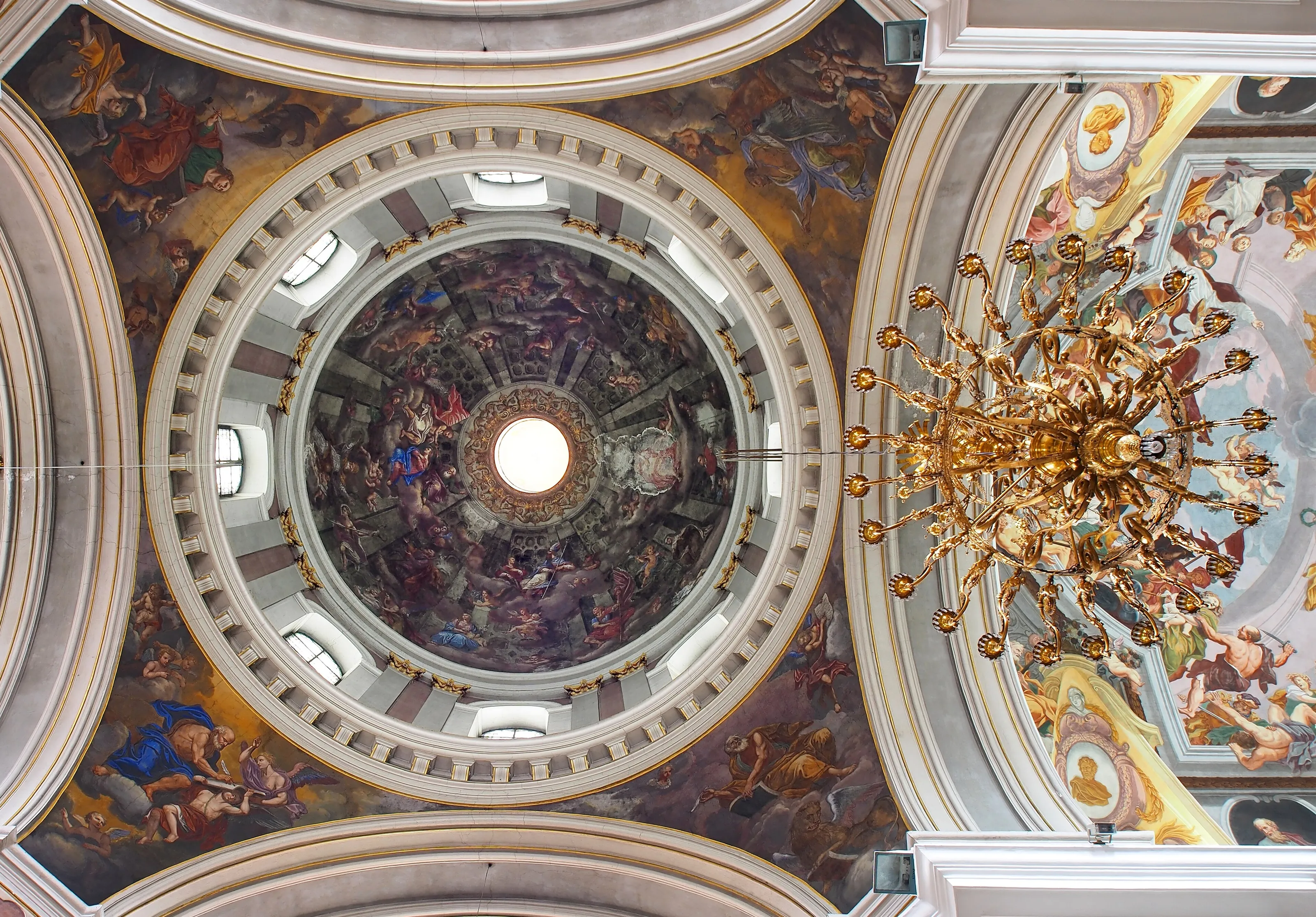
The cathedral frescoes
St Nicholas's Cathedral was built between 1701 and 1706 on a site documented since 1262, according to Wikivoyage (EN). Its Baroque interior is covered in frescoes by Giulio Quaglio, painted between 1703 and 1723 according to the same source; the richly decorated dome is worth looking up for.
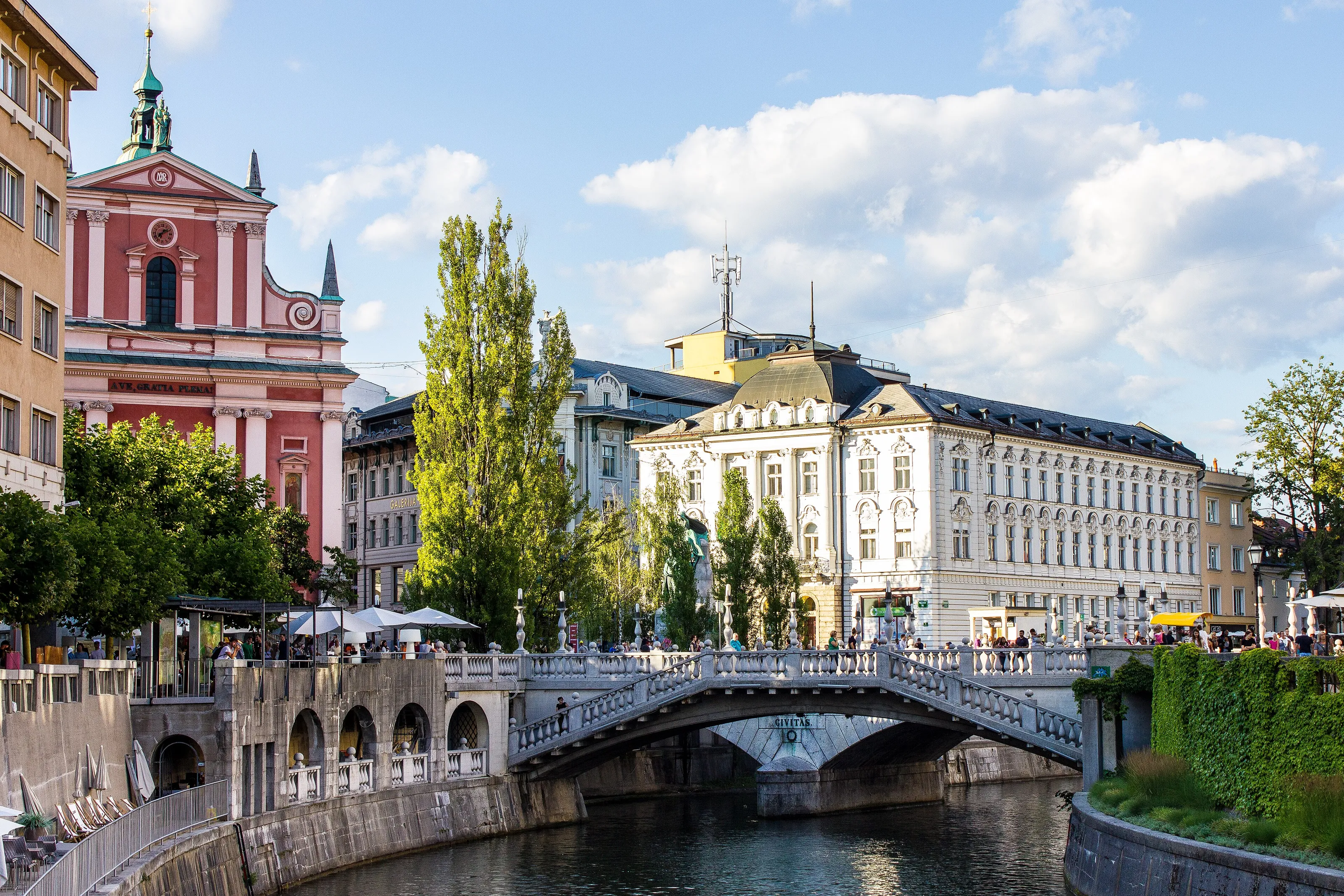
The Triple Bridge
In the heart of the old town, the Triple Bridge (Tromostovje) links Prešeren Square to the south bank. Wikivoyage (EN) says the central span dates from 1842 and that two side footbridges were added in the 1930s, to Plečnik's plans, to avoid a bottleneck. It is one of the symbols of the city.
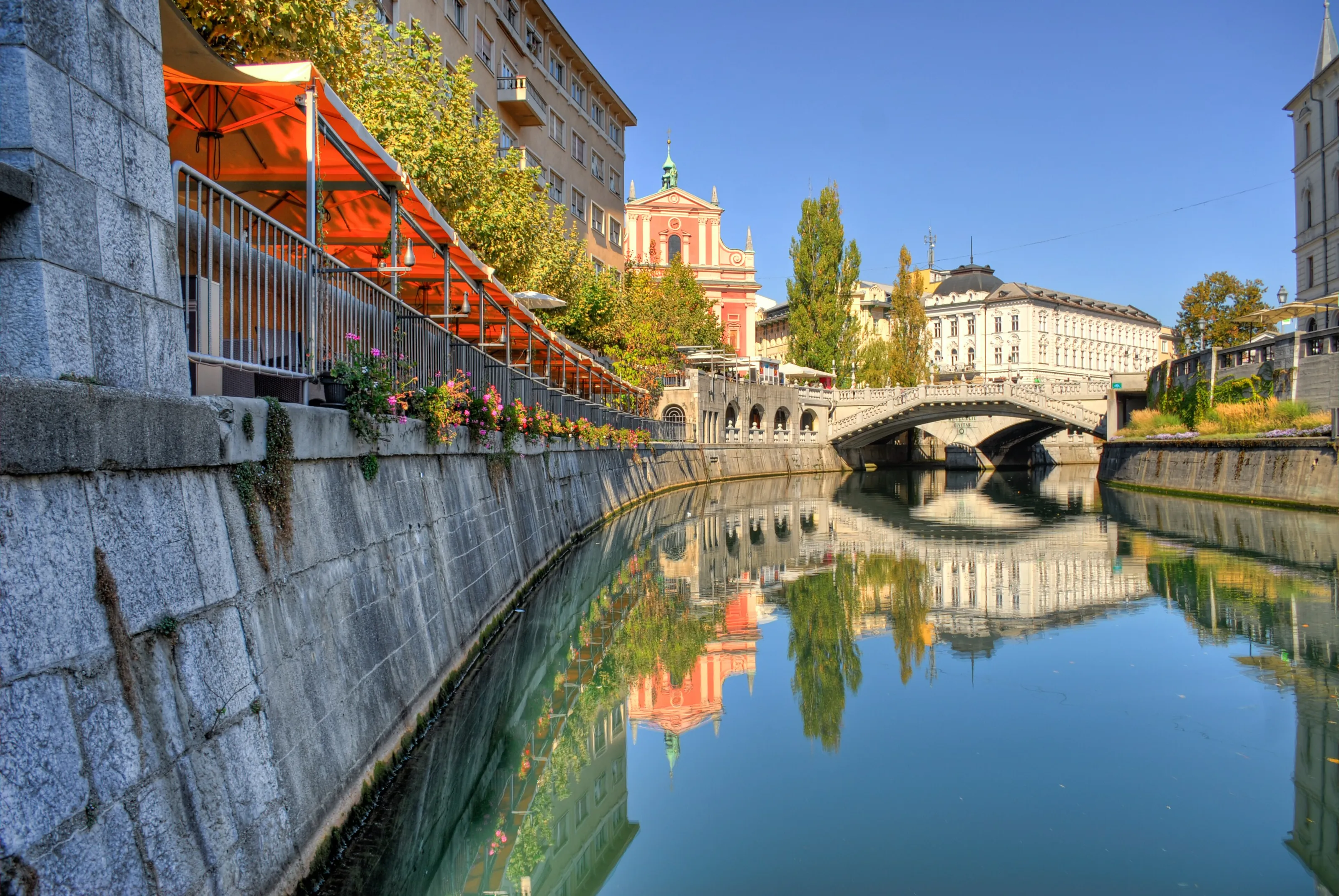
The Ljubljanica embankments
The Ljubljanica banks were redesigned as promenades with terraces, and the historic centre has been closed to motor traffic since 2007, according to Wikipedia (DE). The embankments, lined with trees and poplars, are a good place for a pause at the end of the day.
Other places are worth a detour: the old town, with City Square (Mestni trg) and the Robba Fountain, then Upper Square (Gornji trg); Republic Square and Congress Square, tied to the story of independence in 1991 according to Wikivoyage (EN); Tivoli Park, the city's largest, laid out in 1813 according to Wikipedia (EN); and the botanic garden, founded in 1810 according to Wikivoyage (EN). The Metelkova district, a former barracks turned alternative cultural space, suits fans of contemporary art.
Museums and culture
Museums: history, modern art and Plečnik's architecture
The National Museum of Slovenia
Founded in 1821 according to Wikivoyage (EN), it is the oldest and largest museum in the country. Its collections go back to the Stone Age; Wikivoyage (FR) points to the famous prehistoric flute from Divje Babe cave. A second site, in Metelkova, presents applied arts.
The National Gallery
It displays Slovenian Impressionist painters and other permanent collections according to Wikivoyage (EN), as well as a restored original of the Robba Fountain.
The Museum of Modern Art and the Museum of Contemporary Art
MG+ holds the national collection of 20th-century Slovenian art; +MSUM, opened in 2011 in the former Metelkova barracks, complements it according to Wikivoyage (EN).
Places devoted to Plečnik
The Museum of Architecture and Design has a permanent exhibition on the work of Jože Plečnik, and his house, where he lived from 1921 to 1957, can be visited in small groups by reservation according to Wikivoyage (EN). For 20th-century history, the National Museum of Contemporary History stands in Tivoli Park.
Food and drink
Food and drink: Carniolan sausage, štruklji and the central market
Dishes to try
According to Wikivoyage (DE), Slovenian cooking includes kranjska klobasa, a smoked sausage traditionally served with sauerkraut, štruklji (rolled dough with varied fillings), žlikrofi from Idrija (traditional dumplings) and potica, a rolled nut cake. Burek, a flaky pastry with meat or cheese, is eaten at any hour in the bakeries and snack bars of the centre according to Wikivoyage (EN).
Central market and street food
The central market, near the Triple Bridge, offers local produce, cheeses, breads and meats; it opens in the morning except on Sundays and is liveliest on Saturday mornings according to Wikivoyage (EN). On Fridays from March to October the open-air food market Odprta kuhna gathers Slovenian cooks on Pogačarjev Square.
Cafes, bars and beer
Bars cluster on the streets running parallel to the river from Prešeren Square; the more interesting ones are often tucked away in the backstreets rather than on the embankment, according to Wikivoyage (EN). Along the water, many terraces make the most of the car-free centre.
Getting around
Getting around Ljubljana
On foot and by bike
The centre is small enough to cover on foot, according to Wikivoyage (EN), and much of it is pedestrianised. A bike-share system, BicikeLJ, runs from about thirty stations in the centre; the first hour is free according to the same source.
City buses
The LPP company operates 22 bus lines according to Wikivoyage (EN). You pay with an Urbana card, with the app or with a contactless bank card when boarding at the front. Fares change: check the network's website.
Train, bus and trips across Slovenia
The railway station is about a kilometre north of the river, with the bus station beside it according to Wikivoyage (EN). Trains reach Zagreb in about 2 hours 30 minutes; from Vienna allow 6 to 7 hours, usually with a change.
Taxi, boat and funicular
Taxis ordered by phone or app cost less than those hailed in the street according to Wikivoyage (EN). Boat tours of one to two hours cruise the river, and the funicular climbs to the castle.
Budget and precautions
Budget and precautions
Price level
Slovenia uses the euro. Ljubljana is a capital with a moderate price level according to Wikivoyage (FR), restaurants being generally cheaper than in France except for fine dining. No figures are published here: entry, transport and restaurant prices vary and change every year.
Precautions
Wikivoyage (EN) describes Ljubljana as one of the safer capitals of Europe. The usual precautions apply: watch your belongings in crowds, avoid isolated spots at night and take care of cars near the Dragon Bridge. Also check your own country's official travel advice before you leave.
When to go
When to go to Ljubljana
Spring (March to May)
Flowers return to the streets and bridges after a grey February according to Wikivoyage (EN); it is a pleasant season for terraces, with possible showers.
Summer (June to August)
Warm, with highs of 25 to 30 degrees C in July and August according to Wikipedia (EN); thunderstorms are frequent from May to September. The Ljubljana Summer Festival offers opera, ballet and theatre in July and August.
Autumn (September to November)
More even temperatures and a student buzz according to Wikivoyage (EN); it is also the season of the heaviest rain according to Wikipedia (FR) and (ES), with frequent fog.
Winter (December to February)
Cold, often near zero, with occasional snow. As Christmas approaches the city lights up and food and drink kiosks appear along the river according to Wikivoyage (EN).
The climate is oceanic, bordering on humid subtropical according to Wikipedia (EN), with warm summers and moderately cold winters. Rain is spread through the year, heaviest in September and October. Aim for May-June or September for an easy visit; July and August are the liveliest months.
By length of stay
How many days in Ljubljana
Old town and castle
Two days are enough for the castle, the Triple Bridge, the Dragon Bridge, the cathedral, the central market and the embankments.
Museums, parks and Plečnik
With three days, add the National Museum, the National Gallery, Tivoli Park, the botanic garden and Plečnik's works.
Trips from the capital
With five days, head out to Lake Bled, the mountains or the Adriatic coast, then return for a last evening on the riverbanks.
In pictures
Ljubljana in pictures
You might also like
Similar destinations
FAQ
Frequently asked questions about flights to Ljubljana
Where is Ljubljana airport?
Jože Pučnik Airport (LJU), at Brnik, lies about 25 km north of the capital. A coach reaches the bus station in about 50 minutes according to Wikivoyage (EN).
What currency is used in Ljubljana?
Slovenia uses the euro (EUR). Bank cards are widely accepted, including contactless on city buses according to Wikivoyage (EN).
What should I see first in Ljubljana?
The castle, the Triple Bridge, Prešeren Square, the Dragon Bridge, St Nicholas's Cathedral, the central market and the Ljubljanica embankments.
When is the best time to visit Ljubljana?
May to September for terraces and festivals; December for the Christmas lights. Autumn is rainy and foggy, winter is cold.
Is Ljubljana safe for travellers?
Wikivoyage (EN) describes it as one of the safer capitals of Europe. Keep the usual precautions and check your own country's travel advice.
Can I visit Lake Bled from Ljubljana?
Yes, it is a classic excursion; check coach and train times on the official sites before you go.
How much does a flight to Ljubljana usually cost?
The price depends mainly on your departure city, the time of year and how far ahead you book. The "opportunities" section above shows real examples of prices SniperAir has already detected to this destination.
How do I get alerted when a flight to Ljubljana drops below my budget?
Create an alert profile with your departure airport, Ljubljana (LJU) as the destination and your maximum budget. You are notified automatically as soon as a matching price is detected. SniperAir monitors and alerts, it does not sell or book tickets.
Ready to head to Ljubljana?
Set your budget and let SniperAir monitor fares for you.
Create my alert