
Cheap flights to Alicante
Set your departure airport and maximum budget: SniperAir tracks prices to Alicante and alerts you the moment a deal matching your criteria appears.
Quick summary
Country
Spain
Continent
Europe
Airport
ALC
Currency
Euro (EUR)
Time zone
UTC+1 (UTC+2 during summer time)
Deals already spotted to Alicante
Real flight examples detected by SniperAir, with their reference price.
Loading examples…
Why track Alicante with SniperAir
You do not need to compare prices every day
Choose your departure
Enter your departure airport and your maximum budget for a flight to Alicante (ALC).
SniperAir keeps watch
Our systems continuously compare new prices with the real price history of the route. SniperAir monitors prices and alerts you: it does not sell or book tickets.
You receive an alert
As soon as a price matches your criteria, you are notified, without having searched for anything yourself.
Airport and getting into town
An airport about ten kilometres away, linked to the centre by bus
Alicante-Elche (ALC)
Alicante-Elche airport, also known as L'Altet, lies roughly ten kilometres south-west of the centre; the sources we checked give between 9 and 12 km. Bus C6 leaves about every 20 minutes and takes around 20 minutes to the centre, according to Wikivoyage (EN, ES). A taxi takes a quarter of an hour outside rush hour and up to half an hour at busy times, says Wikivoyage (DE). By rail, the central station has high-speed trains from Madrid in a little over two hours, from Valencia in just under two hours and from Barcelona in up to five hours on conventional lines, according to Wikivoyage (EN, DE).
Distances and times are approximate, from Wikivoyage (EN, DE, ES, FR); timetables and routes change, so check them before you travel. We do not quote fares.
Alicante is the second city of the Valencian Community and the main port of the Costa Blanca. Wikipedia (FR) counts 366,221 inhabitants in 2025, and more than 500,000 with the neighbouring towns. The centre is easy on foot: the old quarter, the harbour, the city beach and the Explanada promenade are minutes apart, according to Wikivoyage (EN). A tram also runs along the coast to Benidorm and Dénia.
Landmarks
Castle, Explanada, old quarter and beaches
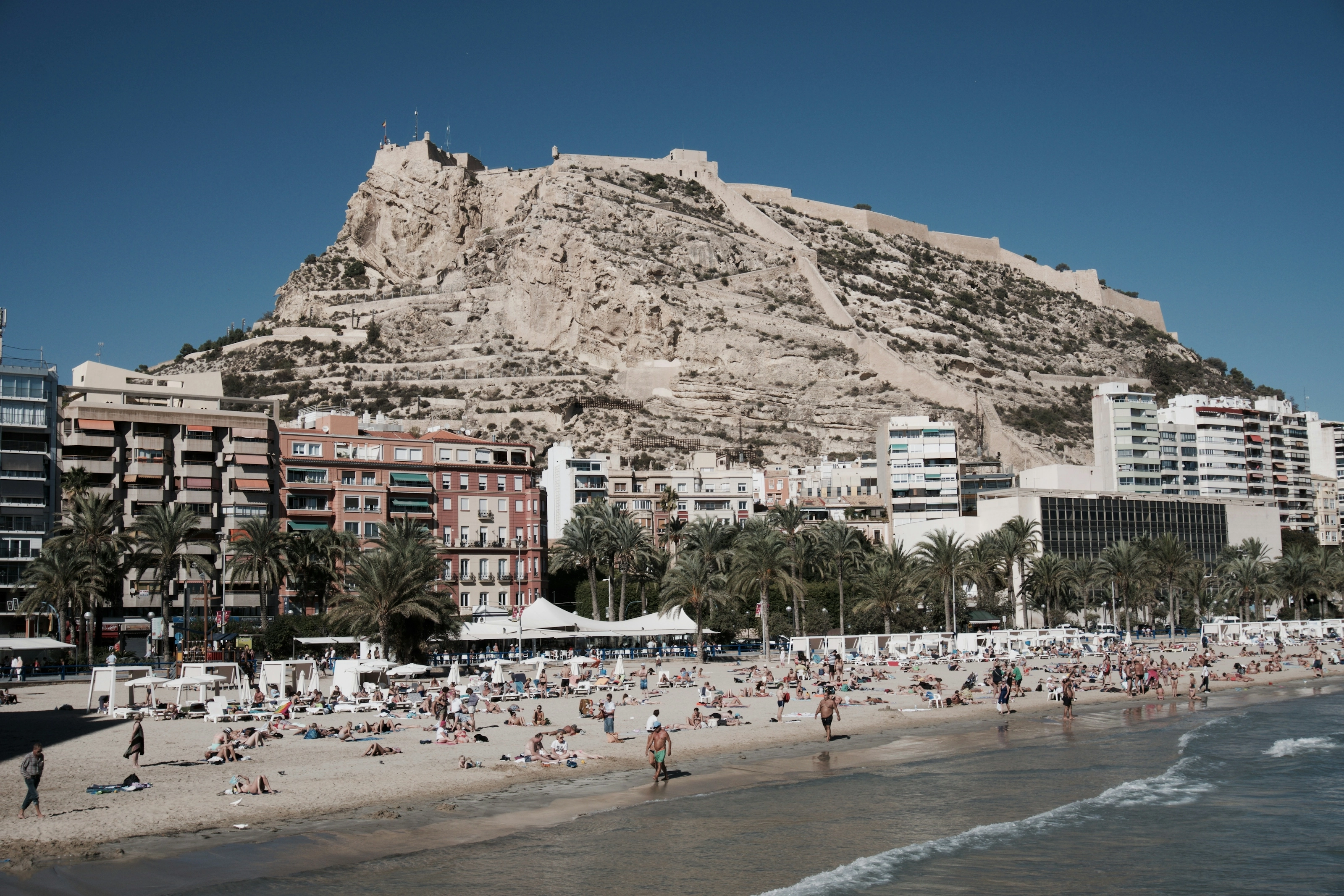
Alicante is built around a rock: Mount Benacantil, about 170 m high according to Wikipedia (FR, ES), crowned by Santa Bárbara Castle. Around it lie the old quarter, the harbour and more than ten beaches. The places below are illustrated; the Explanada, the basilica, the co-cathedral and Tabarca are covered at the end of the section.
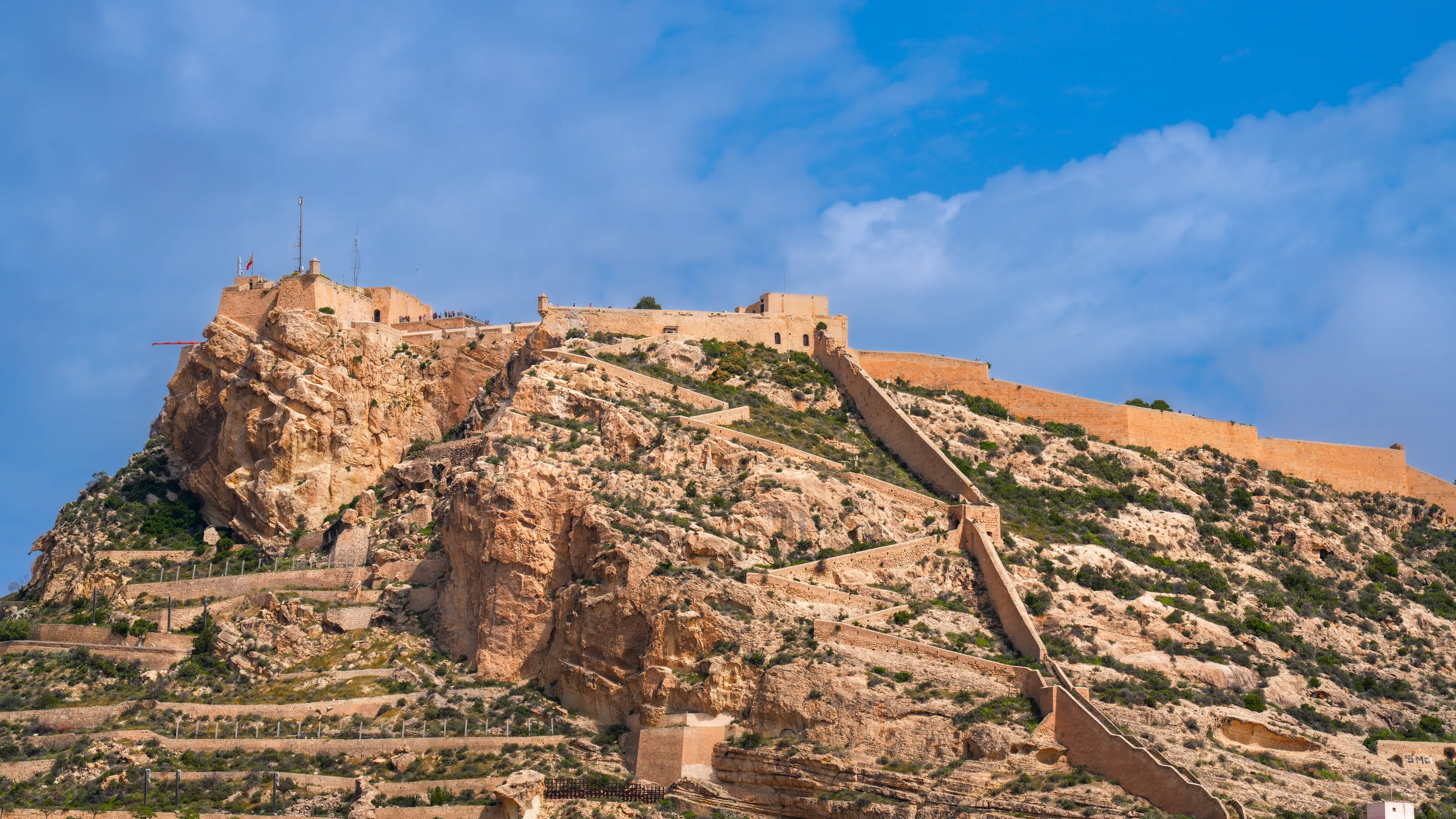
Santa Bárbara Castle
On top of Mount Benacantil, this is one of the largest medieval fortresses in Spain, built by Muslims in the 9th century, says Wikivoyage (EN); it has three enclosures from the 14th, 16th and 18th centuries according to Wikipedia (ES). You can walk up through the Santa Cruz quarter or take a lift cut into the rock, and the view takes in the city, the harbour and, on a clear day, Tabarca island.
Postiguet beach
This is the city-centre beach, below the castle and a short walk from the harbour and the Explanada. At night it is lit up, which gives it a distinctive atmosphere, say Wikivoyage (EN, FR). As on any urban beach, keep an eye on your bags: Wikivoyage (EN, ES) reports thefts of unattended belongings.
The old quarter and its lanes
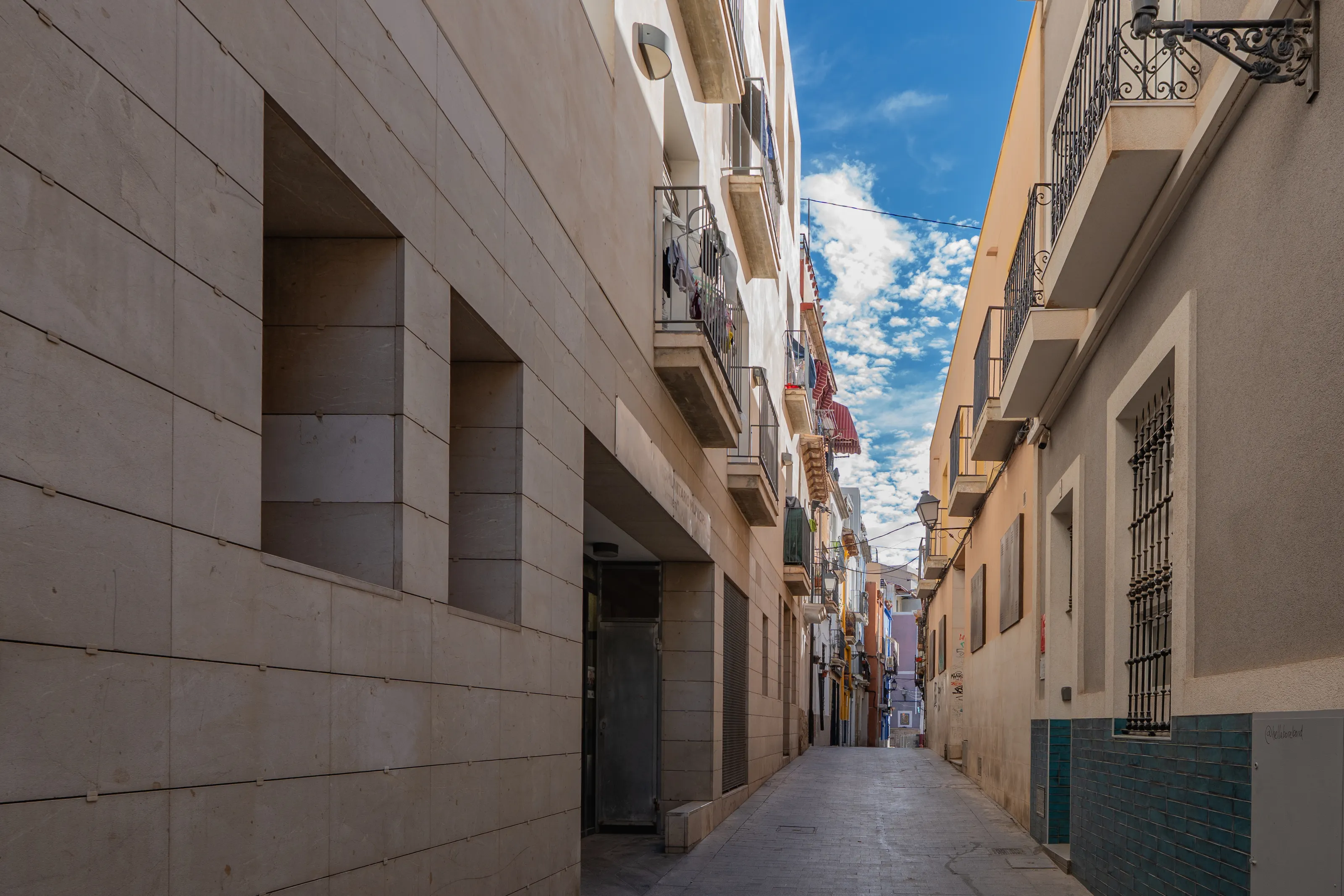
Alicante's old quarter is a triangle of narrow lanes between the Rambla, the Explanada and Mount Benacantil, with the town hall, the basilica and several museums, says Wikivoyage (EN). It is best explored on foot and becomes the heart of the bars and terraces in the evening. The Santa Cruz quarter, with small colourful houses and flowers, climbs towards the castle, according to Wikipedia (DE).
The city and its rock
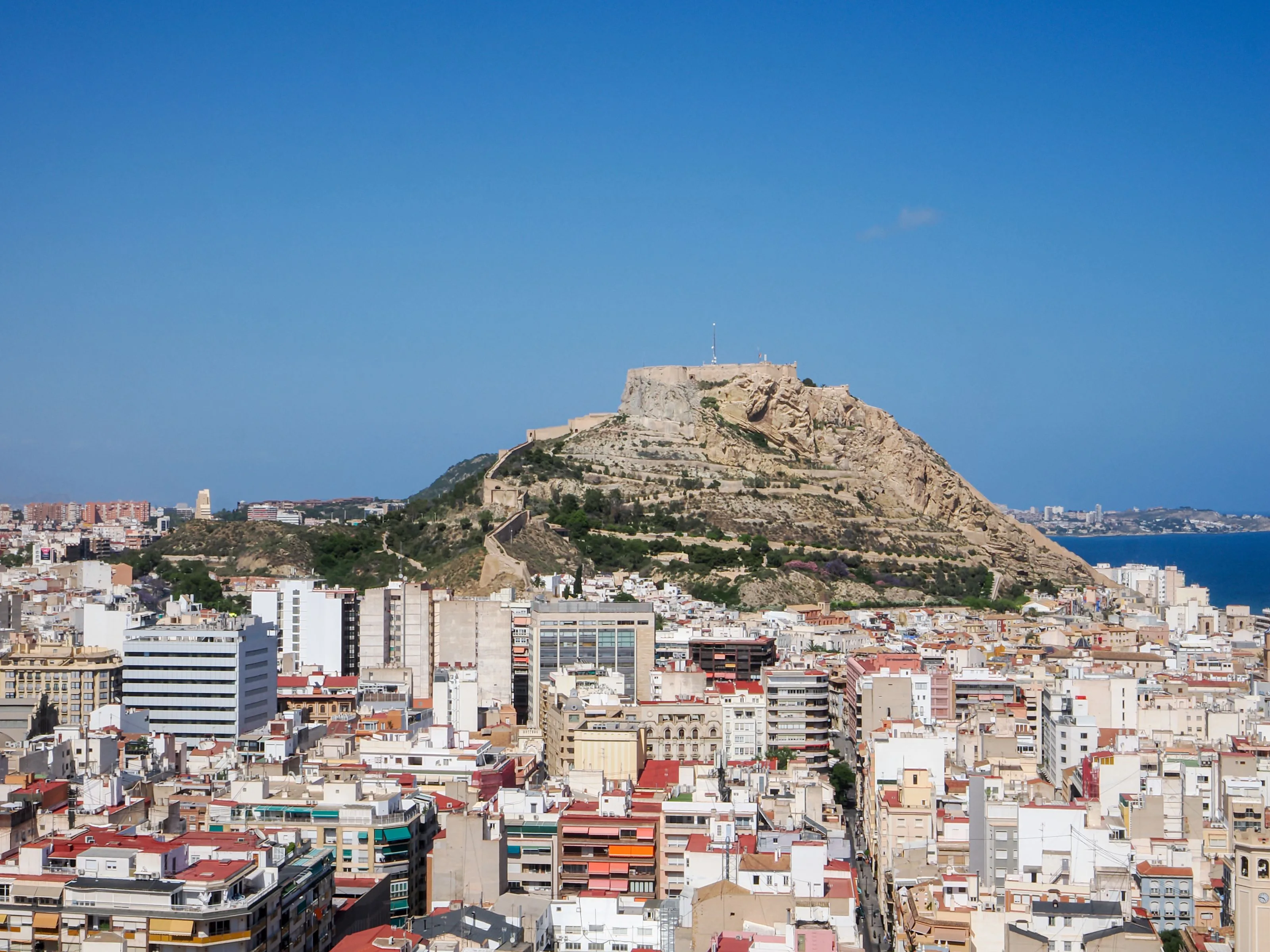
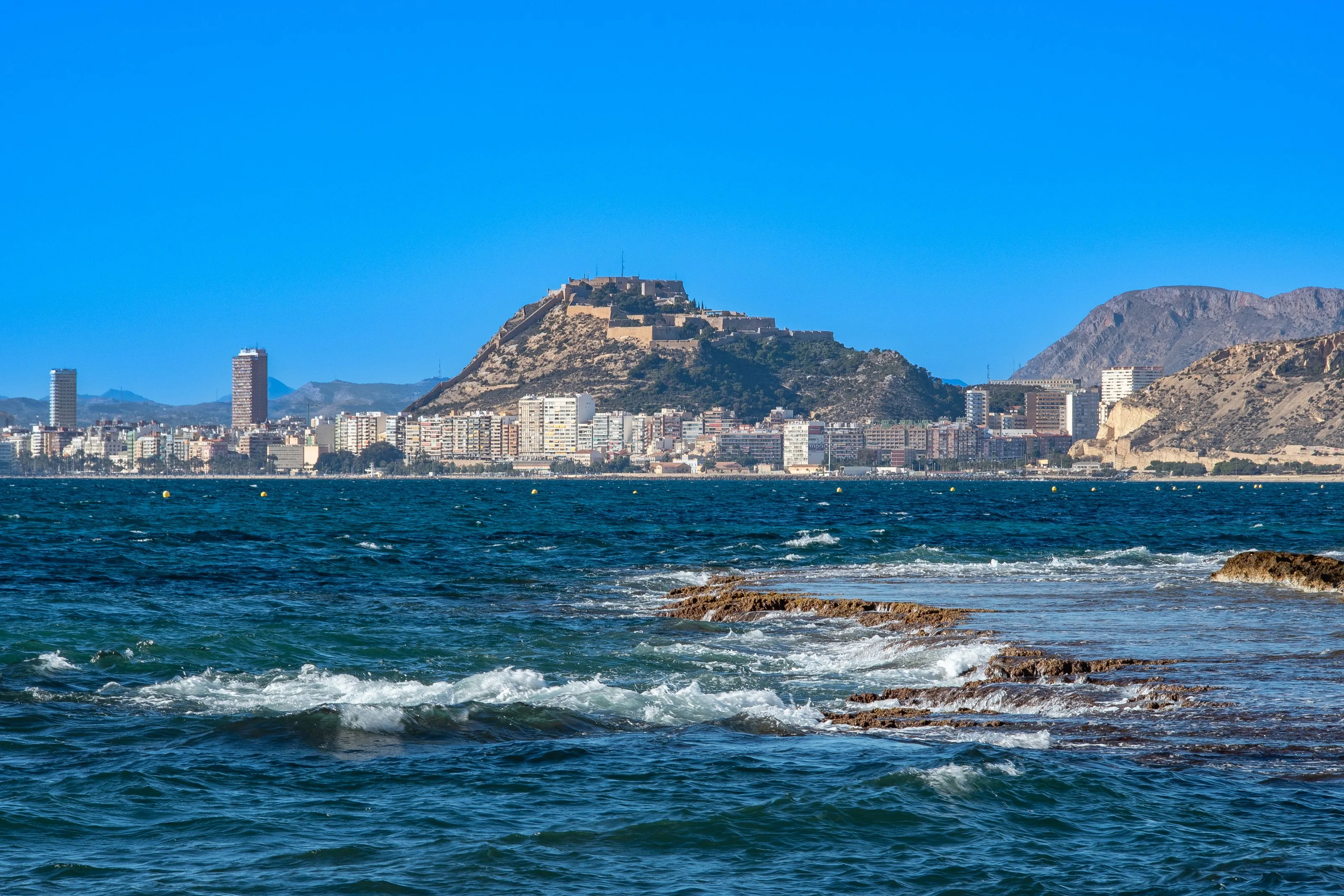
From above, the pale city stretches between the hill and the sea, and Benacantil is the landmark in every view. The coastal plain is dotted with other hills, such as the Tossal, topped by San Fernando Castle, according to Wikipedia (ES).
The coast from the water
From the water's edge you can see how the castle dominates an urban coastline framed by hills. Alicante's beaches run from north to south as San Juan, Albufereta, Postiguet, Agua Amarga and Saladar, says Wikipedia (ES), and swimming is complemented by the rocky coves around Cabo de la Huerta.
The Explanada de España and the churches
Opened in 1959, the Explanada is a palm-lined promenade of more than 500 m, paved with a wavy mosaic of more than six million red, black and white marble tiles, says Wikipedia (ES, EN). It is where people take their evening stroll. Higher up stand the Basilica of Santa María, begun in the 14th century on the site of a former mosque, and the 17th-century Co-cathedral of St Nicholas of Bari in the Herrerian style, according to Wikipedia (ES, DE).
Tabarca and day trips
Tabarca, a marine reserve, is reached by boat from the harbour: about 45 minutes, says Wikivoyage (ES). It keeps its walls and an 18th-century village founded with settlers from Tabarka in Tunisia, according to Wikipedia (ES). Benidorm, Elche, Santa Pola and Guadalest are other possible outings, say Wikivoyage (ES, DE).
Museums and culture
Archaeology, fine arts, contemporary art and the story of the city
MARQ and the city museum
The Provincial Archaeological Museum (MARQ), housed in the former provincial hospital, traces the history of the region from prehistory to the Middle Ages with modern displays, says Wikivoyage (EN). MUSA, the city museum, sits inside the castle and shows archaeological finds.
Fine arts and contemporary art
MUBAG, the fine arts museum, occupies the 18th-century Gravina Palace in the old quarter. MACA, the contemporary art museum, shows works by Picasso, Braque, Miró, Juan Gris and Julio González, as well as local artists such as Eusebio Sempere, according to Wikivoyage (EN).
Festivals, water and performances
The Hogueras de San Juan, around 24 June, are the city's great festival, of international tourist interest since 1984 according to Wikipedia (ES), with large sculptures burned during the cremà; a museum is dedicated to them, says Wikipedia (DE). The Water Museum stands next to the Garrigós wells, which date from Moorish times. The Teatro Principal and the Diputación auditorium host concerts and shows. We do not quote admission prices.
Food and drink
Rice, seafood, turrón and ice cream
Rice, the cooking of the coast
Alicante's cooking is dominated by rice and seafood, with paella first, according to Wikivoyage (EN). Restaurants often offer a menú del día at lunch. Around Calle Castaños, Calle San Francisco and Calle Mayor, restaurants are plentiful, says Wikivoyage (EN). We do not name businesses.
Sweets and markets
Turrón, an almond nougat from Jijona, is the great sweet speciality, according to Wikivoyage (ES) and Wikipedia (DE), together with artisan ice cream. The Mercat Central, which sells meat, fish, cheese, fruit and vegetables on two levels, is not to be missed, says Wikivoyage (EN); it was bombed in 1938, recalls Wikipedia (FR).
Drinks and nights out
The province produces a dry anise spirit, drunk with water, according to Wikivoyage (DE). In the evening people go round the bars of the old quarter, then the harbour; in summer the San Juan beach district takes over, says Wikivoyage (ES).
Getting around
On foot, by bus, tram and regional train
A walkable centre
The centre is easy on foot, say Wikivoyage (ES, EN). Taxi fares are regulated and ranks stand outside the railway station, the bus station and the Explanada.
Bus and tram
Buses and the tram share a common fare system (TAM), according to Wikivoyage (DE). The tram, extended in 2010-2023, serves El Campello, Villajoyosa, Benidorm and Dénia, with night services, says the same source. Bus C6 links the airport.
Regional trains
Cercanías trains reach Elche in half an hour and Murcia in under an hour and a half, according to Wikivoyage (EN). The station is the terminus for trains from Madrid, Valencia and Barcelona.
Budget and precautions
Gentler prices than Barcelona and simple precautions
Price level
Alicante has a moderate price level for western Europe: restaurants offer set lunches, and the beach is free. We do not quote figures because we could not cross-check them on two independent sources.
Flights
SniperAir tracks prices to ALC and compares them with the route's history, but it does not sell or book tickets. Valencia (VLC) and Murcia can be watched in parallel, about two hours away by train or bus.
Safety
Alicante is generally safe, but Wikivoyage (EN, ES) advises avoiding the port and the western districts at night, watching luggage at the bus station and not leaving bags unattended on the beach.
When to go
Exceptional sunshine, hot summers and autumn rain
Winter (December to February)
Mild: January averages around 12 C according to Wikipedia (ES). Days are often sunny and the beaches empty out.
Spring (March to May)
Pleasant for walking in the old quarter and climbing to the castle; Holy Week and the Santa Faz pilgrimage.
Summer (June to August)
Hot and very dry: August averages about 26 C according to Wikipedia (ES). This is the season of the Hogueras, beaches and evenings on the Explanada.
Autumn (September to November)
The sea stays warm, but September and October bring most of the little rain, sometimes violent, say Wikipedia (EN, ES).
Alicante has a hot semi-arid climate: about 300 mm of rain a year, concentrated in autumn, and it is one of the driest cities in Europe according to Wikipedia (EN). Autumn storms can cause flooding. May-June and September are excellent for both the beach and walking; check the forecast before you go.
By length of stay
What to do in Alicante depending on how long you stay
The essentials
Santa Bárbara Castle, the old quarter, the Explanada, the Mercat Central and Postiguet beach.
Museums and beaches
MARQ, MUBAG and MACA, San Juan beach, L'Ereta park and the co-cathedral.
The Costa Blanca
Tabarca, Elche, Benidorm, Guadalest and the coves along the coast, depending on the season.
In pictures
Alicante in pictures
You might also like
Similar destinations
FAQ
Frequently asked questions about flights to Alicante
How do I get from Alicante airport to the centre?
The airport (ALC) is about ten kilometres away. Bus C6 leaves about every 20 minutes and takes around 20 minutes; a taxi is slightly quicker outside rush hour. Check timetables before you travel.
When is the best time to visit Alicante?
May to June and September to October for the beach without too much heat; late June for the Hogueras de San Juan if you like big festivals.
Is Alicante expensive?
The price level is moderate for western Europe, with set lunches at midday. We do not quote figures because we could not cross-check them.
How long should I stay in Alicante?
Two days for the castle, the old quarter and the beach; four to five days if you add the museums, Tabarca and a trip along the Costa Blanca.
What should I eat in Alicante?
Rice dishes (paella, arroz a banda), seafood, turrón from Jijona and ice cream; the Mercat Central is a good place to start.
Which is the best beach in Alicante?
Postiguet is closest to the centre, beneath the castle; San Juan, longer, is the most popular according to the guides we checked. Tabarca has quieter coves.
How much does a flight to Alicante usually cost?
The price depends mainly on your departure city, the time of year and how far ahead you book. The "opportunities" section above shows real examples of prices SniperAir has already detected to this destination.
How do I get alerted when a flight to Alicante drops below my budget?
Create an alert profile with your departure airport, Alicante as the destination and your maximum budget. You are notified automatically as soon as a matching price is detected.
Ready to head to Alicante?
Set your budget and let SniperAir monitor fares for you.
Create my alert