
Cheap flights to Valencia
Set your departure airport and maximum budget: SniperAir tracks prices to Valencia and alerts you the moment a deal matching your criteria appears.
Quick summary
Country
Spain
Continent
Europe
Airport
VLC
Currency
Euro (EUR)
Time zone
UTC+1 (UTC+2 during summer time)
Deals already spotted to Valencia
Real flight examples detected by SniperAir, with their reference price.
Loading examples…
Why track Valencia with SniperAir
You do not need to compare prices every day
Choose your departure
Enter your departure airport and your maximum budget for a flight to Valencia (VLC).
SniperAir keeps watch
Our systems continuously compare new prices with the real price history of the route. SniperAir monitors prices and alerts you: it does not sell or book tickets.
You receive an alert
As soon as a price matches your criteria, you are notified, without having searched for anything yourself.
Airport and getting into town
An airport about 9 km out, with the metro running straight into town
Valencia (VLC)
Valencia Airport lies in Manises, about 9 km from the city centre according to Wikivoyage (EN, FR); the German edition says 10 km. Metro lines 3 and 5 run from the terminal to the centre and the Estació del Nord station in about 21 minutes, every 8 minutes or so by day, according to Wikivoyage (EN); there are no trains between midnight and about 05:30. A direct bus and taxis from the arrivals hall are also available. Long-distance and high-speed trains stop at Joaquín Sorolla station, linked to Estació del Nord by a free shuttle, and Madrid is served by AVE and low-cost operators.
Distances and times are approximate, based on Wikivoyage (EN, FR, DE) and Wikipedia; metro, bus and train timetables change: check them before you travel. We give no fares.
Valencia is Spain's third-largest city, with more than 800,000 inhabitants, and the capital of the Valencian Community. It stretches along the Turia river facing the Mediterranean. Its old town is one of the largest in Spain according to Wikipedia (ES) and can be explored largely on foot, while the dry riverbed, now a park, links the historic heart to the City of Arts and Sciences. Wikivoyage (EN) notes that, like Barcelona, the city feels the pressure of mass tourism, so be a considerate guest.
Landmarks
City of Arts and Sciences, cathedral, Turia Gardens and the Albufera
Valencia pairs a Gothic centre with futuristic architecture by Santiago Calatrava. The Llotja de la Seda, the 15th-century silk exchange, has been a UNESCO World Heritage Site since 1996 according to Wikipedia (ES). The places below are illustrated; the Llotja, the Central Market and the Serranos and Quart towers are covered in text.
The City of Arts and Sciences
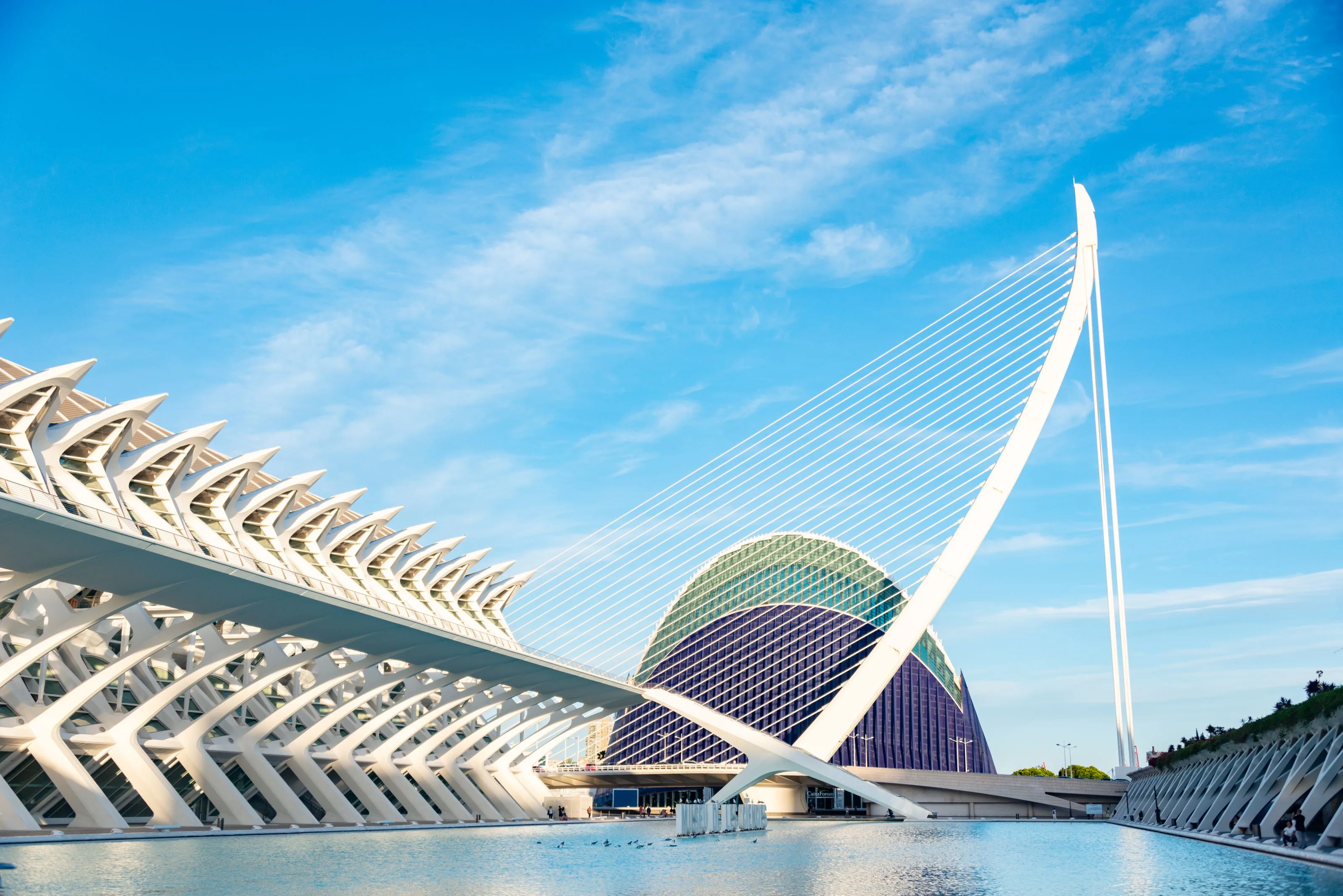
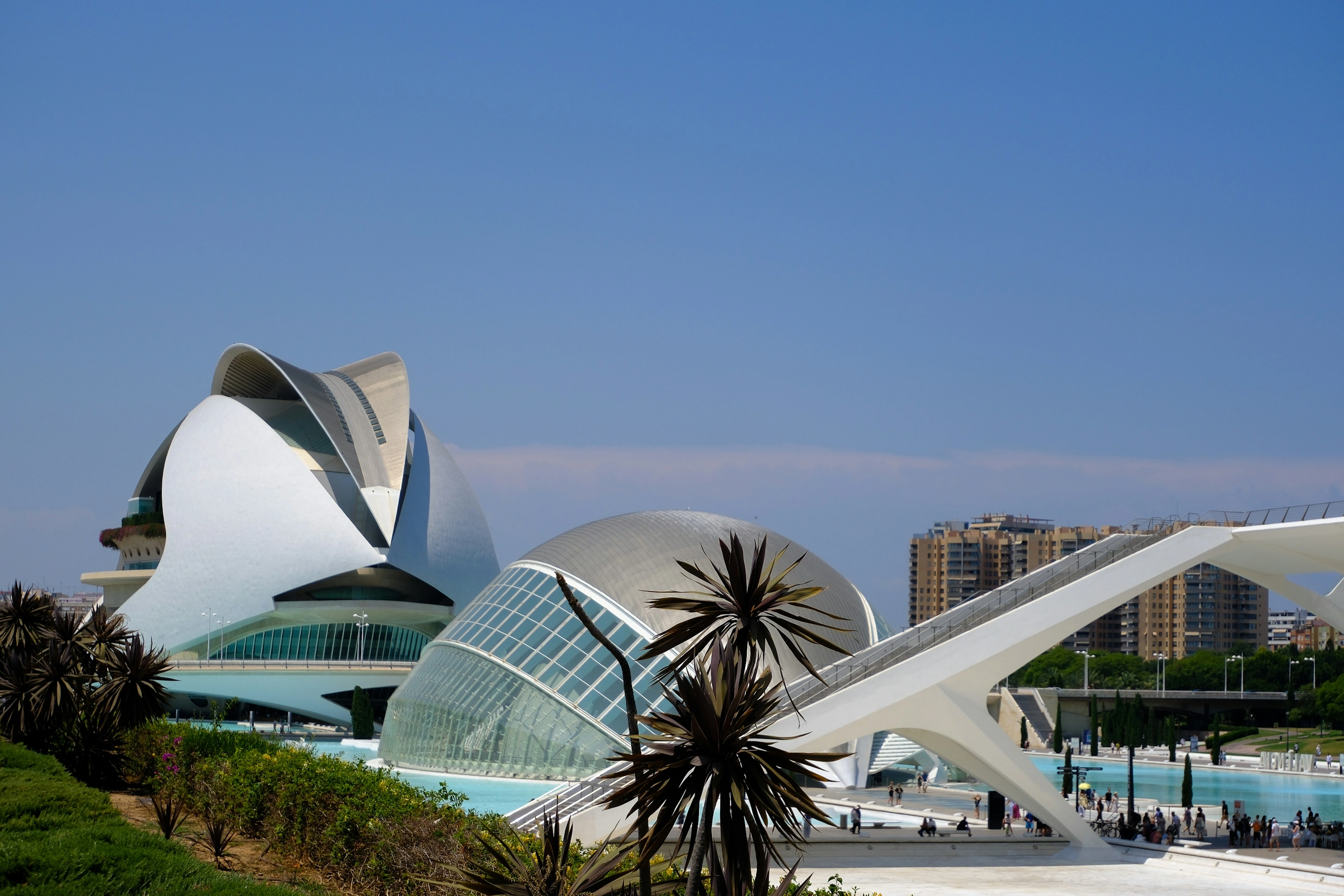
This complex, designed by Valencian architect Santiago Calatrava and Félix Candela, occupies the former Turia riverbed. It includes the glass-domed Hemisfèric, the Palau de les Arts, the science museum, the Oceanogràfic and the Assut de l'Or bridge. According to Wikivoyage (EN) you can admire the architecture from outside for free by strolling around the pools.
The science museum and the Àgora
The Príncipe Felipe Science Museum, whose white ribs recall a whale skeleton, runs along a long pool. Behind it stands the Àgora, a large covered plaza used for sport and concerts. The Assut de l'Or bridge, finished in 2008, has a 125 m tower, the highest point in the city according to Wikivoyage (EN).
The City at dusk
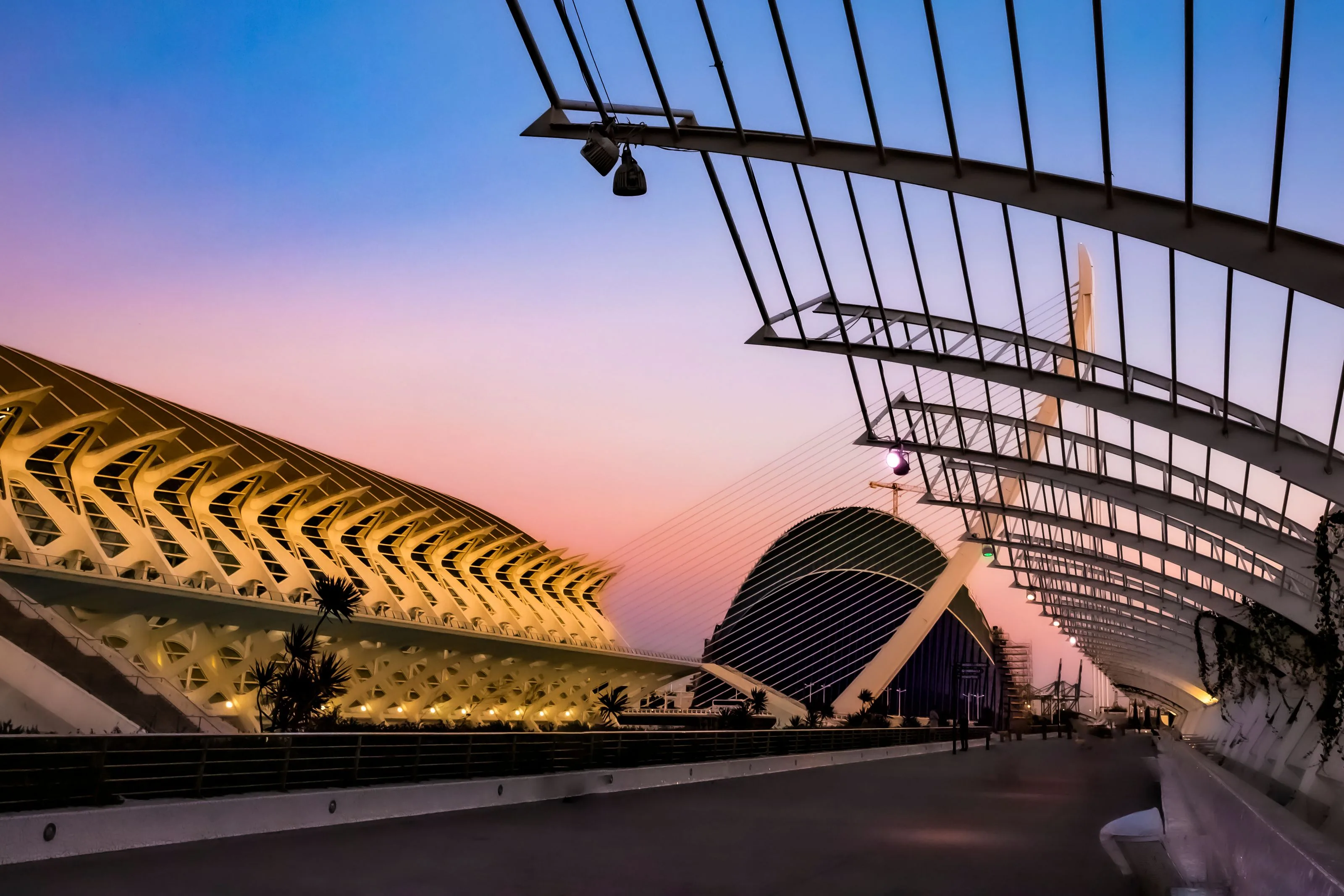
As night falls the museum's ribs light up and the pink sky reflects on the pools. The Umbracle, a long open pergola with a garden of native plants and sculptures, makes a pleasant evening walk.
The cathedral and the Micalet
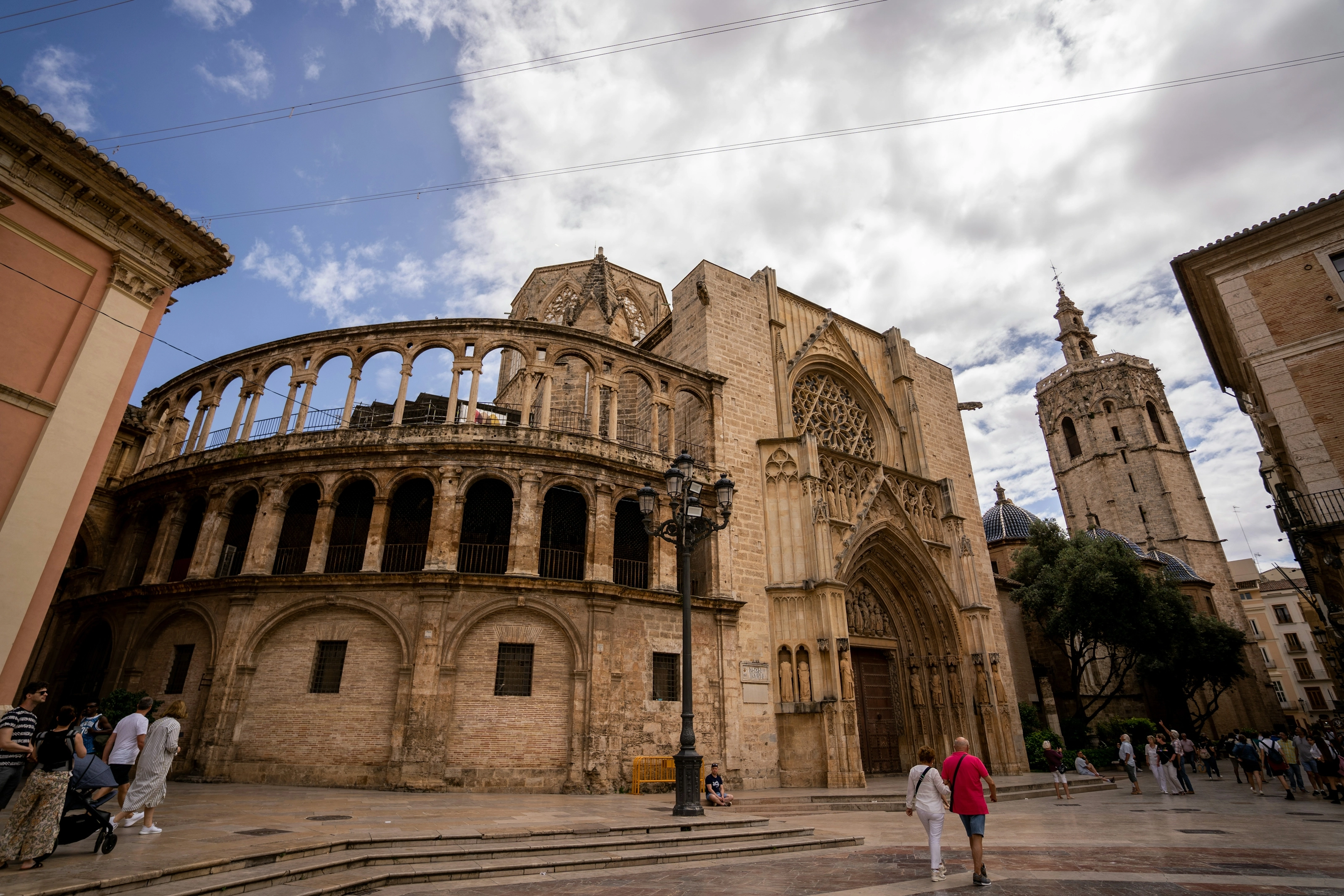
The Gothic cathedral, begun in 1262, stands on the site of a Roman temple and later a mosque; look for the Apostles' Door and, in a chapel, an agate chalice tradition links to the Holy Grail. The Micalet (El Miguelete), the 51 m octagonal bell tower of the 14th and 15th centuries, can be climbed for a view over the old town, according to Wikivoyage (EN).
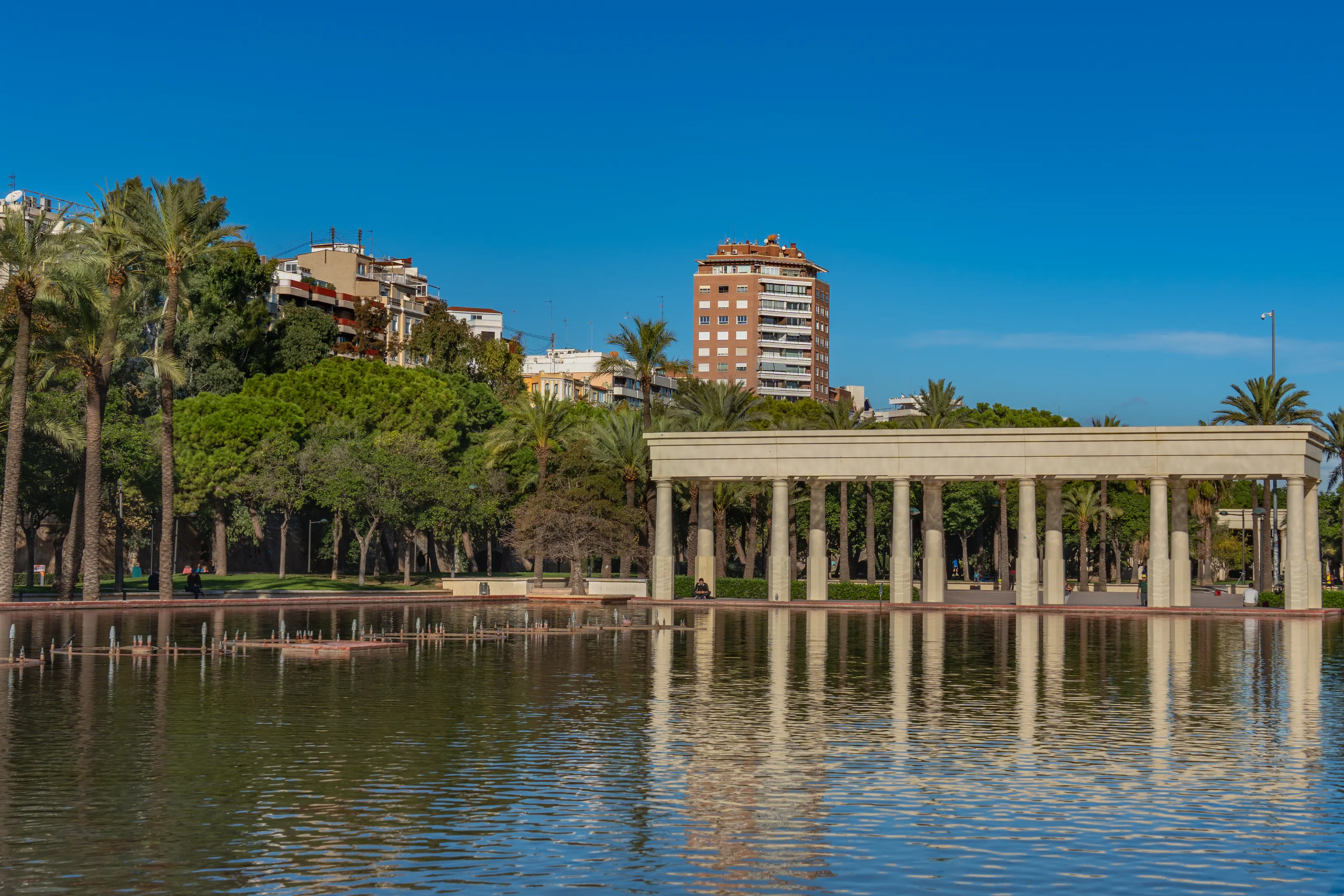
The Turia Gardens
After the catastrophic flood of 1957 the river was diverted south of the city and its old bed became a long garden running through Valencia, with cycle paths, pools and pergolas. Wikivoyage (EN) calls it one of the city's most outstanding features.
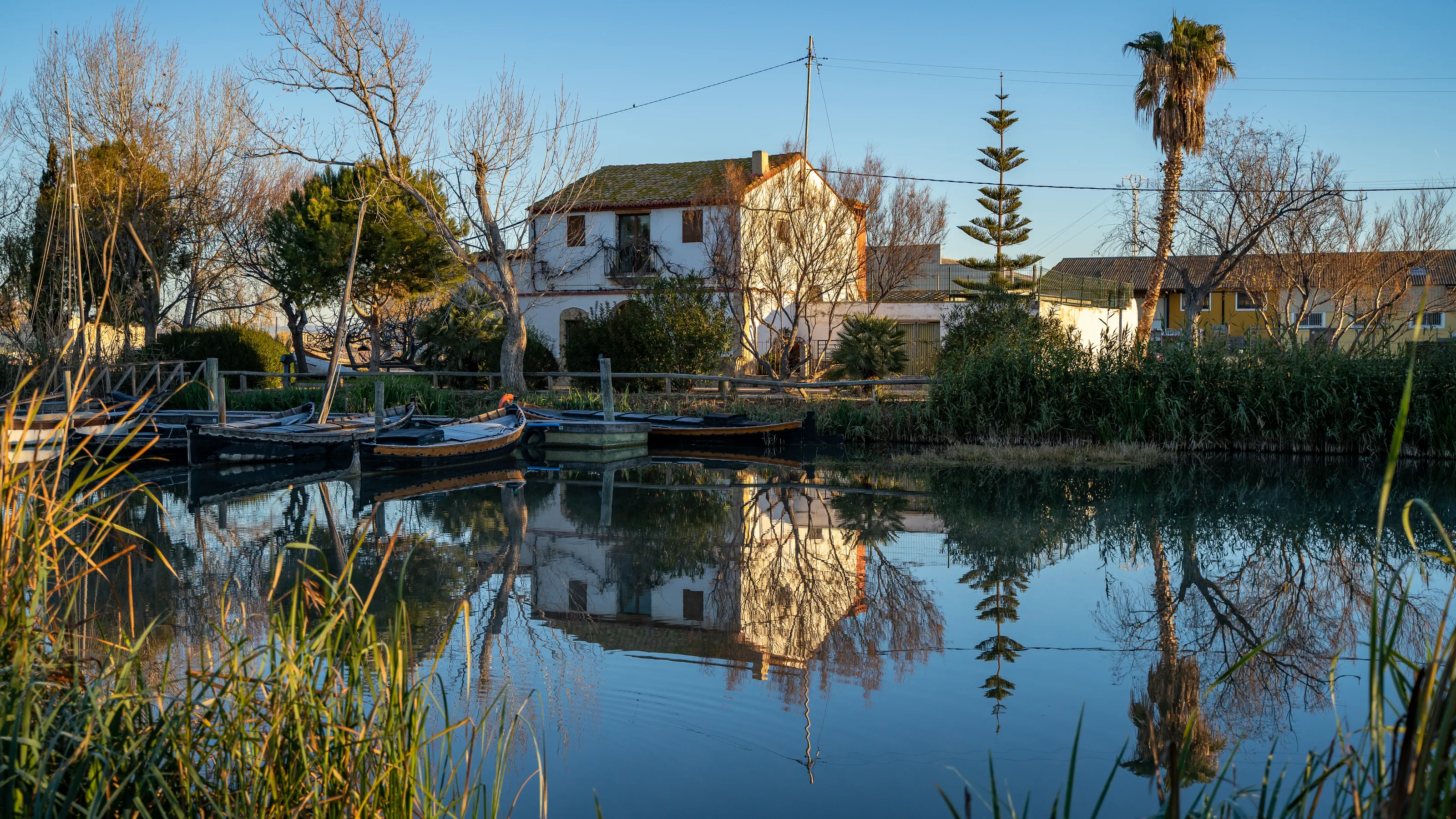
The Albufera
A short way south, the Albufera Natural Park protects a freshwater lagoon, rice fields, pine woods and dunes. Traditional boats and houses at the water's edge make it a calm excursion; the village of El Palmar is known for paella and all i pebre, an eel stew.
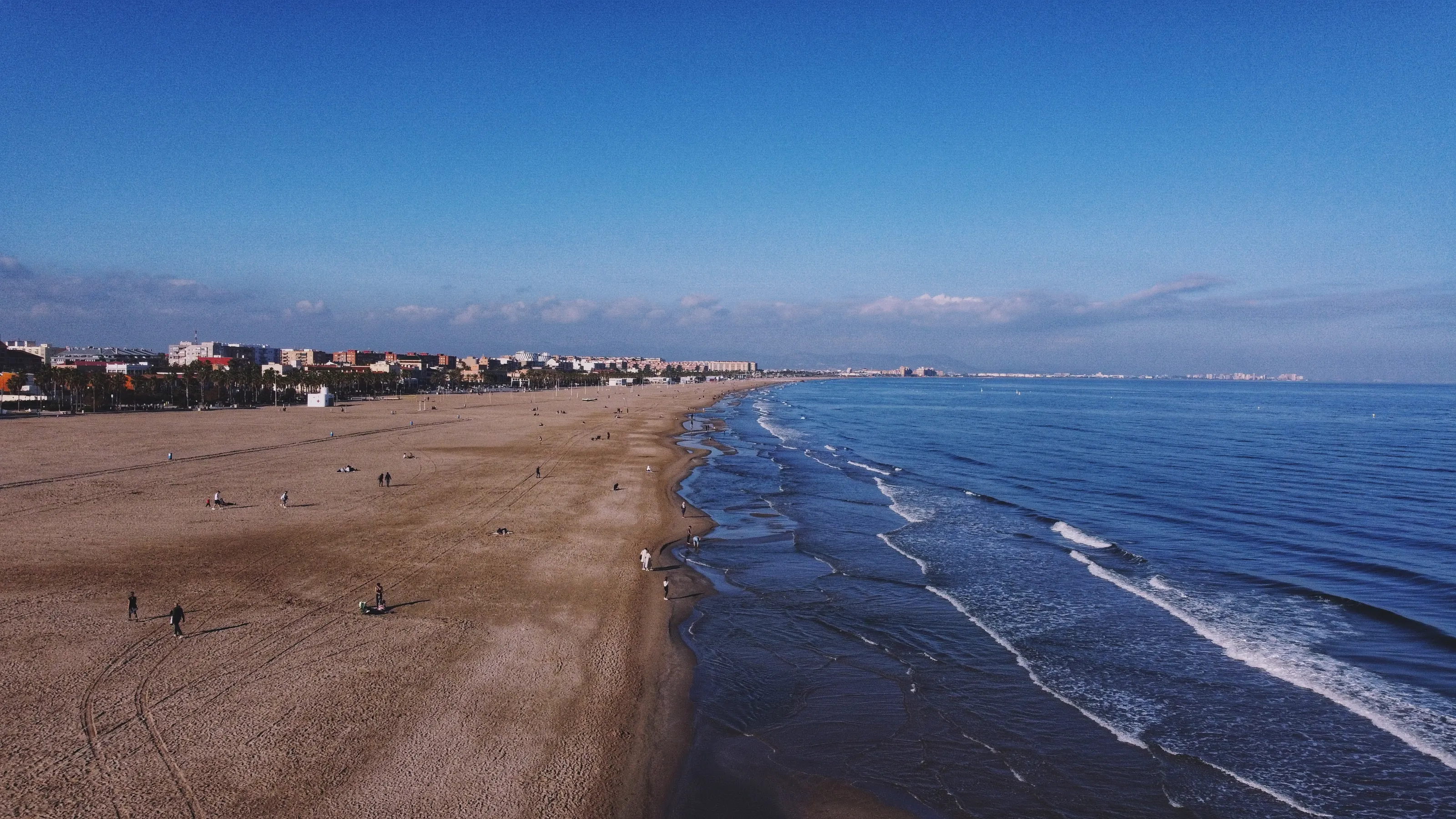
The city beaches
Valencia has fine-sand city beaches, La Malvarrosa and Las Arenas north of the port, with a promenade, according to Wikipedia (ES). Further south, El Saler and La Devesa inside the Albufera park are wilder. The sea reaches about 25 to 27 C in high summer.
Llotja, Central Market and towers
The Llotja de la Seda, built between 1482 and 1533, is a masterpiece of civil Gothic with its columned hall and Orange Tree Patio. The Central Market, a Modernista hall, is the big market of the centre. The Serranos and Quart towers belonged to the old walls and can be visited.
Museums and culture
Fine arts, modern art, science and the water tribunal
Museum of Fine Arts
Housed in a 17th-century palace, it holds more than 2,000 works, mostly from the 14th to 17th centuries, according to Wikivoyage (EN). Check opening days before you go.
IVAM and modern art
The Valencian Institute of Modern Art (IVAM) shows modern art and photography with regular temporary exhibitions. The science museum in the City of Arts has interactive exhibits on several floors.
Oceanogràfic and tradition
The Oceanogràfic is among the largest aquariums in Europe according to Wikivoyage (EN), with seven ecological zones. Valencia also keeps the Water Tribunal, a farmers' court that settles irrigation of the huerta, the market-garden plain, and delivers its decisions orally, according to Wikivoyage (DE). We give no ticket prices.
Food and drink
Paella, horchata, rice dishes and markets
Paella
Valencian paella was born around the Albufera. The traditional version is made with chicken, rabbit and flat beans, cooked over a wood fire in a wide shallow pan; seafood and mixed versions exist too. Wikivoyage (DE) advises eating it at lunchtime, between 14:00 and 17:00, and distrusting a paella with sausage or meat stock.
Other rice dishes
Try arròs a banda, rice cooked in fish stock and served with aioli, arròs negre coloured with squid ink, fideuà made with short noodles and born in Gandía, and all i pebre, an eel stew from the Albufera. Bunyols, fried doughnuts, are mainly eaten around the Falles.
Drinks and markets
Horchata (orxata de xufa), made from tiger nuts, is served very cold with fartons, small sweet buns. Add mistela and agua de Valencia. The Central Market and the Ruzafa, Colón and Cabanyal markets are good places to buy local produce.
Getting around
On foot, metro, tram and bike
A walkers' city
Apart from the beach and the City of Arts, the centre can be explored on foot at an easy pace. There are many cycle lanes: pedestrians should avoid walking in them.
Metro, tram and bus
Metrovalencia links the centre, the airport and the seaside districts, and a tram line reaches the beach. Rechargeable cards are sold at machines, and the Valencia Tourist Card, valid for 24, 48 or 72 hours, includes transport and entry to several museums according to Wikivoyage (EN). Streets have two names, Valencian and Spanish, and signs are often in Valencian only.
Trains and roads
Joaquín Sorolla station handles high-speed trains to Madrid. A car is of little use in town; traffic is dense and the big roundabouts are confusing, warns Wikivoyage (FR).
Budget and precautions
A gentler budget than Barcelona, but watch the Falles
Price level
Valencia is good value for Western Europe, usually gentler than Barcelona for meals and rooms. The currency is the euro. We publish no figures because we could not cross-check them on two independent open sources.
The Falles
Prices and crowds rise during the Falles in mid-March. Book early because the city fills up, and watch your belongings: Wikivoyage (EN) reports pickpockets during the festival.
Flights and precautions
SniperAir monitors prices to VLC and compares them with the route's history, but it does not sell or book tickets. Alicante (ALC) or Barcelona (BCN) can be watched in parallel. Spain is in the Schengen area: entry rules depend on your nationality, so check official sites. Wikivoyage (EN) ranks Valencia among the safest cities in Spain, but stay alert in deserted districts at night.
When to go
Mild winters, hot summers and warm sea into autumn
Winter (December to February)
Mild by day, with January highs of 16 to 17 C according to Wikipedia (FR, ES, DE). Sometimes cool and damp, but some terraces stay open.
Spring (March to May)
The Falles, 15 to 19 March, open the season: giant sculptures, mascletàs at 14:00 and fireworks. Terraces reopen and the light is lovely.
Summer (June to August)
Hot and humid, with August highs of 30 to 31 C according to Wikipedia (ES) and a record of 44.5 C on 10 August 2023 (Wikipedia FR, ES). The sea is warm.
Autumn (September to November)
Swimming remains possible until late September according to Wikivoyage (EN). November can be grey. A good season for paella at the Albufera.
Valencia has a Mediterranean climate with mild winters and hot, fairly dry summers according to Wikipedia (ES). It gets about 2,700 hours of sunshine a year according to Wikipedia (EN). We give no annual average because sources differ by a few tenths of a degree. April to June and September to October are usually the most pleasant; go in March if you like a festival.
By length of stay
What to do in Valencia depending on how long you stay
The essentials
The cathedral and Micalet, the Llotja, the Central Market, the City of Arts and Sciences and a paella.
Gardens and beach
The Turia Gardens by bike, the museums, the Cabanyal district, La Malvarrosa beach and a tapas evening.
Albufera and region
A day at the Albufera and El Palmar, then a train trip to Alicante, Barcelona or Madrid.
In pictures
Valencia in pictures
You might also like
Similar destinations
FAQ
Frequently asked questions about flights to Valencia
How do I get from Valencia airport to the city centre?
The airport (VLC) is about 9 km west of the centre. Metro lines 3 and 5 reach the centre and Estació del Nord in around 20 minutes; a direct bus and taxis are also available. Timetables change: check them before you travel.
When is the best time to visit Valencia?
April to June and September to October for light and sea. Mid-March for the Falles if you like a festival; summer is hot and humid with heat peaks.
Is Valencia expensive?
It is good value for Western Europe, usually gentler than Barcelona. Prices rise during the Falles. We give no figures because we could not cross-check them.
How long should I stay in Valencia?
Two days for the centre, the City of Arts and Sciences and a paella; four days if you add the Turia Gardens, the beaches and a trip to the Albufera.
How do I get around Valencia?
On foot and by bike in the centre, by metro and tram for the beach and the airport. Cycle lanes are numerous: do not walk in them.
What should I eat in Valencia?
Valencian paella with chicken and rabbit, ideally at lunchtime, arròs a banda, fideuà, horchata with fartons and produce from the Central Market.
How much does a flight to Valencia usually cost?
The price depends mainly on your departure city, the time of year and how far ahead you book. The "opportunities" section above shows real examples of prices SniperAir has already detected to this destination.
How do I get alerted when a flight to Valencia drops below my budget?
Create an alert profile with your departure airport, Valencia as the destination and your maximum budget. You are notified automatically as soon as a matching price is detected.
Ready to head to Valencia?
Set your budget and let SniperAir monitor fares for you.
Create my alert