
Cheap flights to Bilbao
Set your departure airport and maximum budget: SniperAir tracks prices to Bilbao and alerts you the moment a deal matching your criteria appears.
Quick summary
Country
Spain
Continent
Europe
Airport
BIO
Currency
Euro (EUR)
Time zone
UTC+1 (UTC+2 during summer time)
Deals already spotted to Bilbao
Real flight examples detected by SniperAir, with their reference price.
Loading examples…
Why track Bilbao with SniperAir
You do not need to compare prices every day
Choose your departure
Enter your departure airport and your maximum budget for a flight to Bilbao (BIO).
SniperAir keeps watch
Our systems continuously compare new prices with the real price history of the route. SniperAir monitors prices and alerts you: it does not sell or book tickets.
You receive an alert
As soon as a price matches your criteria, you are notified, without having searched for anything yourself.
Airport and getting into town
An airport about 11 km away, linked to the centre by bus
Bilbao (BIO)
Bilbao Airport is in Loiu, about 11 km north of the centre according to Wikivoyage (FR); the German edition says 12 km. A Bizkaibus line links arrivals with the centre, stopping at Alameda Recalde near the Guggenheim, then at Plaza Elíptica and Gran Vía before the Termibus bus terminal. Wikivoyage (EN) says there are around four departures an hour, while other editions say every 30 minutes. Taxis wait outside. There is no high-speed rail in the Basque Country yet: Alvia trains to Madrid and Barcelona take about as long as driving, roughly 4 and 6 hours, and coaches are often more practical, with San Sebastián and Vitoria-Gasteiz about an hour away.
Distances and times are approximate, based on Wikivoyage (EN, FR, DE, ES) and Wikipedia; bus and train timetables change: check them before you travel. We give no fares.
Bilbao (Bilbo in Basque) is the largest city in the Basque Country, with about 350,000 inhabitants and more than a million in the metropolitan area. Ringed by mountains, it is nicknamed the botxo, the hole. Industrial for a century, it reinvented itself from the mid-1990s, first with the Guggenheim Museum, so much so that people speak of the Bilbao effect.
Landmarks
The Guggenheim, estuary bridges, the old town and the hills
The Basque Country is green and oceanic, and Bilbao is its great city of metal and stone. The places below are illustrated; the Cathedral of Santiago, the Casco Viejo with its Seven Streets and the Ribera market, and the Vizcaya Bridge are covered in text.
The Guggenheim Museum
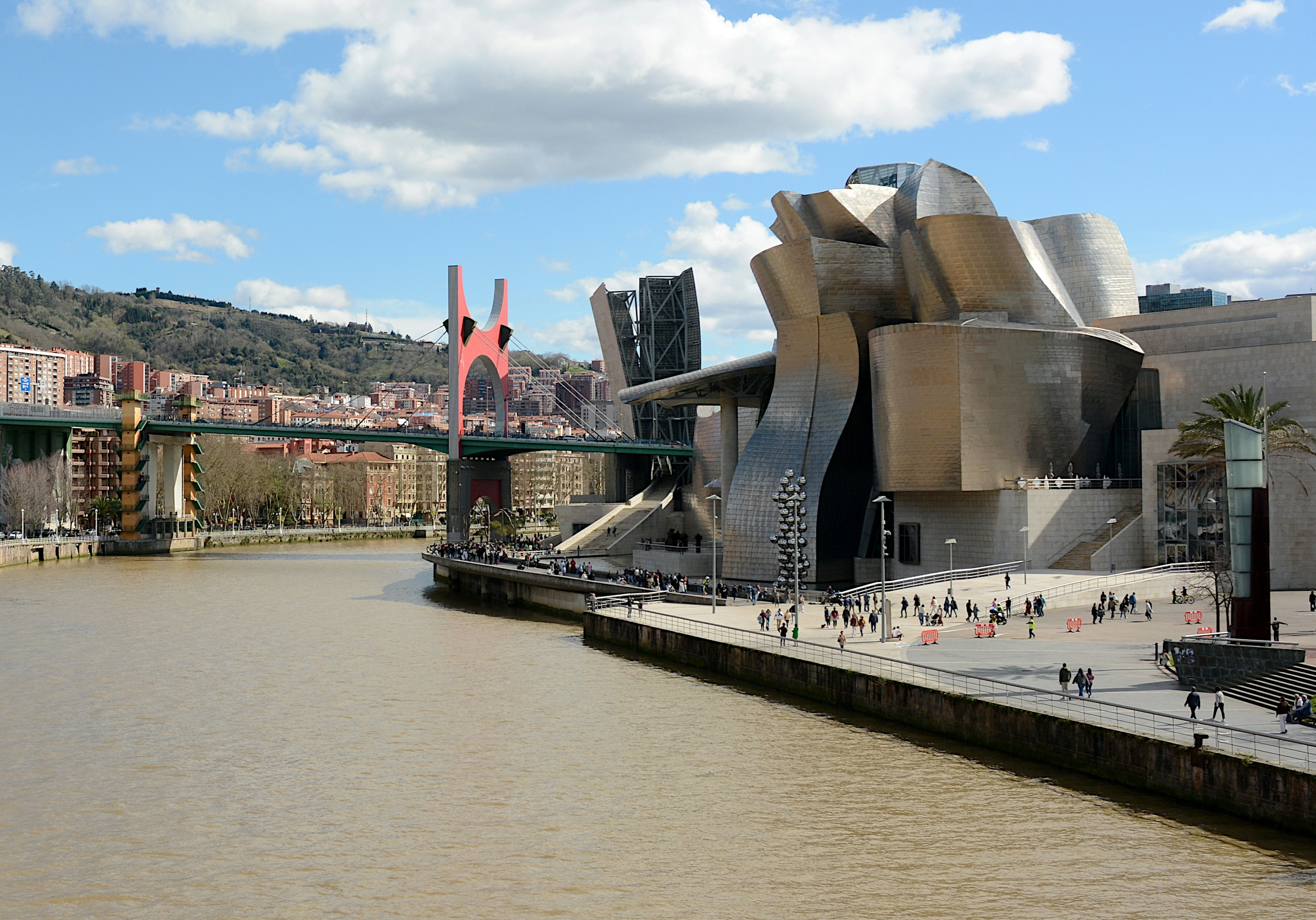
Designed by Frank Gehry, the Guggenheim is clad in titanium panels that recall fish scales and change colour with the light. Wikivoyage (EN) calls it perhaps the most celebrated building of the 1990s, the one that started the Bilbao effect. It stands beside the estuary, near a bridge with a red arch.
In front of the museum
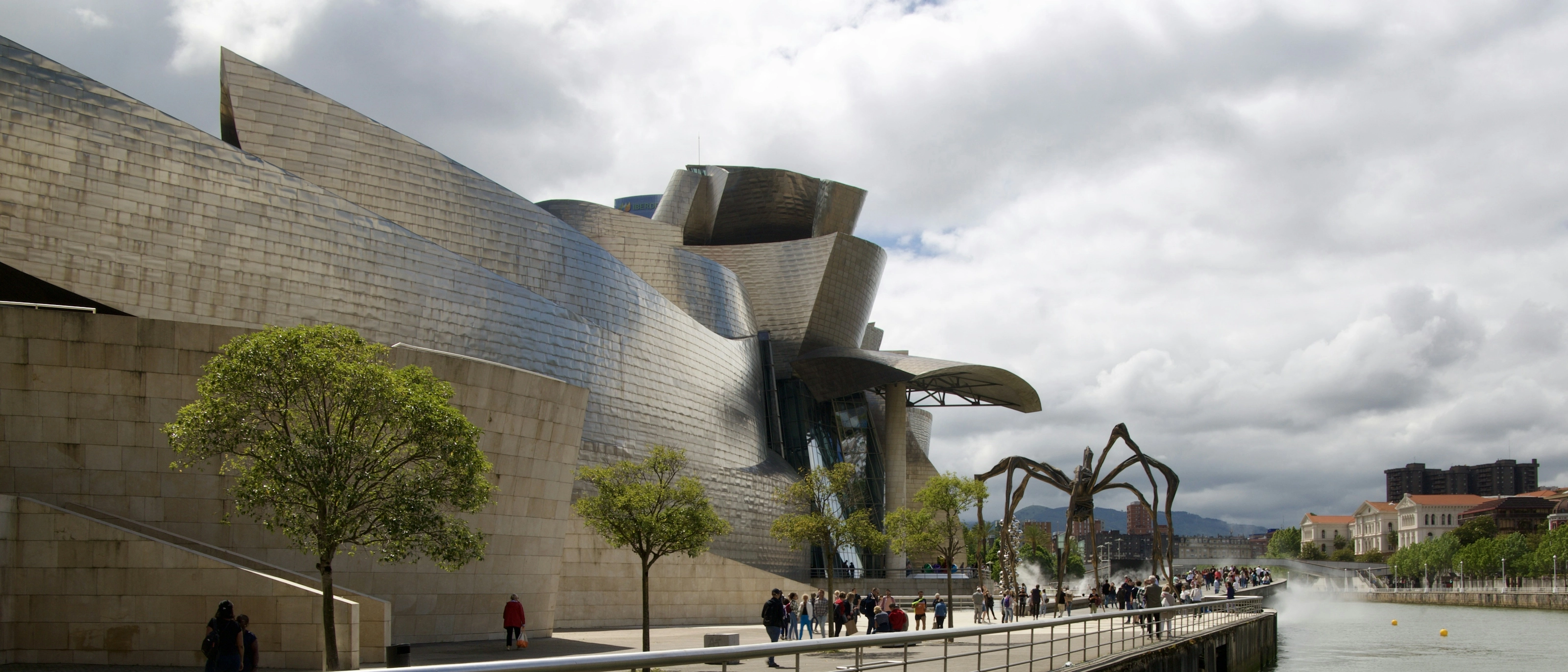
In front of the Guggenheim, monumental works animate the esplanade, including Jeff Koons's Puppy, a 12 m dog covered in flowers that are changed each season (Wikivoyage EN), and a giant metal spider. The promenade along the estuary is open to everyone.
The titanium panels
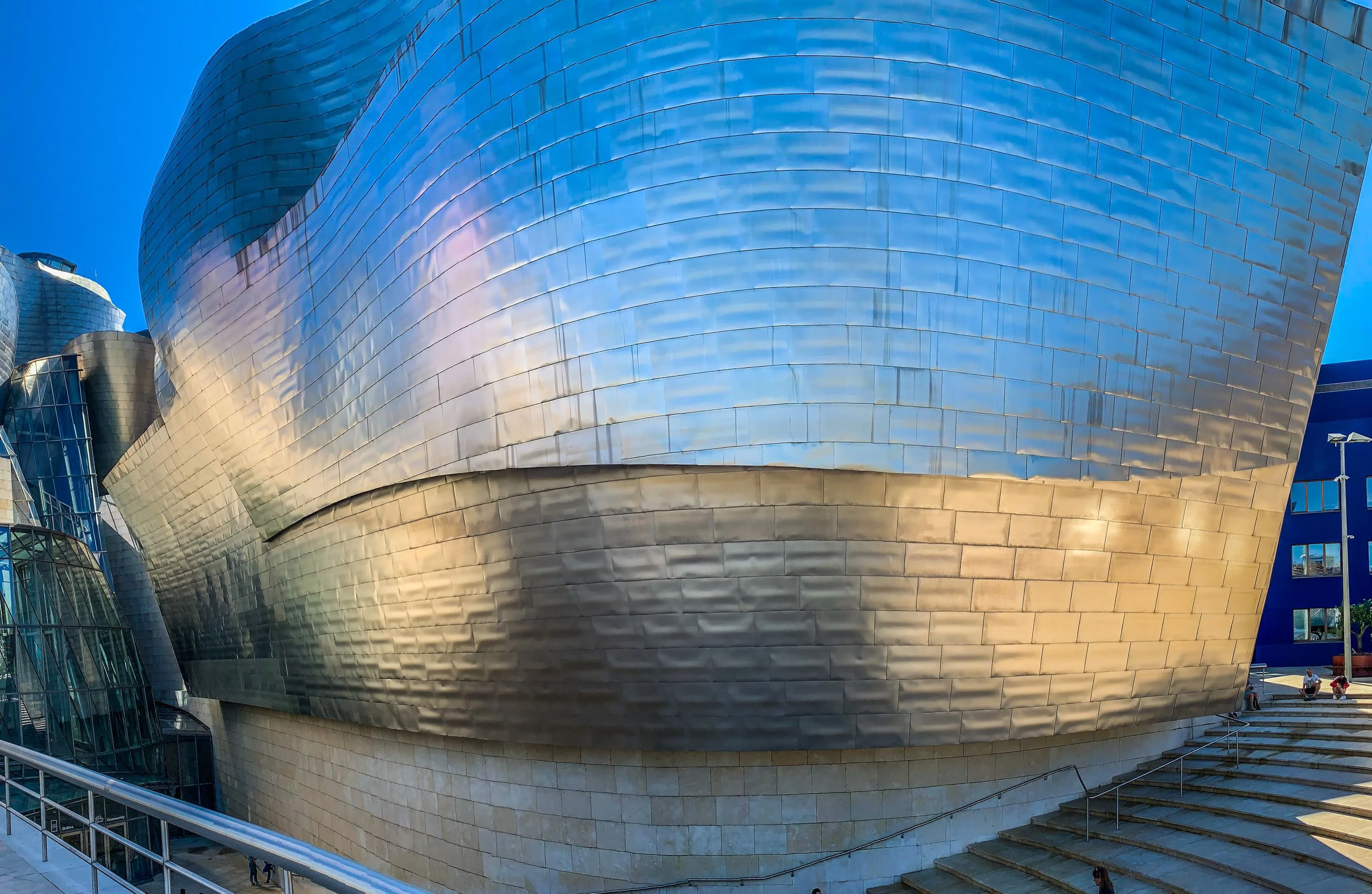
Up close, the titanium forms curved scales that pick up blue and golden reflections. Much of the building is purely decorative according to Wikivoyage (EN); the permanent collection is less striking than the temporary exhibitions, often drawn from other Guggenheim collections.
The Zubizuri footbridge
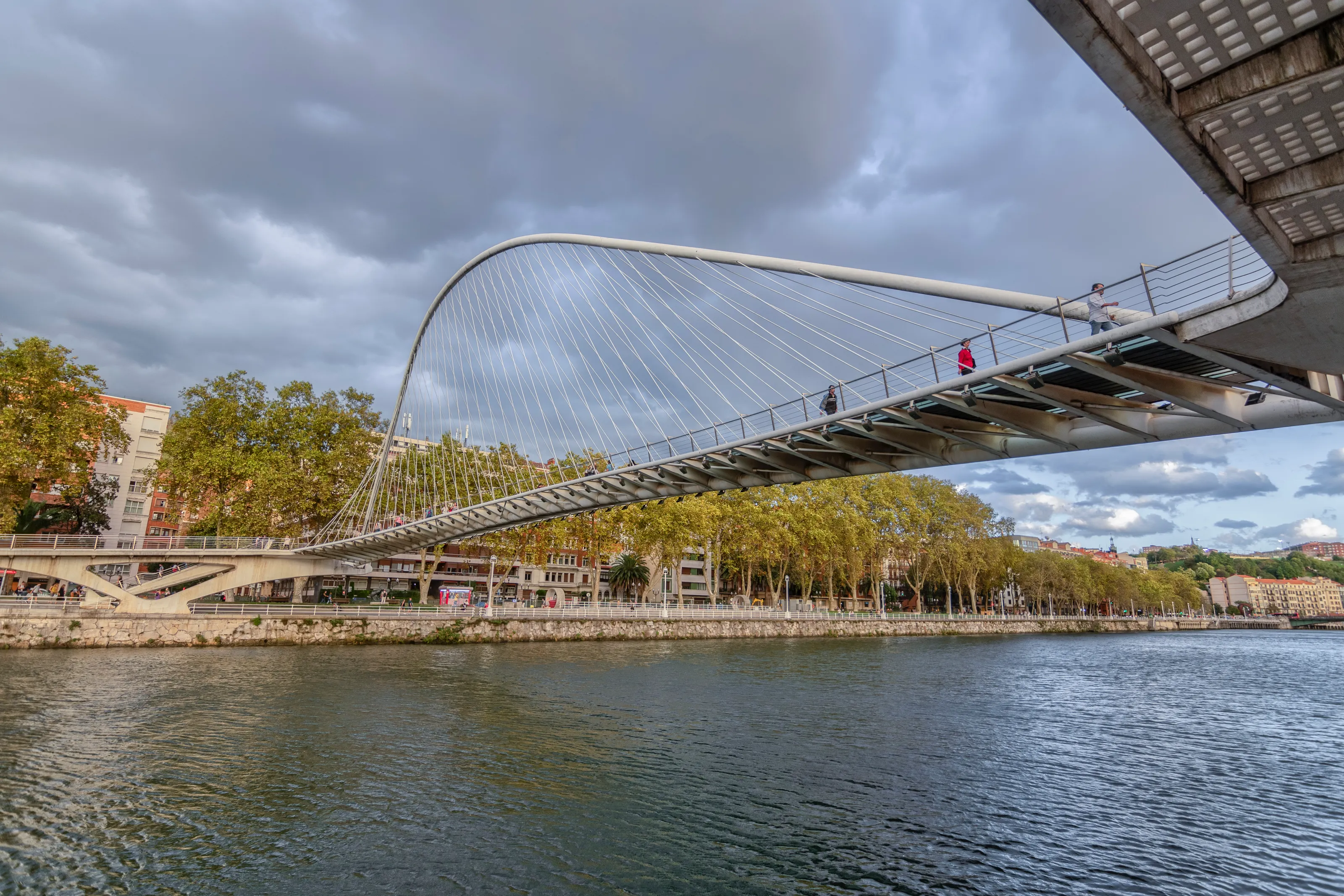
This white cable-stayed footbridge links the two banks of the estuary near the centre. The estuary long divided Bilbao's districts; its bridges, quays and promenades are now among the best walks in the city.
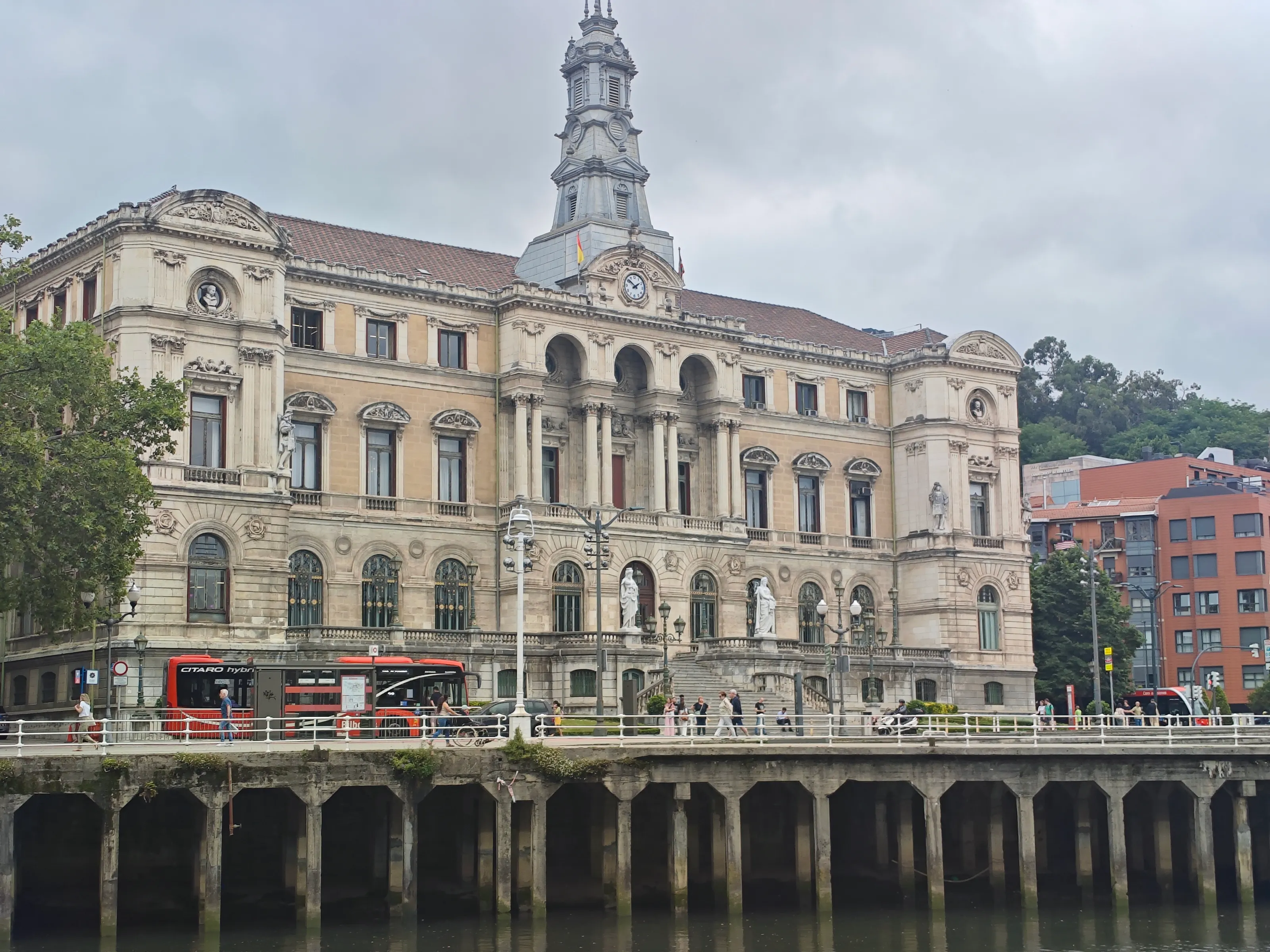
City Hall
Bilbao City Hall stands on the estuary, not far from the old centre, with its clock tower. It lies near the Casco Viejo, whose Seven Streets lead to the Ribera market, built in 1930 according to Wikipedia (FR).
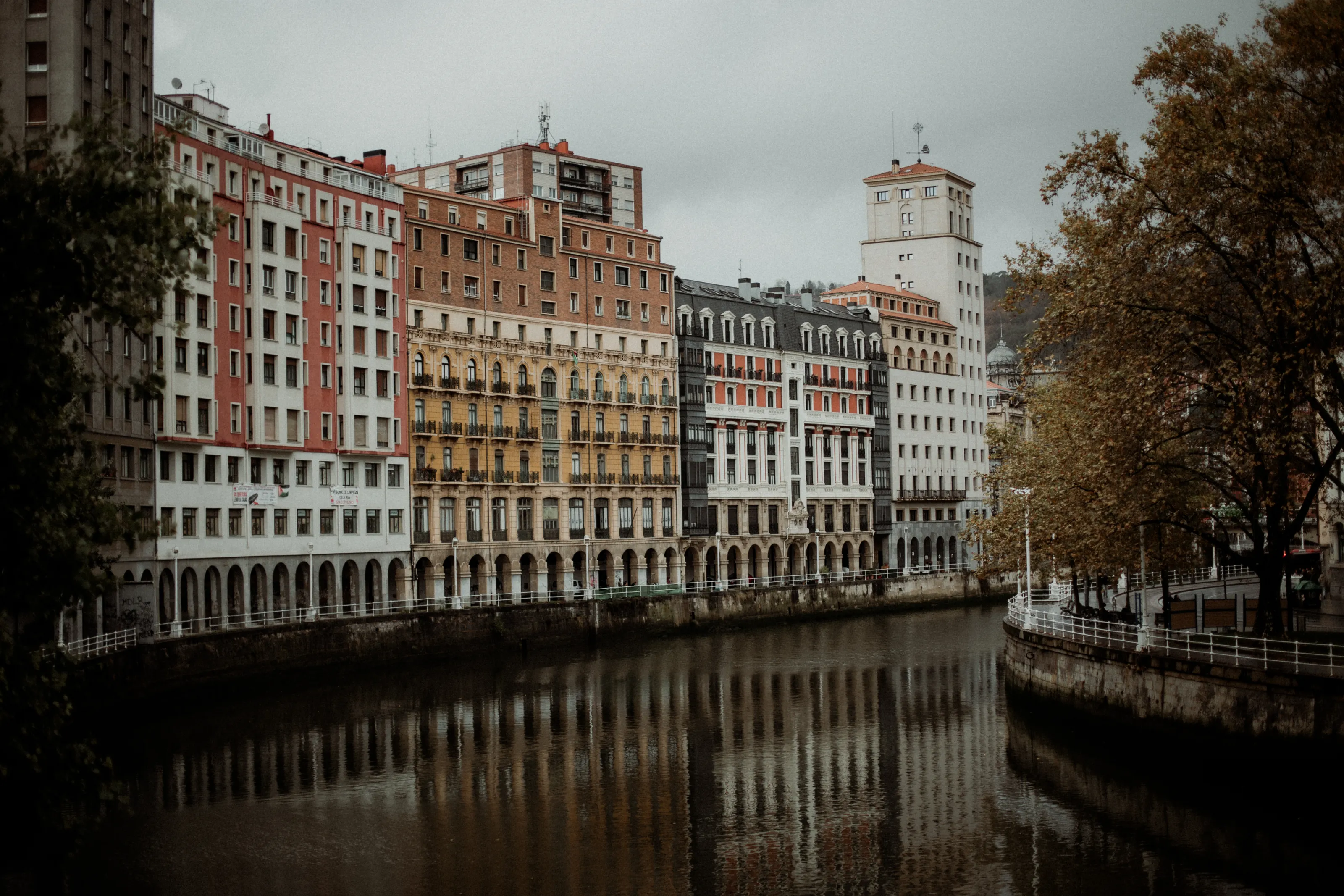
The estuary banks
Old brick and colourful buildings line the estuary; in autumn the trees on the quays and the reflections in the water make for lovely walks. The wide, calm estuary also hosts Bilboats sightseeing boats, according to Wikivoyage (DE).
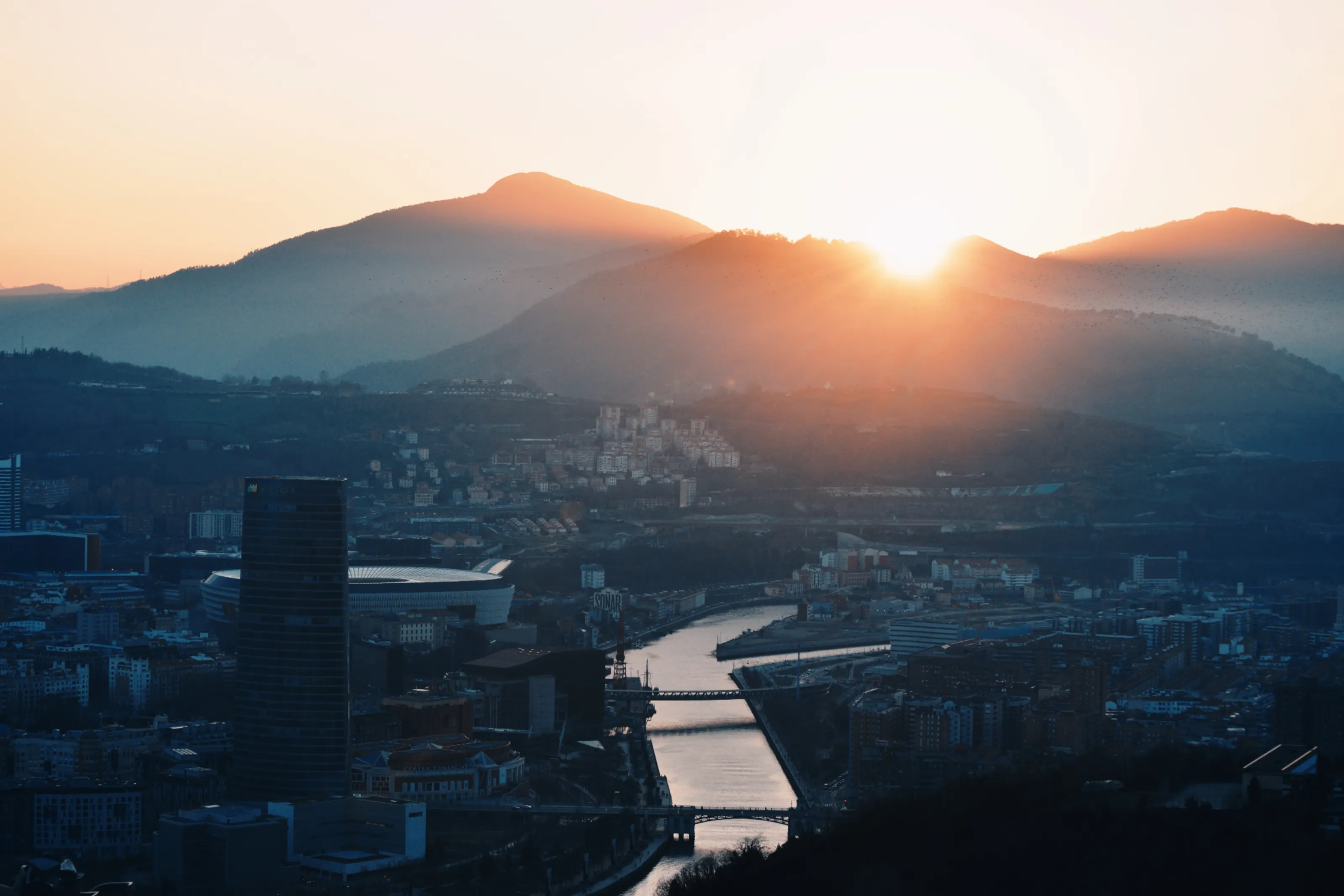
The city from above
From the hilltops you can see the estuary winding between the districts, with mountains behind. The Artxanda funicular, accepted by the Barik card, climbs one of these hills and offers one of the best viewpoints at sunset.
Casco Viejo, the cathedral and the Vizcaya Bridge
The Casco Viejo, the medieval old town of the Seven Streets, holds the Cathedral of Santiago (14th century, with a 19th-century neo-Gothic tower), the 1422 church of San Antón and Plaza Nueva, lined with pintxos bars. The Basilica of Begoña overlooks the city from its hill. At the mouth of the estuary, the Vizcaya Bridge, the Puente Colgante, is the oldest transporter bridge in the world according to Wikipedia (DE).
Museums and culture
Fine arts, Basque history and maritime heritage
The Museum of Fine Arts
It holds more than 6,000 works from the 12th century to today: paintings, sculptures, drawings and decorative arts. It is undergoing an extension project, so check which rooms are open before you go, according to Wikivoyage (EN).
Basque Museum and Itsasmuseum
The Basque Museum, founded in 1921, covers the prehistory, archaeology and ethnography of the Basque homeland. The Itsasmuseum, the maritime museum, occupies the former Euskalduna shipyard beside the estuary.
Azkuna Zentroa and more
Azkuna Zentroa is a large cultural centre, useful on rainy days according to Wikivoyage (DE). The Museum of Sacred Art, the Bullfighting Museum and the Museum of Artistic Reproductions complete the offer. We give no ticket prices.
Food and drink
Pintxos, salt cod and txakoli white wine
Pintxos
In Bilbao tapas go by their Basque name, pintxos: small slices of bread with a topping, generally more elaborate than elsewhere in Spain (Wikivoyage EN). Pintxopoteo, a drink and a bar snack from bar to bar, peaks on Thursday evenings in the old town according to Wikivoyage (DE); Friday and Saturday nights are busy too.
Basque dishes
Try bacalao al pil-pil, salt cod in an emulsion of olive oil and garlic, cod à la vizcaína, baby squid in their ink (txipirones en su tinta), tuna-and-potato marmitako and Gernika peppers. A set menu usually has two courses and a dessert.
Drinks and customs
Txakoli is a dry white wine from the region, and patxaran, a sloe liqueur, is served as a digestif. Wikivoyage (DE) suggests being wary of restaurants that only show menus in English or German, and waiting at the bar in summer if tables are full.
Getting around
Metro, tram, bus and funicular
A city to walk
The centre is easy on foot along the estuary. The upper districts and the hills are easier to reach by public transport.
Metro, tram and bus
The rechargeable Barik card works on all the province's transport, including the Artxanda funicular and the Vizcaya Bridge. The tram stops at the Guggenheim; tickets are validated at the stop. Bilbobus runs the city lines and Bizkaibus the regional ones. The metro also goes to the sea: about 20 minutes to Neguri and 35 to Sopela, according to Wikivoyage (DE).
Trains and coaches
The city has three main stations (Abando, Concordia and Casco Viejo). Coaches link it with San Sebastián, Vitoria-Gasteiz, Santander and Madrid, often more cheaply and frequently than trains, according to Wikivoyage (EN).
Budget and precautions
Set menus and pintxos keep the budget in check
Price level
Bilbao is not Spain's cheapest destination, but set menus (two courses and a dessert) and pintxos help control the budget. The currency is the euro. We publish no figures because we could not cross-check them on two independent open sources.
Festivals
Aste Nagusia, the big festival week, takes place in August and lasts nine days; Athletic Club matches are in high demand and tickets are hard to get, according to Wikivoyage (DE).
Flights and precautions
SniperAir monitors prices to BIO and compares them with the route's history, but it does not sell or book tickets. Santander (SDR) or San Sebastián (EAS) can be watched in parallel. Spain is in the Schengen area: entry rules depend on your nationality, so check official sites. As in every European city, keep an eye on your belongings in busy places.
When to go
Mild and rainy: the oceanic climate of the north
Winter (December to February)
Mild and damp, with an average temperature around 9 C in January according to Wikipedia (FR, DE). Snow is rare in town; it stays on the mountains.
Spring (March to May)
Cool and changeable, with more wind in spring and autumn according to Wikipedia (DE). Bring a windproof jacket.
Summer (June to August)
Mild: average highs of 25 to 26 C according to Wikipedia (EN, ES). Aste Nagusia livens up the city in August.
Autumn (September to November)
The rains return, mainly from mid-October to April; November is the wettest month according to Wikipedia (EN).
Bilbao has an oceanic climate: it rains all year, about 1,200 mm a year according to Wikipedia (FR, DE), and there is no true dry summer. Temperatures stay moderate, which spares the city the heatwaves of southern Spain but not the rain. We give no heat records because the sources differ. May to June and September are usually the most pleasant; pack a waterproof in every season.
By length of stay
What to do in Bilbao depending on how long you stay
The essentials
The Guggenheim, the estuary bridges, the Casco Viejo, pintxos and the view from the heights.
Museums and districts
The Museum of Fine Arts, the Itsasmuseum, Azkuna Zentroa, the Vizcaya Bridge, the Artxanda funicular and a beach reachable by metro.
The Basque Country
San Sebastián and Vitoria-Gasteiz about an hour away by coach, or the Basque coast, with Bilbao as your base.
In pictures
Bilbao in pictures
You might also like
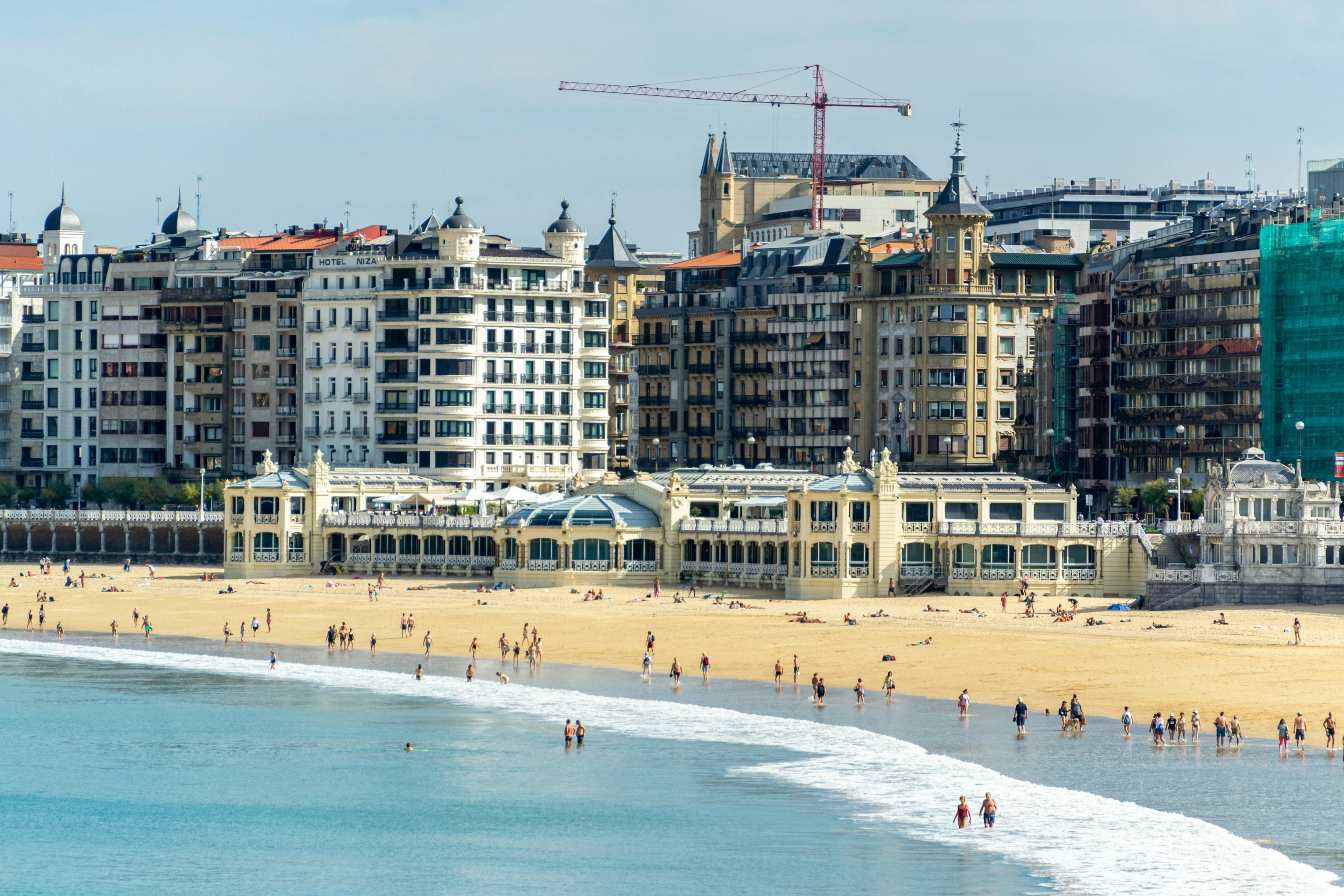
Similar destinations
FAQ
Frequently asked questions about flights to Bilbao
How do I get from Bilbao airport to the city centre?
The airport (BIO), in Loiu, is about 11 km north. A Bizkaibus line reaches Alameda Recalde, Plaza Elíptica, Gran Vía and the Termibus terminal; taxis wait outside. Timetables change: check them before you travel.
When is the best time to visit Bilbao?
May to September for mild temperatures and less rain; August for the big festival week. Keep a waterproof handy in every season.
Is Bilbao expensive?
It is not Spain's cheapest city, but set menus and pintxos help. We give no figures because we could not cross-check them.
How long should I stay in Bilbao?
Two days for the Guggenheim, the estuary, the Casco Viejo and pintxos; four days if you add the museums, the Vizcaya Bridge, the Artxanda funicular and a beach.
How do I get around Bilbao?
On foot along the estuary, and by metro, tram and bus with the Barik card. The tram stops in front of the Guggenheim, and the Artxanda funicular climbs to the heights.
What should I eat in Bilbao?
Pintxos in the old town, bacalao al pil-pil, txipirones en su tinta, marmitako and a glass of txakoli.
How much does a flight to Bilbao usually cost?
The price depends mainly on your departure city, the time of year and how far ahead you book. The "opportunities" section above shows real examples of prices SniperAir has already detected to this destination.
How do I get alerted when a flight to Bilbao drops below my budget?
Create an alert profile with your departure airport, Bilbao as the destination and your maximum budget. You are notified automatically as soon as a matching price is detected.
Ready to head to Bilbao?
Set your budget and let SniperAir monitor fares for you.
Create my alert