
Cheap flights to Bristol
Set your departure airport and maximum budget: SniperAir tracks prices to Bristol and alerts you the moment a deal matching your criteria appears.
Quick summary
Country
United Kingdom
Continent
Europe
Airport
BRS
Currency
Pound sterling (GBP)
Time zone
UTC+0 (UTC+1 during summer time)
Deals already spotted to Bristol
Real flight examples detected by SniperAir, with their reference price.
Loading examples…
Why track Bristol with SniperAir
You don't need to compare prices every day
Choose your departure
Enter your departure airport and your maximum budget for a flight to Bristol (BRS).
SniperAir keeps watch
Our systems continuously compare new fares with the real price history of the route. SniperAir tracks prices and alerts you: it does not sell or book tickets.
You get an alert
As soon as a fare matches your criteria, you are notified, without having searched for anything yourself.
Airport and getting into town
An airport about 13 km out, linked to the centre by bus
Bristol (BRS)
Bristol Airport lies about 13 km south-west of the city centre, and there is no rail link. The A1 bus connects the airport with the centre in roughly half an hour, with departures as frequent as every eight minutes in the daytime, stopping at Temple Meads station and then the bus station, according to Wikivoyage (EN). Cheaper bus services exist, but they are slower and less frequent, and a taxi is the most direct choice. Bristol is a base for low-cost airlines, with many European destinations; for London, the train is the usual choice.
Distances and times are approximate, based on Wikivoyage (EN, FR); bus timetables change, so check them before you travel. We give no fares.
Bristol has around 480,000 residents, making it one of the largest cities in the UK and the most populous in South West England. It received its royal charter in 1155 and grew up around the River Avon. Temple Meads station, about a fifteen-minute walk from the centre, is linked to Bath, Cardiff, Birmingham, London Paddington, Manchester and many other cities.
Old town and landmarks
A suspension bridge, a floating harbour and many-coloured houses
Bristol is best discovered around the water: the old harbour, converted into a floating basin, and the Avon Gorge, crowned by the Clifton Suspension Bridge. Four places are illustrated; the others are described in text only.
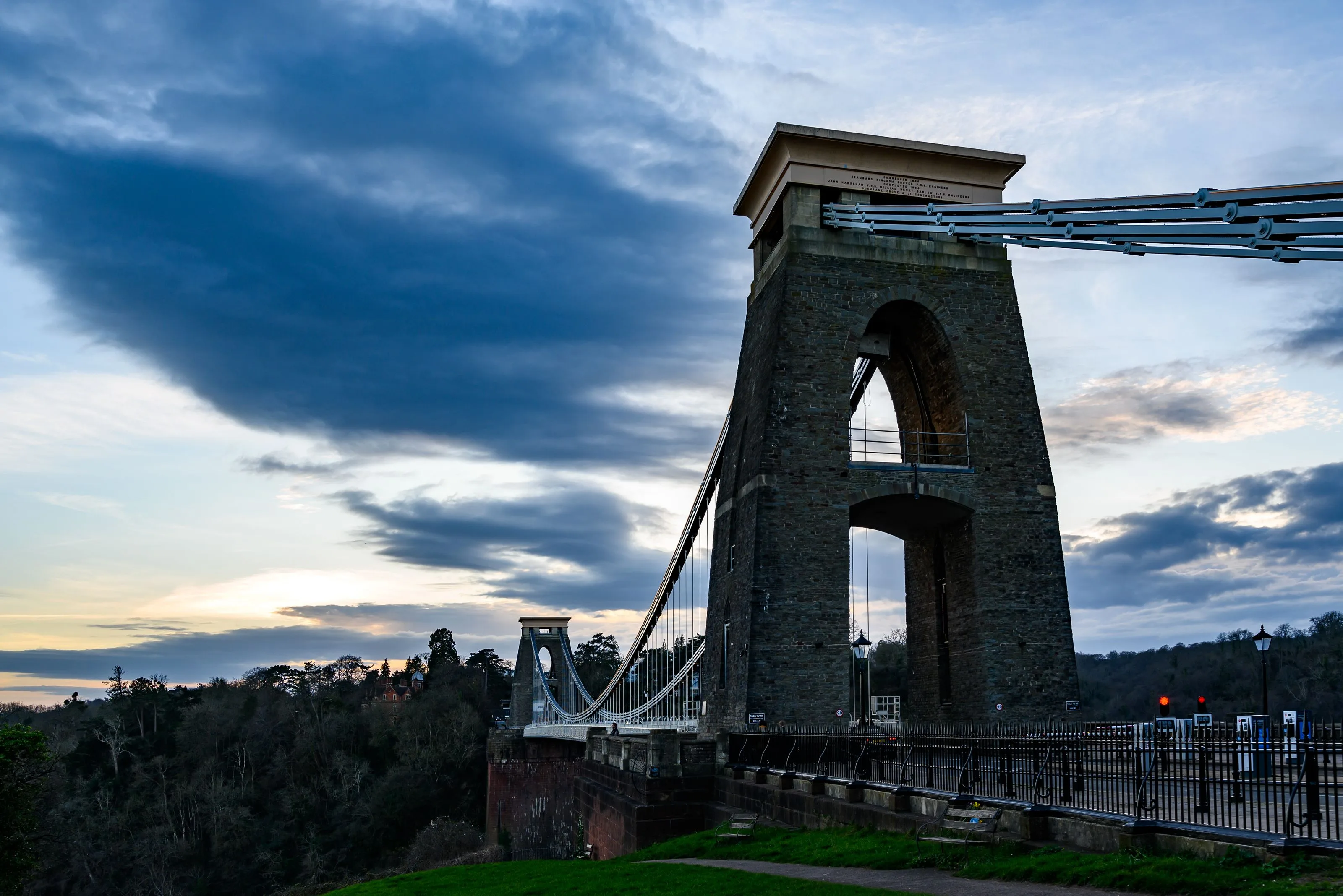
The Clifton Suspension Bridge
Designed by Isambard Kingdom Brunel and opened in 1864, the Clifton Suspension Bridge is the symbol of Bristol. It spans the Avon Gorge between two stone towers, in a wooded setting that is most atmospheric at dusk. It links Clifton, an elegant Georgian district, with the far bank, and can be crossed on foot.
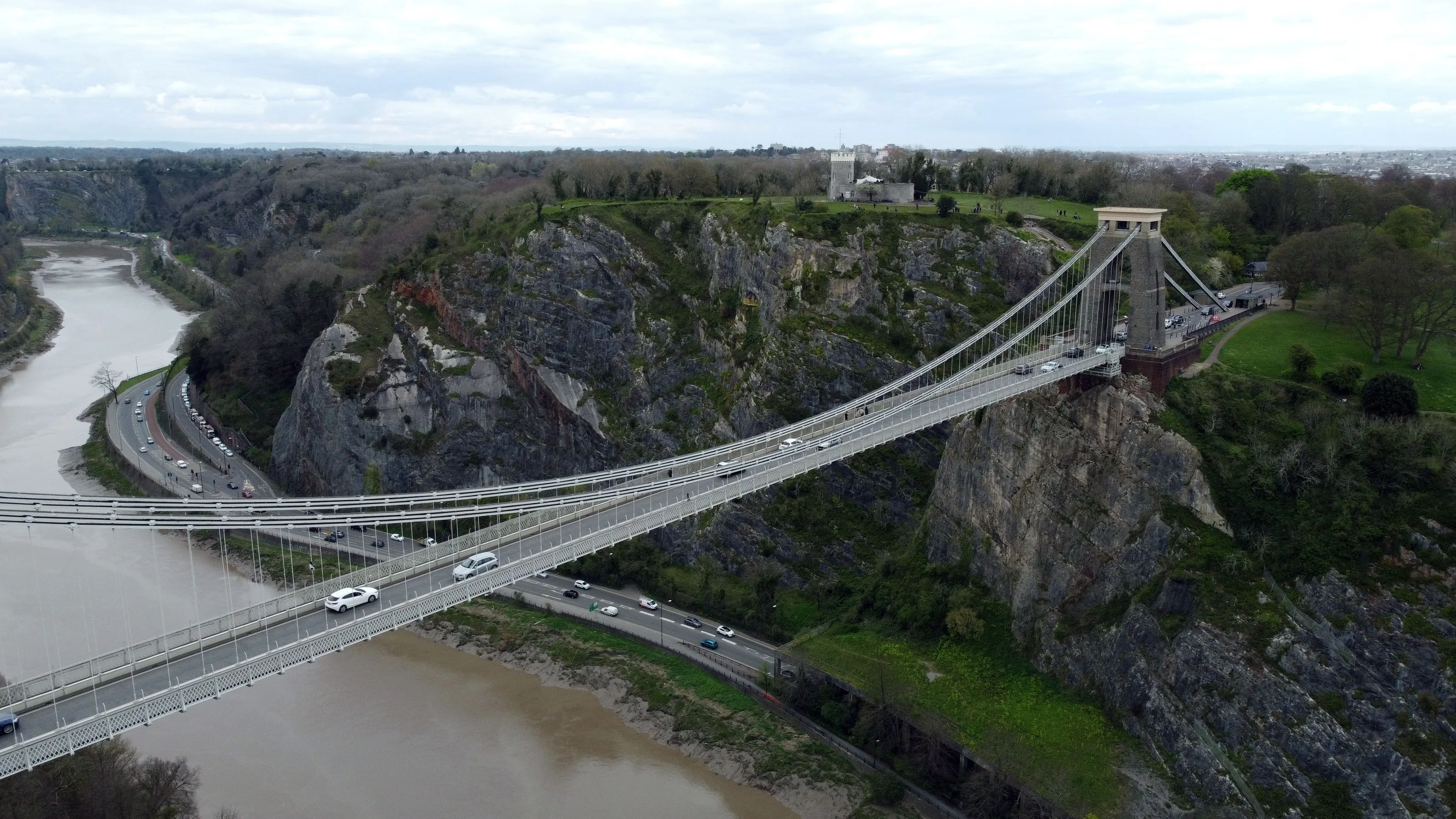
The Avon Gorge from above
From above you can judge how bold the structure is: the deck hanging over the gorge, the brown river heading for the estuary and the wooded limestone cliffs. The parks on both banks offer panoramic walks, with views of the bridge and the city.
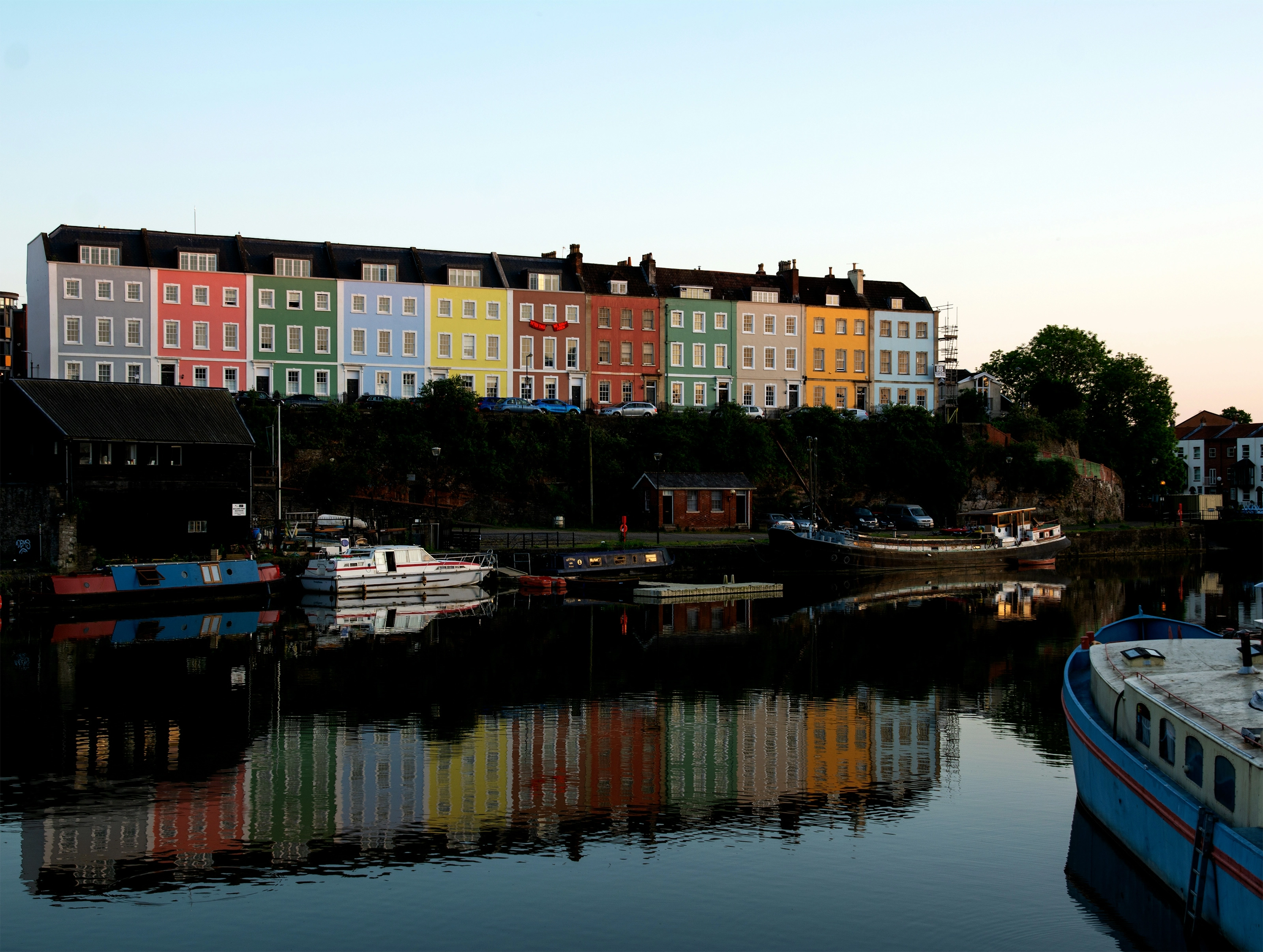
The harbour's colourful houses
Pink, green, yellow and blue fronts are reflected in the harbour basins, where narrowboats and boats lie moored. This splash of colour has become one of the city's most recognisable images, best photographed at dawn when the water is calmest.
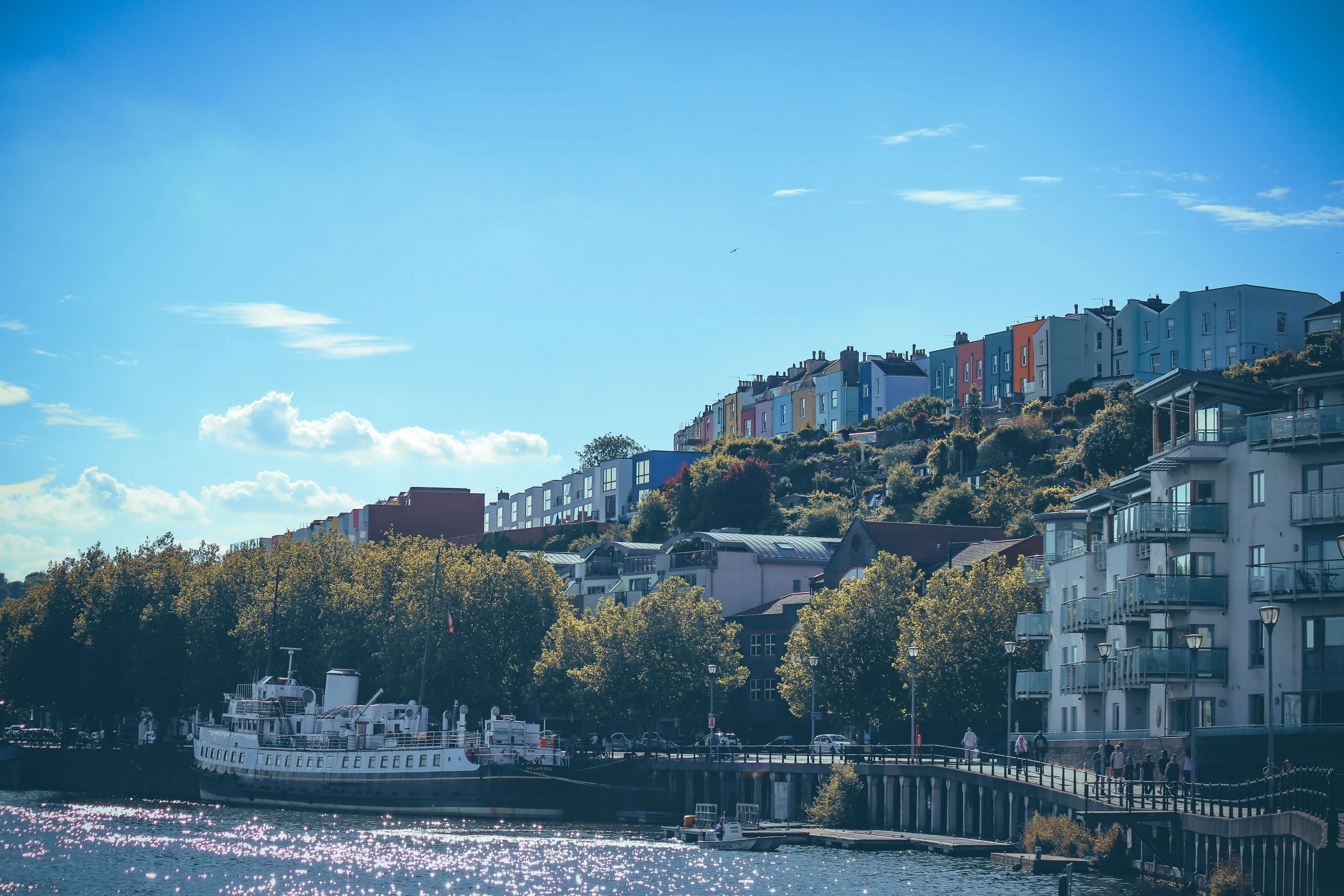
On the floating harbour quays
Along the quays, old warehouses and recent apartment blocks line tree-shaded walks. A historic steamer is moored there, and the hills above the harbour are covered in brightly painted houses. The floating harbour is the heart of the attractions, to be explored on foot or by boat.
Ship, cathedral and street art, in text
The SS Great Britain, built by Brunel in 1843, the first iron-hulled passenger liner driven by a screw propeller, is preserved in a dry dock in the harbour and can be visited. Bristol Cathedral, St Mary Redcliffe and the old town of Corn Street and King Street show the city's past. Bristol is also the home town of street artist Banksy, whose works can be seen in several neighbourhoods, and many murals colour Stokes Croft.
Museums and culture
Ships, aircraft, art and science
The harbour and its ships
The SS Great Britain is a museum in its own right: you walk beneath the hull and tour the liner's saloons. Close by, M Shed, housed in a former harbour shed, tells the story of Bristol and its people.
Aerospace Bristol and science
Aerospace Bristol, at Filton north of the city, covers more than a century of aviation: about a dozen original aircraft and helicopters, including the last Concorde ever to fly, according to Wikivoyage (EN). Allow around three hours. In the centre, We The Curious and the Bristol Museum and Art Gallery complete the offer.
Music and culture
The city is a major music scene: Massive Attack, Portishead, Tricky and Roni Size all came from here, and Bristol was voted Britain's most musical city in 2010, according to Wikivoyage (EN). Theatres and concert venues run programmes all year. We give no admission prices.
Food and drink
Covered markets, West Country cider and historic pubs
The dishes
Bristol offers a very wide choice, from fish and chips to Portuguese, Lebanese, Indian or Caribbean dishes. The region is also cider country, an apple drink poured in many pubs, especially in summer.
Markets and districts
St Nicholas Market, in the glass arcade of the Corn Exchange, gathers world-food stalls and independent shops. Park Street and Whiteladies Road in the West End, and the harbour, have plenty of tables, often more pleasant a little away from the most touristy streets.
Bars and nightlife
The city has some 44,000 students, which feeds the nightlife, but prices are close to London's according to Wikivoyage (EN). King Street in the old city is a pleasant spot in summer, with historic pubs, one of them from the 17th century.
Getting around
A walkable centre, buses and boats on the harbour
On foot
The floating harbour and the old city are easy on foot, with fine walks along the quays and in pedestrian streets. Temple Meads station is about fifteen minutes' walk from the centre; bus 8 reaches the centre and Clifton.
Bus, bike and scooters
Buses serve the city and a day ticket is available, including for the higher-frequency routes. Bristol has many cycle paths and sits at the heart of the National Cycle Network, and an e-scooter hire scheme operates.
Further afield
Bath is about 24 km away, Cardiff and London are reachable by train, and the Avon Gorge and Clifton's parks are a few minutes from the centre. Boats also ply the harbour for another view of the city.
Budget and precautions
Reasonable hotel prices, pricier nights out
Price level
According to Wikivoyage (EN), accommodation in Bristol is relatively affordable compared with some very touristy destinations, while nights out are priced much like London. The currency is the pound sterling (GBP). We give no figures, because we could not cross-check them against two independent open sources.
Flights
The flight is the most variable cost. SniperAir tracks prices to BRS and compares them with the route's history, but it does not sell or book tickets. Cardiff (CWL), under two hours away by road or rail, is another gateway worth comparing.
Entry rules and precautions
The UK is not part of the Schengen area: entry rules, including a possible electronic travel authorisation, depend on your nationality, so check the official sites. Bristol is generally pleasant, but on weekend nights fights can break out near the waterfront and taxi queues: avoid rowdy crowds.
When to go
A mild oceanic climate and lively summers
Winter (December to February)
Cool and damp, with short days; the city is quieter and prices ease.
Spring (March to May)
Clifton's parks turn green and the harbour terraces reopen; the weather stays changeable.
Summer (June to August)
The best season, with big festivals and long evenings, according to Wikivoyage (EN); August is also the time of the large hot-air balloon gathering.
Autumn (September to November)
Soft light on the colourful houses and the return of the rain; a good season for museums.
Bristol's climate is oceanic, mild and fairly damp, with pleasant summers. We give no exact temperatures, as they were not cross-checked; look at the forecast before you go. May to September is the nicest period for the harbour, the bridge and the terraces, although rain can fall at any time of year.
By length of stay
What to do in Bristol depending on how long you stay
The essentials
The floating harbour, the SS Great Britain, the Clifton bridge, Corn Street and St Nicholas Market, then an evening gig.
Culture and street art
M Shed, the museum and art gallery, Aerospace Bristol, Stokes Croft and the pubs of King Street.
The West Country
Bath by train or bus, Cardiff, the Somerset coast or a trip to neighbouring towns in the south west.
In pictures
Bristol in pictures
You might also like
Similar destinations
FAQ
Frequently asked questions about flights to Bristol
How do I get from Bristol airport to the city centre?
BRS is about 13 km south-west of the centre, with no rail link. The A1 bus reaches Temple Meads station and then the bus station in roughly half an hour, and runs very frequently; a taxi is more direct. Check the timetables before you travel.
When is the best time to visit Bristol?
From May to September for the harbour, the Clifton bridge, the terraces and the festivals; August for the balloons; winter suits museums and evenings out, with a waterproof jacket.
Is Bristol expensive?
Accommodation is relatively affordable for a tourist destination, but nights out are close to London prices, according to Wikivoyage (EN). We give no amounts because we could not cross-check them.
How long should I stay in Bristol?
Two days for the harbour, the Clifton bridge, the SS Great Britain and the old town; four days with M Shed, Aerospace Bristol and the street art; longer with Bath or Cardiff.
How do I get around Bristol?
On foot along the harbour and in the old city. Buses, bikes, e-scooters and harbour boats complete the picture; Temple Meads station is a fifteen-minute walk from the centre.
What should I eat in Bristol?
Fish and chips, West Country cider in a historic pub and world food at St Nicholas Market.
How much does a flight to Bristol usually cost?
The price depends mostly on your departure city, the season and how early you book. The opportunities section above shows real examples of fares SniperAir has already detected to this destination.
How do I get alerted when a flight to Bristol drops below my budget?
Create an alert profile with your departure airport, Bristol as the destination and your maximum budget. You are notified automatically as soon as a matching fare is detected.
Ready to head to Bristol?
Set your budget and let SniperAir monitor fares for you.
Create my alert