
Cheap flights to San José
Set your departure airport and maximum budget: SniperAir tracks prices to San José and alerts you the moment a deal matching your criteria appears.
Quick summary
Country
Costa Rica
Continent
North America
Airport
SJO
Currency
Costa Rican colón (CRC)
Time zone
UTC-6 (no daylight saving time)
Deals already spotted to San José
Real flight examples detected by SniperAir, with their reference price.
Loading examples…
Why track San José with SniperAir
You do not need to compare prices every day
Choose your departure
Enter your departure airport and your maximum budget for a flight to San José (SJO).
SniperAir keeps watch
Our systems continuously compare new prices with the real price history of the route. SniperAir monitors prices and alerts you: it does not sell or book tickets.
You receive an alert
As soon as a price matches your criteria, you are notified, without having searched for anything yourself.
Airport and getting into town
An airport in Alajuela, about twenty kilometres from the centre
Juan Santamaría (SJO)
Juan Santamaría International Airport, code SJO, is in Alajuela, west of the capital: 17 km from the centre according to Wikivoyage (EN, ES), 20 km according to Wikivoyage (FR, DE). Wikivoyage (EN) says a public bus links the airport with downtown in under half an hour in good conditions, with a dedicated lane for part of the way. For taxis, the same guide advises using an official airport taxi, reddish or orange in colour, rather than an unlicensed driver.
Distances differ between sources (17 or 20 km): rely on travel time, which depends on traffic. We do not quote fares: check the options before you travel.
San José is the capital and largest city of Costa Rica, on a plateau of the Central Valley at about 1,200 m (Wikipedia FR, Wikivoyage EN). The city proper has roughly 350,000 residents and the urban area more than two million (Wikipedia EN). Downtown is the country's main transport hub, even though the international airport is in Alajuela (Wikivoyage EN).
Trains and buses
Wikivoyage (EN) mentions commuter trains to Heredia, Alajuela or Cartago from the Atlantic station, but with limited timetables; the same guide notes that the bus is widely used for intercity trips. Check schedules before you go.
Entry rules
Entry rules depend on your nationality. Wikivoyage (EN) also notes that arrival checks may ask for proof of onward travel: consult the official websites of your country of departure and of Costa Rica.
Landmarks
Theatre, cathedral, parks and nineteenth-century architecture
Downtown San José is mostly explored on foot. The city was founded in the mid-1730s around a hermitage, depending on the source (1736 for Wikipedia EN and DE, 1737-1738 for Wikipedia FR), and became the capital only in 1823, replacing Cartago; it therefore has little colonial architecture (Wikipedia DE). Most of what you see is more recent, with late-nineteenth and early-twentieth-century buildings influenced by Europe.
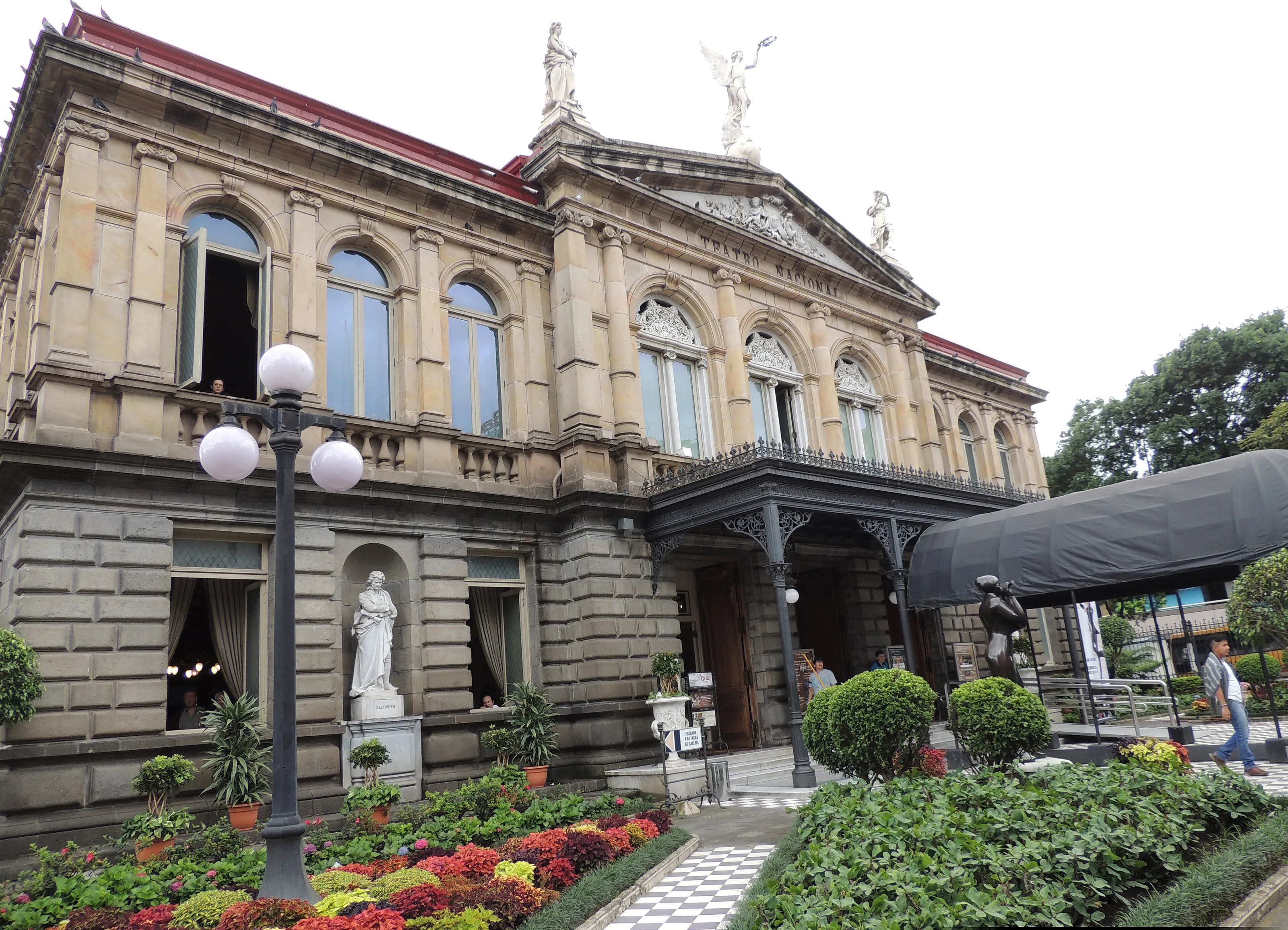
The National Theatre
Opened in 1897 according to Wikipedia (FR), the National Theatre is probably the building Costa Ricans are proudest of. Wikivoyage (EN) describes a Baroque and Romantic style, an art gallery and a coffee shop inside, with guided visits of half an hour to an hour. Concerts and performances follow one another: check the programme on site.
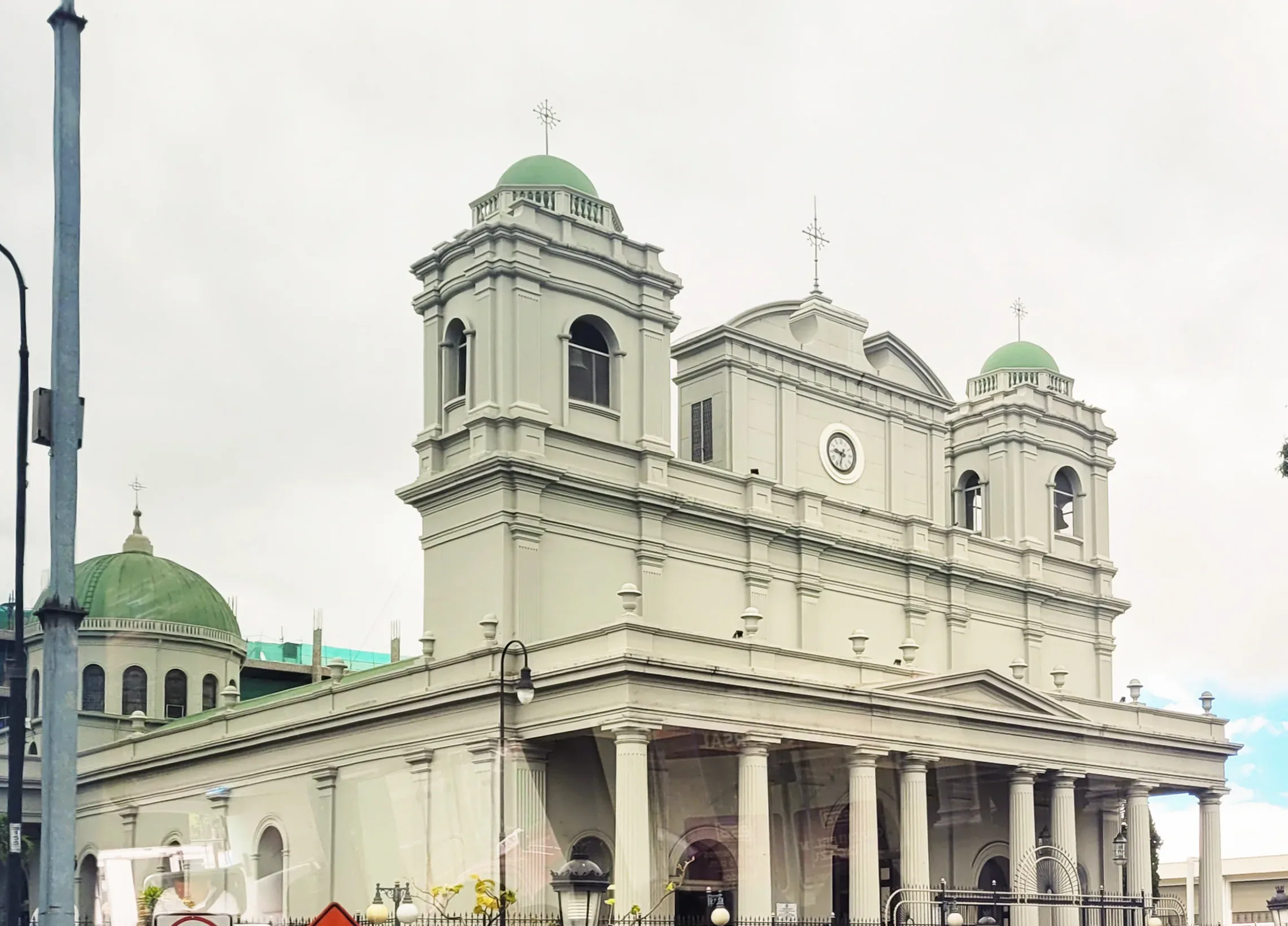
The Metropolitan Cathedral
The Cathedral of Saint Joseph, downtown, descends from an adobe church built in 1776 (Wikipedia FR). Its columned portico and green domes give the square a calm look by day.
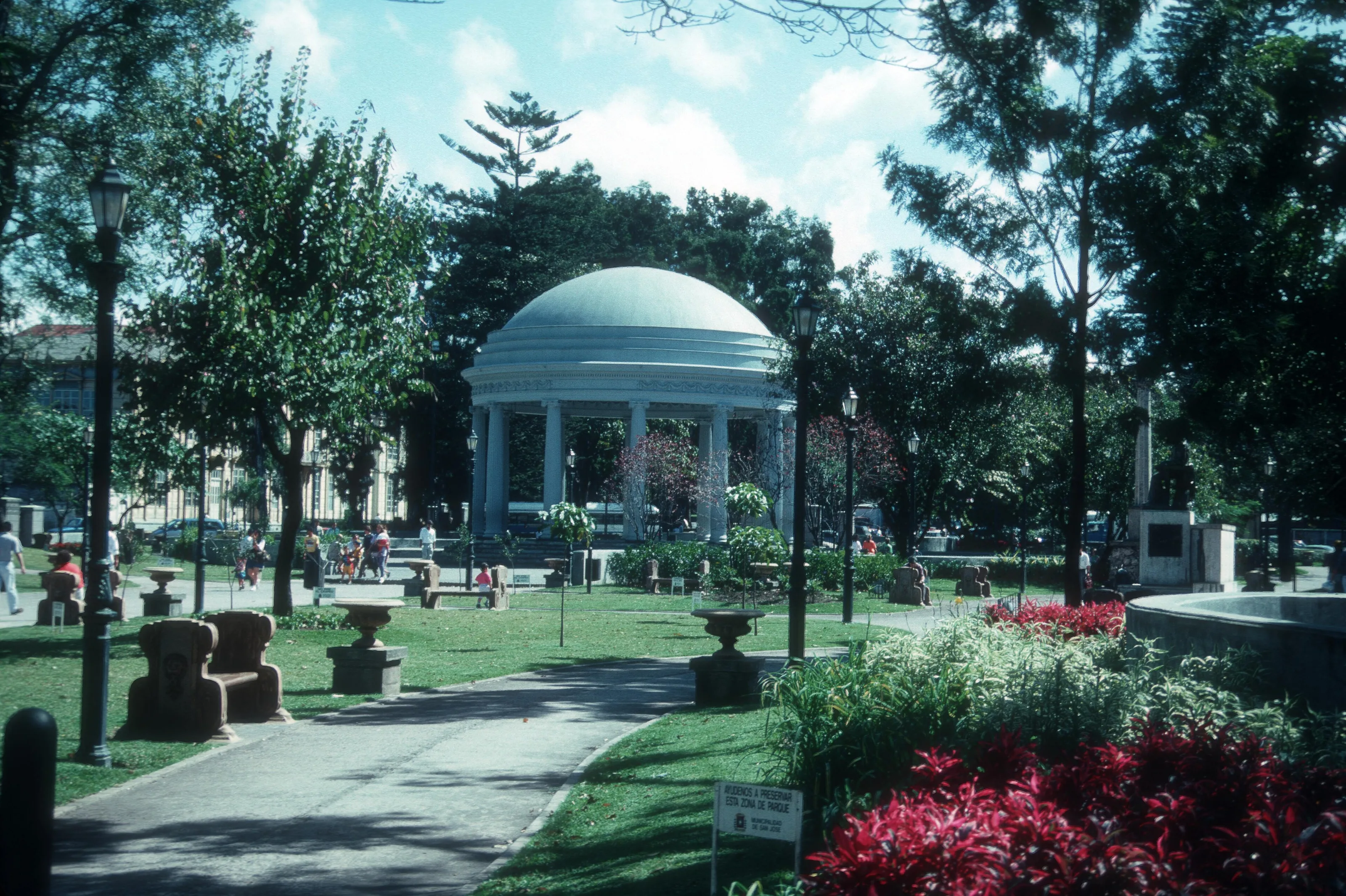
Parque Morazán
This downtown park holds a domed music pavilion among trees and flower beds. According to Wikivoyage (EN), jugglers gather there every Thursday, sometimes with percussion, in a free event. As anywhere downtown, keep an eye on your belongings.
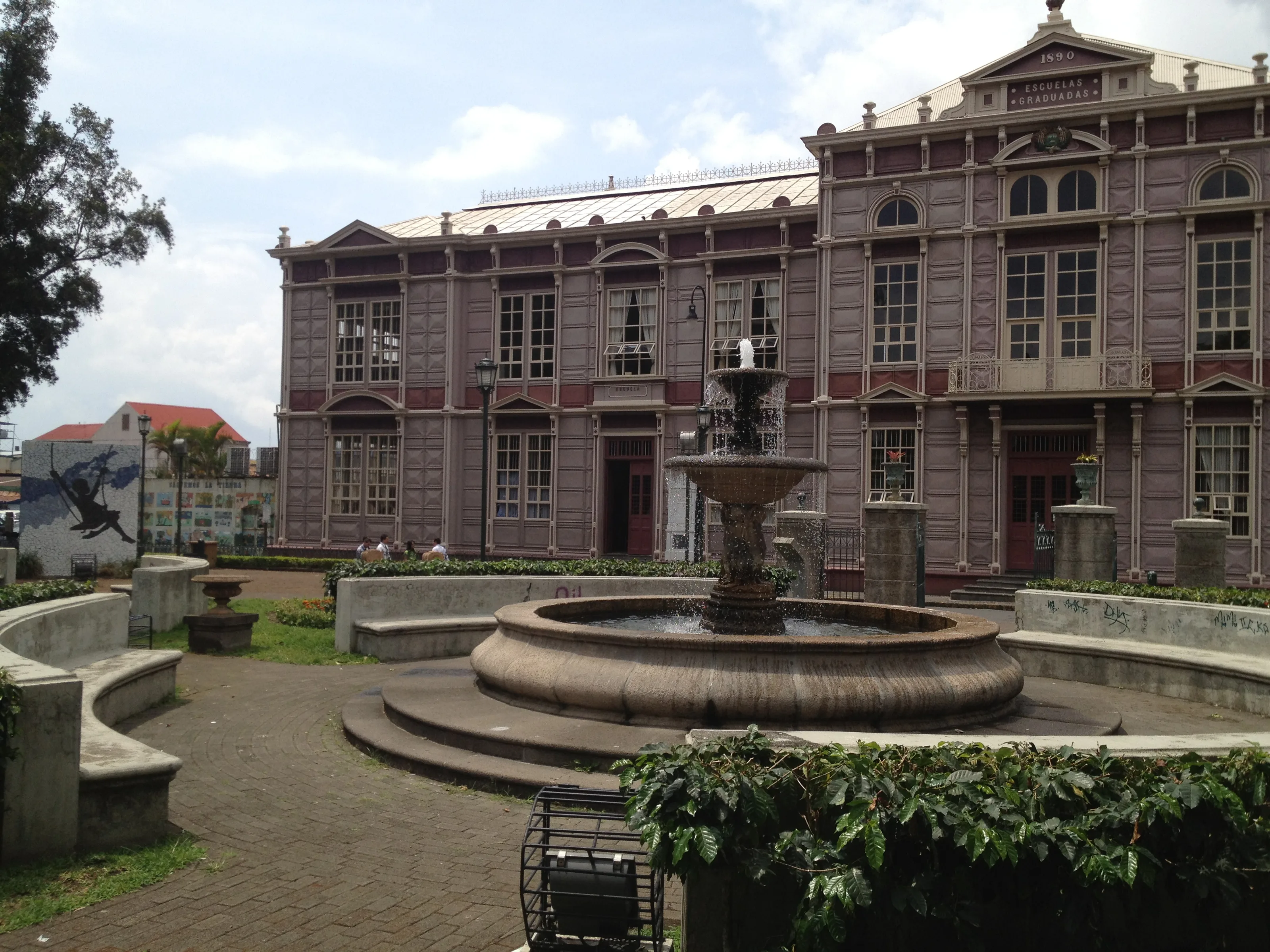
The Metal Building
This large school building with a metal frame, pink and mauve facades and a garden with a fountain is one of the most photographed landmarks in the city.
The Amón district
In the Amón and Otoya districts, north of the centre, wooden and metal houses from the early twentieth century line sloping streets, with verandas, coloured roofs and green or pink facades. Wikivoyage (EN) places several bars and lodgings there; it is a pleasant area to walk by day.
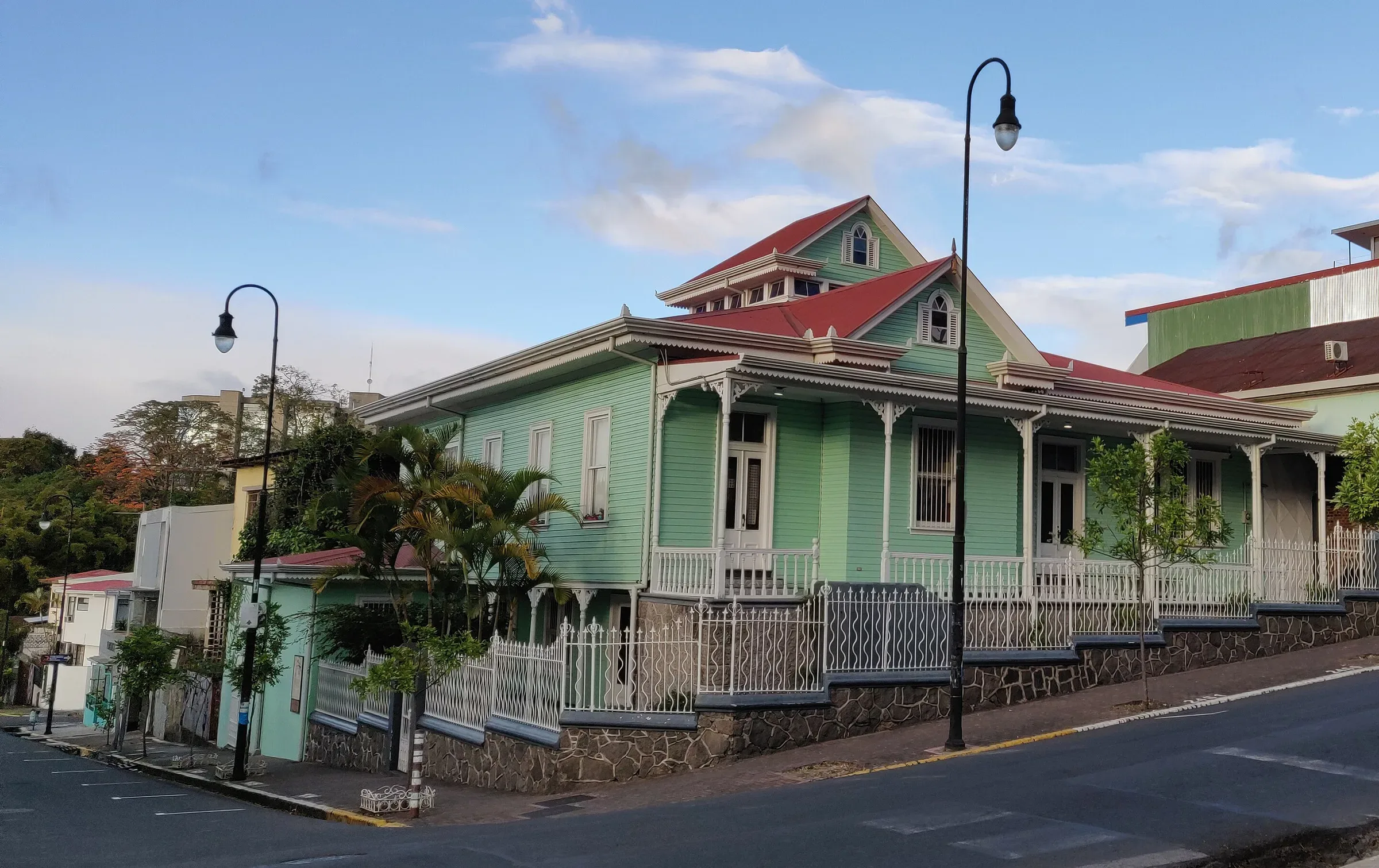
La Sabana and markets
La Sabana Metropolitan Park, west of downtown, is the largest park in the city: running trails, sports grounds and the Costa Rican Art Museum in the old airport terminal (Wikivoyage EN). The Mercado Central, on Calle 8, is a very old and busy market with small restaurants (Wikivoyage EN).
Museums and culture
Pre-Columbian gold, jade, national history and contemporary art
San José holds most of the country's museums. Wikipedia (FR) lists several institutions, among them the Pre-Columbian Gold Museum, the Jade Museum, the National Museum and the Costa Rican Art Museum. Always check opening hours and admission before you go: we do not quote prices.
The Pre-Columbian Gold Museum
Located under the Plaza de la Cultura, it shows about 1,600 pieces of goldwork dated 500 to 1500 AD, according to Wikivoyage (EN), with explanations of how the objects were made and what they meant socially and religiously. Admission includes a numismatic museum and temporary exhibition galleries.
The Jade Museum
It holds the largest collection of pre-Columbian jade in the Americas according to Wikipedia (FR) and Wikivoyage (EN), along with gold, stone, bone, ceramics and shells. Wikivoyage (EN) recommends it if you only have time for one museum.
The National Museum, in the old Bellavista fort
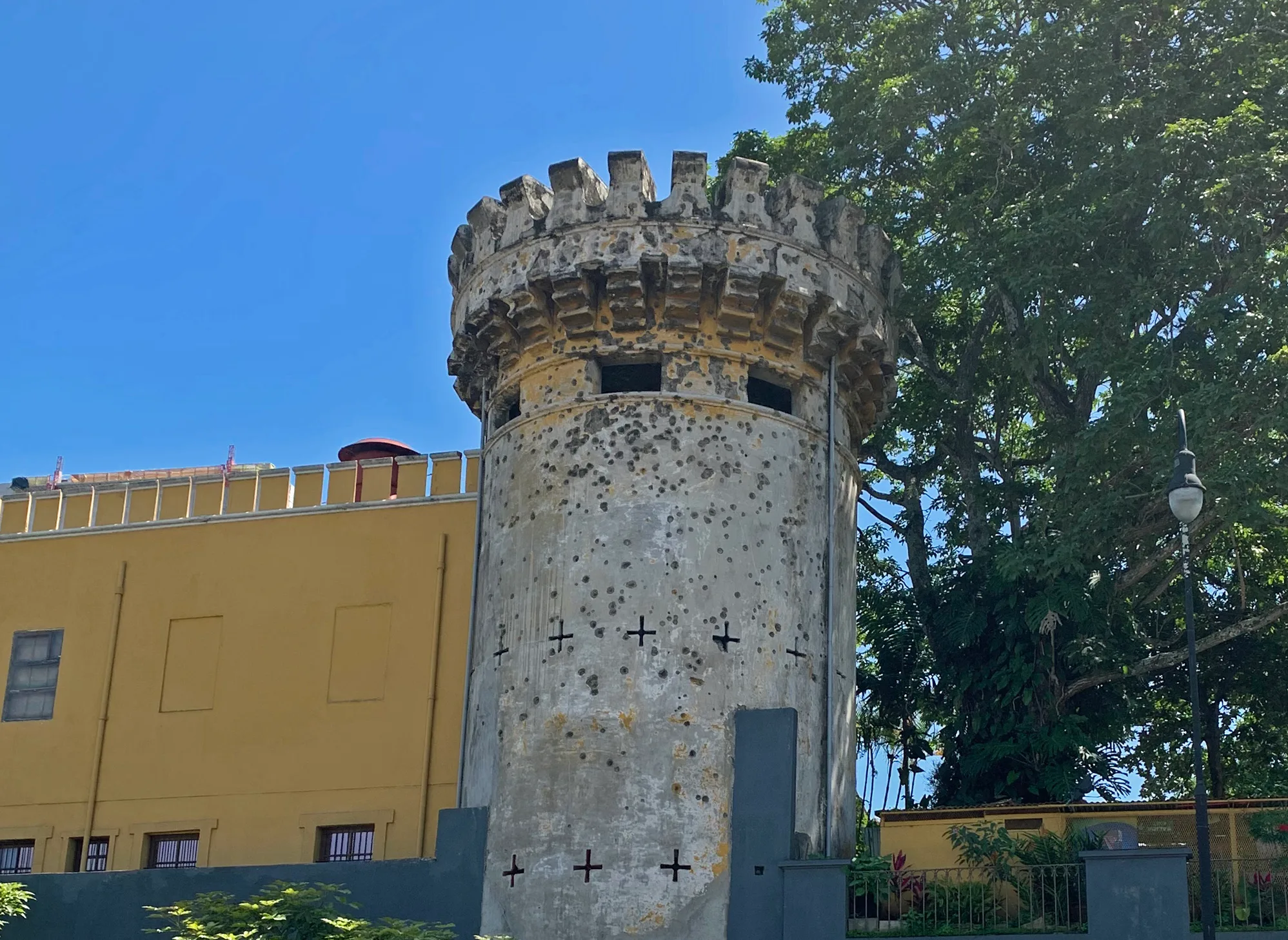
The National Museum occupies the former Bellavista barracks. It was here that President José Figueres Ferrer symbolically abolished the army on 1 December 1948, after the civil war (Wikivoyage EN). It has a butterfly garden, stone spheres from the Diquís valley, a pre-Columbian exhibition and sacred art. This watchtower, its walls dotted with small holes, belongs to the same complex.
Contemporary art and theatre
The Museum of Contemporary Art and Design, in the former national liquor factory, is the country's main institution for contemporary art (Wikivoyage EN). The Melico Salazar Theatre and the National Theatre host concerts and performances.
For children
The Children's Museum occupies the old prison; its displays are in Spanish only (Wikivoyage EN, undated).
Food and drink
Casado, gallo pinto, coffee and markets
Specialities
The everyday dish is the casado: rice, beans, a portion of meat or fish, salad and fried plantain. Gallo pinto, fried rice and black beans, goes with breakfast. At the Mercado Central, Wikivoyage (EN) lists fish soup, ceviche, squid in its ink, corn-based dishes and artisanal cinnamon ice cream.
Coffee
San José is the cradle of coffee growing in Costa Rica: coffee branches appear on the city's coat of arms (Wikipedia FR). Downtown cafés and tastings in the Central Valley let you discover several growing regions.
A hygiene tip
Wikivoyage (EN) warns that street food can sometimes be badly washed and advises sticking to official markets and shops for fruit and vegetables. We do not recommend a specific address: ask your host.
Getting around
Buses, taxis, commuter trains and landmark-based addresses
Buses
Wikivoyage (EN) describes a reliable and very cheap bus network, paid per ride, with no day passes or transfers; routes can be checked on a public-transport app.
Taxis and apps
Official taxis have a meter; Wikivoyage (EN) says ride-hailing apps are widely used even though they are illegal in the country, and recommends asking your accommodation. Wikivoyage (DE) describes taxis as generally reliable.
Finding your way
Streets often lack signs and addresses are given by landmarks: a taxi driver generally expects the name of a known building or park rather than a street number (Wikivoyage EN). Traffic is dense and fast, and pedestrians need to be careful (Wikivoyage EN).
Budget and safety
A mid-to-high price level, with no published ranges
Price level
Costa Rica is often described as more expensive than its Central American neighbours; the price level is medium to high, with differences between districts and types of lodging. The currency is the Costa Rican colón (CRC); US dollars are often accepted but exchange rates vary. We do not give ranges, as we could not confirm them on two independent sources.
Flights
The flight is the most variable item in the budget. SniperAir monitors prices to SJO and compares them with the route's history, but it does not sell or book tickets. Liberia (LIR) is the country's other international airport, on the Pacific side.
Safety
Wikivoyage (EN) advises caution in the area north-west of the centre, around the Coca-Cola bus terminal and in La California, especially at night, and notes that the distance between a tourist area and an area to avoid can be a single block. Petty theft is the main risk; the commercial suburbs to the north-east such as Escalante and San Pedro are described as safer. Official advisories vary by country of departure: consult yours before travelling.
When to go
A dry season from December to April, more rain afterwards
December to February
Dry season: clearer skies and pleasant days; January is the driest month according to Wikipedia (FR).
March to April
End of the dry season, with the first showers around mid-April according to Wikivoyage (EN).
May to August
Rainy season: showers are more frequent, often in the afternoon; June to September includes the wettest months.
September to November
Rain is still frequent, with the dry season gradually returning in December.
Thanks to the altitude, temperatures stay moderate all year: Wikivoyage (EN) gives usually 21 to 27 °C, with sometimes cool nights, and a rainy season from mid-April to December. Wikipedia (FR) classes the climate as tropical savanna tempered by altitude. Pack a light rain jacket and layers.
How long to stay
What to do in San José depending on your stay
Downtown and museums
The National Theatre, Plaza de la Cultura, the Gold Museum and the Jade Museum, then the Mercado Central and a coffee.
Districts and nearby nature
The Amón district, the National Museum, La Sabana, then a day trip to a volcano or a coffee estate.
Central Valley and beyond
Cartago, Heredia or the waterfall gardens, then a domestic flight or a flight to Liberia for the Pacific coast.
In pictures
San José in pictures
You might also like
Similar destinations
FAQ
Frequently asked questions about flights to San José
How far is SJO airport from San José?
In Alajuela, about 17 to 20 km from downtown depending on the source. A public bus links the airport with the centre in under half an hour in good conditions according to Wikivoyage (EN); an official taxi is another option.
What is there to see in San José?
The National Theatre, the cathedral, Parque Morazán, the Metal Building, the Amón district, the Pre-Columbian Gold Museum, the Jade Museum and the National Museum.
When is the best time to visit San José?
December to April, which is drier; the rainy season runs from mid-April to December. Thanks to the altitude, temperatures stay mild all year.
Is San José a beach destination?
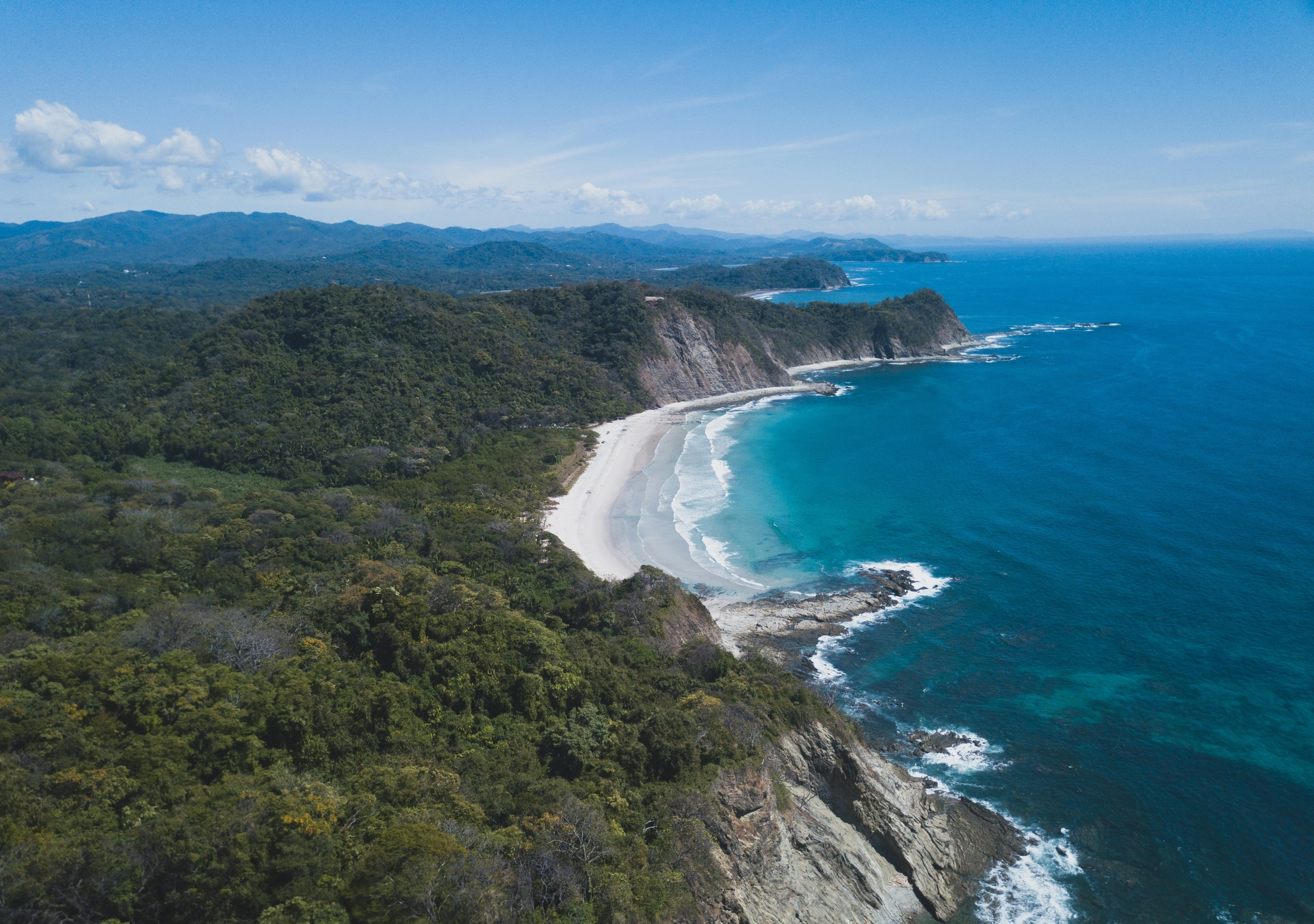
No: it is a highland capital in the Central Valley. Beaches are on the Pacific and Caribbean coasts, several hours away by road, or near Liberia for the northern Pacific coast.
Is San José safe?
Wikivoyage (EN) advises caution in the city, especially around the Coca-Cola bus terminal and in La California at night, and mentions petty theft. Official advisories vary by country of departure: consult yours.
Where is Costa Rica's other international airport?
At Liberia (LIR) in Guanacaste province, on the northern Pacific side: it mainly serves the beaches and parks of the north-west.
How much does a flight to San José usually cost?
The price depends mainly on your departure city, the time of year and how far ahead you book. The "opportunities" section above shows real examples of prices SniperAir has already detected to this destination.
How do I get alerted when a flight to San José drops below my budget?
Create an alert profile with your departure airport, San José as the destination and your maximum budget. You are notified automatically as soon as a matching price is detected.
Ready to head to San José?
Set your budget and let SniperAir monitor fares for you.
Create my alert