
Cheap flights to Mexico City
Set your departure airport and maximum budget: SniperAir tracks prices to Mexico City and alerts you the moment a deal matching your criteria appears.
Altitude
about 2,240 m
Metro lines
12
Rainy season
June to September
Quick summary
Country
Mexico
Continent
North America
Airport
MEX
Currency
Mexican peso
Time zone
UTC-6
Deals already spotted to Mexico City
Real flight examples detected by SniperAir, with their reference price.
Loading examples…
Why track Mexico City with SniperAir
You do not need to compare prices every day
Choose your departure
Enter your departure airport and your maximum budget for a flight to Mexico City (MEX).
SniperAir watches
Our systems continuously compare new fares with the real price history of the route. SniperAir tracks prices and alerts you: it does not sell or book tickets.
You get an alert
As soon as a fare matches your criteria, you are notified, without having searched anything yourself.
Airports and getting into town
Three airports around Mexico City, only one truly central
Mexico City-Benito Juárez
The historic international airport, in the east of the city, a few kilometres from downtown. A taxi can reach the centre in about 15 minutes when traffic is light, but allow 30 to 60 minutes at rush hour. The Metro serves the Terminal Aérea station (line 5) and a Metrobús line links both terminals; neither is convenient with large luggage. Official taxi counters outside baggage claim charge a zone fare.
Felipe Ángeles (AIFA)
The capital's second airport, opened in 2022, about 49 km north-east of the centre in the State of Mexico. Allow at least 90 minutes by road. A rail link to Buenavista station, about 40 to 45 minutes according to recent sources, complements buses and taxis; check that it is running before you travel. It is roughly 40 minutes by car from Teotihuacán.
Toluca
About 50 km south-west of the city, it only handles domestic flights according to the sources consulted. It is of little use to travellers arriving from abroad.
Distances and times are indicative, taken from Wikivoyage (EN, DE, FR) and Wikipedia; they vary a lot with traffic. Check the exact airport on your ticket: MEX and NLU are two different airports.
The historic centre
Zócalo, cathedral and tiled facades
Mexico City was founded by the Mexica in the early 14th century as Tenochtitlan, on an island in Lake Texcoco, before the Spanish built their capital on the same spot after 1521. The historic centre and the canals of Xochimilco are UNESCO World Heritage sites. The city sits in a valley ringed by mountains, at about 2,240 m above sea level.
The Zócalo and the Metropolitan Cathedral
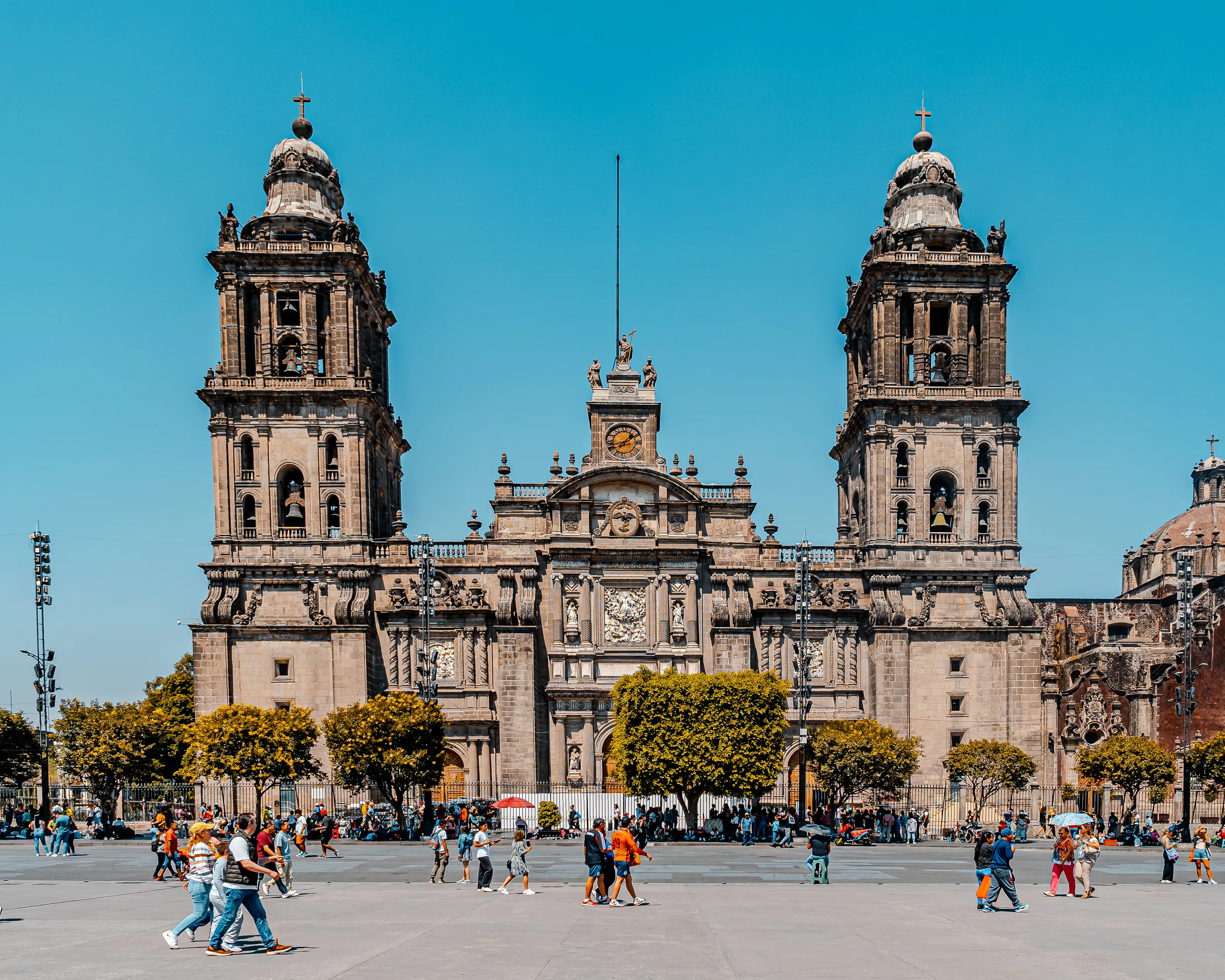
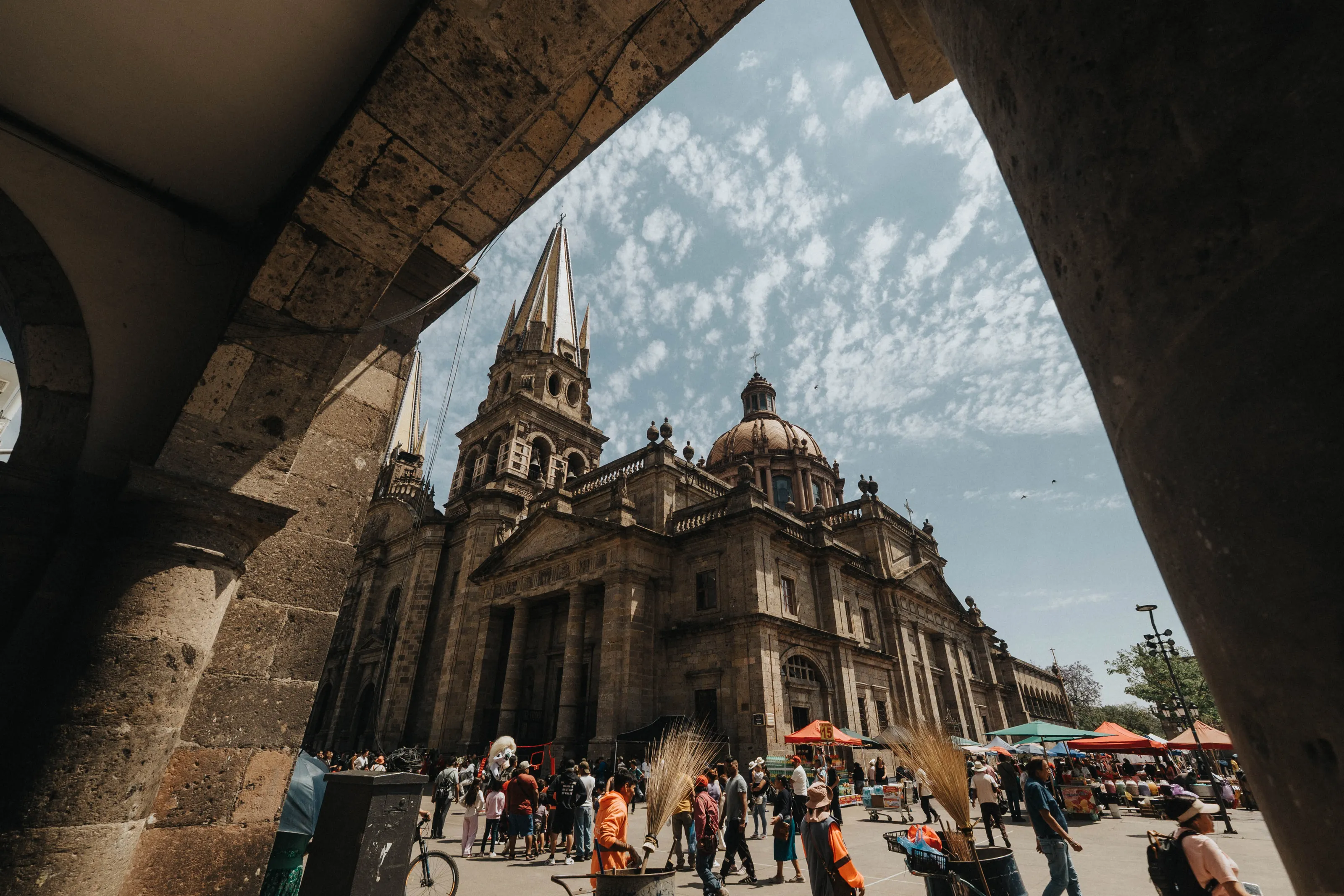
The Zócalo, the great central square, is lined by the National Palace, the remains of the Aztec Templo Mayor and the Metropolitan Cathedral, one of the largest in Latin America. The National Palace houses murals by Diego Rivera. The district is best explored on foot, ideally early in the morning before the crowds arrive.
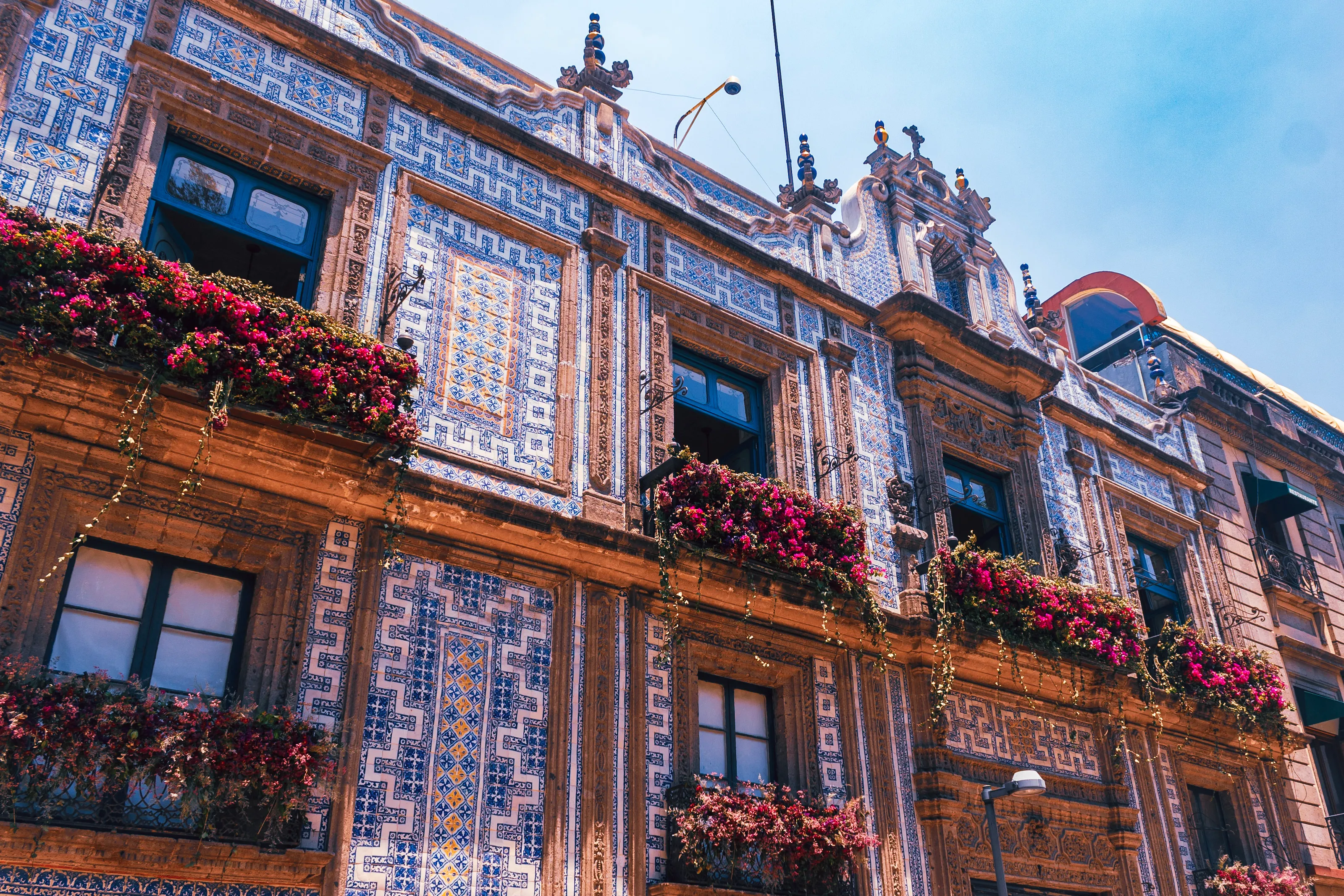
The Casa de los Azulejos
A few streets from the Zócalo, this 18th-century mansion is covered in blue and white glazed tiles, with flower-draped balconies. It shows the colonial taste for Puebla ceramics and remains one of the best-known sights of the old town.
Chapultepec, Reforma and Xochimilco
A castle on a hill, a grand avenue, floating gardens
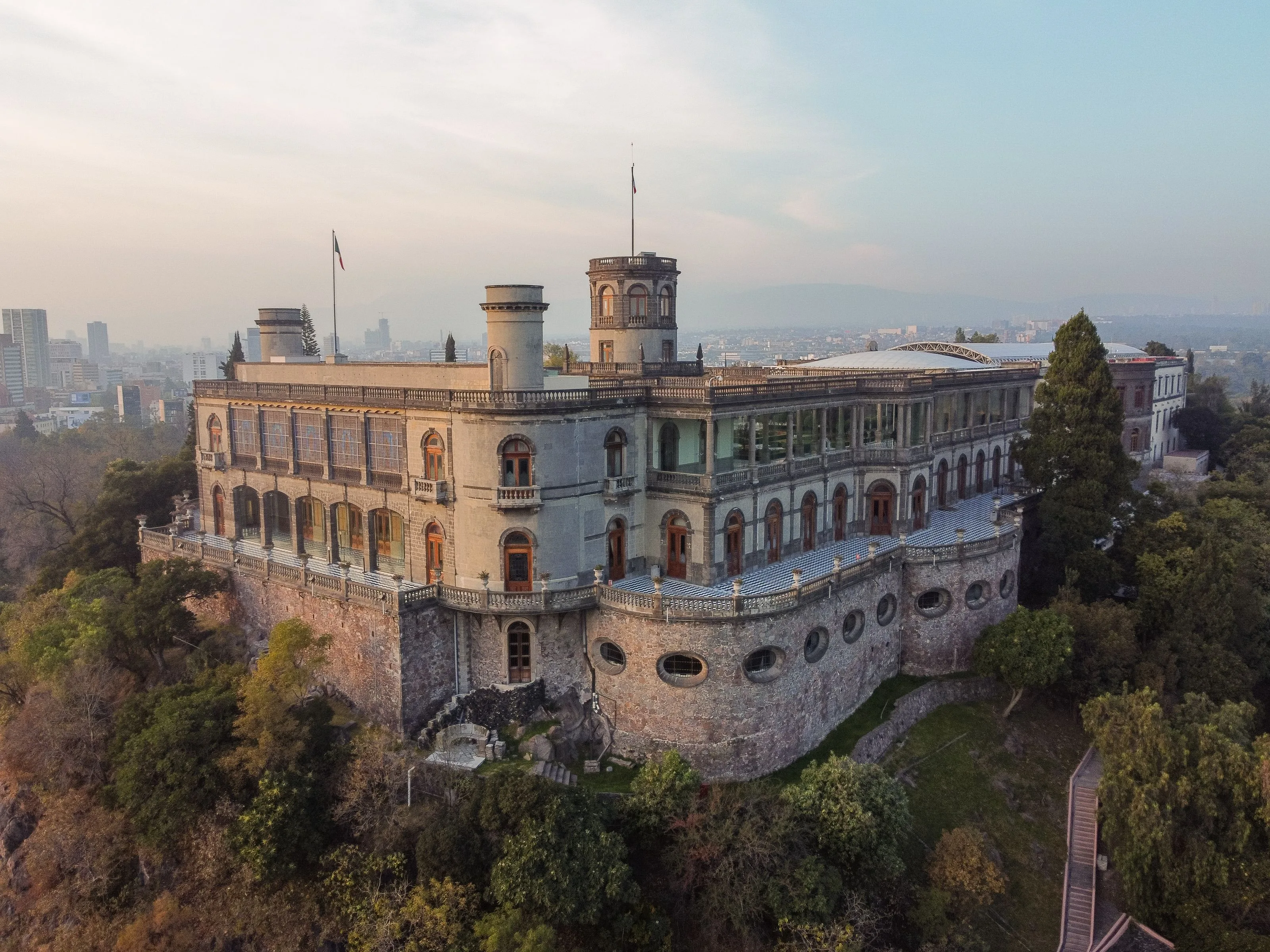
Chapultepec Castle
The castle overlooks Chapultepec Park, the city's best-known park, which was already a retreat for Aztec emperors. It now houses a museum and offers views over the city from its terrace. The park also holds the zoo and several museums, including the National Museum of Anthropology.
Paseo de la Reforma, a broad tree-lined avenue, links the centre with the business districts and is dotted with monuments such as the Angel of Independence, inaugurated in 1910. On Sundays part of the avenue is closed to traffic for pedestrians and cyclists.
Xochimilco and its trajineras
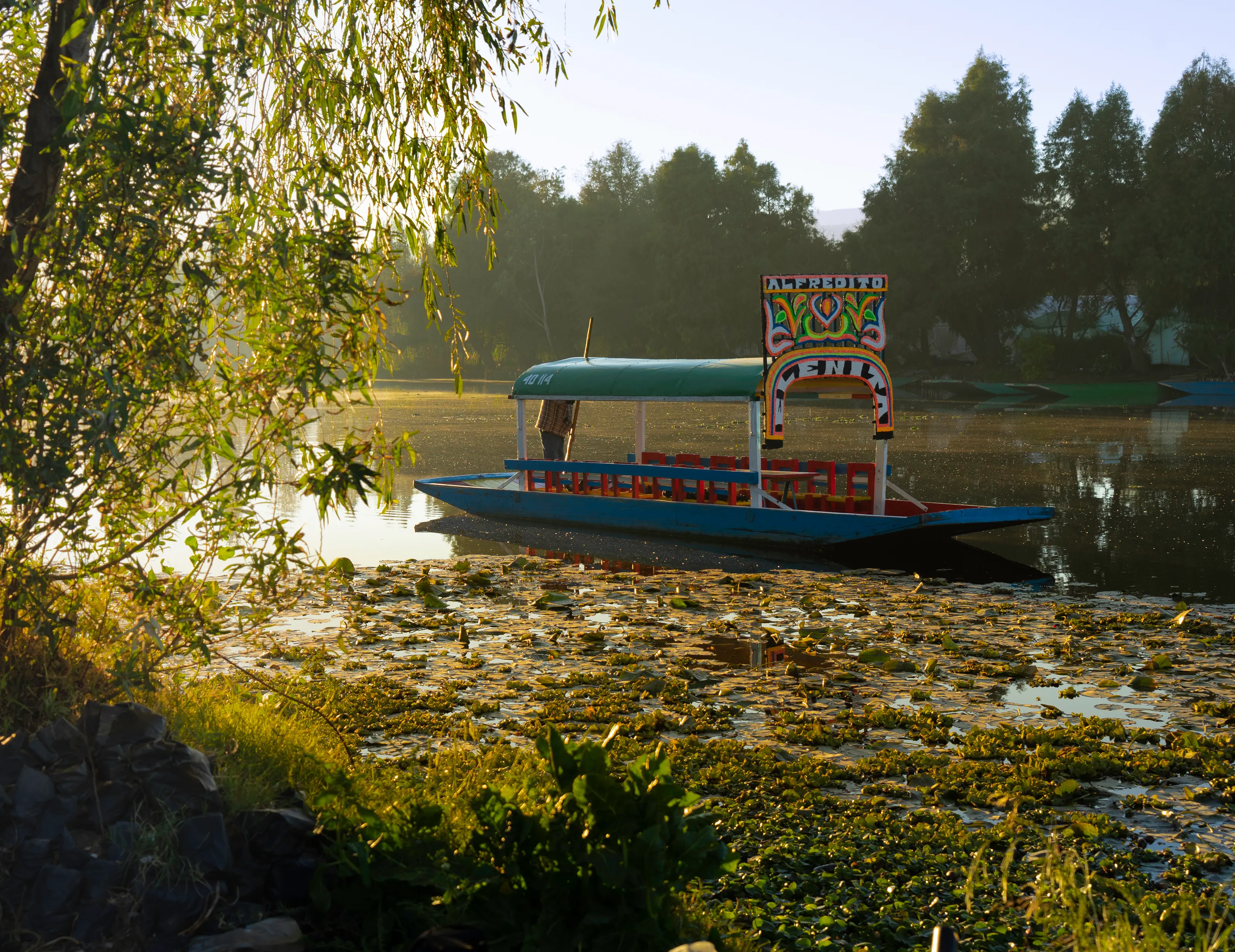
In the south of the city survive the canals left from the chinampas, the Aztec floating gardens, now listed by UNESCO. You glide along them on trajineras, colourful flat-bottomed boats rented by the hour or two, alone or in a group. The atmosphere is calmer early in the morning or on weekdays.
Museums
Anthropology, Bellas Artes, muralism and painting
One of the world's richest museum cities
According to Wikipedia, Mexico City is among the ten cities in the world with the most museums. Many museums close on Mondays, and some offer free entry on specific days: check days and opening hours on each museum's official website before setting out.
The National Museum of Anthropology
In Chapultepec Park, it presents the country's pre-Columbian civilisations and holds the famous Sun Stone, often called the Aztec calendar. Plan at least half a day.
The Palacio de Bellas Artes
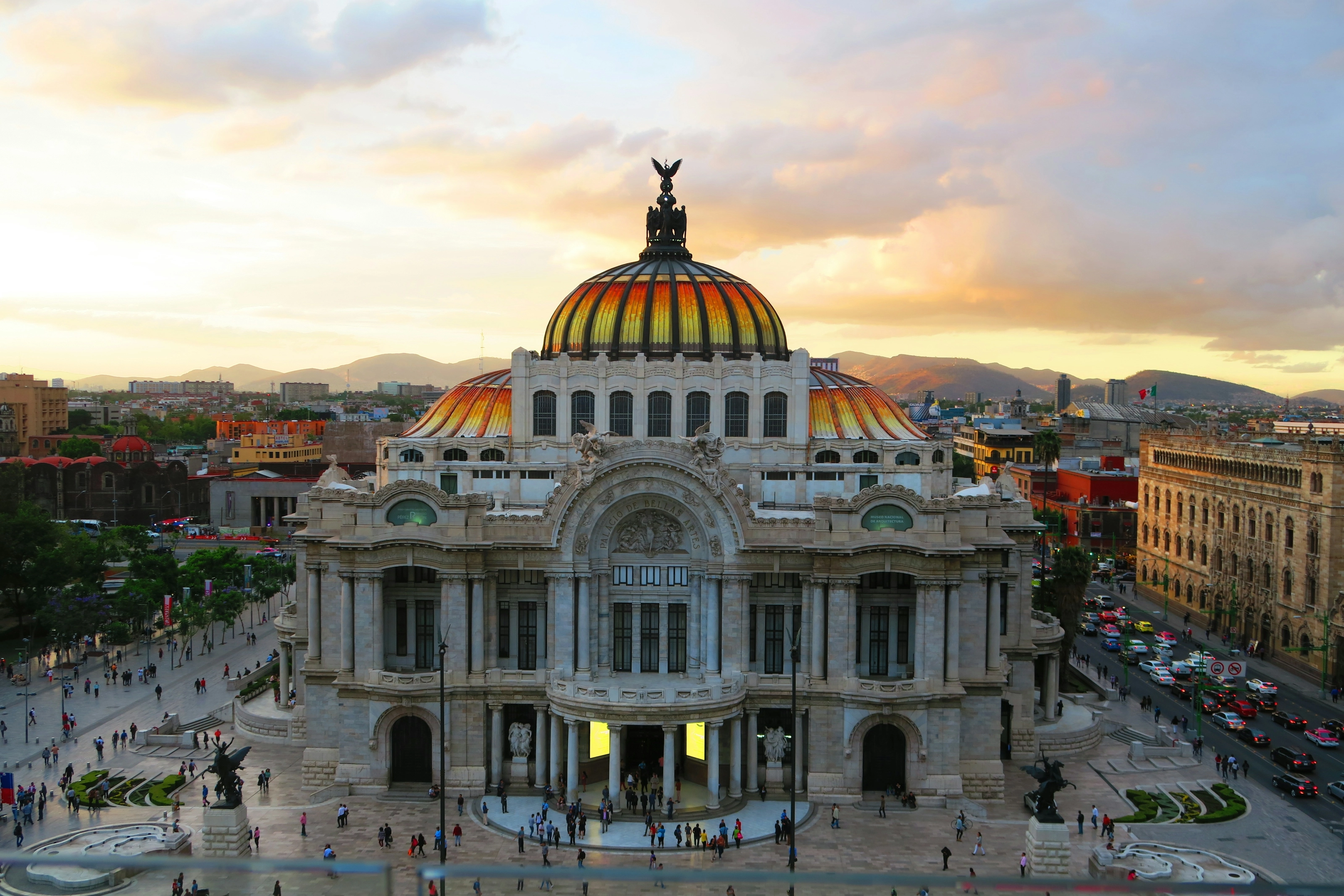
This white marble palace with a dome, begun under Porfirio Díaz and completed in 1934, is both a concert hall and a museum. It houses murals by Rivera, Orozco and Siqueiros, the leading figures of the muralist movement born in Mexico City after the Revolution.
MUNAL and the artists' museums
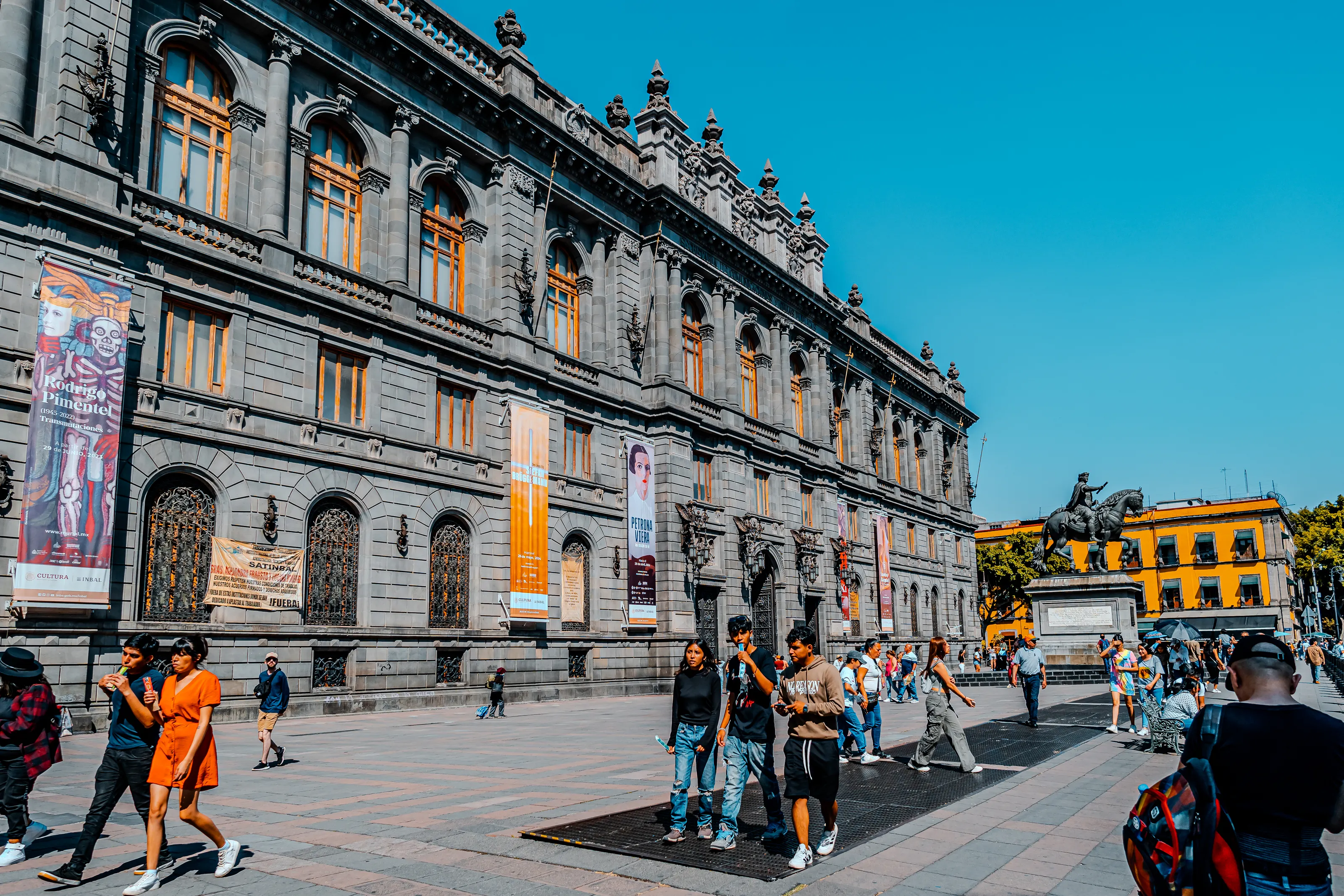
The National Museum of Art (MUNAL), in a neoclassical building near Plaza Tolsá, traces Mexican art from the 16th to the early 20th century. In the south, the Dolores Olmedo Museum in Xochimilco shows many works by Rivera and Frida Kahlo; Frida Kahlo's blue house in Coyoacán is the other major stop on her trail.
The National Museum of Art
The grey stone MUNAL faces a lively square where the equestrian statue of Charles IV, nicknamed El Caballito, stands. It combines easily with Bellas Artes, a few minutes away on foot.
Food and drink
Tacos al pastor, tamales, markets and mezcal
Street-food classics
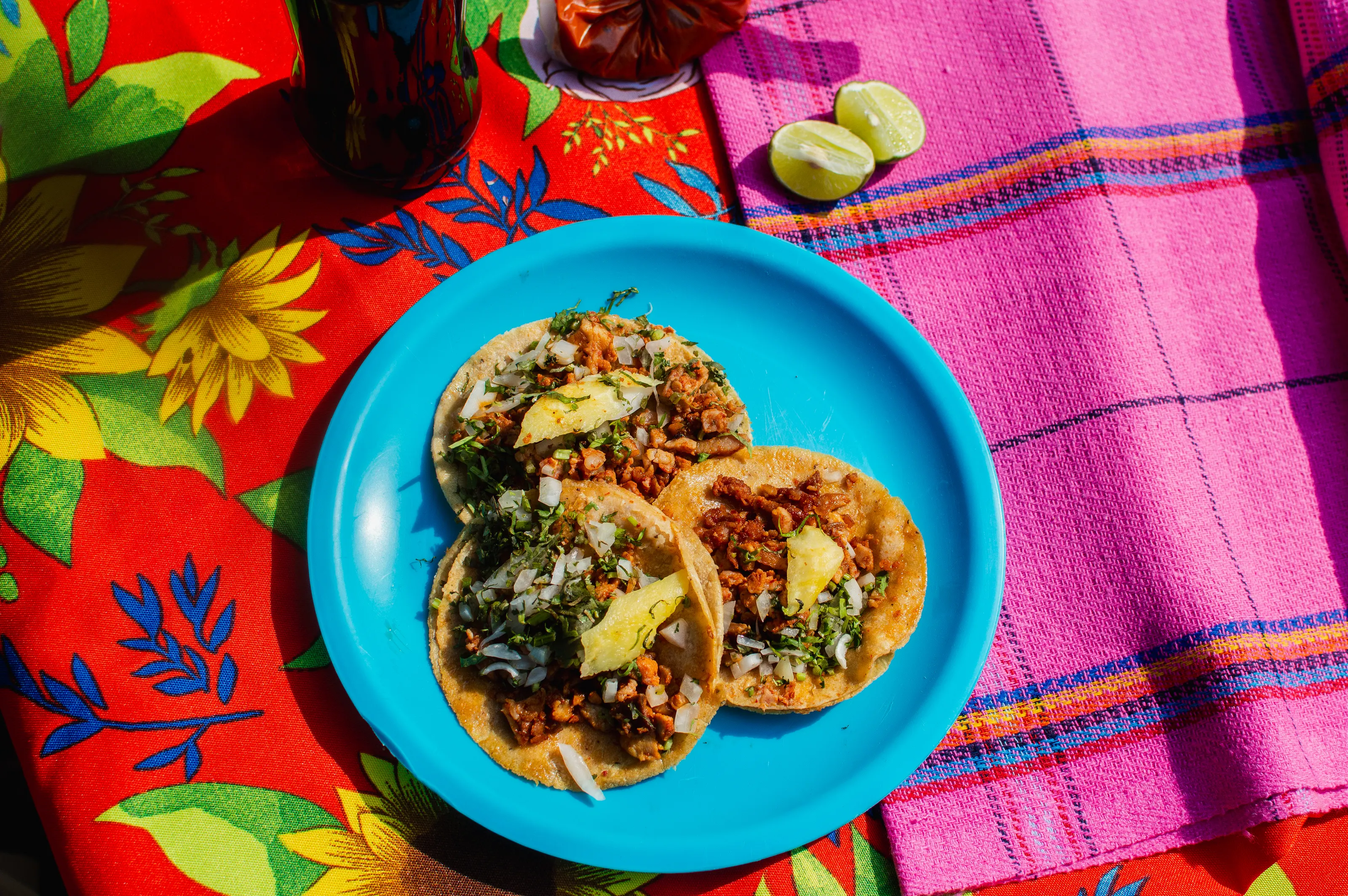
The taco al pastor, marinated pork cooked on a vertical spit and derived from Lebanese shawarma, is the city's emblem; it is eaten with pineapple, onion and coriander. Other musts: tamales for breakfast, pozole (a corn and meat soup), chilaquiles, tlacoyos and quesadillas made to order.
Markets and neighbourhoods
La Merced, the former central market of the historic centre, and the San Juan market, known for rare ingredients, are good places to eat cheaply. Roma, Condesa, Coyoacán and Polanco concentrate newer cafés and restaurants. Street stalls are everywhere: pick those with a steady queue.
To drink
Fruit-based aguas frescas, coffee, hot chocolate, pulque and mezcal: mezcal is sipped slowly, often with orange slices.
A plate of tacos
A plate of tacos topped with onion, coriander and pineapple, with a wedge of lime, sums up the capital's street food.
Getting around
Metro, Metrobús, taxis and walking
The metro and rapid buses
The metro has 12 lines and more than 190 km of track; it is fast, very cheap and runs from early morning until about midnight. It gets very crowded at rush hour (morning and late afternoon), especially on lines 1, 2 and 3. Keep your belongings in front of you: pickpocketing happens. The Metrobús (bus rapid transit) and a light-rail line in the south complete the network. A rechargeable card pays for the whole system; ask locally, as payment methods change.
Taxis, ride-hailing and walking
Official taxis are white and pink; ride-hailing apps are common and often inexpensive. Prefer a station taxi (taxi de sitio) or an app, especially at night. The historic centre, Roma-Condesa and Coyoacán are very walkable. Altitude tires you out: drink water and take it easy on the first day.
Staying careful
As in any large metropolis, keep an eye on your belongings in crowds and on public transport, and check the official travel advice of your country of residence before departure for up-to-date information on Mexico City.
Budget
An affordable to mid-range budget, depending on your choices
Mexico City is considered expensive by Mexican standards, but it remains broadly affordable to mid-range compared with European capitals. Street meals, public transport and most museums cost little; accommodation and restaurants in popular districts such as Polanco or Roma can come close to European prices. We give no figures, because prices change with the season and the exchange rate: check the official websites of museums and transport operators.
To keep control of your trip cost, the plane ticket remains the most variable item. That is exactly what SniperAir watches: fares to MEX, compared with the route's price history.
When to go
When to go to Mexico City?
Spring
March to May: the hottest and driest period, with midday highs of 25 to 32 °C.
Summer
June to September: rainy season, with showers often in the late afternoon, and cooler, cleaner air.
Autumn
October and November: the rains stop, skies clear, days are mild and nights cool.
Winter
December to February: dry season, 20 to 25 °C by day, cold nights and possible frost in some districts.
The best period is October to April: clear skies, little rain and pleasant days, with cool nights (bring a jacket). In early November the Day of the Dead (1 and 2 November) fills the city with orange cempasúchil flowers, but also draws large crowds. Because of the altitude, temperatures vary little between seasons: the real difference lies between day and night and between the dry and rainy seasons.
By length of stay
What to do in Mexico City depending on how long you stay
The essentials
The Zócalo and cathedral, the Palacio de Bellas Artes, half a day at the Anthropology Museum and Chapultepec Park, and a neighbourhood such as Coyoacán or Roma.
Going deeper
Add Xochimilco by trajinera, the MUNAL, the Dolores Olmedo Museum or Frida Kahlo's house, and an evening in a market or street-food stall.
Beyond the city
A day at Teotihuacán, about 50 km away, or a trip to another city in the country, then time for the less touristy districts.
In pictures
Mexico City in pictures
You might also like
Similar destinations
FAQ
Frequently asked questions about flights to Mexico City
Which airport should I choose for Mexico City?
Mexico City-Benito Juárez (MEX) is closest to the centre, in the east of the city: allow 15 to 60 minutes by taxi depending on traffic. The second airport, Felipe Ángeles (NLU), is about 49 km away and needs at least 90 minutes by road. Always check the airport code on your ticket.
When is the best time to visit Mexico City?
October to April: dry season, clear skies and pleasant days, with cool nights. From June to September showers often fall in the late afternoon. March to May is the hottest period.
Is Mexico City expensive?
It is pricier than the rest of Mexico but remains affordable to mid-range compared with Europe: street food, the metro and museums cost little, while accommodation and restaurants in some districts cost more. Prices vary with the season.
How many days do I need in Mexico City?
Three days cover the historic centre, Bellas Artes, Chapultepec and a district such as Coyoacán. Add a day for Xochimilco and the artists' museums, and one more for Teotihuacán.
How do I get around Mexico City?
The metro (12 lines) and the Metrobús are fast and very affordable, but packed at rush hour. Station taxis and ride-hailing apps are handy in the evening. The historic centre and the Roma and Condesa districts are best explored on foot.
Which dishes should I not miss in Mexico City?
Tacos al pastor, tamales, pozole and chilaquiles, eaten on the street or in a market such as La Merced. To drink: aguas frescas, coffee, pulque and mezcal.
How much does a flight to Mexico City usually cost?
The price depends mainly on your departure city, the period and the booking date. The "opportunities" section above shows real examples of prices already detected by SniperAir for this destination.
How do I get alerted when a flight to Mexico City drops below my budget?
Create an alert profile with your departure airport, Mexico City as the destination and your maximum budget. You are notified automatically as soon as a matching fare is detected.
Ready to head to Mexico City?
Set your budget and let SniperAir monitor fares for you.
Create my alert