
Cheap flights to Merida
Set your departure airport and maximum budget: SniperAir tracks prices to Merida and alerts you the moment a deal matching your criteria appears.
Quick summary
Country
Mexico
Continent
North America
Airport
MID
Currency
Mexican peso
Time zone
UTC-6
Deals already spotted to Merida
Real flight examples detected by SniperAir, with their reference price.
Loading examples…
Why track Merida with SniperAir
You do not need to compare prices every day
Choose your departure
Enter your departure airport and your maximum budget for a flight to Merida (MID).
SniperAir watches
Our systems continuously compare new fares with the real price history of the route. SniperAir tracks prices and alerts you: it does not sell or book tickets.
You get an alert
As soon as a fare matches your criteria, you are notified, without having searched anything yourself.
Airport and getting into town
An airport close to the centre, linked to Mexico City and the peninsula
Merida-Manuel Crescencio Rejón
Merida's international airport is about 7.6 km south-west of the central plaza, on Highway 261 towards Umán, roughly twenty minutes by car outside rush hour. A fixed-rate taxi stand outside baggage claim is paid in advance. Bus line 79 "Aviación" reaches the city centre and runs about every 30 minutes until the evening; ride-hailing drivers cannot enter the airport car park but pick up passengers at a bus stop about 500 m away.
Cancún (alternative)
Cancún is the region's largest airport, about 309 km from Merida. First-class buses link the two cities in about 4 hours, several times a day: an option if flights to Cancún are clearly cheaper.
Distances and times are indicative, taken from Wikivoyage (EN, ES, DE) and Wikipedia; they vary with traffic. The trip from Cancún can also be done by rental car.
The historic centre
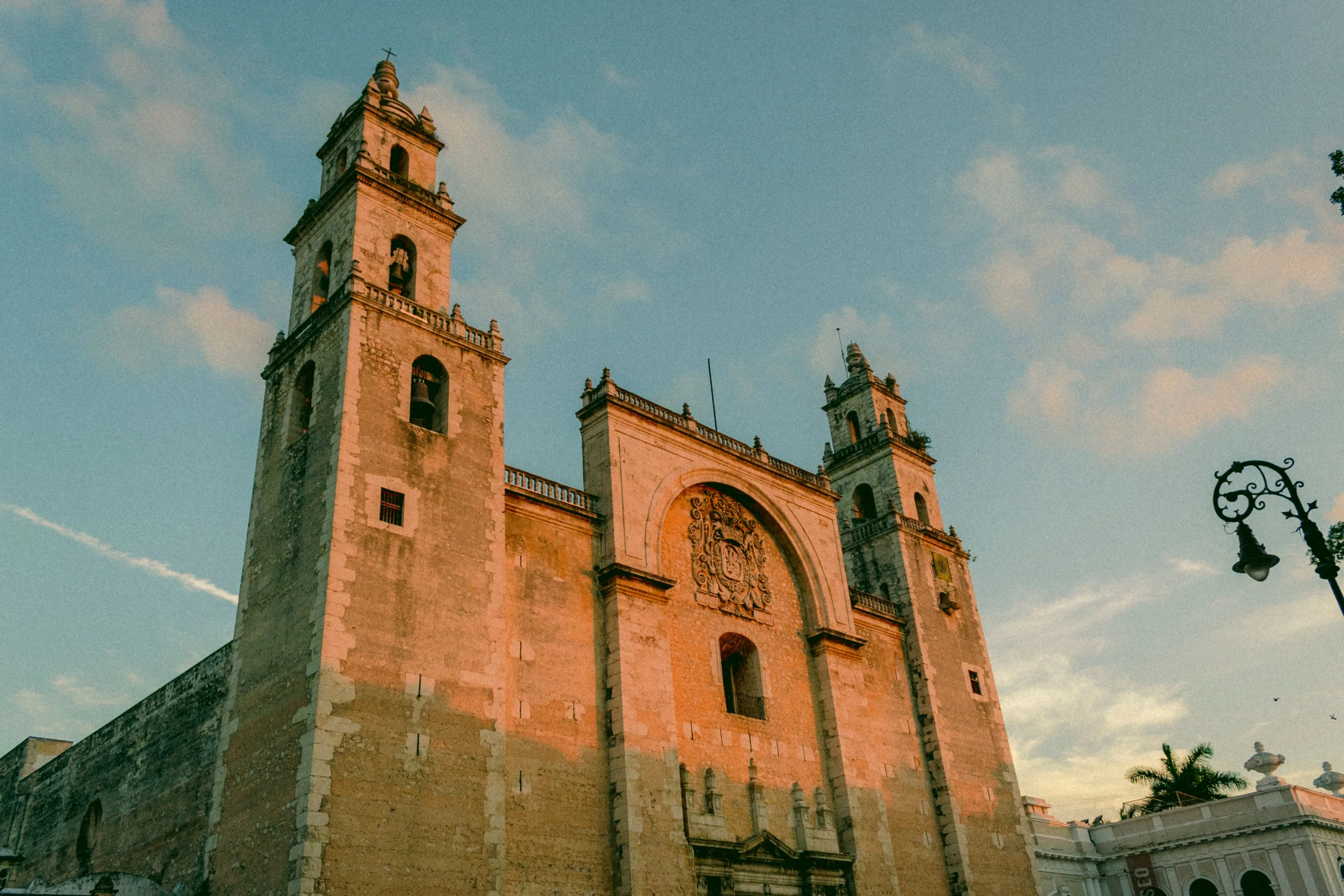
The oldest cathedral on the continent, colourful facades
Merida was founded in 1542 by Spanish conquistadors, including Francisco de Montejo the Younger, on the site of the Maya city of Ti'ho. It has just under a million inhabitants and remains the cultural and economic capital of the Yucatán Peninsula. Its cathedral, dated 1598, is described by Wikipedia as the first cathedral on the North American mainland. The main square, the Plaza Grande, brings together the cathedral, the former Montejo palace (the Casa de los Montejo, from 1549) and public buildings.
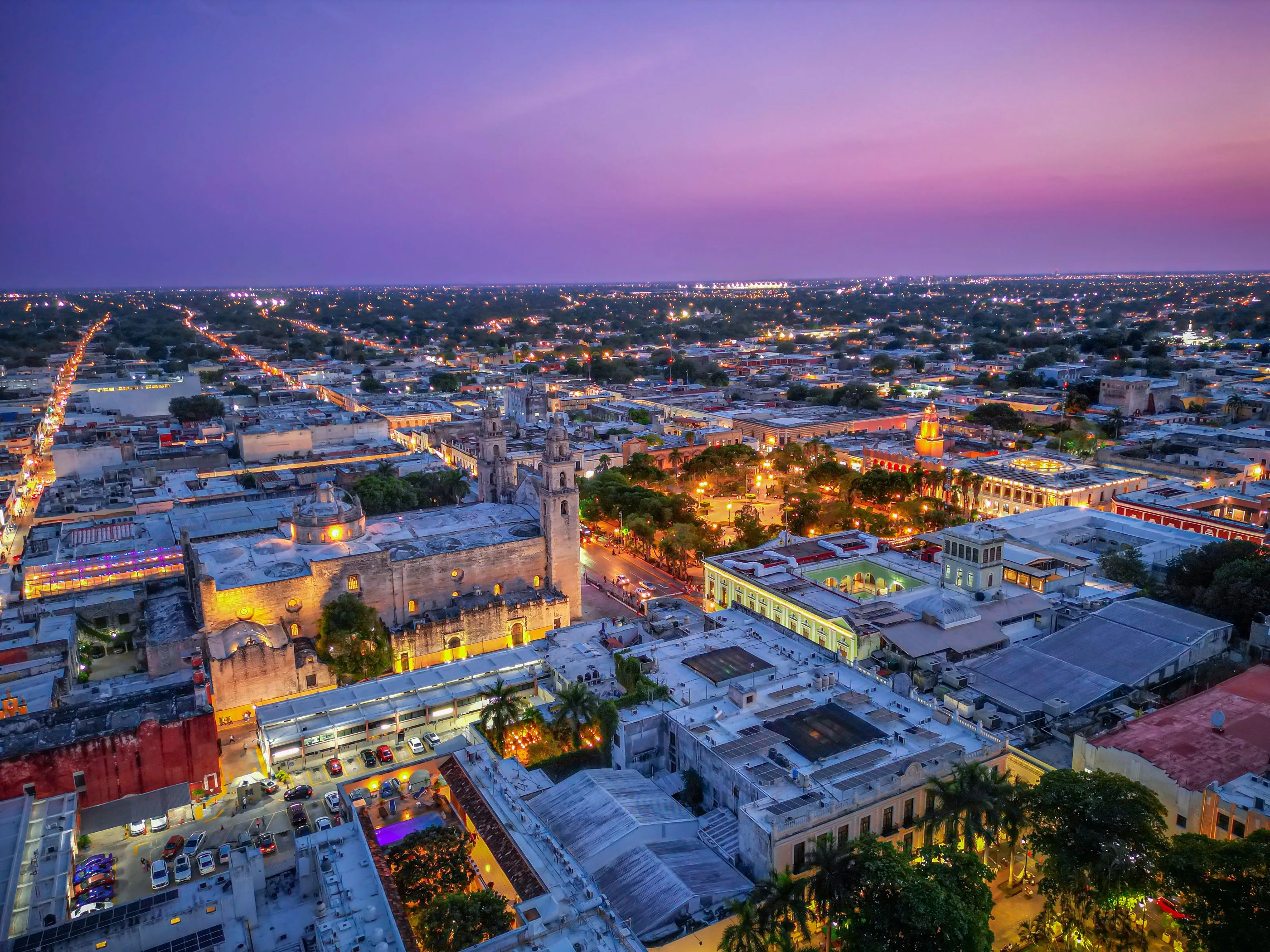
One of the largest colonial centres in the Americas
Merida's historic centre is one of the largest in the Americas, with many colonial mansions and several old city gates. Streets are numbered and the city is best explored on foot, especially early in the morning when the heat is still bearable.
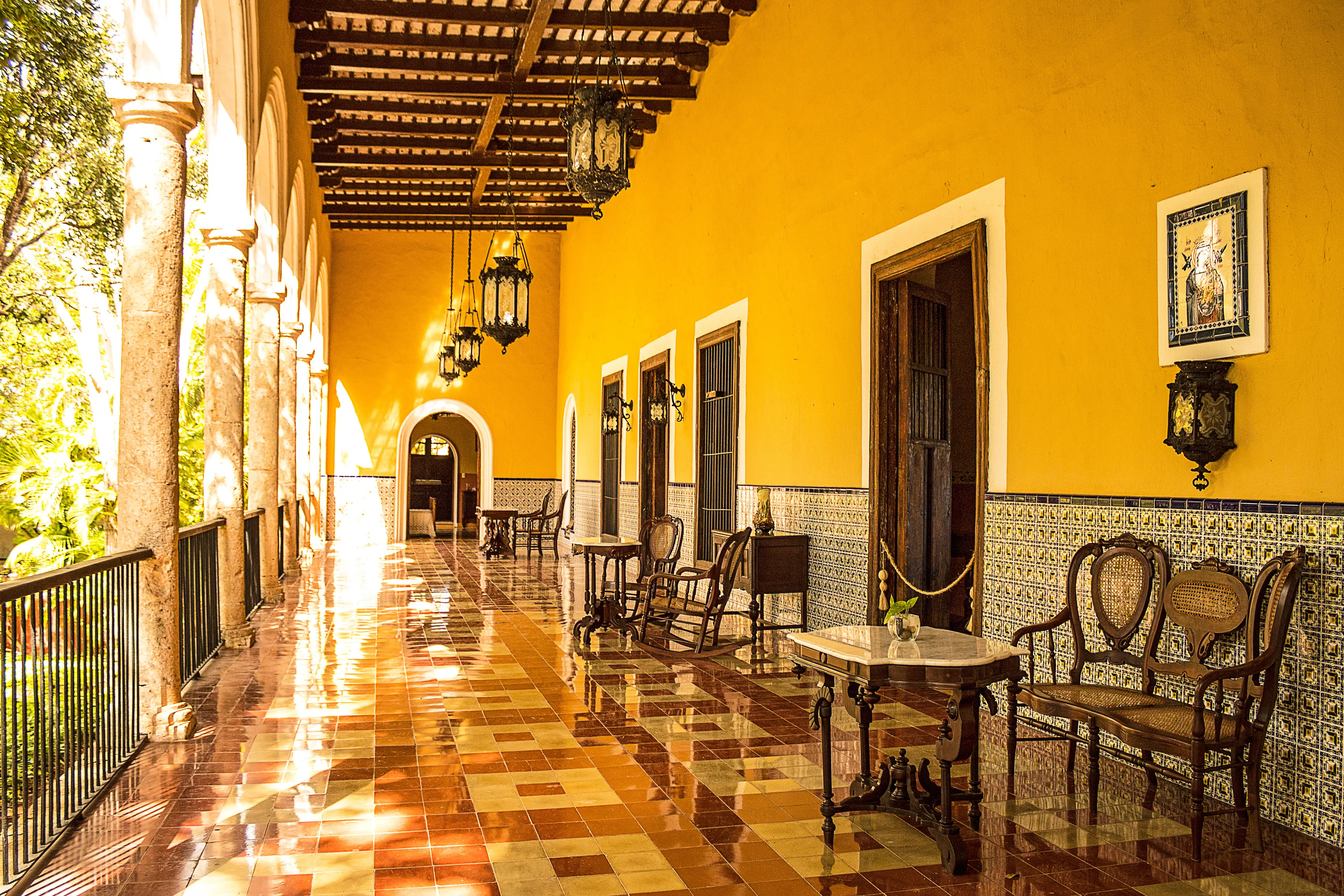
Patios, tiles and antique furniture
Houses in the centre are built around arcaded galleries and shaded patios, with coloured cement-tile floors and antique furniture. Some have become hotels, restaurants or museums.
Paseo de Montejo
An avenue of neoclassical mansions and pastel facades
The Paseo de Montejo, a broad tree-lined avenue, is dotted with late 19th and early 20th century mansions, often European in inspiration. Here you find the regional Anthropology museum, housed in the Cantón palace, and the Quinta Montes Molina, a house museum.
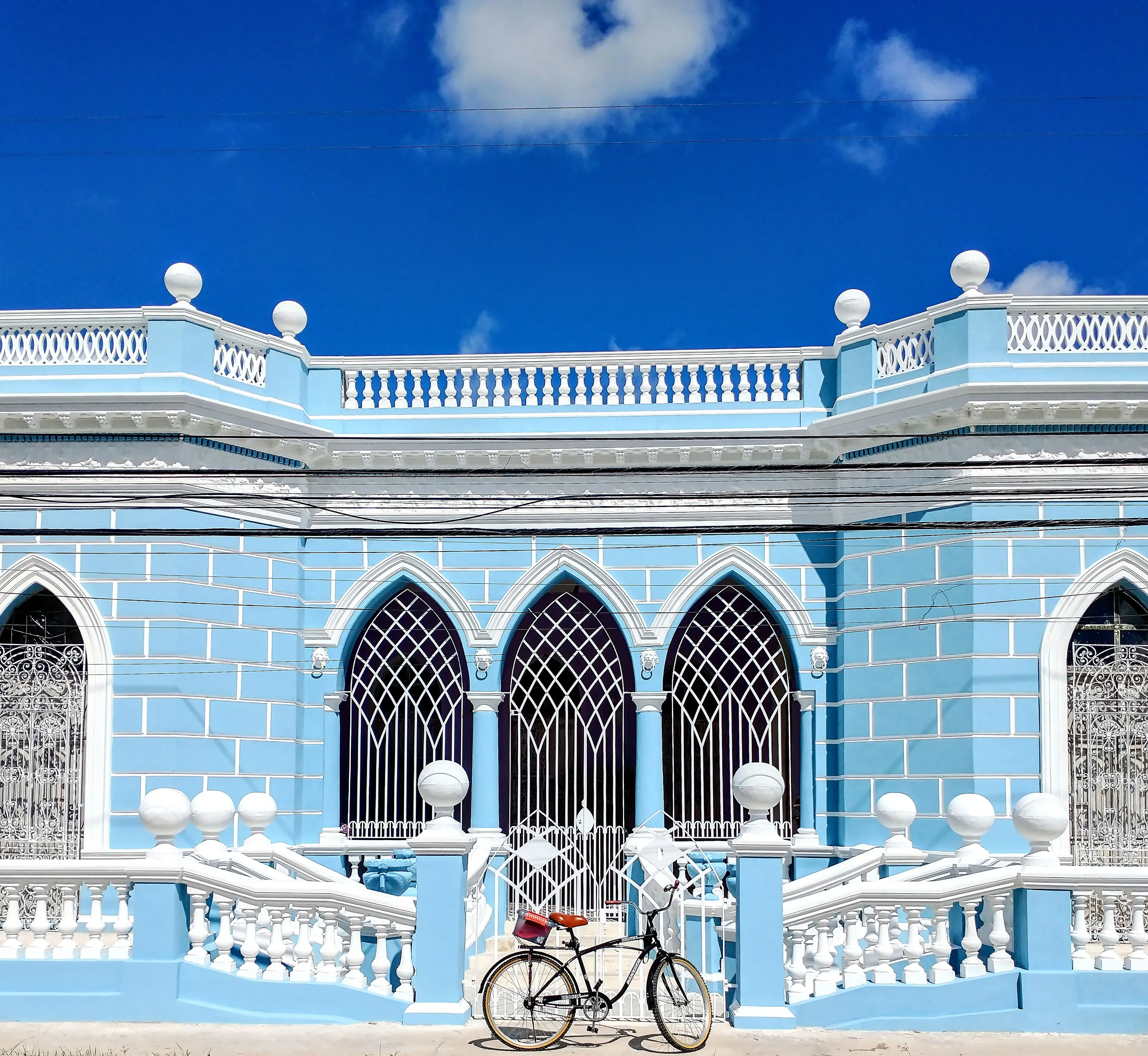
Colourful facades
In the streets around the centre, many houses show bright facades, here a blue mansion with pointed-arch windows and white balustrades.
Chichén Itzá, Uxmal and the cenotes
Maya pyramids one or two hours away by road
Chichén Itzá
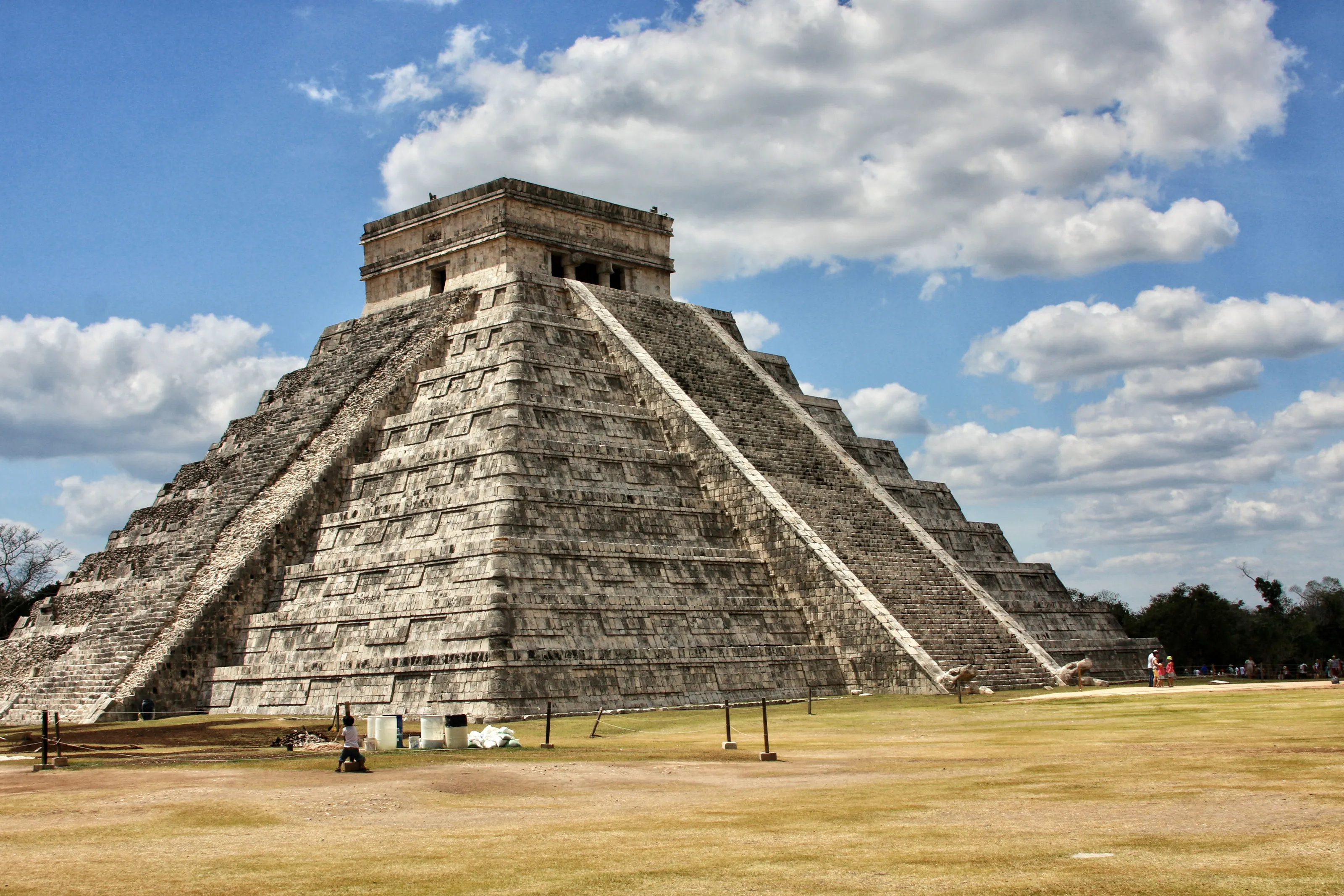
Chichén Itzá is about 124 km from Merida, around two hours by road. Its temple-pyramid El Castillo, dedicated to Kukulkán, is one of the best-known Maya monuments. To limit crowds and heat, arrive at opening time; many tours leave Merida for the day.
Uxmal
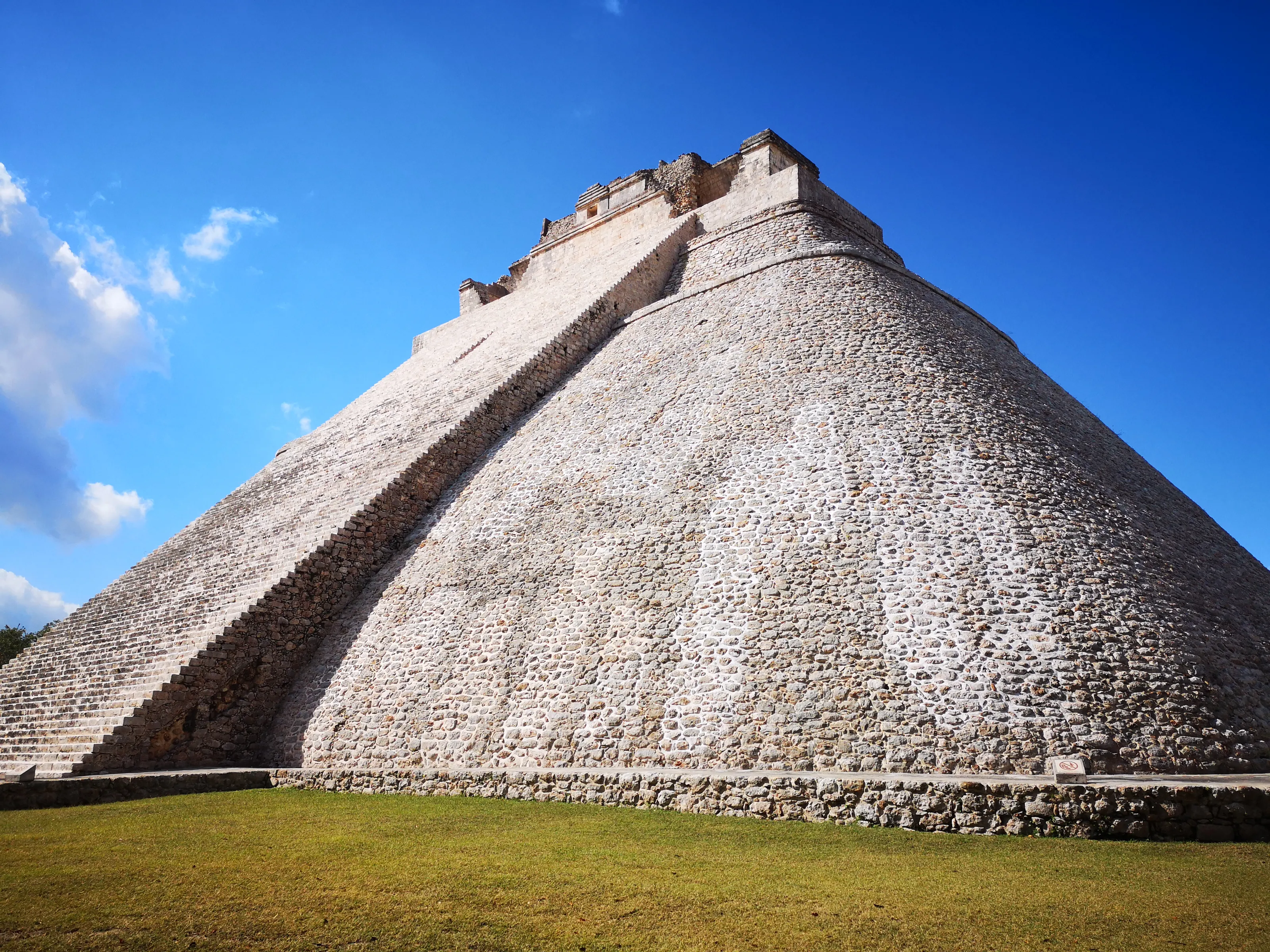
Uxmal, 78 km to the south according to Wikipedia (up to 110 km by Highway 261 depending on the route), is known for the Pyramid of the Magician and its Puuc-style facades. The site is quieter than Chichén Itzá and is easily visited in half a day.
The cenotes
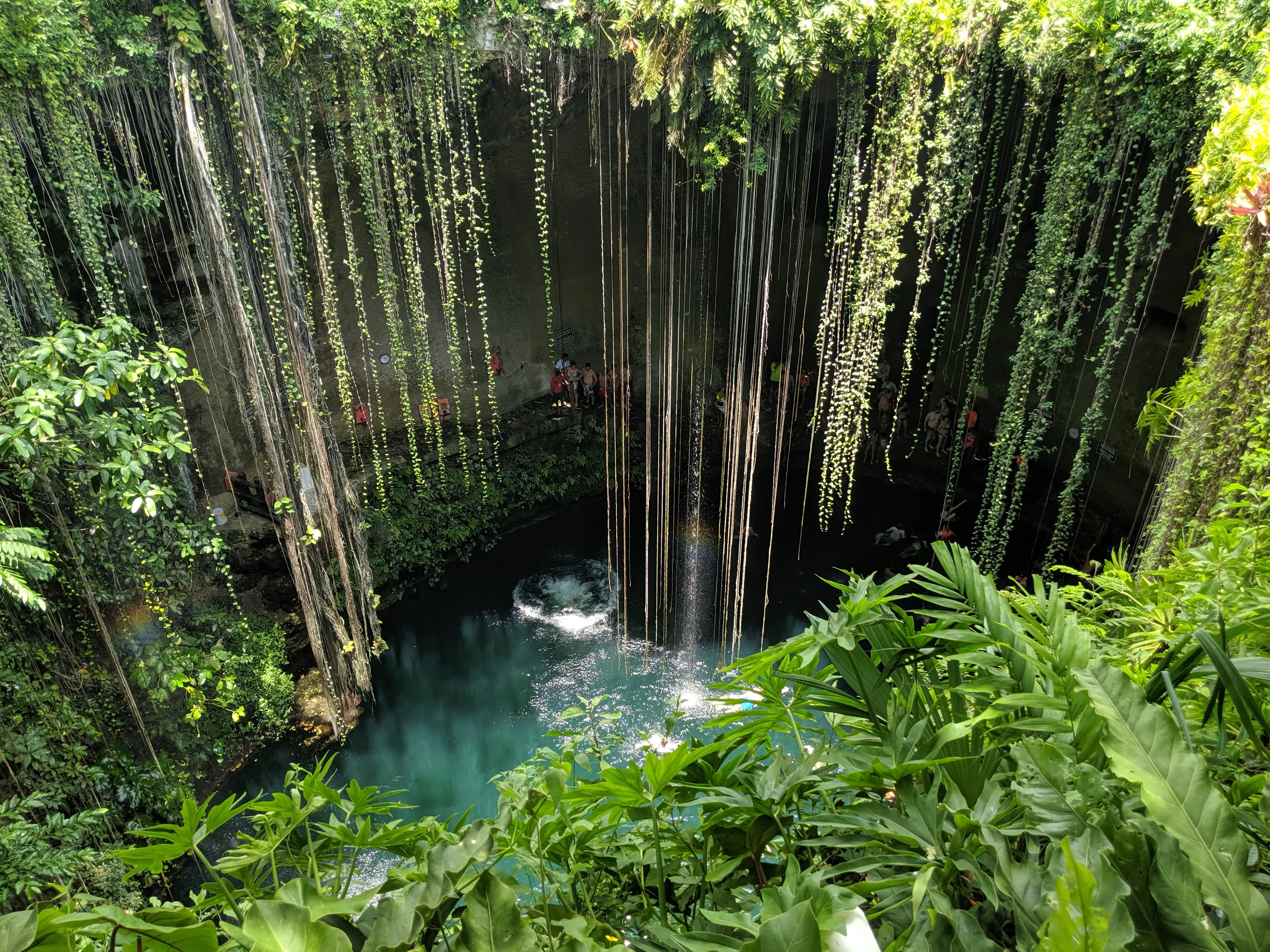
Cenotes, natural limestone sinkholes filled with fresh water, are among Yucatán's signature swimming spots. The Ik Kil cenote, open to the sky with vines hanging towards turquoise water, is near Chichén Itzá.
Other excursions
Celestún, about 90 km to the west, is a mangrove reserve where many pink flamingos winter (almost 90% of the world's wild pink flamingos spend the winter in Yucatán, according to Wikivoyage ES). Mayapán, about 40 km to the south-east, is a compact Maya site. The port of Progreso, about 40 km to the north, has beaches on the Gulf of Mexico, less famous than those on the Caribbean coast.
Museums
The Maya, contemporary art and heritage
The main museums in the centre
The regional Anthropology museum (Cantón Palace), on Paseo de Montejo, is the region's archaeology museum. MACAY (the contemporary art museum) faces the Plaza Grande, to the right of the cathedral. The Casa de los Montejo, the conquistador's 1549 palace, can be visited on the south side of the square.
More specialised museums
The Palace of Music, opened in 2018, tells the story of Mexican music; the City Museum occupies the old post office; the Yucatecan Song museum is dedicated to local musicians; the Railroad museum, mostly outdoors, will please enthusiasts.
Days and hours
Many museums close one or two days a week, often Monday, and hours change: check official websites before you go.
Food and drink
Cochinita pibil, panuchos and Yucatecan markets
Yucatán cuisine
Cochinita pibil, pork marinated in achiote and slow-cooked, is the region's most famous dish. You can also try sopa de lima, panuchos and salbutes, poc chuc (grilled pork) and papadzules. Marquesitas, rolled crêpes with cheese, are eaten in the evening.
Markets
The Lucas de Gálvez market, a large covered market in the heart of the centre, sells everything and offers street food, as well as local Mennonite cheese; the San Sebastián market serves Yucatecan dishes in the morning and evening; the San Benito market houses the meat hall and flowers.
Drinks
Fruit aguas frescas and horchata go well with the heat; local beer and mezcal accompany evening meals.
Getting around
Walking, buses, taxis and organised excursions
In the city
The centre is walkable and streets are numbered. City buses and colectivos serve the districts, taxis are plentiful and ride-hailing apps work. Tourist horse carriages tour the squares and Paseo de Montejo.
To the sites
The historic-centre bus station handles first-class buses to Cancún, Valladolid, Campeche and Playa del Carmen. Excursions to Chichén Itzá or Uxmal go by bus, organised tour or rental car; the Tren Maya station is also served.
Staying careful
As anywhere, keep an eye on your belongings and check the official travel advice of your country of residence before departure for up-to-date information on Merida and its surroundings.
Budget
An affordable to mid-range budget compared with Europe
Merida is affordable to mid-range compared with European capitals: meals in markets and local restaurants, buses and most museums cost little, while boutique hotels in the centre and some restaurants cost more. We give no figures, because prices change with the season and the exchange rate: check official websites.
The plane ticket remains the most variable part of a trip. SniperAir watches fares to MID and compares them with the route's price history.
When to go
When to go to Merida?
Winter
December to February: the most pleasant period, about 24 °C in January, with occasional cool fronts.
Spring
March to May: rising, dry heat; the city comes alive mostly in the morning.
Summer
June to September: very hot and humid, up to about 35 °C in June, with summer rains from June to October.
Autumn
October and November: the rains end and the heat eases; the hurricane season affects the peninsula until November.
The climate is tropical savanna: hot all year, with a mean monthly temperature of about 25 °C and summer rains between June and October. The best period is November to March, when days are more bearable for visiting Maya sites in full sun. In summer, visit early in the morning and keep afternoons for a siesta, like the locals. The hurricane season runs from June to November: follow official bulletins if you travel then.
By length of stay
What to do in Merida depending on how long you stay
The essentials
Plaza Grande and cathedral, Paseo de Montejo, a market, an evening of music or marquesitas, and a day at Chichén Itzá or Uxmal.
Going deeper
Add the other major Maya site, a cenote, the Anthropology museum and MACAY.
The peninsula
Celestún and its flamingos, Progreso and the Gulf, a trip to Valladolid or the Caribbean coast.
In pictures
Merida in pictures
You might also like
Similar destinations
FAQ
Frequently asked questions about flights to Merida
How do I get from Merida airport to the centre?
Merida airport (MID) is about 7.6 km south-west of the central plaza. A fixed-rate taxi is paid at the stand outside baggage claim; bus 79 "Aviación" reaches the centre. Ride-hailing drivers pick up at a bus stop about 500 m away.
When is the best time to visit Merida?
From November to March, when the heat is more bearable. Summer is very hot and humid, with rain from June to October; the hurricane season affects the peninsula until November.
Is Merida expensive?
It is affordable to mid-range compared with Europe: meals in markets, buses and museums cost little, boutique hotels more. Prices vary with the season.
How many days do I need in Merida?
Two to three days cover the centre, Paseo de Montejo and one Maya site. With four days, add a second site and a cenote; with five, Celestún or Progreso.
How do I get around Merida?
On foot in the centre, by city bus, taxi or ride-hailing. For Chichén Itzá and Uxmal, take a bus, an organised tour or a rental car.
Which dishes should I not miss in Merida?
Cochinita pibil, sopa de lima, panuchos and salbutes, poc chuc. At the Lucas de Gálvez or San Sebastián market, try Yucatecan cuisine.
How much does a flight to Merida usually cost?
The price depends mainly on your departure city, the period and the booking date. The "opportunities" section above shows real examples of prices already detected by SniperAir for this destination.
How do I get alerted when a flight to Merida drops below my budget?
Create an alert profile with your departure airport, Merida as the destination and your maximum budget. You are notified automatically as soon as a matching fare is detected.
Ready to head to Merida?
Set your budget and let SniperAir monitor fares for you.
Create my alert