
Cheap flights to Oaxaca
Set your departure airport and maximum budget: SniperAir tracks prices to Oaxaca and alerts you the moment a deal matching your criteria appears.
Quick summary
Country
Mexico
Continent
North America
Airport
OAX
Currency
Mexican peso
Time zone
UTC-6
Deals already spotted to Oaxaca
Real flight examples detected by SniperAir, with their reference price.
Loading examples…
Why track Oaxaca with SniperAir
You do not need to compare prices every day
Choose your departure
Enter your departure airport and your maximum budget for a flight to Oaxaca (OAX).
SniperAir watches
Our systems continuously compare new fares with the real price history of the route. SniperAir tracks prices and alerts you: it does not sell or book tickets.
You get an alert
As soon as a fare matches your criteria, you are notified, without having searched anything yourself.
Airport and getting into town
A small airport south of the city, linked mainly to Mexico City
Oaxaca-Xoxocotlán
A small international airport about 6 to 10 km south of the centre depending on the source, which is 20 to 30 minutes by car. Outside arrivals, taxi booths sell zone-fare rides and shared vans (colectivos) leave when full; the city's yellow taxis generally do not take airport arrivals. Most flights go through Mexico City, with a few direct links to other Mexican cities and some US cities.
Mexico City-Benito Juárez (connection)
Many travellers reach Oaxaca after a connection in Mexico City. The first-class bus between Mexico City's TAPO station and Oaxaca takes about 6.5 hours according to Wikivoyage, a slower alternative to flying.
Distances and times are indicative, taken from Wikivoyage (EN, FR, DE, ES) and Wikipedia; they vary with traffic. Sources give between 6 and 10 km for the airport distance.
The historic centre
Santo Domingo, the cathedral and the zócalo
Oaxaca was called Antequera under Spanish rule and is nicknamed "the green city" for the greenish stone of many of its buildings. Its historic centre, together with the nearby Zapotec site of Monte Albán, has been a UNESCO World Heritage site since 1987. The colonial grid is entirely walkable, at about 1,555 m above sea level.
Santo Domingo de Guzmán and its ethnobotanical garden
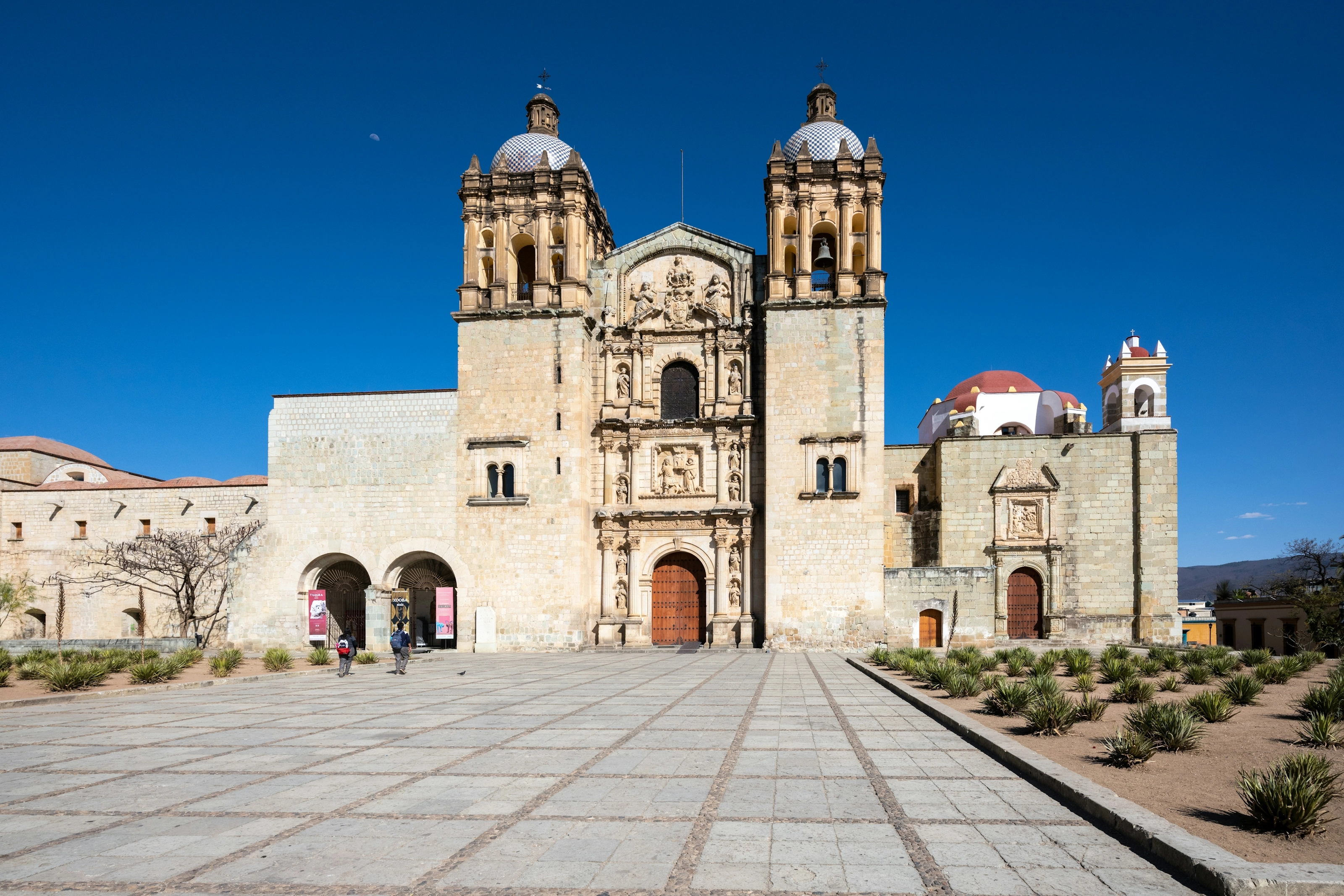
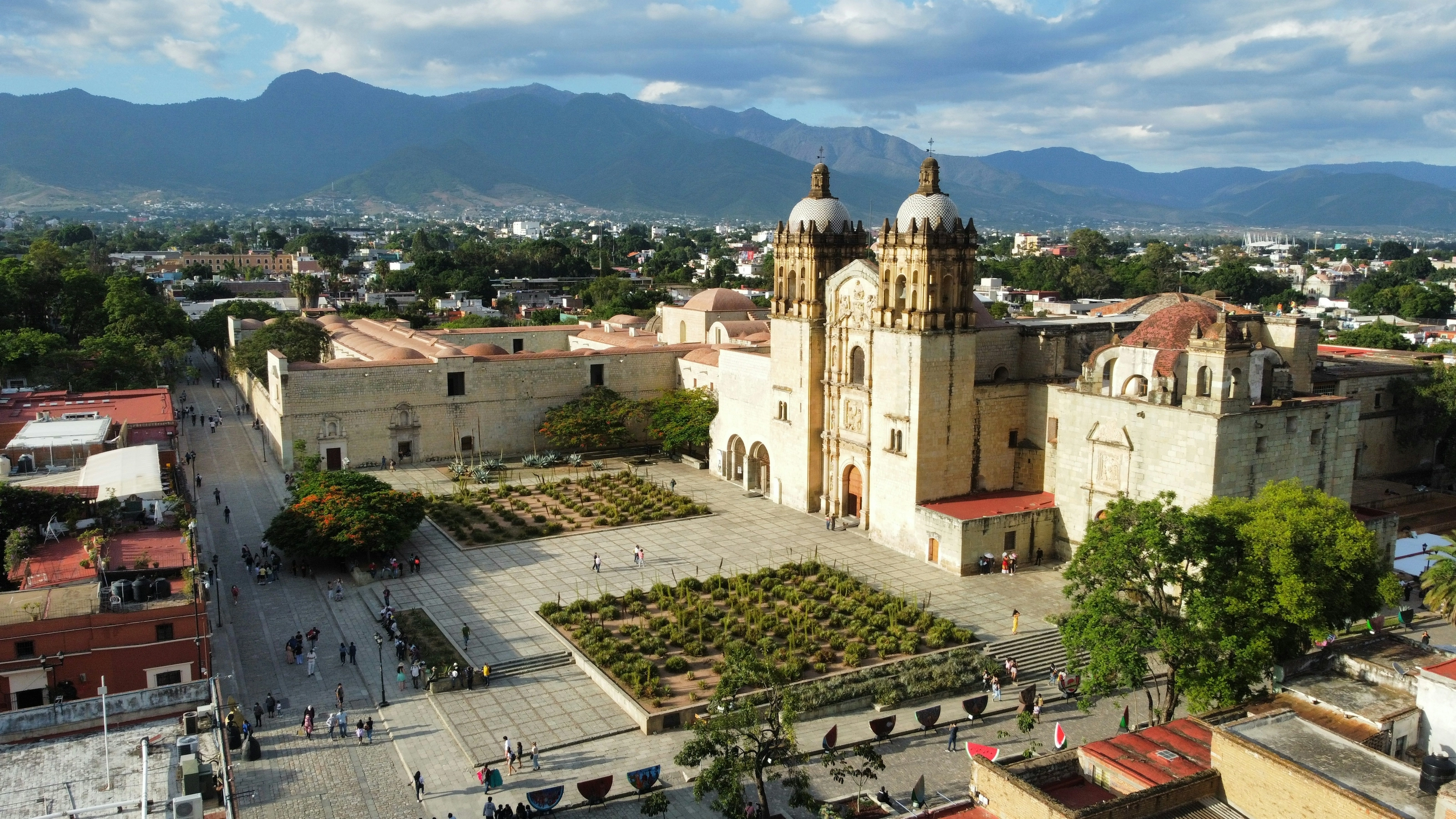
The church and former convent of Santo Domingo, built between 1555 and 1666, are the city's flagship monument, with a baroque facade and tile-covered domes. The former convent houses the Santo Domingo cultural centre, where pieces from Monte Albán are displayed, and is surrounded by an ethnobotanical garden planted with cacti and agaves.
The cathedral and the main square
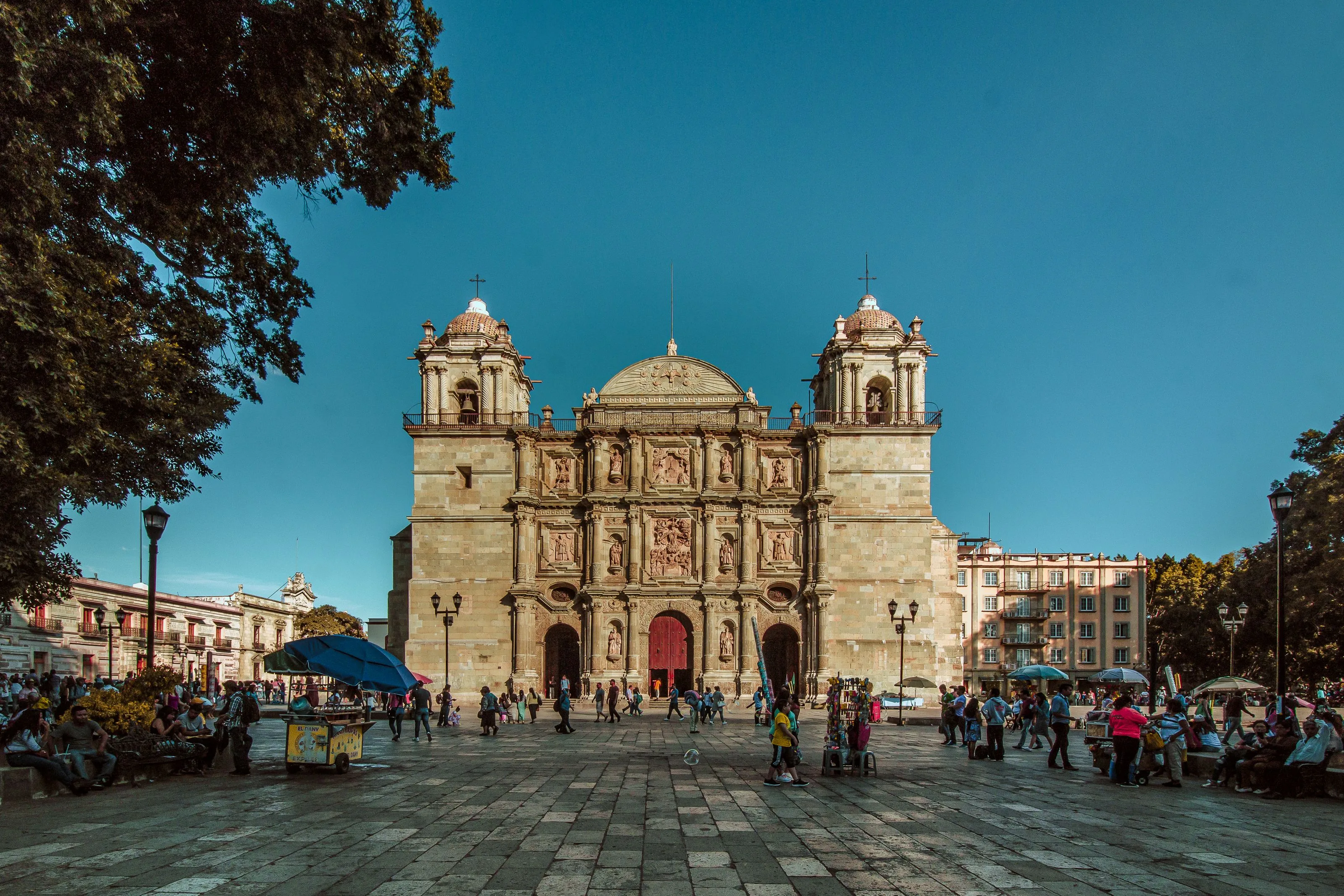
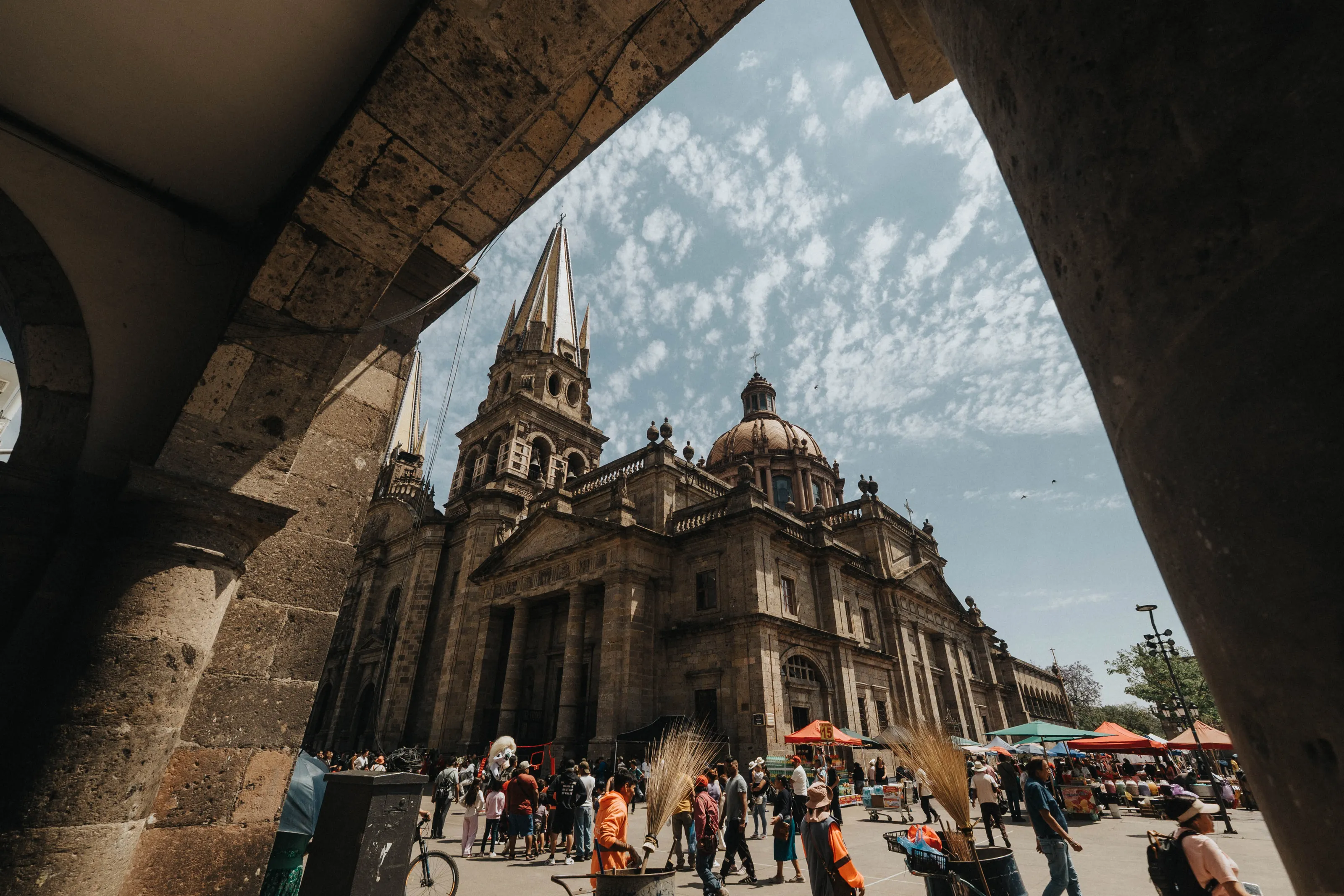
On the zócalo, the central square, the baroque stone cathedral overlooks café terraces, street vendors and musicians. The square is at its best in the late afternoon, when the golden stone catches the light.
Decorated streets
The lanes of the centre fill with papel picado, strings of multicoloured cut paper, during festivals and especially at the end of the year. Pastel facades, wrought-iron grilles and hidden patios give the city its colonial-village feel.

Monte Albán, Hierve el Agua and the valley
An ancient Zapotec capital and stone pools
Monte Albán
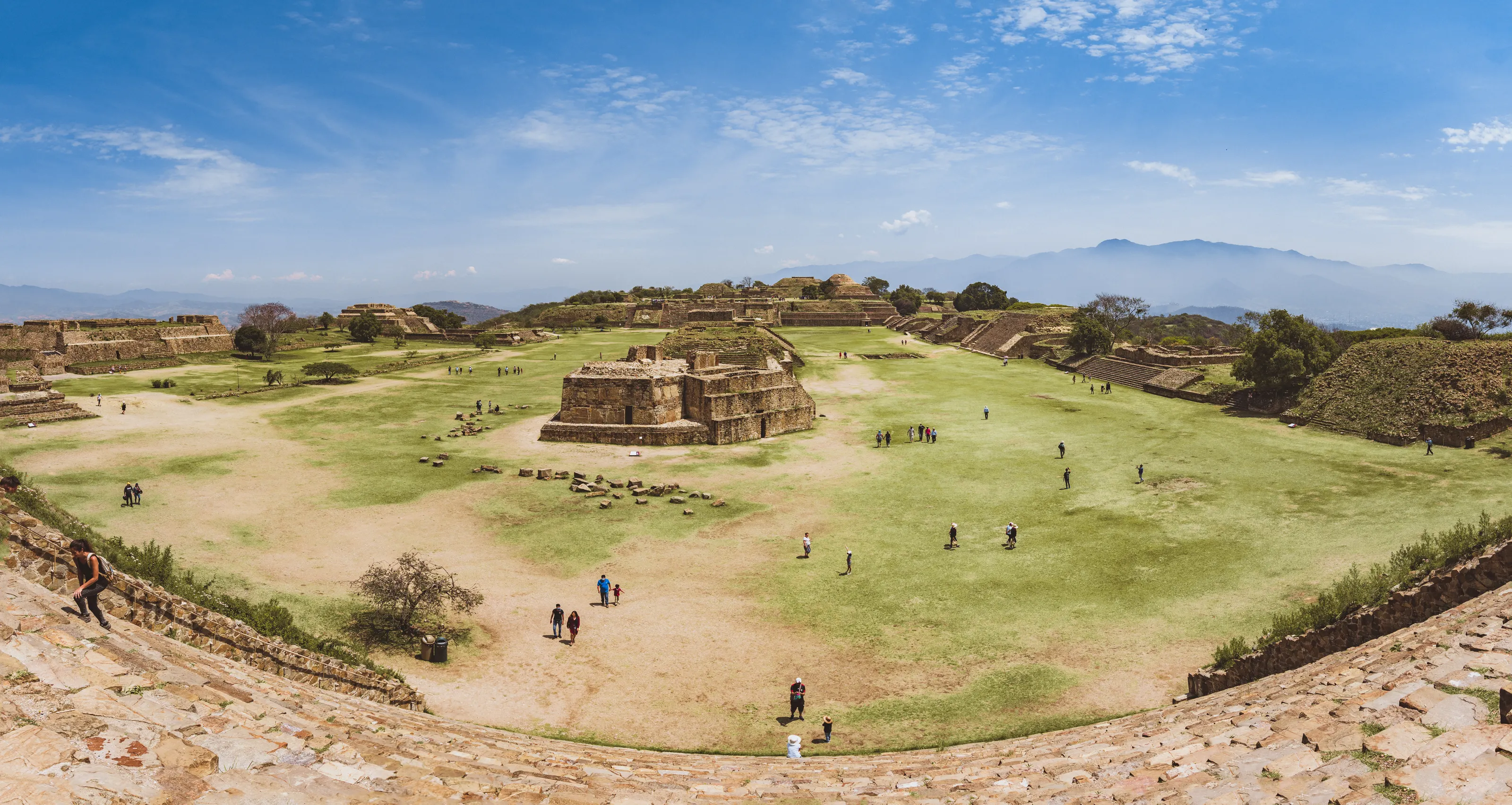
About 8 km west of the city, Monte Albán is the former Zapotec capital, perched on a levelled mountaintop. Wikipedia says it peaked between 500 BCE and 800 CE with about 35,000 inhabitants. You see a great ceremonial plaza lined with platforms, carved stones and a ball court; the view over the valley is superb.
Hierve el Agua
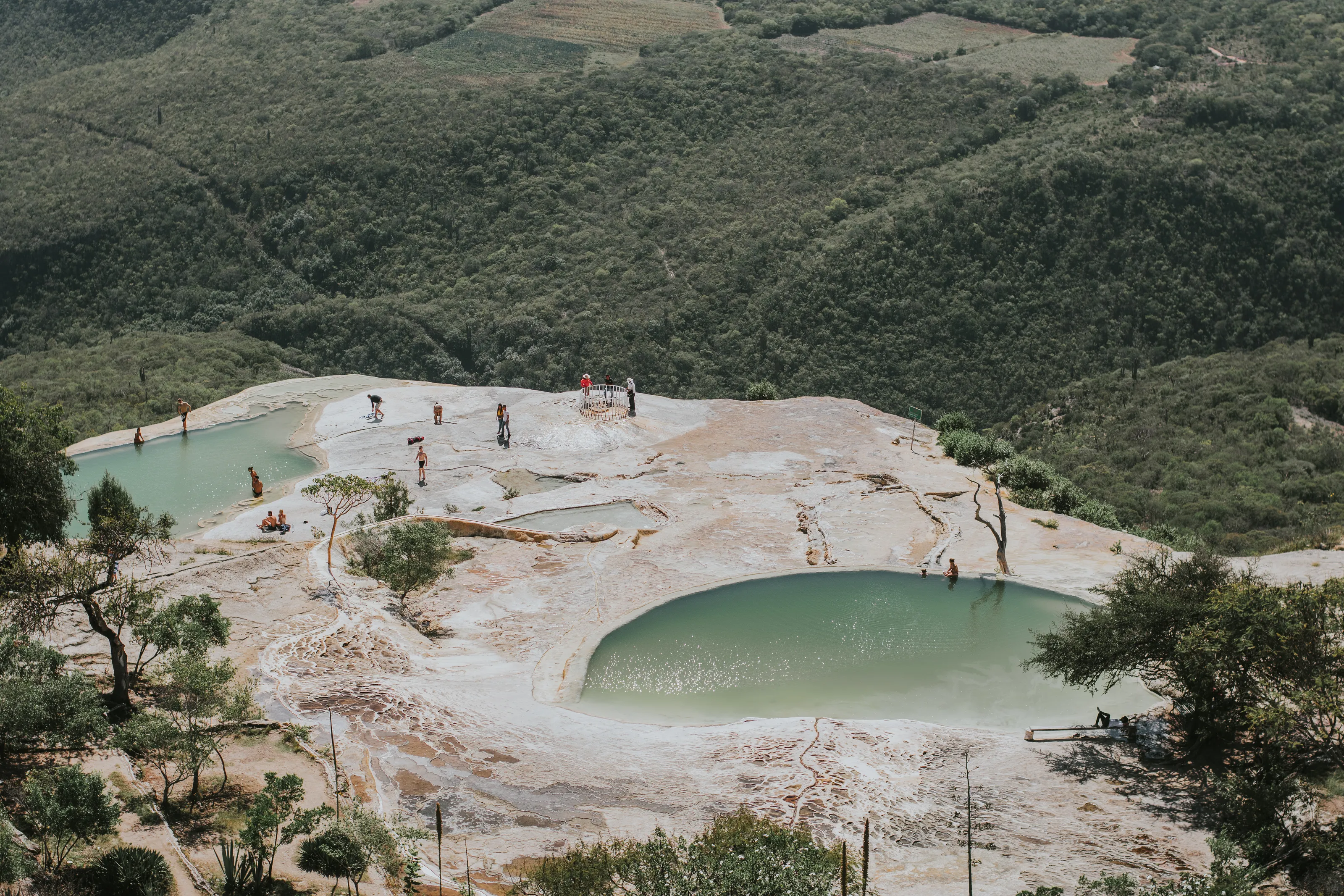
About 70 km away, nearly two hours by bus or taxi, Hierve el Agua is a mineral spring site whose water fills natural pools overlooking the valley. Despite its name ("the water boils"), the water does not boil: deposited limestone forms petrified waterfalls. Bring a swimsuit and closed shoes.
Craft villages and markets
Mitla, about 55 km away, is a Zapotec religious centre known for its stone mosaics. The Sunday market in Tlacolula gathers people from across the region; Teotitlán del Valle is known for hand-woven wool rugs, and Santiago Matatlán, about 50 km away, calls itself the world capital of mezcal. Tour agencies on Macedonio Alcalá street offer day trips.
Museums
Zapotec culture, contemporary art and photography
A cultural centre in a former convent
The Santo Domingo cultural centre occupies the former convent and presents the region's history, with archaeological pieces from Monte Albán. Its restoration, completed in 1996, is cited as one of the best in Latin America.
Contemporary art and photography
The contemporary art museum, open from late morning into the evening, occupies a colonial house in the centre. The Manuel Álvarez Bravo photography centre, the stamp museum and the Southern Mexico railway museum round out the offer, as does the planetarium on Cerro del Fortín.
Days and hours
Many museums close one day a week, often Monday, and opening hours change with the season: check them on official websites before you go.
Food and drink
Mole, tlayudas, cheese and mezcal
The cuisine of Oaxaca
Oaxaca is famous for mole, a family of sauces made from chilies, fruit, spices and seeds or nuts, some taking days to prepare with more than 40 ingredients. You can also try tlayudas (large crisp tortillas with toppings), Oaxaca cheese (quesillo), memelas and chapulines, toasted grasshoppers sold in markets.
Markets
The Benito Juárez market fills a whole block near the zócalo and sells everything from fruit to sauces; the 20 de Noviembre market to the south groups food stalls serving breakfast and lunch; the La Merced (Democracia) market has several good little eateries. The Pochote market, on Fridays and Saturdays, offers organic produce and prepared dishes.
Drinks
Mezcal, an agave spirit, is the drink of the region: sip it slowly with orange slices. Hot chocolate made with ground cacao and fruit aguas frescas round out the list.
Getting around
On foot, by taxi and by colectivo
The centre is walkable
The colonial grid is well signposted and easy to explore on foot; taxis are plentiful and buses cheap. Colectivos, shared minibuses, serve surrounding villages from stops such as those near the Abastos market. There is no metro.
For excursions
Agencies offer day tours to Monte Albán, Mitla, Hierve el Agua or mezcal workshops. Renting a car is possible, but mountain roads are winding. Within the city, traffic poses no particular problem.
Staying careful
As anywhere, keep an eye on your belongings in crowds and check the official travel advice of your country of residence before departure for up-to-date information on Oaxaca and its surroundings.
The city at dusk
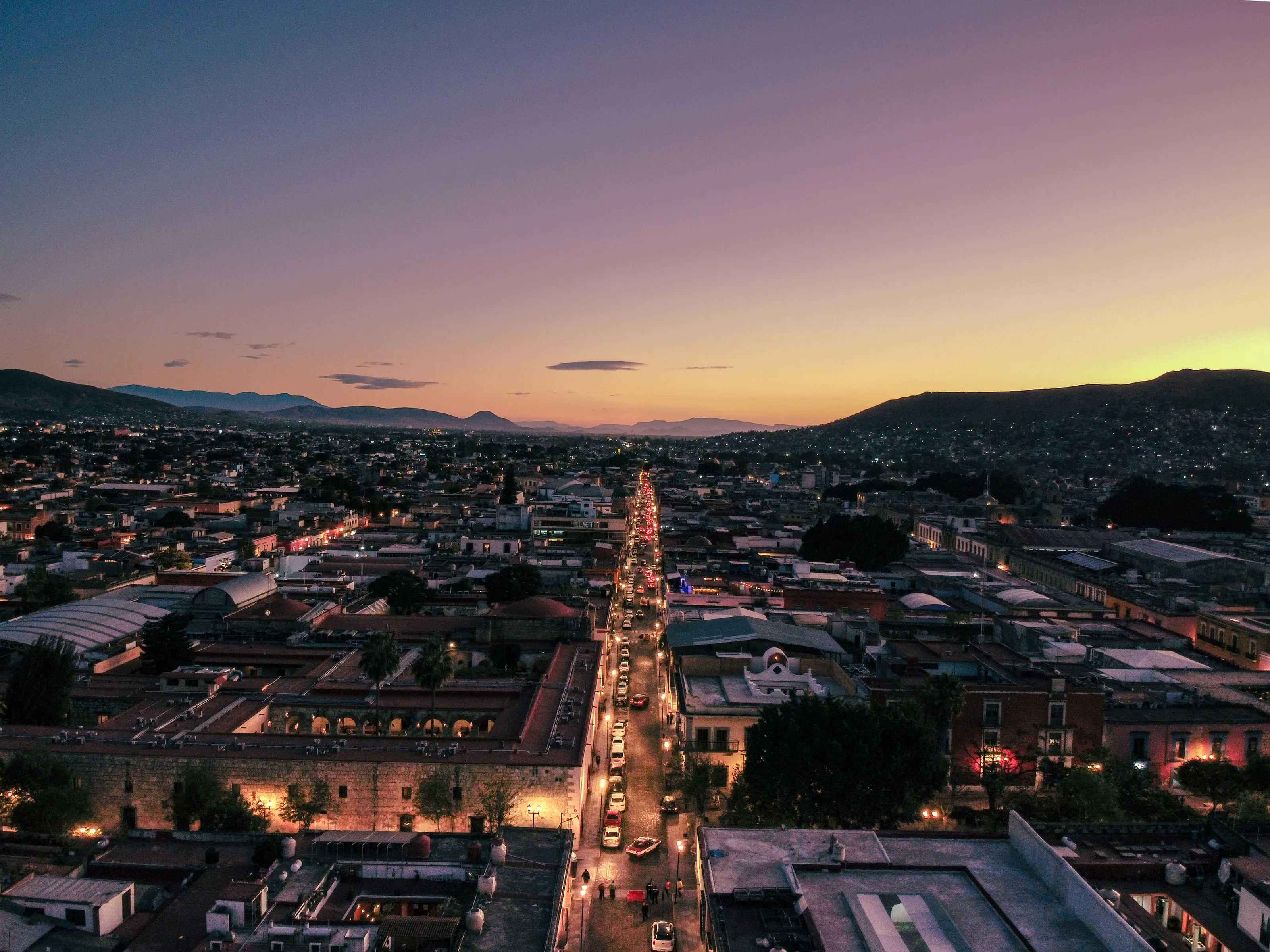
At sunset the city, set in a valley ringed by mountains, lights up street by street; the centre then invites a stroll.
Budget
An affordable budget compared with Europe
Oaxaca is one of Mexico's affordable colonial cities: local meals, markets, buses and most museum or site entries cost little, and accommodation ranges from simple to upscale. We give no figures, because prices change with the season and the exchange rate: check official websites.
The plane ticket remains the most variable part of a trip. SniperAir watches fares to OAX and compares them with the route's price history.
When to go
When to go to Oaxaca?
Spring
March to May: the hottest period, with average highs of about 33 °C in April, just before the rains.
Summer
June to August: frequent rain, mostly in the afternoon, less extreme temperatures and green countryside; the Guelaguetza festival in July.
Autumn
September and October: the end of the rainy season; November is dry and sunny, with the Day of the Dead in early November.
Winter
December to February: dry season, about 27 °C by day, cool nights around 10 °C with rare frosts.
The dry season, from November to April, is the most pleasant for visiting: little rain and clear skies. From May to October it rains on average 16 to 17 days a month, often in showers. Busy periods are Holy Week, summer around the Guelaguetza and the year-end holidays: book early during these festivals.
By length of stay
What to do in Oaxaca depending on how long you stay
The essentials
Santo Domingo and its garden, the zócalo and the Benito Juárez market, Monte Albán in half a day, a mole meal.
Going deeper
Add a day trip to Mitla and mezcal or weaving workshops, plus a museum or the cultural centre.
The valley and the mountains
Hierve el Agua, the Sunday market in Tlacolula, and time to wander without a plan.
In pictures
Oaxaca in pictures
You might also like
Similar destinations
FAQ
Frequently asked questions about flights to Oaxaca
How do I get from Oaxaca airport to the centre?
Oaxaca airport (OAX) is about 6 to 10 km south of the centre, 20 to 30 minutes by car. Zone-fare taxi booths and shared vans (colectivos) serve the city.
When is the best time to visit Oaxaca?
November to April, in the dry season, with sunshine and little rain; April is the hottest month. From May to October showers often fall in the afternoon. The Guelaguetza in July and the Day of the Dead in early November draw large crowds.
Is Oaxaca expensive?
No: it is affordable compared with Europe for meals, markets and local transport. Accommodation varies a lot with comfort level. Prices change with the season.
How many days do I need in Oaxaca?
Three days cover the historic centre, Monte Albán and the markets. Add a day for Mitla and mezcal, and another for Hierve el Agua.
How do I get around Oaxaca?
The historic centre is best explored on foot. For villages and sites, use organised tours, colectivos or a taxi; there is no metro.
Which dishes should I not miss in Oaxaca?
Mole, tlayudas, Oaxaca cheese and memelas. At the market also try chapulines (toasted grasshoppers) and hot chocolate; to drink, mezcal.
How much does a flight to Oaxaca usually cost?
The price depends mainly on your departure city, the period and the booking date. The "opportunities" section above shows real examples of prices already detected by SniperAir for this destination.
How do I get alerted when a flight to Oaxaca drops below my budget?
Create an alert profile with your departure airport, Oaxaca as the destination and your maximum budget. You are notified automatically as soon as a matching fare is detected.
Ready to head to Oaxaca?
Set your budget and let SniperAir monitor fares for you.
Create my alert