
Cheap flights to Port-au-Prince
Set your departure airport and maximum budget: SniperAir tracks prices to Port-au-Prince and alerts you the moment a deal matching your criteria appears.
Quick summary
Country
Haiti
Continent
North America
Airport
PAP
Currency
Haitian gourde (HTG)
Time zone
UTC-5 (UTC-4 in summer, Haiti observes daylight saving time)
Deals already spotted to Port-au-Prince
Real flight examples detected by SniperAir, with their reference price.
Loading examples…
Why track Port-au-Prince with SniperAir
A trip to plan with care, with prices to watch without stress
Choose your departure
Enter your departure airport and your maximum budget for a flight to Port-au-Prince (PAP).
SniperAir keeps watch
Our systems continuously compare new prices with the route's real history. SniperAir monitors prices and alerts you: it does not sell or book tickets.
You receive an alert
As soon as a price matches your criteria you are notified, without having searched for anything yourself.
First of all: Haiti is the subject of very restrictive official travel advice in many departure countries. Depending on your country, that advice warns against certain areas, sometimes the whole country, and the capital region is often named. Do not assume that Port-au-Prince is accessible, or that flights will take you there: read the official advice of your departure country and the terms of your insurance before committing to anything. This page describes the city from open sources; it is not an invitation to travel.
Port-au-Prince (Pòtoprens in Creole) is the capital and largest city of Haiti: Wikipedia (EN, FR) gives about 1.2 million inhabitants for the commune and close to 2.75 million for the metropolitan area in a 2019 estimate. The city was founded in 1749 by French colonists at the head of a bay in the Gulf of Gonâve; its name comes from the ship Le Prince, which sheltered there in the early eighteenth century (Wikivoyage FR), and it became the capital of independent Haiti in 1804 (Wikipedia FR).
It was hit hard by the earthquake of 12 January 2010, which destroyed or damaged the National Palace, the cathedral and many public buildings (Wikipedia EN, FR, DE). SniperAir monitors flight prices to PAP, compares them with the route's real history and alerts you when one falls below your budget. It does not sell or book tickets and never replaces the official advice of your departure country.
Airport and getting into town
A single airport, north of the capital
Toussaint Louverture International (PAP)
Toussaint Louverture International Airport lies in the Tabarre district, north of the urban area. Wikipedia (DE) describes it as one of three Haitian airports with international traffic, and Wikipedia (ES) as the one that handles the country's international flights. Sources give a distance of about 10 km from the centre: 10 km north of the city according to Wikipedia (ES), 9 km north-east of the former National Palace according to Wikivoyage (EN). Wikivoyage (DE) quotes 25 minutes from the centre and more than an hour from Pétion-Ville, while pointing out that traffic is usually chaotic: these times are only indicative.
Services, airlines and even the operation of the airport can change or be interrupted: check your flights with the airlines and the official advice of your country before you book. We do not publish taxi fares or timetables.
The sources stress organising the transfer in advance. Wikivoyage (DE) recommends relying on your hotel or on hosts you know, advises against motorbike taxis that offer themselves, and points out that the city's roads are in very poor condition, almost without signs. Wikipedia (EN) lists the airport road among high-crime areas quoted in travel advice, and Wikivoyage (EN) recommends arranging a trusted local contact rather than improvising a ride.
Entry rules depend on your nationality and can change: check the official websites of your country and of Haiti's embassy before booking. Haitian Creole and French are the two official languages; the gourde is the currency, and the US dollar is also widely used.
Landmarks and sights
Champ-de-Mars, the Pantheon museum, gingerbread houses and the Pétion-Ville heights
The sources describe a centre organised around the Champ-de-Mars, a large esplanade also called the Place des Héros de l'Indépendance, where the carnival and many events take place (Wikivoyage FR). Most major public buildings, including the National Palace and the cathedral, were destroyed or badly damaged by the 2010 earthquake; their rebuilding, restoration or demolition remains a heritage issue (Wikipedia FR). What follows describes places, not a guarantee that they are accessible or open: the condition of the sites is not dated in our sources.
The National Pantheon Museum (MUPANAH)
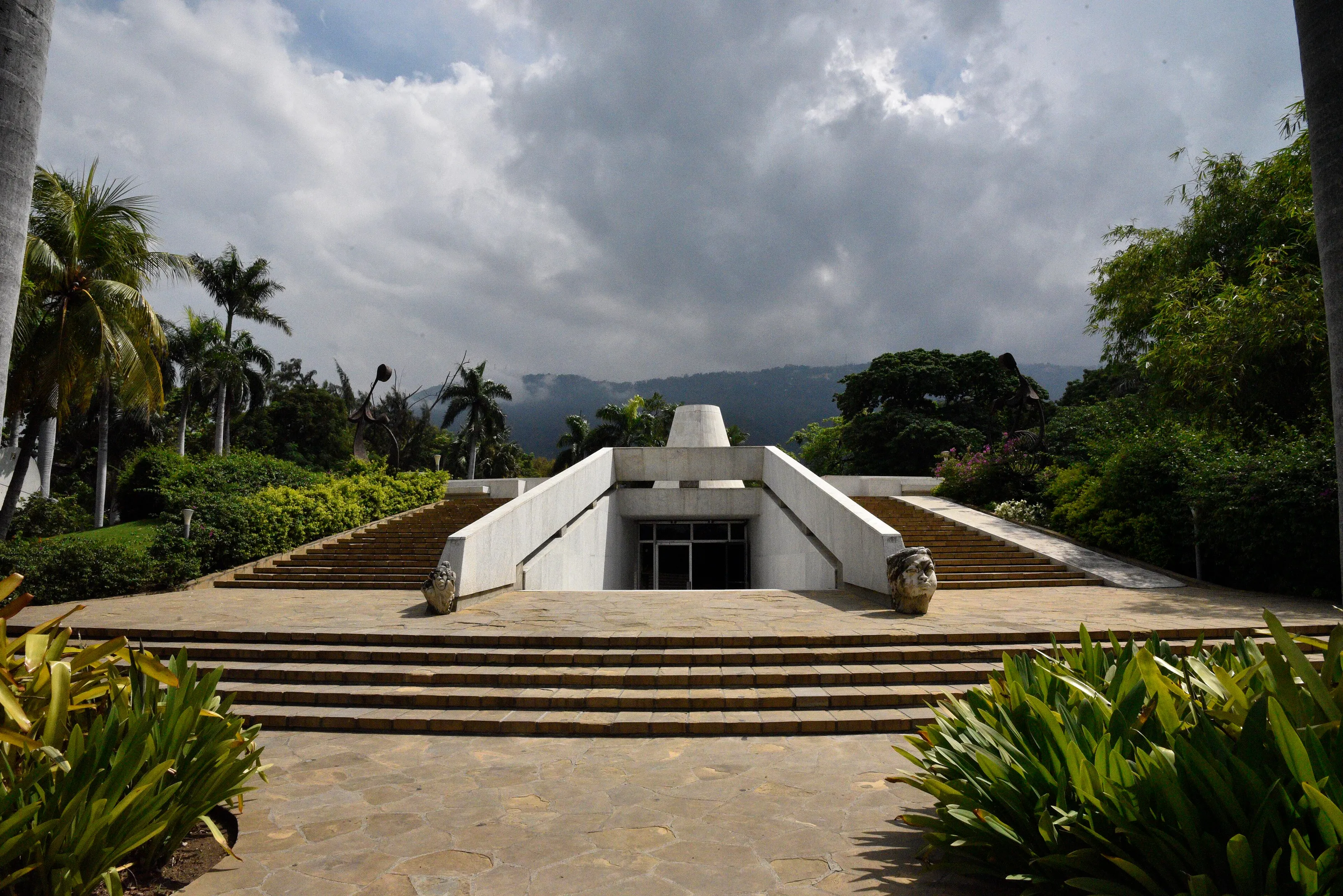
Designed by architect Alexandre Guichard, the MUPANAH stands behind the former National Palace on the Champ-de-Mars: its pale concrete entrance leads down to a crypt (Wikivoyage FR). It honours the fathers of Haitian independence and tells the country's story period by period. Wikivoyage (EN) notes that it displays the anchor of the Santa Maria, Columbus's flagship.
A roof turned into an esplanade
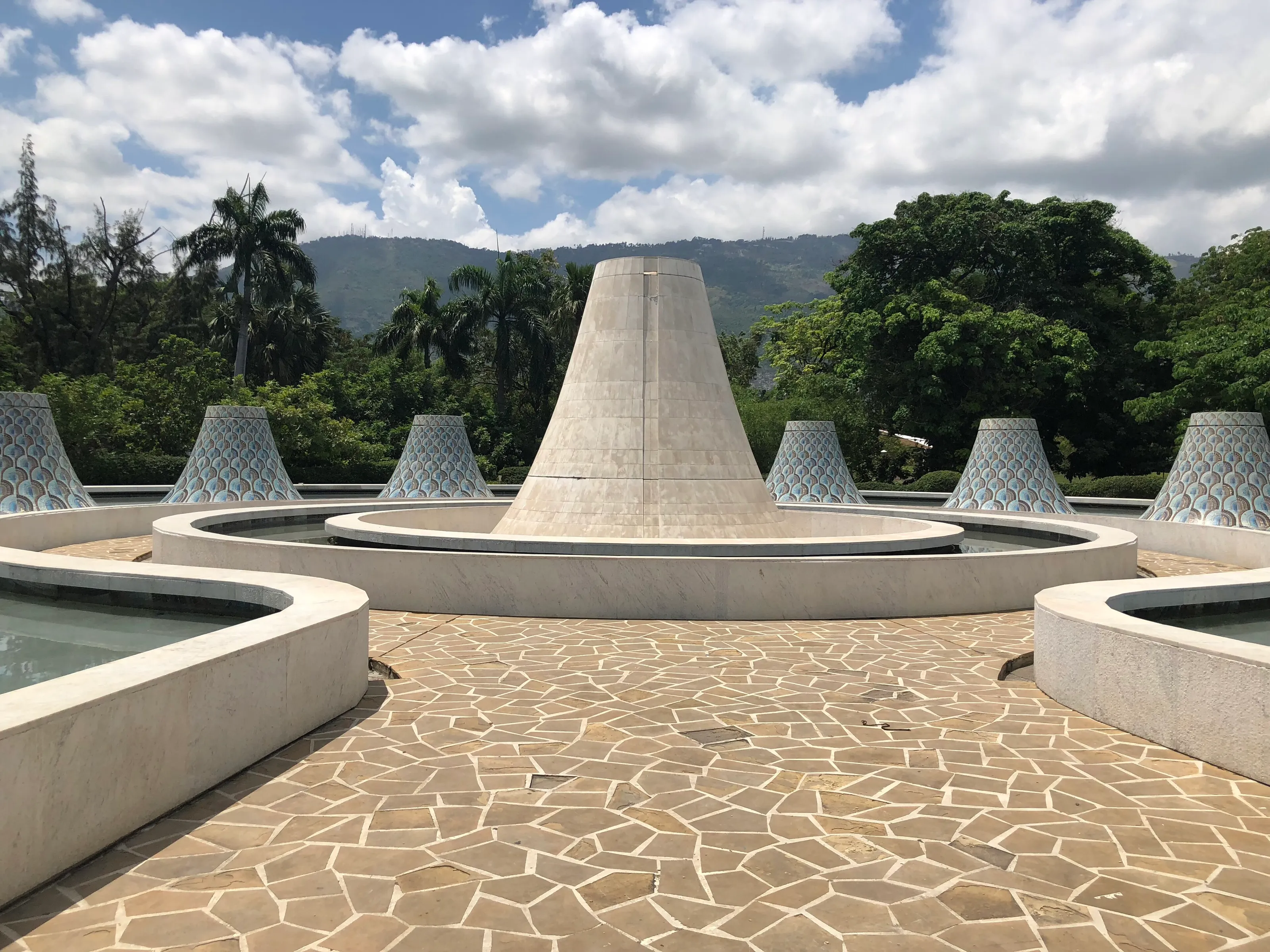
The museum's roof forms a paved esplanade dotted with pools and white concrete cones, with the hills behind. The sources do not say what condition it is in today.
Gingerbread houses and the Hôtel Oloffson
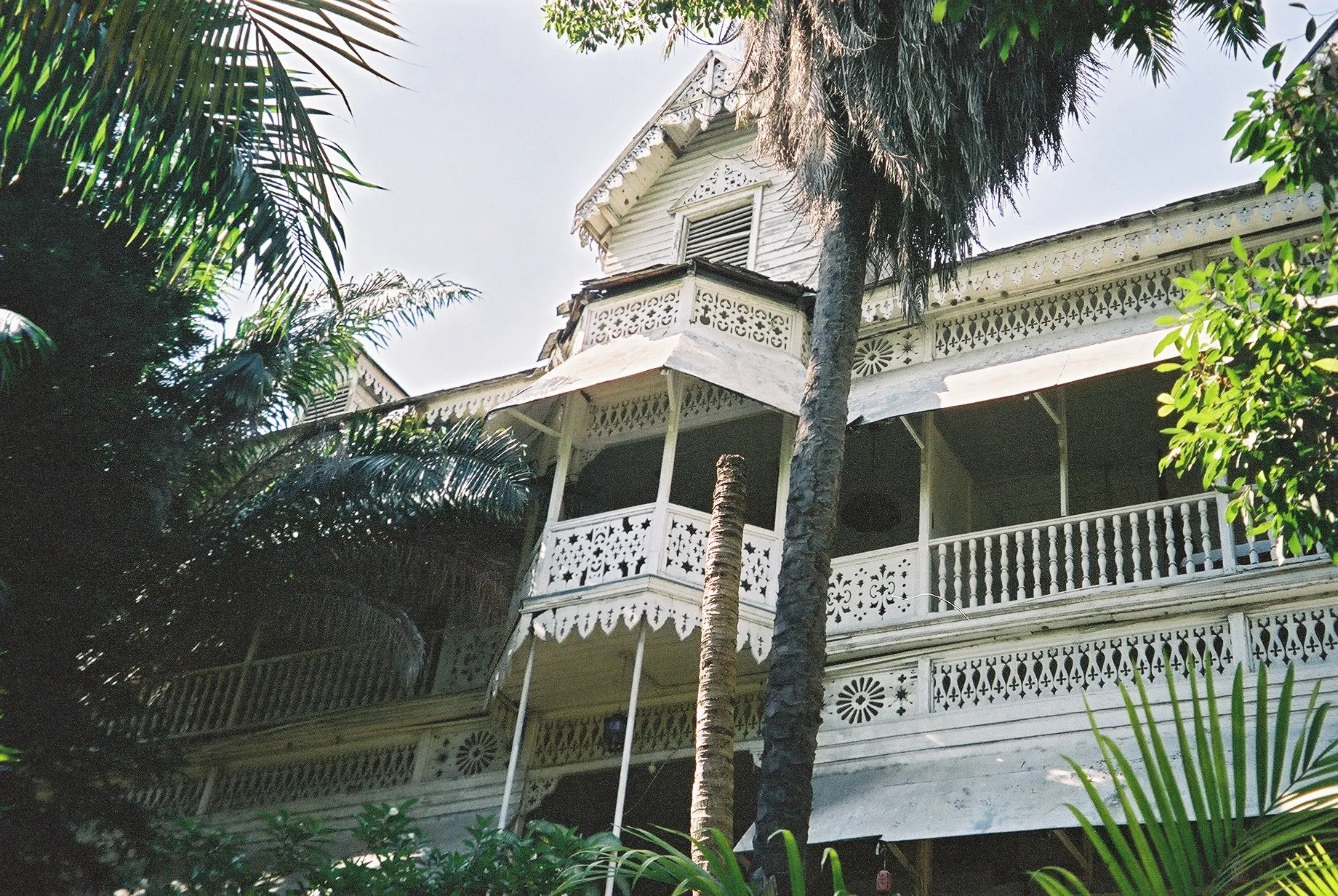
The so-called gingerbread houses, built of wood with lacework balconies and cut-out trim, are part of the city's architectural image: Wikipedia (EN) lists them among sites of interest, Wikivoyage (FR) mentions the Avenue de la Martinière area, and Wikipedia (DE) counts the Hôtel Oloffson among the most notable buildings culturally and architecturally.
Pétion-Ville, Kenscoff and the heights
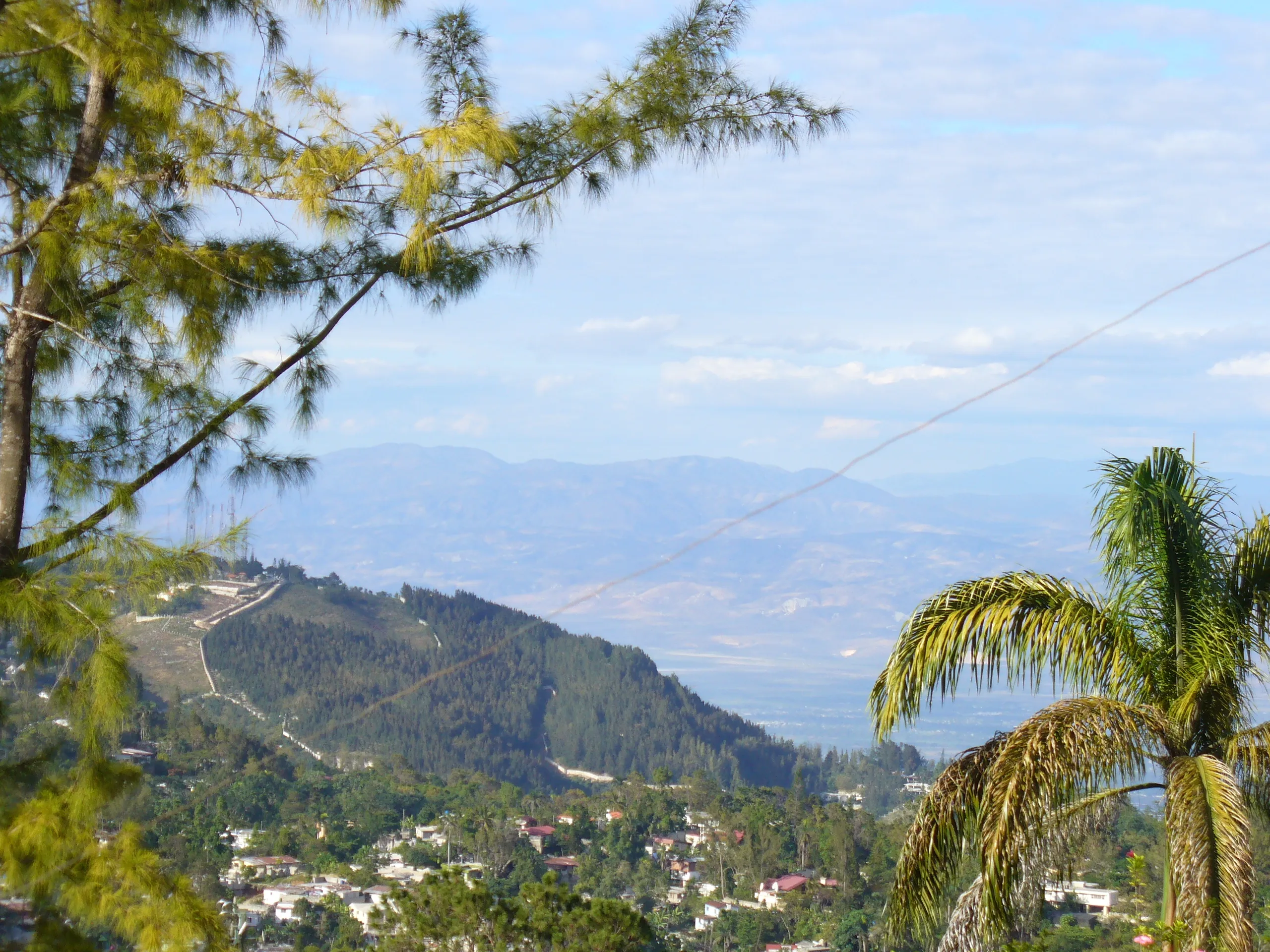
Above the capital, Pétion-Ville is described by Wikipedia (FR) as the affluent suburb at the foot of the Massif de la Selle. Wikivoyage (FR) describes a road climbing to Kenscoff and its market, with an ever wider view over the bay, and Wikivoyage (EN) mentions Fort Jacques, about 45 minutes up a mountain, for cool air and the view. Most embassies are in Pétion-Ville (Wikivoyage EN).
The Iron Market
Forged in Paris in 1893 according to Wikivoyage (FR), with its metal frames and cast-iron turrets, it is one of the liveliest markets in the Caribbean. Wikivoyage (EN) describes a dense, stressful place selling crafts such as sculptures, masks and paintings. Check that it is accessible before even considering it, and do not go without a trusted guide.
National Palace, cathedral and Tour 2004
The National Palace, compared to the White House by Wikivoyage (FR), and the Cathedral of Our Lady of the Assumption were destroyed or badly damaged in 2010. The Tour 2004, built for the bicentenary of independence, was left unfinished (Wikipedia FR; Wikivoyage FR).
Museums and culture
The Pantheon, Haitian art and festivals
Port-au-Prince holds most of the country's cultural institutions, the legacy of long-standing centralisation (Wikipedia DE). Several places have, however, been affected by earthquakes and by the situation in the country: we give no opening hours or prices, and you must not assume that any place is open.
The MUPANAH
Its rooms follow Haitian history period by period, each with its mural and objects from the era; according to Wikivoyage (EN), the anchor of the Santa Maria is the centrepiece of the exploration section.
A gallery of paintings
The museum also has an art gallery where brightly coloured canvases hang under spotlights.
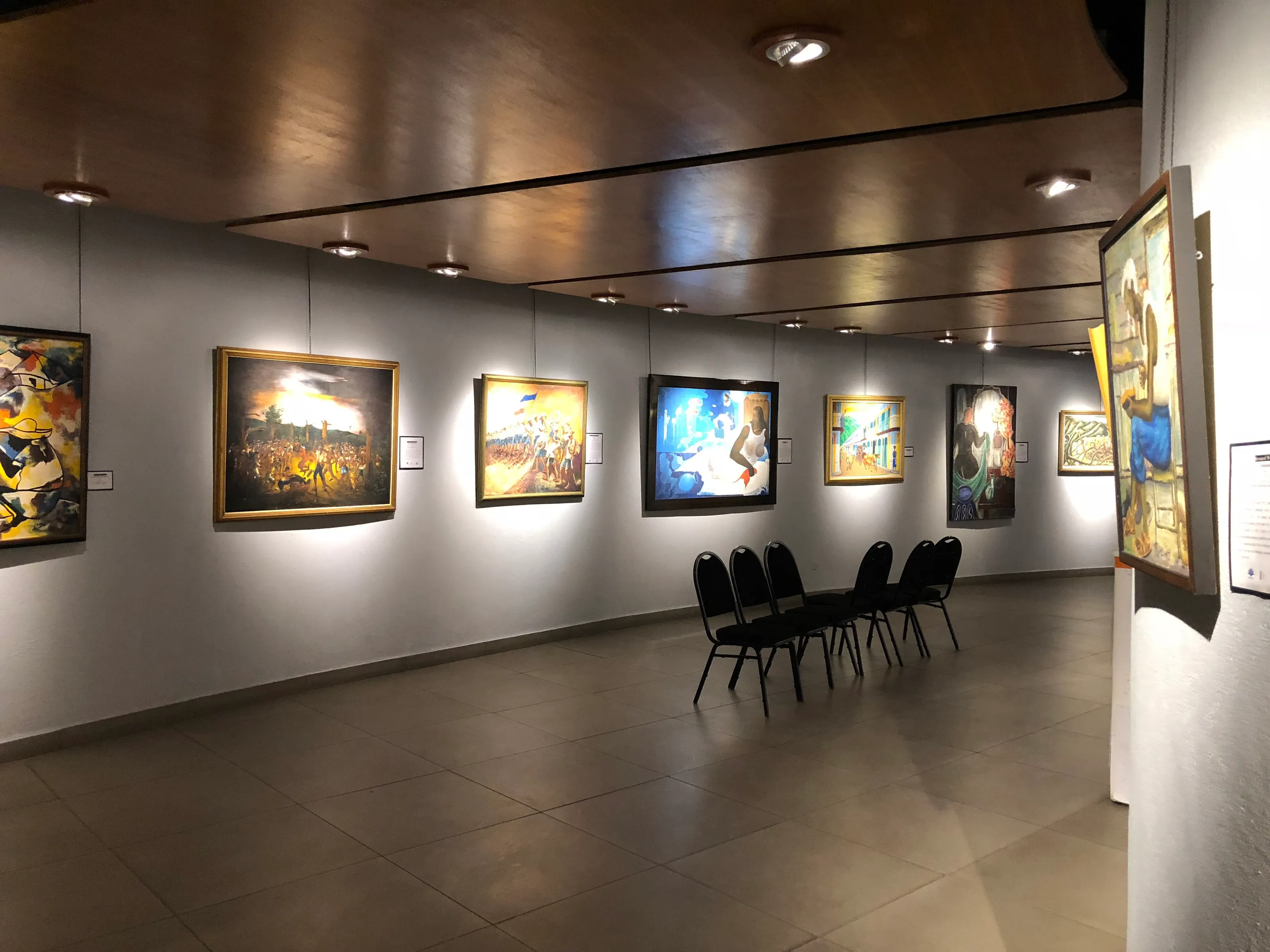
Haitian Art Museum of the Collège Saint-Pierre
Built in 1972 to plans by Albert Mangonès, it offers, according to Wikivoyage (FR), a good overview of so-called primitive Haitian painting and holds the collections of the Art Centre founded in 1944 by the American DeWitt Peters. Wikipedia (DE) names it, with the National Library of Haiti, among the major cultural institutions.
Sugar cane museum
Wikipedia (FR) and Wikivoyage (ES) mention a museum devoted to sugar cane, the emblematic product of the colonial economy of Saint-Domingue.
Festivals
Wikipedia (FR) lists an international jazz festival in January, the carnival in February, a flower carnival in July and the Quatre Chemins festival in November. Whether they take place varies by year and situation: do not build a trip around a date without checking it.
Food and drink
Rice and beans, griot, pikliz and rum
The dishes
Wikipedia (EN, FR, DE) describes a Creole cuisine fed by African, French, Taíno, Spanish and Levantine influences, with plenty of herbs and pepper. Riz collé aux pois (diri kole ak pwa), rice cooked with red beans, is considered the national rice. Add griot, fried pork, pikliz, a spicy cabbage relish, tassot of goat or turkey, accra fritters and the Haitian pâté (Wikipedia DE, ES).
Markets and tables
Wikivoyage (EN) notes that eating out is surprisingly expensive, and Wikivoyage (DE) speaks of many restaurants serving Haitian and French food, more rarely Chinese, more often Italian. The Iron Market is described as the belly of the city (Wikivoyage FR). We recommend no particular address: ask a trusted host.
Drinks
Wikivoyage (FR) ranks Haitian rum among the best in the Caribbean; Wikivoyage (EN) also lists crémas, a coconut and vanilla drink, and Wikipedia (ES) mentions fruit juices (pineapple, papaya, mango, guava) and punches.
Getting around
Tap-taps, daytime taxis and trusted hosts
Tap-taps
The tap-tap, a brightly painted minibus or pick-up with inventive names, carries most urban transport (Wikipedia FR; Wikivoyage FR, DE). Wikivoyage (DE) says there are no regular buses or trains and advises foreign visitors against using them.
Taxis and motorbike taxis
Wikivoyage (EN) advises using street taxis only in daylight, because risks rise after dark; Wikivoyage (DE) advises against motorbike taxis that offer themselves, which can turn into a kidnapping.
Cars and roads
Wikivoyage (DE) stresses the very poor state of the roads, the almost complete lack of signs and chaotic traffic, with steep unprotected drops. Most visitors rely on hotels, hosts or trusted local organisers.
Between towns
Wikipedia (FR) mentions buses leaving from the informal Portail Léogâne station for Léogâne, Jacmel or Les Cayes. Check your country's official advice before any road travel: do not assume the routes are passable.
Budget and precautions
No price ranges, and caution ahead of budget
Price level
Wikivoyage (EN) finds that restaurant meals are surprisingly expensive and that there is no cheap accommodation, only less expensive choices. The currency is the Haitian gourde, with the US dollar also in use. We publish no ranges, because we could not confirm them on two independent sources.
Flights
The flight is the most variable item in the budget. SniperAir monitors prices to PAP and compares them with the route's history, but it does not sell or book tickets.
Safety before budget
Wikivoyage (DE) writes that safety is guaranteed nowhere in Port-au-Prince and lists districts to avoid; Wikipedia (FR) mentions gang violence in some disadvantaged districts. Official advice varies by departure country: some advise against certain areas, others against the whole country. Read your own country's advice, check that your travel insurance covers you, and do not assume that return flights will be available.
Earthquakes and hurricanes
Haiti is exposed to earthquakes (2010, but also 1751 and 1770 according to Wikipedia FR) and hurricanes: Wikipedia (EN) recalls the damage of the 2008 season and of Hurricane Matthew in 2016. The hurricane season runs from June to November; keep your dates flexible.
When to go
Warm all year, with two rainy peaks and a hurricane season from June to November
December to February
The driest period, with hot, humid days. This is the window the sources describe as the most comfortable.
March to May
The rainy season begins; Wikipedia (EN) places a first peak in April and May.
June to August
Humid heat, with a relative lull in rain in June and July according to Wikipedia (EN) and (DE); the hurricane season starts.
September to November
A second rainy peak from August to October; the hurricane season runs to November.
Wikipedia (EN, FR) classes Port-au-Prince as tropical savanna (Aw), with little variation in temperature. Wikipedia (EN, DE) puts the wet season from March to November, Wikipedia (ES) rather April to June and October to November: the sources differ, hence the value of flexible dates. We give no averages, for lack of cross-checking. Haiti observes daylight saving time, so the time difference with Europe changes during the year.
By length of stay
What to do in Port-au-Prince by length of stay, if travel is possible
A short, supervised stay
Accommodation and transfers arranged in advance with a trusted host or organiser, staying in the areas your country's official advice recommends.
Culture and the heights
One or two cultural venues such as the MUPANAH or the Haitian art museum, and the heights of Pétion-Ville, if access and advice allow.
Beyond the capital
The north (Citadelle Laferrière, Cap-Haïtien) and the south-east (Jacmel) are described on our Haiti page; do not stack up stops without checking official advice for each area.
In pictures
Port-au-Prince in pictures
You might also like
Similar destinations
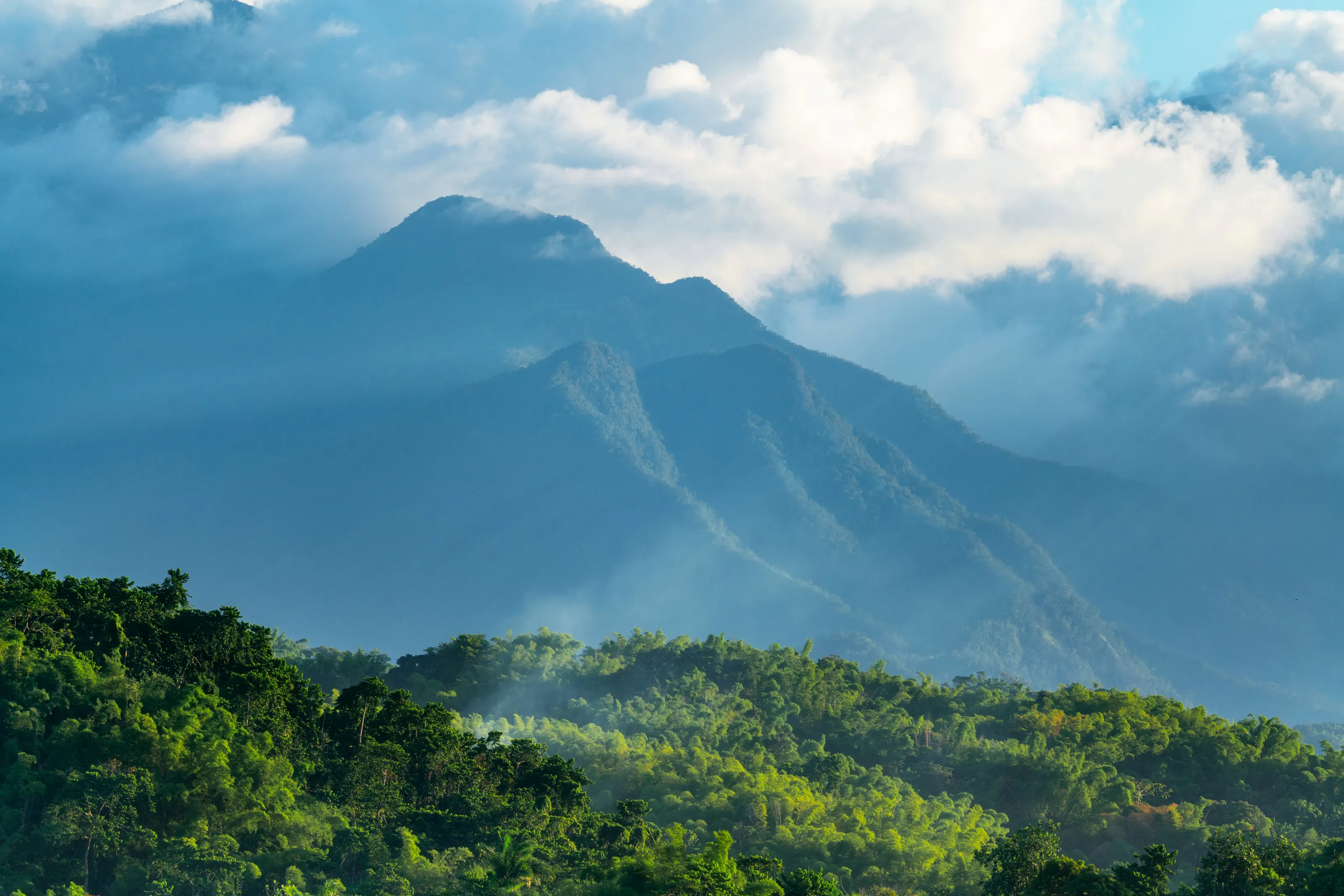
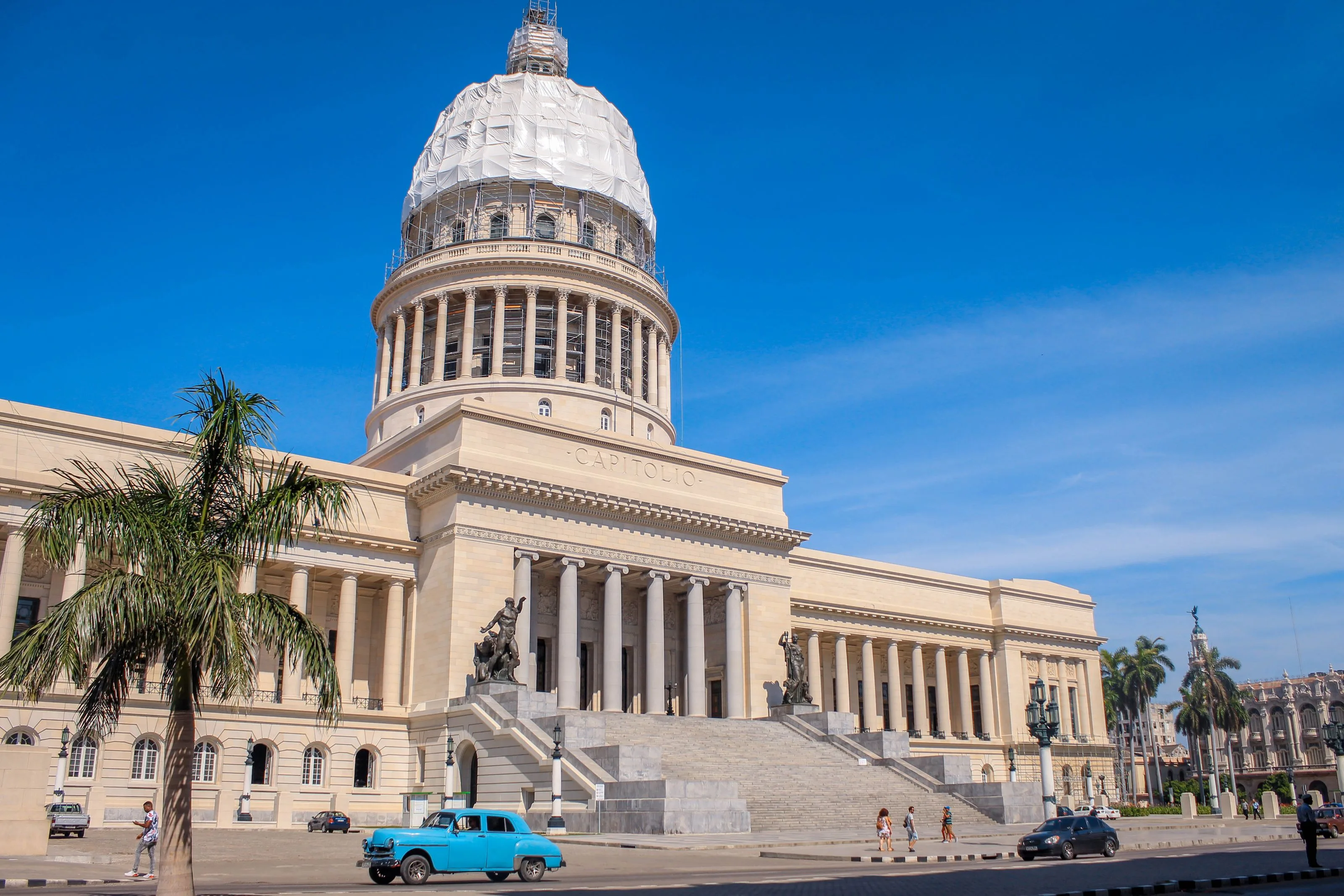
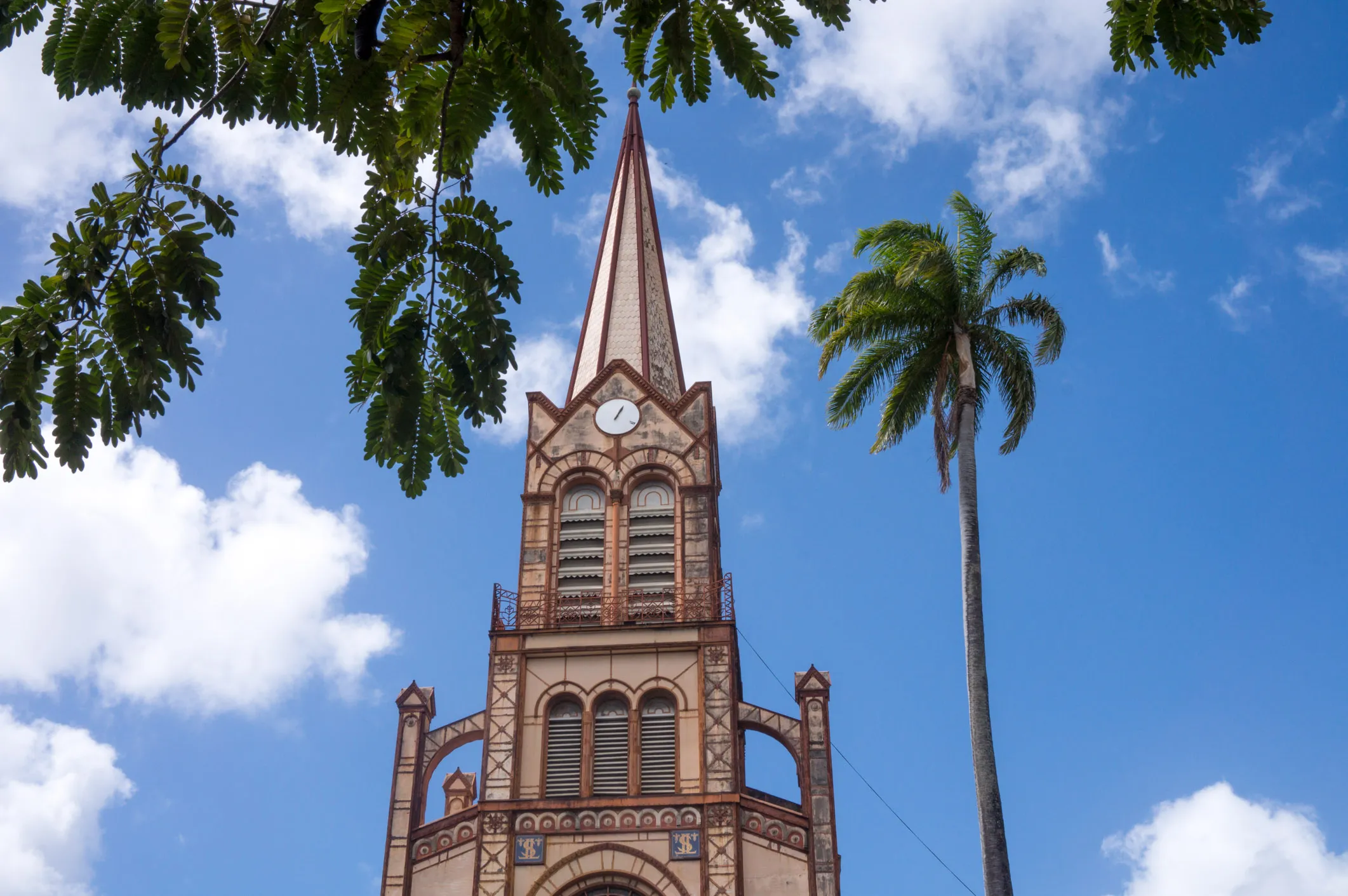
FAQ
Frequently asked questions about flights to Port-au-Prince
Can you travel to Port-au-Prince?
Do not assume that you can. Haiti is the subject of very restrictive official travel advice in many departure countries; depending on your country, some areas, sometimes the whole country, are advised against. Read your country's advice and check your insurance and flights before doing anything.
Where is Port-au-Prince airport and how do I reach the centre?
Toussaint Louverture Airport (PAP) is in Tabarre, about 10 km from the centre. Transfers should be arranged in advance with a hotel or a trusted host; the sources advise against motorbike taxis.
Is Port-au-Prince safe?
The sources describe serious insecurity: Wikivoyage (DE) writes that safety is guaranteed nowhere and lists districts to avoid. Official advice varies by departure country. Do not rely on a guide page: read your country's advice.
What is there to see in Port-au-Prince?
According to the sources: the Champ-de-Mars, the National Pantheon Museum, the Haitian art museum, the Iron Market, the gingerbread houses and the heights of Pétion-Ville. Access and opening are not guaranteed.
When is the best time to go to Port-au-Prince?
December to February is the driest period according to the sources. The hurricane season runs from June to November. Keep your dates flexible.
How long should you stay in Port-au-Prince?
If travel is possible and not advised against by your country, a short stay arranged in advance with a trusted host is safer than a dense itinerary. Do not plan stops without checking official advice for each area.
How much does a flight to Port-au-Prince usually cost?
The price depends mainly on your departure city, the season and how far ahead you book. The "opportunities" section above shows real examples of prices already detected by SniperAir to this destination.
How do I get alerted when a flight to Port-au-Prince falls below my budget?
Create an alert profile with your departure airport, {n} as the destination and your maximum budget. You are notified automatically as soon as a matching price is detected.
Ready to head to Port-au-Prince?
Set your budget and let SniperAir monitor fares for you.
Create my alert