
Cheap flights to Havana
Set your departure airport and maximum budget: SniperAir tracks prices to Havana and alerts you the moment a deal matching your criteria appears.
Quick summary
Country
Cuba
Continent
North America
Airport
HAV
Currency
Cuban peso (CUP)
Time zone
UTC-5 (UTC-4 during summer time)
Deals already spotted to Havana
Real flight examples detected by SniperAir, with their reference price.
Loading examples…
Why track Havana with SniperAir
You do not need to compare prices every day
Choose your departure
Enter your departure airport and your maximum budget for a flight to Havana (HAV).
SniperAir keeps watch
Our systems continuously compare new prices with the real price history of the route. SniperAir monitors prices and alerts you: it does not sell or book tickets.
You receive an alert
As soon as a price matches your criteria, you are notified, without having searched for anything yourself.
Airport and getting into town
An international airport south-west of the city
José Martí (HAV)
José Martí International Airport lies in Boyeros, south-west of Havana, according to Wikivoyage (FR). It has three main terminals: the first for domestic flights, the second mainly for charters and some scheduled flights from the United States, and the third for other international flights, per Wikivoyage (EN). Customs and immigration can be slow, with waits of up to an hour and a half on arrival according to the same source. To reach the centre, official taxis, shared taxis and buses serve the airport's surroundings. Scheduled flights also serve Varadero (VRA), about three hours from Havana by bus according to Wikivoyage (EN).
Distances and times are approximate, based on Wikivoyage (FR, EN, DE); arrangements change, so check them before you travel. We do not quote fares.
Havana is the capital of Cuba, on the island's north-west coast facing the Straits of Florida. It stretches mostly west and south of a bay entered through a narrow channel (Wikipedia EN). Its Old Town, La Habana Vieja, has been a UNESCO World Heritage Site since 1982 (Wikipedia EN, DE, ES). The Spanish settled it at its present site in 1519, beside the Puerto de Carenas, and made it an assembly port for the fleets of the New World. Entry and travel conditions for Cuba depend on your departure country and nationality and change over time: see the "Budget and precautions" section.
Old Havana, the Capitol and the Malecón
Colonial Baroque, neoclassical domes and the seafront
Havana is best explored on foot, between the Baroque squares of the Old Town, the big avenues of the centre and the seafront. The places below are illustrated; Plaza Vieja, Plaza de Armas and the fortresses are described in text at the end of the section.
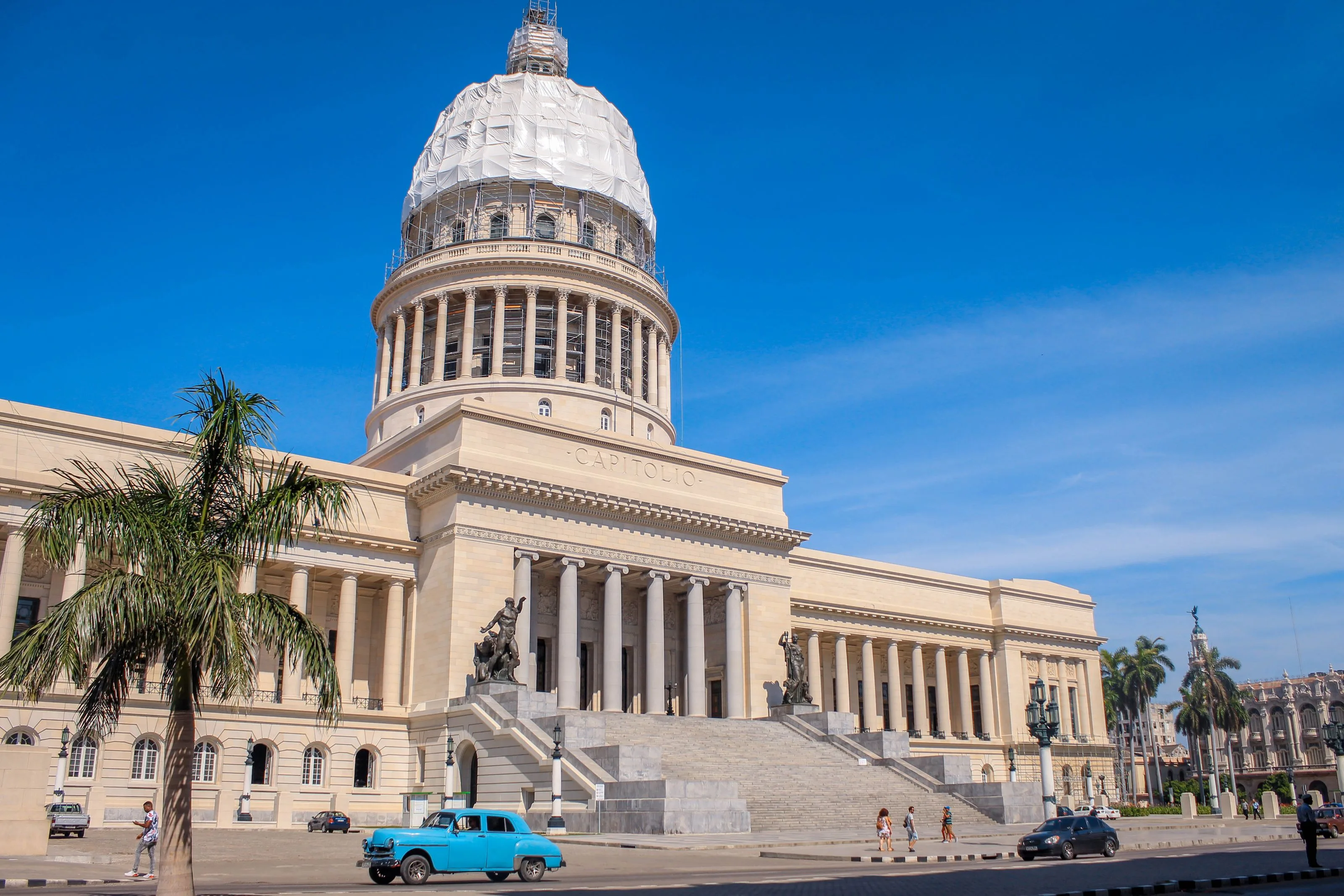
The Capitol
Completed in 1929 according to Wikivoyage (EN), this large neoclassical building with columns and a high dome resembles the US Capitol in Washington. It dominates the centre; in the photo the dome is under restoration. Check opening hours and visiting conditions before you go.
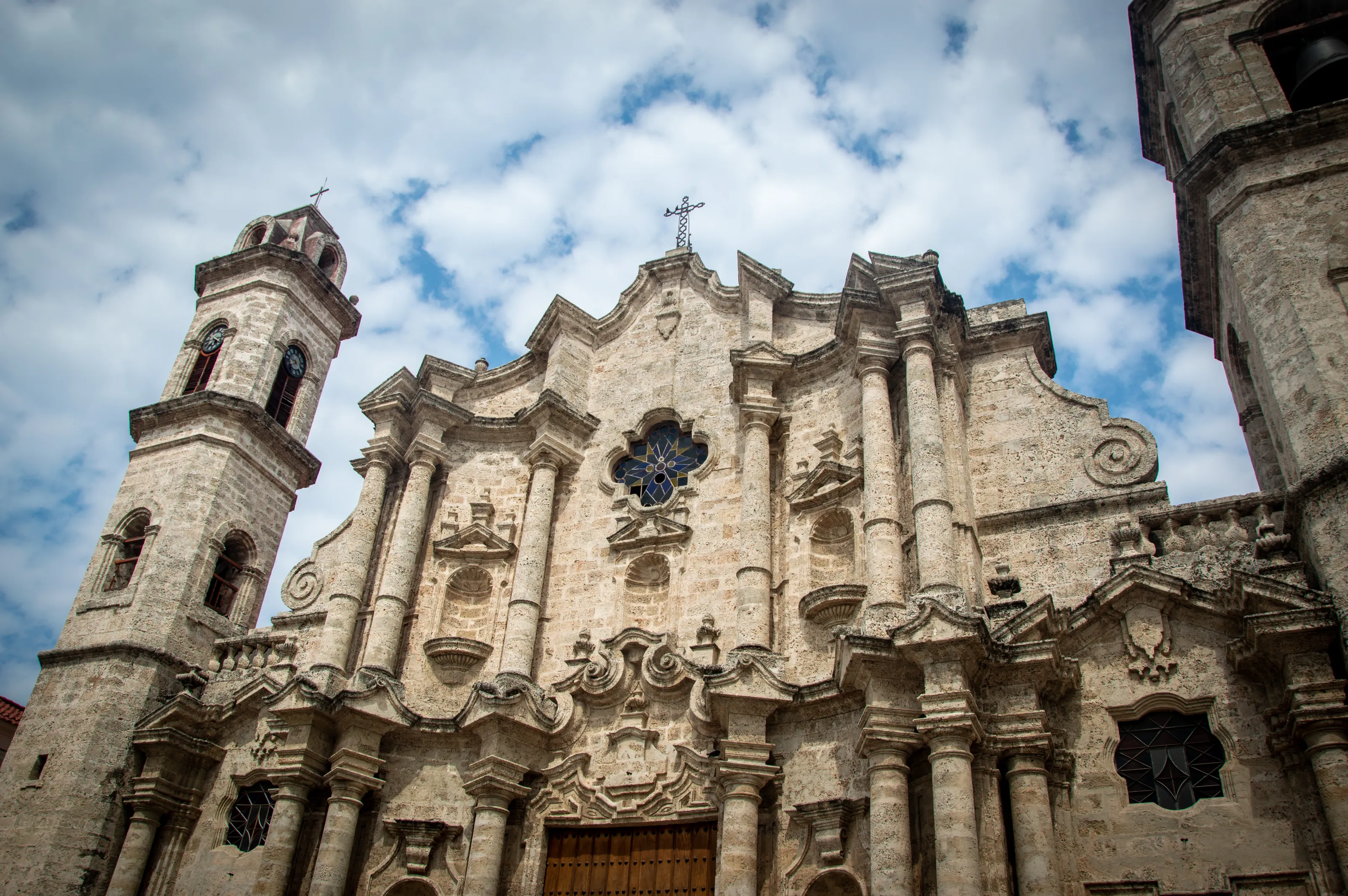
The cathedral
Havana Cathedral, built in the 18th century and redesigned in the 1940s, is a prime example of Cuban Baroque according to Wikivoyage (EN). Its pale, uneven stone facade is flanked by two asymmetrical towers; it houses the seat of the Roman Catholic Archdiocese in Cuba.
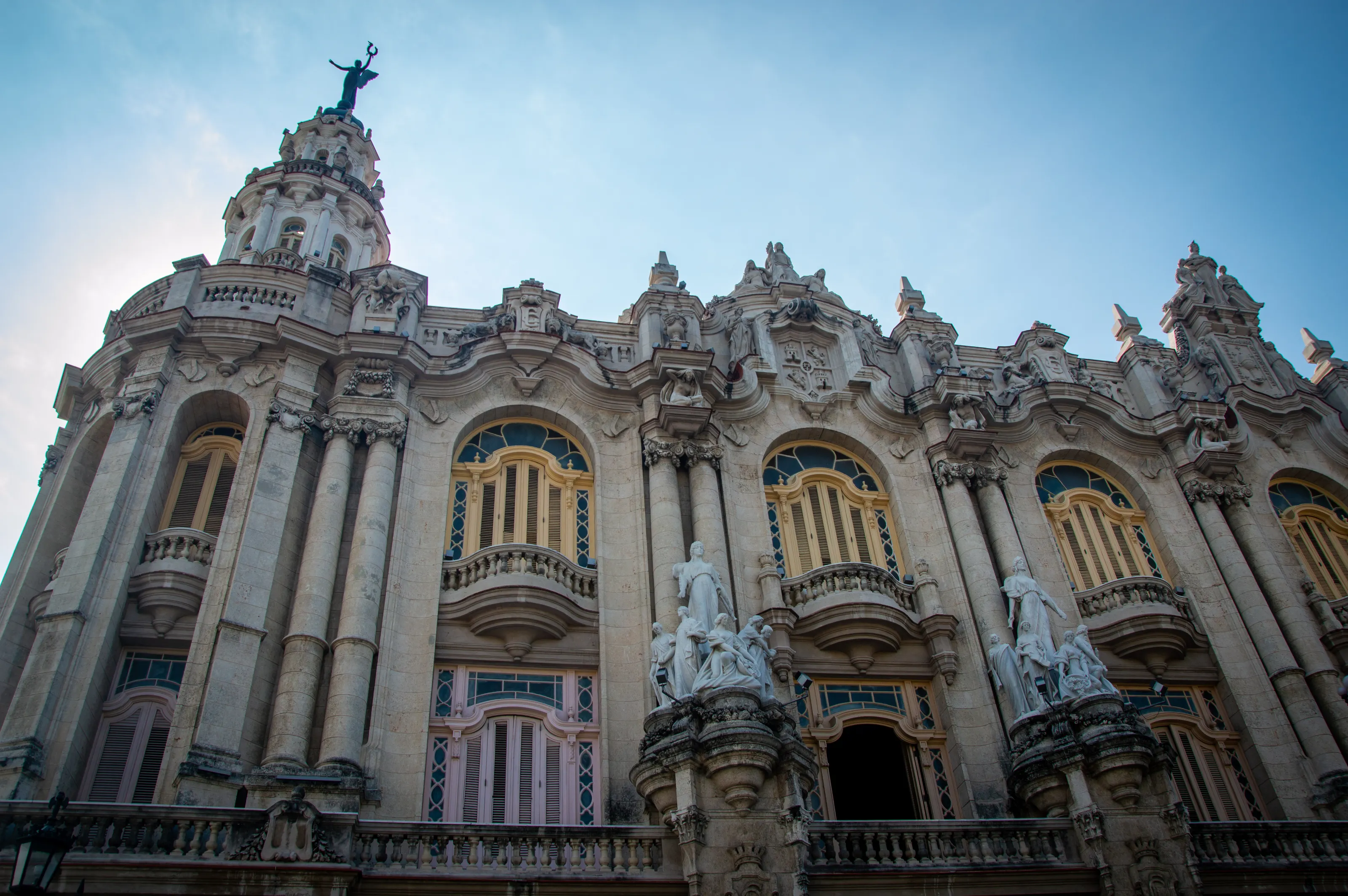
The Gran Teatro
Havana's Gran Teatro, next door to the Capitol, unfolds a Baroque facade covered in statues and ornate balconies, with a tower that carries an angel. It is a renowned performance hall; programmes change, so check on the spot.
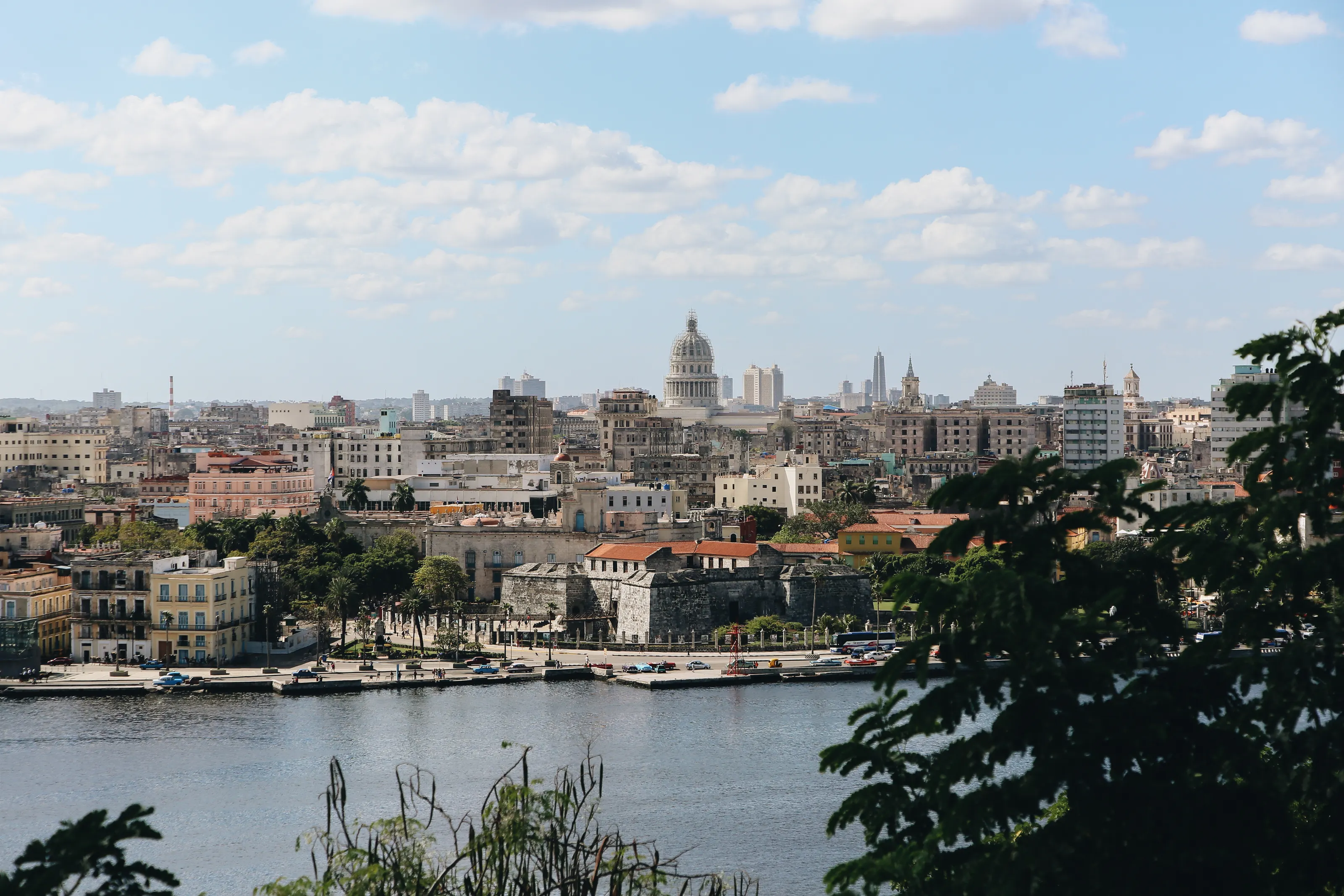
The bay and skyline
Seen across the bay, the city rises behind the water with the Capitol dome at the centre and stone fortifications at the water's edge. The bay is entered through a narrow channel and divides into three harbours (Wikipedia EN); ferries link the Old Town with Casablanca and Regla (Wikivoyage EN, DE).
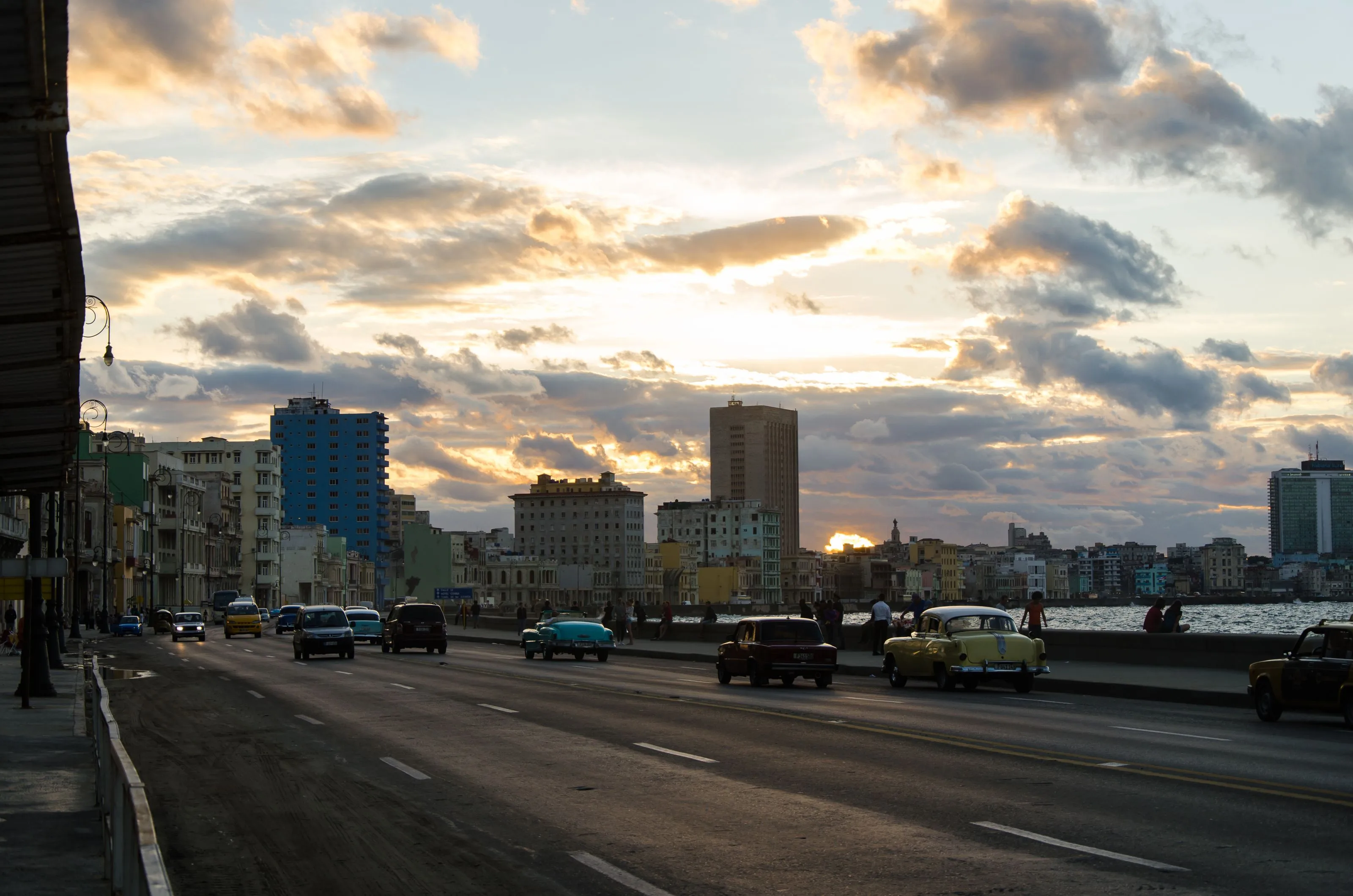
The Malecón
The Malecón is Havana's seafront road, busy at day's end with residents and strollers. At sunset it fills with old cars, pedestrians and anglers; Wikivoyage (EN) calls it a favourite stroll for tourists and locals alike.
Plaza Vieja and Plaza de Armas
Plaza de Armas, laid out in the 17th century, is surrounded by Baroque buildings; this is where El Templete stands, a monument of 1754 commemorating the founding of the city (Wikipedia FR, Wikivoyage EN). Plaza Vieja, a former market square, is lined with colourful facades and arcades.
The fortresses
The Castillo de la Real Fuerza, completed in 1577, is the oldest bastioned fortress in the New World according to Wikivoyage (EN). Across the bay, the forts of El Morro and San Carlos de la Cabaña overlook the harbour entrance; every evening a cannon ceremony is fired over the harbour.
Museums and culture
The Revolution, fine arts and cultural life
Havana is a city of museums, theatres and music, but hours and conditions change: check them on the spot. Three starting points.
The Museum of the Revolution
Housed in the former presidential palace, it traces Cuba's history from pre-Columbian times to the 1959 revolution and the country today; Wikivoyage (EN) adds that there is "more than a hint of propaganda", so it is also a document to read with perspective.
The National Museum of Fine Arts
It has two parts, Cuban art and international art, spread over several floors (Wikivoyage EN): enough to spend hours among Cuban works of recent centuries.
The maritime museum and the Fábrica de Arte
The Castillo de la Real Fuerza houses the maritime museum, with the Royal Shipyard and a large ship model (Wikivoyage EN). The Fábrica de Arte Cubano, a former cooking-oil factory, combines a gallery with a concert stage (Wikivoyage EN).
Colón Cemetery
One of the great historical cemeteries of the world, important for its architecture and history (Wikivoyage EN).
Food and drink
Casas particulares, paladares and Creole cooking
The dishes
Cuban cooking is simple Creole food: rice with black beans, roast pork, plantains and strong coffee. The mojito is one of the cocktails most associated with Cuba. Specialities vary by restaurant and by supply.
Where to eat
Paladares, private family-run restaurants, have become an institution, as have casas particulares for lodging (Wikivoyage FR, EN). We do not recommend specific addresses and quote no prices.
Street caution
Wikivoyage (EN) warns that many cigars sold on the street are fakes; ask for prices before ordering in a restaurant and keep small change for paying.
Getting around
On foot, by taxi, bus and ferry
On foot
Walking is by far the best way to experience Havana according to Wikivoyage (EN): get a decent map and let yourself be surprised. The centre is very dense, and some districts are run-down while others have been restored.
Taxis and shared taxis
Official taxis are the most convenient option; there are also shared taxis, old American cars on fixed routes, and cheap yellow three-wheeled coco taxis. Agree the fare before getting in for informal rides (Wikivoyage EN, DE).
Buses and ferries
The city has modern, often crowded buses and a tourist bus loop; ferries link the Old Town with Casablanca and Regla. Car hire is rarely cheaper than taxis, and traffic shares the road with cyclists, pedestrians and badly parked vehicles (Wikivoyage EN).
Budget and precautions
A destination to research before you go
Price level
We give no figures: the prices quoted in guides are dated, and Cuba's monetary situation has changed. Find out about payment methods in advance: Wikivoyage (EN) reminds readers that ATMs and exchange offices are not always reliable.
Flights
SniperAir monitors prices to HAV and compares them with the route's history, but it does not sell or book tickets. Varadero (VRA) is served by scheduled flights and can be compared too.
Entry and travel conditions
Entry formalities and travel conditions for Cuba depend on your departure country and nationality, and they change. Consult official sources: your country's foreign ministry and the Cuban embassy or consulate.
Caution
According to Wikivoyage (EN), Havana is fairly safe for a large city, with heavy police presence in tourist areas; muggings have been reported at night in Centro Habana. Beware of hustlers and scams, and note that air pollution from old vehicles can bother some travellers. Hurricanes affect Cuba from summer into autumn.
When to go
A drier season from December to April
December to February
Dry, mild winter, the most pleasant time for walking the city; peak season, with many visitors.
March to May
Rain is lowest from December to April according to Wikipedia (FR); the heat builds from April-May.
June to August
Hot and humid, with heavier rain in June according to Wikipedia (FR); hurricane season begins.
September to November
Still hot, with a second rain peak in October according to Wikipedia (FR); hurricane season runs to October according to Wikipedia (DE).
Havana has a tropical savanna climate (Wikipedia FR, DE). Sources give mean temperatures of about 22-23 degrees C in January and February and about 28 in August, but they do not agree exactly, so we publish no numeric averages. Winter is dry, and hurricanes more often hit the island's south coast, according to Wikipedia (FR).
By length of stay
What to do in Havana depending on how long you stay
The essentials
Old Havana (the cathedral, Plaza de Armas, Plaza Vieja), the Capitol, the Gran Teatro and an evening on the Malecón.
Forts and museums
The forts of El Morro and La Cabaña with the cannon ceremony, the fine arts museum, Vedado and Colón Cemetery.
Around Havana
A trip to Varadero or other regions of the island, by bus or taxi.
In pictures
Havana in pictures
You might also like
Similar destinations
FAQ
Frequently asked questions about flights to Havana
How do I get from Havana airport to the centre?
José Martí International (HAV) is in Boyeros, south-west of the city. Official taxis, shared taxis and buses serve its surroundings; check the arrangements before you travel.
What is there to see in Havana?
UNESCO-listed Old Havana, the cathedral, Plaza de Armas, the Capitol, the Gran Teatro, the Malecón, the forts of El Morro and La Cabaña and the fine arts museum.
When is the best time to visit Havana?
December to April, the drier period. Hurricane season runs from summer into autumn, with heavier rain in June and October according to Wikipedia (FR).
What are the entry requirements for Cuba?
They depend on your departure country and nationality and change over time. Check your country's foreign ministry and the Cuban embassy or consulate.
Is Havana safe?
According to Wikivoyage (EN) it is fairly safe for a large city, but muggings have been reported at night in Centro Habana. Beware of hustlers and check your government's official travel advice.
What should I try in Havana?
Simple Creole cooking: rice with black beans, roast pork, plantains, strong coffee and a mojito.
How much does a flight to Havana usually cost?
The price depends mainly on your departure city, the time of year and how far ahead you book. The "opportunities" section above shows real examples of prices SniperAir has already detected to this destination.
How do I get alerted when a flight to Havana drops below my budget?
Create an alert profile with your departure airport, Havana as the destination and your maximum budget. You are notified automatically as soon as a matching price is detected.
Ready to head to Havana?
Set your budget and let SniperAir monitor fares for you.
Create my alert