
Cheap Flights to Cancún
Set your departure airport and your maximum budget: SniperAir tracks prices to Cancún and alerts you as soon as a deal matching your criteria shows up.
Quick summary
Country
Mexico
Continent
North America
Airport
CUN
Currency
Mexican peso
Best months
November to April
Opportunities already detected to Cancún
Real flight examples spotted by SniperAir, with their reference price.
Loading examples…
Identity
A resort city that started with three residents
Cancún is not an old fishing port that slowly turned to tourism. It is a planned resort city, created from scratch in 1970 through the Mexican tourism development fund FONATUR. When work began, Isla Cancún had only three residents, the caretakers of a coconut plantation.
The change of scale since then is hard to overstate. The 2020 census counted 888,797 residents, the airport handles about 15 million passengers a year, and the destination set a record of 21 million tourists in 2023. Everything here was designed around the visitor, from the hotel strip to the airport that feeds it.
The lay of the land
The Hotel Zone, a "7" between lagoon and sea
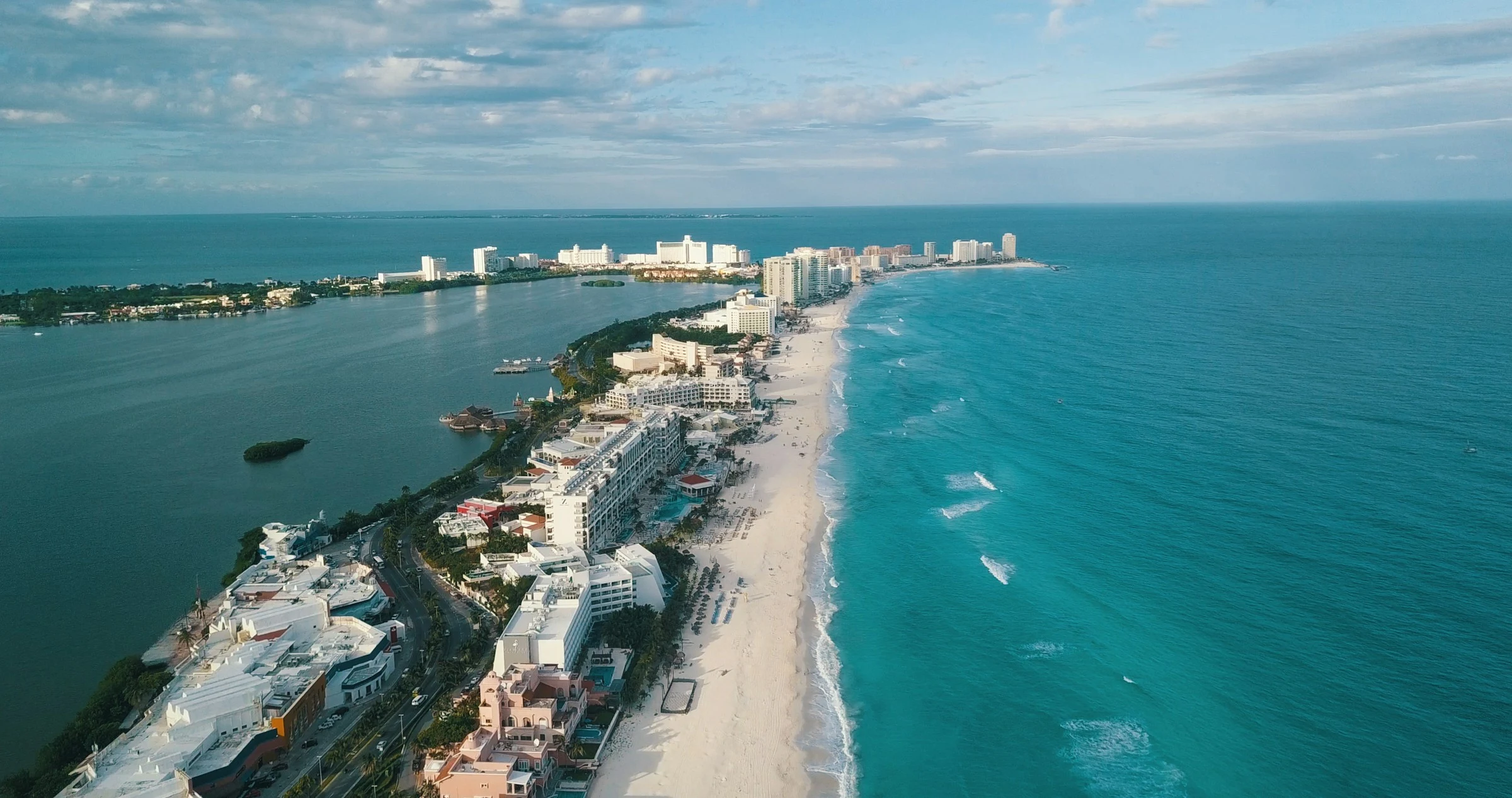
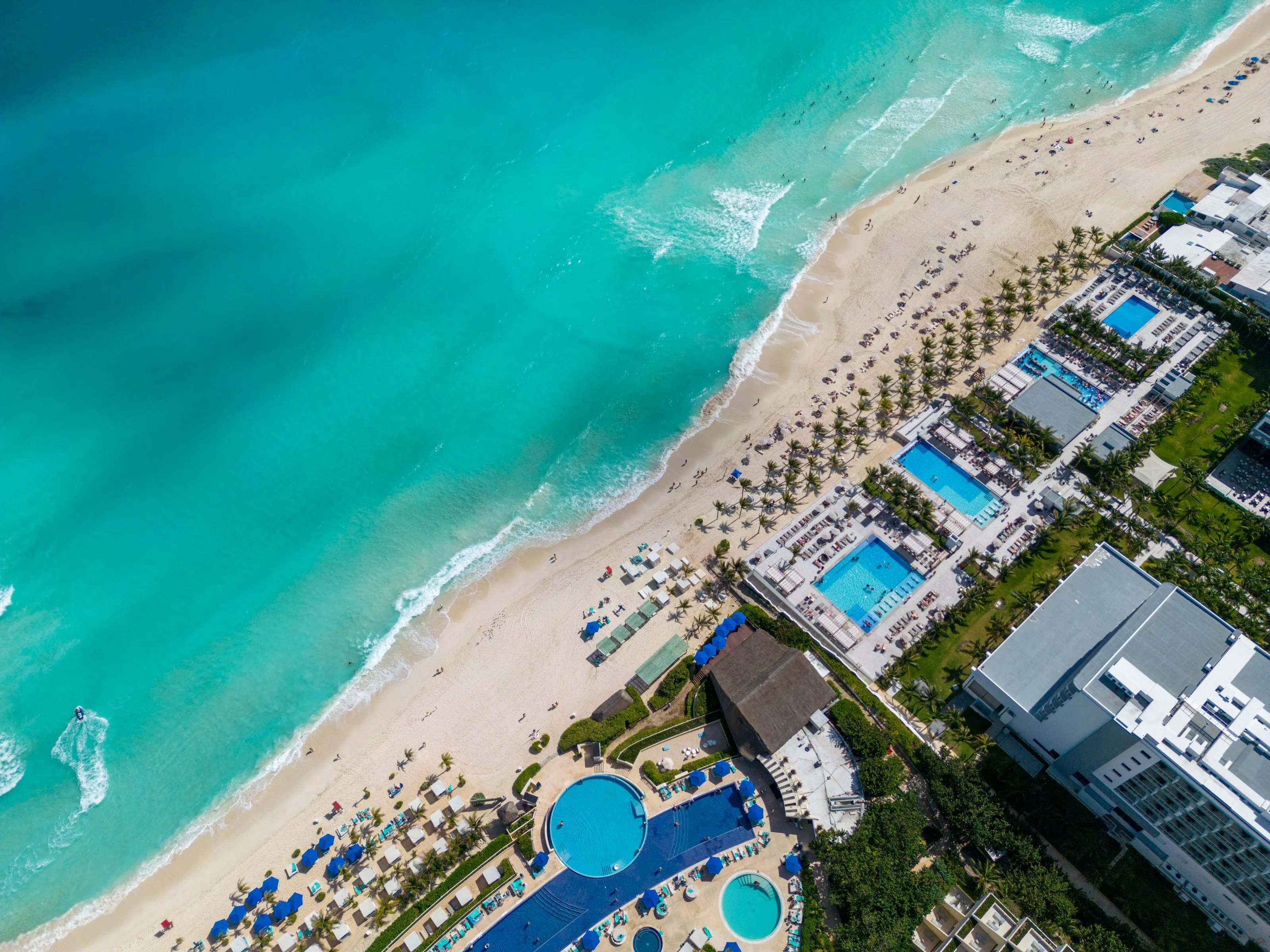
Most visitors spend their stay in the Hotel Zone, a barrier island about 14 miles (22 km) long, shaped like the figure "7". On one side lies the Nichupté Lagoon, on the other the open Caribbean, and nearly 100 hotels line the strip between the two.
Locations along the strip are commonly given by kilometre: Playa Delfines, for example, sits around km 17-18. Where you stay on the "7" matters more than it first appears, because the northern and southern stretches do not face the same sea conditions.
Beaches
North or south: choosing your stretch of sand
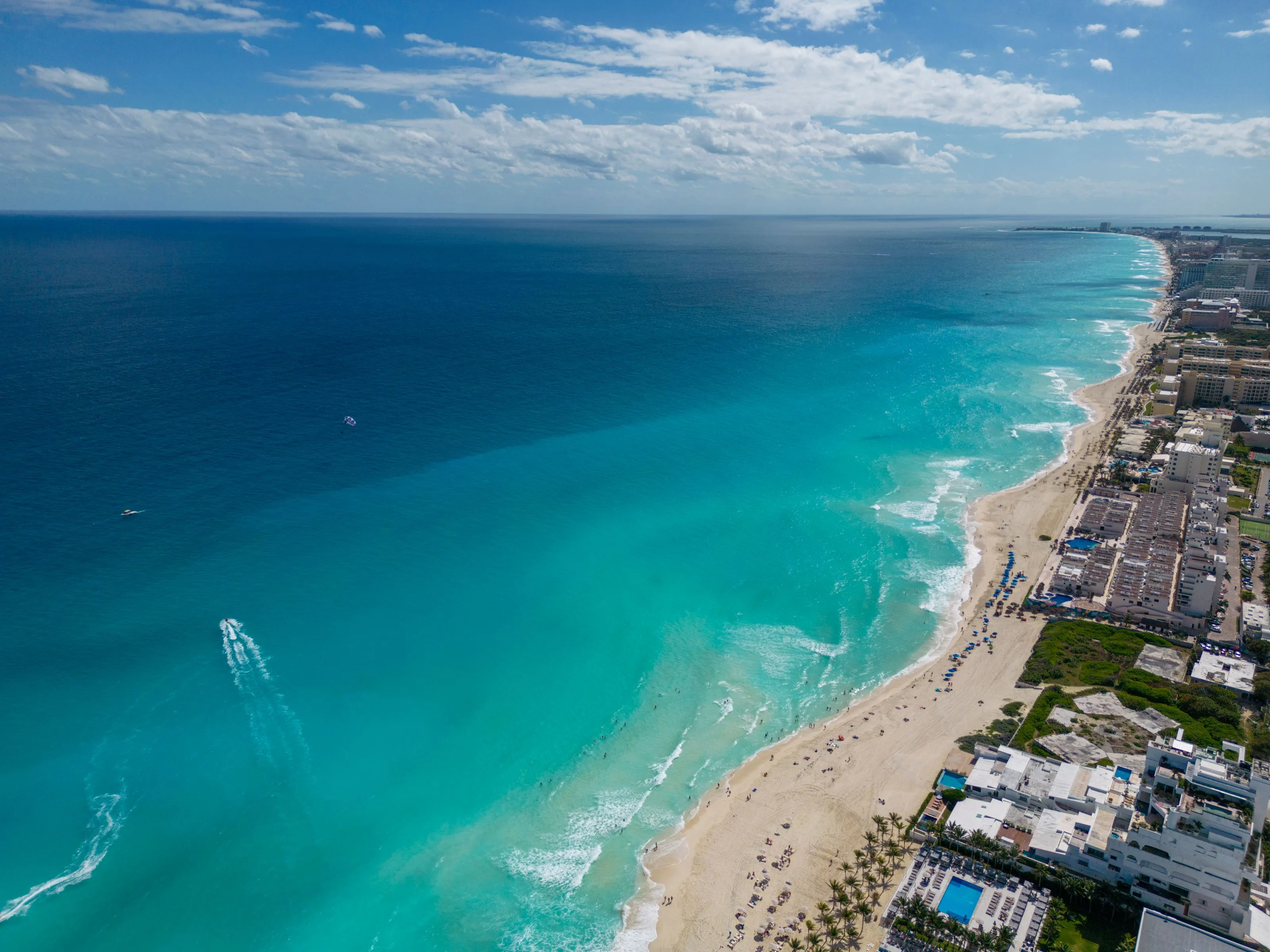
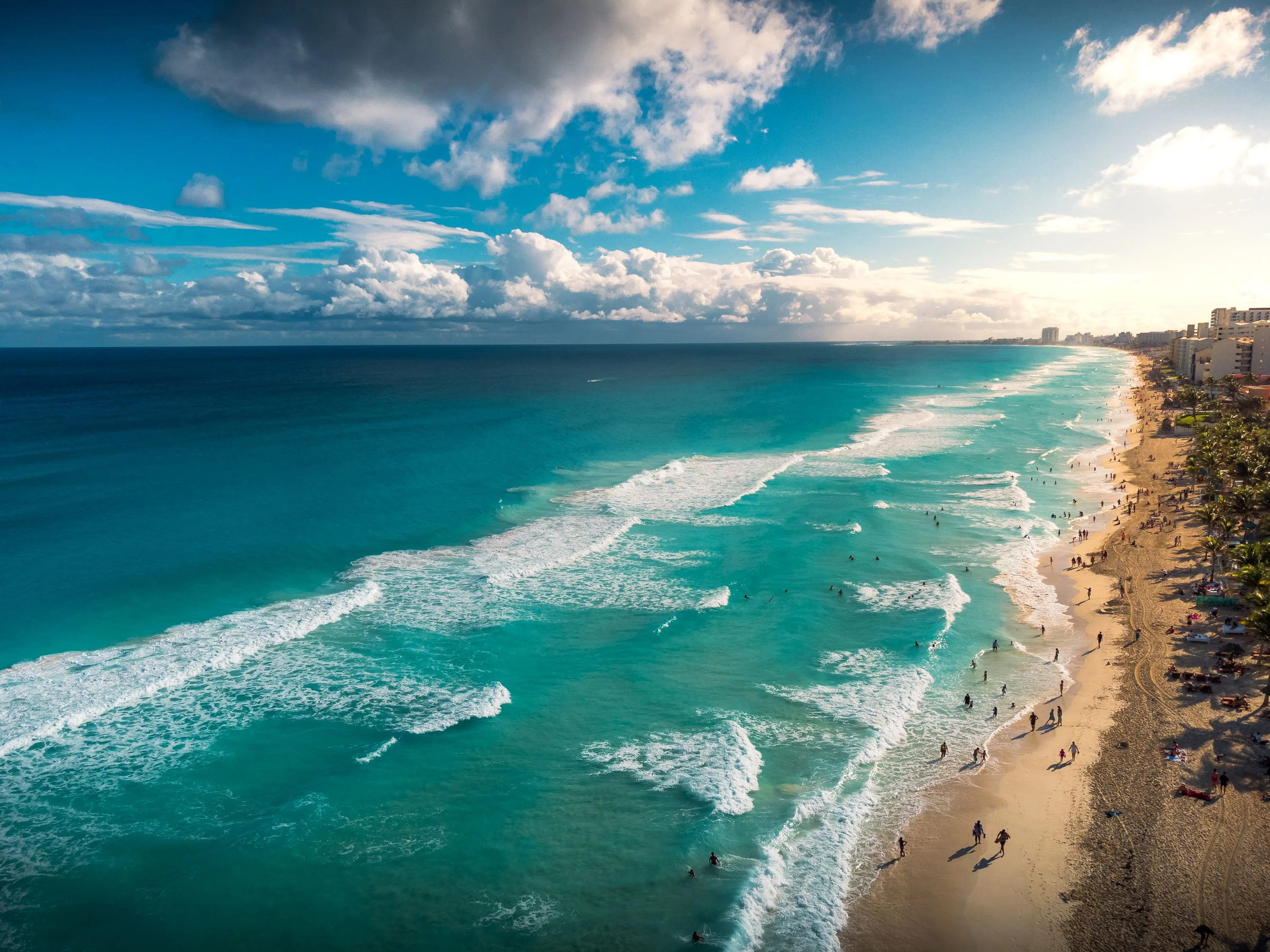
The beaches of the northern Hotel Zone, Playa Langosta, Playa Tortugas and Playa Caracol, consistently receive less sargassum than those further south. Playa Delfines is the most exposed of the well-known beaches, and the far southern end around Punta Nizuc is where the seaweed tends to pile up most heavily.
Sargassum is seasonal. The first arrivals may appear in May, the peak falls in July and August, and during that period the northern Hotel Zone is usually moderately affected while the southern zones can be severely hit. If a clear shoreline is the whole point of your trip, pick a hotel in the north or plan around the summer peak.
Across the water
Isla Mujeres, the short ferry hop
Isla Mujeres is the easiest escape from the Hotel Zone. Ferries leave from Puerto Juárez and take about 15 to 20 minutes, so the island works equally well as a day out or as a quieter base for a night or two.
Its main draw is Playa Norte, the beach in the region that is most reliably free of sargassum, including in the months when Cancún's own shoreline is affected. Once on the island, the usual way to get around is by rented golf cart, typically hired by the day and seating four.
Day trip
Chichén Itzá and Tulum
The two classic ruin visits are both doable in a day. Chichén Itzá is about two and a half hours away by car. Foreign visitors pay two separate charges at the gate, a fee for INAH, the national heritage institute, and a larger one levied by the state of Yucatán, and organised tours from Cancún generally bundle transport, lunch and a cenote stop on the way back.
Tulum lies 131 km to the south, about two hours by road. Entry there is made up of several stacked fees (the archaeological site, the protected natural area and the Parque del Jaguar), and published totals differ from one source to the next, so check the current amount before you go rather than relying on an old figure.
Fresh water and reef
Cenotes and Cozumel
Cenotes, the freshwater sinkholes of the Yucatán Peninsula, are the natural counterpart to a beach day. Ik Kil, Dos Ojos and Gran Cenote are among the best known. They have one practical advantage in summer: they are inland, so they stay free of sargassum whatever is happening on the coast. Entry prices vary a good deal between cenotes and between sources.
Cozumel is reached by ferry from Playa del Carmen, a crossing of 35 to 45 minutes. It takes more organising than Isla Mujeres because you first have to travel down the coast, so allow a full day for it.
Climate
Heat all year, and a hurricane season to plan around
November to April
The recommended window: outside hurricane season and before the sargassum arrives.
May to June
First sargassum may reach the coast; hurricane season opens in June.
July to August
Sargassum peak, and the start of the cheapest period for hotels.
September to October
Peak of hurricane season and the wettest part of the year.
Cancún is warm year-round, with an average annual temperature of 27.1 °C. Rainfall totals about 1,340 mm a year and is concentrated between August and November. Hurricane season runs from June to November and peaks in September and October.
Major storms have marked the resort's history: Gilbert in 1988, Wilma in 2005, and Dean in 2007, which stripped the sand from 7.5 miles of beaches. The trade-off for travelling in the riskier months is price. July to October is the cheapest period, with hotel rates 40 to 60 percent below peak.
Costs and nightlife
What shapes the budget once you have landed
Cancún covers a very wide price range. Hotel rates run from modest to several times that amount per night, all-inclusive packages are priced per person and climb steeply at the top end, and organised tours span a similar spread depending on distance and what is included. Budget travellers do manage on a modest daily amount, and the airport bus and flat-fare city buses help keep transport costs low.
For a night out, Coco Bongo is the name that comes up most often. Admission includes drinks and costs noticeably more at weekends than midweek, which is worth knowing if your dates are flexible.
Why track Cancún with SniperAir
You don't need to compare prices every day
Pick your departure
Set your departure airport and maximum budget for a flight to Cancún.
SniperAir keeps watch
Our systems continuously compare new prices against the route's real history.
You get an alert
As soon as a price matches your criteria, you're notified, without having to search yourself.
Cancún's airport
From the terminal to the Hotel Zone
Cancún International
About 15 million passengers a year.
ADO runs a bus from the airport to the Hotel Zone. The ride takes about 40 to 45 minutes, with nine departures a day at peak times. Once you are settled, the R1 and R2 city buses run along the Hotel Zone for a small flat fare per trip.
By length of stay
What to do in Cancún depending on how long you stay
The essentials
The beaches of the northern Hotel Zone and an evening out on the strip.
Add an island
Take the ferry to Isla Mujeres for Playa Norte, and fit in a cenote.
The full picture
Beach time, one island and one day at the ruins, Chichén Itzá or Tulum: five days is the recommended length.
You might also like
Similar destinations
FAQ
Frequently asked questions about flights to Cancún
Which airport do I fly into for Cancún?
Cancún International (CUN), which handles about 15 million passengers a year.
How much does a flight to Cancún usually cost?
The price mostly depends on your departure city, the season, and how far ahead you book. The "opportunities" section above shows real price examples already detected by SniperAir for this destination.
When is the best time to visit Cancún?
November to April. Hurricane season runs from June to November with a peak in September and October, and sargassum peaks in July and August. July to October is the cheapest period, with hotel rates 40 to 60 percent below peak.
When is sargassum season, and which beaches are least affected?
The first seaweed may arrive in May and the peak is in July and August. The northern Hotel Zone (Playa Langosta, Tortugas, Caracol) gets less than the south, and Playa Norte on Isla Mujeres is the most reliably clear. Cenotes, being inland, are never affected.
How many days do I need in Cancún?
Five days is a good length: enough for the beach, one island such as Isla Mujeres, and one day at the ruins of Chichén Itzá or Tulum.
How do I get from the airport to the Hotel Zone?
The ADO bus links the airport to the Hotel Zone in about 40 to 45 minutes, with nine departures a day at peak times. Along the Hotel Zone itself, the R1 and R2 city buses charge a small flat fare per trip.
How do I get alerted when a flight to Cancún drops below my budget?
Create an alert profile with your departure airport, Cancún as the destination, and your maximum budget. You'll be automatically notified as soon as a matching price is detected.
Ready to head to Cancún?
Set your budget and let SniperAir track the prices.
Create my alert