
Cheap flights to Puerto Vallarta
Set your departure airport and maximum budget: SniperAir tracks prices to Puerto Vallarta and alerts you the moment a deal matching your criteria appears.
Quick summary
Country
Mexico
Continent
North America
Airport
PVR
Currency
Mexican peso
Time zone
UTC-6
Deals already spotted to Puerto Vallarta
Real flight examples detected by SniperAir, with their reference price.
Loading examples…
Why track Puerto Vallarta with SniperAir
You do not need to compare prices every day
Choose your departure
Enter your departure airport and your maximum budget for a flight to Puerto Vallarta (PVR).
SniperAir watches
Our systems continuously compare new fares with the real price history of the route. SniperAir tracks prices and alerts you: it does not sell or book tickets.
You get an alert
As soon as a fare matches your criteria, you are notified, without having searched anything yourself.
Airport and getting into town
An international airport a few kilometres from the seafront
Puerto Vallarta-Licenciado Gustavo Díaz Ordaz
The airport lies about 6 to 8 km north of the centre and the Zona Romántica, right beside the main highway and close to Marina Vallarta and the hotel zone; allow roughly 15 to 30 minutes depending on the mode of transport and traffic. City buses marked Centro stop under the pedestrian bridge: about 20 to 30 minutes to the Zona Romántica. Authorised taxis are bought at the official kiosk in the arrivals hall; cheaper city taxis run on the far side of the bridge, and ride-hailing cars pick up on the northbound side of the road. Nuevo Vallarta, in the neighbouring state of Nayarit, is about 17 km away (around twenty minutes). Direct flights connect the airport with Canada and the United States, with seasonal services from Europe mostly between November and March, and with many Mexican cities.
Distances and times are indicative, taken from Wikivoyage (EN, ES, FR); sources give 6 to 8 km depending on the starting point. In the arrivals area, ignore touts offering transport or tours and go straight to the official kiosk.
Malecón and old town
From the Malecón to the Zona Romántica, between sea and mountains
The Malecón and the Guadalupe church
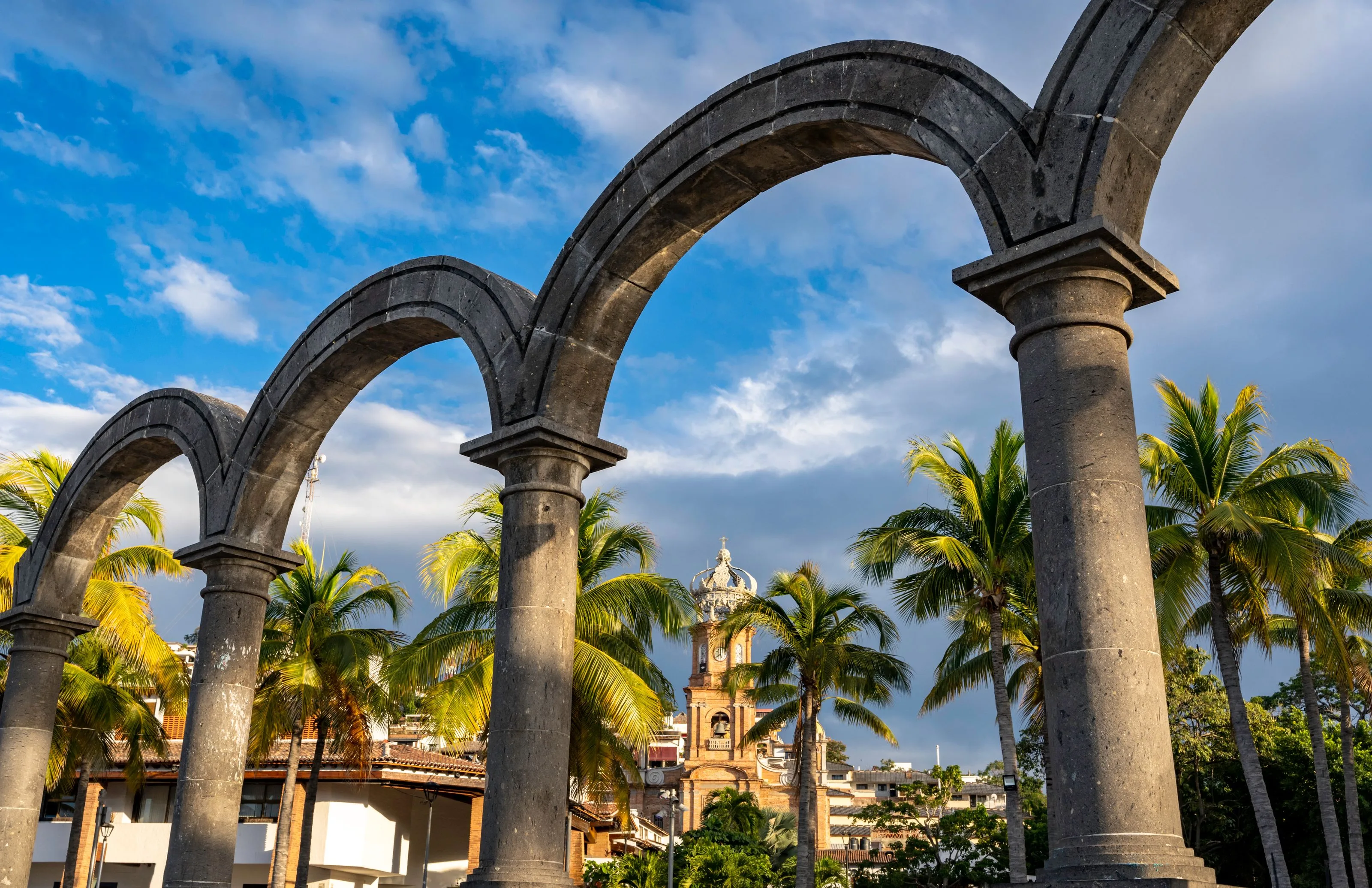
The Malecón is the seafront promenade of the city centre, lined with restaurants, craft shops and a series of contemporary sculptures; it was largely rebuilt in 2002-2003 after Hurricane Kenna. The stone arches on the waterfront host open-air shows. A short walk away, the church of Our Lady of Guadalupe, with its crown-topped bell tower, is one of the city's emblems.
The coves of the south coast
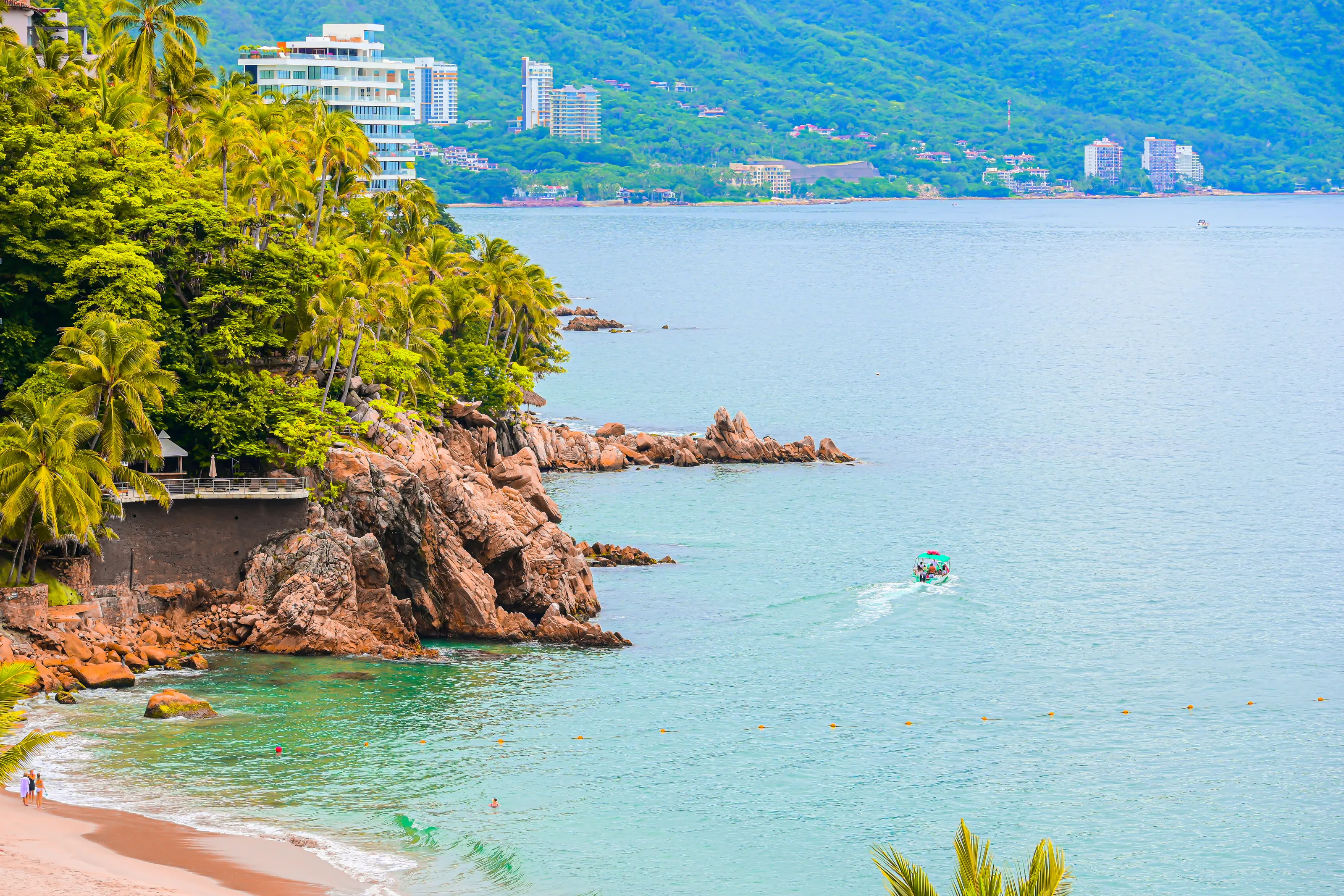
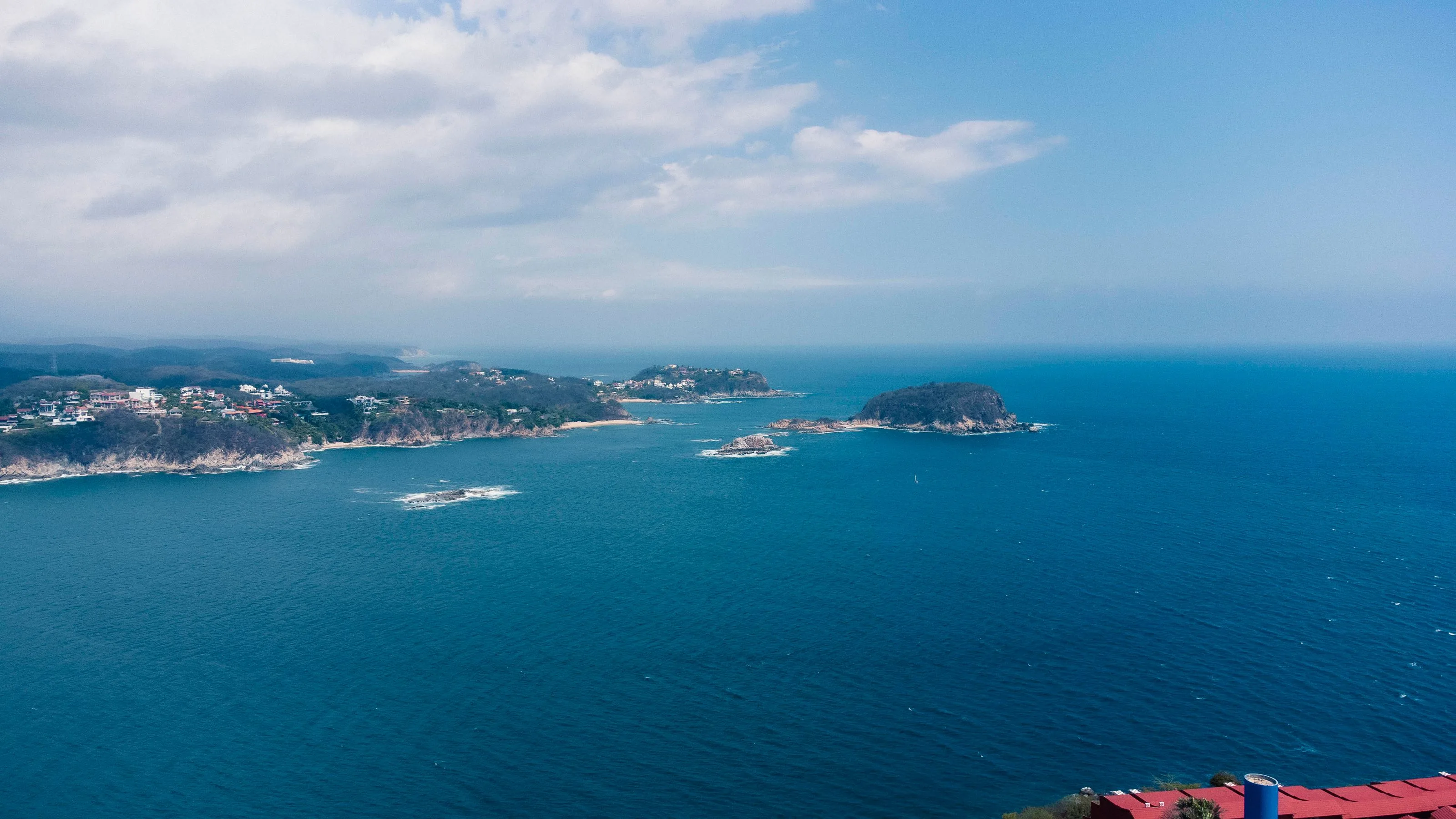
South of the city the coastal road runs past sandy coves and large red rocks fringed with tropical vegetation. Mismaloya, about 15 km away, is known as the location of the 1964 film The Night of the Iguana, which put the resort on the world map. Farther on, Yelapa, about 86 km away, is a beach village reached by water taxi or a long, bumpy road.
Zona Romántica and Isla Cuale
The Zona Romántica, south of the Cuale river, is the historic heart of the resort: sloping lanes, restaurants, bars and Los Muertos beach with its modern pier. Isla Cuale, a small island in the middle of the river, holds a park, craft stalls, galleries and an archaeological museum. Up the hill, the Gringo Gulch neighbourhood recalls the 1960s, when film stars bought villas there. The city is known as very welcoming to LGBT travellers, with a large Pride celebration in May.
Panorama
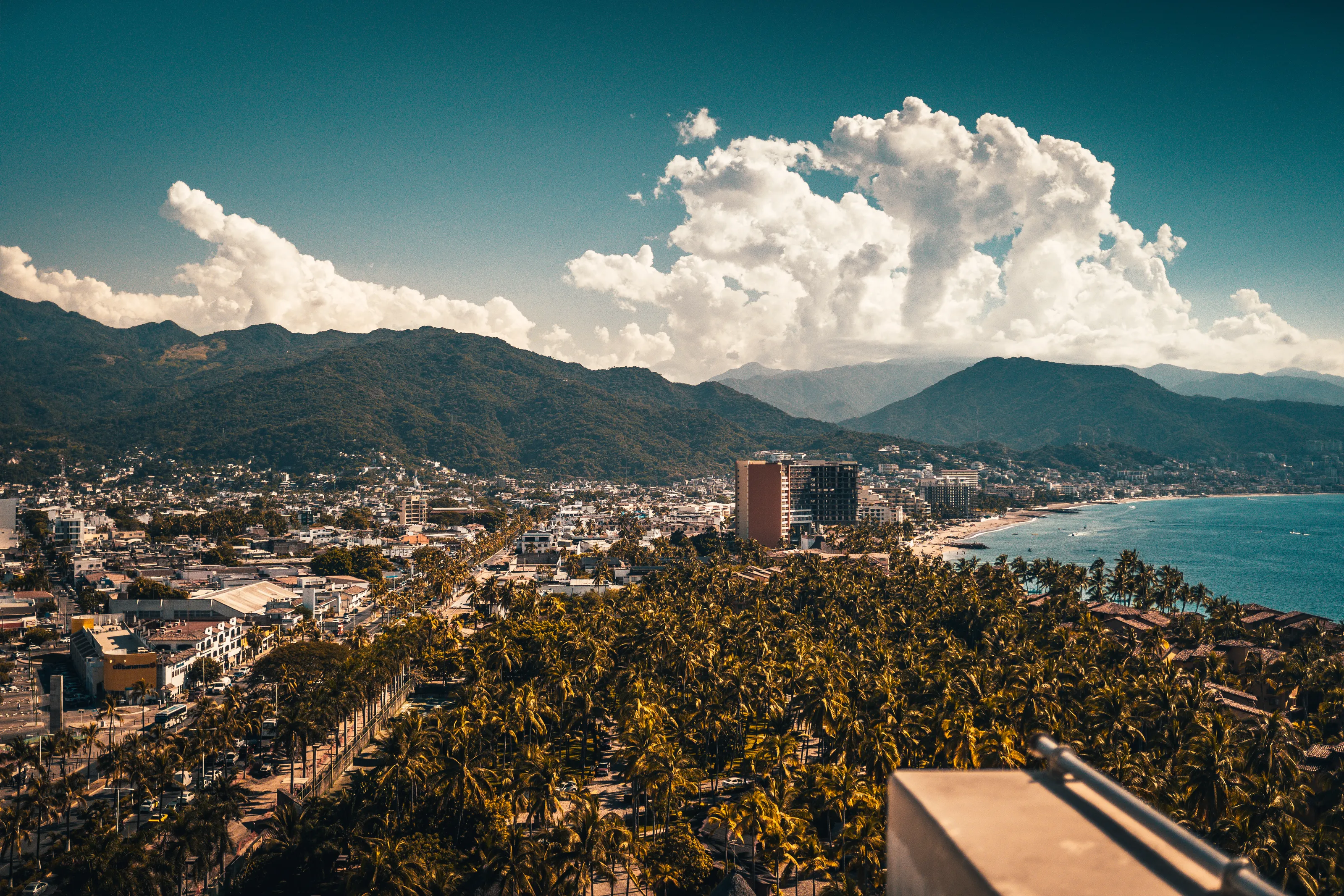
The city between bay, palm groves and mountains
Banderas Bay
Whales, turtles and boat trips
On the water
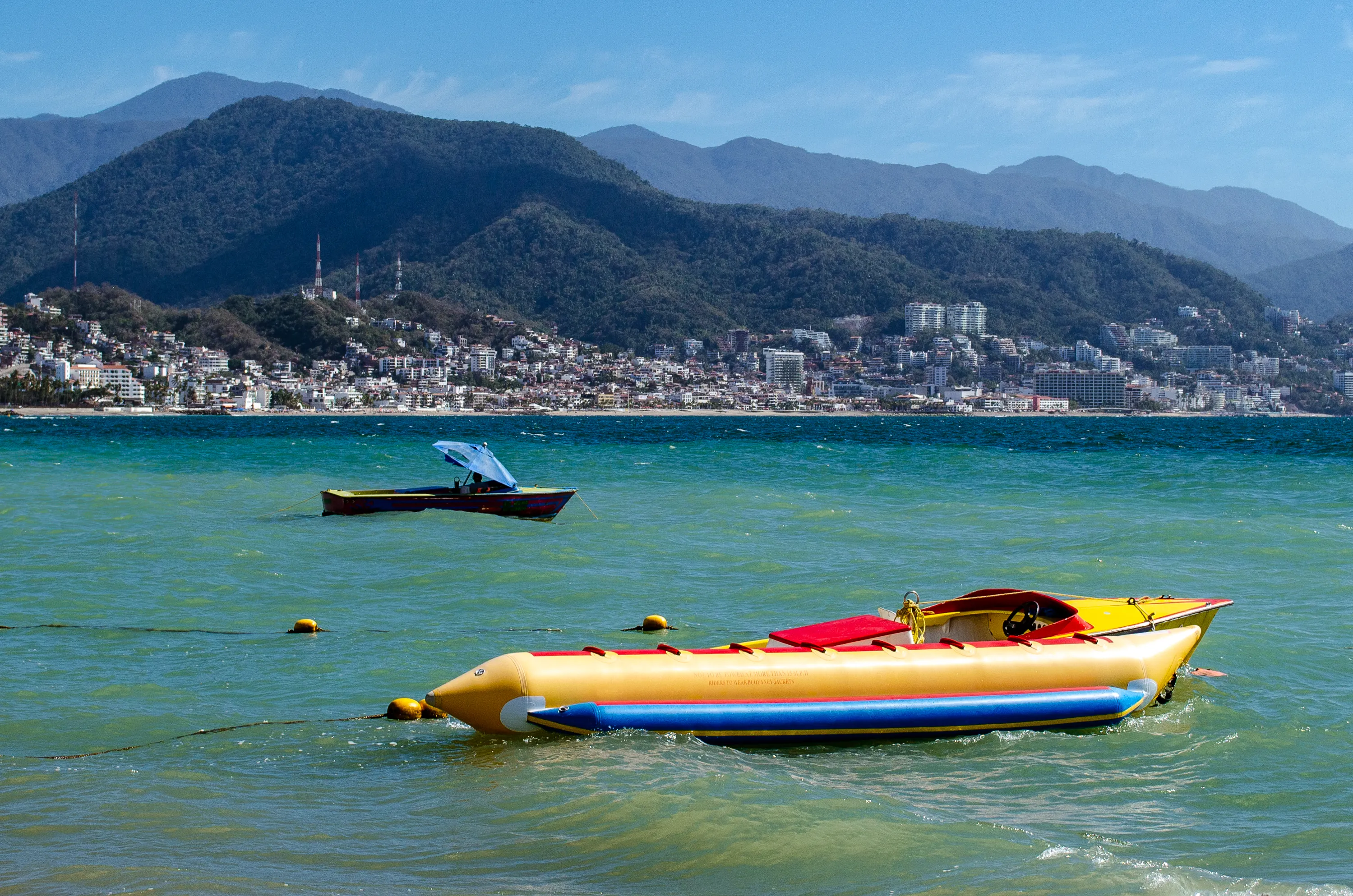
The wide Banderas Bay lends itself to boat trips, sailing, snorkelling and fishing. From December to March humpback whales come here to breed and whale-watching trips leave every day; dolphins and giant manta rays also visit the bay. The Marietas Islands, at the northern entrance of the bay, are a classic destination for divers.
Turtles and nature
Sea turtles nest on the beaches from May to October; some supervised programmes let visitors release hatchlings. Keep your distance from whales, never touch turtles or their nests and choose operators that respect the viewing rules. About twenty kilometres to the south, the Vallarta Botanical Gardens show orchids, agaves and palms in the tropical dry forest.
Trips around the bay
To the north, the coast of Nayarit state offers long beaches: Bucerías about 25 km away, Punta Mita and Sayulita about 45 km away. To the east, San Sebastián del Oeste, a colonial former mining town 70 to 80 km away in the Sierra Madre, is known for its old-world atmosphere and for raicilla, a local agave spirit. Guadalajara is about 330 km away by road.
Museums and culture
Museums, galleries and open-air sculpture
The museums
The Cuale Archaeological Museum, on Isla Cuale, presents pre-Hispanic art from the region and a small contemporary art gallery. The Naval Museum, on Calle Zaragoza, tells the story of the Mexican Navy with ship models, cannons and uniforms. Check the opening hours before you go, as they change with the season.
Galleries and sculpture
The centre and the Zona Romántica have many galleries of contemporary Mexican art, Huichol art and photography, with gallery-walk evenings in season. The Malecón works as an open-air museum: it displays works by several Mexican sculptors, including Sergio Bustamante, Alejandro Colunga and Ramiz Barquet.
Festivals and film history
The 1964 shooting of The Night of the Iguana, directed by John Huston, launched the resort; a statue of the director recalls it. Carnival takes place in February, Pride in May, and the feast of the Virgin of Guadalupe on 12 December is preceded by daily processions through the centre from 1 December.
Food and drink
Fish, tacos and raicilla
Fish and seafood
On the coast, fish is eaten as ceviche, marinated in lime, or grilled, in beach restaurants under palapas as well as on rooftop terraces in the centre. Shrimp and the fish of the day feature on almost every menu.
Tacos and markets
You are never far from a taco stand; residential districts such as Pitillal or the 5 de Diciembre neighbourhood, away from the seafront, offer cheaper street meals. The Río Cuale municipal market mostly sells crafts and souvenirs. To be safe, choose busy stalls and bottled water.
Local drinks
Tequila and raicilla, an agave spirit from the Jalisco mountains, are served in the bars of the centre; a food festival in mid-November offers wine and tequila tastings, cooking classes and gala dinners.
Getting around
City buses, taxis, ride-hailing and water taxis
City buses
City buses run very often, sometimes every five minutes; you flag them down and the destination is shown on the windscreen: Centro follows the seafront, Túnel goes straight to the old town, Walmart leads to the transfer point for the north, towards Nuevo Vallarta and Sayulita. No official timetable is published online; mapping apps cover the city.
Taxis and ride-hailing
Ride-hailing apps cover the whole city. For a taxi, agree the fare before getting in; hotels often have a price list. Tipping is not automatic for taxis.
On foot, by boat, long distance
The Malecón, the centre and the Zona Romántica are explored on foot. For Yelapa or coves with no road access, you take a water taxi. A rental car is useful for excursions, but driving calls for care in high season. To reach Guadalajara (about 330 km) or Mexico City (nearly 900 km), the bus is possible; flying is more practical for Mexico City.
Budget
A medium to high budget for Mexico, varying a lot by neighbourhood
Puerto Vallarta is a major beach resort: prices are higher than in many other Mexican cities, especially on the seafront, in the Zona Romántica, the Marina and the hotel zone. Street meals, city buses and residential neighbourhoods remain affordable. Compared with Europe, simple meals and transport generally cost less, while seafront accommodation and large resorts can come close in high season. We give no figures, because prices vary with the season and the exchange rate.
At Christmas and Easter the city fills with Mexican and foreign visitors: prices rise and the beaches are crowded; booking early and aiming for quieter weeks of the dry season helps keep costs down.
The plane ticket remains the most variable part of a trip. SniperAir tracks fares to PVR and compares them with the route's price history.
When to go
When to go to Puerto Vallarta?
December to March
Dry and high season: warm days (about 27 °C average high in January), pleasant sea and humpback whales in the bay.
April and May
February to April are among the least rainy months; heat and humidity build up gradually in May.
June to October
Rainy season, from about mid-June to mid-October: humid heat (about 32 °C in July), concentrated downpours, August the wettest. It is also turtle nesting time.
November
Dry weather returns and the resort gets ready for high season; the mid-November food festival brightens the city.
The climate is tropical, with dry winters and rainy summers. For the beach, the best period runs from December to May, with the least rain from February to April. From June to October the heat is more humid but showers are often short and the vegetation is very green; prices are often lower.
Pacific hurricanes mostly concern late summer and autumn, but the sheltered bay is rarely hit head-on: Hurricane Kenna, in October 2002, made landfall about 160 km to the north-west. Check official forecasts before and during your trip. Sargassum seaweed affects Mexico's Caribbean coast, not the Pacific coast.
By length of stay
What to do in Puerto Vallarta depending on how long you stay
The essentials
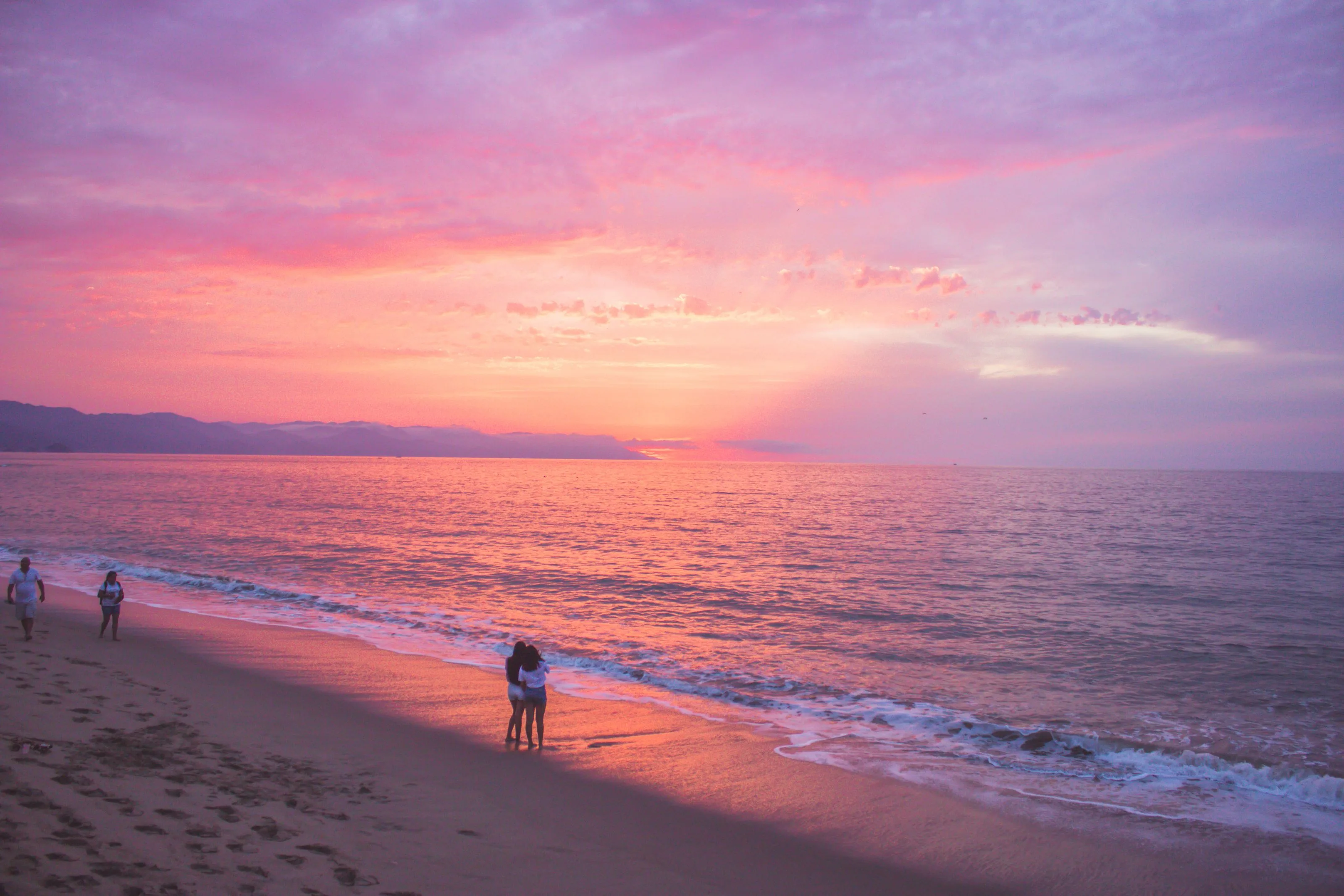
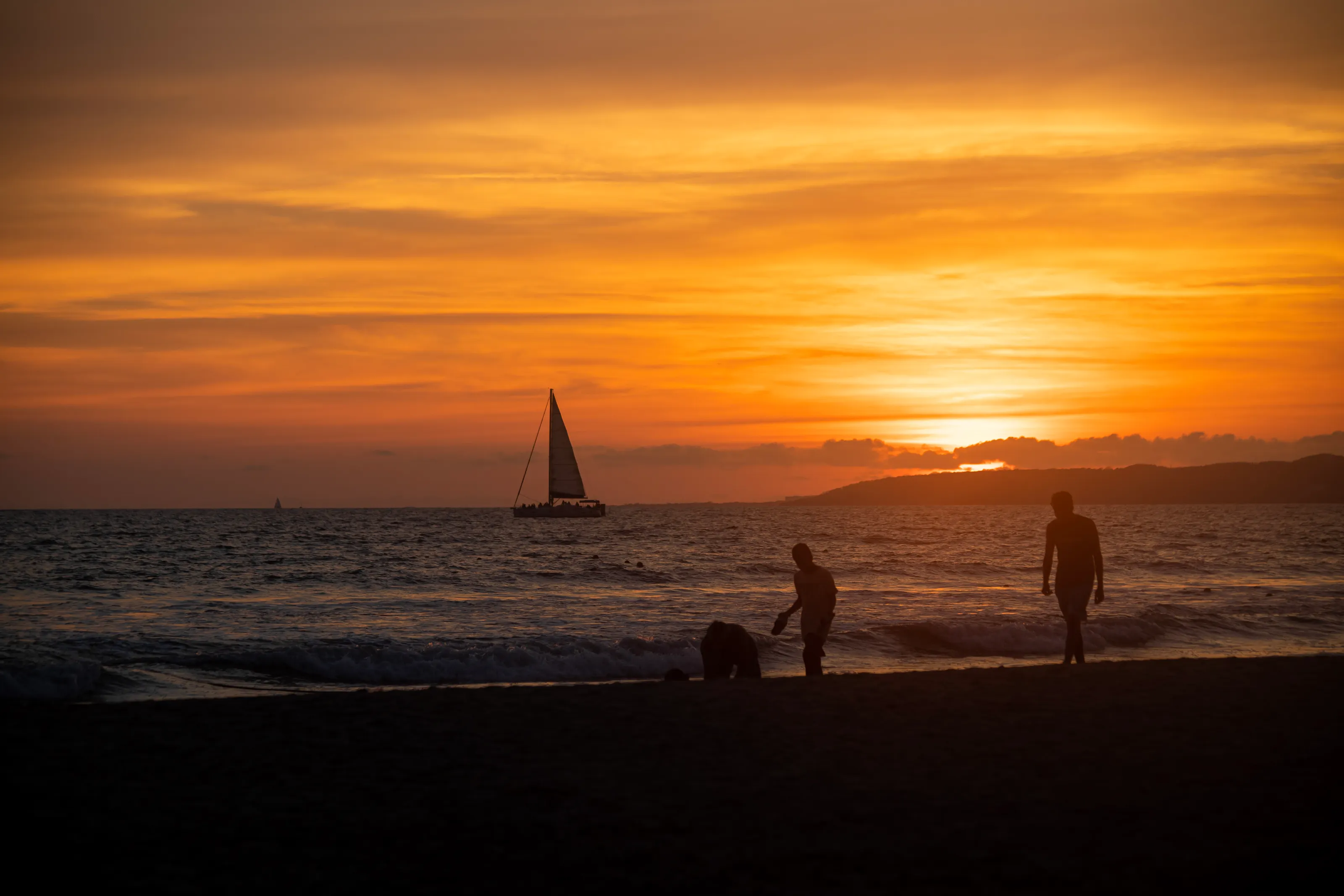
Malecón, Zona Romántica, Isla Cuale and a sunset on the beach.
The bay
A boat trip (whales from December to March), Mismaloya or Yelapa, a museum.
The surroundings
Sayulita or Punta Mita, the botanical gardens, San Sebastián del Oeste.
In pictures
Puerto Vallarta in pictures
You might also like
Similar destinations
FAQ
Frequently asked questions about flights to Puerto Vallarta
How do I get from Puerto Vallarta airport to the centre?
The airport (PVR) is about 6 to 8 km from the centre. A city bus marked Centro takes about 20 to 30 minutes to the Zona Romántica; authorised taxis are bought at the official kiosk, city taxis are cheaper across the pedestrian bridge, and ride-hailing also works.
What is the best time to visit Puerto Vallarta?
From December to May for the beach, with the least rain from February to April. The rainy season runs from mid-June to mid-October, with concentrated downpours and humid heat.
When can I see whales and turtles?
Humpback whales visit the bay from December to March; sea turtles nest on the beaches from May to October. Choose operators that keep their distance and do not touch the animals.
Is Puerto Vallarta expensive?
It is more expensive than many other Mexican cities, especially on the seafront and in high season, but street meals, buses and residential neighbourhoods remain affordable. Prices vary by season.
How do I get around Puerto Vallarta?
On foot in the centre and the Zona Romántica, by very frequent city bus, by taxi (agree the fare before getting in) or by ride-hailing. For Yelapa you take a water taxi; for Sayulita, a bus with a transfer or a shuttle.
Hurricanes and safety: what should I know?
The bay is rarely hit head-on by hurricanes, but the season runs from late spring to autumn: follow official forecasts. For safety, consult the official travel advice of your country of residence before you leave and keep an eye on your belongings.
How much does a flight to Puerto Vallarta usually cost?
The price depends mainly on your departure city, the period and the booking date. The "opportunities" section above shows real examples of prices already detected by SniperAir for this destination.
How do I get alerted when a flight to Puerto Vallarta drops below my budget?
Create an alert profile with your departure airport, Puerto Vallarta as the destination and your maximum budget. You are notified automatically as soon as a matching fare is detected.
Ready to head to Puerto Vallarta?
Set your budget and let SniperAir monitor fares for you.
Create my alert