
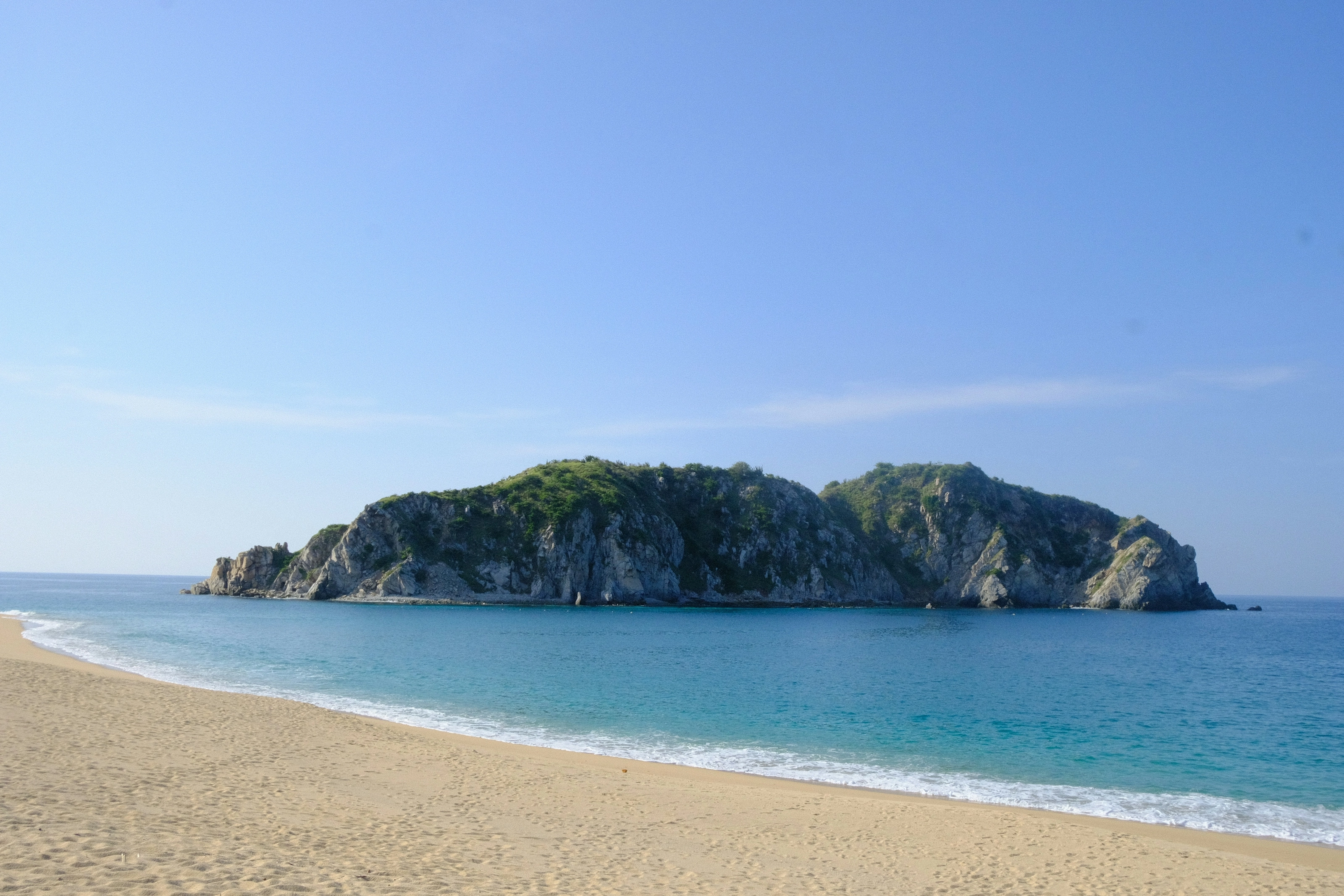
Cheap flights to Huatulco
Set your departure airport and maximum budget: SniperAir tracks prices to Huatulco and alerts you the moment a deal matching your criteria appears.
Quick summary
Country
Mexico
Continent
North America
Airport
HUX
Currency
Mexican peso
Time zone
UTC-6
Deals already spotted to Huatulco
Real flight examples detected by SniperAir, with their reference price.
Loading examples…
Why track Huatulco with SniperAir
You do not need to compare prices every day
Choose your departure
Enter your departure airport and your maximum budget for a flight to Huatulco (HUX).
SniperAir watches
Our systems continuously compare new fares with the real price history of the route. SniperAir tracks prices and alerts you: it does not sell or book tickets.
You get an alert
As soon as a fare matches your criteria, you are notified, without having searched anything yourself.
Airport and getting into town
A small airport 10 to 20 minutes from the bays
Bahías de Huatulco International
The airport, small and airy with palapa-style buildings, is about 10 to 20 minutes by car from La Crucecita, Santa Cruz and the large hotels of Tangolunda Bay. It is served by flights from Mexico City (about an hour in the air) and Oaxaca, and, depending on the season, by direct flights from Canada and the United States; other travellers connect through Mexico City. Outside, authorised taxis and shuttles have fixed fares, higher than city taxis; walking about 500 m to the main road gets you cheaper taxis or a local bus if you travel light. By road, allow about 5 to 6 hours from Oaxaca city and about 10 hours from Mexico City.
Distances and times are indicative, taken from Wikivoyage (EN) and Wikipedia (EN, ES); flight connections change with the season, so check them before booking.
Bays and beaches
Nine bays, 36 beaches and a jagged coastline
The nine bays of Huatulco
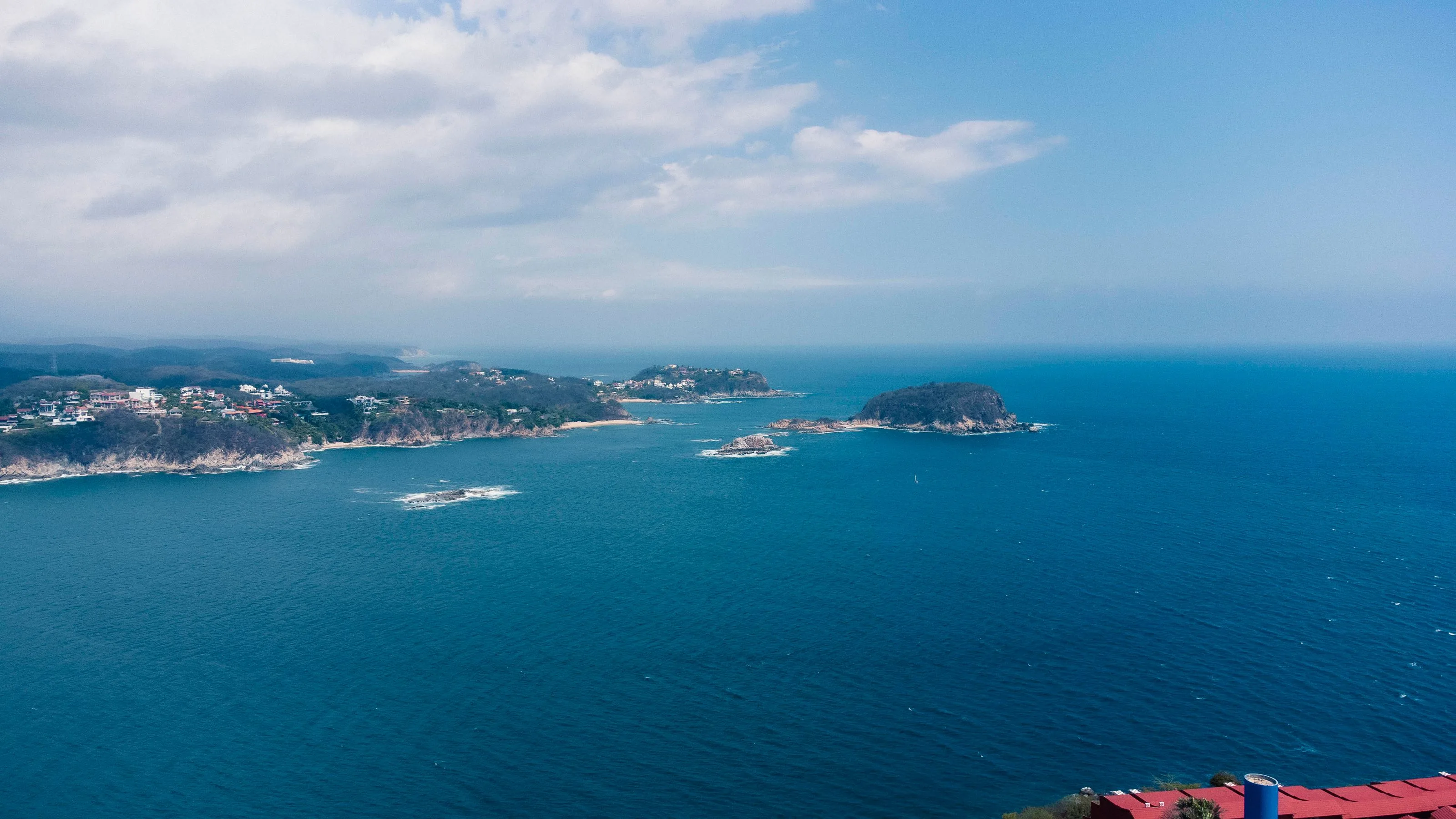
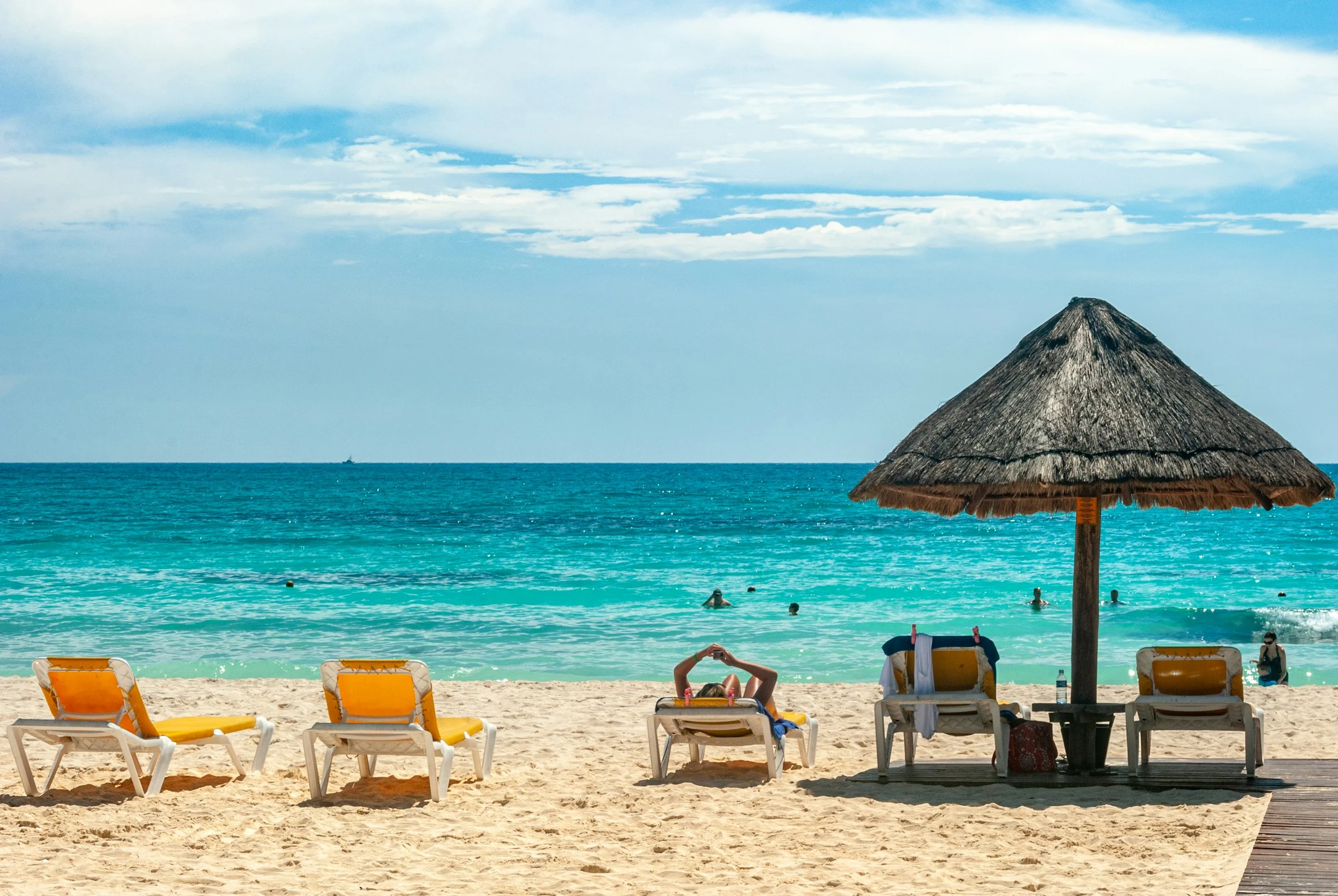
Huatulco, or more precisely the Bahías de Huatulco, spreads over nine bays and 36 sandy beaches along the Pacific coast of Oaxaca state. Four bays are developed (Santa Cruz, Chahué, Tangolunda and Conejos); five others, such as San Agustín, Chachacual, Cacaluta, Maguey and Órgano, are protected within the national park. The site was created from the 1980s as a planned beach resort, with large areas left to nature.
Santa Cruz, La Crucecita and the accessible beaches
Santa Cruz Bay, in the middle, holds the marina, the pier for excursion boats and the pier for cruise ships, as well as the small Santa Cruz chapel by the water. La Crucecita, further inland, is the town centre with its zócalo, restaurants and shops. La Entrega and Maguey beaches are linked by a paved road; Cacaluta, Violín and Órgano are reached on foot, Chachacual and La India only by boat.
Swimming and exploring
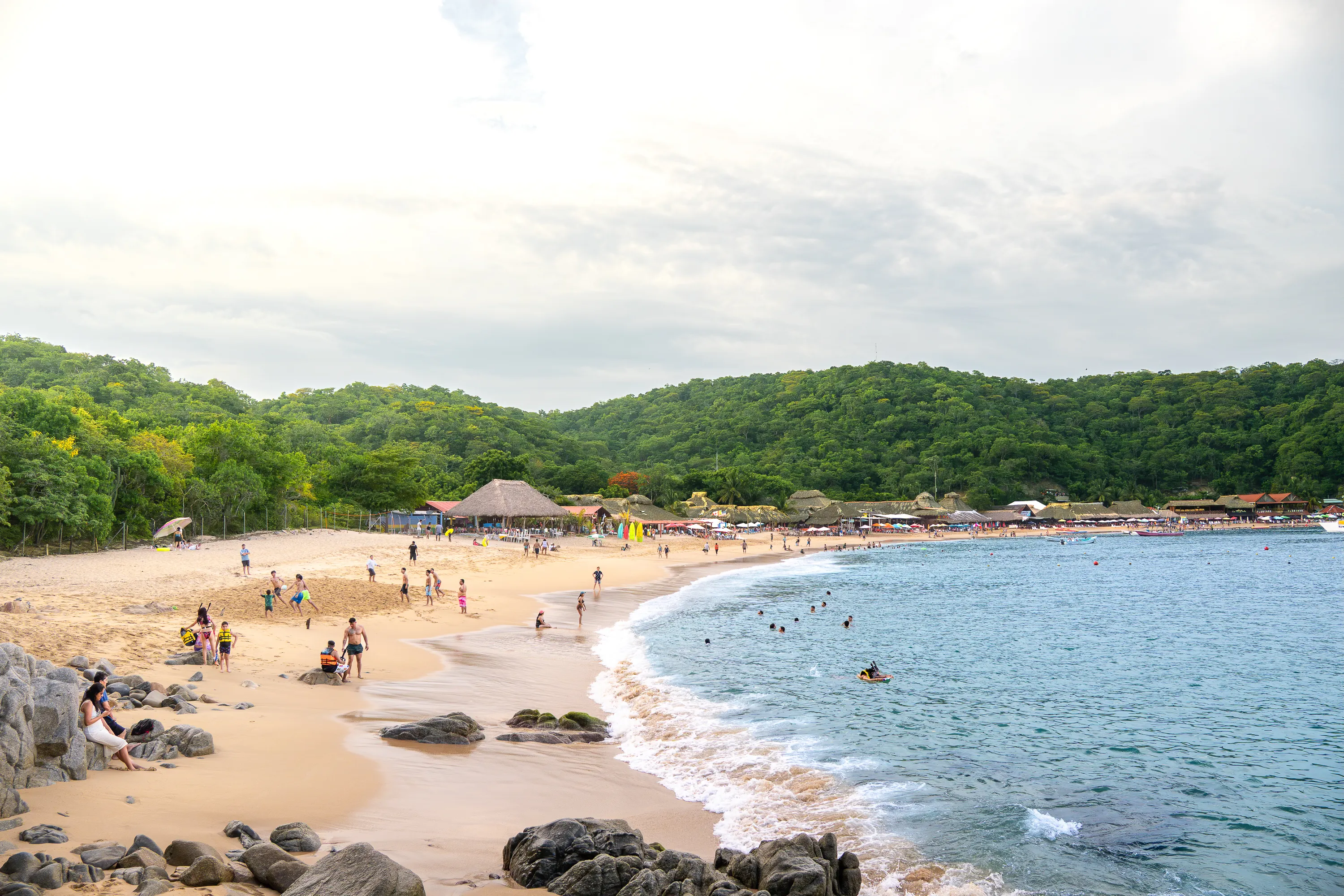
The sheltered bays usually offer calm water, with large areas marked by buoys to protect swimmers from boats. Shared boat trips from Santa Cruz visit several bays in the park, with stops that depend on the operators; you can also hire a small boat or a catamaran. Along the coast, beach restaurants and bars serve in the shade of palapas.
Panorama
A bay seen from above
National park and nature
Dry forest, rocky coves and biosphere reserve
The wild coast
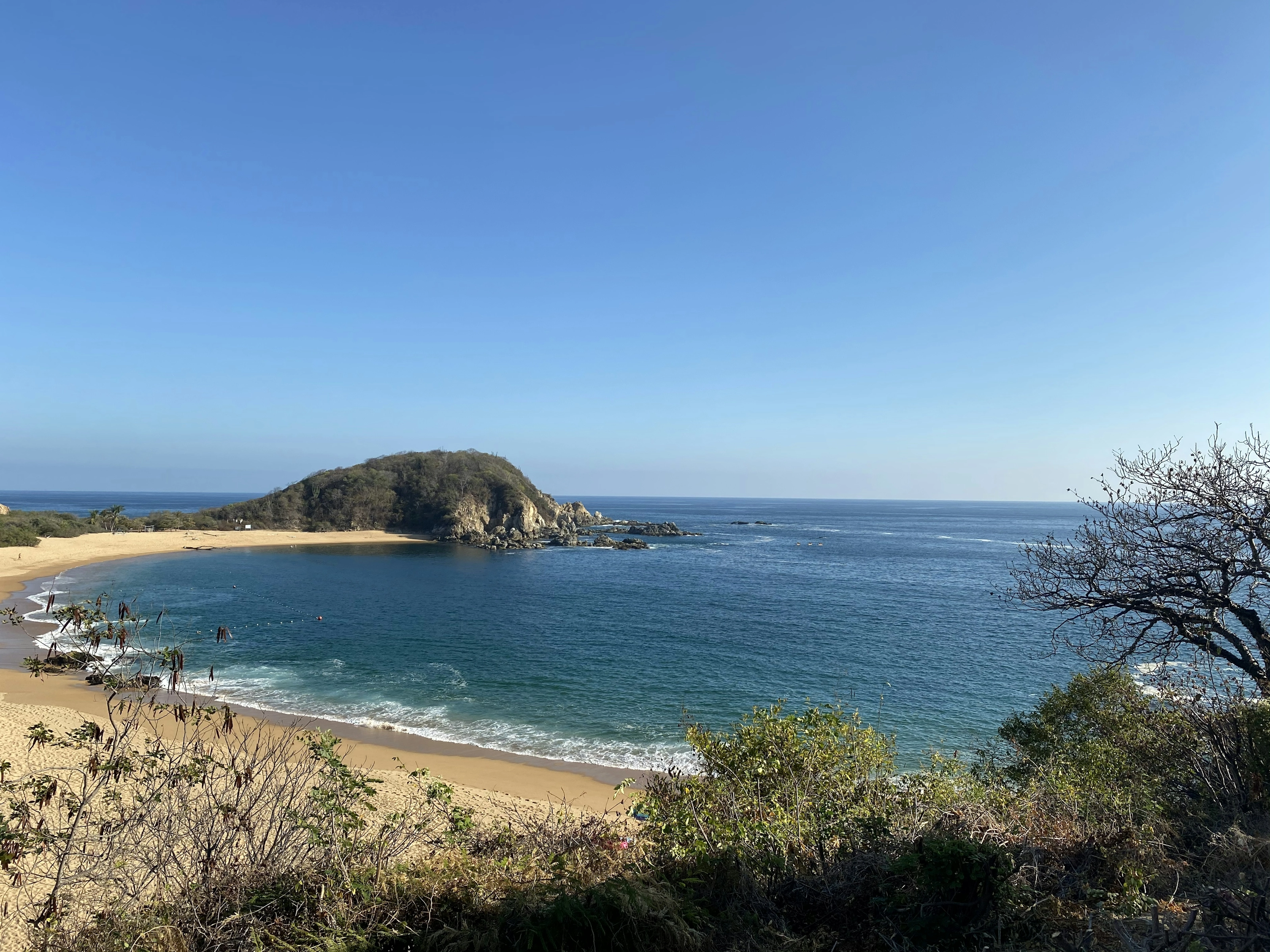
A large part of the municipality is a national park, which protects the tropical dry forest, mangroves and reefs. The bays and the adjoining dry forest form a UNESCO biosphere reserve. The cliffs and wave-battered coves can be seen by boat or on the trails; in the dry season the vegetation is brownish, in the rainy season it is very green.
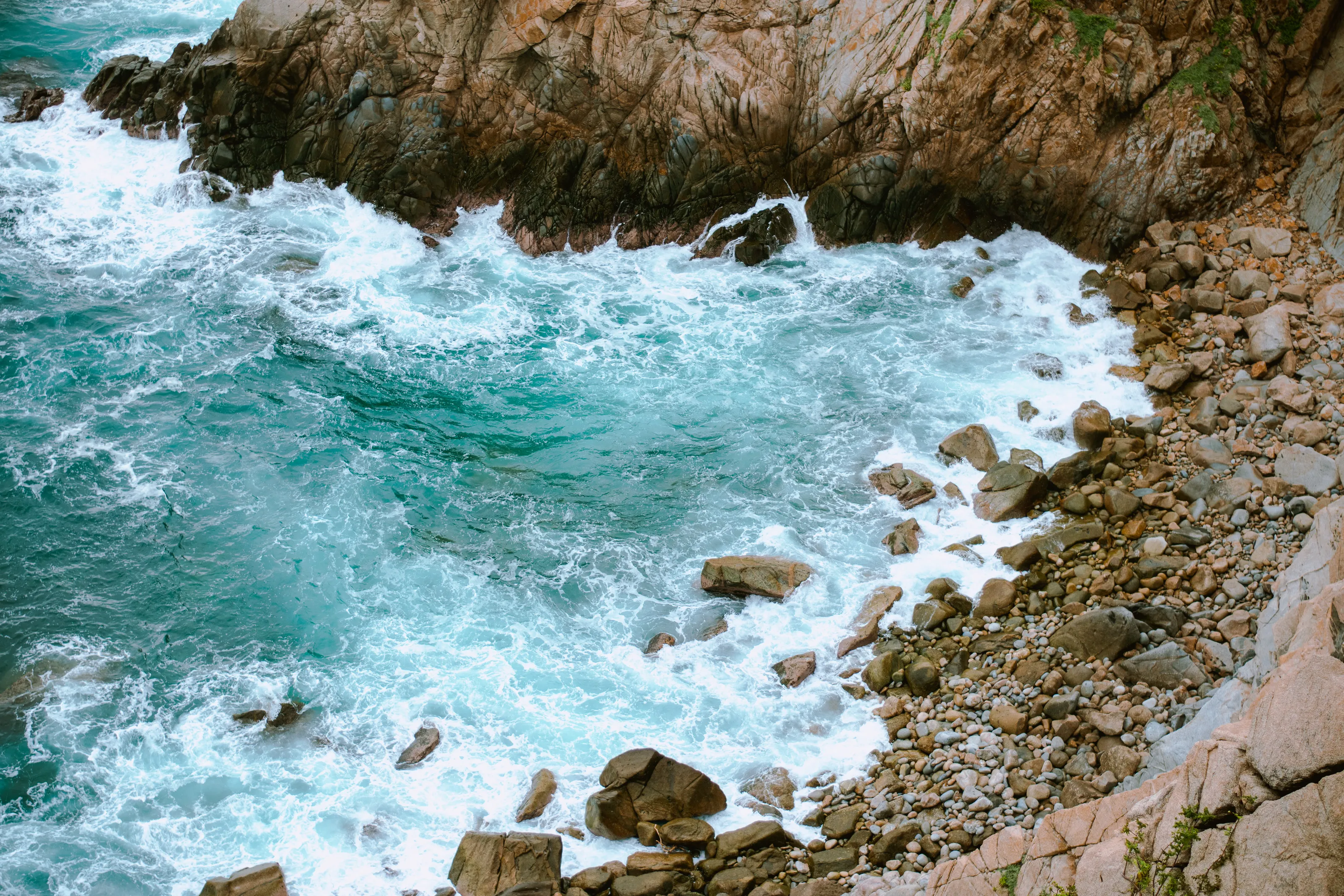
Respecting the area
In the park, do not touch the corals, leave no rubbish and follow your guides' instructions; the state of the reefs, hit by a marine heat wave in 2023, should be checked with diving and snorkelling operators. The beaches are known for being calm, but swell can surprise you: stay within the marked areas.
Museums and culture
An archaeological site, a chapel and the culture of Oaxaca's coast
The Copalita site
About ten kilometres from the bays, the archaeological site of Bocana del Río Copalita, some 2,500 years old, is open to visitors: it has a main temple, a temple dedicated to a serpent god, a Mesoamerican ball court and a small site museum. It is believed to have stood on the border between Zapotec and Mixtec territories.
Chapel, old town and history
The Santa Cruz chapel, by the sea, hosts weddings and baptisms. The old town of Santa María Huatulco, the municipal seat, lies in the foothills of the Sierra Madre del Sur about twenty kilometres from the coast; hardly touristy, it keeps a local way of life. The port was raided by the privateer Francis Drake in 1579, and the region was mostly known for coffee before tourism took off.
Further along the coast
About 45 km to the east, Zipolite and, a little farther on, Mazunte are more bohemian beach villages; Mazunte is home to the National Sea Turtle Museum. For museums and colonial heritage, Oaxaca city is about five to six hours by road or a very short flight.
Food and drink
Fish, shrimp and Oaxacan flavours
Seafood cooking
On the beach, palapas serve grilled fish, shrimp, octopus and shellfish; here a coctel usually means a shrimp or seafood salad, not a mixed drink. Locally caught mahi-mahi is often on the menu.
Oaxacan touches
In the restaurants of La Crucecita you find traditional Mexican dishes with regional Oaxacan touches, such as moles, tlayudas or mezcal, as well as coffee from the region. Fresh fruit juices often go with breakfast.
Where to eat
La Crucecita, around the zócalo, has the cantinas, restaurants and bars; Santa Cruz Bay offers beachside tables near the pier. Nightlife stays quiet: bigger nights out are rather in Puerto Escondido, about 110 km away, nearly two hours by road.
Getting around
Taxis, local buses, colectivos and boats
Locally
Taxis, in different colours depending on their home area, are the most common way to get from one area to another; agree the fare before getting in. Blue-and-white local buses link La Crucecita with Santa Cruz and with the town of Santa María Huatulco, and shared taxis leave once full on short routes.
Remote beaches and boats
Beaches such as La Entrega or Maguey have no public transport: you go by taxi or boat. San Agustín, on the far side of the park, is reached by boat or a long dirt road. Small boats and catamarans can be hired at Santa Cruz harbour, and shared excursions visit several bays.
Car and long distances
A car is not essential, as the tourist area is compact and taxis are plentiful. For farther excursions, day-hire taxis, shared vans or second-class buses serve the coast towards Zipolite and Mazunte, and Pochutla, from where buses leave for Oaxaca.
Budget
A moderate budget, from small guesthouses to all-inclusive resorts
Huatulco is a rather family-oriented resort, visited mainly by Mexicans on holiday: about 80% of its tourism is domestic. The offer ranges from simple rooms and hostels to luxury villas and the large all-inclusive resorts of Tangolunda Bay. Meals in palapas and cantinas, as well as taxis and local buses, remain affordable compared with Europe; we give no figures, because prices vary with the season.
Direct flights are limited, so the trip often goes through Mexico City, which affects the total cost: comparing itineraries and following fares with an alert helps you pick the right moment. The resort fills up at Christmas and Easter, with higher prices.
The plane ticket remains the most variable part of a trip. SniperAir tracks fares to HUX and compares them with the route's price history.
When to go
When to go to Huatulco?
December to February
Dry season and peak season for foreign visitors: plenty of sun, calm sea, crowds at Christmas.
March to May
End of the dry season: heat builds, vegetation turns brown, with heavy crowds at Easter.
June to September
Rainy season: storms and showers, very green landscapes, fewer people; the Pacific cyclone season is under way.
October and November
The rains last into November, then dry weather returns before the high season.
The area gets about 330 days of sunshine a year and an average temperature of around 28 °C. The dry season runs from December to May and the rainy season from June to November. The best time for the beach and boat trips is December to April, when the sea is calm and the weather dry; the rainy season draws fewer people and offers greener landscapes.
The Pacific has a tropical storm and hurricane season, roughly from May to November: follow official bulletins before and during your trip. Sargassum seaweed affects Mexico's Caribbean coast, not this Pacific coast.
By length of stay
What to do in Huatulco depending on how long you stay
The essentials
Santa Cruz Bay, La Crucecita and a boat trip to two or three bays.
Nature and history
The Copalita site, a wilder beach such as La Entrega or Maguey and a walk to Cacaluta.
Along the coast
Zipolite and Mazunte, or an extension to Oaxaca.
In pictures
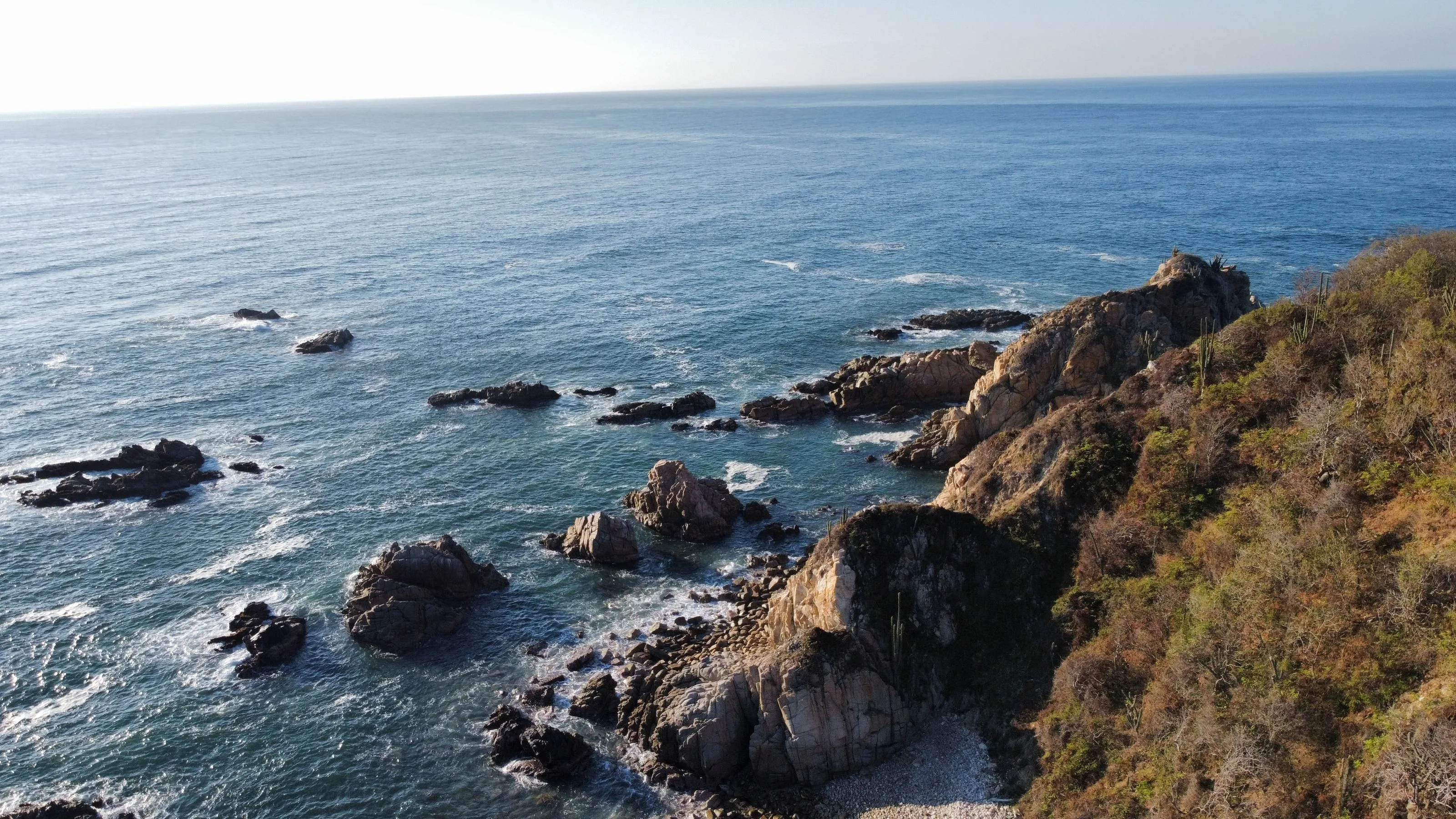
Huatulco in pictures
You might also like
Similar destinations
FAQ
Frequently asked questions about flights to Huatulco
How do I get from Huatulco airport to the beaches and hotels?
The airport (HUX) is about 10 to 20 minutes by car from La Crucecita, Santa Cruz and the Tangolunda hotels. Authorised taxis and shuttles have fixed fares; walking 500 m to the road lets you find cheaper taxis or a local bus.
What is the best time to visit Huatulco?
From December to April, when the weather is dry and the sea calm. The rainy season runs from June to November; it offers green landscapes and fewer crowds, but frequent storms.
How many bays and beaches does Huatulco have?
Nine bays and 36 sandy beaches, of which four bays are developed and five protected within the national park. Some beaches can only be reached by boat or on foot.
Is Huatulco expensive?
The price level is moderate: beach meals, taxis and buses remain affordable, and accommodation ranges from simple to all-inclusive resorts. Prices rise at Christmas and Easter and vary by season.
How do I get around Huatulco?
By taxi, by blue-and-white local bus, by shared taxi on short routes and by boat for beaches with no road. A car is not essential.
Is Huatulco safe and what about storms?
The tourist area is generally described as calm, but ask locally before going out late at night and consult the official travel advice of your country of residence before you leave. The Pacific tropical storm season runs roughly from May to November: follow official bulletins.
How much does a flight to Huatulco usually cost?
The price depends mainly on your departure city, the period and the booking date. The "opportunities" section above shows real examples of prices already detected by SniperAir for this destination.
How do I get alerted when a flight to Huatulco drops below my budget?
Create an alert profile with your departure airport, Huatulco as the destination and your maximum budget. You are notified automatically as soon as a matching fare is detected.
Ready to head to Huatulco?
Set your budget and let SniperAir monitor fares for you.
Create my alert