Cheap flights to Monterey
Set your departure airport and your maximum budget: SniperAir tracks prices to Monterey and alerts you the moment an opportunity matching your criteria appears.
Quick summary
Country
United States
Continent
North America
Airport
MRY
Population
~30,000
Currency
US dollar (USD)
Time zone
UTC-8
Opportunities already detected to Monterey
Real flight examples spotted by SniperAir, with their reference price.
Loading examples…
Why Monterey
A small city with an outsized reputation
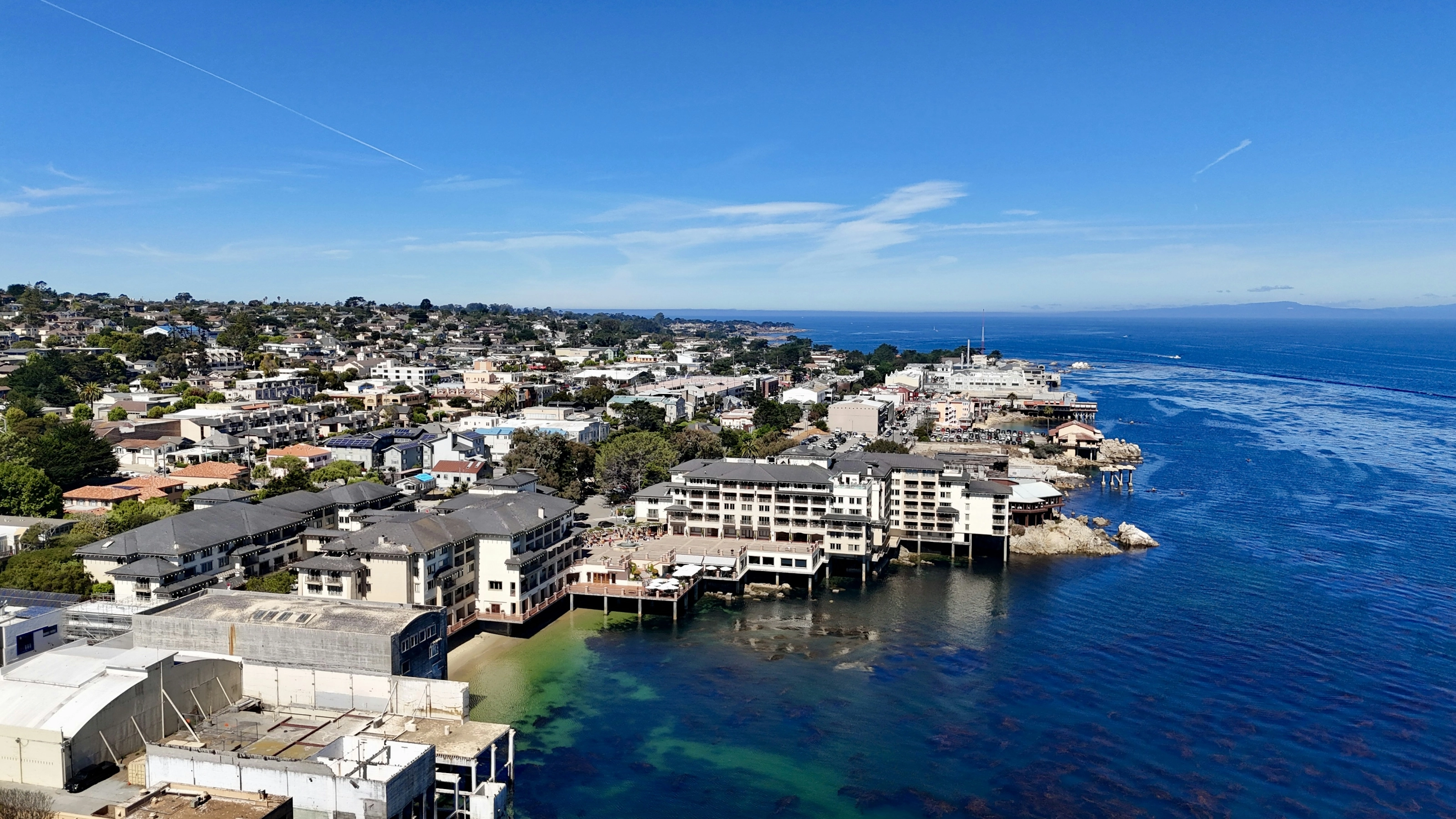
With barely 30,000 residents, Monterey punches well above its weight. For close to a century it was the political capital of Spanish and then Mexican California, before reinventing itself as one of the world's reference points for marine conservation. The city sits on the southern tip of Monterey Bay, wedged between rocky headlands, pine forest and sandy coves, about a two-hour drive south of San Francisco along the coast.
A quick history
From colonial capital to sardine capital
Spanish captain Gaspar de Portolá and Franciscan friar Junípero Serra founded Monterey on June 3, 1770, and it went on to serve as the capital of Alta California under Spanish and then Mexican rule until 1848 — California's first state constitution was signed here in 1849. The city's next chapter belongs to the sea in a very different way: from 1902 onward, sardine canneries took over the waterfront, and by the early 1940s more than thirty plants were running around the clock along what is now Cannery Row. The postwar collapse of the sardine population shut the industry down for good by 1973, but novelist John Steinbeck had already given the neighborhood lasting fame in his 1945 novel Cannery Row.
Not to be missed
Monterey Bay Aquarium, built inside a former cannery
Opened on October 20, 1984 on the site of the old Hovden cannery, the Monterey Bay Aquarium was founded by David Packard, co-founder of Hewlett-Packard, and his wife Lucile. It was the first major aquarium built entirely around the marine life of its own waters — Monterey Bay and the central California coast — and the first to grow a living kelp forest indoors. Today it holds more than 35,000 animals across upwards of 550 species and draws close to two million visitors a year, making it one of the most-visited aquariums in the country.
Waterfront
Cannery Row and Old Fisherman's Wharf
Cannery Row
Officially renamed in 1958 — it was previously Ocean View Avenue — this waterfront street still follows the footprint of its old canneries, now converted into restaurants, shops and hotels. It's the natural starting point for a visit to the aquarium, which sits right at the end of the row.
Old Fisherman's Wharf
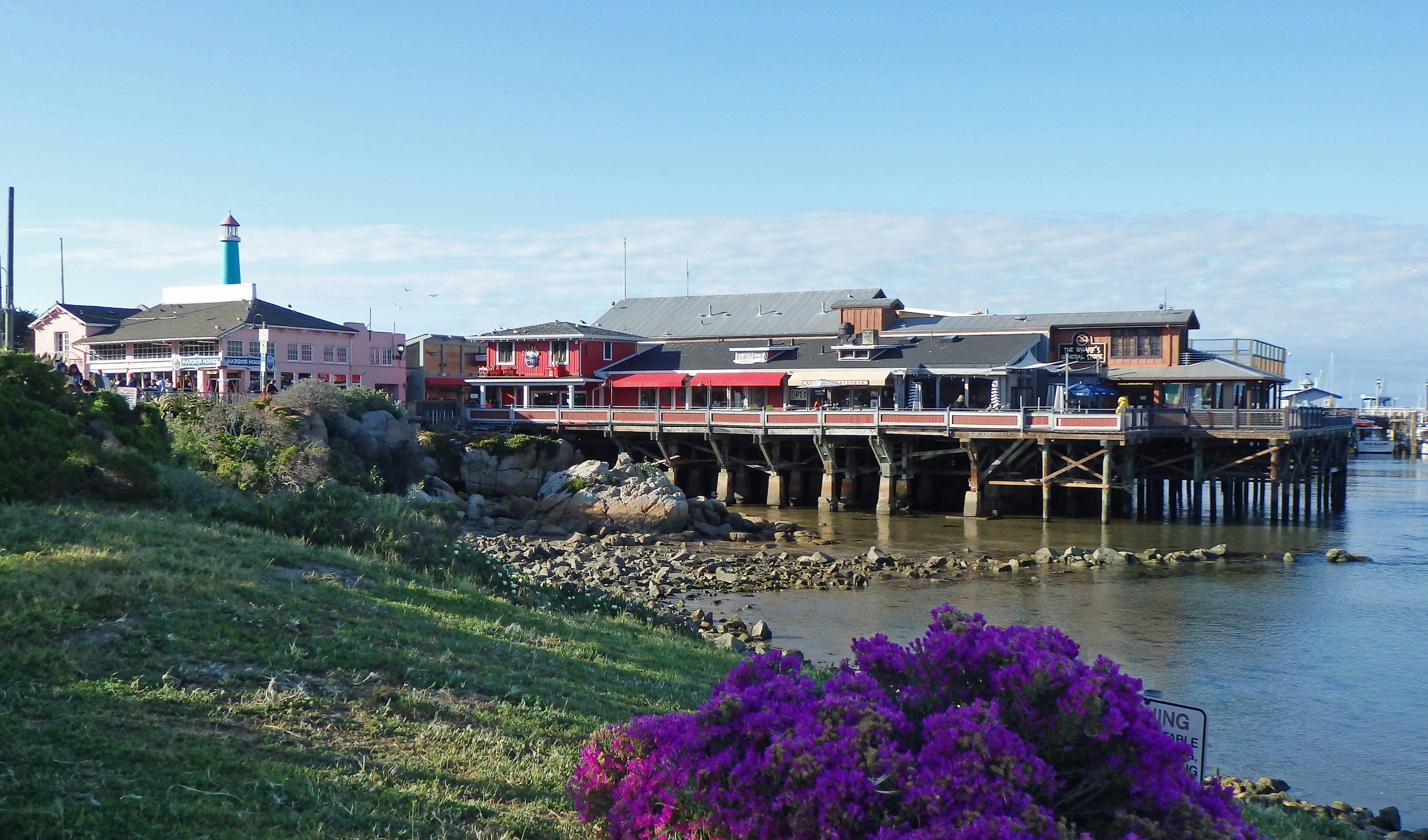
Built in 1870 by the Pacific Coast Steamship Company to handle passengers and cargo, the wharf spent decades as a wholesale fish market before turning into a visitor draw. A 1923 collapse of 40 meters of the structure under the weight of a sardine haul forced a rebuild that extended it by another 230 meters — roughly the length it still has today, lined with seafood restaurants and whale-watching boat departures.
Scenic drive
17-Mile Drive: California's most famous stretch of road
This toll road winds along the coast through the gated community of Pebble Beach, home to a golf course that regularly hosts PGA Tour events. It passes through one of only two remaining native groves of Monterey cypress on Earth — the other sits just across Carmel Bay, at Point Lobos. The drive's signature landmark is the Lone Cypress, a single tree that has clung to a rocky outcrop for more than 250 years and has become one of the most photographed trees in North America.
Nearby
Carmel-by-the-Sea and Big Sur, a short drive away
Ten minutes south, Carmel-by-the-Sea packs art galleries, European-style cottages and a white-sand beach fringed with pines into a compact center that still has no illuminated signs or traffic lights. Further along, about 48 kilometers south of Monterey (some thirty miles past Pebble Beach), Highway 1 clings to the cliffs of Big Sur through redwood forest and sweeping Pacific views — one of the most spectacular coastal drives anywhere in the country.
Wildlife
One of the world's best bays for whale watching
An underwater canyon that plunges right off the coast gives Monterey Bay unusually rich marine wildlife without a long boat ride to reach it. Gray whales migrate offshore from December to May, with peak sightings in January and March, while sea otters, sea lions and dolphins can be spotted almost year-round from Fisherman's Wharf or the coastal recreation trail.
Food
Seafood straight from the bay
Monterey County's cool coastal waters and fertile farmland make this one of the country's richer food regions, and the local table leans heavily on what comes out of the bay itself — Dungeness crab in winter, wild-caught salmon, calamari (the city still calls itself the world's squid capital), and clam chowder served the classic way along the wharf. Inland, the Salinas Valley's produce and Carmel Valley's wineries round out a food scene that punches well above what a town this size would suggest.
Monterey's airport
A small regional airport, with San Francisco as the main alternative
Monterey Regional Airport
About 5.5 km (3.5 miles) east of downtown, with a handful of domestic connections via Alaska, American and United.
MRY has limited direct routes, so many travelers — especially from Europe — fly into San Francisco (SFO), about 170 km / 106 miles north, or San Jose (SJC), roughly 120 km / 75 miles away, then continue by car or connecting flight. Price data on the Monterey route is still thin: SniperAir has only just started tracking it.
When to go
When to visit Monterey?
Spring
Often clear skies before the summer coastal fog rolls in — and the tail end of the gray whale season.
Summer
Cool and frequently foggy in the mornings, typical of the California coast — pack a layer even in July.
Autumn
Usually the sunniest stretch of the year, with clear skies over the bay.
Winter
Mild by most standards, and the best window for spotting gray whales offshore.
FAQ
Frequently asked questions about flights to Monterey
What is Monterey's airport?
Monterey Regional Airport (MRY), about 5.5 km from downtown, with limited direct routes. Many travelers connect through San Francisco (SFO) or San Jose (SJC) instead.
Do I need a car to visit the Monterey area?
Strongly recommended — the 17-Mile Drive, Carmel-by-the-Sea and Big Sur are far easier to explore by car, even though downtown and Cannery Row are very walkable on their own.
When is the best time to see whales in Monterey?
December to May for gray whales, with peak sightings in January and March. Sea otters, sea lions and dolphins are visible almost year-round.
How much does a flight to Monterey usually cost?
SniperAir has only just started tracking this route and doesn't yet have enough history for a reliable range. Create an alert to be notified as soon as a price is detected.
How long is a flight to Monterey from Europe?
There's no direct flight from Europe — expect roughly 13 to 15 hours including a connection within the United States, often through San Francisco.
How do I get alerted when a flight to Monterey drops below my budget?
Create an alert profile with your departure airport, Monterey as the destination, and your maximum budget. You'll be notified automatically as soon as a matching price is detected.
Ready to head to Monterey?
Set your budget and let SniperAir track fares for you.
Create my alert