
Cheap flights to Brisbane
Set your departure airport and maximum budget: SniperAir tracks prices to Brisbane and alerts you the moment a deal matching your criteria appears.
Quick summary
Country
Australia
Continent
Oceania
Airport
BNE
Currency
Australian dollar
Time zone
UTC+10 (no daylight saving time in Queensland)
Deals already spotted to Brisbane
Real flight examples detected by SniperAir, with their reference price.
Loading examples…
Why track Brisbane with SniperAir
You do not need to compare prices every day
Choose your departure
Enter your departure airport and your maximum budget for a flight to Brisbane (BNE).
SniperAir watches
Our systems continuously compare new fares with the real price history of the route. SniperAir tracks prices and alerts you: it does not sell or book tickets.
You get an alert
As soon as a fare matches your criteria, you are notified, without having searched anything yourself.
Airport and getting into town
An airport about 20 km north-east, linked to the centre by the Airtrain
Brisbane International
Brisbane Airport is about 20 km north-east of the city centre. The Airtrain links the terminals with the city centre and runs about every 15 minutes; allow about twenty minutes to reach Roma Street station in normal conditions. By taxi or ride-hailing, plan on about 20 to 30 minutes, more at peak times because traffic jams are well known. The international and domestic terminals are about 3 km apart and linked by the Airtrain.
Distances and times are approximate, cross-checked on Wikivoyage (FR, EN, DE) and Wikipedia; as not every source gives the train journey time, it is rounded and varies with traffic. Fares are not given because they change.
Brisbane is the capital of Queensland and one of Australia's major cities. It spreads on both sides of the winding Brisbane River, with a compact centre, a subtropical climate and a more relaxed rhythm than Sydney or Melbourne. It is also a base for the Gold Coast, the Sunshine Coast and the islands of Moreton Bay.
Landmarks
A river, bridges, parks and a city in the sun
Central Brisbane is best explored on foot along the river. You will find the City Hall with its clock tower, St Stephen's Cathedral, Parliament House, Old Government House, the Old Windmill, the city's oldest building, and the City Botanic Gardens. South Bank, laid out on the site of the 1988 World Expo, offers parks, an artificial swimming beach, a large cultural centre and a Ferris wheel. Mount Coot-tha, about 7 km from the centre and rising to 287 m, gives a panoramic view, best at dawn or dusk.
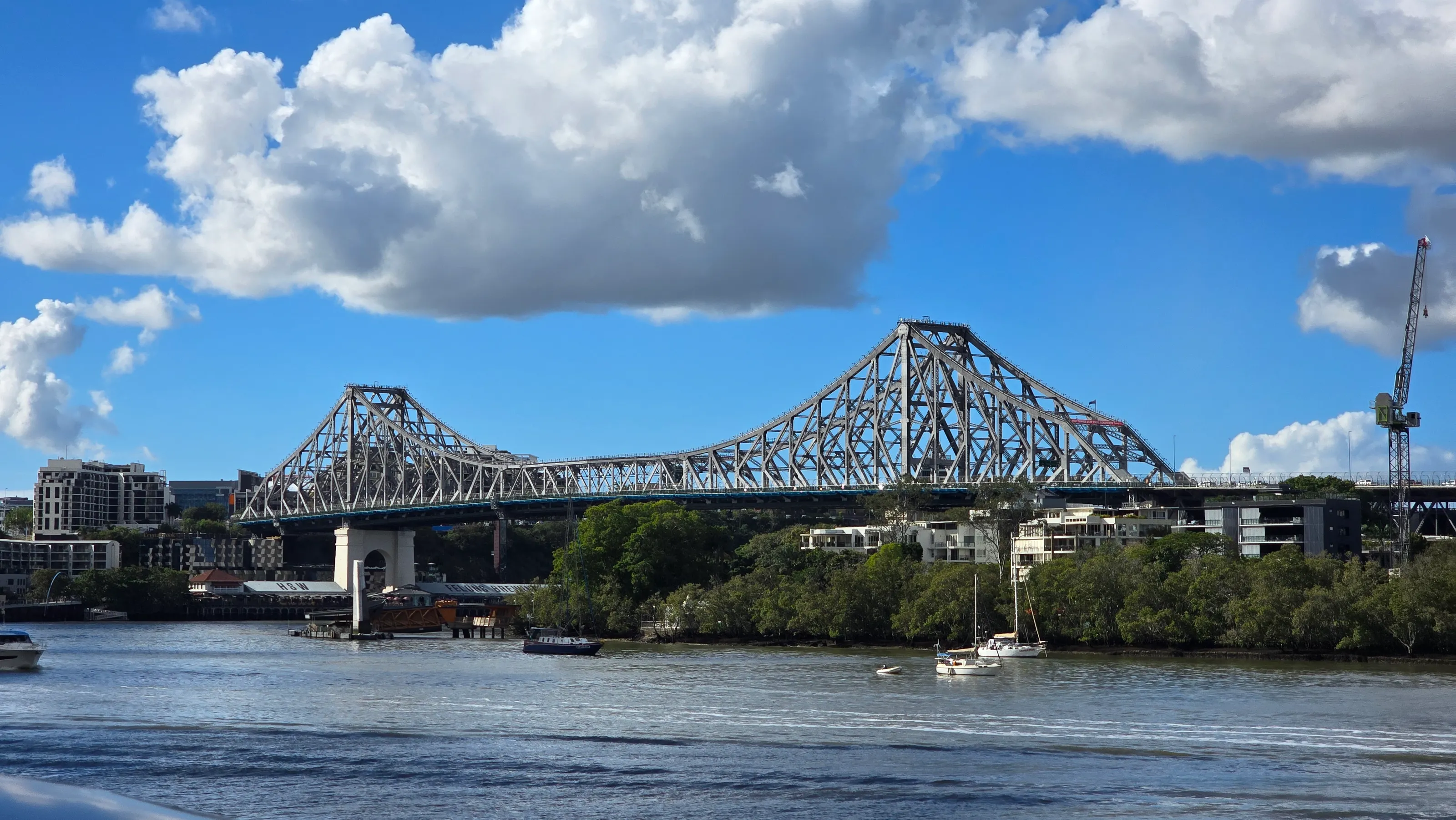
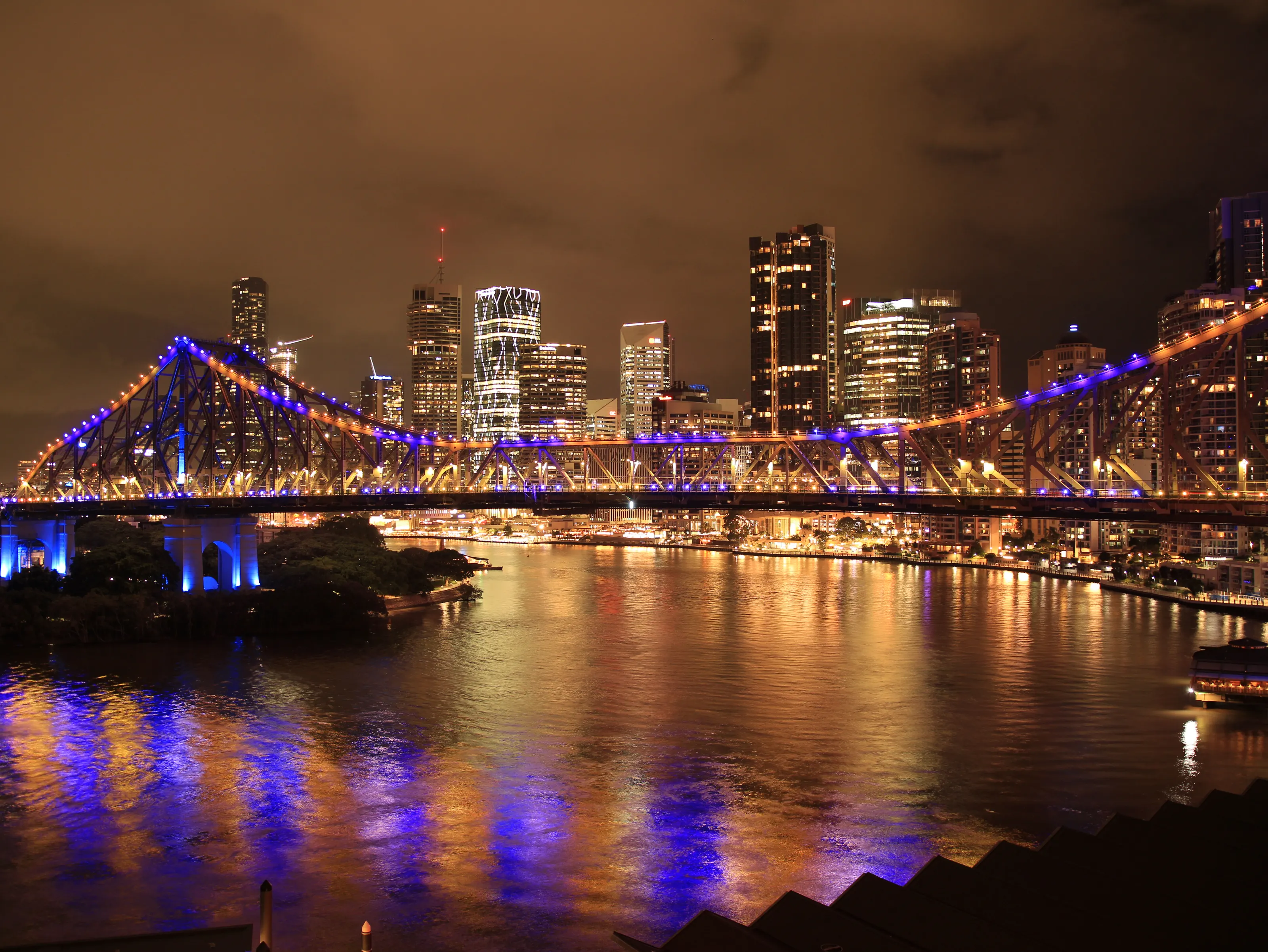
The Story Bridge, by day and by night
Opened in 1940, this steel bridge is the great landmark of the river. You can walk across it and take guided climbs to the top, with a 360-degree view of the city. In the evening it lights up and reflects in the river while the towers of the centre switch on their lights: it is one of the city's most photogenic moments, from the bank or a ferry wharf.
Koalas
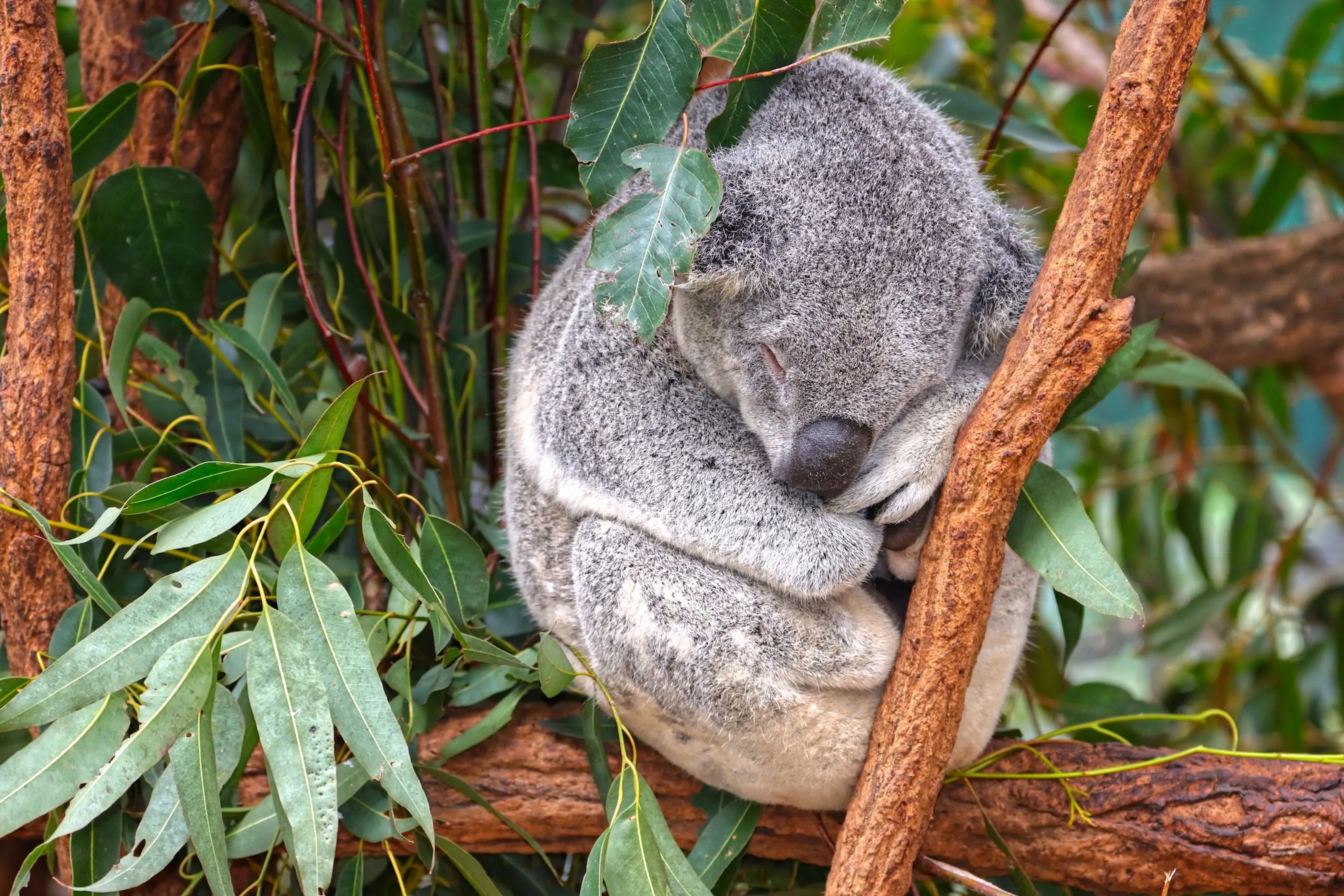
The koala is one of Australia's emblematic animals and Brisbane is a good starting point to see one. A large koala sanctuary lies about 13 km south-west of the centre, reachable by bus or by boat on the river. Watch the animals without disturbing them and follow the keepers' instructions.
Moreton Island
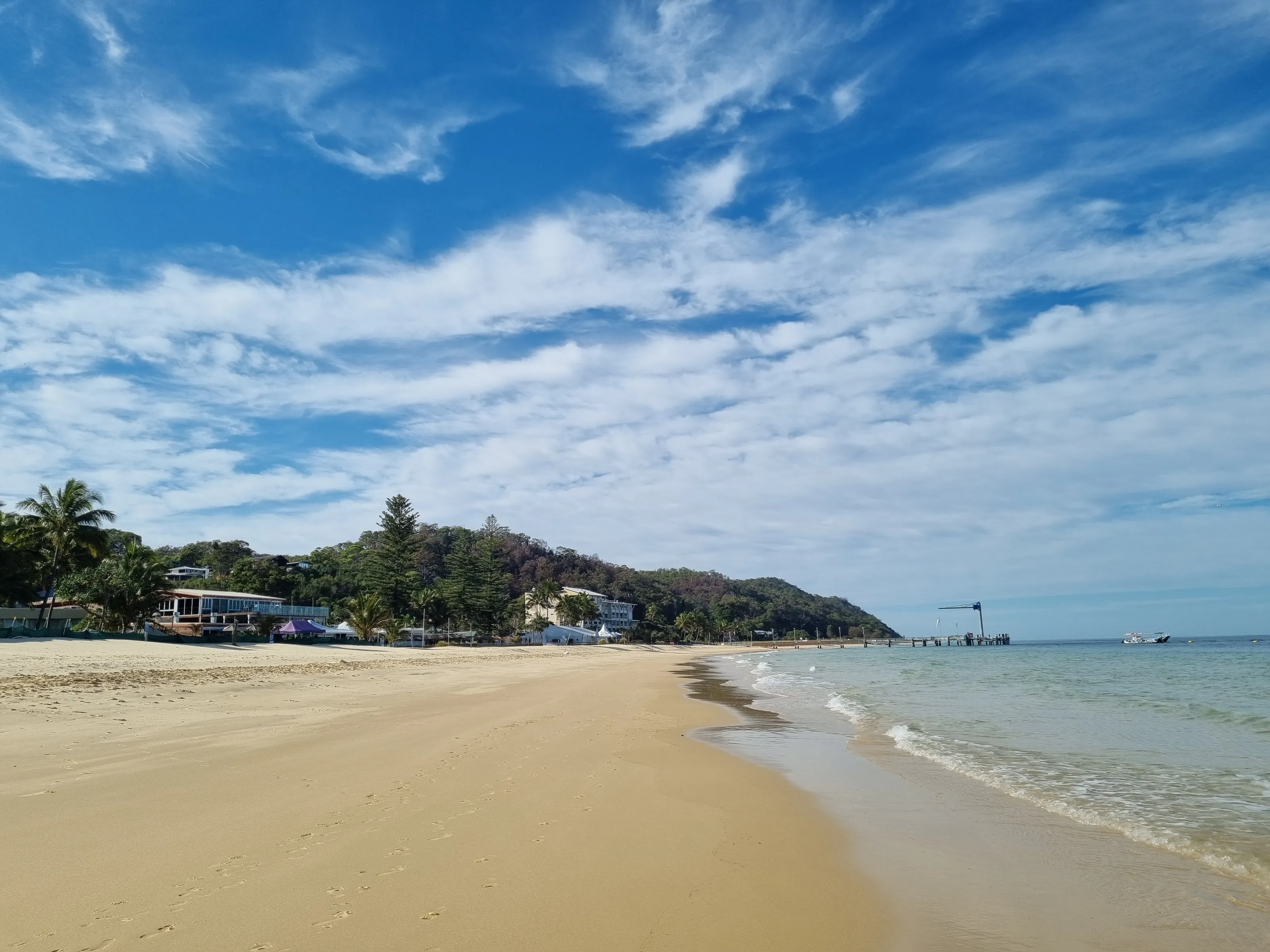
About 58 km north-east of Brisbane, in Moreton Bay, this 37 km long sand island is one of the largest sand islands in the world. About 98 percent of it is national park, with dunes, beaches and wrecks for snorkelling; the crossing from Brisbane takes about 75 minutes on the passenger ferry.
Day trips and nature
Islands, beaches and reserves around Brisbane
Moreton Island and Tangalooma
The passenger ferry reaches Tangalooma, a former whaling station now a resort site, known for dolphin feeding and wreck diving. Mount Tempest, at 280 m, is a large stabilised dune; sand tobogganing is one of the signature activities.
North Stradbroke and the coast
North Stradbroke Island, about 65 km to the east, is reached by ferry from Cleveland in about 25 minutes. The Gold Coast, about 70 to 80 km to the south, and the Sunshine Coast, about 110 to 120 km to the north, can be reached by train, bus or car.
Nature nearby
The Glass House Mountains, about 70 km to the north, and Australia Zoo can be visited as day trips. Mount Coot-tha and its botanic gardens are within reach by bus or ride-hailing from the centre.
Museums and culture
A large cultural centre on the river
QAGOMA and the Queensland Cultural Centre
The Queensland Art Gallery and the Gallery of Modern Art (GOMA), together known as QAGOMA, form one of Australia's major art museums, at South Bank. The Queensland Museum, with its Sciencentre, the State Library and the Queensland Performing Arts Centre complete the Queensland Cultural Centre.
The city's history
The Museum of Brisbane is in the City Hall. The Queensland Maritime Museum, Newstead House, the city's oldest house with its Victorian furniture, and Old Government House tell the story of the region.
And also
Boggo Road Gaol can be visited, and the Sir Thomas Brisbane Planetarium, about 8 km to the west, welcomes astronomy fans. Check opening hours and closing days; we give no prices, which change.
Food and drink
Varied cooking, open-air barbecues and tables by the water
A table with no single speciality
Brisbane has no emblematic dish: you mostly find Anglo-Saxon-inspired cooking and a wide variety of tables from Asia, Italy, France and elsewhere. Prices are close to those of a large western European city.
Districts and river
Chinatown, in Fortitude Valley, is the reference for Asian cuisines. The riverside restaurants, on Eagle Street and at South Bank, have terraces over the water. At many places you can bring your own wine (BYO), which sometimes lightens the bill.
Barbecues and the outdoors
Free or coin-operated public barbecues line the parks and the coast, from the Gold Coast to the Sunshine Coast: you cook for yourself, in full sun. Cafés and bars in the centre also benefit from mild evenings.
Getting around
Train, bus, CityCat ferries and the transport card
Train, Airtrain and bus
All suburban trains stop at Bowen Hills, Fortitude Valley, Central and Roma Street stations; lines reach the Gold Coast and the Sunshine Coast. Modern buses, busways with dedicated lanes and Brisbane Metro lines run very frequently in the daytime; a free bus loop serves the centre on weekdays, and night buses run on Fridays and Saturdays.
CityCat ferries
CityCat catamarans and small ferries link the wharves along the river, from the University of Queensland at St Lucia to Northshore Hamilton: a pleasant and efficient way to cross the city. Small cross-river ferries also operate.
Card, ride-hailing and cycling
Public transport is used with a go card or a contactless bank card; fares are greatly simplified in Queensland, to be checked before the trip. Ride-hailing is available. Cycling is practical along the river, but some districts are hilly; parking and road tolls are expensive.
Budget and entry
A medium to high price level compared with Europe
Price level
Brisbane falls in the medium to high range compared with western Europe. Reduced public transport fares, public barbecues, parks and South Bank's artificial beach help limit spending. We give no figures, because prices change with the season and the exchange rate.
Flights
The long-haul flight remains the most variable item. SniperAir tracks prices to BNE and compares them with the route's history.
Entry and precautions
Australia generally requires an electronic travel authorisation or a visa depending on nationality: check the official Australian government websites, as well as the official advice of your country of departure. The sun is very strong all year: a hat, sunglasses and sunscreen are essential. At sea, swim in patrolled areas and follow the safety instructions.
When to go
When to go to Brisbane
Austral summer (December to February)
December to February: hot and humid, about 30 °C by day and 20 to 22 °C at night, with frequent late-afternoon thunderstorms.
Austral autumn (March to May)
March to May: humidity drops and temperatures stay pleasant; one of the best periods for visitors not used to humidity.
Austral winter (June to August)
June to August: dry, sunny season, about 21 to 25 °C by day and cooler nights, around 10 °C.
Austral spring (September to November)
September to November: days warm up, with sea breezes, and humidity climbs again towards summer.
Mind the reversed seasons: Australia is in the southern hemisphere, so the austral summer runs from December to February and winter from June to August, the opposite of Europe. Brisbane's climate is subtropical, with 7 to 9 hours of sunshine a day all year, and the wettest months are January and February.
To explore on foot and enjoy the parks, aim for spring, autumn and winter, which are drier. Summer suits the beach and the islands, provided you can stand the heat and humidity.
By length of stay
What to do in Brisbane depending on your length of stay
The essentials
The centre on foot: South Bank, City Hall, the Story Bridge, a CityCat crossing and nightfall on the river.
Going deeper
Add QAGOMA or the Queensland Museum, Mount Coot-tha and a koala sanctuary.
Further afield
A day on Moreton Island, a stay on the Gold Coast or the Sunshine Coast, or a trip to the Glass House Mountains.
In pictures
Brisbane in pictures
You might also like
Similar destinations
FAQ
Frequently asked questions about flights to Brisbane
How do I get from Brisbane airport to the centre?
The airport (BNE) is about 20 km north-east. The Airtrain runs about every 15 minutes and reaches Roma Street station in about twenty minutes; taxis and ride-hailing are also available.
When is the best time to visit Brisbane?
From March to November, when the weather is drier and less humid: austral autumn, winter (sunny) and spring. Austral summer (December to February) is hot, humid and stormy. The seasons are reversed compared with Europe.
Is Brisbane expensive?
The price level is medium to high compared with Europe. Reduced transport fares, public barbecues and parks help control the budget.
What should I eat in Brisbane?
There is no emblematic dish: varied cooking, Asian cuisines in Fortitude Valley, riverside terraces and open-air barbecues.
Which day trips can I make from Brisbane?
Moreton Island (about 75 minutes by ferry), North Stradbroke Island, a koala sanctuary, the Gold Coast (about 70 to 80 km) and the Sunshine Coast (about 110 to 120 km).
How do I get around Brisbane?
By train, bus and CityCat ferry with a go card or a contactless card. The centre is walkable, and the river can be followed by bike.
How much does a flight to Brisbane usually cost?
The price depends mainly on your departure city, the period and the booking date. The "opportunities" section above shows real examples of prices already detected by SniperAir for this destination.
How do I get alerted when a flight to Brisbane drops below my budget?
Create an alert profile with your departure airport, Brisbane as the destination and your maximum budget. You are notified automatically as soon as a matching fare is detected.
Ready to head to Brisbane?
Set your budget and let SniperAir monitor fares for you.
Create my alert