
Cheap flights to Sydney
Set your departure airport and maximum budget: SniperAir tracks prices to Sydney and alerts you the moment a deal matching your criteria appears.
Quick summary
Country
Australia
Continent
Oceania
Airport
SYD
Currency
Australian dollar
Time zone
UTC+10 (UTC+11 during austral daylight saving time)
Deals already spotted to Sydney
Real flight examples detected by SniperAir, with their reference price.
Loading examples…
Why track Sydney with SniperAir
You do not need to compare prices every day
Choose your departure
Enter your departure airport and your maximum budget for a flight to Sydney (SYD).
SniperAir watches
Our systems continuously compare new fares with the real price history of the route. SniperAir tracks prices and alerts you: it does not sell or book tickets.
You get an alert
As soon as a fare matches your criteria, you are notified, without having searched anything yourself.
Airport and getting into town
An airport about 8 to 9 km south, a quarter of an hour by train from the centre
Sydney - Kingsford Smith
Sydney Airport is in Mascot, about 8 to 9 km south of the city centre on the shore of Botany Bay. The airport train line reaches Central Station in about fifteen minutes. By taxi or ride-hailing, allow roughly 20 to 30 minutes depending on traffic. Door-to-door shuttles and buses add more options. The international and domestic terminals are separate and linked by the train line or a shuttle, so leave time for the connection.
Distances and times are approximate, cross-checked on Wikipedia (FR, EN, DE, ES) and Wikivoyage (FR, EN, DE, ES); they vary with traffic. Fares are not given because they change.
Sydney is Australia's largest city: around 5.3 to 5.6 million people in the metropolitan area according to recent estimates, spread around a vast harbour, Port Jackson. The business district (CBD) extends north to Circular Quay and The Rocks, and south-west to Chinatown and Darling Harbour.
Landmarks
A harbour, an opera house of shells and a steel bridge
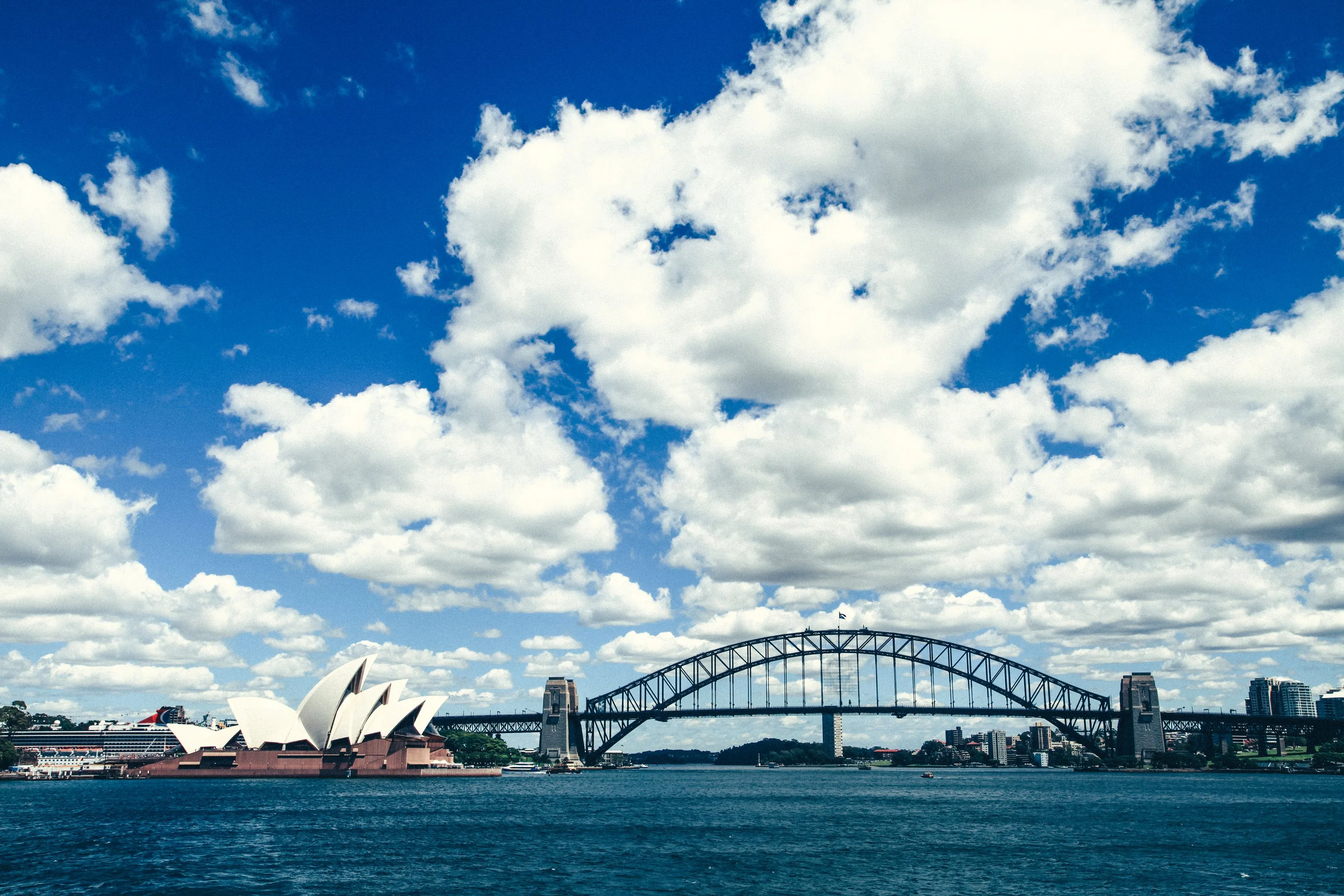
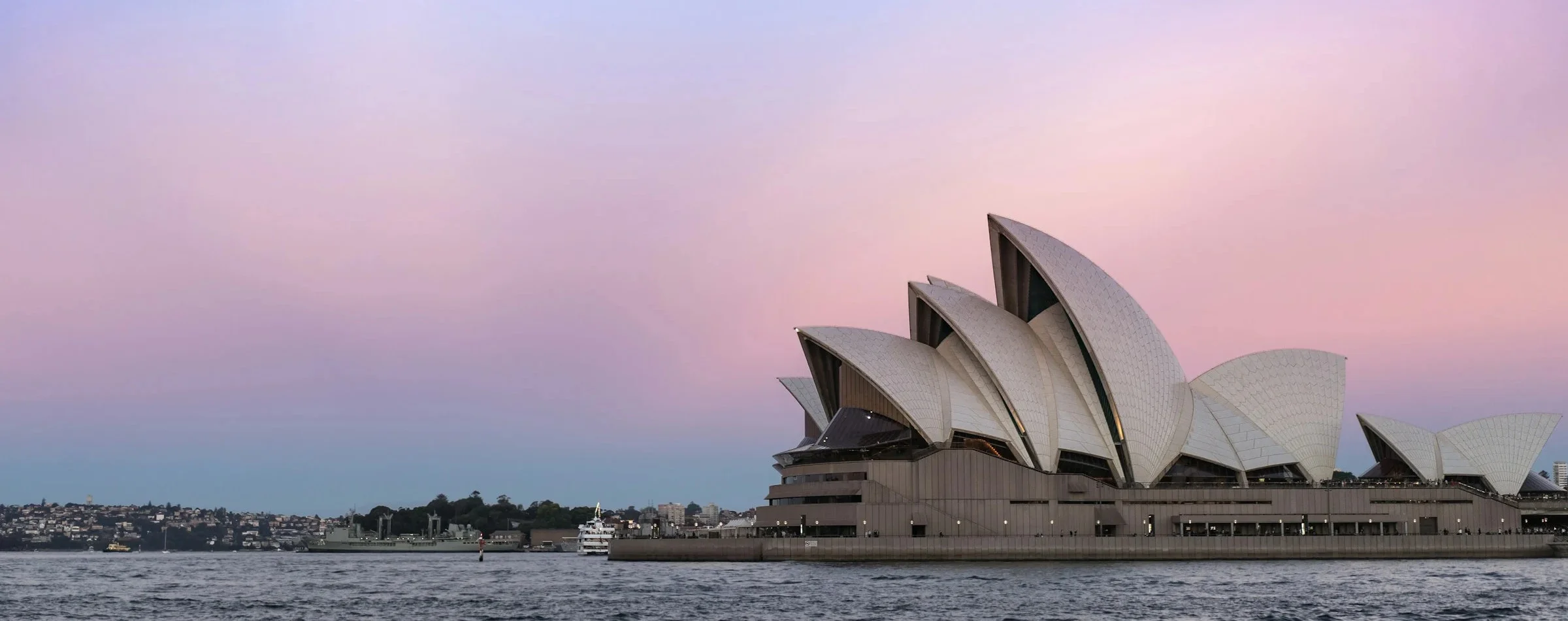
Sydney is best discovered first from the water and from its harbourside walks. The Opera House, a UNESCO World Heritage Site since 2007, and the Harbour Bridge, opened in 1932, form one of the best-known cityscapes in the world. Nearby are also the Queen Victoria Building, the Town Hall, the Royal Botanic Gardens and Sydney Tower, whose observation deck stands at about 300 m.
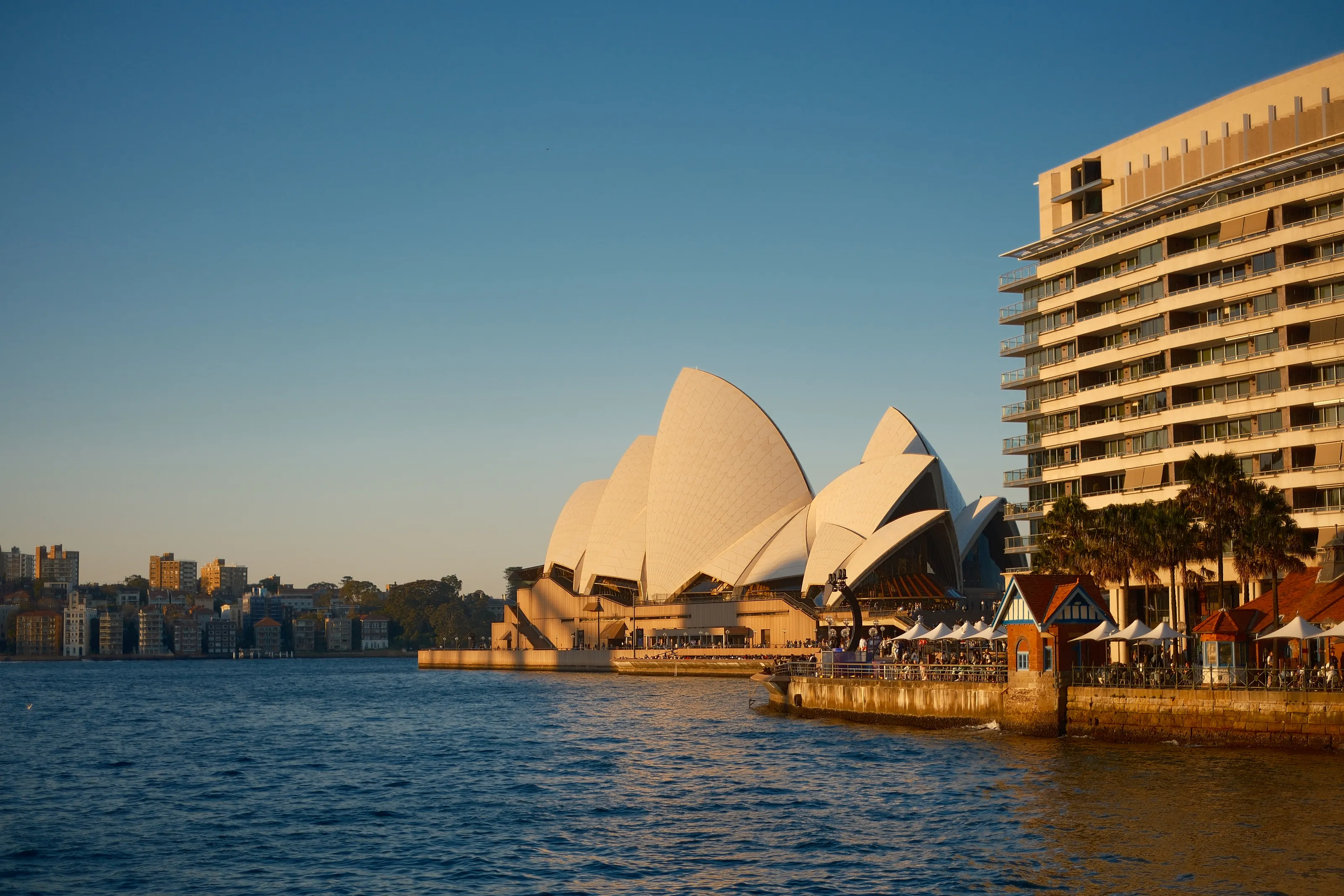
The Sydney Opera House
Its white sails stand out against the harbour, and the golden light of late afternoon is especially beautiful. You can walk around it from Circular Quay, attend a performance or join a guided tour; check opening times, which change.
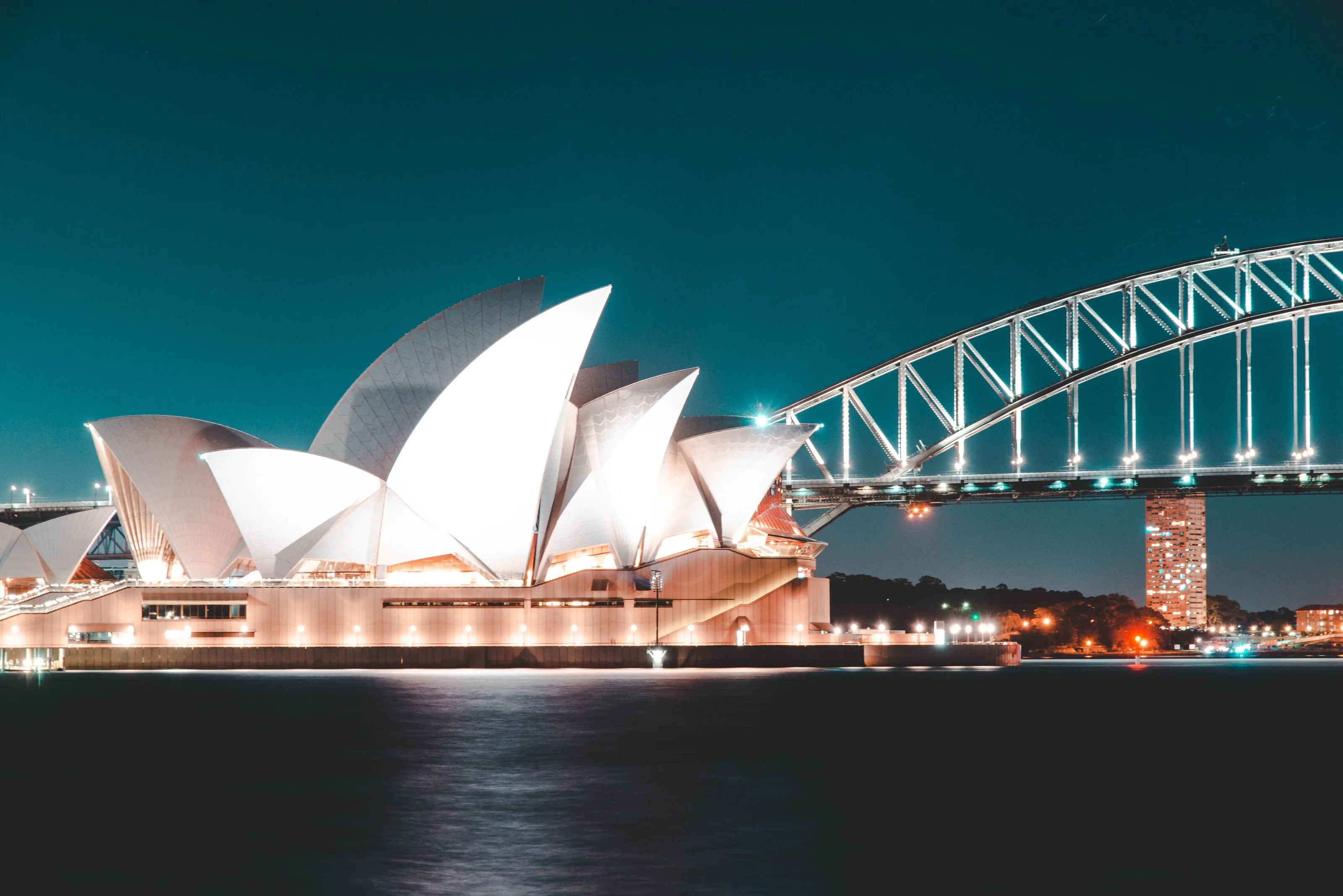
The Harbour Bridge and the Opera House at night
The steel arch bridge links the city centre to the north shore. You can walk across it free of charge by a footway, a lookout in one of the pylons gives views over the harbour, and guided climbs of the arch are offered. At night both landmarks are lit up.
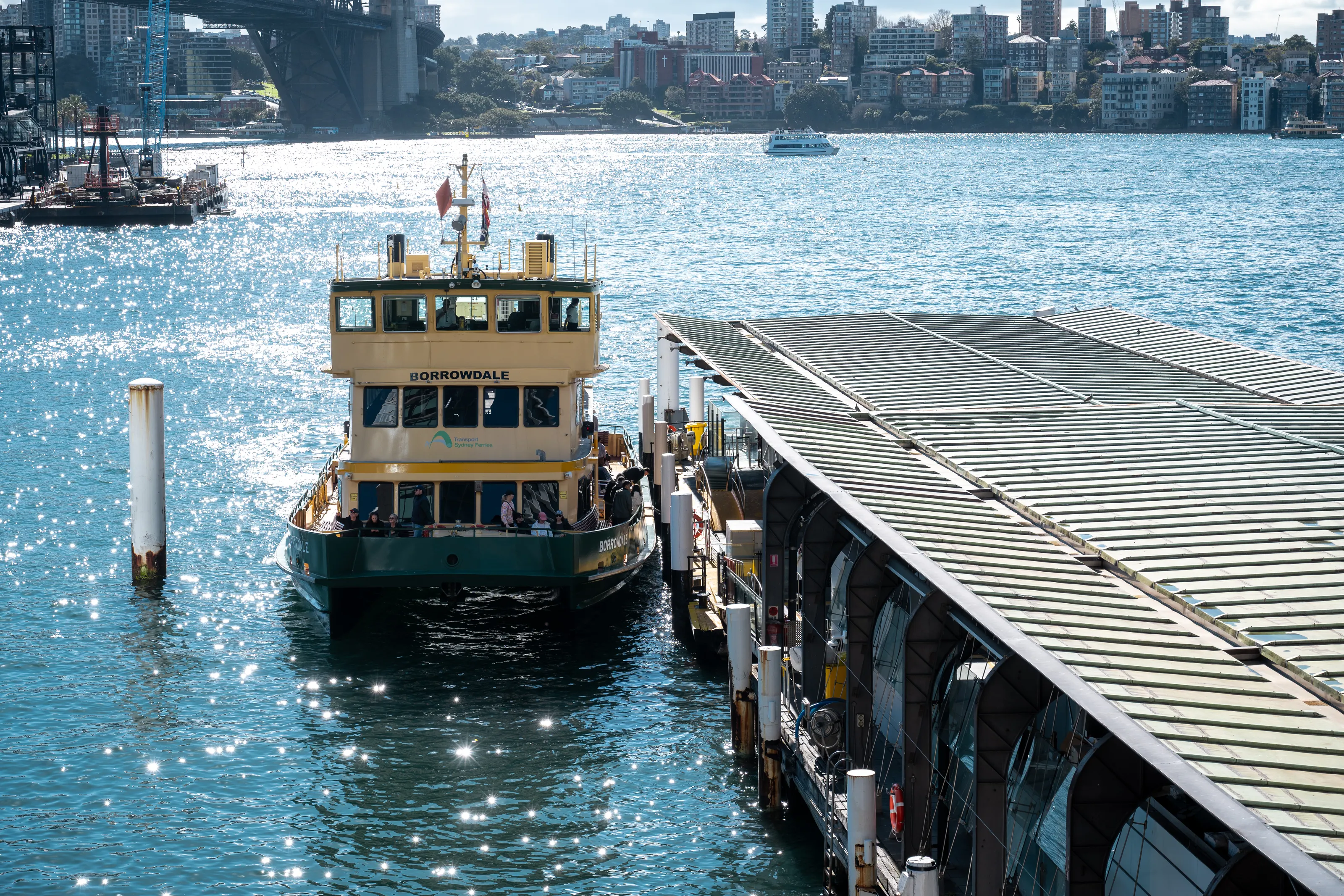
Circular Quay and the ferries
Circular Quay is the great crossroads of the harbour: trains, buses and ferries meet here, with the Opera House on one side and the historic district of The Rocks on the other. Ferries leave from here for Manly, Watsons Bay or Taronga Zoo, and a crossing is one of the best ways to see the city.
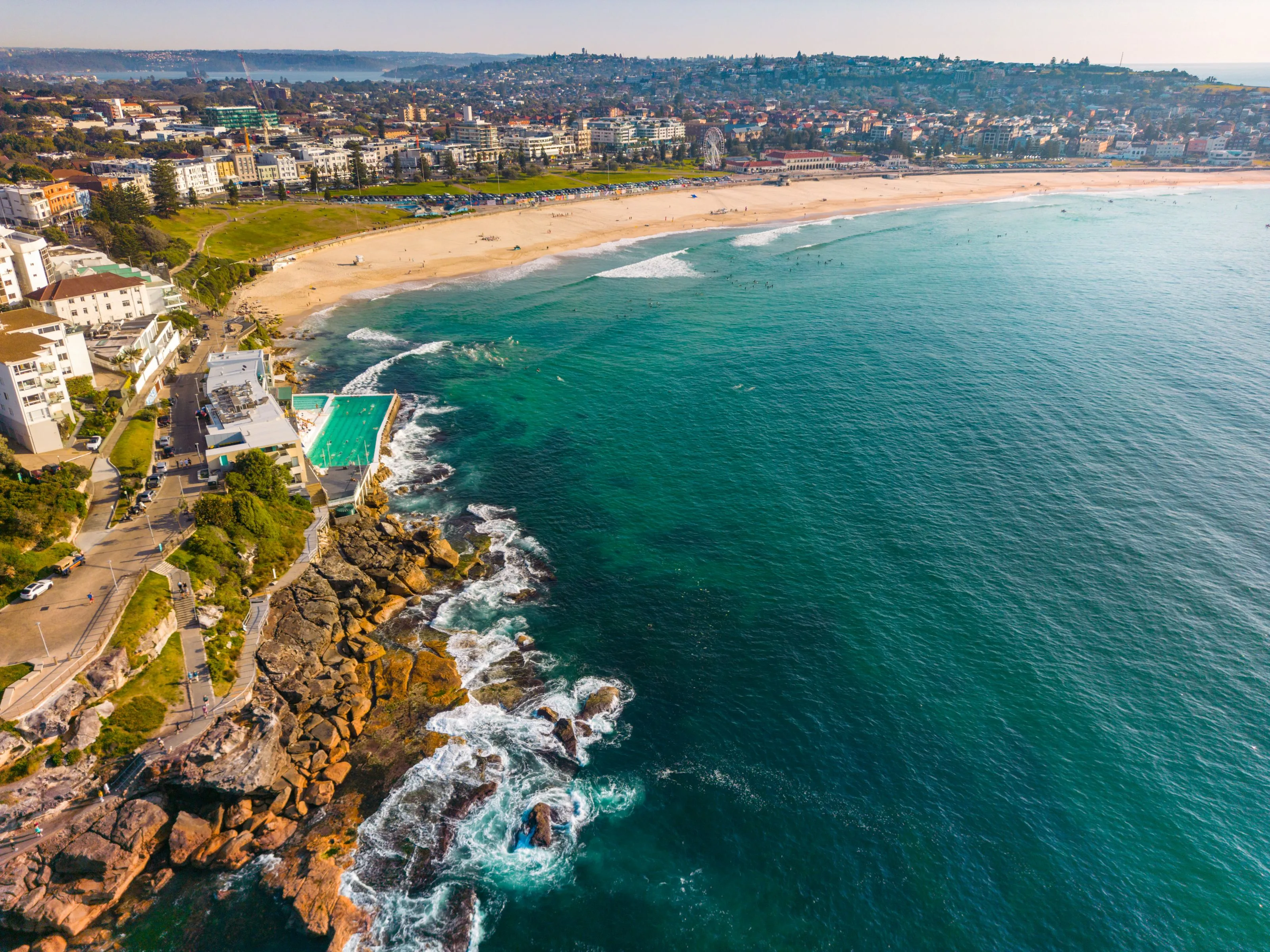
Bondi Beach
Sydney's most famous beach is good for a relaxed half-day, with its curved bay, surf waves and an ocean pool cut into the rock. A coastal path runs along the cliffs. Ferries do not serve Bondi: get there by bus, or by train then bus.
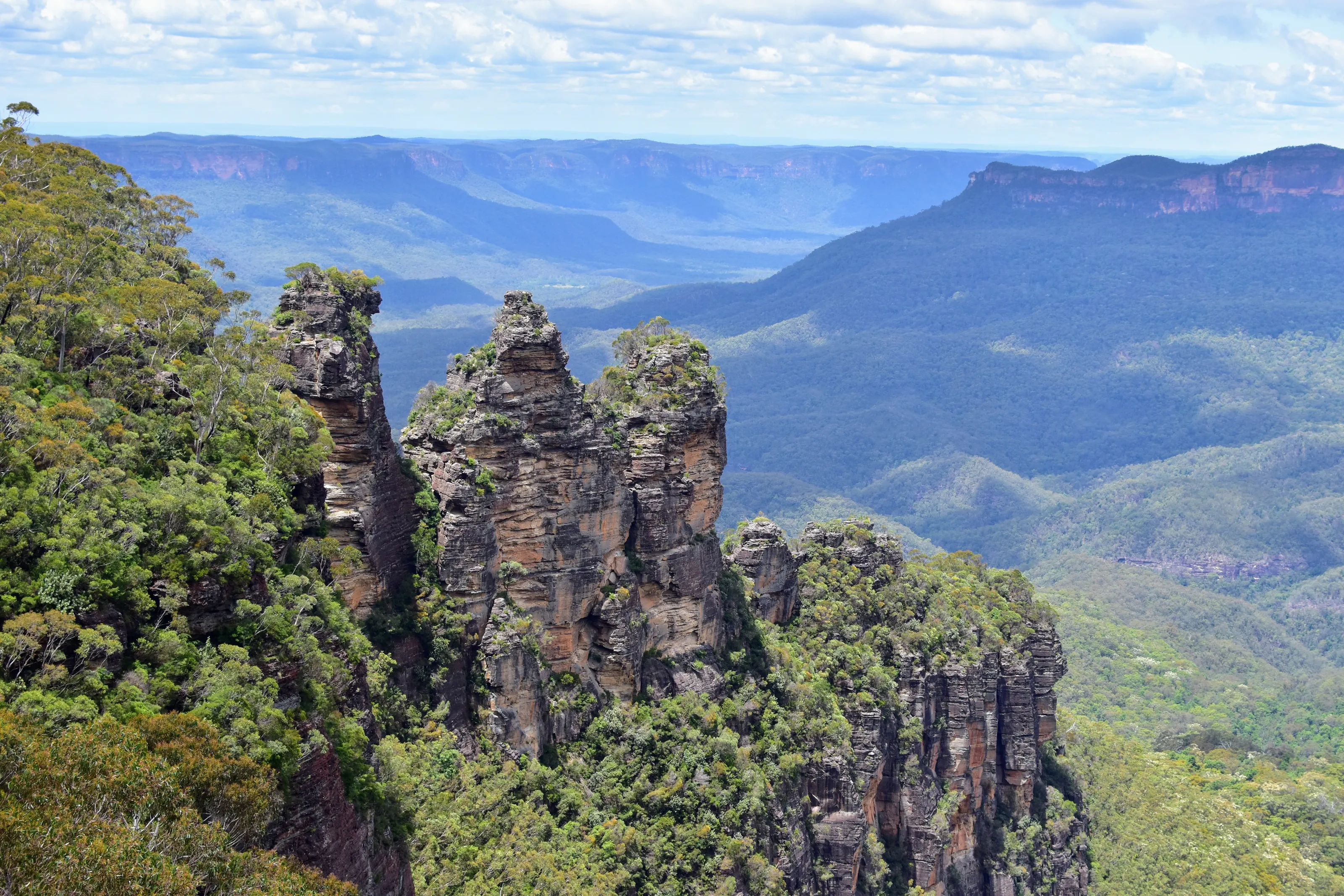
The Blue Mountains
About 50 km to the west, the Blue Mountains, listed by UNESCO in 2000, offer sandstone cliffs, eucalyptus forests and walking tracks. The Three Sisters, near Katoomba, are among the most photographed sights in the country. You can go by train from Central as a day trip; winter can be cold there, with occasional snow.
Day trips and nature
Beaches, national parks and vineyards around the city
Beaches and harbour
Bondi is not the only beach: Manly is reached by ferry from Circular Quay, and Watsons Bay has views back to the city. Beaches are patrolled by lifeguards from late October; swim in the flagged areas.
National parks
The Royal National Park to the south and the parks of the Blue Mountains offer walks and viewpoints. When fire danger is high, tracks and parks may close: check official notices before you go.
Vineyards and coast
The Hunter Valley, known for its wineries, can be visited as a day trip or a weekend; the Illawarra coast (Wollongong) and Newcastle are also reachable by train or car.
Museums and culture
Fine arts, nature, colonial history and contemporary art
Art Gallery of New South Wales
It shows Australian, European and Asian art, including a section on Aboriginal art, and hosts the Archibald Prize for portraiture. It stands near the botanic gardens, within walking distance of the centre.
History and science museums
The Australian Museum, devoted to natural history and cultures, the Museum of Sydney, Hyde Park Barracks, a former convict lodging, and the Powerhouse, a museum of science, applied arts and technology, tell the story of the city and the country. The Australian National Maritime Museum is at Darling Harbour.
Contemporary art and districts
The Museum of Contemporary Art overlooks the harbour in The Rocks, where you will also find small local-history museums. Check opening hours and closing days; we do not give prices, which change.
Food and drink
A cosmopolitan table, between seafood and Asian influences
A very varied table
The city has thousands of restaurants, with a strong presence of Asian cuisines; Chinatown and the Haymarket district are good reference points for low-priced meals. Modern Australian cooking mixes local produce with influences from around the world, and some menus include local meats such as kangaroo.
Markets and seafood
A fish market that opens early in the morning is near Darling Harbour. Neighbourhood markets, cafés and brunches are part of the city's rhythm, especially in the Inner West and the eastern suburbs.
Wine and bars
Hunter Valley wines appear on many lists, and pubs serve simple meals at reasonable prices. Surry Hills, Newtown and The Rocks have many bars and restaurants.
Getting around
Train, metro, light rail, ferries and the Opal card
Train, metro and light rail
Central is the hub of the suburban train, metro and light rail networks. A driverless metro line, several light rail lines (one of them along George Street) and a wide train network serve the city; at night, buses take over.
Ferries
Almost all ferries leave from Circular Quay: Manly, Watsons Bay, Taronga and other harbour wharves. The Manly line is the classic crossing; no ferry serves Bondi.
Opal card and ride-hailing
Public transport runs on the Opal card or, often, on a contactless bank card; remember to tap on and off. Ride-hailing and taxis are available. Parking in the centre is expensive, so prefer public transport.
Budget and entry
A high price level, comparable to or above western Europe
Price level
Sydney is among the most expensive cities in Australia, and accommodation is the biggest cost. Neighbourhood meals, markets and daily fare caps on transport help keep the budget under control. We give no figures: prices vary with the season and the exchange rate.
Flights
The long-haul flight remains the most variable item. SniperAir tracks prices to SYD and compares them with the route's history.
Entry and precautions
Australia generally requires an electronic travel authorisation or a visa depending on nationality: check the official Australian government websites. Also consult the official advice of your country of departure. On the spot, respect the swimming flags, protect yourself from the sun and follow the rules about wildlife and tracks.
When to go
When to go to Sydney
Austral summer (December to February)
December to February: hot and sunny, about 26 to 28 °C by day, with heat spikes and thunderstorms; this is beach season.
Austral autumn (March to May)
March to May: mild temperatures, pleasant nights and fewer crowds; a very good time for sightseeing and ferries.
Austral winter (June to August)
June to August: cool, about 17 °C by day and under 10 °C at night; more rain, but days are often clear.
Austral spring (September to November)
September to November: the weather warms up; a good time to walk, cycle and sightsee. Beaches are patrolled from late October.
Mind the reversed seasons: Australia is in the southern hemisphere, so the austral summer runs from December to February and winter from June to August, the opposite of Europe. The climate is humid subtropical: roughly 1,000 to 1,200 mm of rain a year, depending on the source, and the heat record is 45.8 °C, in January 2013.
Spring and autumn suit sightseeing best; summer suits the beaches, with a hat, water and sunscreen because the sun is strong. Winter can suit those who want to avoid heat, with cool days.
By length of stay
What to do in Sydney depending on your length of stay
The essentials
The Opera House and Circular Quay, The Rocks, a ferry crossing and a walk over the Harbour Bridge.
Going deeper
Add Bondi Beach and its coastal path, a museum (the Art Gallery or the Museum of Contemporary Art) and Darling Harbour.
Further afield
A day in the Blue Mountains, a ferry trip to Manly or a tasting in the Hunter Valley.
In pictures
Sydney in pictures
You might also like
Similar destinations
FAQ
Frequently asked questions about flights to Sydney
How do I get from Sydney airport to the centre?
The airport (SYD) is about 8 to 9 km to the south. The airport train line reaches Central Station in about fifteen minutes; taxis, ride-hailing and door-to-door shuttles are also available.
When is the best time to visit Sydney?
In austral spring (September to November) and autumn (March to May) for sightseeing. Austral summer (December to February) is beach season. Remember the seasons are reversed compared with Europe.
Is Sydney expensive?
The price level is high, comparable to or above western Europe, especially for accommodation. Daily capped transport fares, markets and neighbourhood meals help control the budget.
What should I eat in Sydney?
A cosmopolitan cuisine, with many Asian restaurants, seafood, modern Australian cooking and Hunter Valley wines.
Which day trips can I make from Sydney?
The Blue Mountains, about 50 km to the west, Manly Beach by ferry, the Royal National Park and the Hunter Valley for wine.
How do I get around Sydney?
Train, metro, light rail and ferries with the Opal card or a contactless card. Ferries leave from Circular Quay; none serves Bondi.
How much does a flight to Sydney usually cost?
The price depends mainly on your departure city, the period and the booking date. The "opportunities" section above shows real examples of prices already detected by SniperAir for this destination.
How do I get alerted when a flight to Sydney drops below my budget?
Create an alert profile with your departure airport, Sydney as the destination and your maximum budget. You are notified automatically as soon as a matching fare is detected.
Ready to head to Sydney?
Set your budget and let SniperAir monitor fares for you.
Create my alert