
Cheap flights to Yulara
Set your departure airport and maximum budget: SniperAir tracks prices to Yulara and alerts you the moment a deal matching your criteria appears.
Quick summary
Country
Australia
Continent
Oceania
Airport
AYQ
Currency
Australian dollar
Time zone
UTC+9:30 (Northern Territory time, no daylight saving time)
Deals already spotted to Yulara
Real flight examples detected by SniperAir, with their reference price.
Loading examples…
Why track Yulara with SniperAir
You don't need to compare prices every day
Choose your departure
Enter your departure airport and your maximum budget for a flight to Yulara (AYQ).
SniperAir watches
Our systems continuously compare new fares with the route's real price history. SniperAir tracks prices and alerts you: it does not sell or book tickets.
You receive an alert
As soon as a fare matches your criteria, you are notified, without having searched for anything yourself.
Airport and getting into town
An airport a few kilometres from the resort, in the middle of the desert
Ayers Rock / Connellan (AYQ)
Ayers Rock Airport (also called Connellan) is about 6 km north of Yulara: the ride to the resort takes only a few minutes by shuttle, taxi or rental car, and the base of Uluru is roughly a 20-minute drive away. It handles Australian domestic flights, notably from Sydney, Melbourne, Brisbane and Cairns; there is no direct international service, so from Europe you travel with at least one connection in Australia. By road, Alice Springs, the nearest large town, is about 450 km away (4.5 to 5 hours of driving), so flying saves a great deal of time.
Distances and times are approximate, cross-checked on Wikipedia (FR, EN, DE, ES) and Wikivoyage; sources differ by a few kilometres (428 to 463 km for Alice Springs). Fares are not given because they change.
Yulara is a small resort settlement of roughly a thousand permanent residents, created in the early 1980s outside Uluṟu-Kata Tjuṯa National Park to bring together the accommodation that used to stand at the foot of the rock. Uluru is about 20 km away and Kata Tjuta 50 to 55 km. There is almost nothing else for hundreds of kilometres: it is the only accommodation base for the site, with hotels in several categories, a campground, a small shopping centre and a visitor centre.
Landmarks
Uluru and Kata Tjuta, two sacred sites in the red desert
Yulara has no monuments of its own: the visitors come for the rock formations of Uluṟu-Kata Tjuṯa National Park, a UNESCO World Heritage Site. The places below come with photos; the cultural centre, art galleries and resort lookouts are described further down. The park is managed jointly by its traditional owners, the Anangu, and the federal parks agency, and an entry fee applies (we give no amount, as it changes).
Uluru, a red sandstone monolith
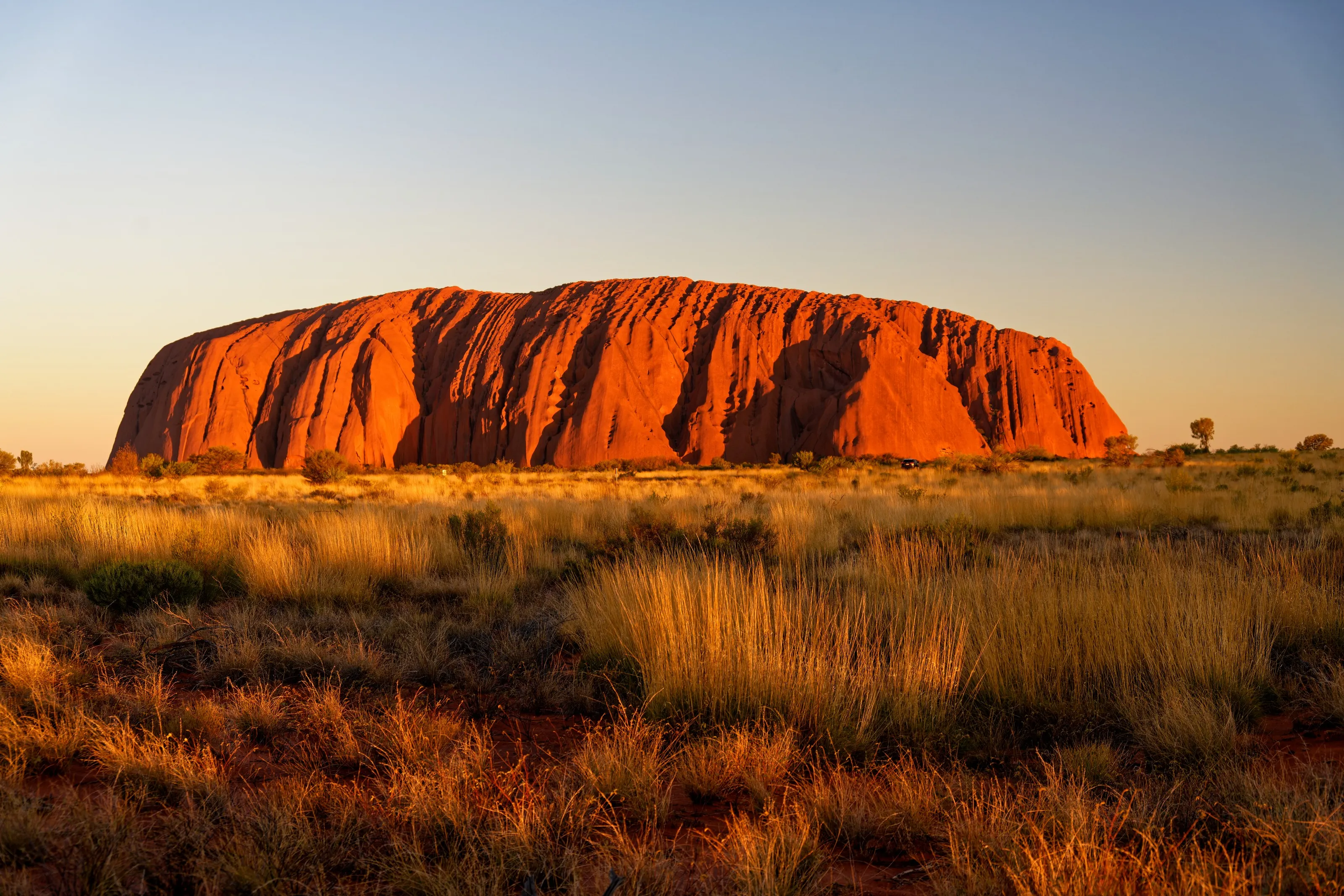
Uluru (or Ayers Rock) is a huge sandstone monolith about 350 m high, most of which extends underground, with a perimeter of a little over 9 km. Its red colour comes from iron oxide and seems to change with the time of day and the season. It is a sacred place for the Anangu, who see it as part of Tjukurpa, the Dreaming. You can admire it from afar at the lookouts, up close on a walk around its base, or on guided visits.
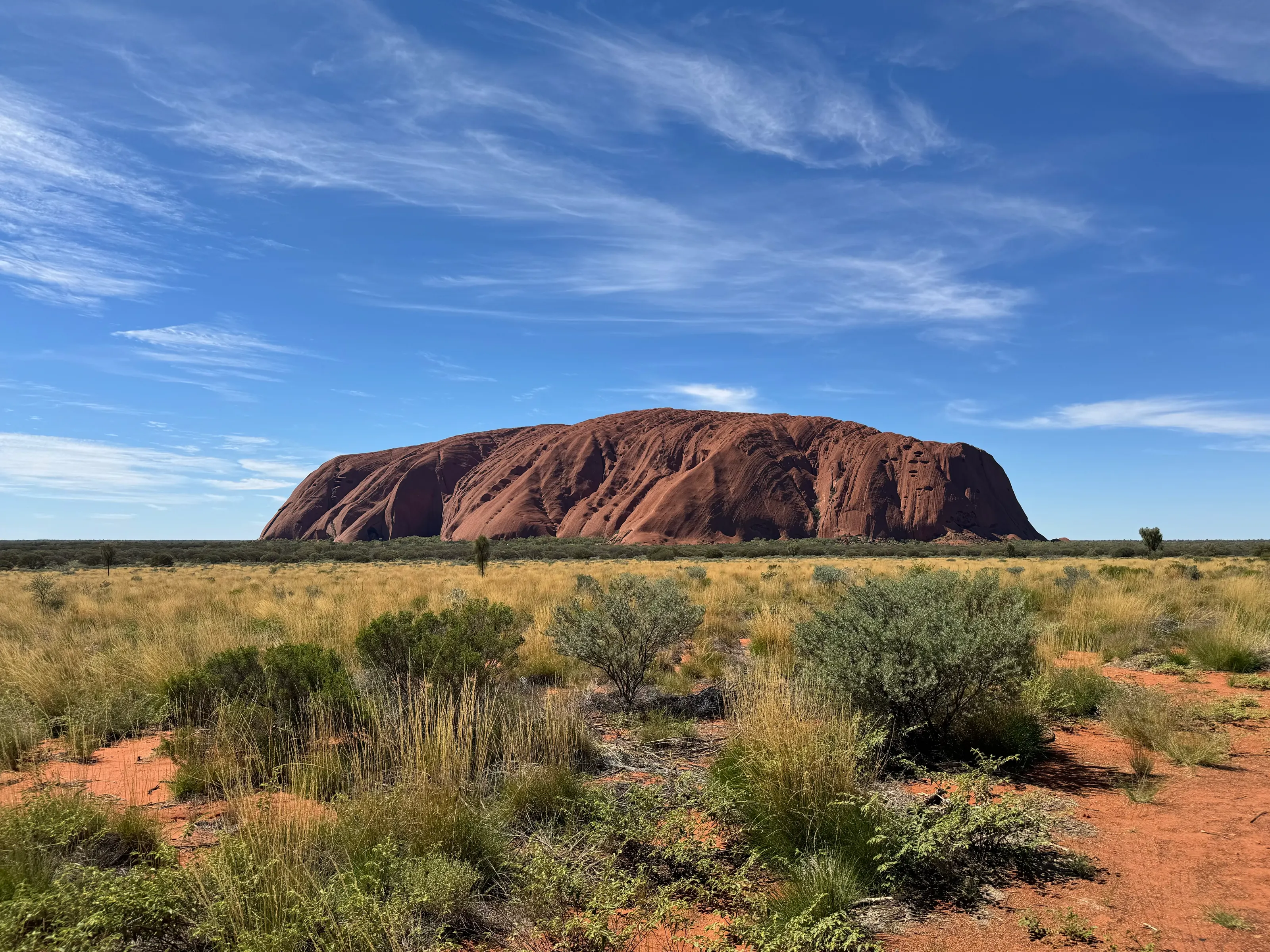
Sunrise at Uluru
At dawn, the wall of Uluru goes from shadow to glowing orange within minutes. Viewing areas with car parks have been built in the park for sunrise and sunset; they fill up quickly, so arrive early. The lookouts in the resort also give clear views without leaving Yulara.
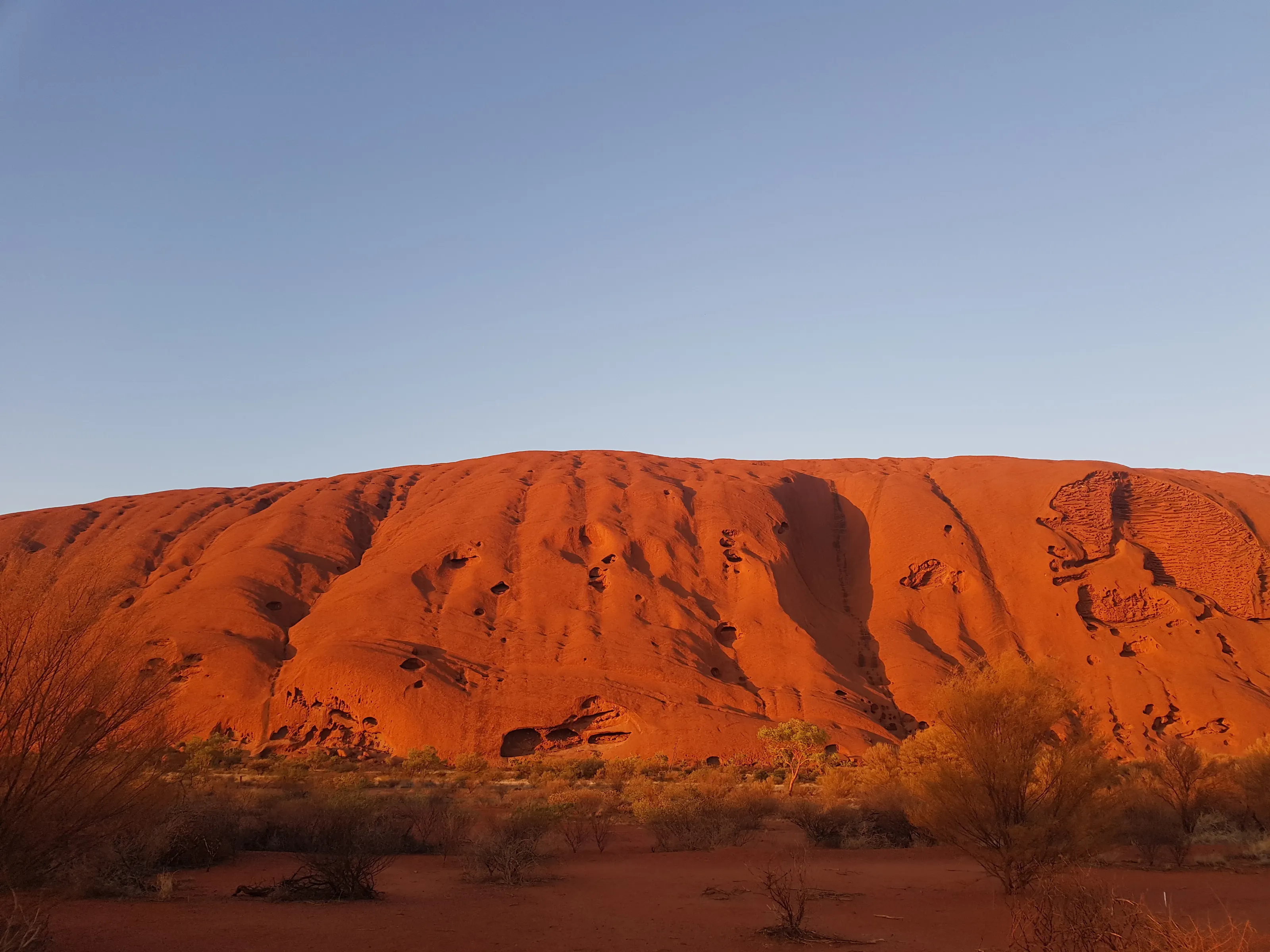
Sunset at Uluru
At dusk, the rock turns deep red and then purple, under a pink and violet sky. It is the most photographed moment of the day, hence the crowds at the viewing points: bring water, a light layer for the cool air that arrives quickly, and a torch for the way back. In winter the sun sets earlier and it gets cold fast.
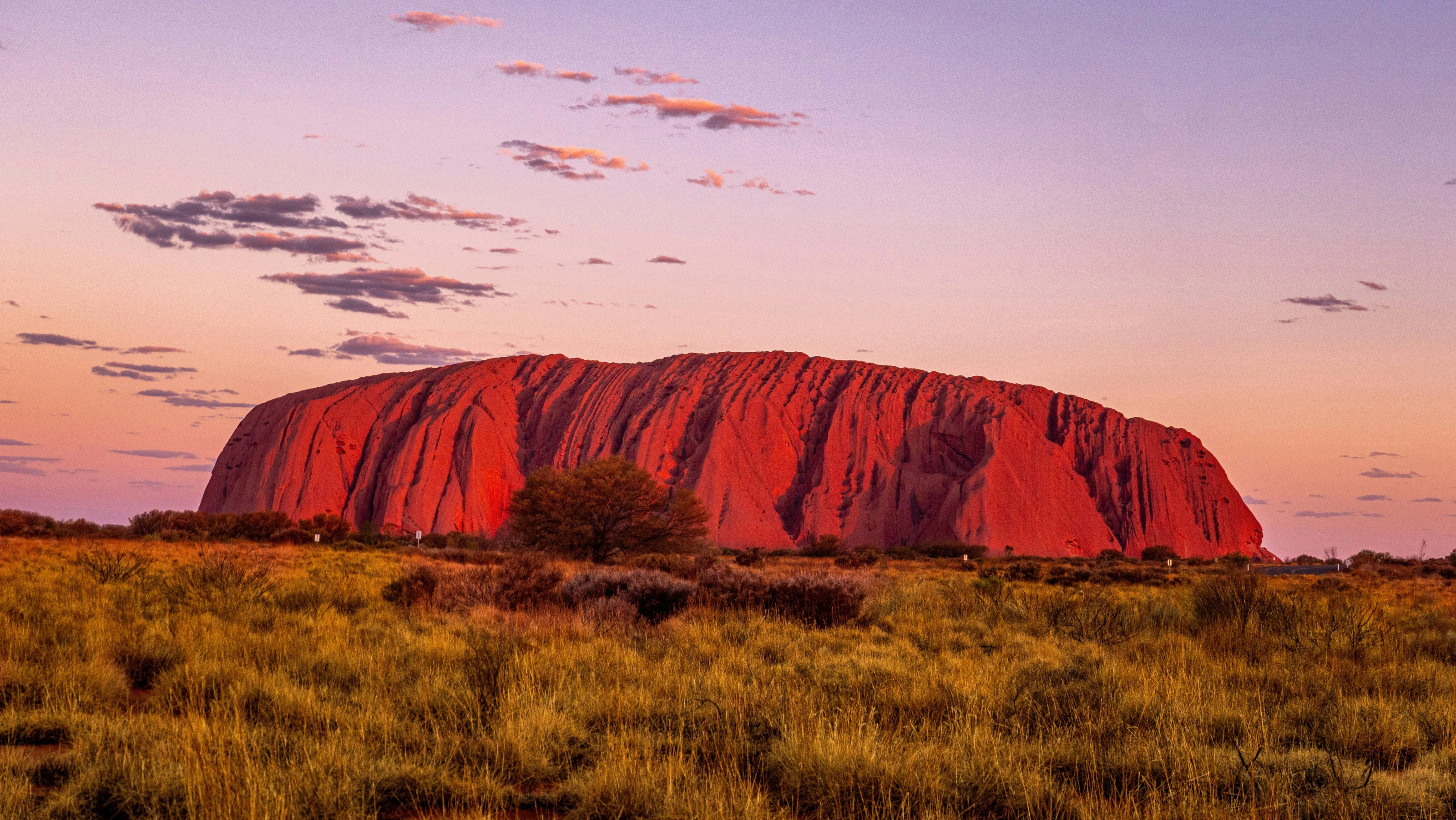
Kata Tjuta, the red domes
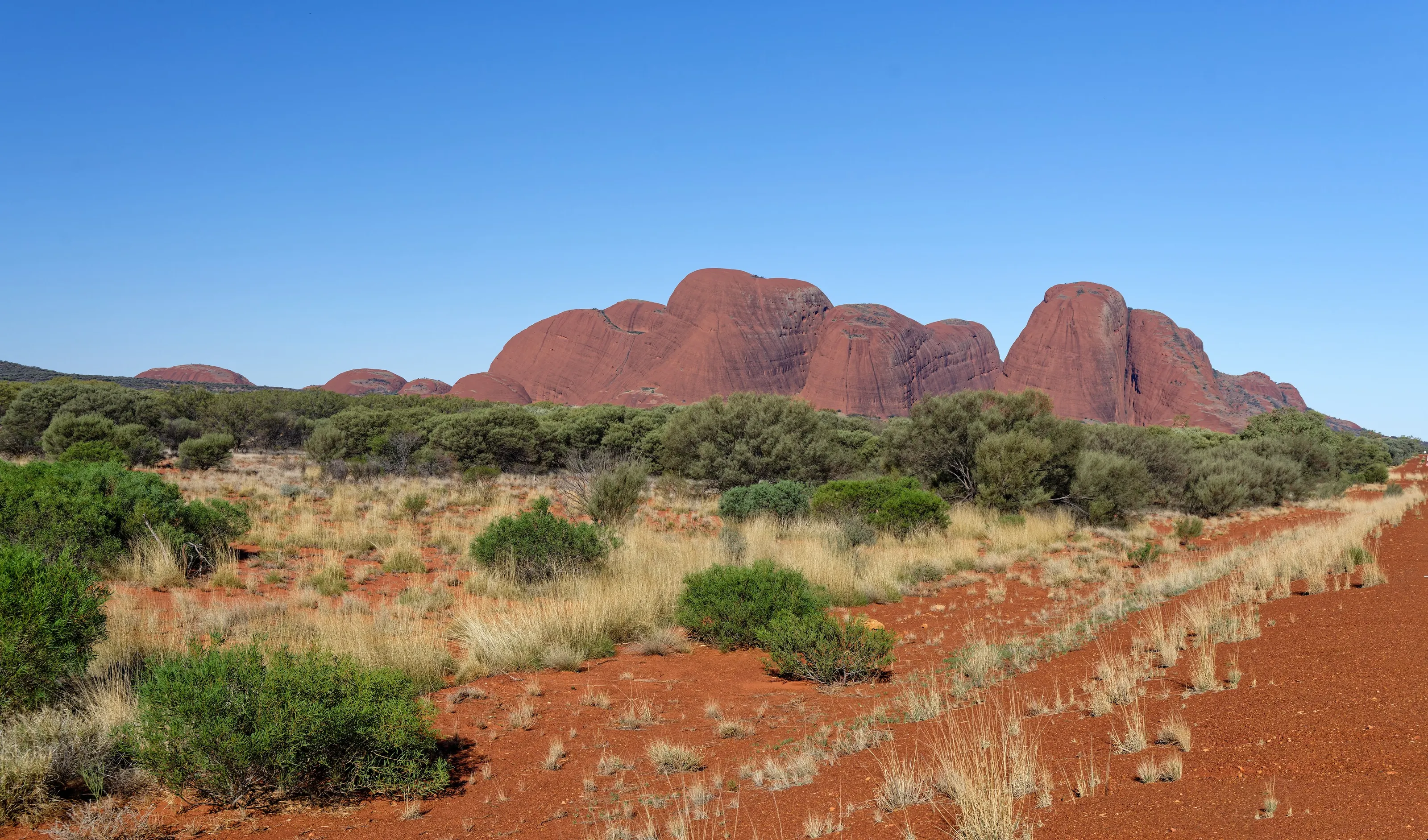
About fifty kilometres from Yulara, Kata Tjuta (the Olgas) is a group of 36 conglomerate domes, the highest of which stands well above Uluru; the name means 'many heads'. Two walks enter the massif: Walpa Gorge (about 2.5 km, 1 to 2 hours) and Valley of the Winds (about 7 km, 3 to 4 hours, more demanding). Start early: in extreme heat some trails may be closed for your safety.
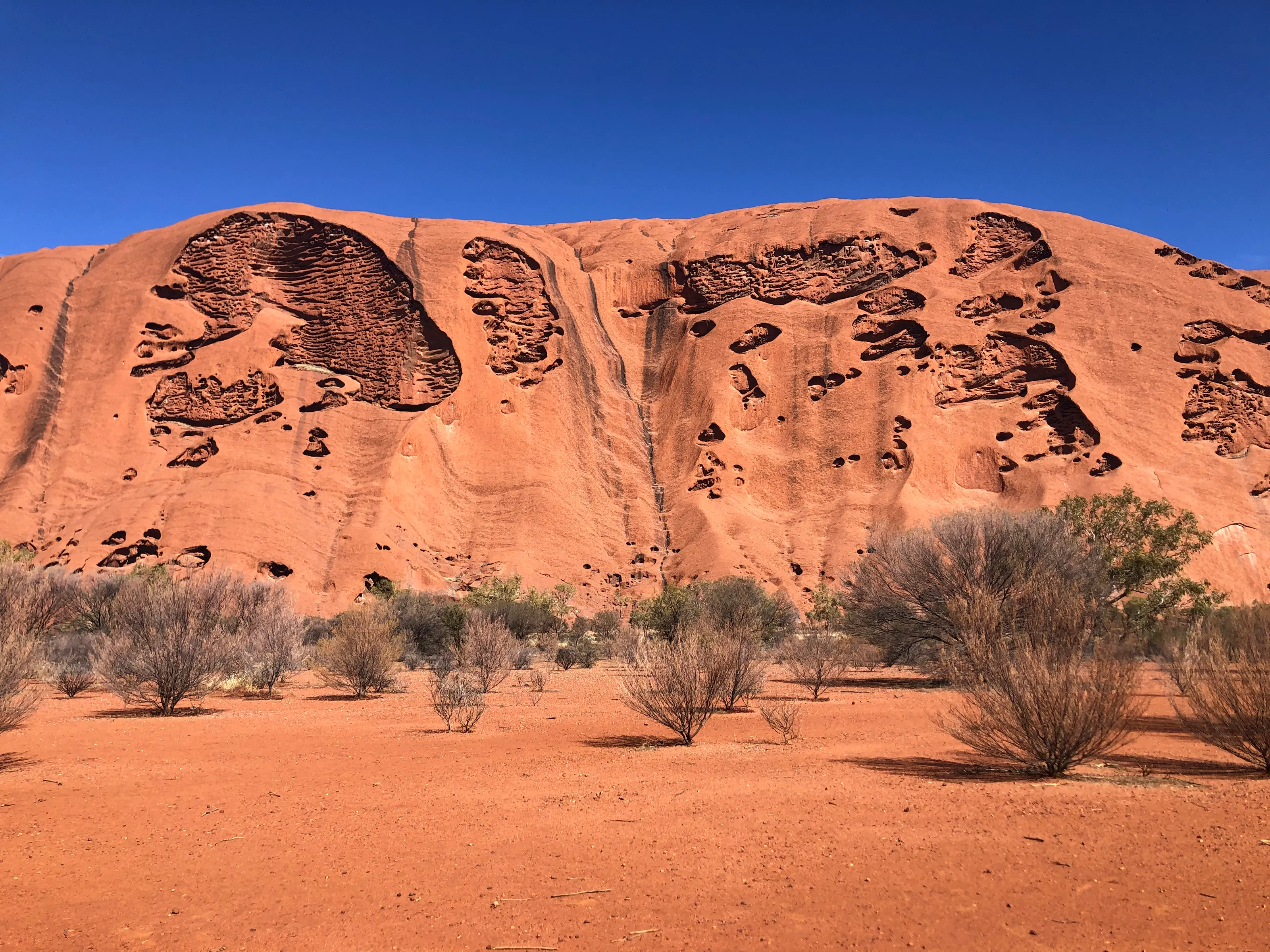
The walk around the base of Uluru
A trail of about 10 km circles the rock (allow 3 to 4 hours); shorter variants lead to waterholes, caves and walls sculpted by erosion, with signs telling the stories of the place. Up close you can see the hollows and flakes in the rock. Some areas must not be photographed at the request of the Anangu: respect the signs.
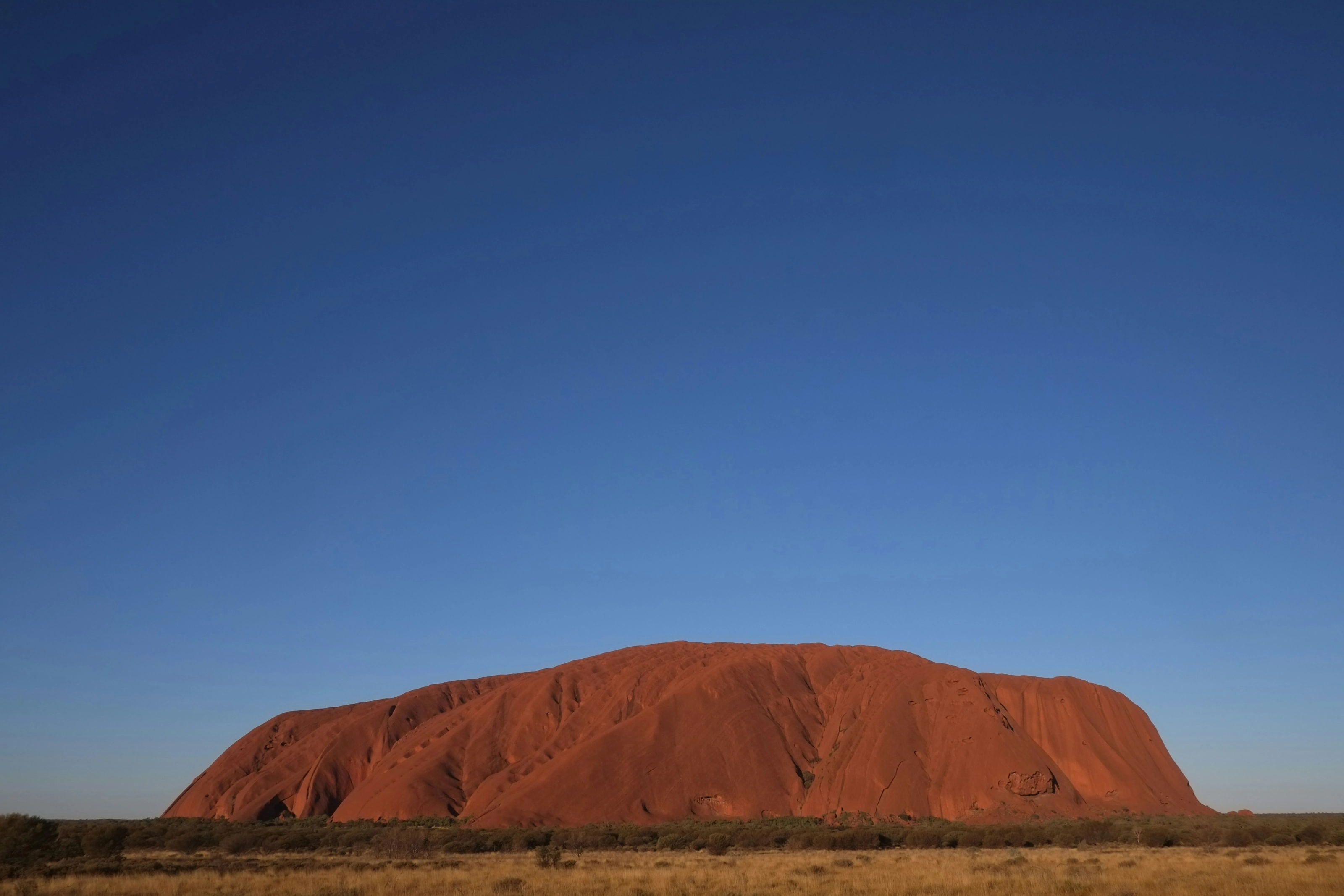
Panorama
Uluru alone in the vastness of the desert
A sacred place
Climbing Uluru is banned: visiting with respect for the Anangu
A ban since 2019
The Anangu, the traditional owners, do not climb Uluru because of its spiritual importance and long asked visitors not to. Climbing has been banned since 26 October 2019: it is no longer possible to go up, and the handhold chain has been removed. This does not limit the visit, which is made by walking around the rock, watching the changing light and learning about the culture of the place.
How to behave
Stay on the marked trails, respect the no-photography areas and announced closures, and do not take away stones or sand. Updates on park rules are published by the park authority and at the cultural centre: check them before you go, as they may change.
Museums and culture
Cultural centre, Aboriginal art and a light installation
The Uluṟu-Kata Tjuṯa Cultural Centre
Located in the park near Uluru, it introduces visitors to Anangu traditions, legends, languages and history. Its architecture, built from local materials and inspired by two ancestral snakes, has won an award. Rangers also offer guided walks in the park. It is the best introduction to the visit: start there before walking around the rock.
Aboriginal art galleries at the resort
In the resort, galleries show and sell works by Aboriginal artists from Central Australia: paintings, objects and carvings. Ask about the origin of the work and the artist, and prefer galleries that pay the communities fairly. We give no prices, which vary widely.
Visitor centre and the Field of Light
The Yulara visitor centre presents the region and Anangu culture and lets you book tours. In the evening, Field of Light, an artwork by Bruce Munro, is a field of thousands of small lights on the sand that you walk through after dark; it is reached by bus from the resort and must be booked in advance.
Food and drink
A limited offer, concentrated in the resort
Resort restaurants
In Yulara, restaurants and cafés are grouped in the hotels and the small shopping centre, with classic Australian cooking: grills, pizza, pasta and buffets. Kitchens close early and menus are limited: book on busy evenings.
Local products and dinners in the desert
Some menus offer locally inspired produce: kangaroo meat and edible bush plants (whose uses the Anangu explain on guided visits). Dinners in the open desert at sunset, which must be booked, are the most sought-after food experience; they are expensive and we give no price.
Shopping for food
A small supermarket in the shopping centre makes self-catering possible, but fresh produce is limited. Stock up on water and food before excursions; the only petrol station is in Yulara, hundreds of kilometres from the next.
Getting around
Resort shuttles, rental car and organised tours
In the resort
The resort can be explored on foot (the Yulara Drive loop is about 3 km long), but midday heat discourages long walks. Shuttles link the hotels and the campground. Distances are short; evening walks call for a torch and some caution.
To reach Uluru and Kata Tjuta
Three options: a rental car (rental desks at the airport and in the resort; paved roads, driving on the left), shuttles and buses serving the park from the resort, or organised guided tours (sunrise or sunset, base walk). A car gives the most freedom; included mileage may be limited. Unpaved roads to the west require a four-wheel drive and permits.
Towards Alice Springs
By road, allow 4.5 to 5 hours to Alice Springs via the Lasseter Highway and then the Stuart Highway. Fill the tank before leaving, avoid driving at dawn and dusk because of animals on the road, and keep water in the vehicle.
Budget and entry
A very high price level, because of the remoteness
Price level
Yulara is a very expensive destination compared with Europe: accommodation is concentrated in a single resort, restaurants and supplies cost clearly more than elsewhere in Australia, and guided tours, car rental and park entry add up. Campgrounds and simple lodgings are the cheapest option. We give no figures: prices vary with the season and the exchange rate.
Flights
The long-haul flight remains the most variable cost. SniperAir tracks fares to AYQ and compares them with the route's history; also consider flights to Alice Springs (ASP), about 450 km away.
Entry and precautions
Australia generally requires an electronic travel authorisation or a visa depending on nationality: check the official Australian government websites. Also consult the official travel advice of your country of departure. On the spot, heat, sun and dehydration are the main risks: carry plenty of water, wear a hat and sunscreen, and adapt your schedule.
Heat, flies and practical tips
A desert: be ready for heat, sun and flies
Heat and sun
In the Australian summer (December to February), the park's average maximum temperature is close to 38 °C, with records near 46 °C; UV levels are extreme from October to March. Walk early in the morning, drink before you feel thirsty, wear a hat and covering clothes, and rest in the shade at the hot hours. Drinking water points are rare on the trails: carry your own.
Flies
Flies are a feature of the Australian interior and can be very intrusive in warm weather. A lightweight head net and a repellent are useful, inexpensive purchases, often sold locally. They are less of a nuisance in winter.
Nights and isolation
In winter nights are cold, with average minimums close to 5 °C in June and July and occasional frost: bring a warm jacket. The remoteness calls for caution: tell someone your route, keep the tank full and stay on open roads.
When to go
Cool pleasant winters, very hot summers: reversed seasons
Winter (June to August)
Mild, sunny days and cold nights, sometimes close to freezing with frost: a good time to walk all day. Busier.
Spring (September to November)
Heat builds quickly; in September and October plants flower and animals breed, according to the Anangu calendar. UV levels become extreme from October.
Summer (December to February)
Very hot, with average highs close to 38 °C and higher peaks; sporadic storms are possible. Walk only early in the morning; some trails may close.
Autumn (March to May)
The heat gradually eases; April and May offer pleasant walking temperatures, with cooler nights.
Beware of the reversed seasons: Australia lies in the southern hemisphere, so the austral summer runs from December to February and winter from June to August, the opposite of Europe. Yulara has a desert climate, with a little under 300 mm of rain a year, unevenly spread; the Anangu recognise five seasons rather than four.
As a rule, the best time runs from April-May to September: bearable temperatures, little rain and cool nights. The rest of the year, favour very early starts and rest in the shade.
By length of stay
What to do in Yulara depending on how long you stay
The essentials
A sunset at Uluru, then the next day its sunrise and the base walk.
Culture and Kata Tjuta
The cultural centre, an early morning walk at Kata Tjuta and an evening at Field of Light.
The Red Centre
A road trip to Alice Springs and the gorges of the MacDonnell Ranges, or a flight to another city.
In pictures
Yulara and Uluru in pictures
You might also like
Similar destinations
FAQ
Frequently asked questions about flights to Yulara
How do I get from Yulara airport (AYQ) to the resort?
The airport is about 6 km from Yulara: a few minutes by shuttle, taxi or rental car. Uluru is about 20 minutes by road from the airport.
When is the best time to visit Uluru?
Generally from April-May to September, with mild days and cold nights. The austral summer (December to February) is very hot; seasons are reversed compared with Europe.
Is Yulara expensive?
Yes, the price level is very high, especially for accommodation, meals, tours and car rental, because of the remoteness. Campgrounds and supermarket groceries help keep the budget down.
How long should I stay in Yulara?
Two days allow a sunrise and a sunset at Uluru and the walk around its base; add a day for Kata Tjuta and the cultural centre.
Can you climb Uluru, and how do you get around?
No: climbing has been banned since October 2019, out of respect for the Anangu. To visit the park, use a rental car, resort shuttles and buses or guided tours; driving is on the left.
What is there to eat in Yulara?
The offer is limited to the resort's restaurants and cafés, with classic Australian dishes and a few locally inspired products. Booking and carrying some provisions is useful.
How much does a flight to Yulara usually cost?
The price mainly depends on your departure city, the season and how far ahead you book. The "opportunities" section above shows real examples of fares already detected by SniperAir for this destination.
How do I get alerted when a flight to Yulara drops below my budget?
Create an alert profile with your departure airport, Yulara as the destination and your maximum budget. You are notified automatically as soon as a matching fare is detected.
Ready to head to Yulara?
Set your budget and let SniperAir monitor fares for you.
Create my alert