
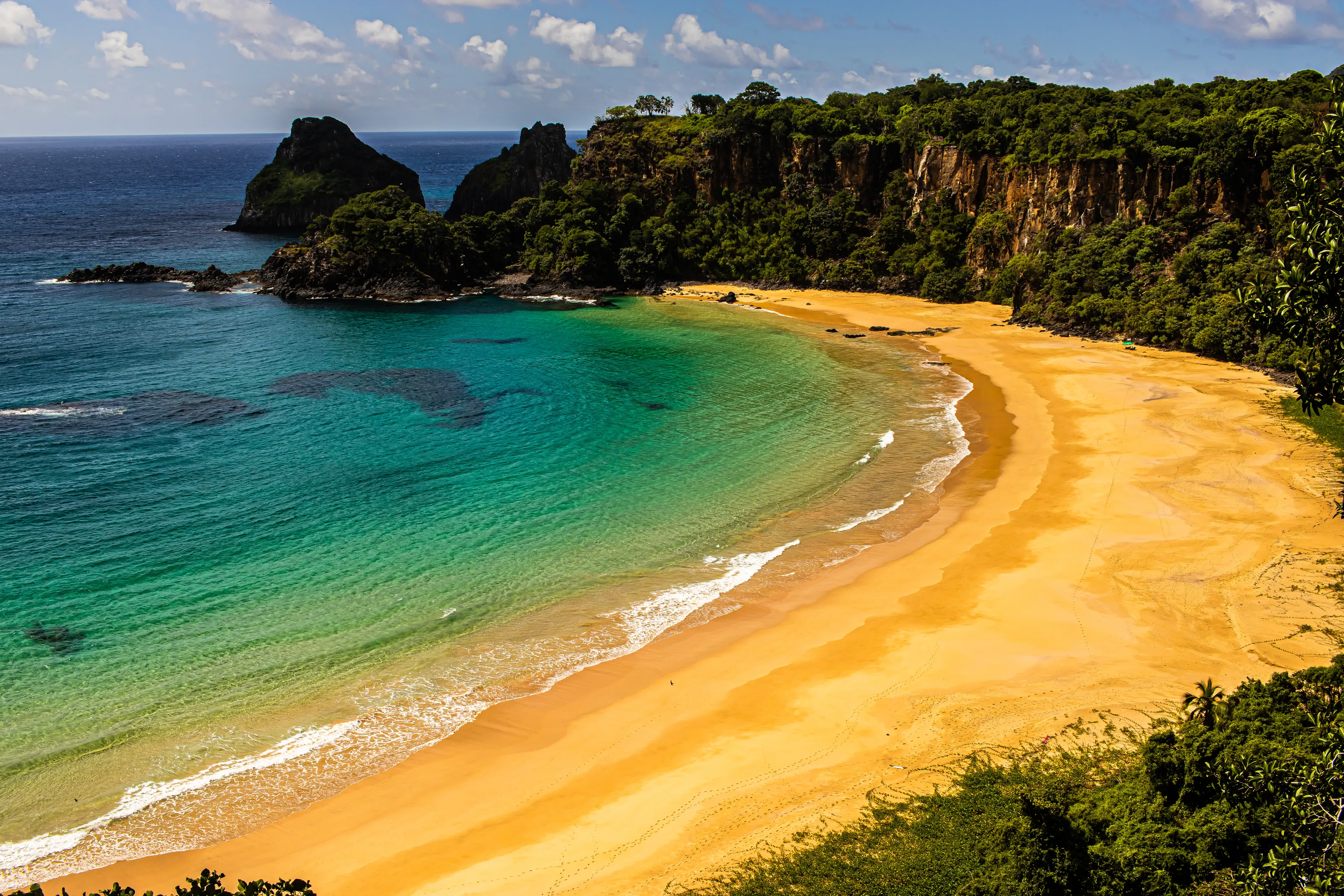
Cheap flights to Fernando de Noronha
Set your departure airport and maximum budget: SniperAir tracks prices to Fernando de Noronha and alerts you the moment a deal matching your criteria appears.
Quick summary
Country
Brazil
Continent
South America
Airport
FEN
Currency
Brazilian real
Time zone
UTC-2
Deals already spotted to Fernando de Noronha
Real flight examples detected by SniperAir, with their reference price.
Loading examples…
Why track Fernando de Noronha with SniperAir
You do not need to compare prices every day
Choose your departure
Enter your departure airport and your maximum budget for a flight to Fernando de Noronha (FEN).
SniperAir keeps watch
Our systems continuously compare new prices with the real history of the route. SniperAir monitors prices and alerts you: it does not sell or book tickets.
You receive an alert
As soon as a price matches your criteria, you are notified without having searched yourself.
Airport and getting there
One air link only: flights from Recife or Natal
Fernando de Noronha
The archipelago lies about 350 km off the north-east coast of Brazil, off Natal. A small airport on the main island receives daily flights from Recife (about 540 km, around 1 h 40 in the air) and Natal (about 350 km, around 1 h 10), according to Wikivoyage (EN, DE) and Wikipedia (EN, ES). This is the usual way in; in high season, cruises also link Fortaleza, Natal and Recife. From the airport you reach the pousadas by bus, taxi, rented buggy or even on foot for the nearest ones.
Distances and times are indicative, taken from Wikivoyage (EN, DE) and Wikipedia (EN, ES, FR); sources differ by a few kilometres. We give no fares, which change.
Fernando de Noronha belongs to the state of Pernambuco although it lies closer to Rio Grande do Norte. It has 21 islands and islets covering about 26 km²; only the main island, about 17 to 18 km², is inhabited, by a few thousand people. On arrival you pay a local environmental preservation tax, and the number of visitors on the archipelago at any one time is capped: check the official websites before booking, as amounts and rules change.
Beaches and landmarks
A volcanic archipelago on the UNESCO list and its famous beaches
The archipelago is the summit of a submarine volcanic structure. A marine national park has covered about 70% of the main island and nearby waters since 1988; together with Rocas Atoll it has been a UNESCO World Heritage Site since 2001. The beaches of Sancho, Porcos and Leão regularly feature in rankings of Brazil's best, according to Wikivoyage. The mainland-facing coast has Sancho, Porcos, Cacimba do Padre, Conceição and Boldró; the Atlantic-facing side has Leão, Sueste and Atalaia.
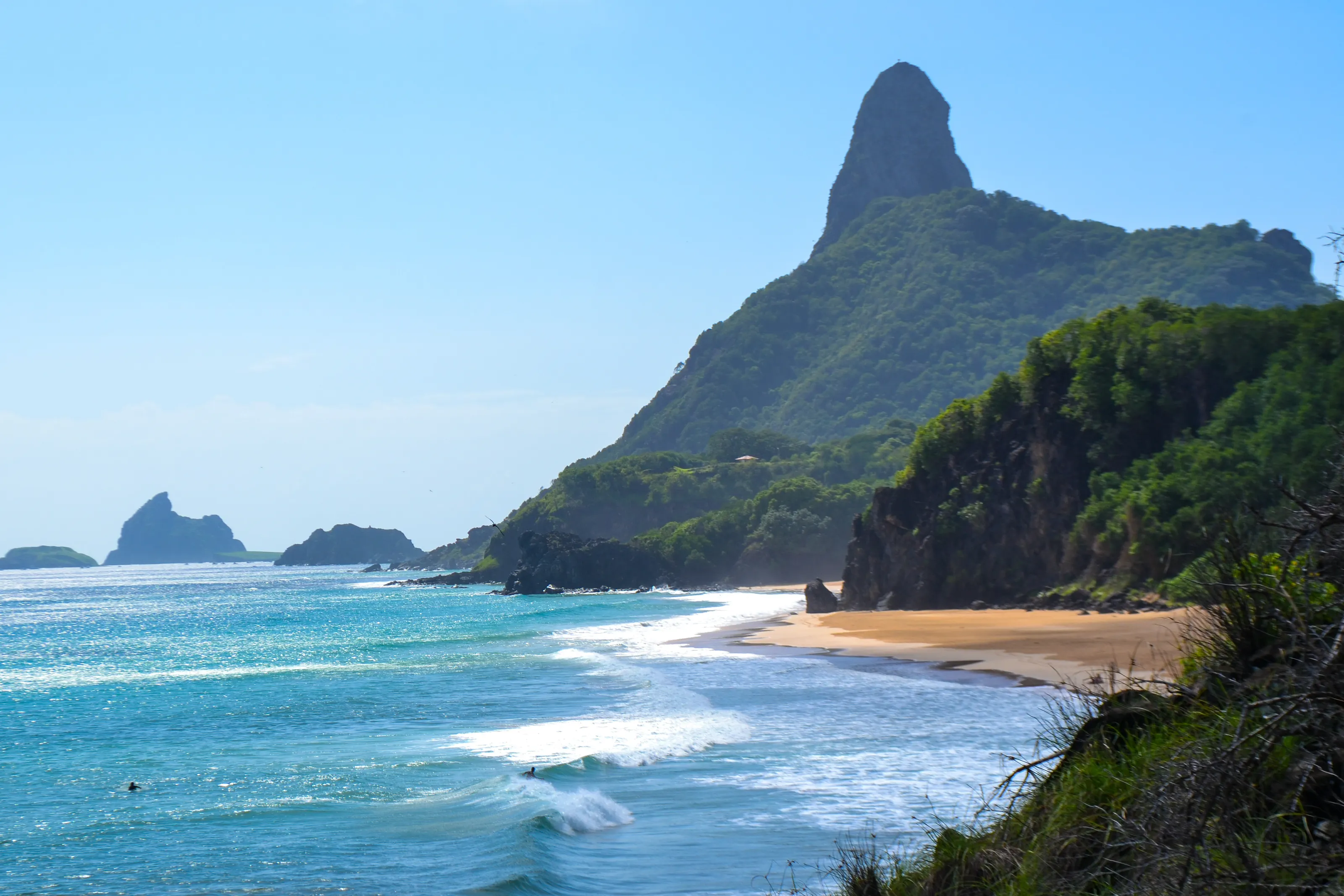
The Morro do Pico
The Morro do Pico, a volcanic spire 323 m high, is the highest point of the archipelago and its most recognisable profile; it can be seen from many parts of the island.
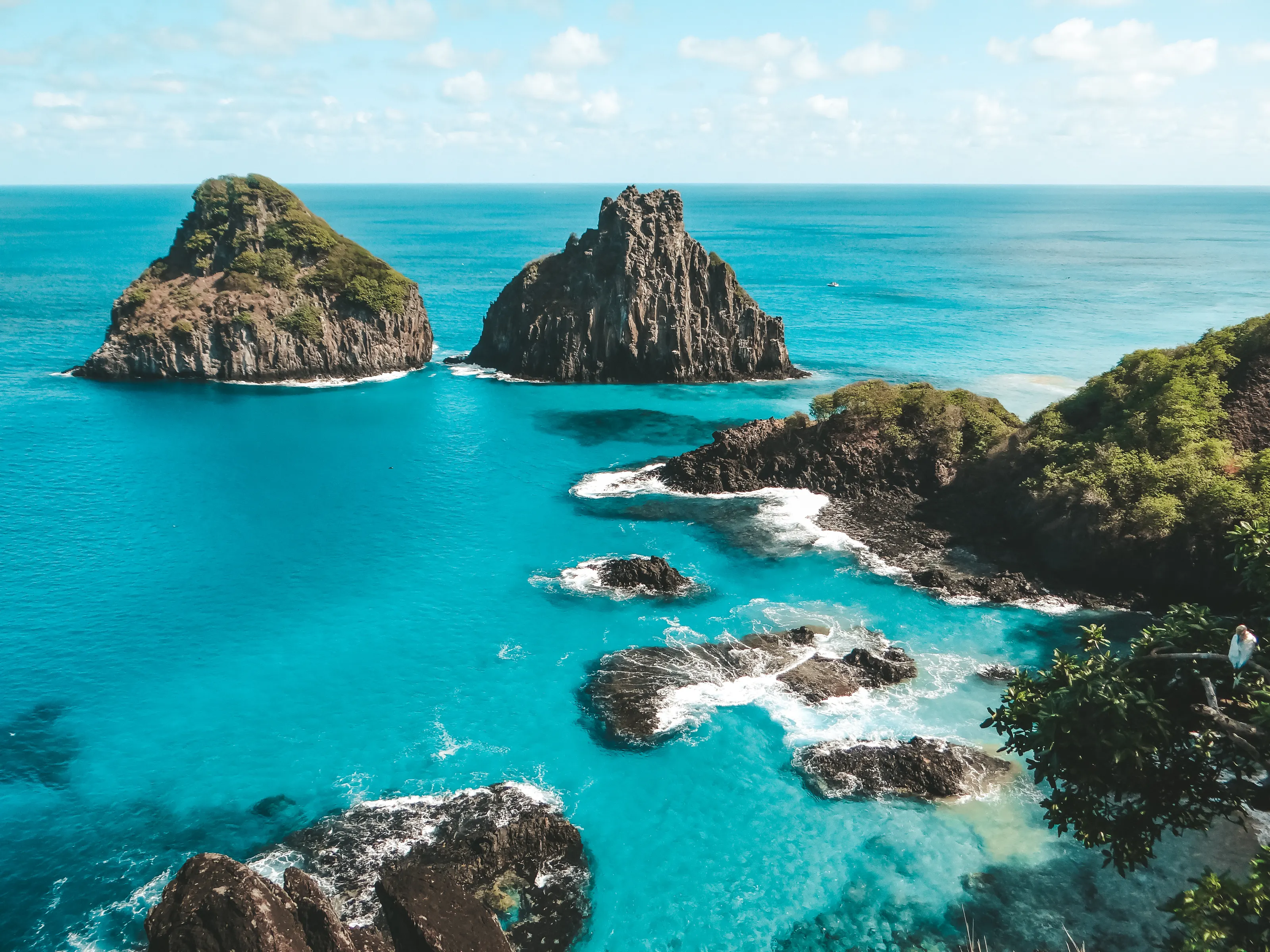
Dois Irmãos and the Baía do Sancho viewpoint
The twin Dois Irmãos rocks stand in the water at the entrance to Baía do Sancho, the island's most often cited beach; its neighbour, Baía dos Porcos, can be seen the same day. Wikivoyage advises bringing your own shade: there is none at Leão and the shaded spots at Sancho fill up quickly.
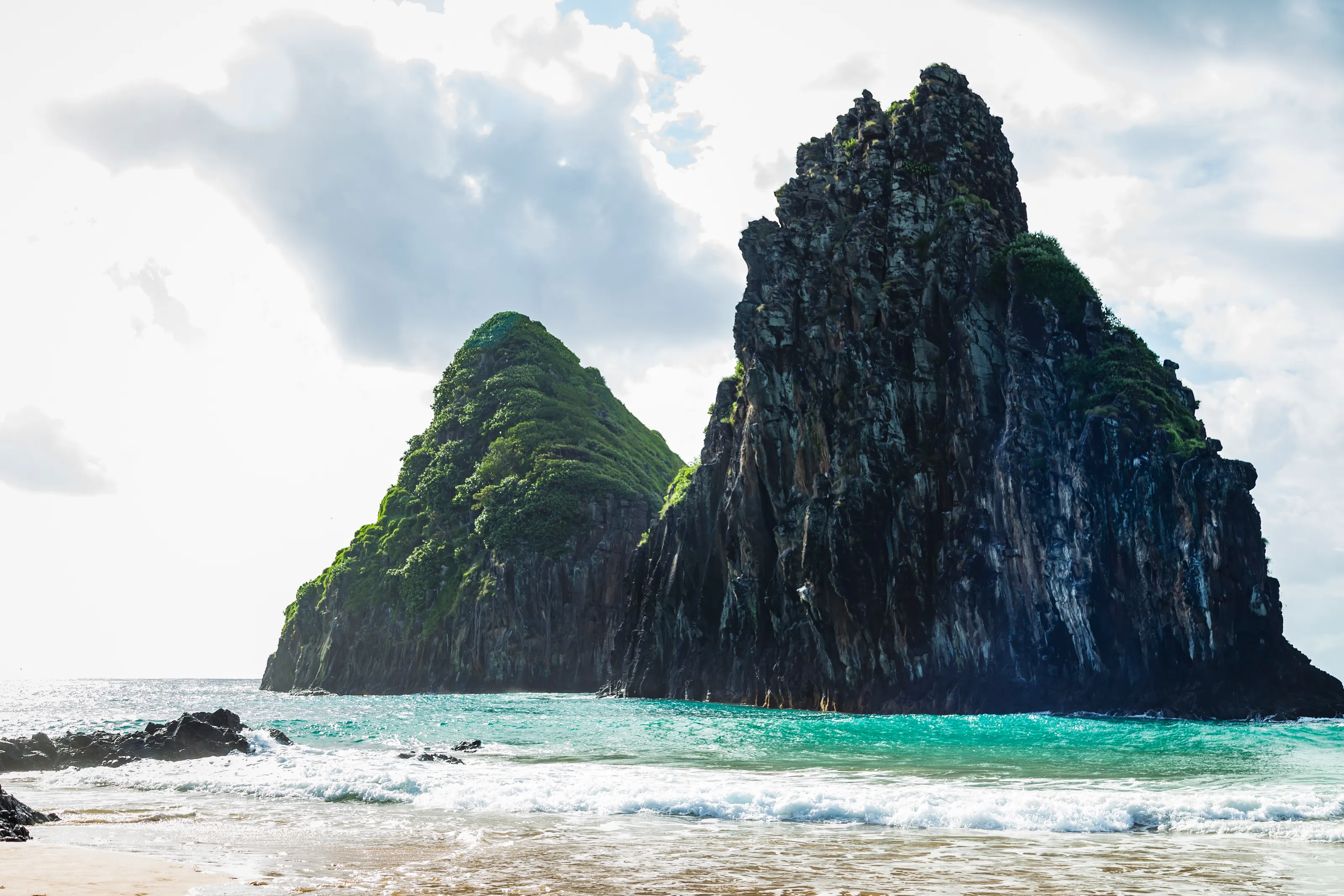
Cacimba do Padre beach
On the mainland-facing coast, Cacimba do Padre gives another view of the Dois Irmãos rocks. Its waves make it popular with surfers; ask locally about sea conditions before swimming.
Diving, dolphins and nature
Clear water, dolphins and turtles
Diving and snorkelling
The archipelago's waters, bathed by a warm current from Africa, offer visibility of up to about 50 m, according to Wikipedia (EN) and Wikivoyage (EN). Diving and snorkelling are a major reason to come; several natural pools, such as Atalaia, are regulated (limited numbers, limited time, sometimes a guide is compulsory). We have no photo of the diving: check with local operators.
Turtles and birds
Sea turtles visit Sueste Bay; touching them is forbidden. The park also shelters one of the largest seabird breeding colonies in the South Atlantic and endemic birds such as the Noronha vireo. We have no photo of the turtles.
Trails
Trails inside the national park need authorisation and accredited guides; those in the environmental protection area are freely accessible. Some routes (Atalaia, Capim-Açu, Pontinha-Caieira, Abreu) run on a booking system with limited places.
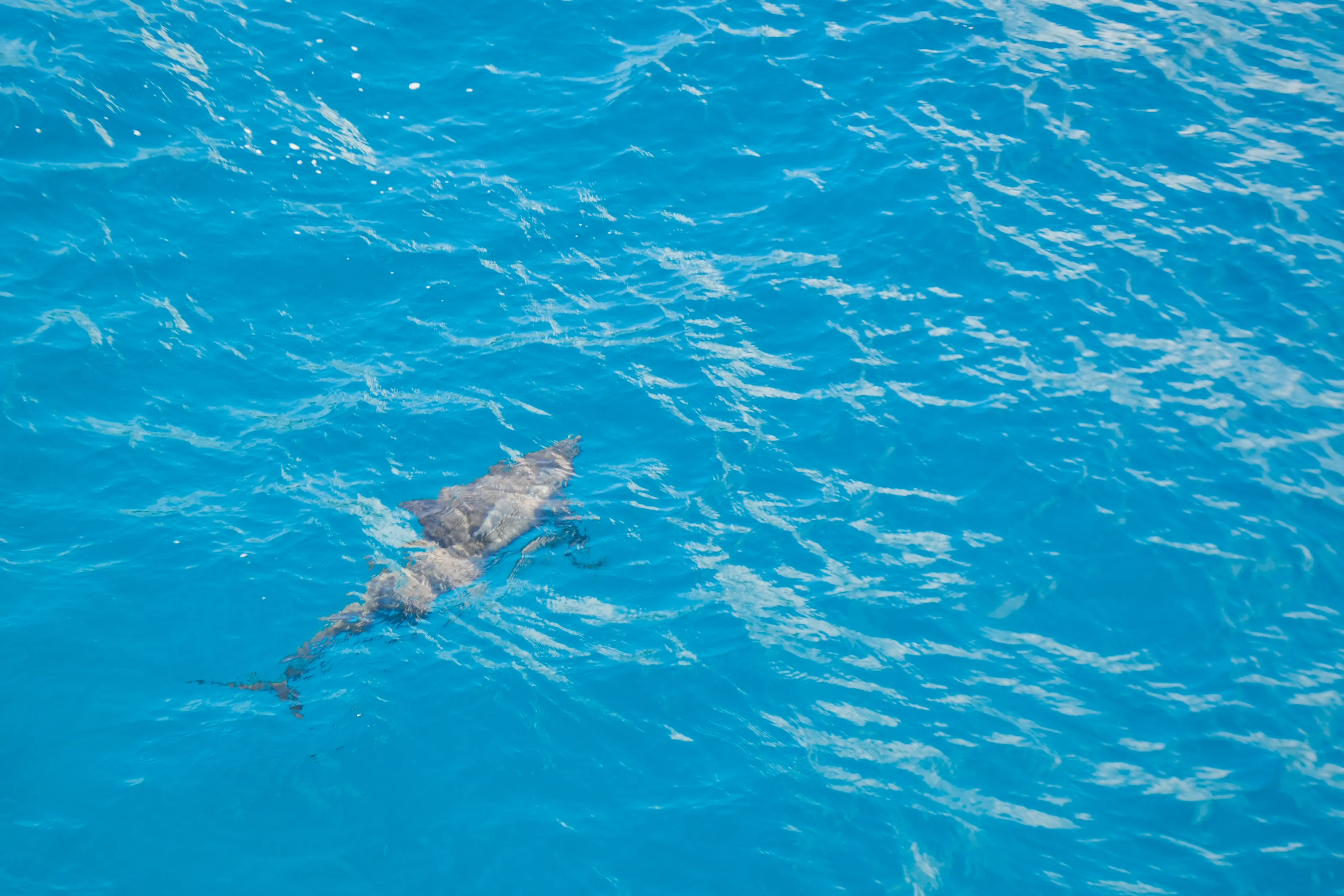
Dolphins at Baía dos Golfinhos
Baía dos Golfinhos is home to a large dolphin population, mainly spinner dolphins; they can be watched from the viewpoint, from the shore or on a boat trip. The archipelago is listed by UNESCO notably as a feeding ground for dolphins, turtles, sharks and tuna.
History, culture and museums
Forts, wartime remains and conservation
Forte dos Remédios
Sighted in 1503, notably by the expedition that included Amerigo Vespucci, the archipelago was contested by the Dutch, the French and others, then secured by Portugal in the 18th century, which built a network of forts. The Forte Nossa Senhora dos Remédios, begun in 1737, is the largest and best preserved, according to Wikivoyage (EN). We have no photo of the fort.
Vila dos Remédios and wartime traces
Vila dos Remédios, the main village, keeps remains from the time when the island was a penal colony and then a military base in the Second World War, with anti-aircraft batteries preserved for visitors, according to Wikipedia (ES). The island served as a prison until the 1980s.
Conservation and the park
There are no large museums: the island's culture revolves around conservation. The marine park is run by ICMBio, and the Tamar project, devoted to sea turtles, is cited by Wikivoyage; shops supporting Tamar are one way to contribute. Check opening times locally.
Food and drink
Seafood, moqueca and pay-by-weight buffets
Island cooking is that of Brazil's north-east: fresh fish and seafood, moquecas (fish stew with coconut milk), grilled picanha and many buffets by weight or all-you-can-eat. After a dive, a bowl of açaí with granola and banana near the port is a classic. Restaurants cluster in Vila dos Remédios and the Floresta Nova and Boldró districts; pizzerias and Italian tables round out the choice.
Getting around
One road, one bus line, buggies
The BR-363 and the bus
A single road, the BR-363, crosses the island from the port to Sueste Bay, hence its nickname TransNoronha. One bus line runs it every day from early morning to evening, in about twenty minutes end to end, according to Wikivoyage (EN); it is the cheapest way to reach the beaches.
Buggy, car and hitchhiking
Buggies and cars can be rented, and many visitors also get lifts with locals or dive trucks. Taxis exist. For some park sites you need a guide or an organised tour.
Staying safe
Swim only in marked areas, follow posted instructions (Sueste Bay is sometimes closed) and check your home country's official travel advice before departure.
Budget
A high budget, among the most expensive in Brazil
Fernando de Noronha is an expensive destination: an isolated island reached only by plane or boat, accommodation almost entirely in pousadas (about 70, often adapted houses), limited visitor numbers and local fees. The bus, pay-by-weight meals and free beaches help keep costs down, but the overall level is clearly higher than on the mainland. We give no figures, because fees and prices change.
The air fare remains the most variable item. SniperAir tracks prices to FEN and compares them with the route's history; since flights mostly come from Recife and Natal, also consider tracking those cities.
When to go
When to visit Fernando de Noronha? Warm all year, seasons reversed
Dry season, calmer sea (roughly August to January)
Little rain and plenty of sun: the usual period for diving and beaches. Sources place the start of this season between August and September.
Rainy season (roughly February to July)
Short showers alternate with sunshine, with more rainy days; the vegetation is greener. Sources give a start in February or March and an end in July or August.
Temperature
Warm all year, about 28 °C on average, with small variations. The archipelago is close to the equator (about 4° south).
Reversed seasons
Even near the equator, it is rain and wind, not cold, that mark the year; the southern winter (June to September) is not a cool season here.
Sources differ by a few weeks on the rainy dates (February to July for Wikipedia and Wikivoyage EN; March to August for Wikipedia DE): take these months as a guide. The climate is tropical, with two distinct seasons. Book early in high season, as visitor numbers are capped.
By length of stay
How many days on Fernando de Noronha
The essentials
Baía do Sancho and Baía dos Porcos, Dois Irmãos, a sunset and an outing to watch dolphins.
Going deeper
Diving or snorkelling, a booked trail, Sueste Bay and the fort.
Taking it slowly
Surfing, quieter beaches and unplanned days, if the budget allows.
In pictures
Fernando de Noronha in pictures
You might also like
Similar destinations
FAQ
Frequently asked questions about flights to Fernando de Noronha
How do you get to Fernando de Noronha?
By air: the island's airport (FEN) receives daily flights from Recife (about 540 km, 1 h 40) and Natal (about 350 km, 1 h 10). In high season, cruises also link Fortaleza, Natal and Recife.
When is the best time to visit Fernando de Noronha?
It is warm all year. The dry, calmer-sea season runs roughly from August to January and the rainy season from about February to July; sources differ by a few weeks.
Is Fernando de Noronha expensive?
Yes, it is among Brazil's most expensive destinations: an isolated island, pousada accommodation, limited visitors and local fees. The bus and pay-by-weight meals help limit costs.
How many days should I plan on Fernando de Noronha?
Three to four days cover the main beaches, Dois Irmãos and the dolphins; five to six allow diving, booked trails and the fort.
How do you get around Fernando de Noronha?
A single road, the BR-363, and one bus line that runs along it every day; you can also rent a buggy or car, take a taxi or get a lift with locals.
What should I eat on Fernando de Noronha?
Fresh fish and seafood, moqueca with coconut milk, grilled picanha, pay-by-weight buffets and a bowl of açaí with granola and banana.
How much does a flight to Fernando de Noronha usually cost?
The price depends mainly on your departure city, the period and the booking date. The opportunities section above shows real examples of prices already detected by SniperAir to this destination.
How do I get alerted when a flight to Fernando de Noronha drops below my budget?
Create an alert profile with your departure airport, Fernando de Noronha as the destination and your maximum budget. You are notified automatically as soon as a matching price is detected.
Ready to head to Fernando de Noronha?
Set your budget and let SniperAir monitor fares for you.
Create my alert