
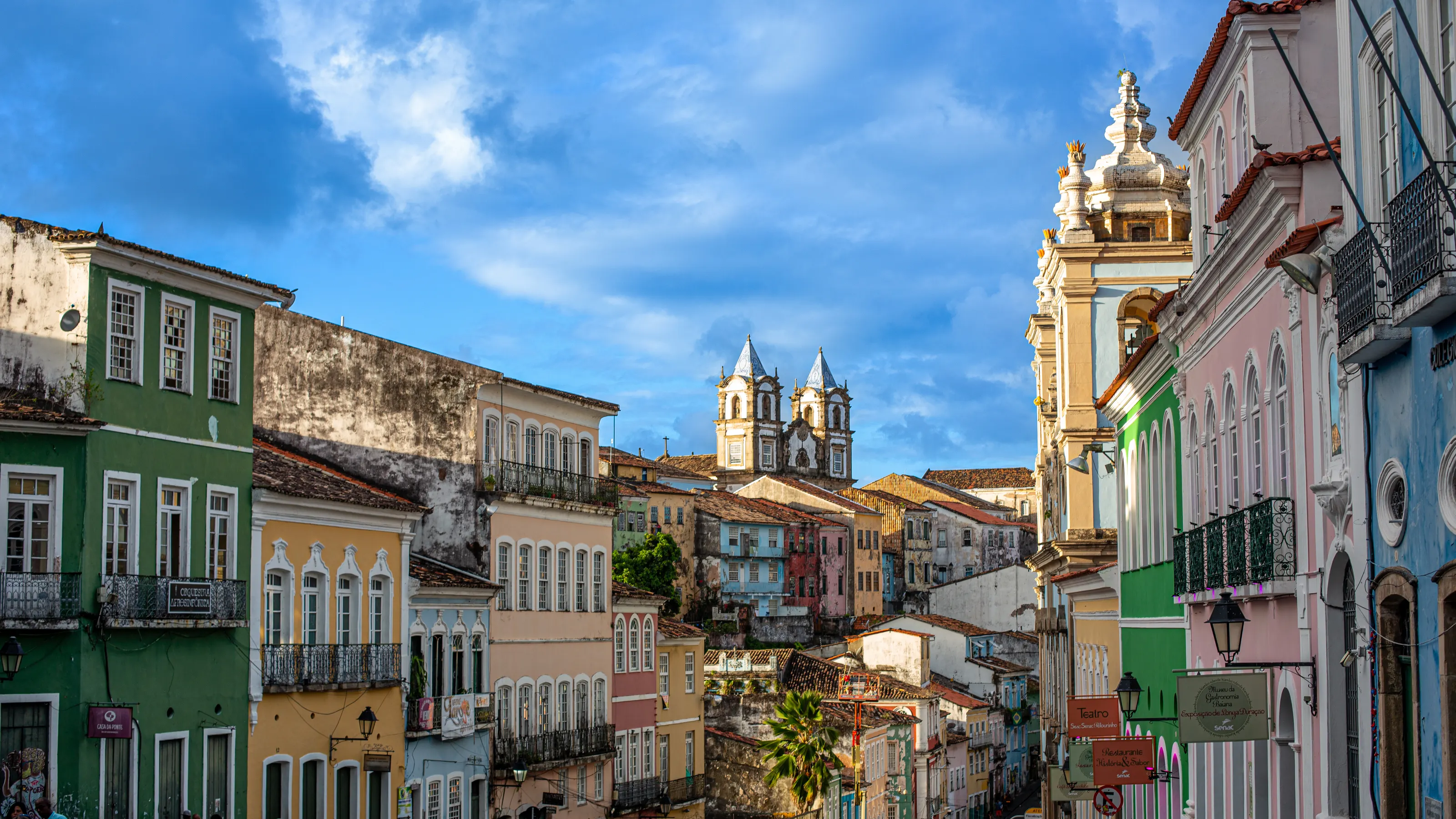
Cheap flights to Salvador
Set your departure airport and maximum budget: SniperAir tracks prices to Salvador and alerts you the moment a deal matching your criteria appears.
Quick summary
Country
Brazil
Continent
South America
Airport
SSA
Currency
Brazilian real
Time zone
UTC-3
Deals already spotted to Salvador
Real flight examples detected by SniperAir, with their reference price.
Loading examples…
Why track Salvador with SniperAir
You do not need to compare prices every day
Choose your departure
Enter your departure airport and your maximum budget for a flight to Salvador (SSA).
SniperAir keeps watch
Our systems continuously compare new prices with the real history of the route. SniperAir monitors prices and alerts you: it does not sell or book tickets.
You receive an alert
As soon as a price matches your criteria, you are notified without having searched yourself.
Airport and transfers
An airport about 28 km to the north, linked by metro
Salvador - Deputado Luís Eduardo Magalhães
Salvador International Airport is about 28 km north of the centre via the Paralela expressway (about 32 km by the coastal road), according to Wikivoyage (EN, DE) and Wikipedia (FR); another ES source gives about 20 km. It has its own metro station, reached from the terminal by a free shuttle according to Wikivoyage. The line serves the centre and the long-distance bus station; for the Pelourinho, get off at Campo da Pólvora, about 900 m on foot. Taxis, ride-hailing and executive buses are also available.
Distances and times are approximate, taken from Wikipedia (FR, EN, DE, ES) and Wikivoyage (EN, DE, ES); sources differ (20 to 32 km) and the time varies with traffic. We give no fares, which change.
Salvador, capital of the state of Bahia, has more than 2.4 million inhabitants and stretches along a peninsula between All Saints Bay and the Atlantic. A cliff about 100 m high separates the Upper Town (Cidade Alta), home to the Pelourinho and the historic centre, from the Lower Town (Cidade Baixa) by the port.
Landmarks
A listed colonial city, its churches and its waterfront
Founded in 1549 by the Portuguese under Tomé de Sousa, Brazil's first governor-general, Salvador is one of the oldest cities founded by Europeans in the Americas; it was the country's first capital until 1763. The Pelourinho district has been a UNESCO World Heritage Site since 1985: cobbled lanes, colourful façades, squares such as Terreiro de Jesus and many Baroque churches, along with museums, restaurants and music and capoeira schools. The name Pelourinho refers to the pillory that once stood there.
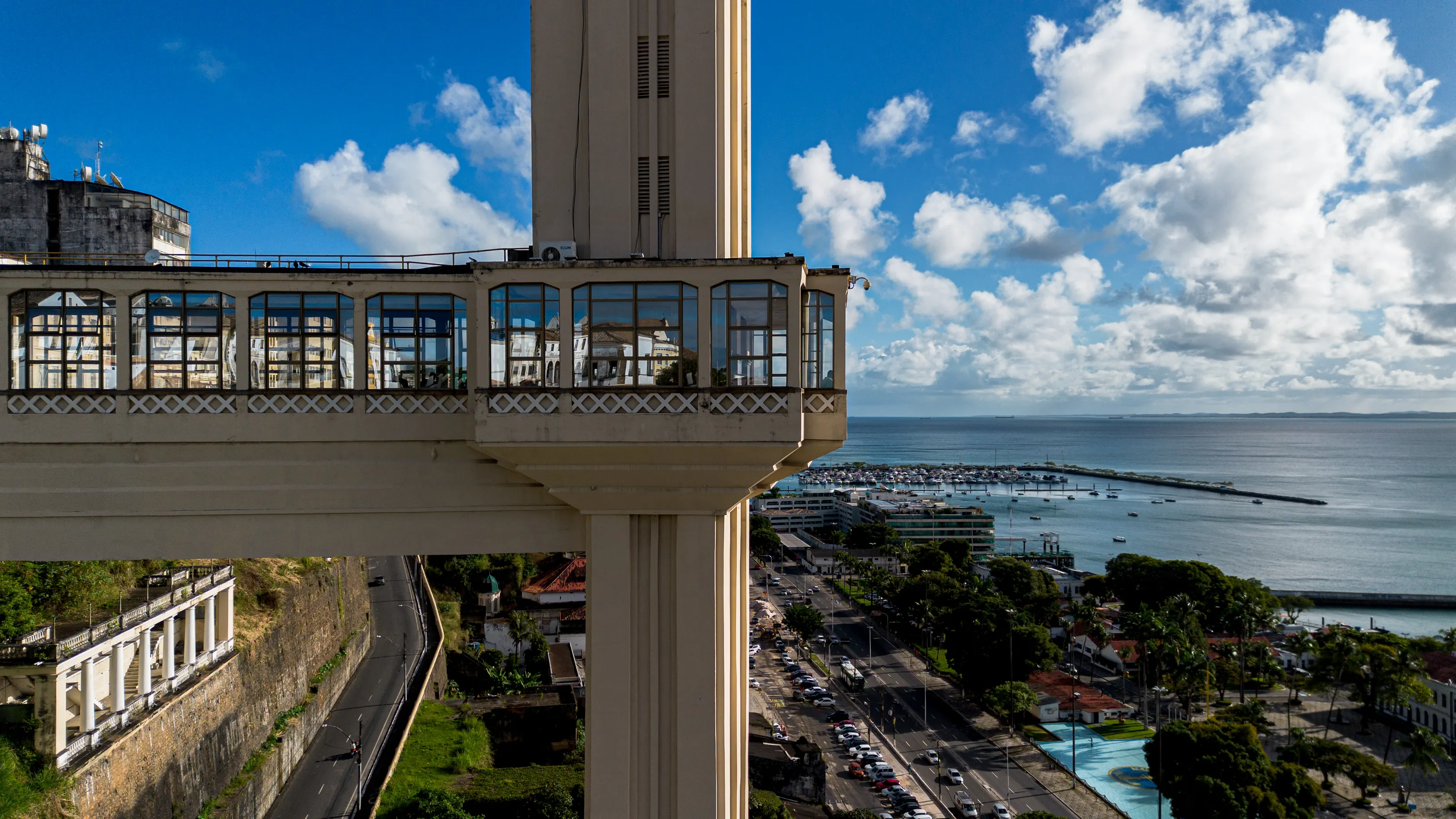
The Lacerda Elevator
The Lacerda Elevator links the Upper Town, near Praça da Sé, with the Lower Town and the Mercado Modelo, a crafts market by the bay. It offers a wide view of All Saints Bay. It is the usual way of moving between the two levels; Wikivoyage considers the streets between them unsafe, even by day.
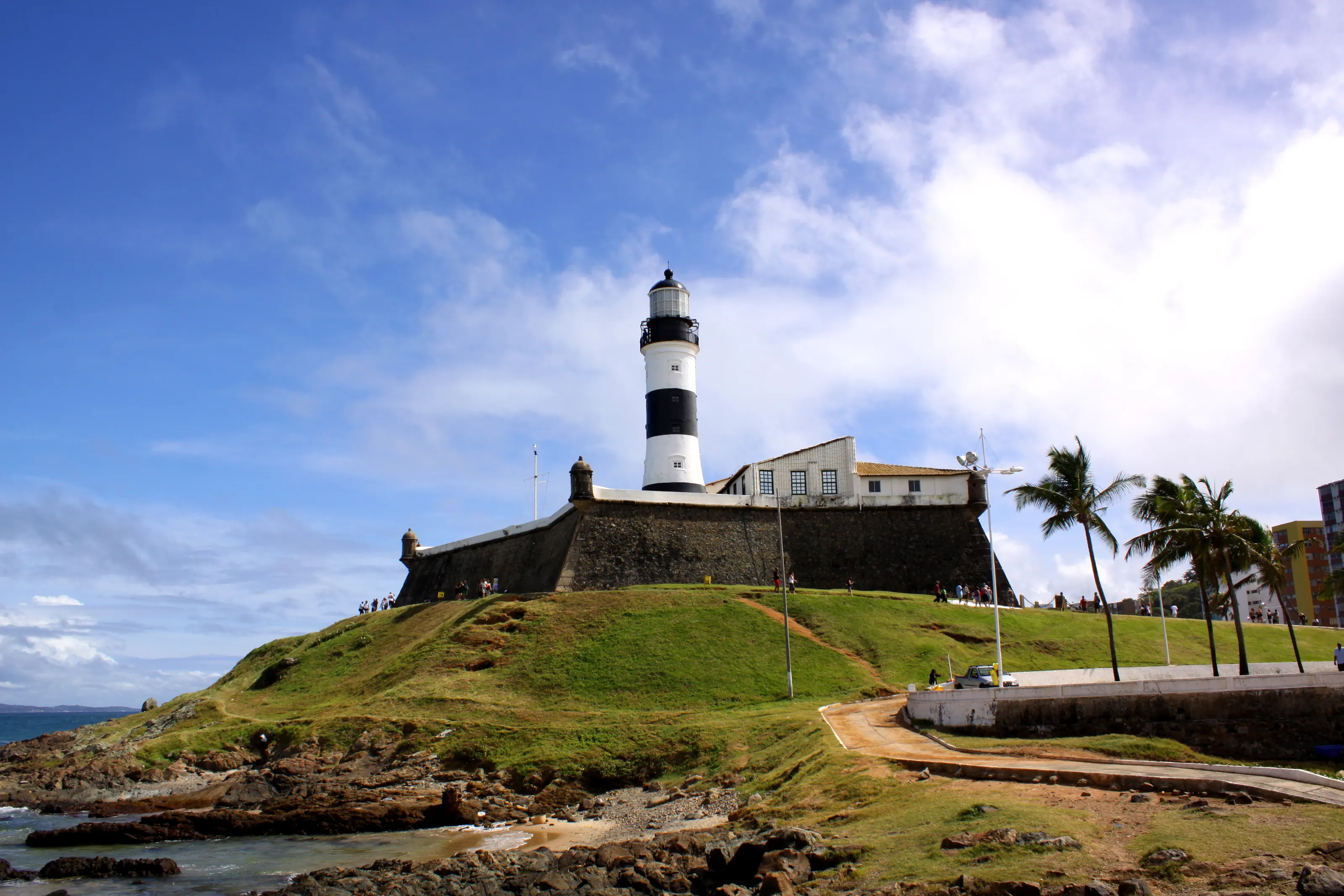
The Farol da Barra
The lighthouse stands at the entrance to All Saints Bay, inside the Santo Antônio da Barra fort built in the 17th century; according to Wikivoyage it is Brazil's oldest lighthouse. The fort houses a nautical museum of Bahia. Sunset from here is much loved, and Porto da Barra beach is close by.
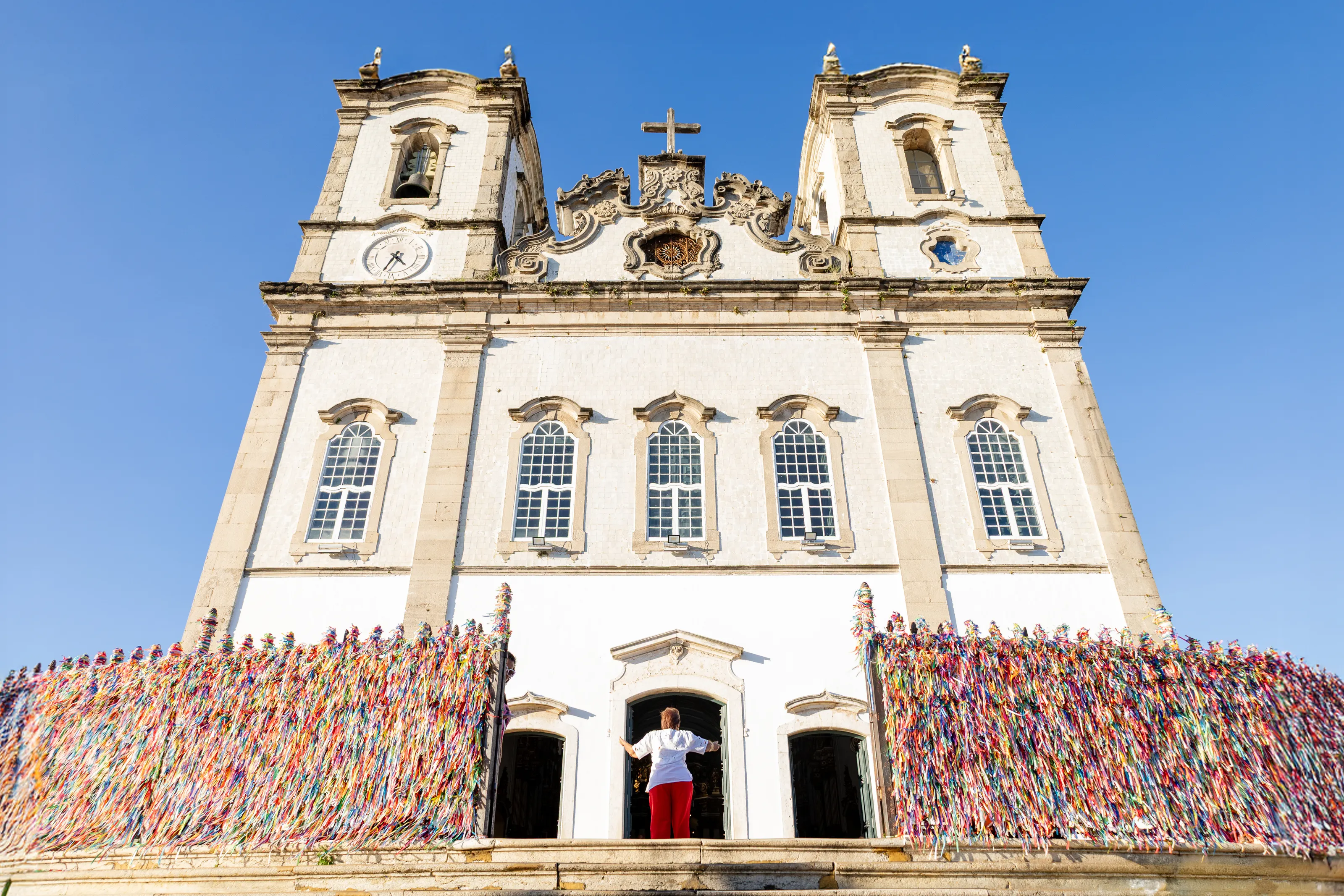
The Bonfim church
The Nosso Senhor do Bonfim church, in a district to the north, is one of Brazil's great pilgrimage sites. Its railings are covered with fitas, the colourful wish ribbons that have become a symbol known far beyond the city; they are tied around the wrist to make a wish.
Afro-Brazilian culture and museums
Candomblé, capoeira, carnival and museums
A culture inherited from Africa
A former major arrival port for enslaved people, Salvador keeps a deeply African heritage: its population has African, European and Native American roots. Candomblé, the Afro-Brazilian religion that originated here, is practised in terreiros, some of which can be visited with guides. Capoeira, a martial art danced to music, can be seen in the streets around the Mercado Modelo.
The museums
The Museu Afro-Brasileiro documents the slave trade and the city's development. The Solar do Unhão, by the bay, houses the modern art museum and is a good place for sunset. The Farol da Barra holds a nautical museum. Check opening hours and closing days; we give no prices, which change.
Carnival
Salvador's carnival, in mid-February, lasts about a week of parades, live music and dancing; it is among the largest in the world. Hotels fill up fast: plan ahead if you want to experience it.
Food and drink
Acarajé, moqueca and Bahian cooking
Acarajé
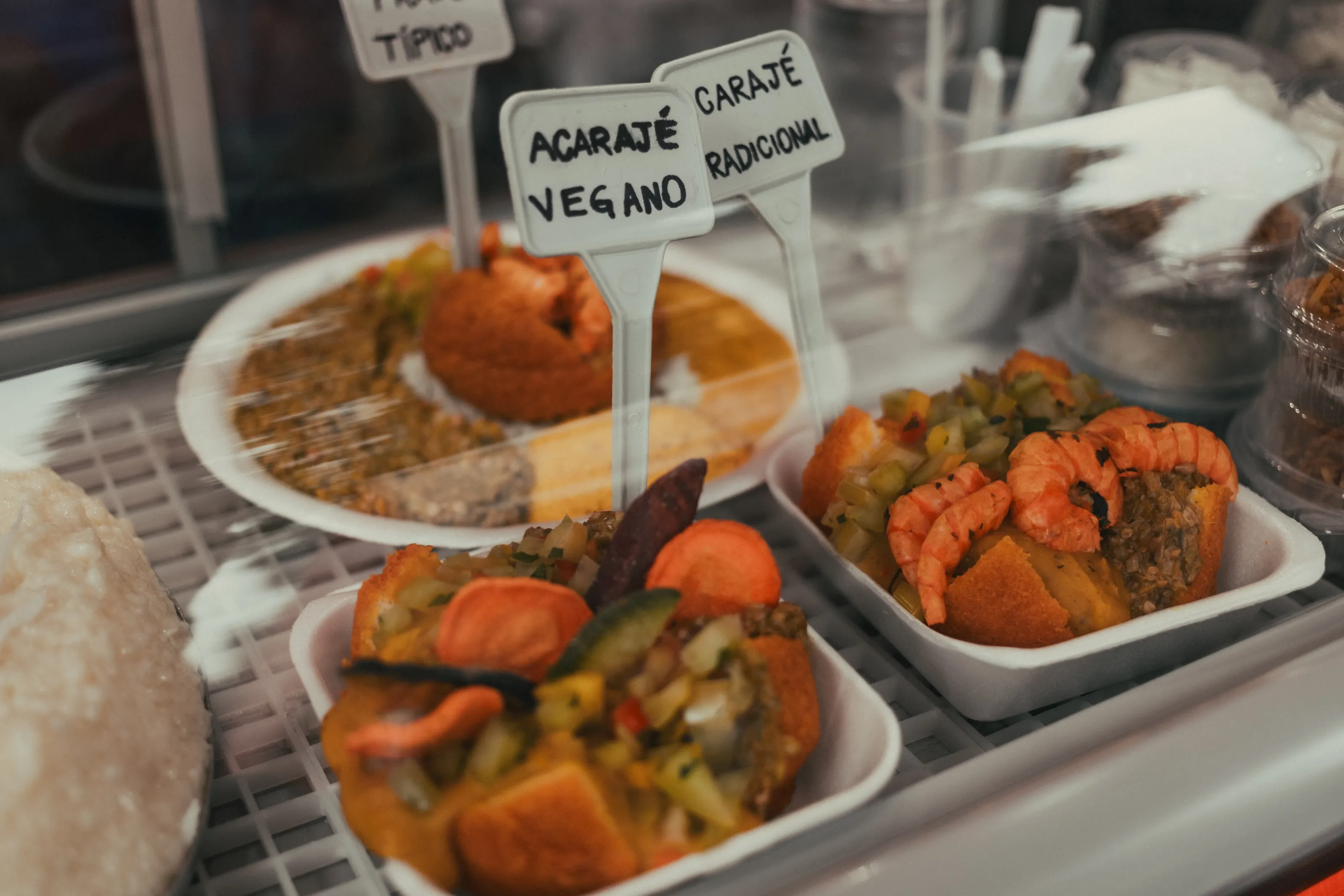
Acarajé is a fritter of black-eyed peas and onion fried in palm oil, filled with vatapá (a shrimp paste) and shrimp. It is sold on the street by baianas in traditional dress. A vegan version also exists. It is the first speciality to try in Salvador.
Restaurants and seafood
Bahian restaurants are considered among the best in the country, with fish and seafood, moqueca (a fish stew with coconut milk and palm oil) and other coastal dishes. The Pelourinho has many places to eat, but you can also eat well in Rio Vermelho and Barra.
Acarajé on display
Topped with shrimp, chilli and vegetables, they are eaten on the go, often in the late afternoon.
Getting around
Elevator, metro, buses and ride-hailing
On foot, elevator and metro
The old centre is explored on foot; to move between the Upper and Lower Town, take the very cheap Lacerda Elevator. The metro, with two lines, links the centre with several districts, the airport and the long-distance bus station; Lapa station connects to the Barra area by bus.
Buses, taxis and ride-hailing
City buses are frequent but sometimes confusing; air-conditioned executive buses exist. Services stop around midnight. Taxis and ride-hailing are a practical option in the evening, but insist on the meter or prefer ride-hailing.
Staying alert
As in most large Brazilian cities, stay alert in tourist areas, do not display valuables and check the official advice of your departure country before travelling.
Beaches and day trips
Eighty kilometres of coast and an island by ferry
Salvador's coast has about 80 km of beaches, from calm coves to open-sea beaches with waves sought by surfers. Porto da Barra, at the foot of the Farol da Barra, is the central beach; it gets very busy at weekends. Wikivoyage notes that water quality is better to the north-east. For a day trip, a ferry reaches the quieter island of Itaparica.
Budget
An affordable to moderate budget compared with Europe
Buses, the Lacerda Elevator, street food such as acarajé and many restaurants remain affordable compared with Europe, while hotels and upscale places, especially during carnival, cost more. We give no figures, as prices change with the season and the exchange rate.
The plane ticket remains the most variable item. SniperAir monitors prices to SSA and compares them with the route's history.
When to go
When to go to Salvador: warm all year, reversed seasons
Austral summer (December to March)
Hot and sunny, around 30 °C highs; December and January are the driest months. Carnival takes place in February.
Autumn (March to June)
This is the rainy season, mainly April to June, with at least 20 cm of rain a month; downpours are often heavy.
Austral winter (June to September)
The coolest period, with temperatures of roughly 21 to 26 °C; rain eases off.
Spring (September to December)
The weather turns dry and sunny again; the sea stays pleasant.
Salvador has a humid tropical climate, with temperatures that barely vary through the year and more than 2,400 hours of sunshine annually; humidity makes it feel hotter. The sea stays around 27 °C. The southern hemisphere reverses the seasons: summer begins in December. To avoid the heaviest rain, favour September to March, bearing in mind that carnival and summer holidays push up visitor numbers.
By length of stay
What to do in Salvador depending on your stay
The essentials
Pelourinho and Terreiro de Jesus, the Lacerda Elevator, the Mercado Modelo and an acarajé.
Going deeper
Add the Farol da Barra at sunset, a museum and the Bonfim church.
The surroundings
A beach day, a ferry crossing to Itaparica island or a guided visit to a candomblé terreiro.
In pictures
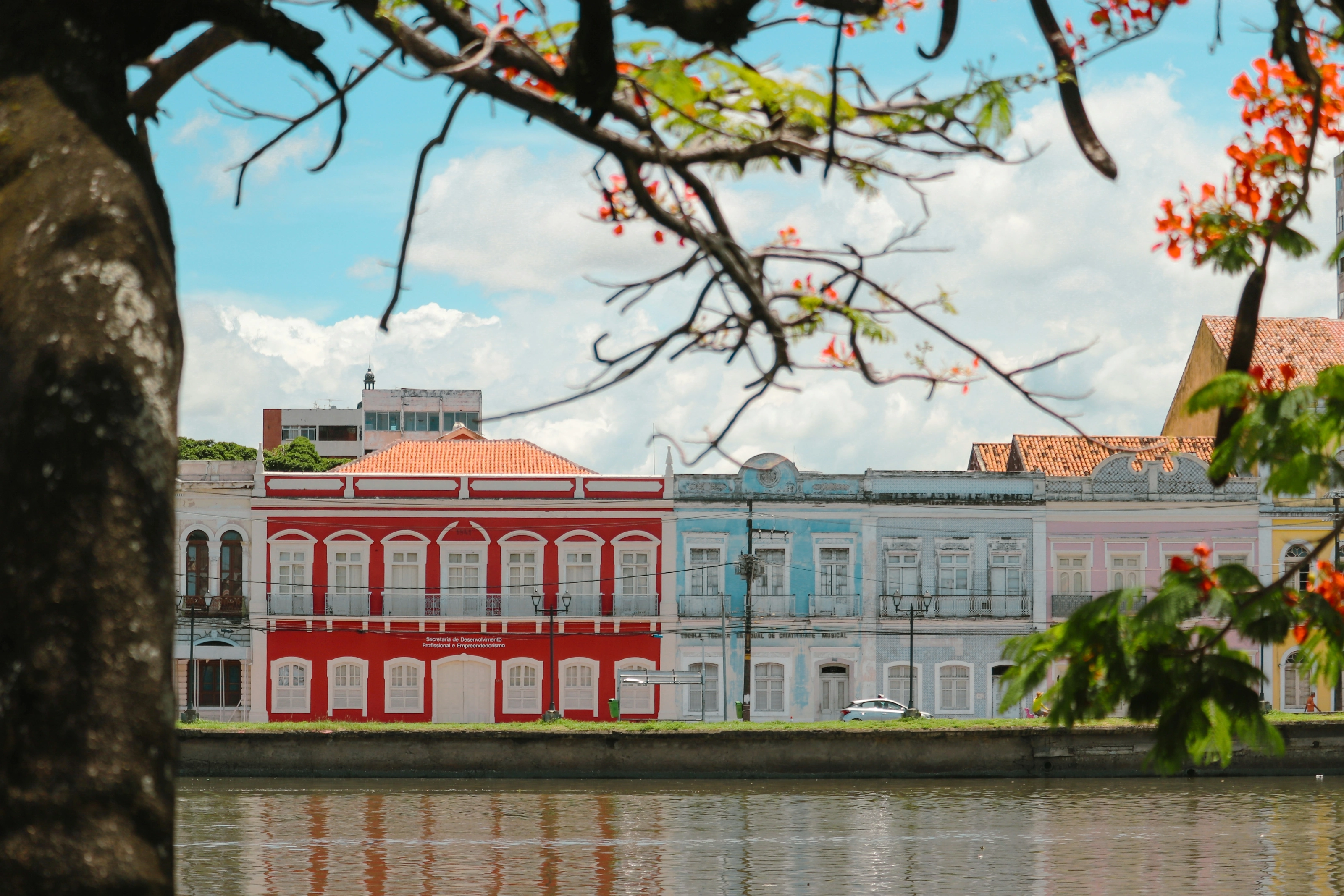
Salvador in pictures
You might also like
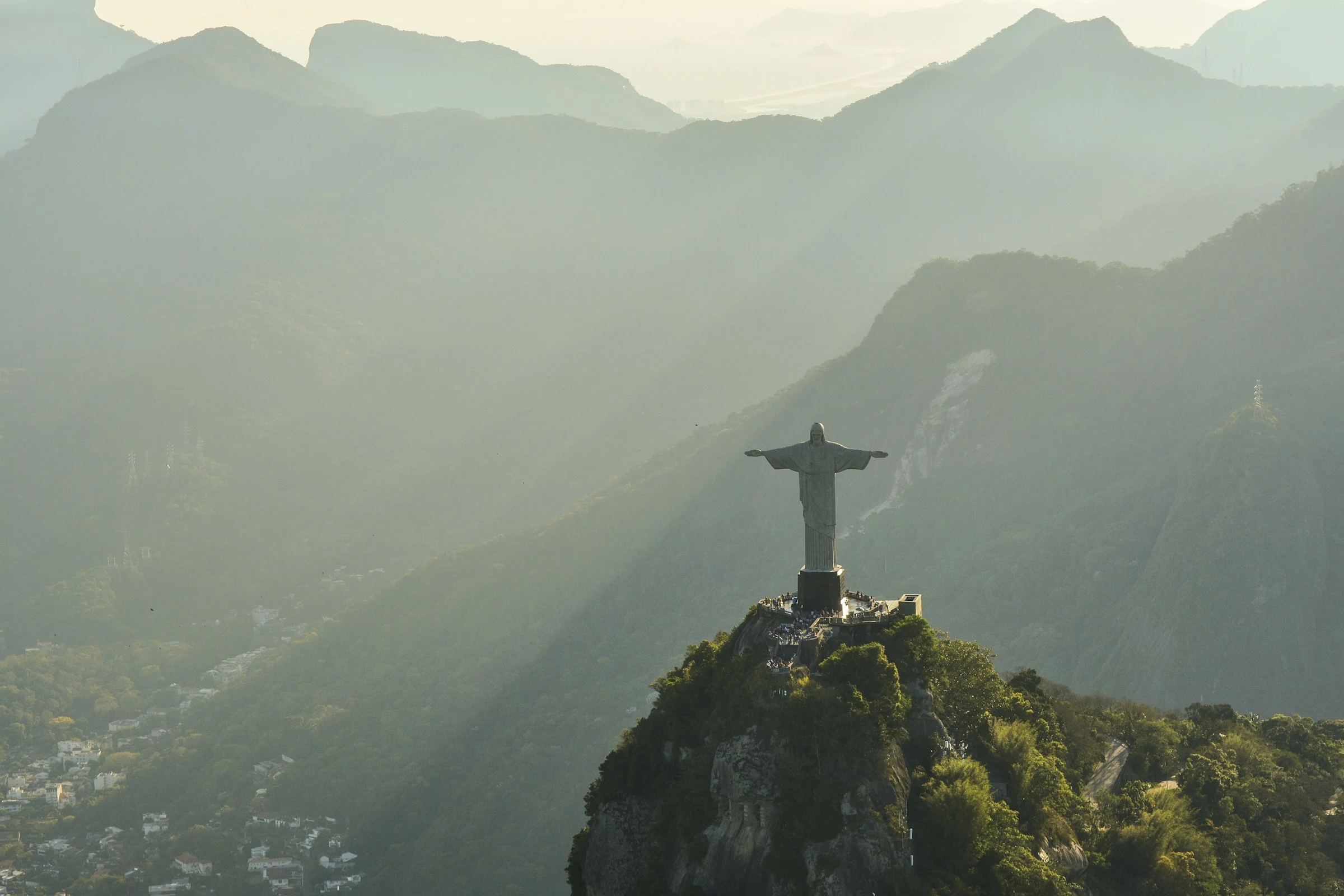
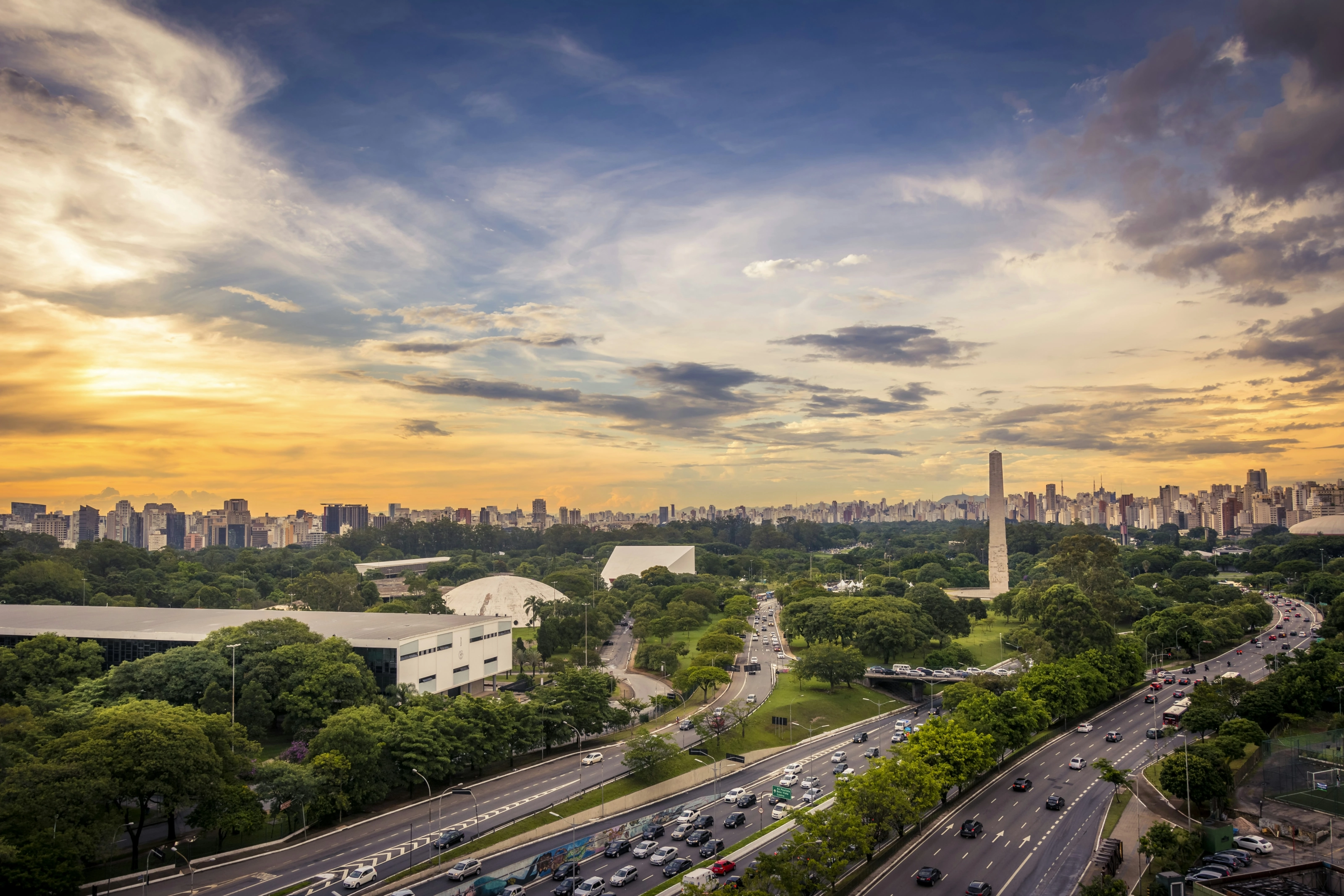
Similar destinations
FAQ
Frequently asked questions about flights to Salvador
How do you get from Salvador airport to the centre?
The airport (SSA) is about 28 km to the north. The simplest option is the metro, reached from the terminal by a free shuttle: get off at Campo da Pólvora for the Pelourinho (about 900 m on foot) or at Lapa for Barra. Taxis, ride-hailing and executive buses are also available.
When is the best time to visit Salvador?
It is warm all year. The driest months are December and January, and the rainy season runs mainly from April to June. Carnival in February draws large crowds.
Is Salvador expensive?
It is affordable to moderate compared with Europe: buses, street food and many restaurants cost little, while hotels and upscale places cost more, especially at carnival.
How many days should I plan in Salvador?
Two days cover the Pelourinho, the Lacerda Elevator and a market; three to four days let you add the lighthouse and beaches, the Bonfim church and a trip to Itaparica.
How do you get around Salvador?
On foot in the old centre, with the Lacerda Elevator between the Upper and Lower Town; the metro, city buses, taxis and ride-hailing for the rest. Buses stop around midnight.
What should I eat in Salvador?
Acarajé filled with vatapá and shrimp, fish moqueca and the seafood dishes of Bahian cooking.
How much does a flight to Salvador usually cost?
The price depends mainly on your departure city, the period and the booking date. The opportunities section above shows real examples of prices already detected by SniperAir to this destination.
How do I get alerted when a flight to Salvador drops below my budget?
Create an alert profile with your departure airport, Salvador as the destination and your maximum budget. You are notified automatically as soon as a matching price is detected.
Ready to head to Salvador?
Set your budget and let SniperAir monitor fares for you.
Create my alert