
Cheap flights to São Paulo
Set your departure airport and maximum budget: SniperAir tracks prices to São Paulo and alerts you the moment a deal matching your criteria appears.
Quick summary
Country
Brazil
Continent
South America
Airport
GRU
Currency
Brazilian real
Time zone
UTC-3
Deals already spotted to São Paulo
Real flight examples detected by SniperAir, with their reference price.
Loading examples…
Why track São Paulo with SniperAir
You do not need to compare prices every day
Choose your departure
Enter your departure airport and your maximum budget for a flight to São Paulo (GRU).
SniperAir keeps watch
Our systems continuously compare new prices with the real history of the route. SniperAir monitors prices and alerts you: it does not sell or book tickets.
You receive an alert
As soon as a price matches your criteria, you are notified without having searched yourself.
Airports and transfers
Two main airports: one far from the centre, one close
São Paulo - Guarulhos
Guarulhos International Airport, also known as Cumbica, handles most international flights. It lies about 40 km from the city centre, in the neighbouring municipality of Guarulhos, and the journey time depends mainly on traffic. An urban bus reaches Tatuapé metro station in about 35 minutes according to Wikivoyage, shuttle buses serve República square, Avenida Paulista and the long-distance bus stations, and suburban rail line 13 links the airport to the rail network. Taxis and ride-hailing are also available.
São Paulo - Congonhas
Congonhas, south of the centre near Ibirapuera Park, mainly handles domestic flights, including the air shuttle to Rio de Janeiro. It is about 15 km from the city centre. Buses running along Avenida Paulista serve it in roughly 40 to 60 minutes; the metro to São Judas station followed by a short bus ride is often faster. Metro line 17 serves the airport but still requires connections to reach the centre.
Distances and times are approximate, taken from Wikipedia (FR, EN, DE, ES) and Wikivoyage (EN, DE, ES); they vary greatly with traffic. We do not give fares, which change.
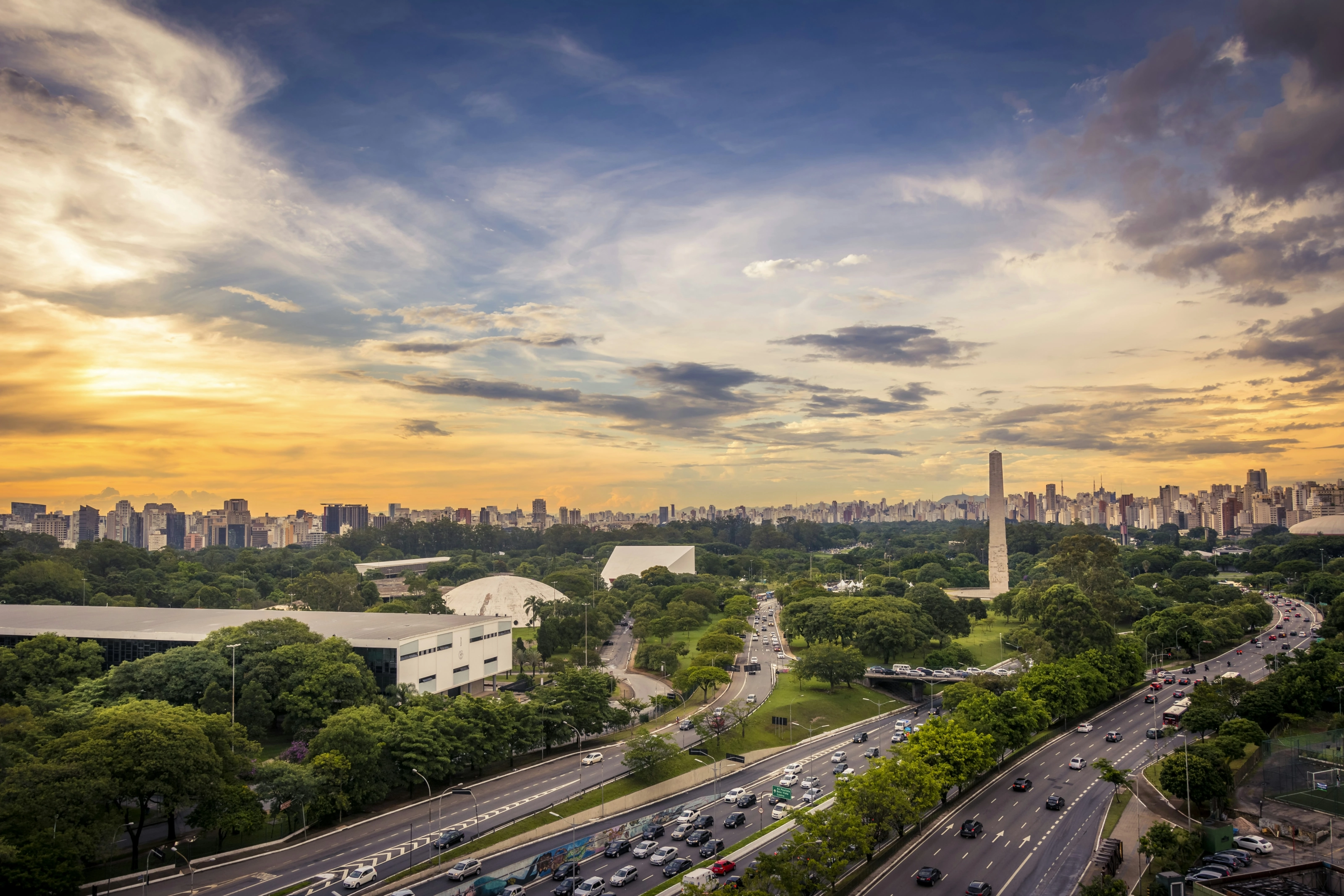
São Paulo is Brazil's largest city, with about 12 million inhabitants in the municipality and over 21 million in the metropolitan region according to Wikivoyage. It sits on a plateau about 800 m above sea level, only 70 km from the ocean. A third airport, Viracopos, is in Campinas about 100 km away and is sometimes used as an alternative.
Landmarks
A megacity of towers, parks and avenues
Founded on 25 January 1554 by Jesuit priests, São Paulo is one of the oldest continuously inhabited cities in the Americas. Its historic centre keeps the Pátio do Colégio, the founding site, the Theatro Municipal and the cathedral; Avenida Paulista, a major business and cultural hub, is the usual reference point for finding your way. The avenue and the streets around Praça da Liberdade are closed to traffic on Sundays and holidays.
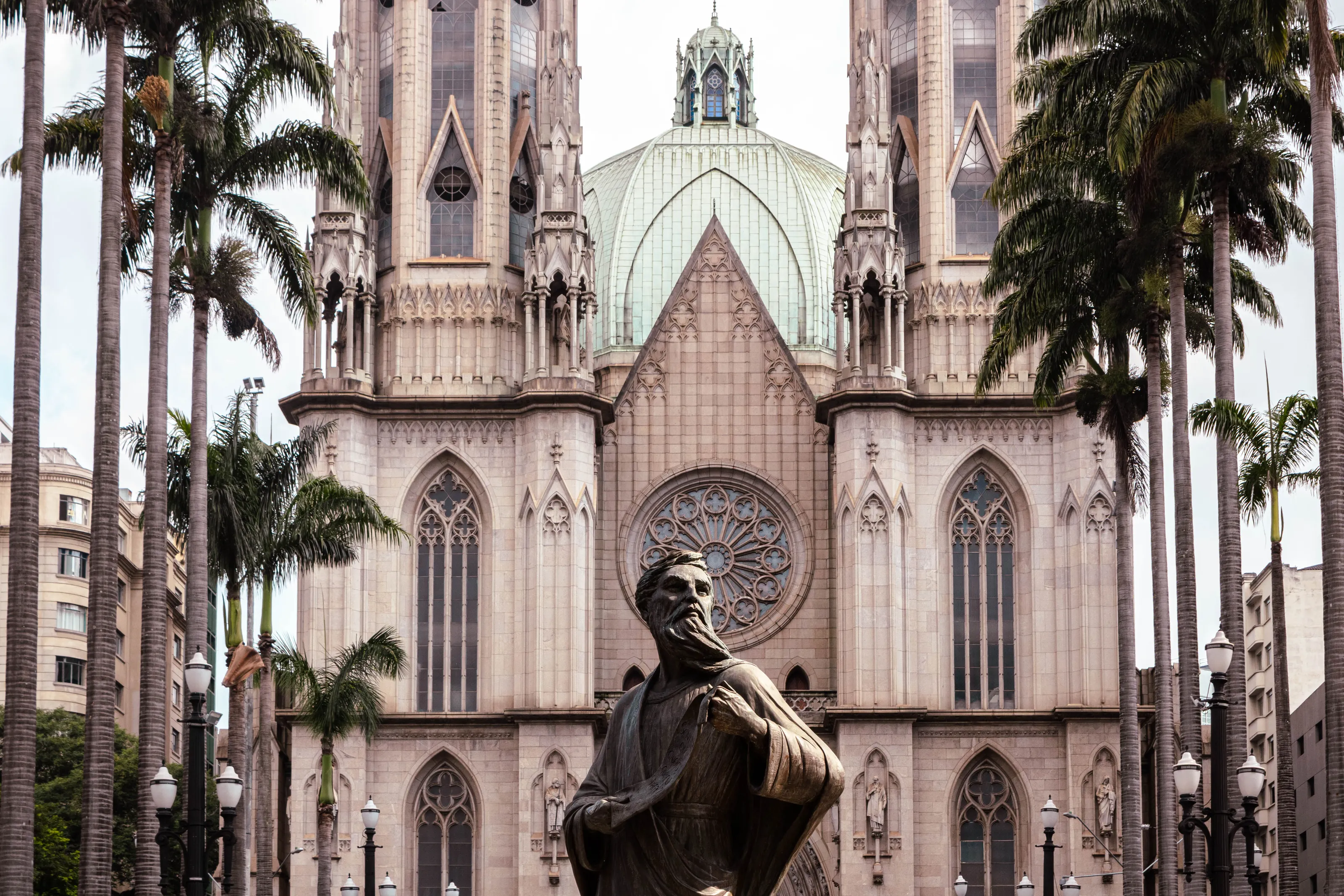
The Catedral da Sé
Built in the neo-Gothic style, the cathedral was begun in 1913 and consecrated in 1954 according to Wikipedia (DE). It can hold about 8,000 people. It stands on Praça da Sé, in the heart of the historic centre, next to the metro station of the same name.
Ibirapuera Park
Ibirapuera Park is the best-known leisure park in the city: lawns, modernist buildings, museums, monuments and cultural activities. An obelisk rises above the trees. According to Wikivoyage it is within walking distance of Avenida Paulista, and it is close to Congonhas airport. On Sundays, leisure cycle lanes link several major sights.
Street art
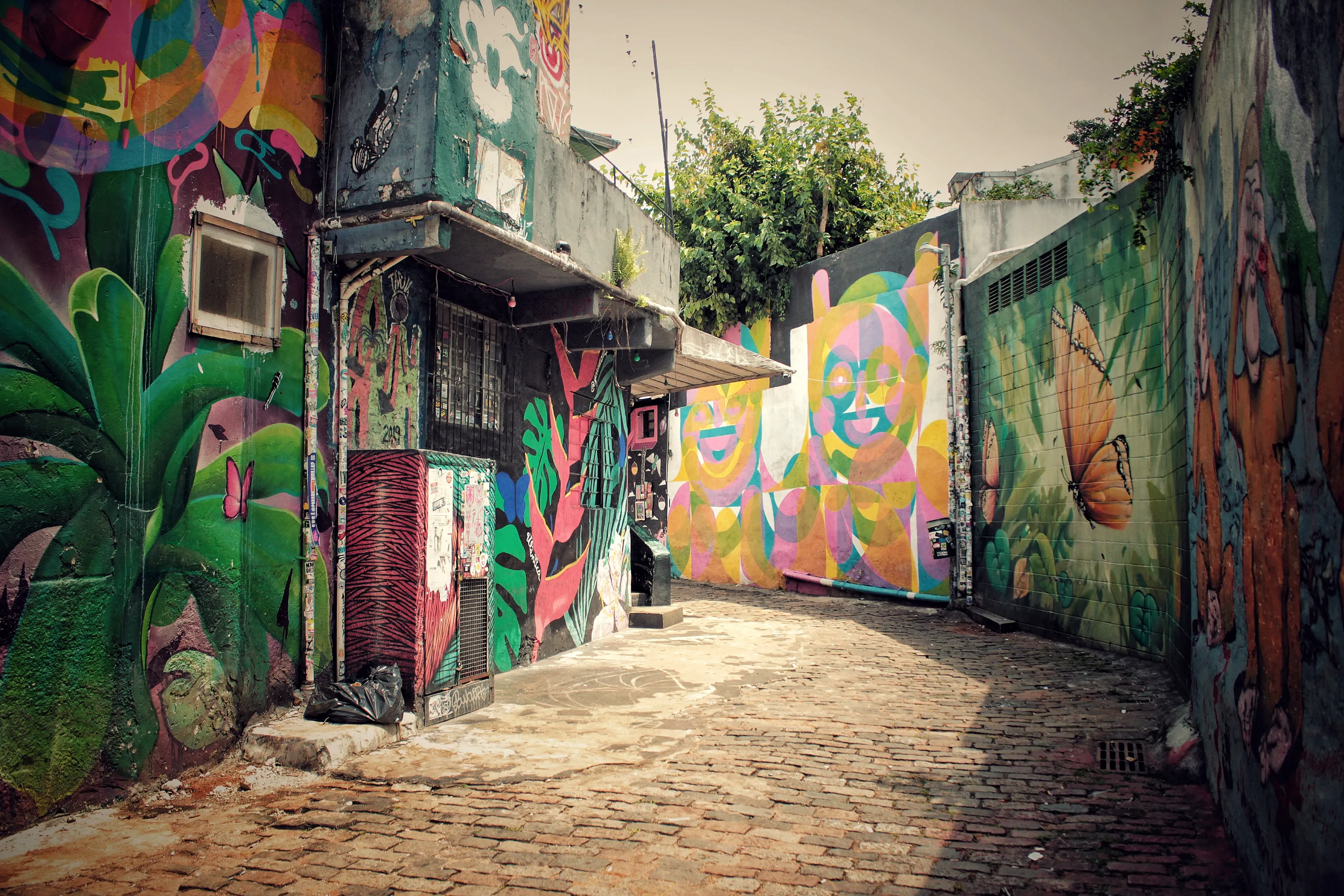
The city's walls are a canvas for street painters, and some cobbled alleys are covered in colourful murals. Vila Madalena, known for its concentration of bars and nightlife, is a good place to start wandering. Ask locally, as the murals change regularly.
Museums and culture
Art, independence and music: from Paulista to Ipiranga
The Museu do Ipiranga
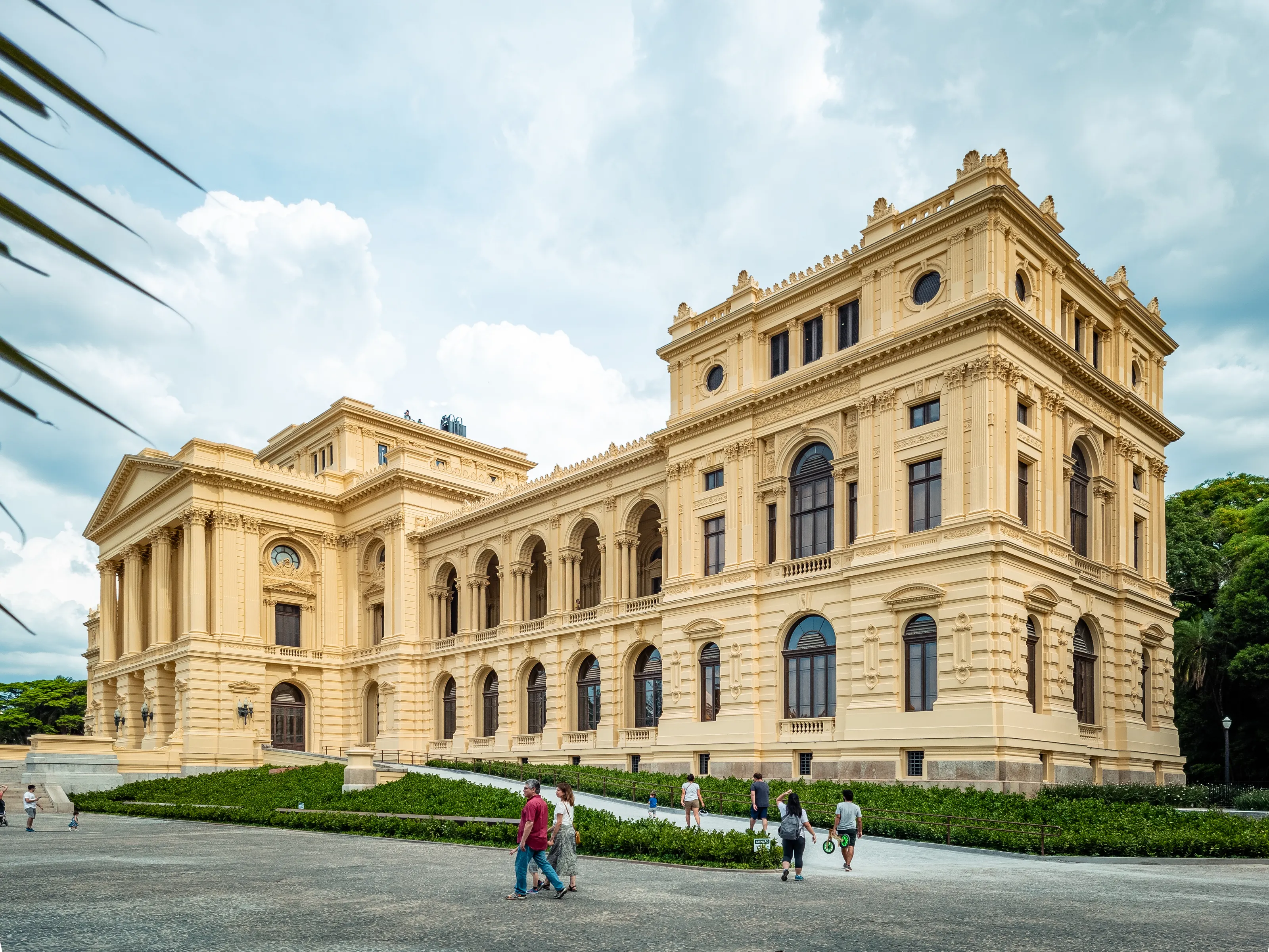
The Museu do Ipiranga, or Museu Paulista, stands in the Ipiranga district, in the middle of Parque da Independência, a garden inspired by Versailles that holds the Independence monument. The museum tells the history of Brazil. Wikivoyage lists it among two museums not to be missed for its size, architecture and historical importance.
Art: MASP and the Pinacoteca
MASP, the São Paulo art museum, is on Avenida Paulista and holds a large art collection. The Pinacoteca do Estado, in the centre, is devoted to the visual arts. Wikivoyage also mentions the Instituto Tomio Ohtake, the Museu de Arte Contemporânea and the Museu de Arte Moderna.
Music, theatre and memory
The two main concert and opera houses are the Theatro Municipal and the Sala São Paulo, in the centre. The Memorial da América Latina, to the west, rounds out the major cultural sites. Check opening hours and closing days before you go; we give no prices, which change.
The Museu do Ipiranga in pictures
Its yellow neoclassical palace overlooks the Independence gardens, a favourite walking spot for locals.
Food and drink
Italian and Japanese immigration, and paulista cooking
Typical dishes
Virado à paulista combines rice, tutu de feijão, garlic-sautéed kale and a pork chop, often with a fried egg and fried banana. The bauru, a sandwich of roast beef and melted cheeses, is a local invention according to Wikivoyage, while coxinha and pastel de feira are among the creations of paulista cooking cited by Wikipedia. Churrascarias serve meat on skewers in an all-you-can-eat format (rodízio).
Pizza, Italian and Japanese food
The city received many Italian immigrants and is home to the largest Japanese community outside Japan. Pizza is an institution, and Japanese restaurants, from sushi to ramen and udon, are everywhere; the Liberdade district has many. The Bixiga and Mooca districts keep the Italian tradition alive.
The Mercado Municipal and bars
The Mercado Municipal, also known as Mercadão, is the central market hall, opened in 1933; it sells fruit, vegetables, spices and delicacies. Vila Madalena and Itaim have the highest concentration of bars, where ice-cold beer and caipirinha are served.
Getting around
Metro, suburban trains, buses and ride-hailing
Metro and trains
The metro, opened in 1974, and the CPTM suburban train lines form the backbone of the network, with a single fare per trip. It is often the fastest and least stressful way to get around, but trains are very crowded at peak times. The metro stops around midnight.
Buses, ride-hailing and bikes
Buses reach every neighbourhood but are slow and crowded. Ride-hailing apps are widely used. Traffic is heavy: at peak hours the slightest incident causes long queues. The city has about 500 km of cycle paths, and on Sundays leisure lanes link the main sights.
Staying alert
As in any big metropolis, watch your belongings, avoid waiting alone at a bus stop late at night and check the official advice of your departure country before travelling.
Budget
An affordable to moderate budget compared with Europe
The metro, neighbourhood meals and many services remain affordable or moderate compared with Europe, while upscale hotels and restaurants, plentiful in a business metropolis, cost more. We give no figures, as prices change with the season and the exchange rate.
The plane ticket remains the most variable item. SniperAir monitors prices to GRU and compares them with the route's history.
When to go
When to go to São Paulo: seasons are reversed in the southern hemisphere
Summer (December to March)
Hot and rainy: around 28 °C highs and 19 °C lows from January to March, with the heaviest rain (about 290 mm in January).
Autumn (March to June)
A transitional season: heat and rain gradually ease.
Winter (June to September)
Mild but the coolest season, roughly 12 to 22 °C, often cloudy with polar air masses; rain is scarce (about 32 mm).
Spring (September to December)
The weather warms up; heat waves near 34 °C are possible in spring and summer.
The southern hemisphere reverses the seasons: summer starts in December and winter in June. The climate is humid subtropical, tempered by altitude, with about 1,650 mm of rain a year. The city has never been hit by a tropical cyclone. The transition seasons in spring and autumn, and the drier winter months, are often more comfortable for walking around museums and parks.
By length of stay
What to do in São Paulo depending on your stay
The essentials
Avenida Paulista and MASP, the historic centre with the Sé and the Mercado Municipal, a pizza or Japanese meal in Liberdade.
Going deeper
Add Ibirapuera Park, the Museu do Ipiranga and an evening in Vila Madalena.
The surroundings
A concert at the Sala São Paulo, the Pinacoteca or a trip to the state's coast, less than an hour from some beaches according to Wikipedia.
In pictures
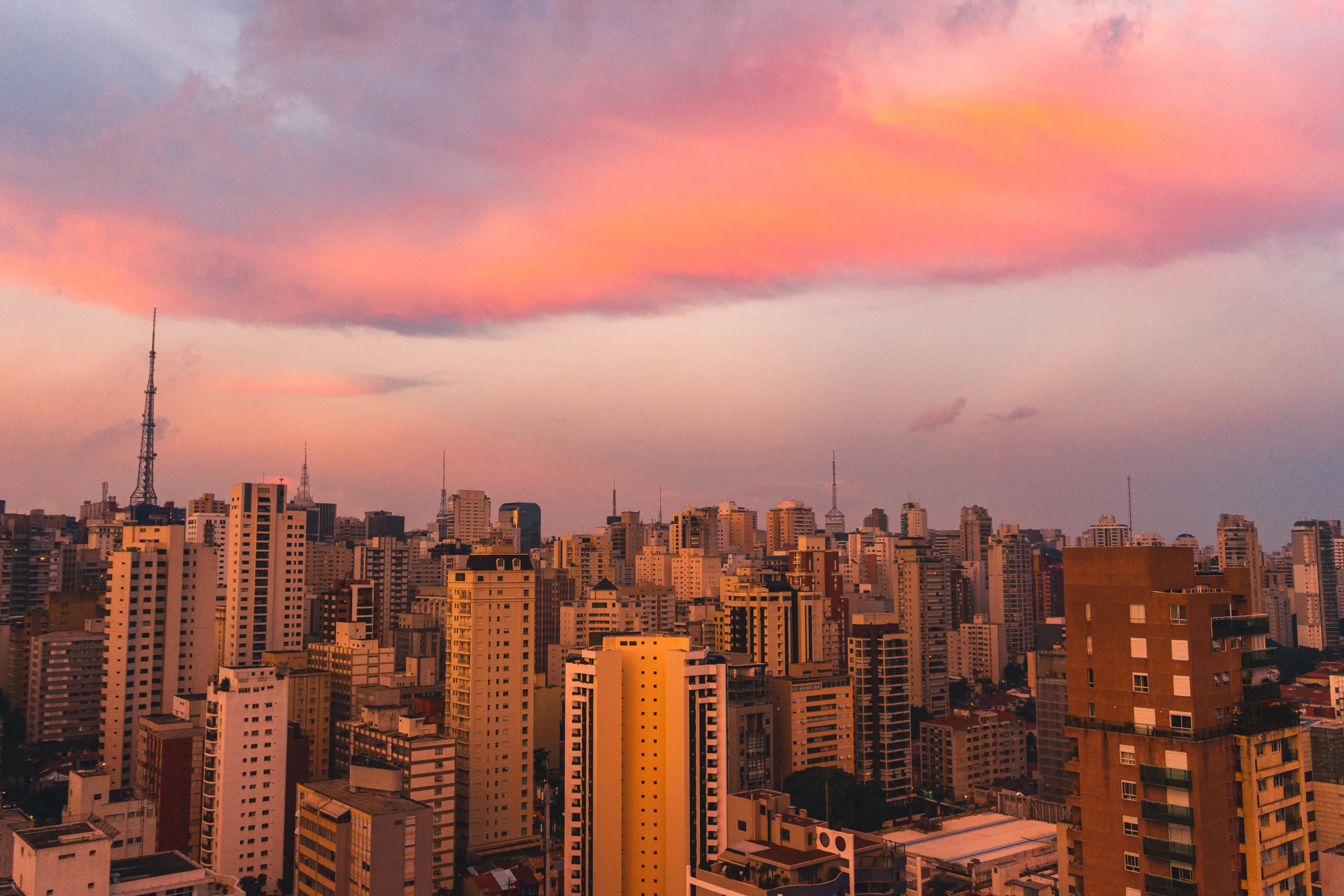
São Paulo in pictures
You might also like
Similar destinations

FAQ
Frequently asked questions about flights to São Paulo
How do you get from São Paulo airport to the centre?
Guarulhos (GRU), about 40 km away, handles international flights: urban bus to the metro, shuttles, suburban train (line 13), taxis and ride-hailing, with journey times that vary greatly with traffic. Congonhas (CGH), about 15 km away, is closer; buses on Avenida Paulista serve it in roughly 40 to 60 minutes.
When is the best time to visit São Paulo?
Seasons are reversed: summer (December to March) is hot and rainy, winter (June to September) is cool, dry and often cloudy. Spring and autumn often offer a good compromise.
Is São Paulo expensive?
It is affordable to moderate compared with Europe: the metro, neighbourhood meals and several services cost little, while upscale hotels and restaurants cost more.
How many days should I plan in São Paulo?
Two days cover the essentials (Avenida Paulista, the historic centre, a market and a meal in Liberdade); three to four days let you add Ibirapuera, the Museu do Ipiranga and nightlife.
How do you get around São Paulo?
The metro and suburban trains are often the fastest; buses cover every neighbourhood but are slow, and ride-hailing is widespread. The centre and Avenida Paulista are good on foot.
What should I eat in São Paulo?
Virado à paulista, coxinha, pastel de feira and bauru; pizza and Italian restaurants; Japanese restaurants, especially in Liberdade; and the produce of the Mercado Municipal.
How much does a flight to São Paulo usually cost?
The price depends mainly on your departure city, the period and the booking date. The opportunities section above shows real examples of prices already detected by SniperAir to this destination.
How do I get alerted when a flight to São Paulo drops below my budget?
Create an alert profile with your departure airport, São Paulo as the destination and your maximum budget. You are notified automatically as soon as a matching price is detected.
Ready to head to São Paulo?
Set your budget and let SniperAir monitor fares for you.
Create my alert