
Cheap flights to Punta Arenas
Set your departure airport and maximum budget: SniperAir tracks prices to Punta Arenas and alerts you the moment a deal matching your criteria appears.
Quick summary
Country
Chile
Continent
South America
Airport
PUQ
Currency
Chilean peso
Time zone
UTC-3
Deals already spotted to Punta Arenas
Real flight examples detected by SniperAir, with their reference price.
Loading examples…
Why track Punta Arenas with SniperAir
You don't need to compare prices every day
Choose your departure
Enter your departure airport and your maximum budget for a flight to Punta Arenas (PUQ).
SniperAir keeps watch
Our systems continuously compare new prices with the route's real price history. SniperAir tracks prices and alerts you: it does not sell or book tickets.
You get an alert
As soon as a price matches your criteria, you are notified without having searched for anything yourself.
Airport and transfer
An airport about 15 to 20 km from the centre
Presidente Carlos Ibáñez del Campo International Airport
The airport lies north of the city, about 20 km from the centre according to Wikivoyage (EN) and Wikipedia (EN, ES); Wikipedia (DE) gives about 15 km. It is served by flights from Santiago (about 3.5 hours according to Spanish Wikivoyage) and by connections to other Patagonian towns. By taxi or rental car, allow a short half hour or so depending on traffic (our estimate); some buses from Puerto Natales also stop at the airport (German Wikivoyage). We give no fares or timetables, as they change.
Distance taken from Wikivoyage (EN) and Wikipedia (EN, ES, DE): sources differ by 15 to 20 km. No fares given.
Punta Arenas is the capital of the Magallanes and Chilean Antarctic region, on the Brunswick Peninsula beside the Strait of Magellan. Officially founded in 1848, it has about 130,000 inhabitants (Wikipedia EN, DE) and is still the largest city in Chilean Patagonia. It is a gateway to Torres del Paine, Tierra del Fuego, the penguin colonies and Antarctic expeditions.
Torres del Paine
Torres del Paine: the region's most famous mountains, a day's journey away
Torres del Paine National Park is not in Punta Arenas: it is about 250 km to Puerto Natales (Spanish Wikipedia), roughly 3 hours by bus (Wikivoyage EN, ES), then another hundred kilometres or so on a road that is paved at first and gravel afterwards (Wikipedia EN). That is a long drive, so plan at least one night nearby. The park has been a UNESCO biosphere reserve since 1978 (Wikipedia EN).
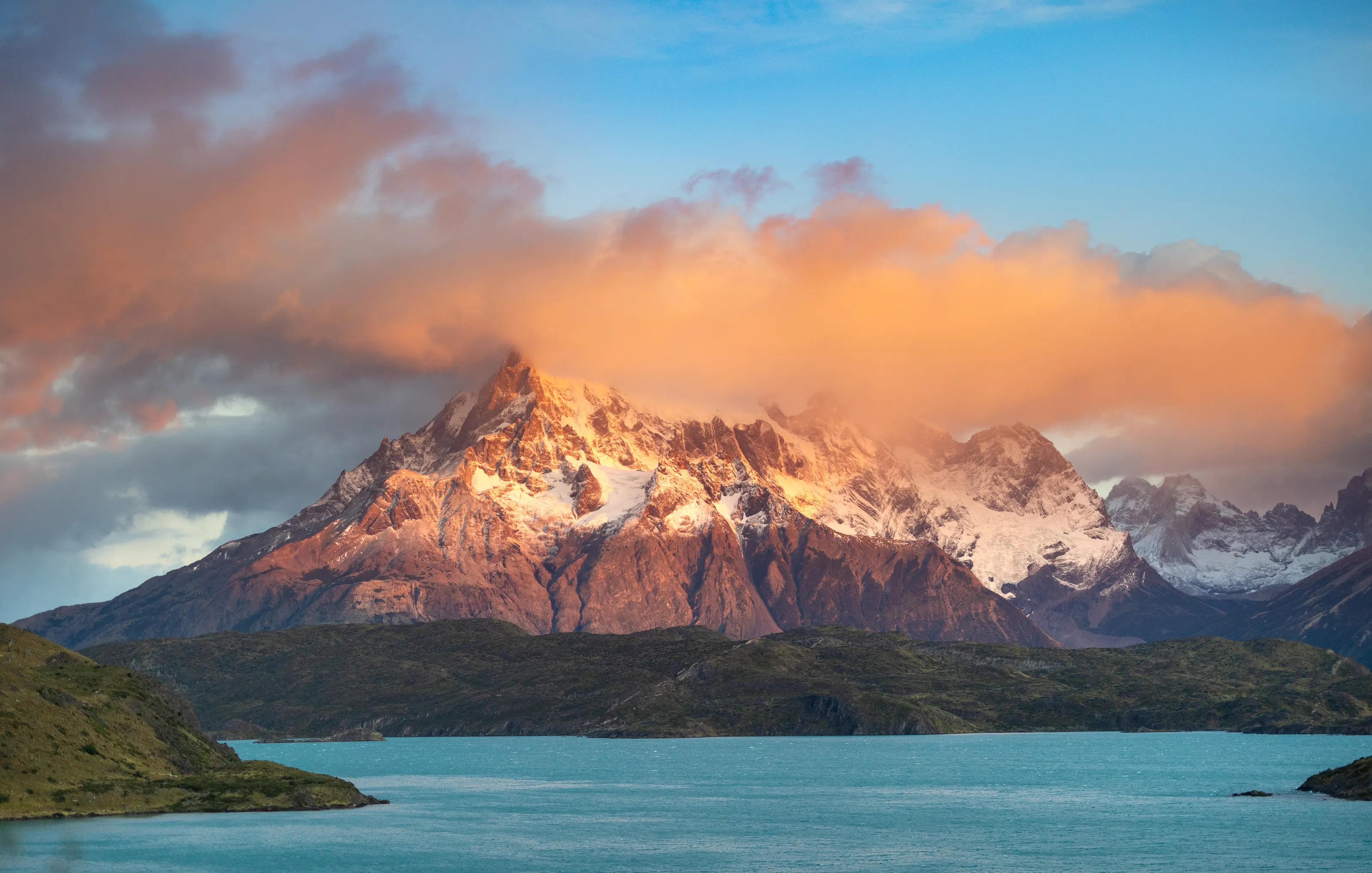
Sunrise over the massif
The first light turns the rock and clouds orange above a turquoise lake. This kind of light is typical of Patagonian mornings, when the sky briefly clears.
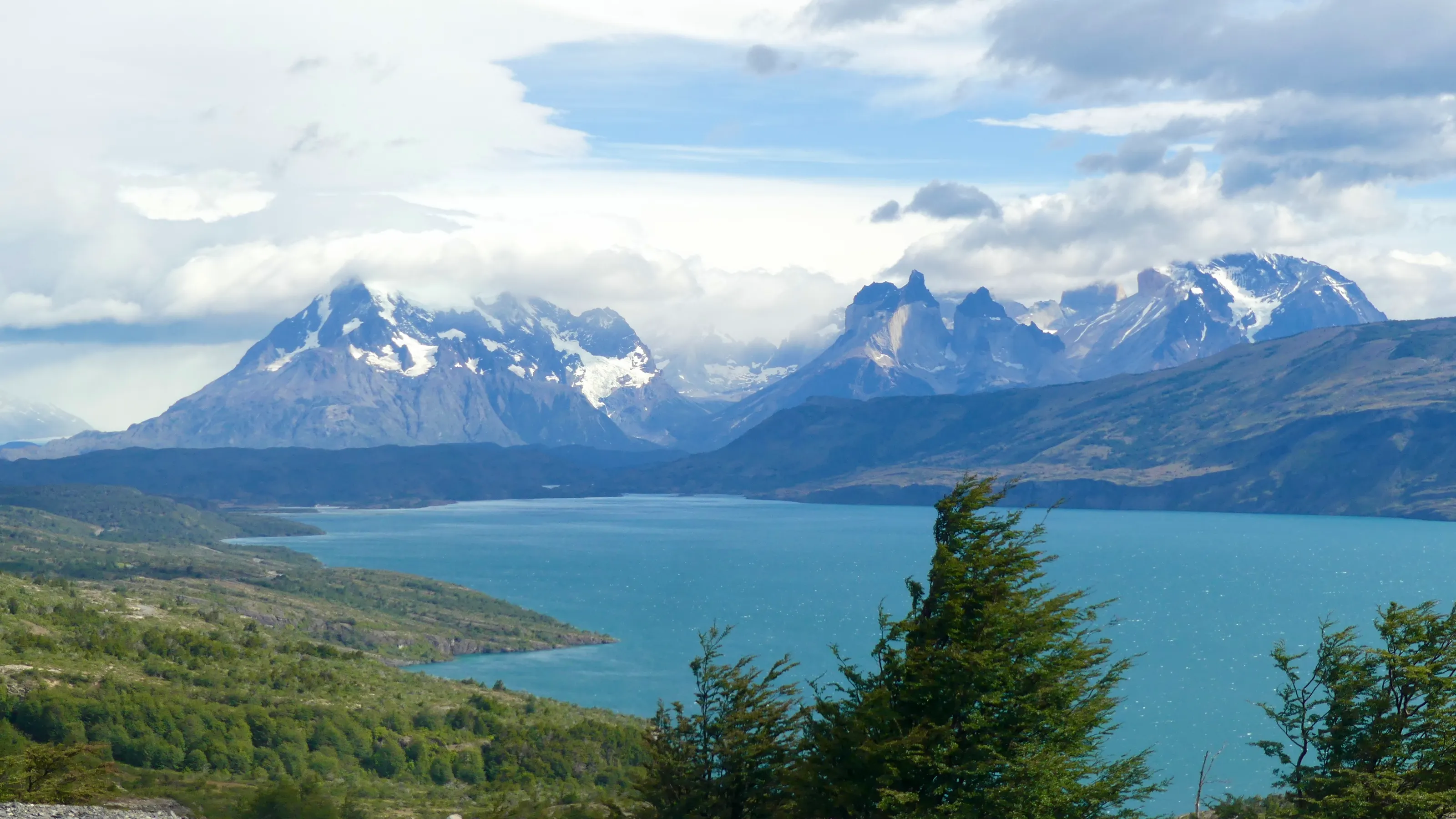
Lake and Cuernos del Paine
A large turquoise lake edged with forest, with snowy peaks and the Cuernos del Paine in the clouds. The wind can be strong and the weather changes quickly.
Magellanic penguins
Magellanic penguins: Isla Magdalena and Seno Otway
Isla Magdalena
Magdalena Island, in the Los Pingüinos Natural Monument, shelters a large colony of Magellanic penguins. The boat trip takes about 5 hours: roughly 2 hours each way plus 1 hour on the island, and the season runs from October to April (Wikivoyage EN). Visitors must stay on the marked path.
Seno Otway
Seno Otway, about 70 km north of the city (Wikivoyage EN), is another colony often offered as a tour. Reports differ on its current state, so ask a local agency before booking. In every case, keep your distance from the animals.
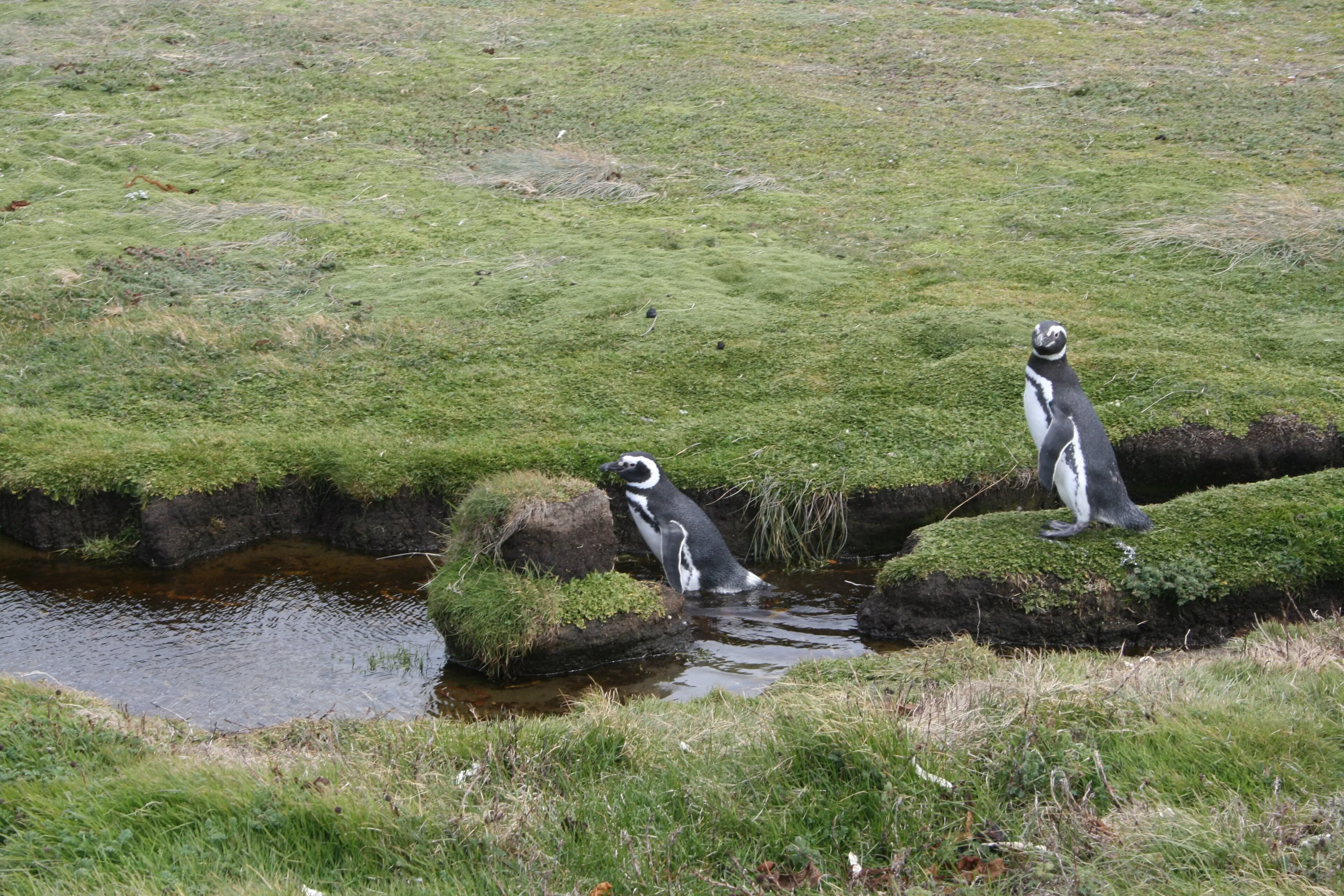
Two penguins by a stream
Two Magellanic penguins in short grass beside a small stream. The photo was taken at Seno Otway.
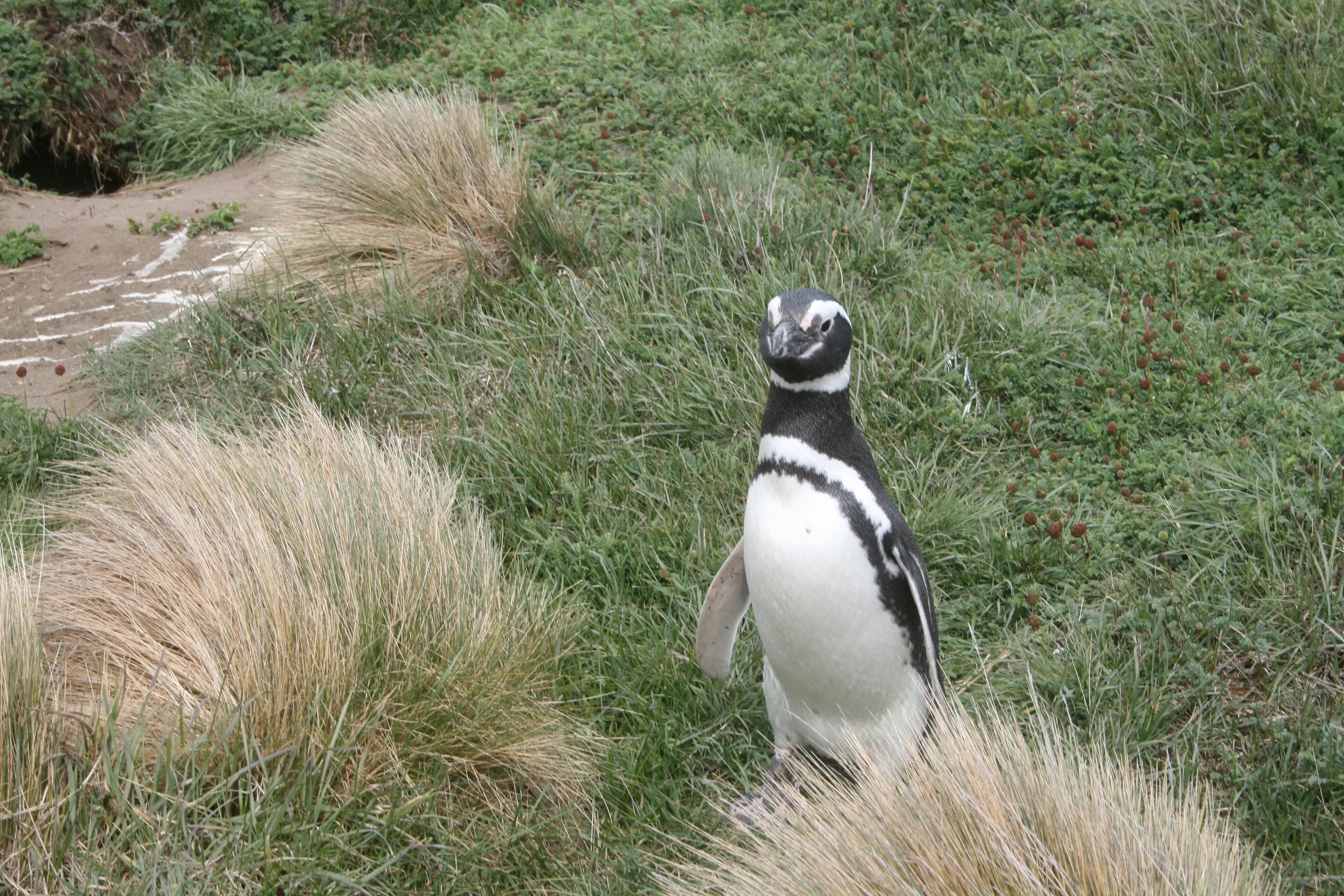
A penguin in tall grass
A Magellanic penguin standing among tufts of grass, near its nesting area. Penguins dig burrows in the ground.
The strait and the city centre
Port history, Victorian-era mansions and views of the strait
A port on the Strait of Magellan
Founded as a military post and penal colony, the city prospered through shipping, sheep farming, wool, coal and the nineteenth-century gold rush, until the opening of the Panama Canal in 1914 reduced ship traffic through the strait (Wikipedia FR, DE). Croatian, British and Spanish immigration left a deep mark. This history also had dramatic consequences for the region's Indigenous peoples, such as the Selk'nam, the Yagan and the Kawésqar.
The square and the mansions
In the centre, Plaza Muñoz Gamero holds the monument to Magellan; according to legend, touching the statue's foot guarantees your return (Wikivoyage EN). Around the square, late nineteenth-century buildings recall the golden age of wool, including the neoclassical Palacio Sara Braun, built between 1895 and 1905 and listed as a national monument (Wikivoyage EN). We have no photo of the square or the palace.
Cerro de la Cruz and the waterfront
Cerro de la Cruz is a viewpoint about ten minutes' walk from the square, with views of the city and the strait (Wikivoyage EN, DE). The Costanera waterfront promenade is good for spotting sea birds. Further south, Fuerte Bulnes, the first Chilean settlement on the strait in 1843, can be visited on an excursion.
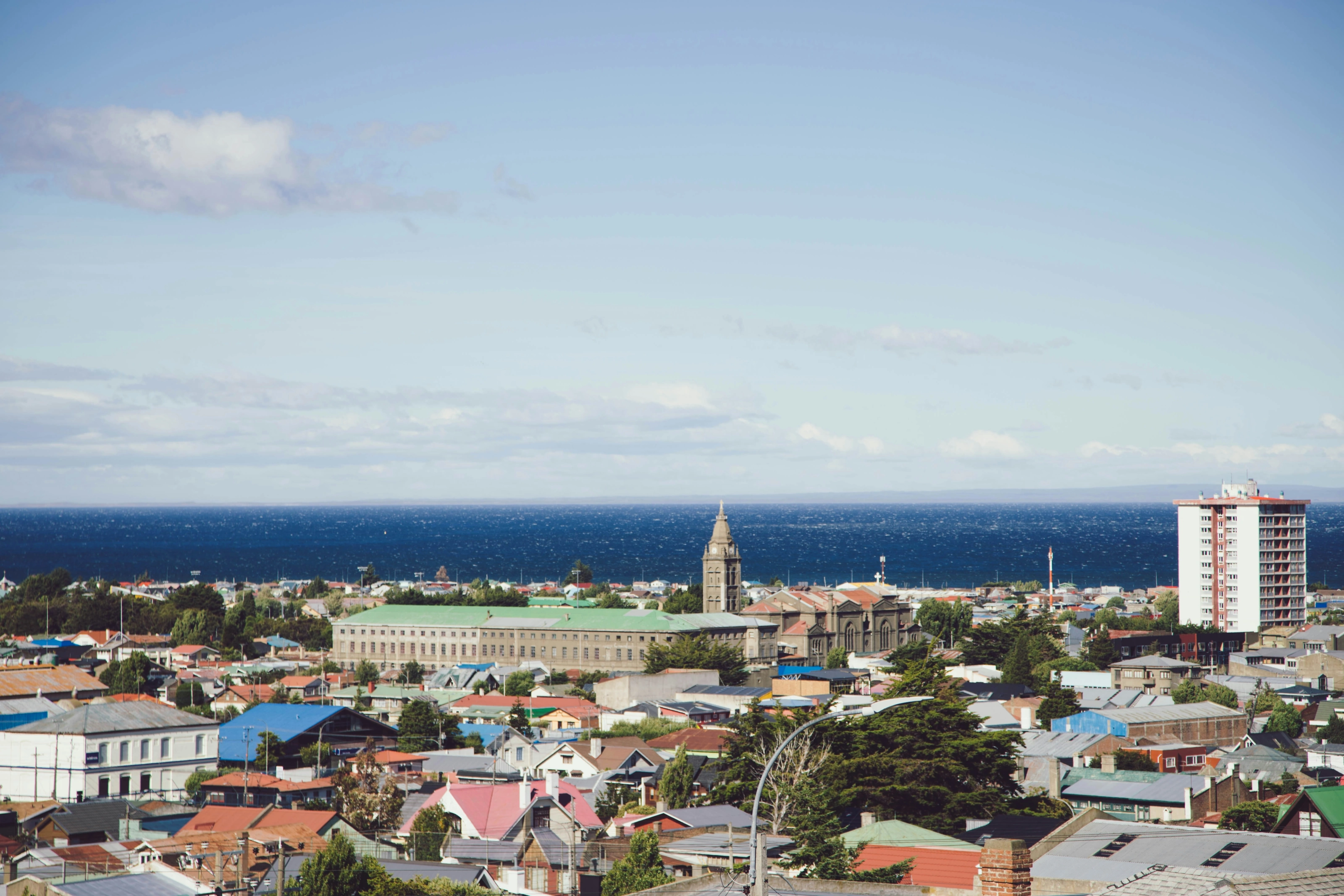
Rooftops and the sea
An overview of colourful rooftops, a large building with a green roof and the sea beyond, under a blue sky. The exact location of this photo is not confirmed.
The municipal cemetery
A cemetery of clipped cypresses and white mausoleums
The municipal cemetery is one of the most visited places in the city. Avenues of cypresses clipped into rounded shapes line the mausoleums of notable families and the graves of English, Croatian and other immigrants, with epitaphs sometimes in English, German or Croatian (Wikivoyage EN, Wikipedia DE). It is a place of memory: visit discreetly and respect its character.
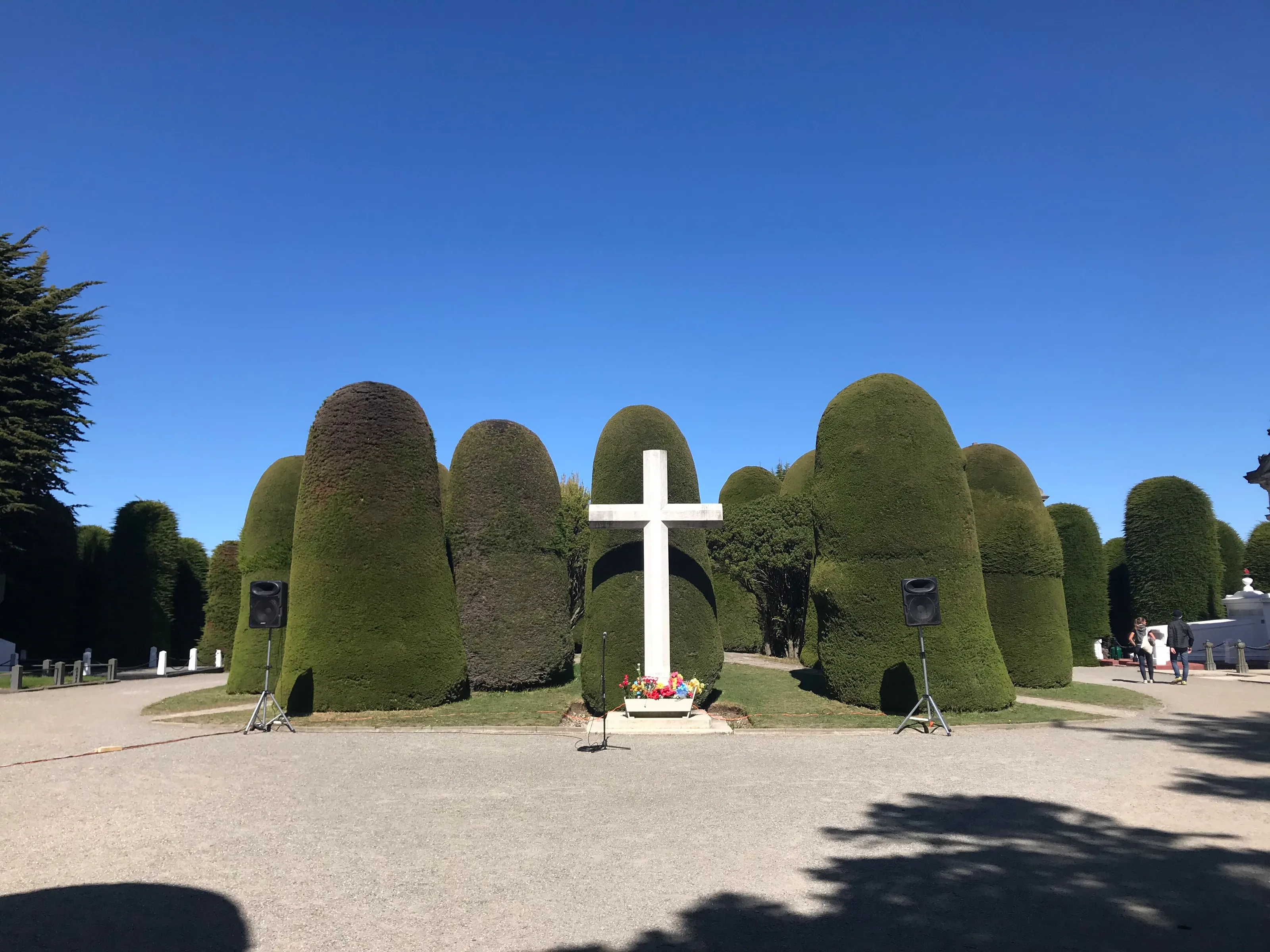
The cross between the cypresses
A large white cross stands between dome-shaped clipped cypresses under an intensely blue sky.
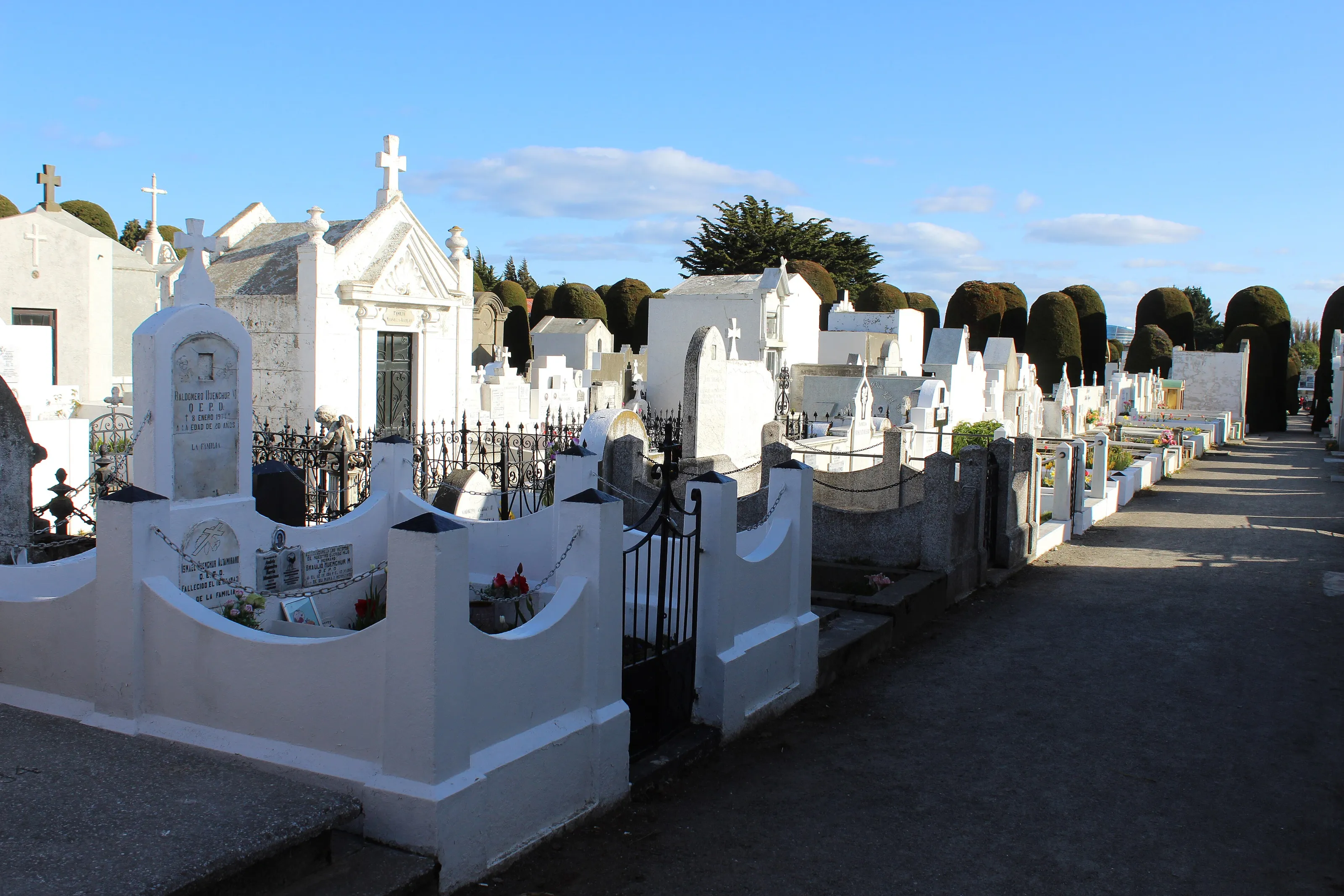
An avenue of white mausoleums
An avenue lined with small white mausoleums, wrought-iron railings and cypresses in the evening light.
Museums and culture
Regional museums, maritime history and Salesian heritage
Museo Regional de Magallanes
Housed in the former Braun-Menéndez family mansion, a national monument, it holds collections on the region's history, notably that of the great sheep-farming families (Wikipedia EN, Wikivoyage EN).
Museo Salesiano Maggiorino Borgatello
Founded by the Salesians in 1893, this regional museum brings together ethnography, fauna, flora and history, with room for Selk'nam culture (Wikipedia DE, EN).
Museo Naval y Marítimo
This museum traces the Chilean navy's role in the development of Punta Arenas and Patagonia (Wikipedia EN, Spanish Wikivoyage).
Other places
The Museo del Recuerdo, an open-air museum of old machinery and buildings, and the Museo Nao Victoria, with replicas of famous ships, round out the offer (Wikipedia EN). We give no prices or opening hours: check them before you go. The winter carnival in July enlivens the city (Wikivoyage EN).
Food and drink
King crab, Patagonian lamb and calafate
Local cuisine relies on lamb, often grilled in the style of the asado patagónico, and on seafood such as salmon, trout and centolla, the southern king crab (Wikivoyage EN). Markets and small lunch counters in the centre serve sandwiches and simple dishes.
Drinks
Calafate is a Patagonian berry: it is made into a syrup used in the calafate sour, a variant of the pisco sour. Legend says that tasting these berries guarantees your return to the region (Wikivoyage EN). We have no photo of these dishes, and we cite no venues.
Getting around
Walking, taxis, colectivos and car rental
In town
The centre is compact and can be covered on foot, but the wind can be very strong. Taxis, colectivos (shared taxis) and a few city bus lines serve the neighbourhoods (Wikivoyage EN).
Outside the city
For Fuerte Bulnes, the penguin colonies or the pampa landscapes, rent a car or book a guided excursion. Buses to Puerto Natales leave several times a day; there is no central bus station (Spanish Wikivoyage).
Tierra del Fuego
A ferry reaches Porvenir, on Tierra del Fuego, in about 2 to 2 hours 20 minutes (Wikivoyage EN, DE). There is no direct road to the rest of Chile without crossing Argentina.
Caution
Pack warm, windproof clothing all year, as wind and cold can catch you out. Check the official recommendations of your country of departure before you travel.
Budget
A mid-to-high budget destination
Punta Arenas is more expensive than an average Chilean city, especially in high season, when excursions, accommodation and Antarctic cruises push prices up. Trips to Torres del Paine and the penguins also weigh on the budget. We give no figures, because prices change with the season and the exchange rate.
The airfare remains the most variable item. SniperAir tracks prices to PUQ and compares them with the route's history.
When to go
When to visit Punta Arenas? Cool all year, reversed seasons
Austral summer (December to February)
Cool and windy: the average January high is about 14 °C (Wikipedia EN). This is high season for Torres del Paine and the penguins.
Autumn (March to May)
Days shorten and temperatures drop. Rain is most frequent in April and May (Wikipedia EN), and snow can return.
Austral winter (June to August)
Cold, with average July lows of about -1 °C (Wikipedia EN), frost and snow. The wind is weaker, but daylight is limited.
Spring (September to November)
Days lengthen, the snow melts slowly and the penguins return from October.
The climate is subpolar oceanic: temperatures vary little, it rains a little all year, with about 400 mm a year depending on the source, and the wind can exceed 100 km/h. The southern hemisphere reverses the seasons: summer begins in December. Wikivoyage (EN) recommends December to March.
By length of stay
How many days in Punta Arenas
The essentials
A day in town, with the cemetery, a museum and Cerro de la Cruz, and another half day for the waterfront.
The penguins
Add an excursion to Seno Otway or Magdalena Island in season, or a visit to Fuerte Bulnes.
Patagonia
Add Puerto Natales and several days in Torres del Paine, or a crossing to Tierra del Fuego.
In pictures
Punta Arenas and its surroundings in pictures
You might also like
Similar destinations
FAQ
Frequently asked questions about flights to Punta Arenas
How do I get from Punta Arenas airport to the city centre?
The airport (PUQ) is about 15 to 20 km north of the centre, depending on the source. Taxis and rental cars reach the city in a short half hour or so (our estimate); some buses from Puerto Natales also stop there. We give no fares.
When is the best time to visit Punta Arenas?
From December to March, in the austral summer: the average high is about 14 °C in January and the days are long, but the wind is strong. Winter is cold, with snow and little daylight.
Is Punta Arenas expensive?
The budget is mid to high, especially in high season, because of excursions, accommodation and cruises. We give no figures, because prices change.
How many days should I plan in Punta Arenas?
One to two days are enough for the city, the cemetery and a museum; three to four days allow an excursion to the penguins; five days or more open up Puerto Natales and Torres del Paine.
How do I get around Punta Arenas?
On foot in the centre, by taxi or colectivo, and by rental car or excursion for Fuerte Bulnes, the penguins or Torres del Paine. Buses reach Puerto Natales in about 3 hours.
What should I try in Punta Arenas?
Centolla (king crab), Patagonian lamb, salmon and trout, plus the calafate sour, a pisco sour variant made with calafate berry syrup.
How much does a flight to Punta Arenas usually cost?
The price depends mainly on your departure city, the period and the booking date. The opportunities section above shows real examples of prices already detected by SniperAir to this destination.
How do I get alerted when a flight to Punta Arenas drops below my budget?
Create an alert profile with your departure airport, Punta Arenas as the destination and your maximum budget. You are notified automatically as soon as a matching price is detected.
Ready to head to Punta Arenas?
Set your budget and let SniperAir monitor fares for you.
Create my alert