
Cheap flights to Nagoya
Set your departure airport and maximum budget: SniperAir tracks prices to Nagoya and alerts you the moment a deal matching your criteria appears.
Quick summary
Country
Japan
Continent
Asia
Airport
NGO
Currency
Japanese yen (JPY)
Time zone
UTC+9
Deals already spotted to Nagoya
Real flight examples detected by SniperAir, with their reference price.
Loading examples…
Why track Nagoya with SniperAir
Central Japan's metropolis of castles, shrines and red miso
Choose your departure
Enter your departure airport and your maximum budget for a flight to Nagoya (NGO).
SniperAir keeps watch
Our systems continuously compare new prices with the real price history of the route. SniperAir monitors prices and alerts you: it does not sell or book tickets.
You receive an alert
As soon as a price matches your criteria, you are notified, without having searched for anything yourself.
Nagoya is Japan's fourth-largest city after Tokyo, Yokohama and Osaka, and the capital of Aichi Prefecture in the Chubu region of Honshu (Wikivoyage EN, Wikipedia EN). It has about 2.3 million inhabitants and about 9 million in its wider metropolitan area. Wikivoyage (EN) calls it Japan's answer to Detroit, home to Toyota, Honda and Mitsubishi Motors, and notes that it was flattened in the Second World War. It also admits that Nagoya is not one of Japan's top tourist draws, since most travellers just zip through on the bullet train between Tokyo and Kyoto. Those who do stop find car-related museums, a restored castle, an ancient shrine and a surprisingly lively nightlife, along with a food culture of its own built around red miso. Fares to NGO move with the season, the airline and the number of stops; SniperAir compares them with the route's real price history and alerts you when one falls below your budget.
Airport and getting into town
Chubu Centrair airport, on an artificial island off Tokoname
Nagoya – Chubu Centrair International Airport (NGO), at Tokoname
Chubu Centrair International Airport (NGO) sits on an artificial island off the city of Tokoname, around 4 km from it according to several sources. It opened on 17 February 2005, in time for Expo 2005, and replaced Komaki as Nagoya's international airport, taking over the NGO code (Wikipedia EN, FR, DE). Wikivoyage (EN) calls it Japan's third major international gateway and places it 30 minutes south of the city centre, with two hotels, restaurants, shops and an onsen spa with runway views. The Meitetsu Airport Line connects it to Nagoya Station in 28 minutes on μSKY trains (Wikivoyage EN, FR, DE), and the official tourist office, Visit Nagoya, quotes 28 to 35 minutes.
Train time per Visit Nagoya and Wikivoyage (EN, FR, DE): 28 to 35 minutes. These sources do not give a distance in kilometres. We do not publish fares because sources disagree; check with the operator before you travel.
Wikivoyage (EN) points out that the Japan Rail Pass is not valid on the private Meitetsu line. A bus and taxis also link the airport and the centre, but they are slower and more expensive, and the tourist office says the bus service is currently suspended. The old Komaki airport (NKM) north of the city now handles only a few domestic flights (Wikivoyage EN). Entry rules depend on your nationality: check official sources before you travel.
Landmarks
The castle, Atsuta Shrine and Tokugawa Garden
Nagoya is best explored around a few major sights: the castle, a much-visited Shinto shrine and a garden from the Tokugawa era. The four views below are followed by more places described in the text.
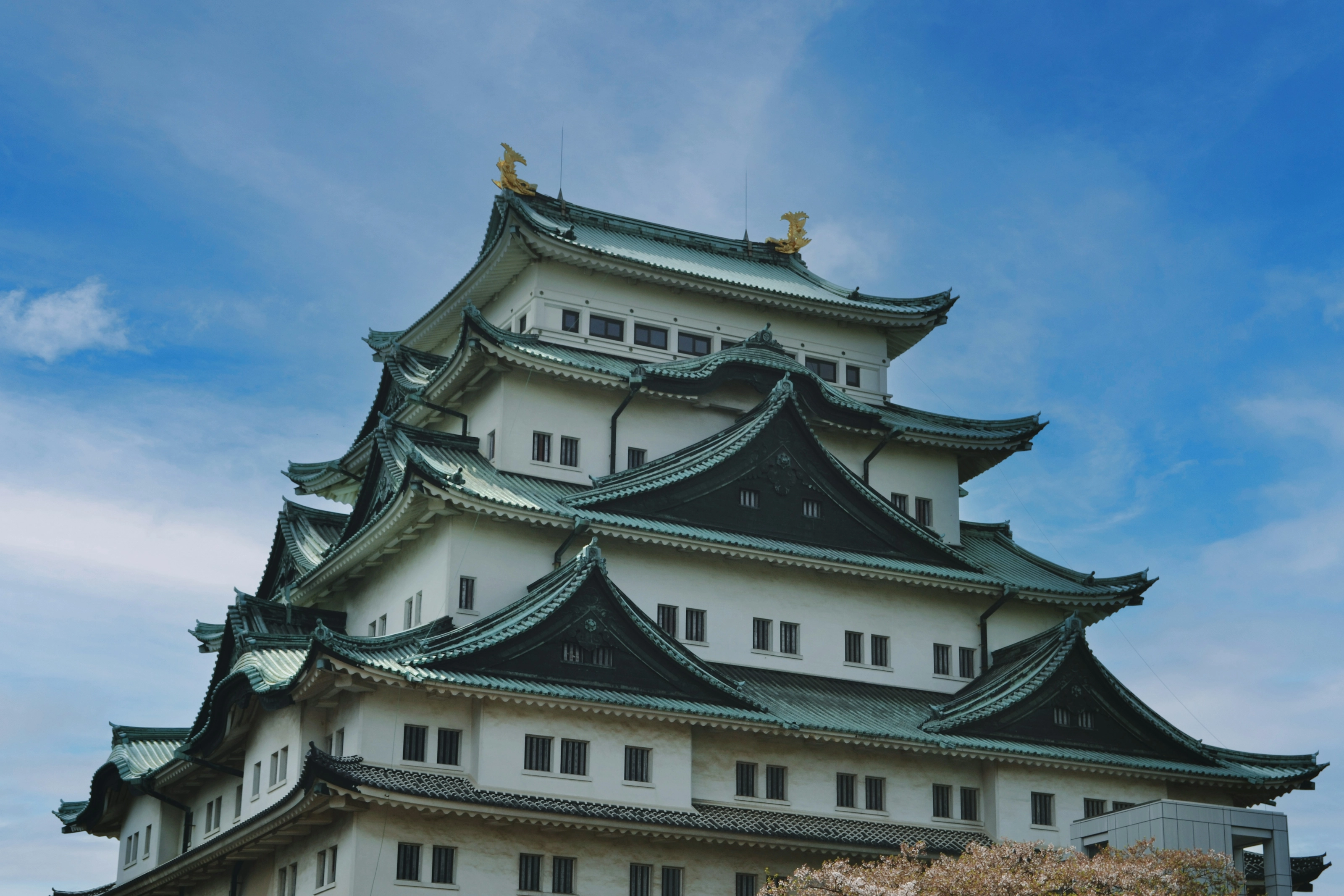
Nagoya Castle and its golden dolphins
Tokugawa Ieyasu had the stronghold at Nagoya renovated in 1610 (Wikipedia EN, FR). Largely destroyed in 1945, the castle was rebuilt in 1959 (Wikipedia EN, FR, DE), and its roofs carry two golden dolphins, the shachi (Wikivoyage EN). According to the official Visit Nagoya site, the main keep is currently closed to visitors, while other areas of the castle stay open: check the situation before you go.
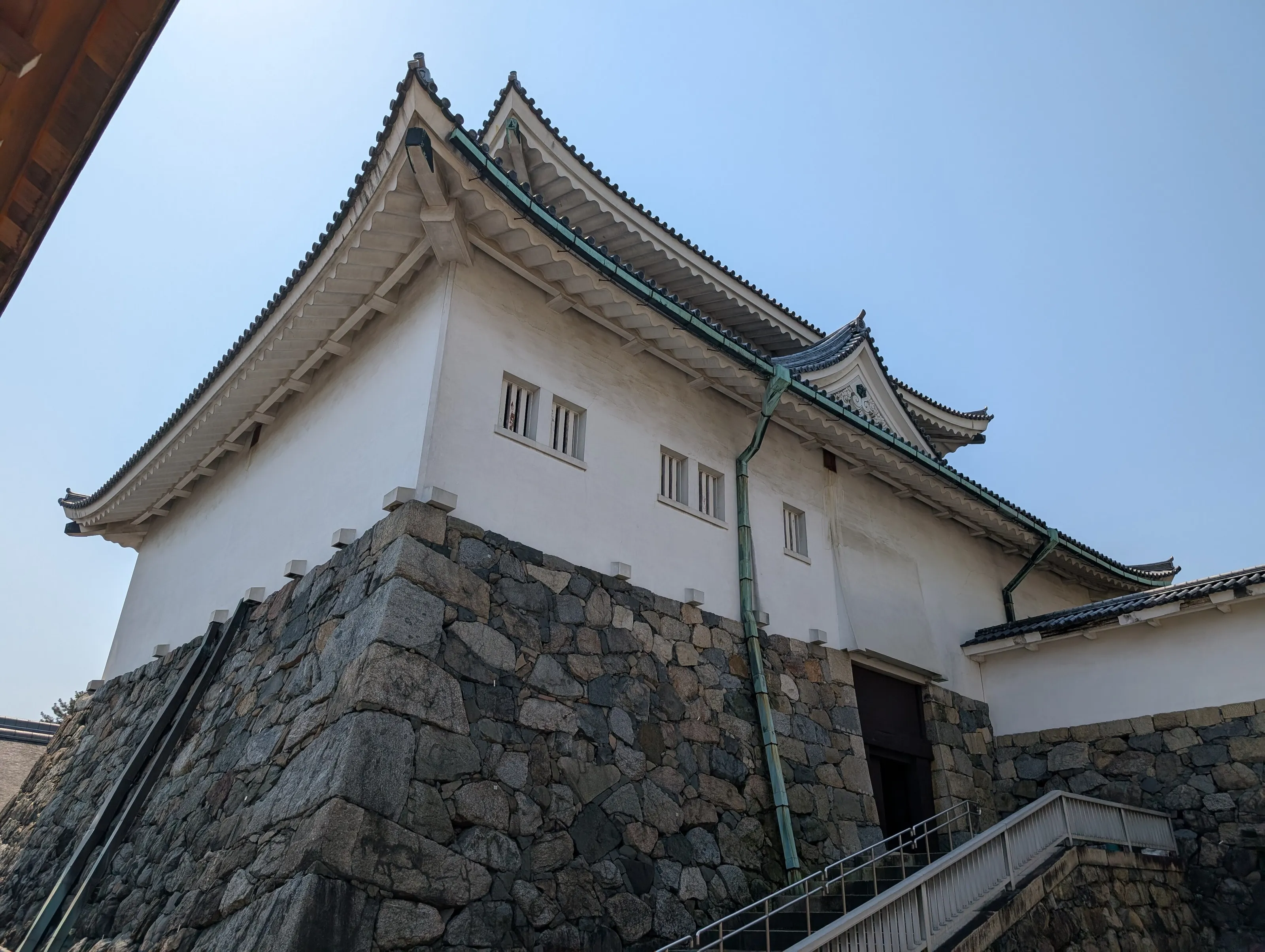
Turret and stone walls of the castle
The stone walls and white turrets give an idea of the castle's defences. Wikivoyage (EN) says that the Honmaru Palace, the residence of the castle's lords, was reconstructed in 2018 using traditional materials and methods. Wikipedia (ES) recalls that about 60,000 people from Kiyosu were moved to populate the new town built around the castle.
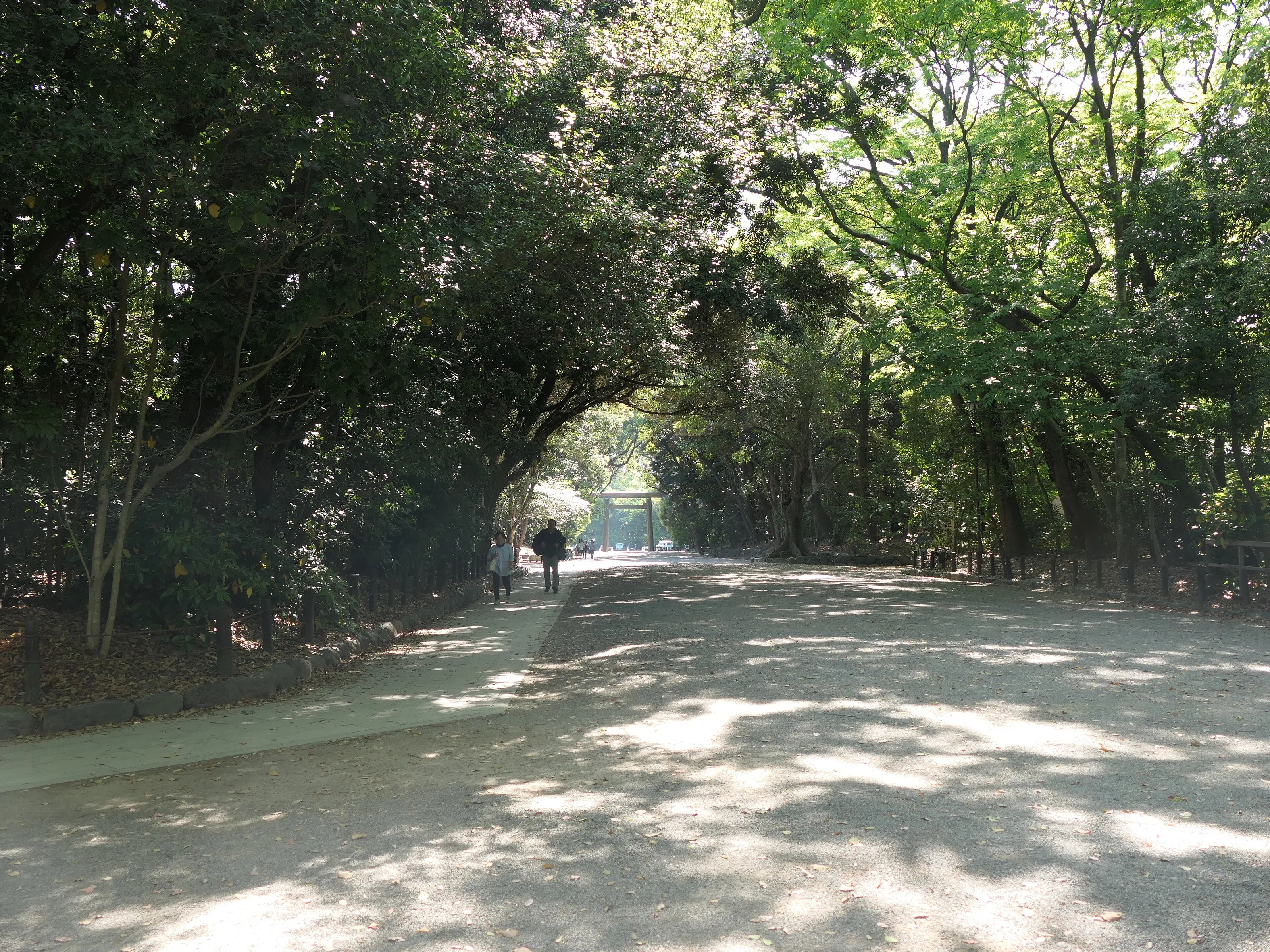
Atsuta Shrine, a path through the forest
Atsuta Shrine covers about 200,000 square metres and is among the most visited places in Nagoya (Wikipedia FR). It is said to house the Kusanagi sword, one of Japan's three Imperial regalia, which almost nobody is allowed to see (Wikivoyage EN, Wikipedia DE). More than 4,000 historical objects are kept there (Wikipedia DE) and about 70 festivals are held each year (Wikivoyage EN).
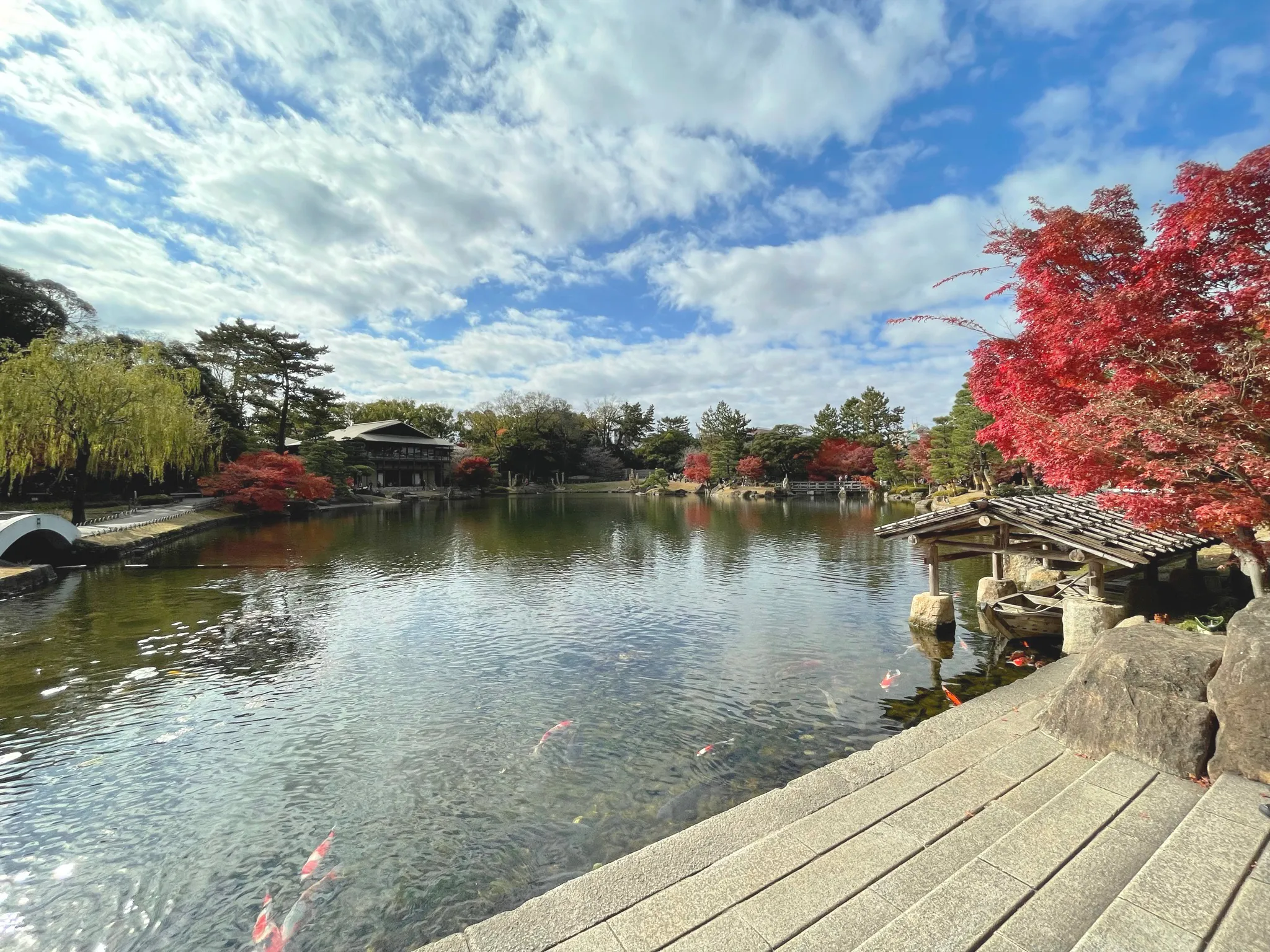
Tokugawa Garden and its koi
The Japanese garden Tokugawa-en sits next to the Tokugawa Art Museum (Wikivoyage EN). The photo shows Ryusen Lake in autumn, with koi, red maples and a small wooden pavilion. We do not quote admission fees or opening hours.
More places in Nagoya: Shirotori Garden, with its koi ponds, tea house and waterfall; Nittai-ji Temple, whose Gandhara-style pagoda holds relics of the Buddha presented by the king of Thailand (Wikivoyage EN); the Ōsu shopping arcade and Ōsu Kannon temple (Wikivoyage EN, FR); the TV tower and Oasis 21 in the Sakae district (Wikivoyage FR); and the Port of Nagoya Aquarium (Wikipedia FR). The towers above Nagoya Station dominate the station district.
Museums and culture
Tokugawa Art Museum, Toyota, maglev trains and fine art
The Tokugawa Art Museum
The Tokugawa Art Museum displays treasures of the Tokugawa family and stands next to Tokugawa-en garden (Wikivoyage EN, Wikipedia DE). We do not quote admission fees or opening hours.
The Toyota Commemorative Museum of Industry and Technology
Built on the site of one of Toyota's original loom factories, it tells how the company went from weaving looms to cars, with large machines, vehicles and a hands-on science area (Wikivoyage EN, FR). It is one of the car-related attractions that give the city its identity.
Trains, fine art and ceramics
The SCMAGLEV and Railway Park is a railway museum (Wikipedia FR, DE). The Nagoya City Art Museum shows works by Modigliani, Laurencin and Utrillo as well as local artists (Wikivoyage EN); the Aichi Prefectural Museum of Art is housed in the Aichi Arts Center (Wikipedia DE). Noritake, famous for its porcelain, also has a museum (Wikipedia FR).
Food and drink
Miso, grilled eel and flat noodles
Red miso and miso katsu
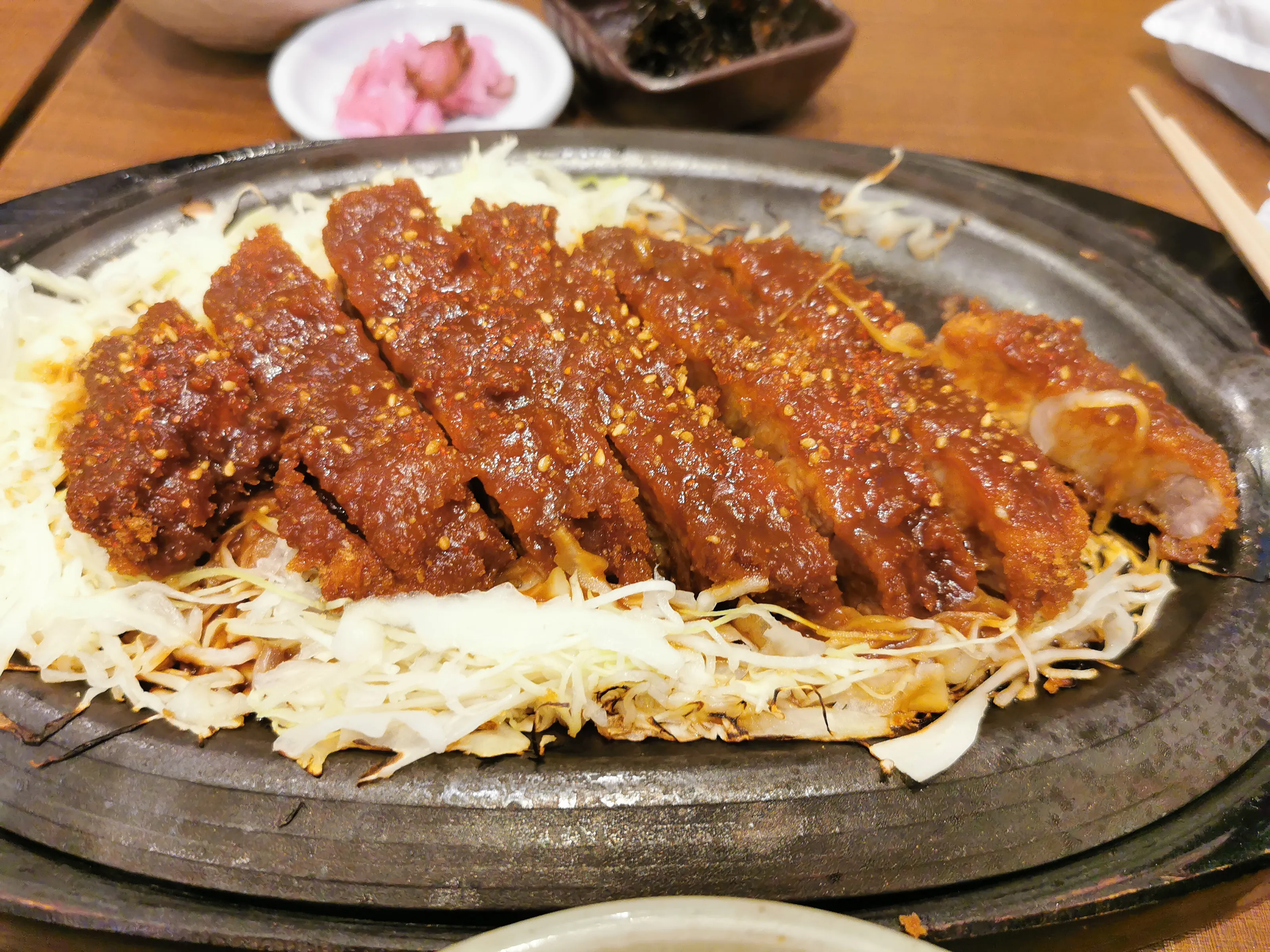
Nagoya's cuisine, known as Nagoya-meshi, is famous for flavours that are both intense and sweet (Wikipedia ES). Red miso, especially Hatchō miso, is its backbone (Wikivoyage EN). Miso katsu, a breaded pork cutlet covered in miso sauce and served with shredded cabbage and rice, is its star (Wikipedia ES, Wikivoyage FR).
Hitsumabushi
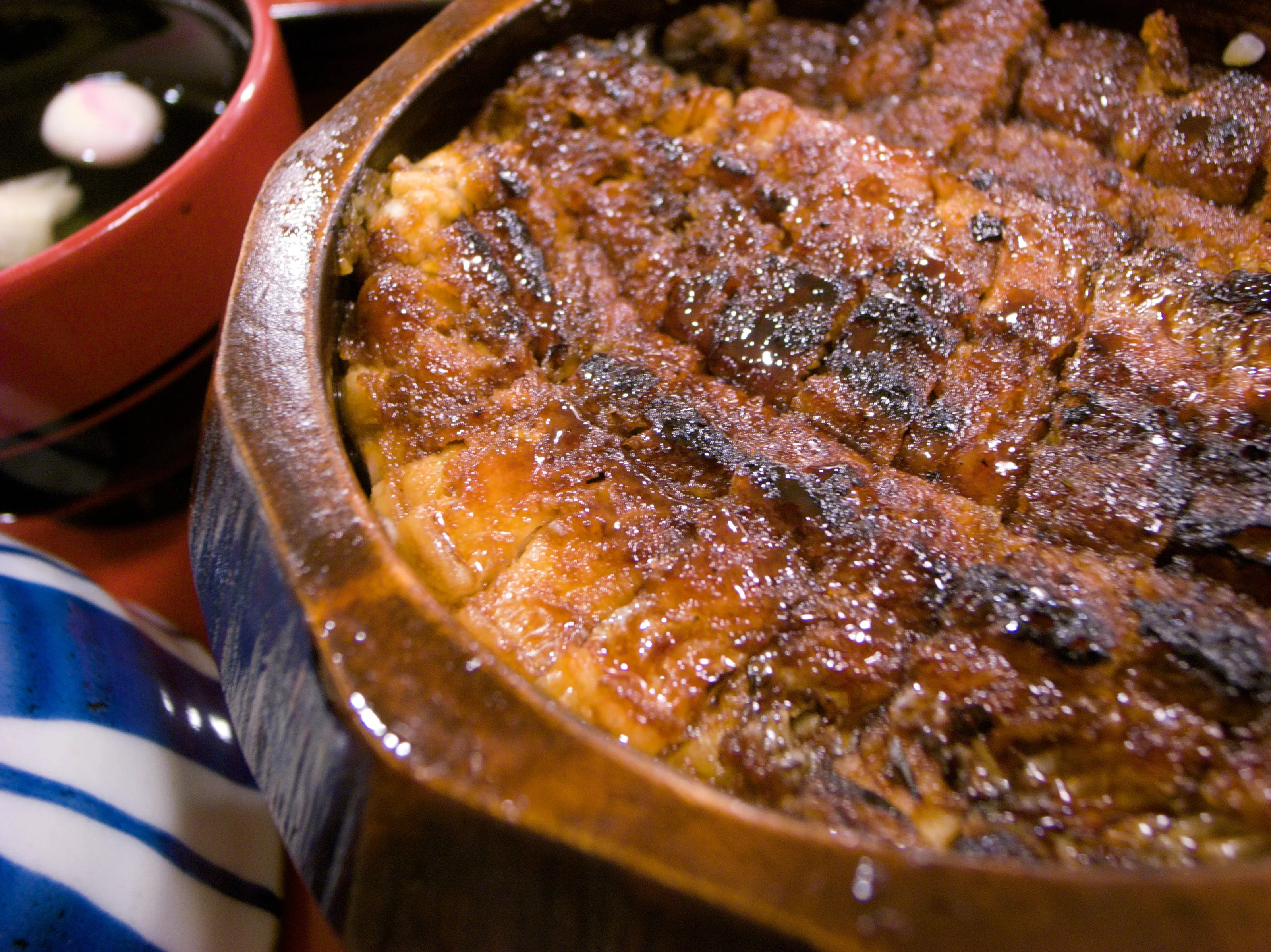
Hitsumabushi is grilled eel on rice served in a wooden bowl with condiments and broth. It can be eaten three ways: first just the eel and rice, then with spring onions and nori, then with tea or stock poured over it (Wikivoyage EN, FR). Wikipedia (ES) describes it as a relatively expensive gourmet dish.
Noodles, chicken wings and sweets
Other specialities include kishimen, flat wheat noodles; miso nikomi udon, a thick noodle stew perfect for winter; tenmusu, shrimp tempura wrapped in rice; tebasaki, fried chicken wings; ankake spaghetti; and uirō, a rice-flour confection (Wikivoyage EN, FR). Visit Nagoya adds Nagoya Cochin chicken and Nagoya-style breakfasts. We name no brands; Ōsu and Sakae have the densest concentration of bars and restaurants.
Getting around
Subway, private railways, Shinkansen and car
The Nagoya subway
Nagoya has six subway lines, one of them a loop (Wikipedia EN, FR, DE). Wikivoyage (EN) says that one-day passes exist and sometimes bring discounts at attractions; we publish no fares.
Trains and the bullet train
Nagoya Station is on the Tōkaidō Shinkansen linking Tokyo, Kyoto and Osaka (Wikipedia EN), and is served by JR Central, Meitetsu and Kintetsu (Wikipedia DE). The manaca card, compatible with other Japanese transit cards, simplifies local trips (Wikivoyage DE).
By car and bike
Nagoya is a car city with an extensive road network, and Wikivoyage (EN) notes that trains and subways are less convenient than in Tokyo or Kansai. The city is flat but the traffic is heavy; a bike-share service exists, with an interface mostly in Japanese (Wikivoyage EN).
Budget and precautions
Budget, health and safety
Price level
Prices in Nagoya are comparable to other big Japanese cities; neighbourhood meals and miso katsu stay accessible, while eel is more expensive. The currency is the Japanese yen (JPY). We publish no amounts, because we could not cross-check them on two independent, current sources.
Flights
SniperAir monitors fares to NGO and compares them with the route's history, but it does not sell or book tickets. Prices vary with the season, the airline and the number of stops.
Health
Ask a doctor or travel clinic for advice before you leave and take out travel insurance. Requirements vary between travellers.
Safety
Official advice differs by country of departure: check your own government's before booking. Japan is exposed to earthquakes and typhoons, and the Nagoya region was hit hard by the Ise Bay Typhoon in 1959 (Wikipedia EN, FR). Follow local instructions.
When to go
Hot, humid summers and cool winters
Spring and autumn
Wikivoyage (EN) suggests these seasons for anyone who dislikes the heat, since temperatures are milder.
Summer
Very hot, humid summers, with highs routinely above 30 °C in August (Wikivoyage EN, FR); it rains more in summer than in winter (Wikipedia EN). A sumo tournament is held in July (Wikivoyage DE).
Winter
Cool winters, with rain spread through the year but lighter than in summer (Wikipedia EN). Wikivoyage (EN) recommends miso nikomi udon as a perfect winter dish.
Wikipedia (EN) classes Nagoya's climate as humid subtropical (Cfa): hot, humid summers, cool winters and rain all year. Wikivoyage (EN, FR) quotes averages from 4 °C in January to 27 °C in August; we do not publish these figures because they come from a single family of sources. Visitors sensitive to heat will prefer spring and autumn.
By length of stay
What to do in Nagoya depending on your stay
The centre
The castle, Atsuta Shrine and the Ōsu arcade, with a lunch of miso katsu or hitsumabushi.
Museums and gardens
Tokugawa Garden and Art Museum, the Toyota museum, the SCMAGLEV and Railway Park and the harbour aquarium.
Day trips
According to Wikipedia (EN), Nagoya is a good base for Inuyama (Ghibli Park, Meiji Mura) and, within two hours at most, for Takayama, Shirakawa-go or Ise Shrine.
In pictures
Nagoya in pictures
You might also like
Similar destinations
FAQ
Frequently asked questions about flights to Nagoya
How far is NGO airport from Nagoya?
Chubu Centrair (NGO) is about 30 minutes south of Nagoya, and the Meitetsu μSKY train takes 28 minutes according to Wikivoyage (EN, FR, DE); Visit Nagoya says 28 to 35 minutes depending on the train.
Is Nagoya's airport really at Tokoname?
Yes: Chubu Centrair (NGO) is built on an artificial island off Tokoname and opened on 17 February 2005 (Wikipedia EN, FR, DE). It replaced the old Komaki airport.
What should I see in Nagoya?
Nagoya Castle, Atsuta Shrine, Tokugawa Garden and Art Museum, the Toyota museum and the harbour aquarium, according to Wikipedia (EN, DE) and Wikivoyage (EN). The main keep is currently closed to visitors according to Visit Nagoya.
What should I eat in Nagoya?
Miso katsu, hitsumabushi (grilled eel), kishimen, miso nikomi udon and tebasaki, according to Wikivoyage (EN) and the Visit Nagoya tourist office.
When is the best time to visit Nagoya?
Spring and autumn are milder; summer is hot and humid, with highs often above 30 °C in August (Wikivoyage EN). Keep an eye on fares well in advance.
How many days do I need in Nagoya?
One day covers the castle, Atsuta and Ōsu; two to three days let you add museums and gardens, and more time makes day trips to Inuyama, Takayama or Ise possible.
How much does a flight to Nagoya usually cost?
The price depends mainly on your departure city, the time of year and how far ahead you book. The "opportunities" section above shows real examples of prices SniperAir has already detected to this destination.
How do I get alerted when a flight to Nagoya drops below my budget?
Create an alert profile with your departure airport, Nagoya (NGO) as the destination and your maximum budget. You are notified automatically as soon as a matching price is detected. SniperAir monitors and alerts, it does not sell or book tickets.
Ready to head to Nagoya?
Set your budget and let SniperAir monitor fares for you.
Create my alert