
Cheap flights to Sharjah
Set your departure airport and your maximum budget: SniperAir tracks prices to Sharjah and alerts you the moment an opportunity matching your criteria appears.
Quick summary
Country
United Arab Emirates
Continent
Asia
Airport
SHJ
Currency
UAE Dirham (AED)
Time zone
UTC+4
Opportunities already spotted to Sharjah
Real flight examples spotted by SniperAir, with their reference price.
Loading examples…
The one dry emirate
Sharjah does not drink, and does not apologise for it
Of the seven emirates, Sharjah is the only one where alcohol is banned outright — no bars, no wine lists in international hotels, nothing sold beyond the duty-free shop at the airport. It is a deliberate policy, not an oversight, and it sets the tone for the whole destination: Sharjah has built its tourism identity around heritage, family life and culture rather than nightlife, in explicit contrast to Dubai, its neighbour barely half an hour down the road. Visitors who come expecting a quieter, more traditional version of the Gulf tend to leave satisfied; anyone chasing rooftop bars should book Dubai or Abu Dhabi instead.
History
One ruler's five-decade project to make culture a state policy
Sheikh Sultan bin Muhammad Al Qasimi has ruled Sharjah since 1972 — a historian by training, he restored the Al Hisn Fort the same year he took power and went on to found the University of Sharjah, the American University of Sharjah, and dozens of museums and cultural institutions that most Gulf cities of comparable size simply don't have. In 1982 he launched the Sharjah International Book Fair by decree; it has since grown into one of the largest publishing events in the Arab world. UNESCO recognised the results twice: naming Sharjah Cultural Capital of the Arab World in 1998, and World Book Capital in 2019 — only the third city in the Middle East and North Africa to receive that title.
Landmark
Al Noor Mosque, the only one open to non-Muslim visitors
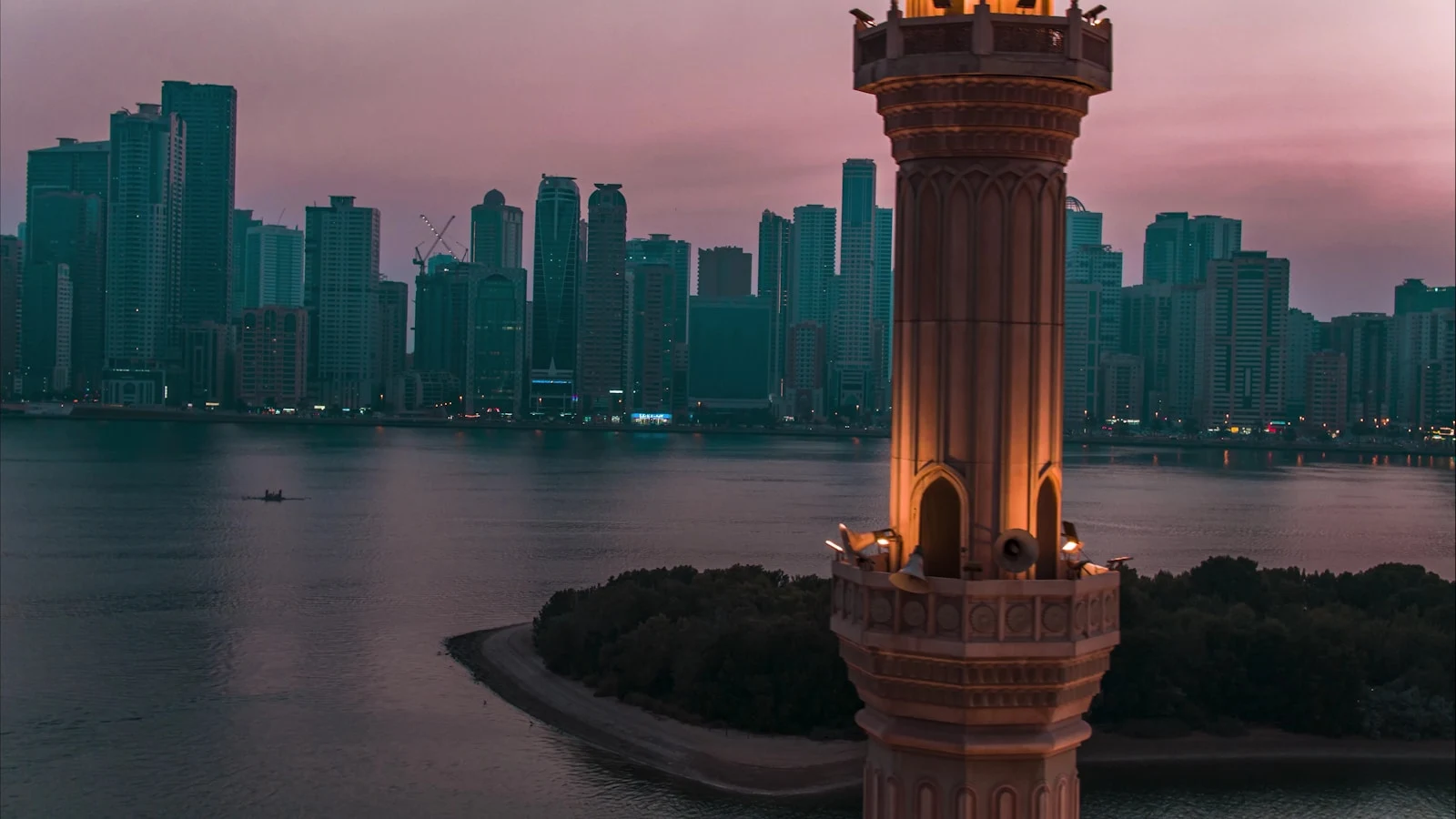
Facing Khalid Lagoon on the Buhaira Corniche, Al Noor Mosque takes its cues from Ottoman architecture and is arguably the most photogenic building in the emirate at sunset, when its dome and minaret light up over the water. It's also the only mosque in Sharjah that welcomes non-Muslim visitors: the Sharjah Centre for Communication and Cultural Understanding runs free guided tours, typically on Monday and Thursday mornings, covering the architecture, the basics of Islam and Emirati traditions, usually finishing with a cup of traditional gahwa coffee. Modest dress covering shoulders and knees is expected, and abayas are lent at the door for anyone who needs one.
Heritage Area
A whole neighbourhood of restored forts, houses and souks
Rather than clear its old town for new towers, Sharjah restored it. The Heritage Area centres on Al Hisn Fort, close to two centuries old and once the ruler's residence, alongside traditional Emirati courtyard houses turned into small museums — Bait Al Naboodah, once home to a pearl merchant, is the best preserved. Next door, Souk Al Arsah, one of the oldest covered markets in the country, still trades in textiles, woodwork and jewellery around an open courtyard, the way it has for generations. It's a five-minute walk from a UNESCO-recognised concentration of roughly twenty museums, from the Sharjah Museum of Islamic Civilisation to the Sharjah Art Museum, which between them give the emirate one of the densest museum scenes anywhere in the Gulf.
Shopping
The Blue Souk, a landmark that made it onto the currency
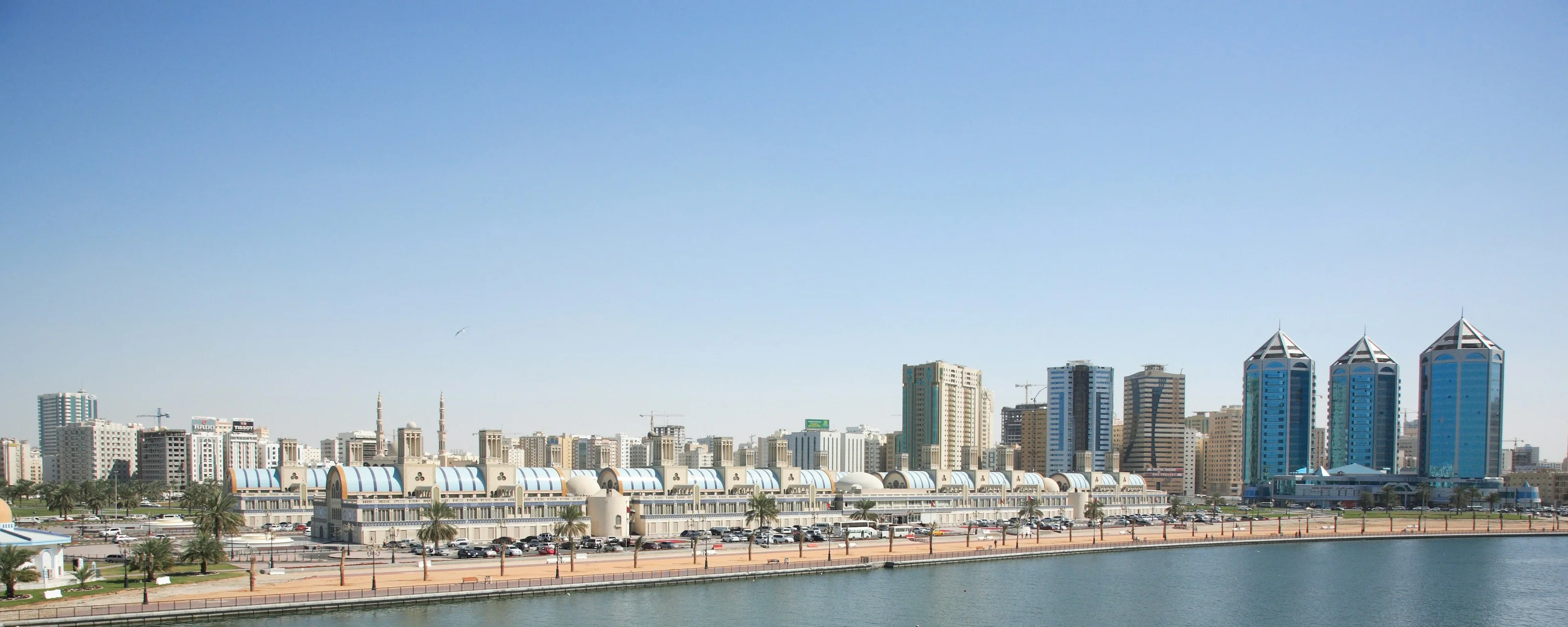
Completed in 1978 to a design commissioned by the ruler of Sharjah, the Central Souq owes its nickname — the Blue Souk — to the tiles covering its two long, arcaded buildings, linked by bridges and topped with twenty wind towers that give it a skyline of its own; it's distinctive enough to appear on the UAE's 5-dirham note. Inside, more than 600 shops spread across roughly 80,000 square metres sell gold, carpets, perfumes and souvenirs, and the building itself, lit up along Khalid Lagoon at sunset, is as much a sight as the shopping.
Evenings without bars
Al Majaz Waterfront, Al Qasba and Al Noor Island
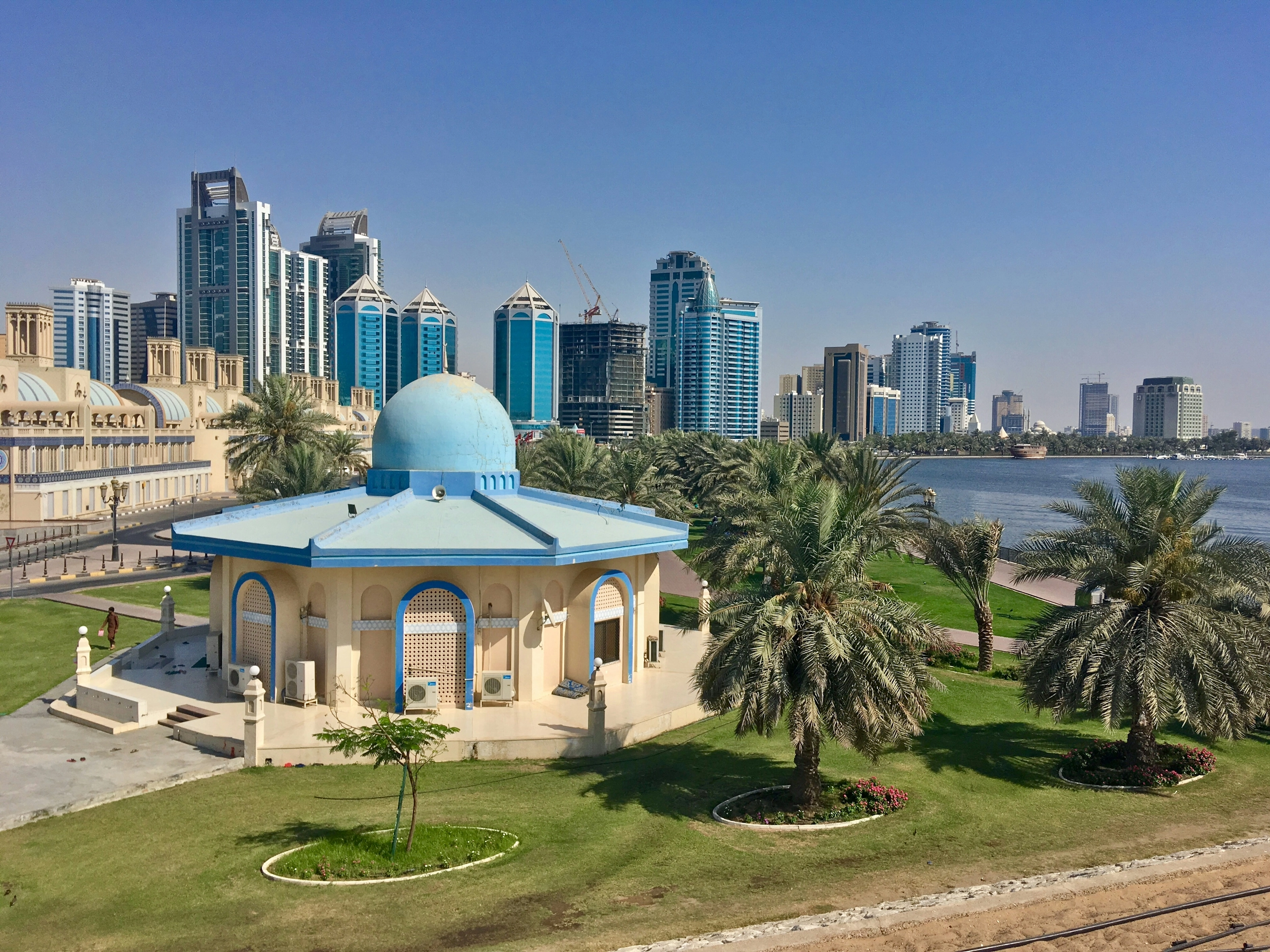
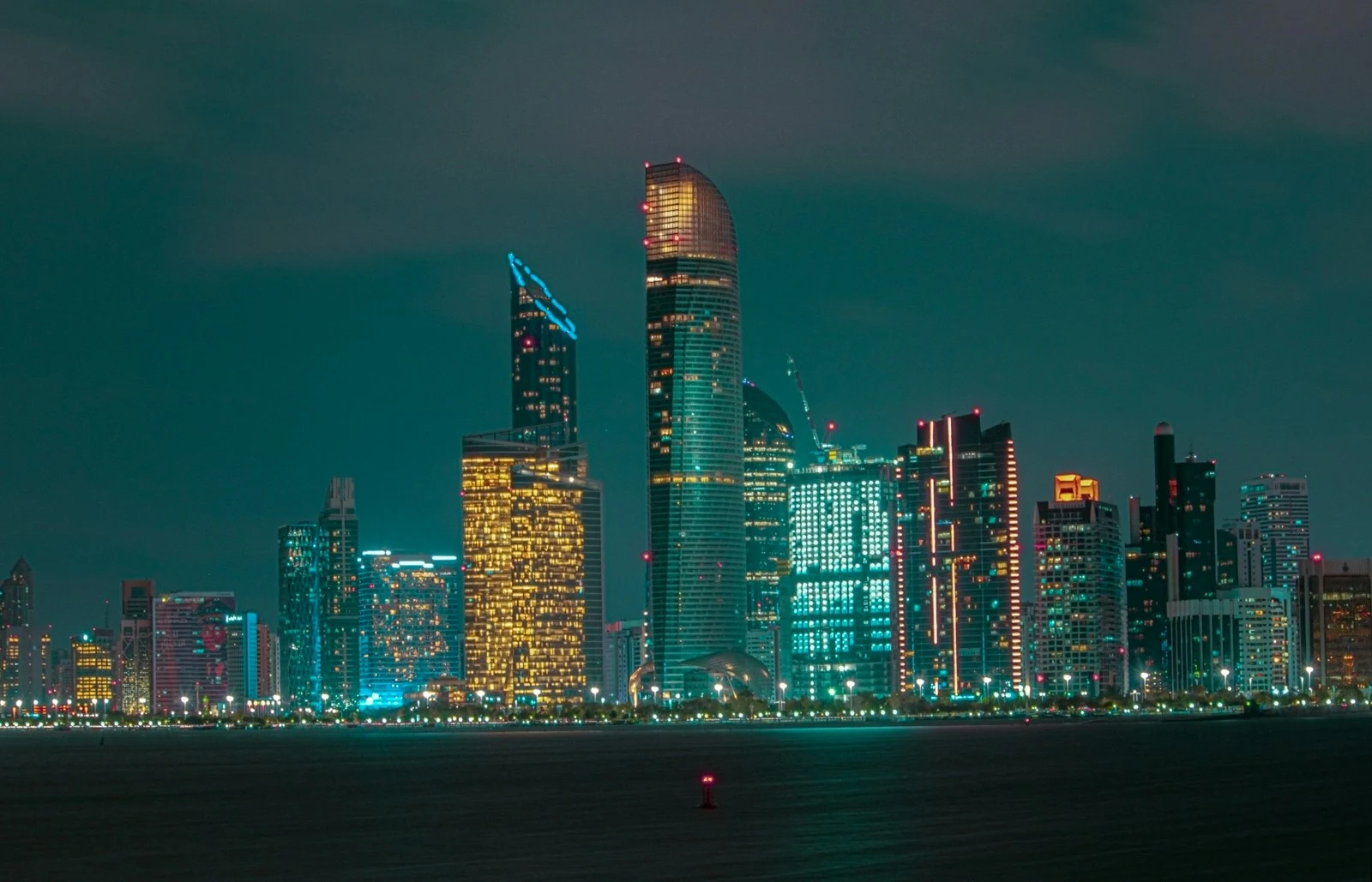
With no alcohol in the picture, Sharjah's evenings run on lit-up promenades instead: Al Majaz Waterfront and Al Qasba, both along the lagoon, combine fountains, boat rides and family entertainment with cafés serving an elaborate range of mocktails built specifically to fill the gap left by the absence of bars. A footbridge connects the Corniche to Al Noor Island, a garden and butterfly house that also happens to offer one of the better skyline views in the city — worth timing for late afternoon, just before the mosque next door lights up for the evening.
Beyond the city
Mleiha desert and the east coast
Sharjah's territory is split across the peninsula: alongside the main city on the Gulf coast, three exclaves — Khor Fakkan, Kalba and Dibba Al-Hisn — sit on the Gulf of Oman side, separated from the rest of the emirate by Fujairah and Ajman; Sharjah is also the only one of the seven emirates to border all six others. Inland, the Mleiha desert region, roughly 45 minutes from the city, holds some of the oldest archaeological sites on the Arabian Peninsula alongside dune-buggy safaris and Bedouin-style dinner camps, most bookable with hotel pickup from Sharjah or Dubai. On the coast, Khor Fakkan trades the built-up Corniche for beaches on the Gulf of Oman backed by the Hajar Mountains.
Food
No alcohol doesn't mean no flavour
Sharjah's food scene simply skips the wine list and focuses on the food: Emirati staples sit alongside a strong South Asian presence, reflecting the emirate's large resident community from the subcontinent.
| To try | Description |
|---|---|
| Machboos | Spiced rice with meat or fish, the backbone of traditional Emirati cooking, well represented around the Heritage Area. |
| South Asian cuisine | Widespread across the city, a direct reflection of Sharjah's large South Asian resident population. |
| Mocktails | An elaborate non-alcoholic drinks menu, developed specifically by cafés along Al Majaz Waterfront. |
Getting around
No metro — taxis and local buses do the job
Sharjah has no metro system, unlike Dubai next door. Metered taxis are the most practical way to get around, including out to the Heritage Area or Al Majaz Waterfront, backed up by a local bus network — Route 14, for instance, runs near Al Noor Mosque. Getting to Dubai usually means a taxi or rental car along Sheikh Mohammed Bin Zayed Road.
Getting there
Sharjah International, home of Air Arabia
Sharjah International
About 10-13 km from downtown, Sharjah International has been the home base of Air Arabia, the Middle East's first low-cost carrier, since it launched here in 2003 — often a cheaper alternative to flying into Dubai. Arrival formalities are generally quick, usually done inside 20 minutes.
By length of stay
How much time do you need in Sharjah?
The essentials
Heritage Area, Al Hisn Fort, Souk Al Arsah.
Go deeper
Add a couple of museums and an evening at Al Majaz Waterfront.
Excursion
A day trip to the east coast or Mleiha, or combine with Dubai.
When to go
When to visit Sharjah?
October to April
The best season, comfortable temperatures for walking the Heritage Area.
May & September
Shoulder months, already warm but often cheaper fares.
Summer (June-August)
Very high heat and humidity — museums and malls become the default plan.
Ramadan
A distinctive atmosphere with adjusted hours — check the lunar calendar before booking.
Sharjah, Dubai or Abu Dhabi?
The traditional one
Dubai chases skyline records and shopping, Abu Dhabi leans into museums and religious architecture with alcohol still permitted in licensed hotels — Sharjah is the only one of the three that bans it outright, and the only one built around heritage rather than spectacle. It's also the cheapest of the three to fly into thanks to Air Arabia's low-cost network, and close enough to both — Dubai is about 30 minutes away — to combine easily in one trip.
You might also like
Similar destinations
FAQ
Frequently asked questions about flights to Sharjah
Can you drink alcohol in Sharjah?
No — Sharjah is the only fully dry emirate in the UAE, alcohol is banned even in international hotels. Worth knowing before you book if nightlife is part of the plan.
Is Sharjah just a cheaper version of Dubai?
Not really — Sharjah has built its own identity around heritage and museums rather than trying to compete with Dubai's skyline and shopping.
What's the airport for Sharjah?
Sharjah International Airport (SHJ), home base of low-cost carrier Air Arabia. Depending on where you're flying from, Dubai's airports can also be worth comparing.
How much does a flight to Sharjah typically cost?
It mainly depends on your departure city, the season and how far ahead you book. The "opportunities" section above shows real price examples already detected by SniperAir for this destination.
Can you visit a mosque in Sharjah?
Yes — Al Noor Mosque, on the Buhaira Corniche, is the only one in Sharjah open to non-Muslim visitors. Free guided tours run a couple of mornings a week.
Does Sharjah have a well-known book fair?
Yes, the Sharjah International Book Fair, launched in 1982, is one of the largest publishing events in the Arab world — part of why UNESCO named the city World Book Capital in 2019.
How do you get around Sharjah without a metro?
Taxis are the simplest option for most visitors, backed up by a local bus network. Getting to Dubai takes about 30 minutes by road.
Can you do a desert safari from Sharjah?
Yes — the Mleiha region, about 45 minutes away, offers dune-buggy safaris and Bedouin-style dinner camps, usually with direct hotel pickup.
How do I get alerted when a flight to Sharjah drops below my budget?
Create an alert profile with your departure airport, Sharjah as the destination, and your maximum budget. You'll be notified automatically as soon as a matching price is detected.
Ready to head to Sharjah?
Set your budget and let SniperAir track fares for you.
Create my alert