Cheap Flights to Basel-Mulhouse
Find the best flight deals to Basel-Mulhouse and create an alert to get notified the moment a great price shows up.
Quick summary
Country
France
Region
Alsace / Swiss border
Airport
BSL
Sea
—
Time zone
UTC+1
Opportunities already spotted to Basel-Mulhouse
Real flight examples detected by SniperAir, with their reference price.
Loading examples…
Understanding the region
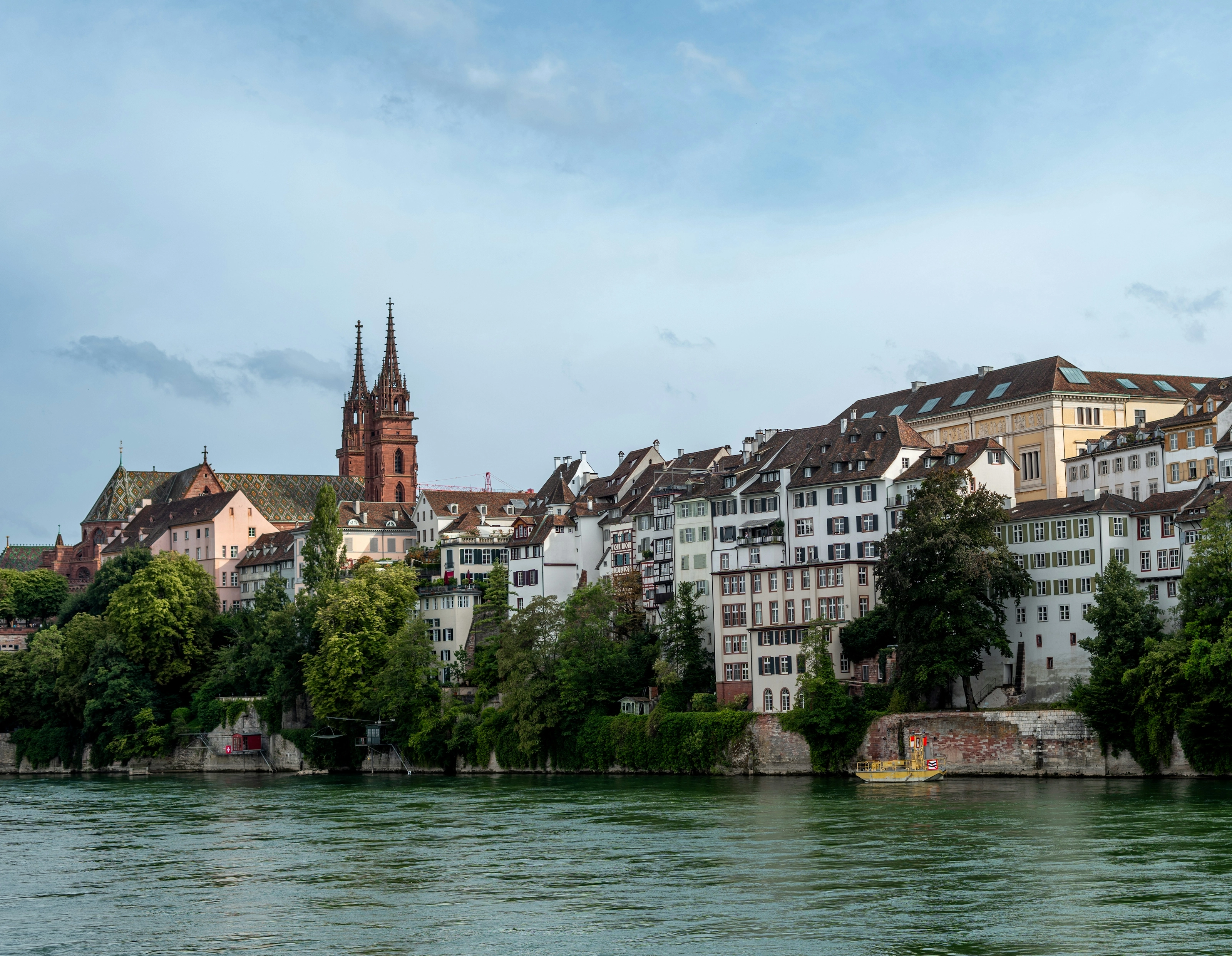
The airport carries three city names, but its terminal lies in France. Its binational status and separate French and Swiss road access explain the signs and exits. Basel is a Swiss city on the Rhine, immediately beside France and Germany. Mulhouse is in Haut-Rhin, in southern Alsace. They are separate destinations with different currencies and languages, joined by rail, commerce and a wider trinational metropolitan area.
Basel grew around a medieval bishopric and an important Rhine crossing. Founded in 1460, its university is Switzerland’s oldest. Printing, humanism and international trade shaped its intellectual identity; chemicals, pharmaceuticals and finance later strengthened its economy. Mulhouse followed a different path. Once an independent republic allied to the Swiss Confederacy, it joined France in 1798. Textile production, engineering and railways transformed it during the nineteenth century. Today its great technical museums occupy an important place in the story of European industry.
Getting in from euroairport
For Basel, leave through the Swiss side and take bus 50 to Basel SBB, the main railway station. The direct ride generally takes around twenty minutes, although traffic and road works can add time. Trams and buses connect the station with the old town, the Rhine, exhibition district and most hotels.
Guests staying in qualifying accommodation in Basel-Stadt normally receive the BaselCard. A booking confirmation can serve as the ticket for the initial airport-to-hotel journey, while the card then provides second-class travel in the specified local zones, including the airport zone, plus discounts at participating museums and attractions. Travellers should confirm eligibility and the current rules with their accommodation. The card does not cover travel into France.
For Mulhouse, the usual public-transport route is Distribus line 11 from the airport to Saint-Louis railway station, followed by a TER regional train. Connection times vary, so allowing roughly forty-five minutes to just over an hour is sensible. A taxi is more direct. A hire car becomes valuable for wine villages, rural hotels or the Vosges, but is unnecessary for the urban centres.
Because the terminal serves two national systems, check the chosen exit, currency and ticket validity. Swiss and French tickets are not automatically interchangeable. Consult EuroAirport, BVB or TNW, Distribus and SNCF Connect shortly before travelling, especially during construction or holiday periods.
Basel: old streets, art and the rhine
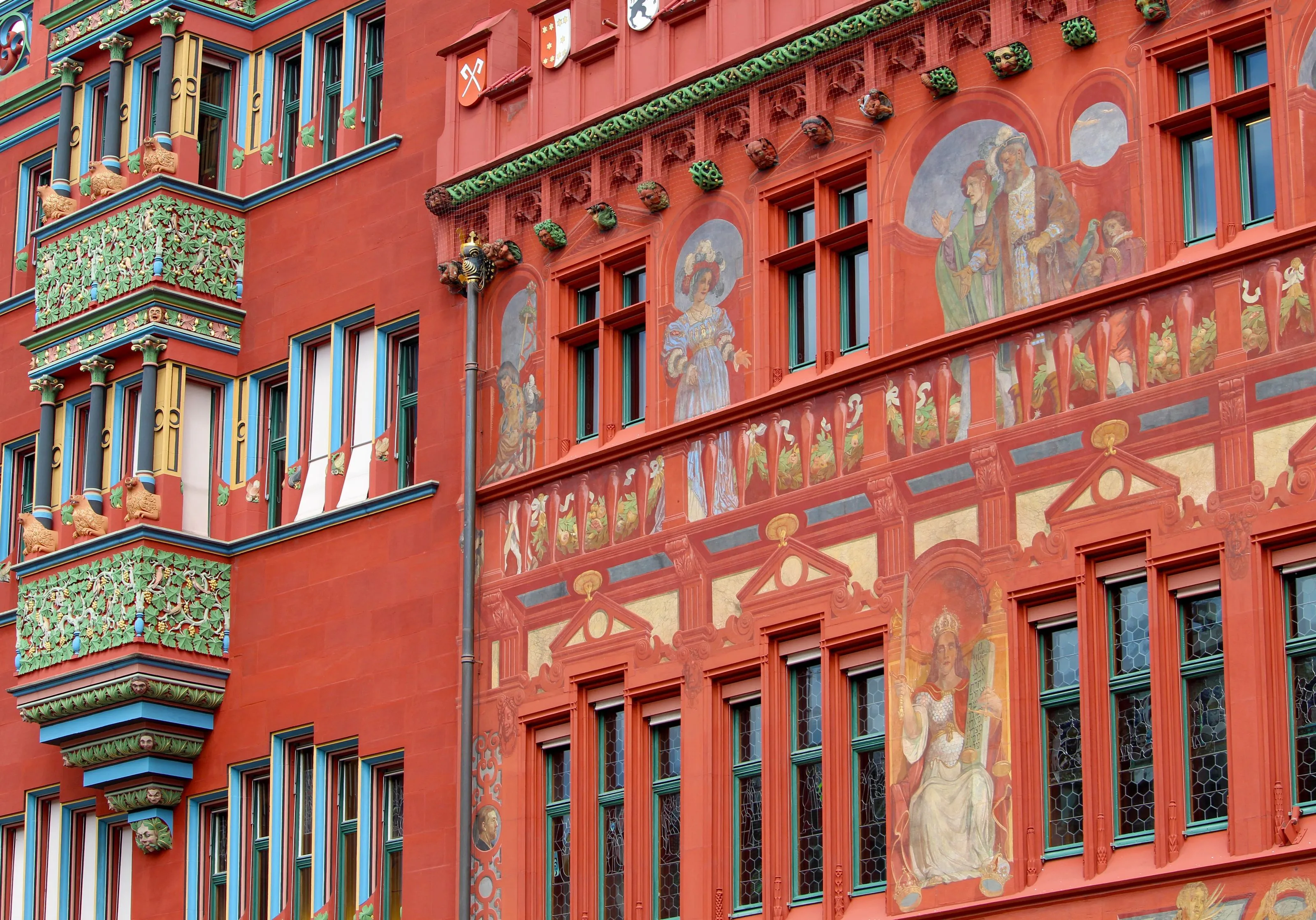
Start in the compact old town. Basel’s red Rathaus dominates Marktplatz with painted façades and an ornate courtyard. Uphill, the red-sandstone Münster and the Pfalz terrace overlook the river and Kleinbasel. Spalentor, one of the surviving medieval gates, introduces another network of lanes, fountains and quiet squares. A self-guided walk is rewarding because much of Basel’s character appears between the headline landmarks.
The Kunstmuseum Basel is the anchor of the city’s art scene, bringing together works from early European masters to modern and contemporary art. Fondation Beyeler in Riehen combines a major collection with Renzo Piano’s low, light-filled building and a landscaped setting. Museum Tinguely, beside the Rhine, is devoted to Jean Tinguely’s playful kinetic machines. The Historical Museum, Paper Mill and Natural History Museum broaden the choice. Across the German border in Weil am Rhein, the Vitra Design Museum and campus appeal to architecture and design enthusiasts, but require a separate cross-border ticket.
Basel rewards architecture walks. Buildings by Herzog & de Meuron, Mario Botta and other international designers sit alongside medieval fabric and converted industrial sites. Choosing one neighbourhood is more satisfying than racing between scattered icons. The riverside, the area around the museums and selected parts of the harbour all show how the city balances preservation and experimentation.
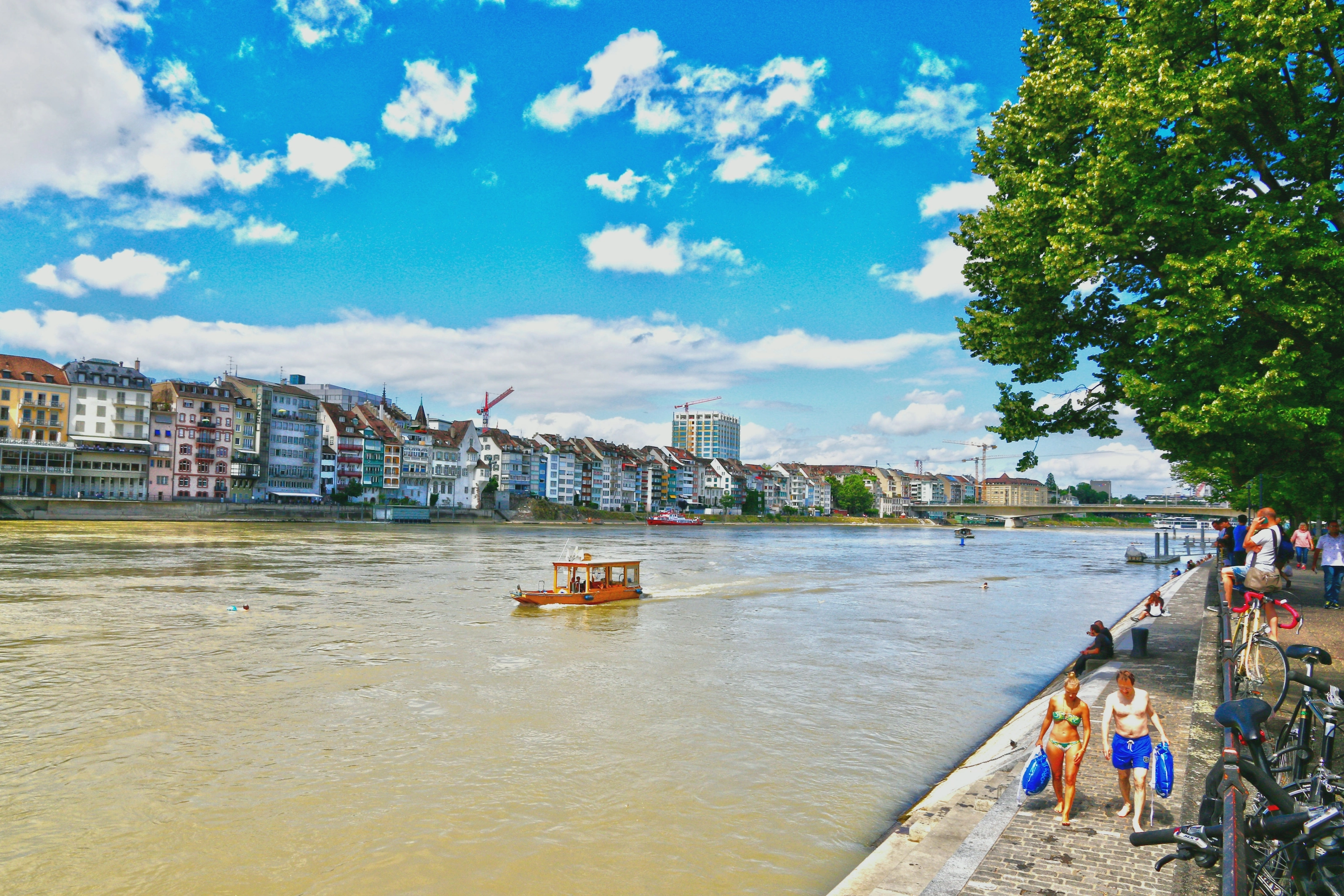
In warm weather, the Rhine becomes a social space. Experienced local swimmers float downstream with clothes stored in a waterproof Wickelfisch bag. Visitors should treat this as a serious river swim, not a casual pool activity: use recognised routes, follow official safety guidance and stay out when conditions are unsuitable. Walking the promenades or crossing on one of the cable-guided ferries offers a gentler way to enjoy the same scenery.
Mulhouse: industrial heritage with personality
Place de la Réunion is Mulhouse’s historic centre. The painted former town hall, Saint-Étienne temple and surrounding terraces create an attractive first impression. Decorative façades and murals continue a local visual tradition. Beyond the square, former factories, workers’ districts and the regenerated Fonderie area reveal the industrial city rather than disguising it.
Cité de l’Automobile houses the Schlumpf collection and traces automotive history through early models, prestige cars and racing machines. Cité du Train uses locomotives, carriages and immersive displays to tell the story of French rail. The Musée de l’Impression sur Étoffes explains how printed textiles connected Mulhouse to global design and trade, while Electropolis explores the production and uses of electricity. Allow at least half a day for either major transport museum; attempting both in a rushed afternoon weakens the experience.
Excursions across alsace and the three-country region
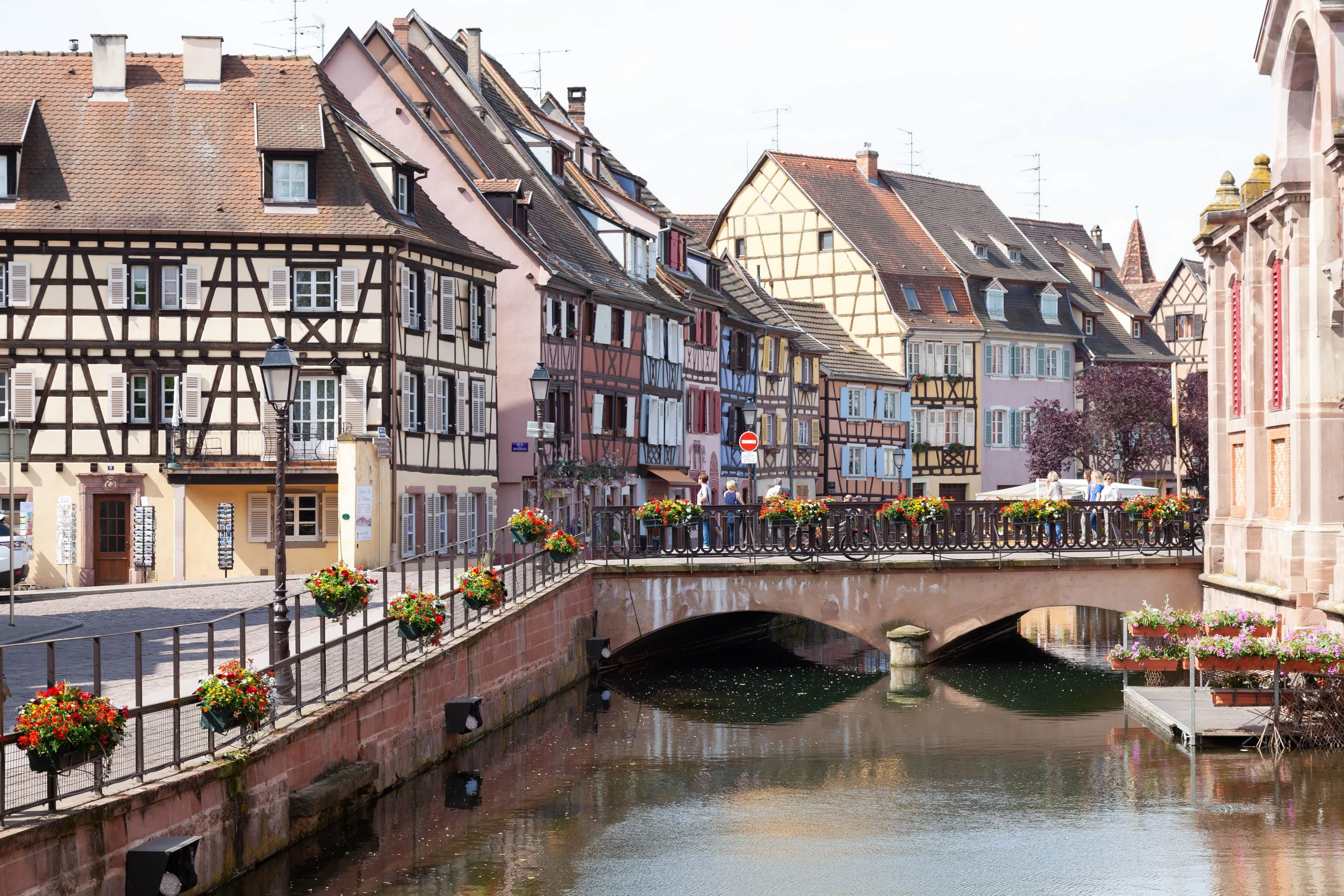
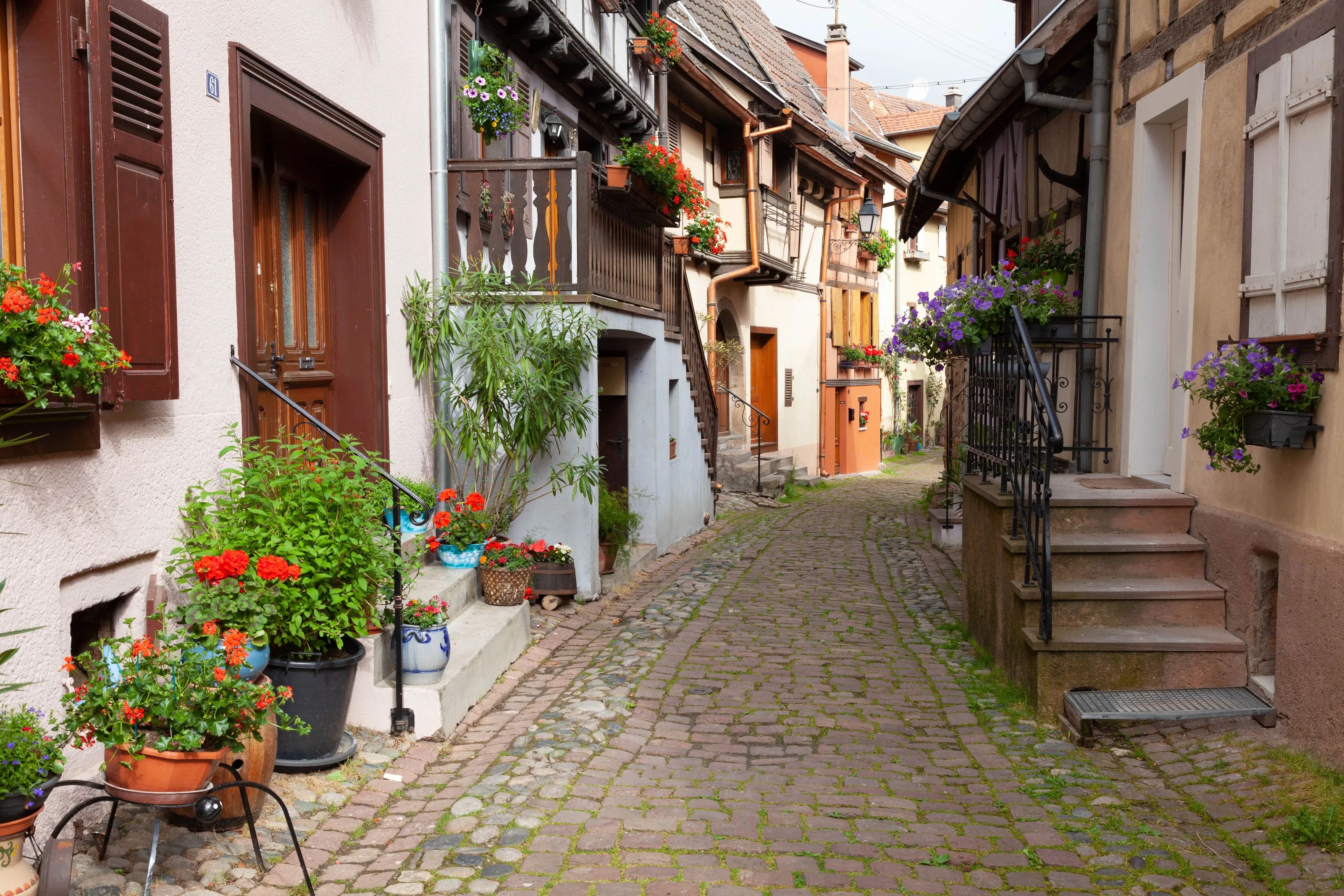
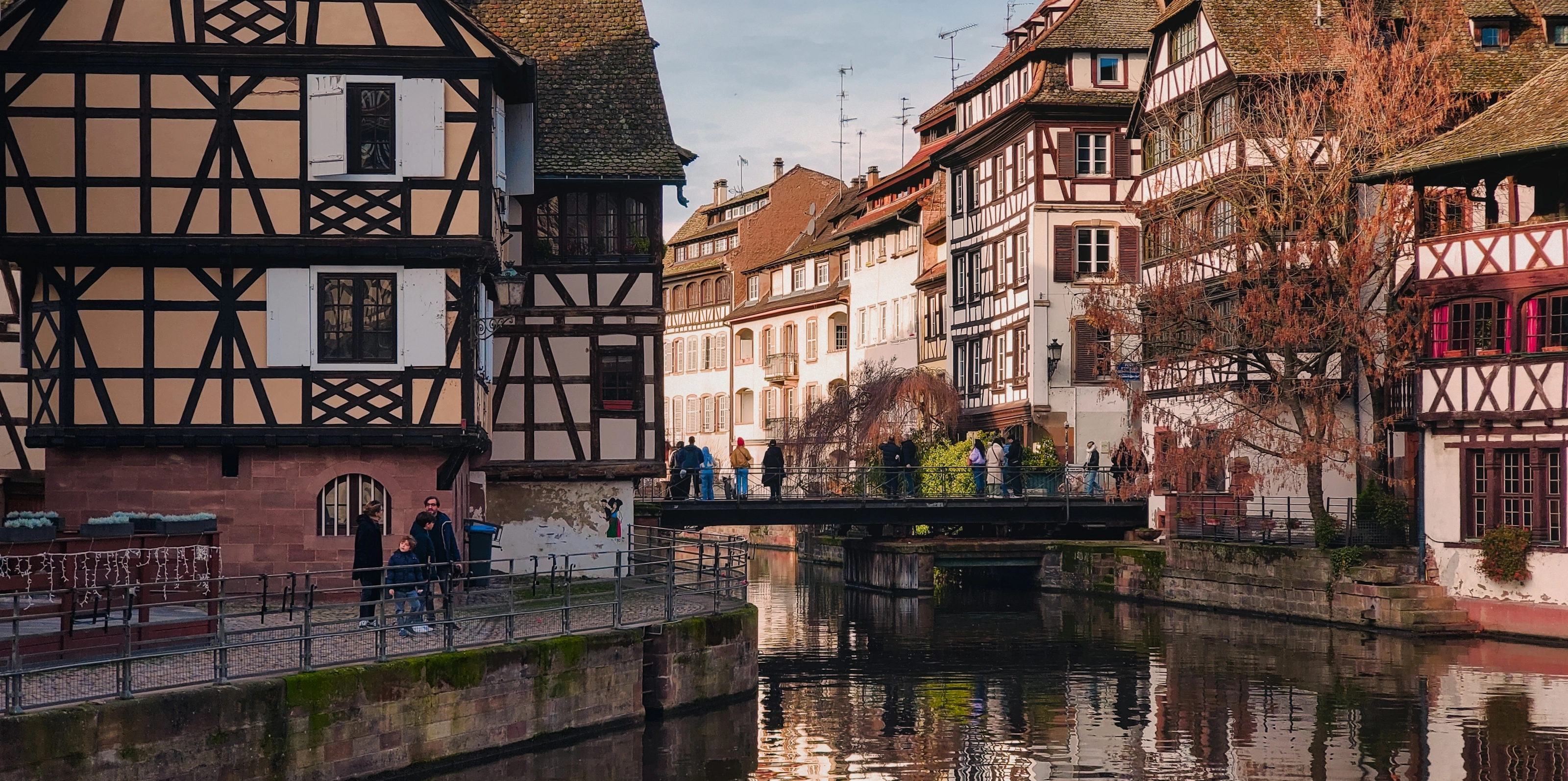
Colmar is an easy rail trip from Mulhouse. Its canals, timber-framed streets and Unterlinden Museum justify a full day. The Alsace Wine Route passes villages such as Eguisheim, Kaysersberg and Riquewihr. Driving offers flexibility, but wine tasting and driving should never be combined; use a designated driver or organised excursion. Seasonal buses and cycling routes can provide alternatives.
Near Ungersheim, the Écomusée d’Alsace brings historic rural buildings together as a living village with crafts and demonstrations. The nearby Petit Prince park is aimed at families. East of Basel, Augusta Raurica preserves a Roman theatre, remains and museum collections connected with the ancient colony. Freiburg im Breisgau makes a lively German day trip with its cathedral, old streets and small water channels known as Bächle. The Black Forest begins beyond it.
Nature travellers can head to the Vosges for ridge walks, lakes and broad views. Grand Ballon is the highest summit in the range. In winter, areas such as Le Markstein may offer downhill skiing, cross-country routes and snow activities when conditions permit. These are mountain excursions, not city-centre facilities: verify snow cover, lift operation and road conditions before leaving.
Climate and when to go
The Upper Rhine has a semi-continental climate and four recognisable seasons. Summer is often warm and can turn hot, with occasional thunderstorms. It is the best time for long evenings, outdoor dining and Rhine-side life. Spring brings blossom but changeable weather. Autumn colours vineyards and wooded hills, while harvest season adds interest along the wine route. Winter is cold, sometimes foggy or snowy, yet festive markets give both Basel and Alsatian towns a distinctive atmosphere.
May, June, September and early October often provide a useful balance between comfortable conditions and visitor numbers. Major art events can make Basel particularly busy and expensive in June. Late November and December draw Christmas-market visitors, so early reservations matter. Pack layers and rain protection in every season; sturdy shoes help on cobbled streets and excursion trails.
Costs, currencies and planning a budget
Basel uses Swiss francs and is generally more expensive than Mulhouse, where prices are in euros. As a flexible 2026 planning guide, a careful traveller in Basel might spend roughly CHF 90–150 per person per day excluding flights, using basic accommodation, inexpensive meals and free activities. A comfortable trip often moves beyond CHF 180. In Mulhouse, approximately EUR 70–130 per day can cover a budget-to-mid-range approach. These are planning bands, not quoted prices: fairs, weekends, room type and booking date can change the total sharply.
Staying in Mulhouse or Saint-Louis may reduce hotel costs but increases travel time when most plans are in Basel. Staying at least one night in eligible Basel accommodation brings the BaselCard and may offset part of the price difference through public transport and attraction discounts. Compare the entire itinerary rather than the room rate alone. Lunch menus, bakeries, markets and supermarkets help balance restaurant meals.
Cards are widely accepted, but conversion fees depend on the provider. Avoid assuming that every merchant will accept euros in Basel or Swiss francs in France. Mobile roaming deserves attention too: Switzerland is outside the European Union, and some EU plans charge separately. Download maps and transport details before crossing if uncertain.
Food and local flavours
In Basel, look for Basler Läckerli, firm honey-and-spice biscuits with a long local tradition. Swiss taverns serve seasonal dishes, while the city’s international population supports creative restaurants and strong vegetarian choices. Mulhouse offers an Alsatian table: tarte flambée, choucroute, baeckeoffe, kougelhopf, local cheeses and wines. Traditional dishes can contain pork, cream or bacon even when this is not prominent in the name, so dietary requests should be explicit.
A balanced food itinerary might combine Mulhouse’s market, a village winstub and a contemporary Basel dinner. Popular restaurants can fill quickly during fairs and Christmas-market weekends. Tap-water customs, service and portion sizes differ across the border; reading the menu carefully avoids surprises.
A four-day itinerary
Day one: arrive, settle in Basel and walk from Marktplatz to the Rathaus, Münster, Pfalz and Rhine. Day two: choose Kunstmuseum plus either Museum Tinguely or Fondation Beyeler, leaving time for the riverside and Kleinbasel. Day three: travel to Mulhouse, see Place de la Réunion and devote the afternoon to Cité de l’Automobile or Cité du Train. Day four: visit the other specialist museum or take a day trip to Colmar and one wine village. A fifth day can be reserved for Augusta Raurica, Freiburg, the Écomusée or the Vosges.
Practical advice
Carry valid identification because border crossings are routine and checks remain possible within the Schengen area. German is the main language in Basel, French in Mulhouse; English is widely understood in visitor settings. City centres are easy to navigate on foot and by public transport. Hire a car only when the rural route justifies it, and check environmental or parking rules for every country entered.
Museum hours, temporary closures and ticket policies change. Confirm them on official sites rather than relying on an old itinerary. SniperAir can reveal the flight opportunity, but a successful Basel–Mulhouse trip comes from treating the border as part of the experience: plan the correct transport zone, leave room for two currencies and give each city enough time to express its own character.
FAQ
Frequently asked questions about flights to Basel-Mulhouse
Is EuroAirport in France or Switzerland?
It is physically in Saint-Louis, France, but is jointly operated by France and Switzerland and organised for access to both countries.
How long is the journey to Basel?
Bus 50 usually reaches Basel SBB in about twenty minutes. Traffic and road works can lengthen the trip.
How do I reach Mulhouse without a car?
Take Distribus line 11 to Saint-Louis station, then a TER regional train to Mulhouse. Check the connection on your travel date.
Can Basel and Mulhouse fit into one city break?
Yes. Rail and bus links make the combination practical. Four days provide a useful introduction; five or more allow excursions.
Which currency do I need?
Swiss francs in Basel and euros in Mulhouse. Payment cards are convenient, although bank conversion charges may apply.
What does the BaselCard include?
Eligible overnight guests in Basel-Stadt receive local public transport in the specified zones and discounts at participating attractions. It does not cover France.
Where are the strongest museums?
Basel is outstanding for fine, modern and contemporary art. Mulhouse excels in automobile, railway, textile and electricity heritage.
Are there beaches?
There is no sea coast. Basel has Rhine-side recreation and seasonal river swimming for capable swimmers who follow official safety rules; public pools are the safer alternative.
Can I ski nearby?
The Vosges offer winter sports when snow conditions allow, particularly around Le Markstein. Road transport and advance condition checks are normally required.
How many days should I stay?
Plan four days for both cities, or five to seven for Colmar, wine villages, the Vosges, Freiburg or Roman Augusta Raurica.
Ready to head to Basel-Mulhouse?
Set your budget and let SniperAir track fares for you.
Create my alert