
Cheap Flights to Biarritz
Find the best flight deals to Biarritz and create an alert to get notified the moment a great price shows up.
Quick summary
Country
France
Region
French Basque Country
Airport
BIQ
Sea
Atlantic Ocean
Time zone
UTC+1
Opportunities already spotted to Biarritz
Real flight examples detected by SniperAir, with their reference price.
Loading examples…
Biarritz travel guide: atlantic energy, elegance and basque culture
Why visit Biarritz?
Biarritz brings together a dramatic Atlantic shoreline, an aristocratic past and a living Basque identity. Once a fishing and whaling settlement, it became an imperial resort in the nineteenth century before developing into one of European surfing’s landmark towns. Beaches, villas, ocean walks and cultural venues create a trip that is neither limited to luxury nor defined solely by boards and waves.
SniperAir can help travellers compare flight opportunities to Biarritz Pays Basque Airport. A weekend covers the principal sights, while four to six days allow Bayonne, Saint-Jean-de-Luz, inland villages and perhaps San Sebastián in Spain. The ocean sets the schedule: tides, swell, wind and beach safety flags must shape each day.
From whaling port to international resort
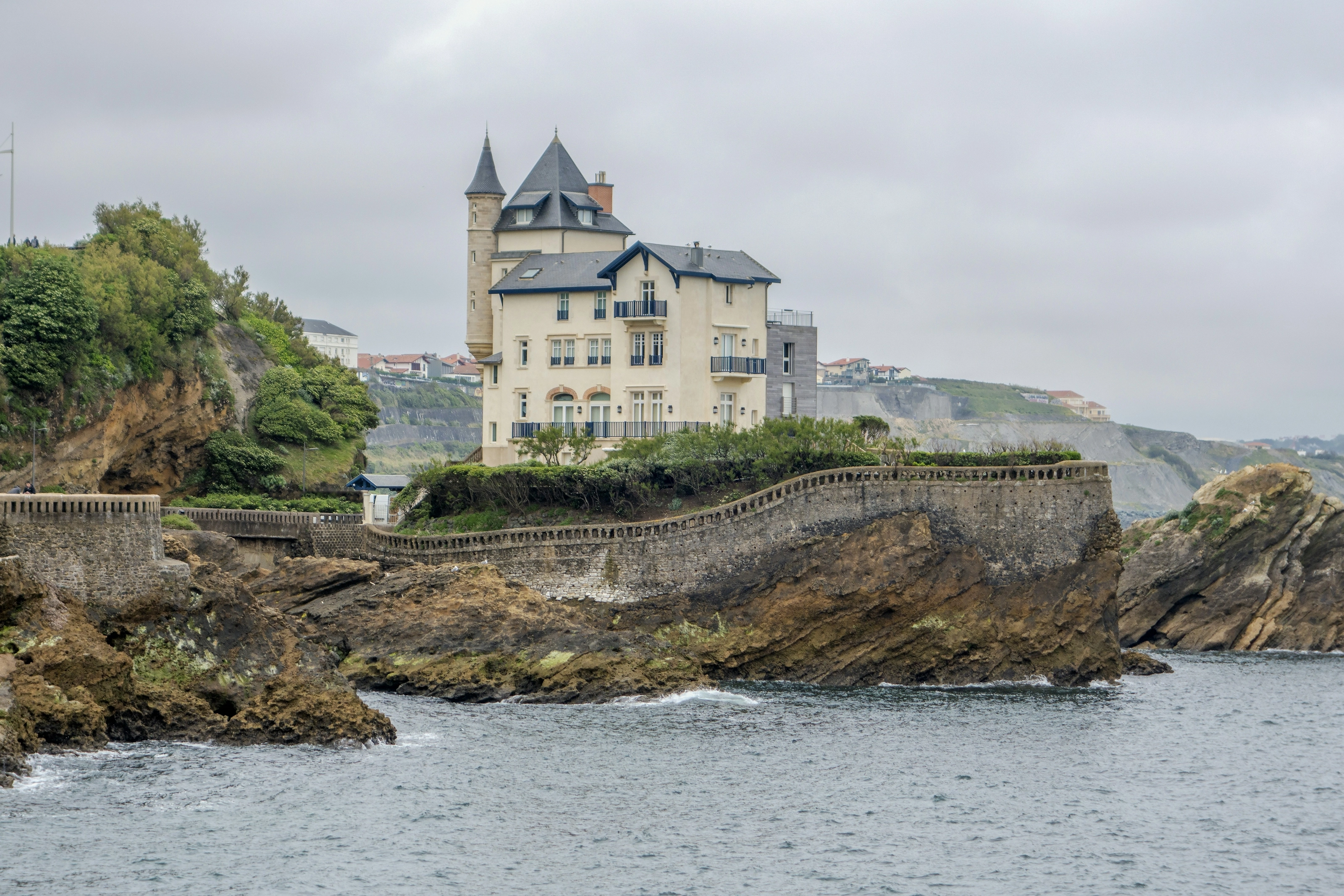
Before the grand hotels, Biarritz lived from the sea. Lookouts watched the water from the cliffs, and local history preserves the memory of whaling. A decisive change came with Napoleon III and Empress Eugénie, who selected Biarritz for their holidays. Villa Eugénie, later transformed into Hôtel du Palais, symbolises that era. Eclectic villas, promenades and the casino reflect the growth of an international resort.
Artists, writers and fashionable visitors extended its reputation into the twentieth century. From the 1950s, surfing reshaped the Côte des Basques and attracted a new sporting culture. Yet Biarritz remains part of the French Basque Country. Basque language, pelota, markets, food traditions and links with Bayonne and neighbouring villages give the town a regional depth beyond its polished seafront.
Arrival and transport
Biarritz Pays Basque Airport stands only a few kilometres from the centre, close to Anglet and Bayonne. Txik Txak buses connect the airport with Biarritz, Bayonne and other communes according to the current timetable. Taxis, private hire and car rental are available. Traffic can be heavy in summer, so roughly fifteen to thirty minutes to central Biarritz is a sensible planning range rather than a fixed promise.
Biarritz railway station is in La Négresse, away from the beaches. Urban buses connect it with the centre. Trains serve Bayonne, Saint-Jean-de-Luz, Hendaye, Bordeaux and Paris depending on the service. For Spain, Hendaye and Irun act as cross-border rail points, while coaches broaden the options.
Walking and buses avoid parking problems within Biarritz. Slopes, stairs and coastal distances still matter, particularly for travellers with luggage or reduced mobility. A car is useful for inland villages but unnecessary for a purely urban day. Park-and-ride or public transport often makes more sense during peak summer.
Essential landmarks
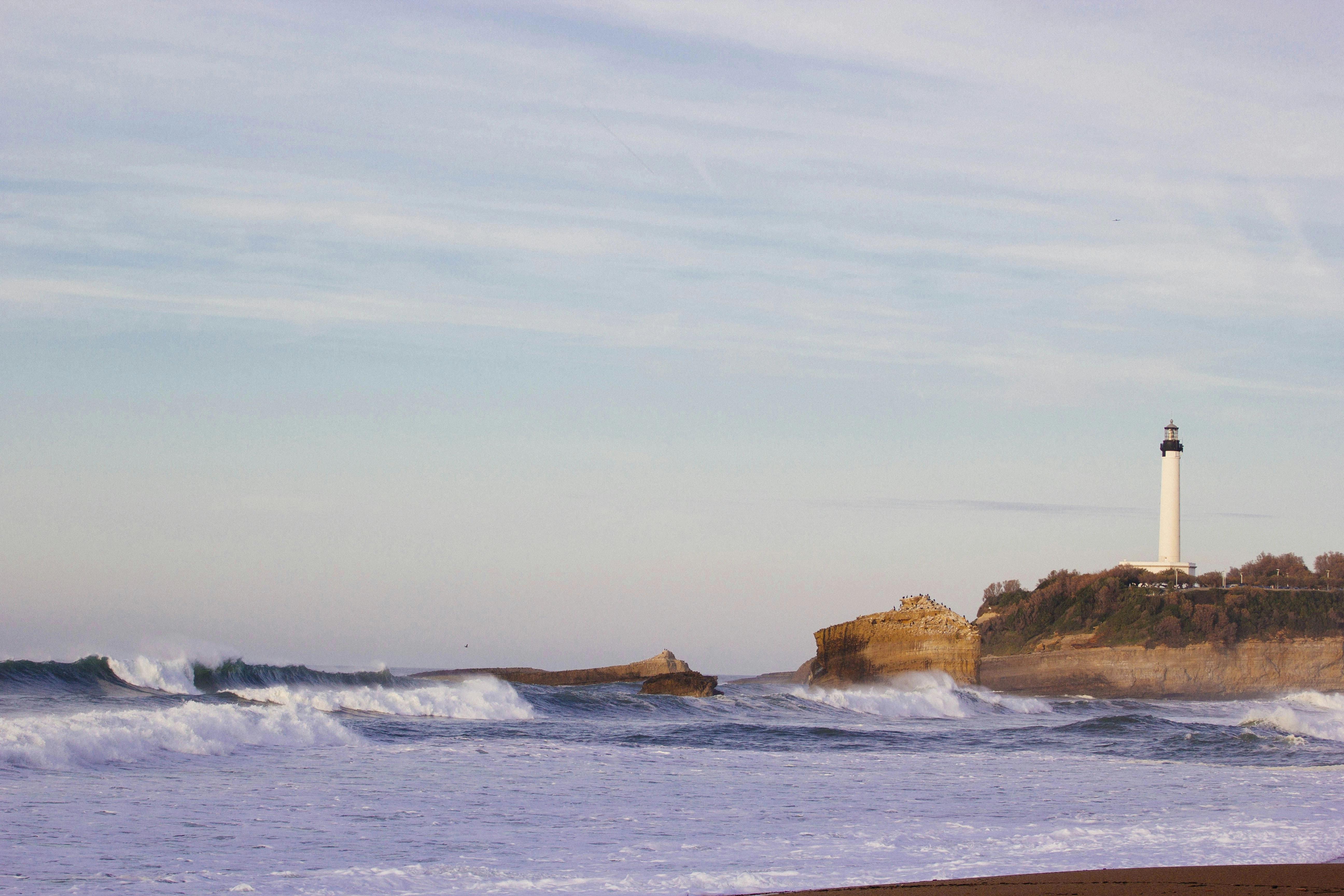
Rocher de la Vierge is the town’s emblem. A footbridge reaches the rock and opens a panorama over the coast, lighthouse and, in clear weather, the Pyrenees. Spray can make surfaces slippery and access may be restricted in severe conditions. Barriers and closures must be respected.
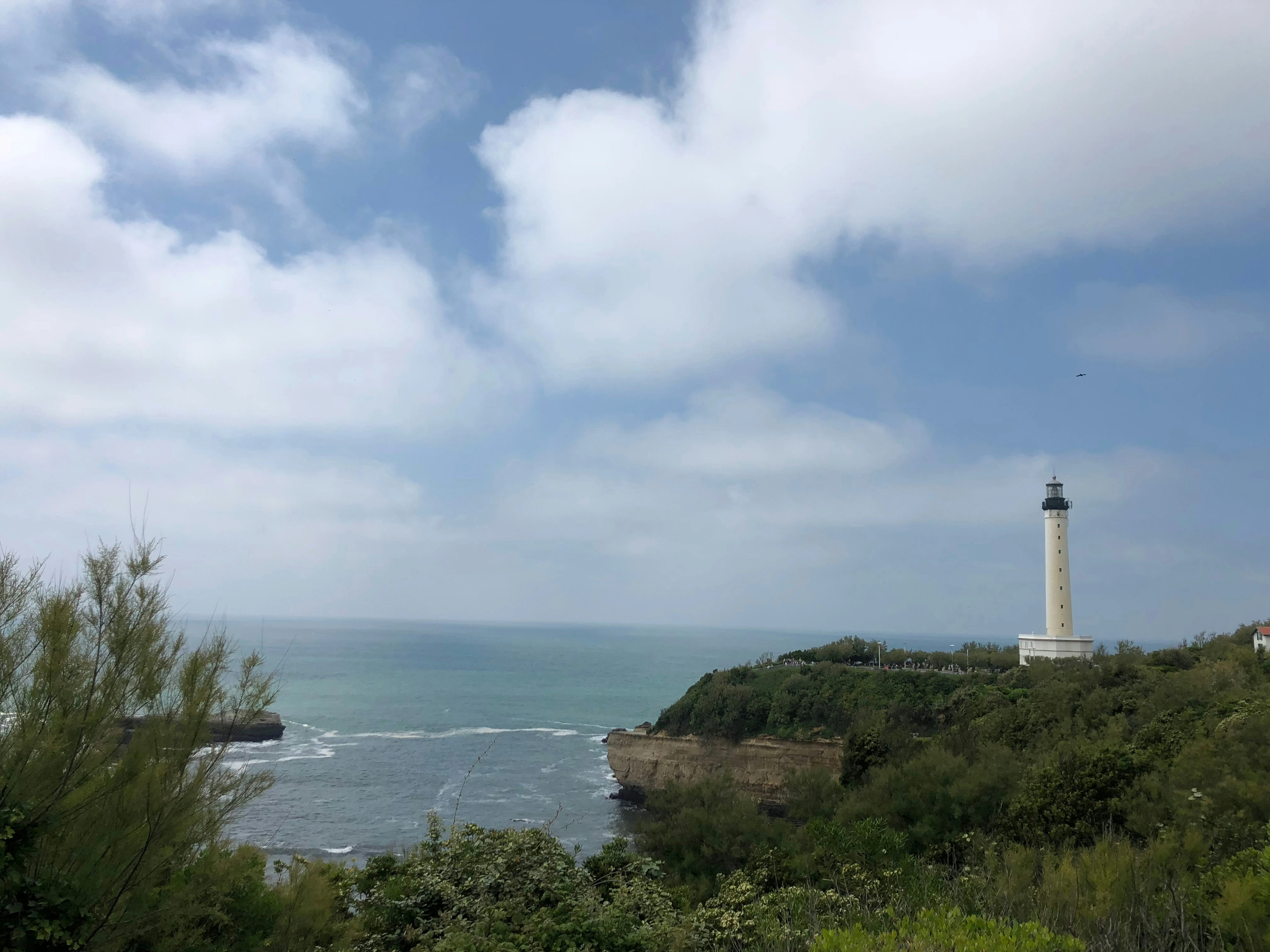
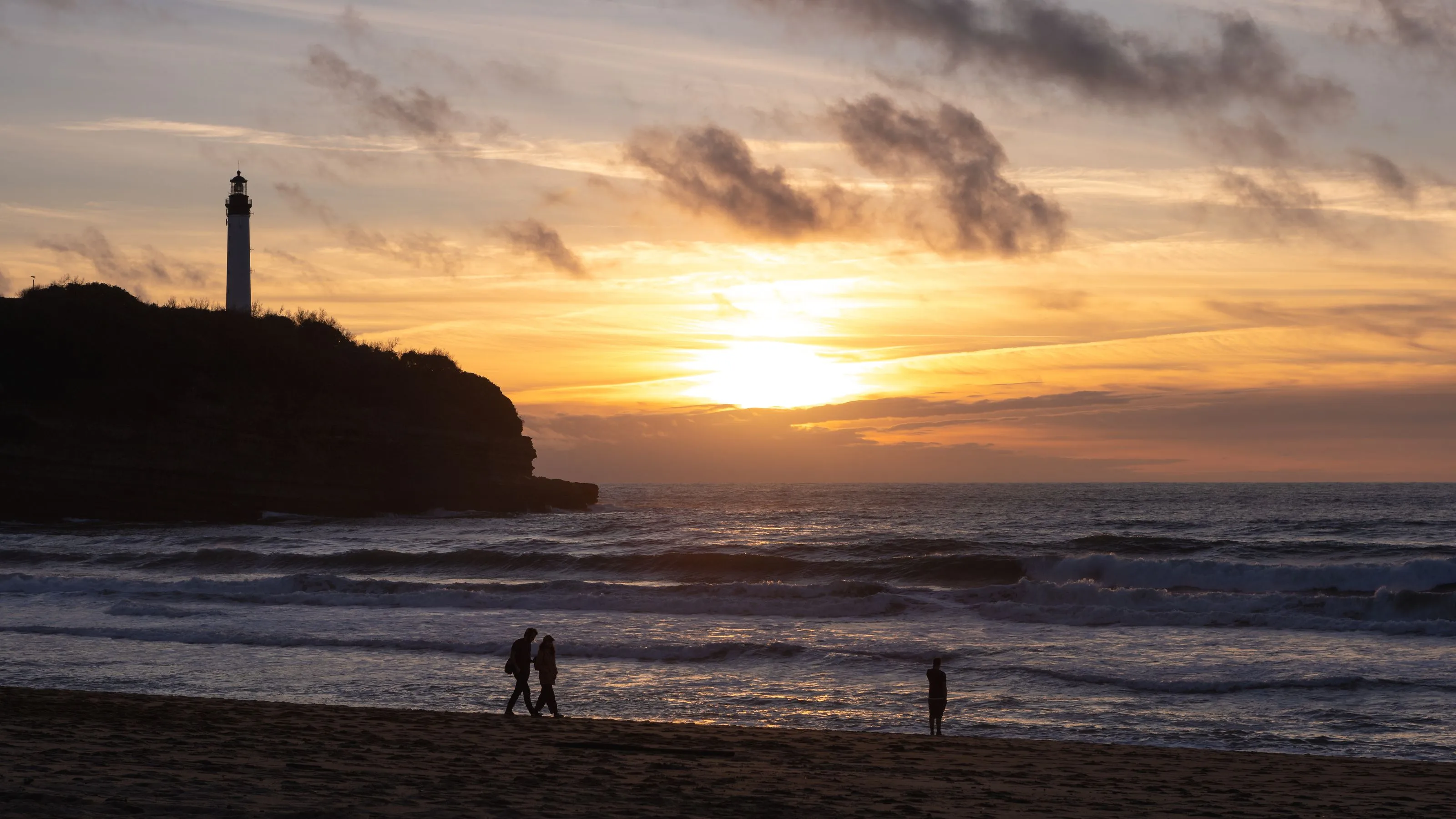
Port des Pêcheurs retains small fishermen’s huts known as crampottes, now used by associations or restaurants. It evokes the town’s maritime origins. Farther north, Grande Plage lies in front of the casino and central façades. The seafront continues past Hôtel du Palais toward Miramar and the lighthouse. When open, the lighthouse climb gives an excellent reading of the coastline; steps and access conditions should be checked.
The Halles district combines the covered market, shops and restaurants. It is lively in the morning and early evening, although nearby rooms may experience noise. The Orthodox church, imperial chapel, Sainte-Eugénie church and a variety of villas reveal the architectural diversity created by Biarritz’s fashionable years.
Choosing the right beach
Grande Plage is central, scenic and busy. Port-Vieux is a small rocky cove popular with families when swimming is authorised and supervised. Côte des Basques is the iconic surf beach with views toward the Spanish mountains, but much of its sand can disappear at high tide. Marbella and Milady farther south offer different surroundings for walking, swimming or surfing.
Every beach carries specific risks: rip currents, shore break, rocks and rapidly changing tides. Swim only in supervised areas, follow the flags and ask lifeguards when uncertain. A calm-looking sea can remain dangerous. Patrol hours and rules for dogs, boards or water access vary by beach and season.
Surfing with realistic expectations
Biarritz played a central role in European surf history. Beginners and experienced surfers can find schools, rentals and breaks, but the right choice depends on ability and conditions. A supervised first lesson is safer than hiring a board without understanding currents. Check instructor qualifications, insurance, equipment and group size.
Côte des Basques is famous, yet it is not suitable at every tide or for every learner. Swell, crowding and available beach space change throughout the day. Surfers must respect priority rules, swimming areas and other users. Bodyboarding, open-water activities, coastal walking, diving and Basque pelota provide alternatives.
Museums and rainy-day options
Aquarium de Biarritz, opposite Rocher de la Vierge, introduces marine environments of the Bay of Biscay and other ecosystems. Cité de l’Océan near Milady uses interactive displays to explore the ocean, climate and surfing. Opening hours, exhibitions and prices should be confirmed on the official sites.
Musée Historique de Biarritz occupies a former Anglican church and follows the transformation from maritime village to international resort. Galleries, performances at Gare du Midi, cinema and thalassotherapy offer further wet-weather choices. Rain and sunshine can alternate quickly on the Basque coast; a flexible programme works better than cancelling the day.
Day trips around biarritz
Bayonne is a short bus or rail journey away. Its ramparts, cathedral, Nive quays, Musée Basque and chocolate history justify a full day. Anglet provides long beaches and cycle routes. Saint-Jean-de-Luz has a working harbour, a relatively sheltered bay and a centre connected with the marriage of Louis XIV.
Inland, Espelette is known for its protected chilli pepper, Ainhoa and Sare for village architecture, and Cambo-les-Bains for Villa Arnaga, associated with Edmond Rostand. The La Rhune rack railway leaves from Col de Saint-Ignace under seasonal and operational conditions. Check and book before travelling.
San Sebastián in Spain offers a cross-border day of bay views, old streets and pintxos. Carry valid identification and secure the return transport. One overnight stay allows a more meaningful experience than reducing the city to lunch.
Climate and when to go
Biarritz has a mild, wet oceanic climate. Summers are generally pleasant and can become hot, but rain remains possible. The Atlantic softens temperature extremes and creates fast-changing weather. Spring brings flowers and clear light. Autumn often retains relatively mild water and good surf. Winter produces dramatic seas, stronger wind and more seasonal closures.
June and September often balance warmth and visitor numbers. July and August bring the fullest beach supervision and events, alongside high prices, traffic and crowds. April, May and October suit walking and culture for travellers comfortable with uncertainty. Always consult weather, tide and marine-warning information.
Budget and costs
Biarritz can be expensive in peak season. As a flexible 2026 guide, allow about EUR 90–150 per person per day for a careful trip excluding flights, or EUR 180–300 and above for a comfortable central hotel, restaurant meals and activities. These are planning ranges, not guaranteed prices. Accommodation, surf lessons, thalassotherapy and parking quickly increase the total.
Travelling in June or September, booking early and using buses and the market can control costs. Sleeping in Bayonne or Anglet may be cheaper, though daily transport must be added. A flight found with SniperAir is only one component; baggage, airport transfer, accommodation and experiences create the real trip price.
Basque food
Les Halles introduces fish, cheese, Bayonne ham, gâteau basque, Espelette-pepper products and seasonal produce. Menus blend Basque tradition, seafood and Spanish influences. Squid, hake, axoa, pintxos and pastries appear according to the venue. A guide should not invent a restaurant’s origin or promise local sourcing without evidence.
Ask the price and preparation when fish is sold by weight. Seafront venues may charge for the view, while streets farther back and Bayonne provide other value. Reserve in summer and explain allergies clearly. Espelette pepper has protected status, so favour transparent producers and retailers.
A four-day itinerary
Day one: Grande Plage, lighthouse, centre and Halles. Day two: Port des Pêcheurs, Rocher de la Vierge, Aquarium and Port-Vieux. Day three: Côte des Basques, an ability-appropriate surf lesson or Cité de l’Océan, then Milady. Day four: Bayonne or Saint-Jean-de-Luz. With two more days, add Basque villages and San Sebastián.
The route works without a car using Txik Txak and trains. If hiring one for inland excursions, avoid paying for it on days spent in the urban centre. Group village visits geographically rather than crossing the region repeatedly.
Practical and responsible advice
Check the tide before visiting Côte des Basques and safety flags before every swim. Never enter a closed pier or approach a large wave for a photograph. Protecting the ocean means taking away litter and cigarette ends and respecting dunes and cliffs.
Basque culture is living culture, not decoration. Understanding local festivals and respecting residents improves the visit. During major events, reserve early and expect traffic controls. Travellers with limited mobility should verify gradients, lifts, beach access and assisted bathing equipment individually.
Families benefit from alternating beach, aquarium and short walks. Cliffs, footbridges and steep streets require close supervision of children, particularly in wind, spray or wet conditions. Downloading tide times and transport details before leaving the hotel reduces avoidable uncertainty.
Architecture, events and evenings
Biarritz rewards attention to buildings beyond the headline monuments. Seaside residences combine Neo-Basque, Art Deco, eclectic and modern styles. Rather than entering private property, use a published walking route or guided tour to understand how architecture changed with each period of tourism. The Imperial Chapel and Orthodox church have limited visiting arrangements, so their opening should never be assumed.
The events calendar includes surfing competitions, pelota, concerts, exhibitions and seasonal festivals. Dates, access and crowd controls change every year. Anyone travelling for a specific event should use the organiser’s current programme and book transport and rooms early. Visitors seeking quiet may prefer accommodation away from Les Halles or the busiest seafront streets during major weekends.
Biarritz has restaurants, bars, performances and a casino, but a responsible guide should not present every evening as a party. A sunset walk followed by a Basque dinner may suit the destination better than a forced nightlife itinerary. Last buses are not equally frequent on every route, and cross-border returns from Spain require particular attention.
Accessibility and ocean safety
Several beaches provide seasonal accessibility services, but equipment, hours and assisted entry points vary. Contact the tourist office or lifeguard service before relying on them. Historic paths may contain steps, steep gradients or uneven surfaces; an accessible route can be longer than the direct one. The aquarium and major cultural venues publish their own visitor information.
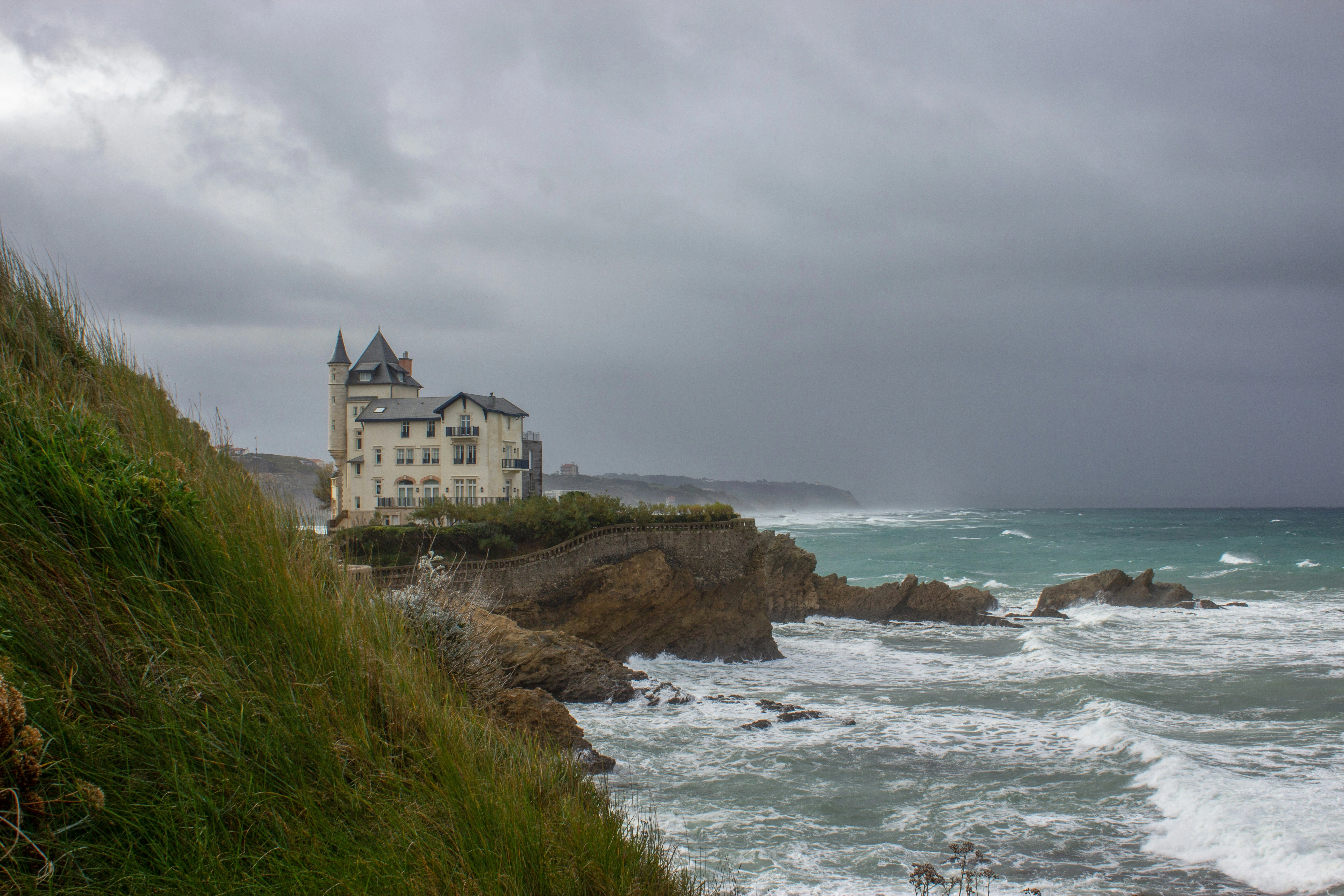
Ocean safety applies even when nobody intends to swim. A rising tide can cut off sections of sand, waves can cross sea walls, and cliff edges may be unstable after rain. Photographs should be taken from authorised viewpoints. If lifeguards close a zone, moving to another supervised beach is the correct response, not testing the boundary.
FAQ
Frequently asked questions about flights to Biarritz
How long is the airport transfer?
Depending on traffic and transport, plan roughly fifteen to thirty minutes. Check the selected Txik Txak route.
Can Biarritz be visited without a car?
Yes. The centre, beaches and main attractions are walkable or served by buses. Rail and coaches connect nearby towns.
Which beach suits children?
Port-Vieux is often favoured, but only when swimming is authorised and supervised. Daily conditions always take priority.
Where can beginners learn to surf?
Schools operate around Côte des Basques, Milady and other beaches. Choose a lesson matched to ability and conditions.
Is Côte des Basques always accessible?
No. At high tide much of the beach can disappear. Consult tide times before going.
When is the best time to visit?
June and September often provide a good balance. July and August are livelier, more expensive and busier.
What can I do in rain?
Aquarium, Cité de l’Océan, Musée Historique, covered market, performances and thalassotherapy.
Which excursion should I choose?
Bayonne for heritage and Basque culture, Saint-Jean-de-Luz for harbour and bay, or San Sebastián for a Spanish day.
What daily budget is realistic?
Roughly EUR 90–150 for a careful trip and EUR 180–300 or more for greater comfort, excluding flights.
How many days are needed?
Two for the essentials, four for beaches and museums, and six for broader Basque Country exploration.
Ready to head to Biarritz?
Set your budget and let SniperAir track fares for you.
Create my alert