
Cheap flights to Nantes
Set your departure airport and maximum budget: SniperAir tracks prices to Nantes and alerts you the moment a deal matching your criteria appears.
Quick summary
Country
France
Continent
Europe
Airport
NTE
Currency
Euro (EUR)
Time zone
UTC+1 (UTC+2 in summer time)
Deals already spotted to Nantes
Real flight examples detected by SniperAir, with their reference price.
Loading examples…
Why track Nantes with SniperAir
You do not need to compare prices every day
Choose your departure
Enter your departure airport and your maximum budget for a flight to Nantes (NTE).
SniperAir keeps watch
Our systems continuously compare new prices with the real price history of the route. SniperAir monitors prices and alerts you: it does not sell or book tickets.
You receive an alert
As soon as a price matches your criteria, you are notified, without having searched for anything yourself.
Airport and getting into town
An airport to the south-west, a shuttle of about 20 minutes and Paris in about two hours by TGV
Nantes Atlantique (NTE)
Nantes Atlantique airport is at Bouguenais, south-west of the city: 8 km from the centre according to Wikivoyage (EN) and 12 km according to Wikivoyage (DE). A shuttle runs every 20 to 30 minutes and takes about 20 to 30 minutes to the centre according to Wikivoyage (EN); bus 38 to Pirmil, then Tram 3, is the cheaper way. For visitors arriving from elsewhere in France, the TGV is a real alternative to flying: about two hours from Paris-Montparnasse with one train an hour according to Wikivoyage (FR, DE), or 2 hours 20 minutes according to Wikivoyage (EN). Rennes is 80 minutes by regional train and Saint-Nazaire about half an hour by rail. For visitors from abroad, NTE is the air gateway to Nantes and the Atlantic coast.
Distances and times are approximate, from Wikivoyage (EN, FR, DE) and Wikipedia; timetables change, so check them before you travel. We do not quote fares.
Nantes is the sixth-largest city in France with 327,734 inhabitants in 2023, according to Wikipedia (EN, FR, DE, ES). The Loire flows through the city in two arms that frame the Isle of Nantes, which covers 4.6 km² according to Wikipedia (EN); the Erdre and the Sèvre Nantaise also water the city. Plans for a new airport were dropped in January 2018 according to Wikipedia (DE).
Landmarks
The ducal castle, the Machines of the Isle, the Loire quays and Place Royale
Nantes was European Green Capital in 2013 and is the city of Jules Verne, who was born here according to Wikipedia (DE). It mixes ducal heritage, a port past and contemporary creations. The places below are illustrated; Passage Pommeraye, the cathedral and the Tour LU are described in the text.
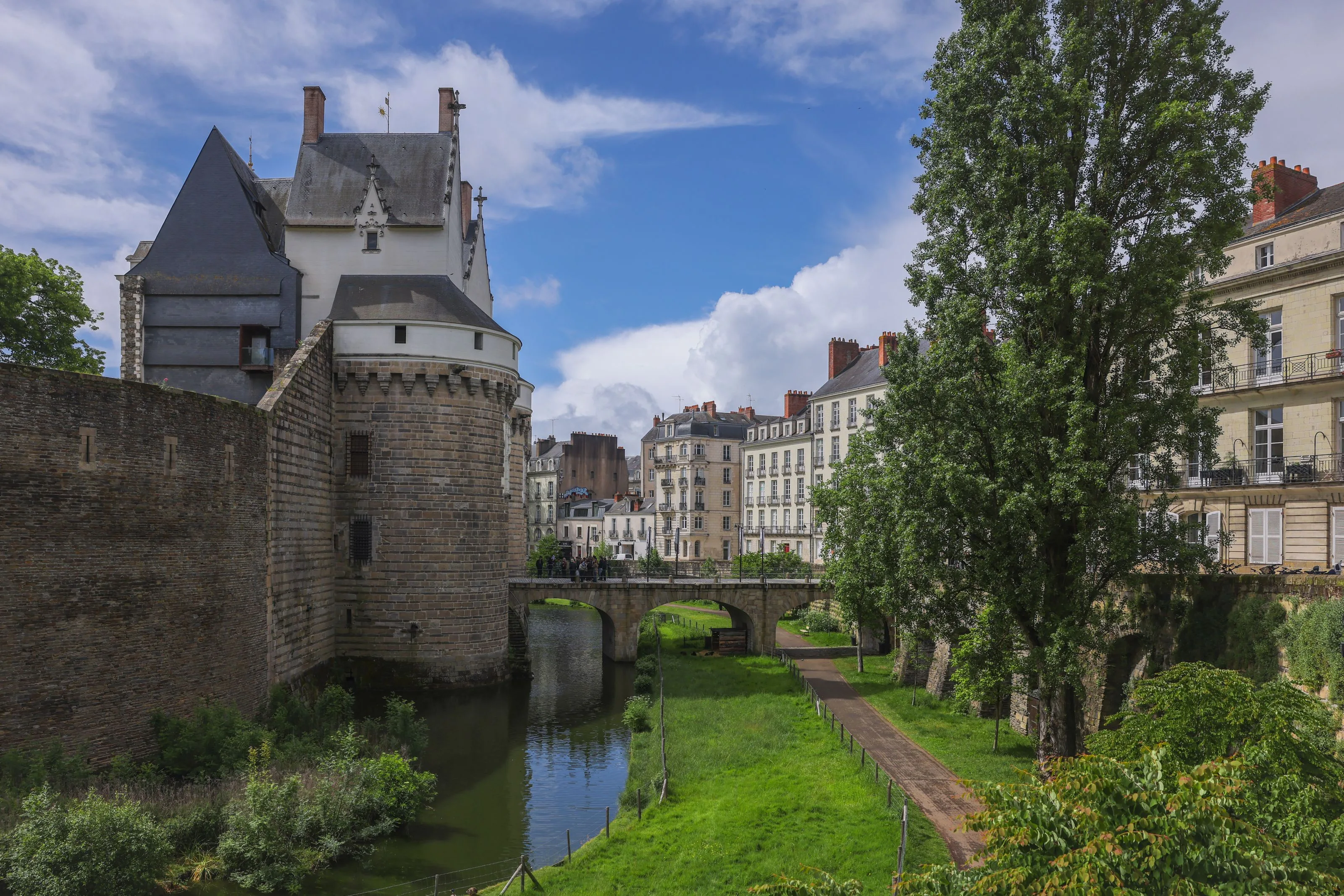
The Château des ducs de Bretagne
The main residence of the dukes of Brittany from the thirteenth to the fifteenth century according to Wikipedia (ES), the castle reopened in early 2007 after fifteen years of restoration, says Wikipedia (DE). Locals seized it on 18 July 1789 according to Wikipedia (EN). Its courtyard, ramparts and moat gardens can be visited free of charge according to Wikivoyage (FR, EN), and it houses the history museum of Nantes.
The Great Elephant of the Machines
The Machines of the Isle of Nantes, in the Parc des Chantiers on the Isle of Nantes, have been open since 2007 according to Wikipedia (DE) and include the Great Elephant, according to Wikivoyage (FR). This giant wood-and-metal machine moves slowly across the plaza with visitors aboard and sometimes sprays water from its trunk. Opening times and tickets are on the official website.
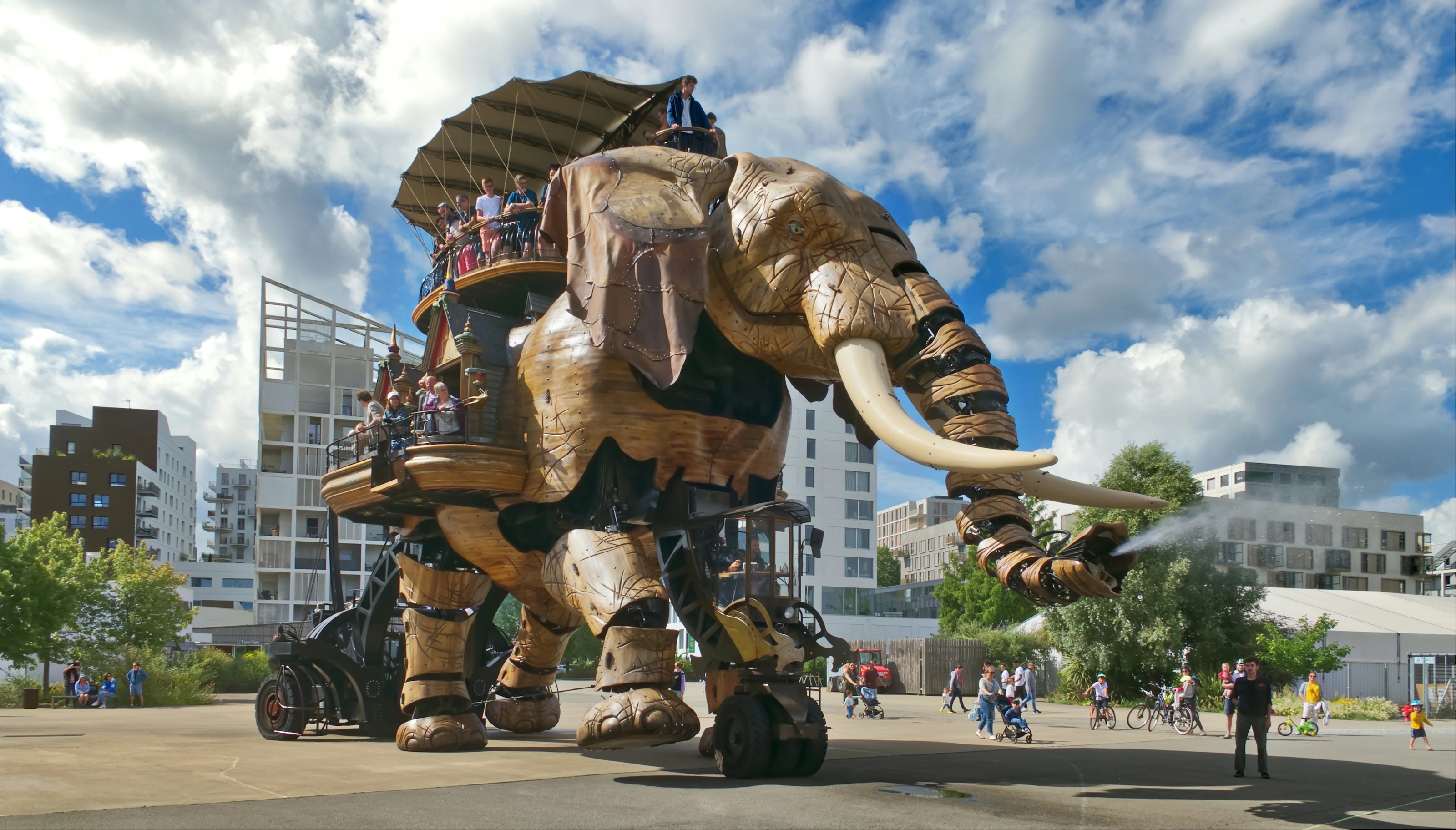
The Marine Worlds Carousel
Next to the elephant stands the Marine Worlds Carousel, another creation of the Machines of the Isle according to Wikivoyage (FR), with colourful decor inspired by the sea. The metalwork and the carved details of the elephant recall the imagination of Jules Verne, whom the city claims as its own, and appeal to adults as much as children.
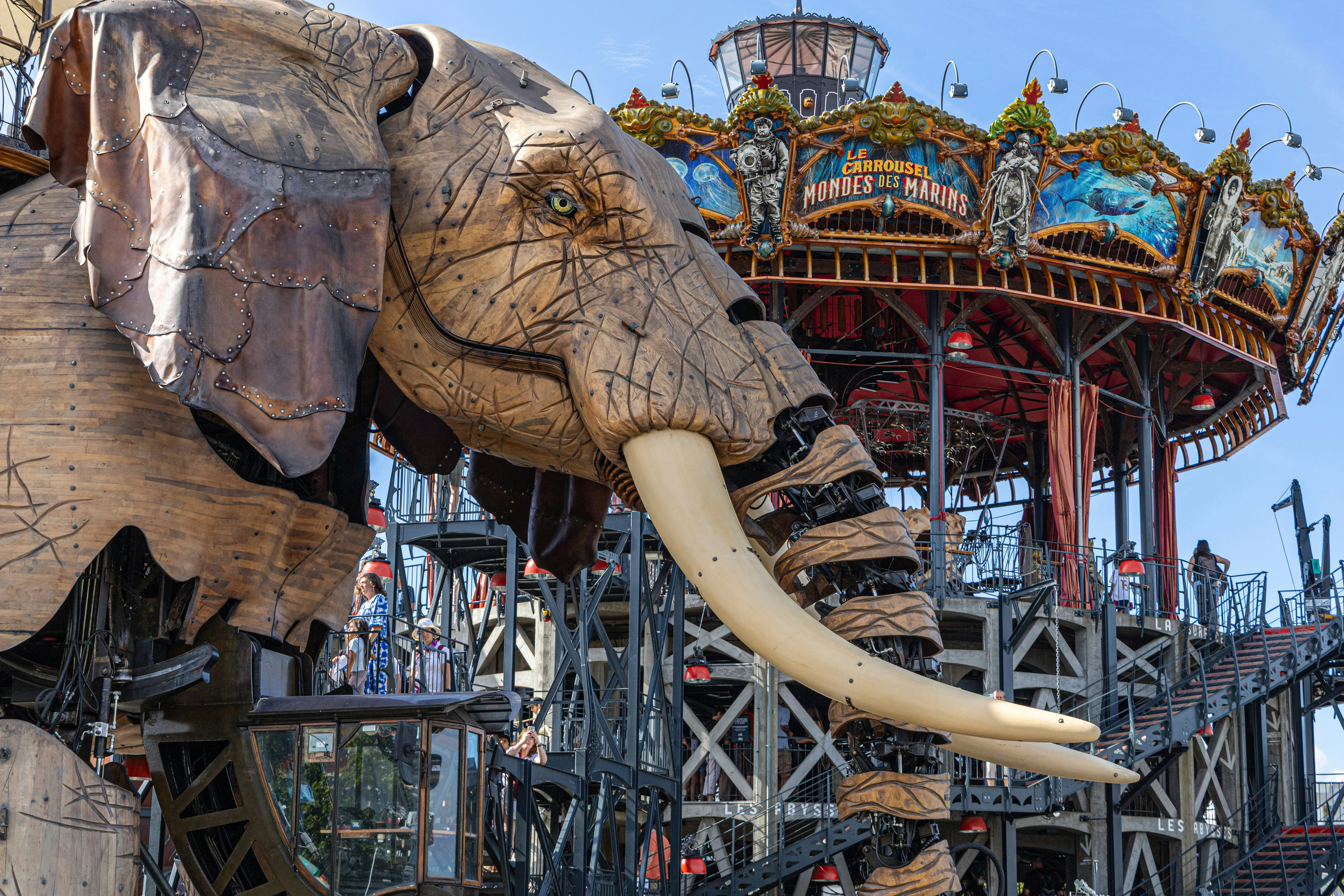
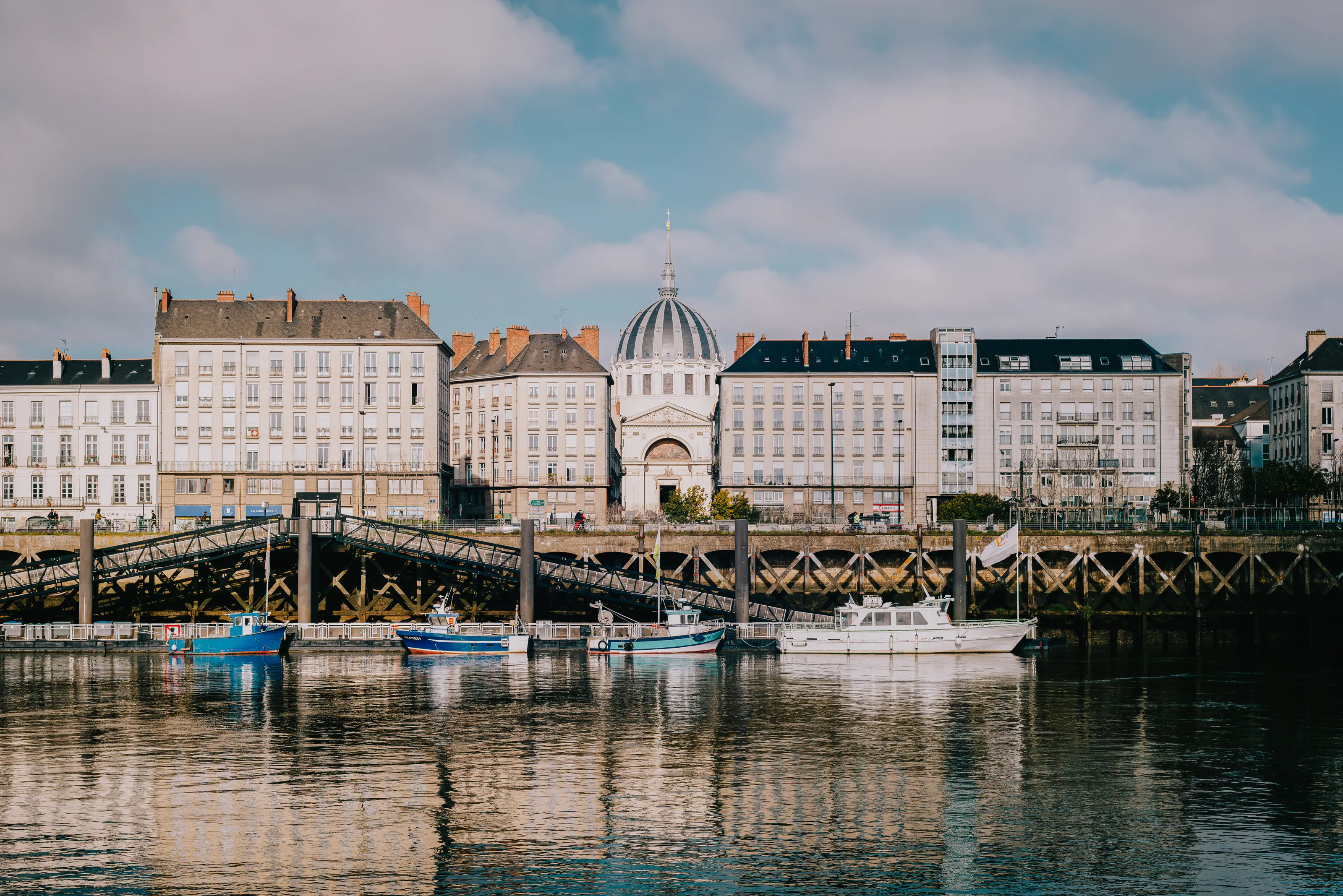
The Loire quays
The Loire kept the port of Nantes alive for centuries. The quays, lined with pale stone buildings, still hold pleasure boats and gangways. One landmark is the church of Notre-Dame-de-Bon-Port, recognisable by its 60-metre dome built between 1852 and 1859 according to Wikivoyage (DE). The Memorial to the Abolition of Slavery, inaugurated in 2012, stands on the Quai de la Fosse according to Wikipedia (DE).
Place Royale and its fountain
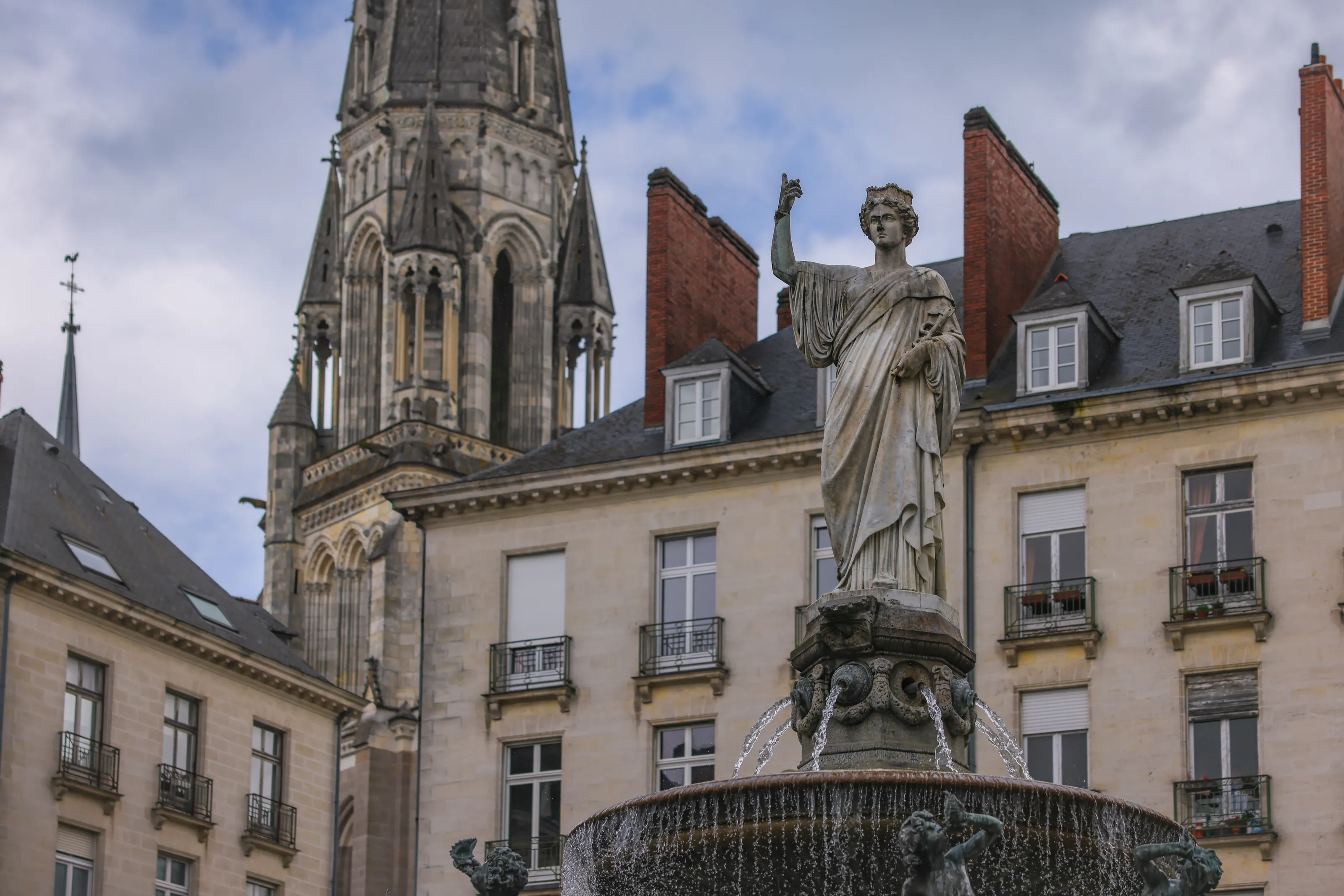
At the heart of the centre, the fountain on Place Royale is a meeting point at the foot of the Basilica of Saint-Nicolas, built between 1844 and 1869 according to Wikivoyage (DE); its stone spire rises behind the buildings. The nearby pedestrian streets lead to Passage Pommeraye, cafes and shops.
Passage Pommeraye, the cathedral and the Tour LU
Passage Pommeraye is a nineteenth-century covered arcade, inaugurated in 1843 according to Wikipedia (ES), linking Rue Crébillon and Rue de la Fosse according to Wikivoyage (FR). The Gothic Flamboyant Cathedral of Saint-Pierre-et-Saint-Paul was begun in 1434 and finished in 1891 according to Wikipedia (ES); a fire struck it on 18 July 2020 according to Wikipedia (DE), so check access conditions. The Tour LU and the Lieu Unique recall the Lefèvre-Utile biscuit factory, origin of the LU brand according to Wikipedia (EN, DE, ES).
Museums and culture
Castle, fine arts, Jules Verne and the memory of the slave trade
The History Museum of Nantes
Housed in the Château des ducs de Bretagne, the history museum traces the life of the city according to Wikivoyage (EN, FR, DE). Nantes was the leading slave-trading port in France according to Wikipedia (ES): this past is presented in the museum and in the Memorial to the Abolition of Slavery, which the tourist office also promotes.
Arts and Dobrée
The Musée d'Arts, on Rue Georges-Clemenceau, and the Musée Dobrée, a fifteenth-century Renaissance mansion according to Wikivoyage (DE), complete the fine arts and history offer. The natural history museum and the planetarium are other options.
Jules Verne
The Jules Verne museum occupies a former bourgeois house with a view of the port according to Wikivoyage (FR). We do not quote prices because sources differ.
Food and drink
Muscadet, galettes, the Talensac market and LU biscuits
Muscadet
The south of the region is known for its Muscadet vineyards according to Wikipedia (EN). Wikivoyage (EN) recommends this white wine with seafood; it also goes with fish dishes in the restaurants of the city.
Galettes and drinks
Buckwheat galettes, crêperies and Breton cider recall the closeness of Brittany according to Wikivoyage (EN); you can also find kir Breton. For a budget lunch, cafes and crêperies offer set menus at midday.
Market and biscuits
The Talensac market, on Rue Talensac, is one of the busiest in the city according to Wikivoyage (FR). LU biscuits, born at the Lefèvre-Utile company, remain a sweet emblem of Nantes.
Getting around
Tram, BusWay, Navibus and bikes: a full network
Tram and BusWay
The network has three tram lines according to Wikivoyage (EN, FR, DE), a modern system revived in 1985 according to Wikipedia (DE), plus BusWay and Chronobus lines and about 50 bus lines according to Wikivoyage (EN, FR). The same ticket works on buses, trams and shuttles.
Navibus and bikes
The Navibus crosses the Loire between the Gare Maritime and Trentemoult, and a river shuttle runs on the Erdre, according to Wikivoyage (FR). The Naolib Vélo bike-share scheme, formerly Bicloo, covers the centre according to Wikivoyage (FR).
Free weekends and cars
Wikivoyage (EN, FR) says public transport is free at weekends, apart from the airport shuttle; check this before you travel. A car is not needed in the centre.
Budget and precautions
An average price level for France, with affordable lunch menus
Price level
Nantes sits around the average for big French cities: cafes and crêperies offer affordable lunch menus according to Wikivoyage (EN), while hotel prices vary with the season. The currency is the euro. We do not publish figures because prices differ between sources.
Flight or train?
SniperAir monitors prices on flights to NTE and compares them with the real history of the route, but it does not sell or book tickets. From Paris, the TGV of about two hours is a serious alternative. Rennes and Bordeaux airports may be worth watching in parallel.
Precautions
Nantes is generally safe according to Wikivoyage (EN), which advises caution around intoxicated people and watching your belongings; demonstrations can turn tense. Visitors from abroad should check entry requirements for their nationality and their own government's travel advice.
When to go
An Atlantic climate: mild winters, pleasant summers, rain possible all year
Winter (December to February)
Mild and damp, with highs of around 9 degrees C in January according to Wikipedia (EN). The winter mean stays around 6 degrees C.
Spring (March to May)
Days lengthen and mild weather returns; Nantes won the European Green Capital title in 2013, and its parks and gardens are made for walking.
Summer (June to August)
Pleasant, with highs of about 25 degrees C in July according to Wikipedia (EN). Wikivoyage (EN) describes bright summers with the occasional thundery shower.
Autumn (September to November)
The rain gradually returns. September and October days often stay mild, and the light over the Loire is lovely.
Nantes has an Atlantic climate: about 819 mm of rain over 120 days a year in the Bouguenais normals according to Wikipedia (EN, FR, ES), and between 1,800 and 1,900 hours of sunshine depending on the source. We do not publish heat records because the values differ. May to June and September to October are generally the most pleasant months.
By length of stay
What to do in Nantes depending on how long you stay
The essentials
The Château des ducs de Bretagne, the Machines of the Isle, Passage Pommeraye and a stroll along the Loire quays.
Memory and districts
The Memorial to the Abolition of Slavery, the history museum, the Lieu Unique and lunch at the Talensac market.
Atlantic and vineyards
Saint-Nazaire, La Baule, Pornic or Clisson and its vineyards as day trips, according to Wikivoyage (EN, FR).
In pictures
Nantes in pictures
You might also like
Similar destinations

FAQ
Frequently asked questions about flights to Nantes
How do I get from Nantes airport to the centre?
The airport (NTE) is 8 to 12 km south-west. A shuttle reaches the Commerce stop in about 20 minutes and the station in around 30; bus then Tram 3 is a cheaper alternative. Timetables change, so check them before you travel.
When is the best time to visit Nantes?
May to June and September to October: mild days and often bright skies. Winter is mild but damp, with highs of around 9 degrees C in January.
Is Nantes expensive?
Its price level is close to the average for big French cities, with affordable lunch menus. We do not publish figures because prices differ between sources.
Can I come by TGV from Paris?
Yes. Paris-Montparnasse to Nantes takes about 2 hours by TGV according to Wikivoyage (FR, DE), or 2 hours 20 minutes according to Wikivoyage (EN), with one train an hour.
How do I get around Nantes?
On foot in the centre, by tram (three lines), by bus or BusWay, by Navibus on the Loire or by bike. A car is not needed in the centre.
What should I eat in Nantes?
Muscadet with seafood, buckwheat galettes and Breton cider; the Talensac market is a good place to start.
How much does a flight to Nantes usually cost?
The price depends mainly on your departure city, the time of year and how far ahead you book. The "opportunities" section above shows real examples of prices SniperAir has already detected to this destination.
How do I get alerted when a flight to Nantes drops below my budget?
Create an alert profile with your departure airport, Nantes as the destination and your maximum budget. You are notified automatically as soon as a matching price is detected.
Ready to head to Nantes?
Set your budget and let SniperAir monitor fares for you.
Create my alert