
Cheap flights to Cologne
Set your departure airport and maximum budget: SniperAir tracks prices to Cologne and alerts you the moment a deal matching your criteria appears.
Quick summary
Country
Germany
Continent
Europe
Airport
CGN
Currency
Euro (EUR)
Time zone
UTC+1 (UTC+2 during summer time)
Deals already spotted to Cologne
Real flight examples detected by SniperAir, with their reference price.
Loading examples…
Why track Cologne with SniperAir
You do not need to compare prices every day
Choose your departure
Enter your departure airport and your maximum budget for a flight to Cologne (CGN).
SniperAir keeps watch
Our systems continuously compare new prices with the real price history of the route. SniperAir monitors prices and alerts you: it does not sell or book tickets.
You receive an alert
As soon as a price matches your criteria, you are notified, without having searched for anything yourself.
Airport and getting into town
An airport to the south-east, linked to the centre by train
Cologne/Bonn Konrad Adenauer (CGN)
Cologne/Bonn Airport is about 15 km south-east of the city according to Wikivoyage (FR); Wikivoyage (ES) mentions about fifteen minutes by train. It is linked to the main station by S-Bahn and regional trains, according to Wikivoyage (EN). Düsseldorf Airport, to the west, is an alternative served by regional trains; Frankfurt-Hahn, used by some low-cost airlines, means a longer transfer. The main station is a major rail hub, with high-speed links to Amsterdam, Brussels and Paris according to Wikivoyage (ES). Frankfurt and Düsseldorf are other gateways worth watching.
Distances and times are approximate, based on Wikivoyage (EN, FR, ES); sources differ on line names and timetables change, so check them before you travel. We do not quote fares.
Cologne is the fourth-largest city in Germany and the largest in North Rhine-Westphalia: between 1 and 1.1 million people according to the Wikipedia editions (EN, FR, DE, ES), which give different figures. It spreads over both banks of the Rhine; the city is divided into nine districts and 86 quarters, which locals call Veedel, according to Wikipedia (DE) and Wikivoyage (DE). Most visitors stay in the Innenstadt, which includes the old town and Deutz, according to Wikivoyage (EN).
Landmarks
The cathedral, the Hohenzollern Bridge, the Rhine banks and Rheinauhafen
Founded by the Romans, who made it the colony Colonia Claudia Ara Agrippinensium in AD 50, Cologne became an archbishopric in 785 and a free imperial city, according to Wikipedia (EN, FR). Bombing in the Second World War destroyed much of the centre, which was rebuilt. The places below are illustrated; the Romanesque churches and the shopping centre are described at the end of the section.
The cathedral
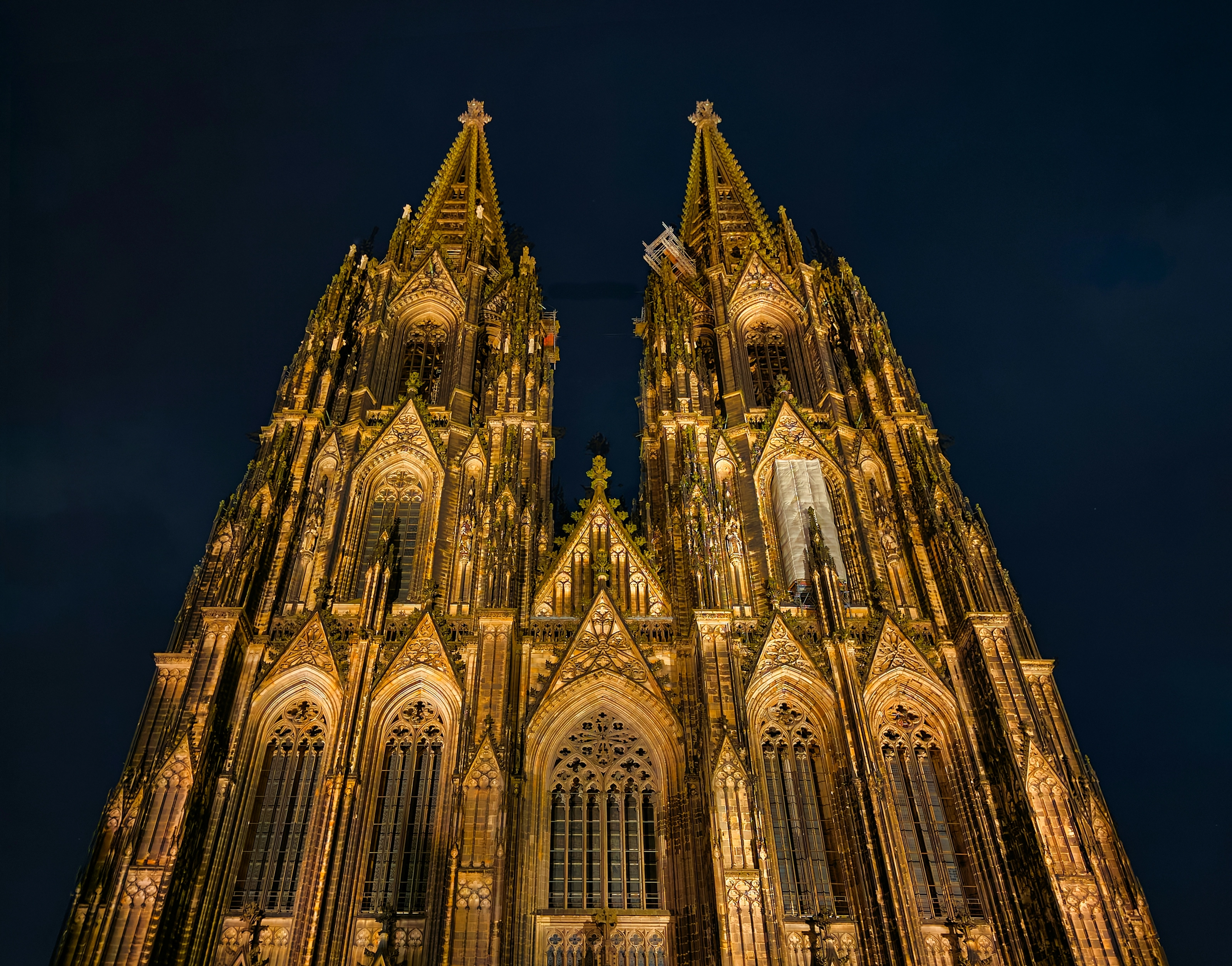
The Gothic cathedral is the symbol of the city. Building began in 1248 and was completed in 1880 after a long interruption, according to Wikipedia (EN, FR, ES); it has been a UNESCO World Heritage Site since 1996 and its towers reach about 157 m according to the English article on the cathedral. The Shrine of the Three Kings, a masterpiece of goldwork, is kept inside. You can climb the south tower, a little over 500 steps according to Wikivoyage (EN, ES).
The Hohenzollern Bridge
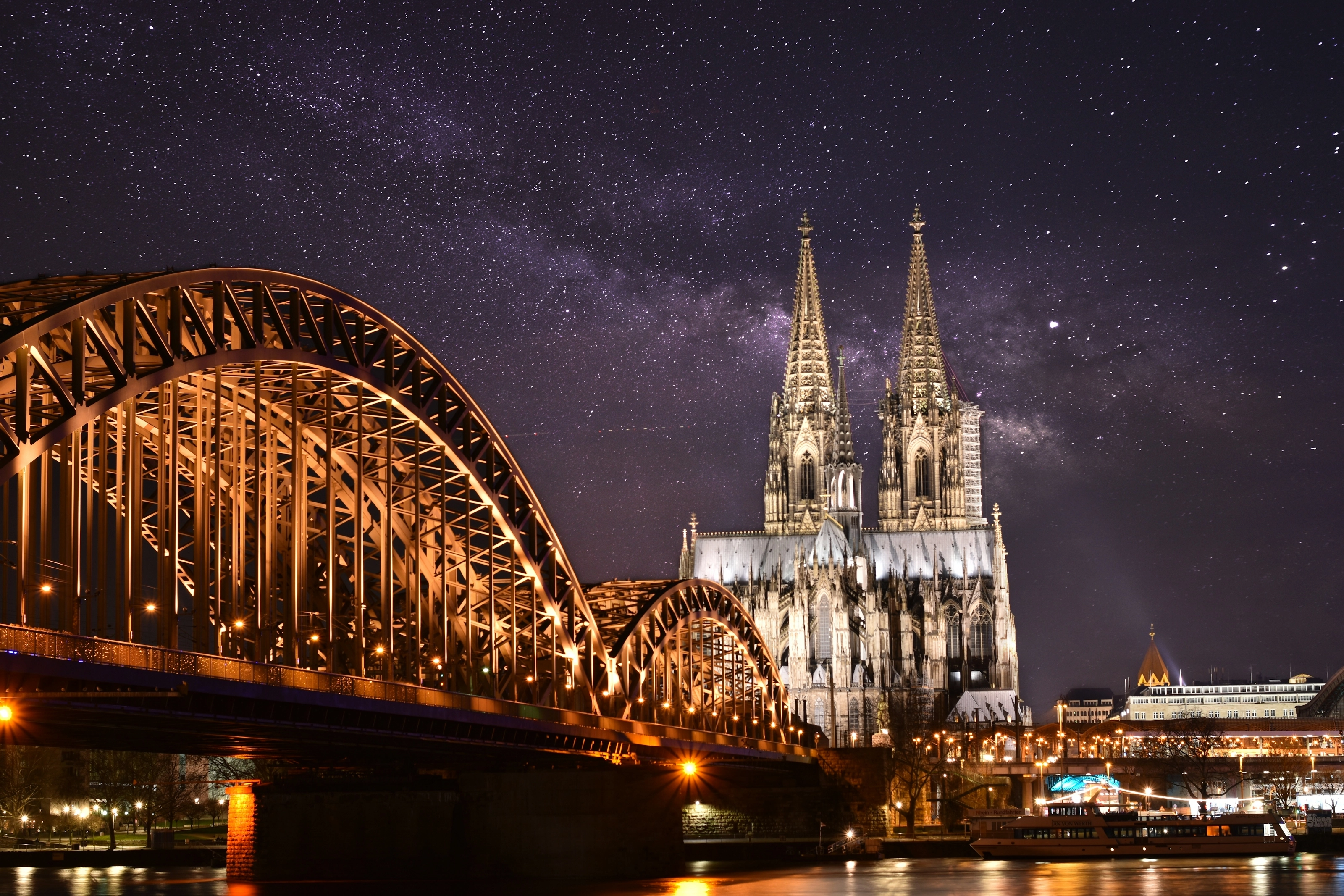
The Hohenzollern Bridge crosses the Rhine opposite the cathedral; Wikivoyage (EN) notes that couples attach padlocks to it. It is one of the bridges over the river, along with the Severinsbrücke, according to Wikipedia (DE, FR). The view of the cathedral from the Deutz bank is one of the finest in the city, especially in the evening.
The Rhine banks and the old town
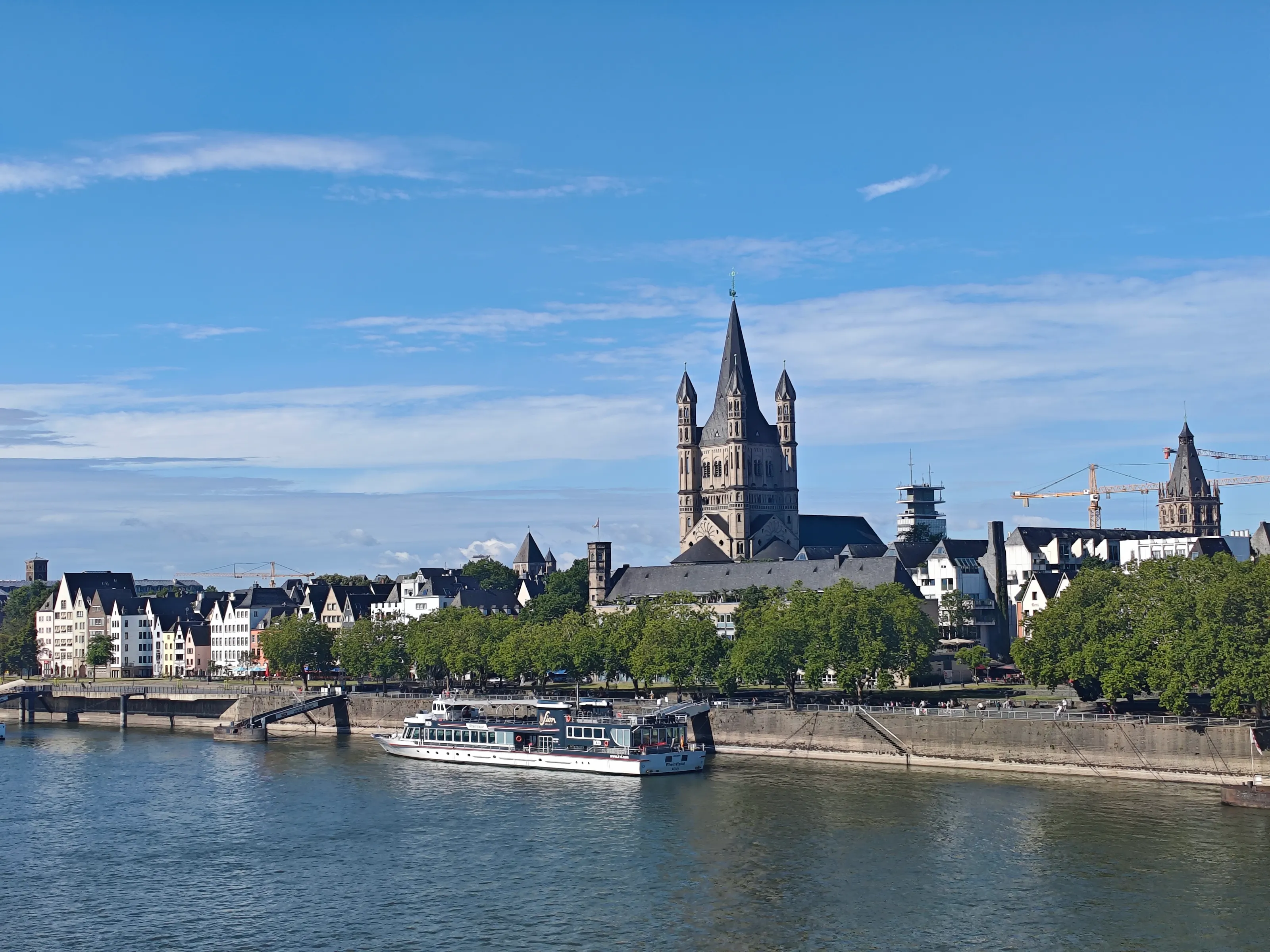
Along the river, the old town lines up its coloured facades, dominated by the Gross St Martin church. Wikivoyage (EN) also lists the coloured houses along the Rhine among the sights. The promenade along the quays is pleasant on foot, with boats passing on the river.
Gross St Martin
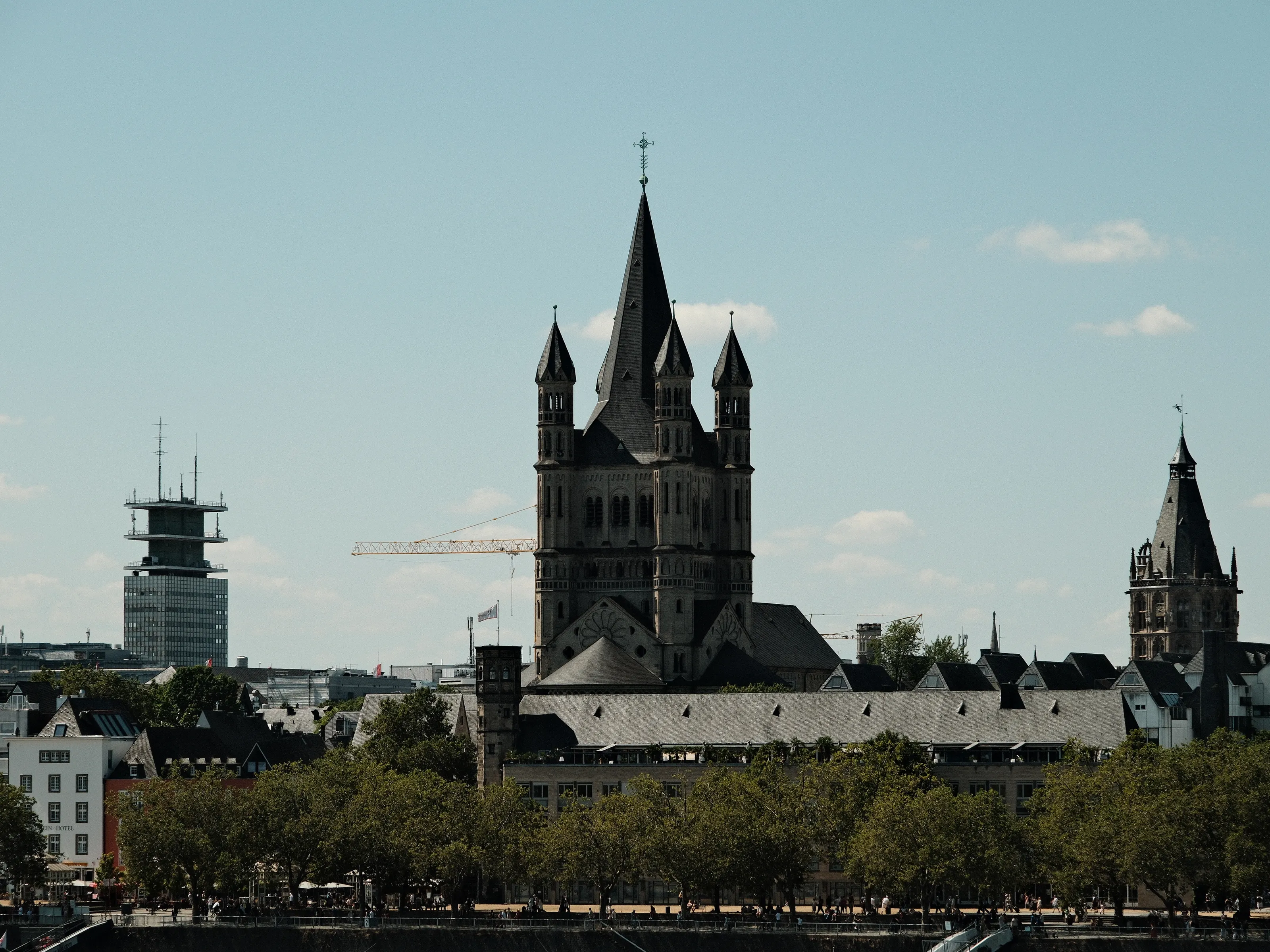
The Romanesque church of Gross St Martin is one of the city's twelve great Romanesque churches, which Wikipedia (FR) cites as a major feature of Cologne's heritage. Its massive bell tower marks the skyline of the old town on the Rhine.
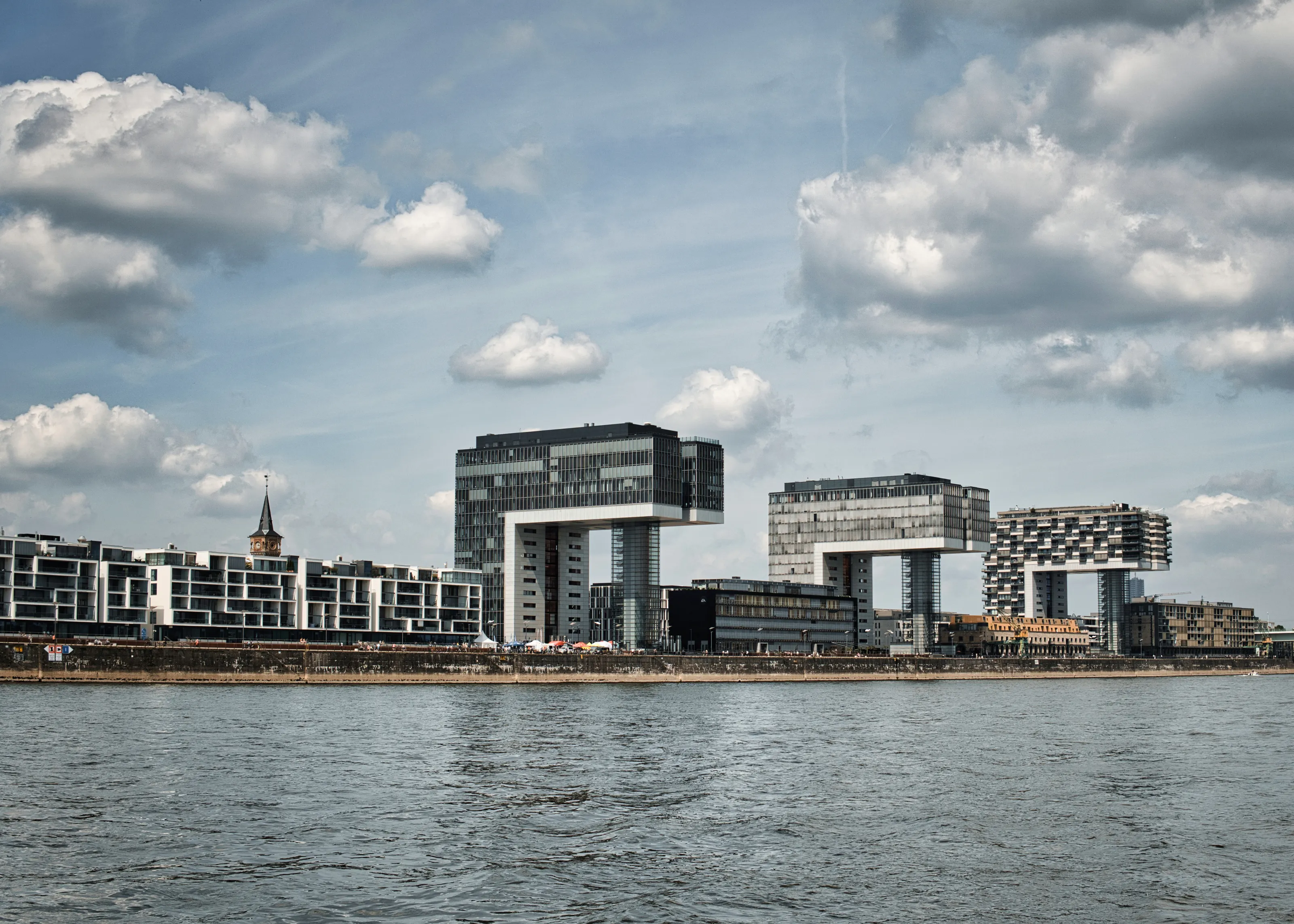
Rheinauhafen and its Kranhäuser
Wikivoyage (ES) recommends the Rheinauhafen district for a walk along the river. Its large modern buildings on stilts, the Kranhäuser, recall the cranes of the old harbour. The quays are also used by walkers and joggers.
Romanesque churches, town hall and the heart of the city
Cologne has twelve great Romanesque churches, according to Wikipedia (FR). The Rathaus, with its 61 m tower, the Gürzenich and the ruins of the Roman praetorium are mentioned by Wikivoyage (DE); the Schildergasse and the Hohe Straße are the main shopping streets. Remains of the Roman and medieval walls can still be seen, according to Wikivoyage (ES).
Day trips from Cologne
Bonn, the former capital of West Germany, and Brühl, with Augustusburg Palace, are easy to visit, according to Wikivoyage (ES); Düsseldorf, Aachen, Zons and the Drachenfels are other trips mentioned by Wikivoyage (FR, DE).
Museums and culture
Museum Ludwig, the Roman-Germanic Museum, Chocolate and Farina
Art and archaeology
The Museum Ludwig shows modern art, while the Römisch-Germanisches Museum presents the city's Roman finds, according to Wikivoyage (EN). The Wallraf-Richartz-Museum, Kolumba and the Museum Schnütgen complete the offer for old and religious art, according to Wikivoyage (DE, ES).
Chocolate, perfume and history
The Schokoladenmuseum is one of the city's most popular museums; the Farina house, which holds a perfume museum, is described as the oldest perfume factory still in operation, founded in 1709, according to Wikivoyage (DE). The NS-Dokumentationszentrum documents the city's history under the Third Reich. A MuseumsCard exists for the municipal museums, according to Wikivoyage (ES). We do not quote fares.
Music, theatre and Carnival
The Cologne Philharmonic and the Millowitsch theatre are part of cultural life, according to Wikipedia (DE) and Wikivoyage (DE). Carnival is the main event: the Rose Monday parade draws up to 1.5 million spectators, according to Wikivoyage (DE), and the Festkomitee has organised it since 1823.
Food and drink
Kölsch, brewery houses and Rhineland dishes
Kölsch beer
Kölsch is a top-fermented beer particular to Cologne, served in small cylindrical glasses, according to Wikivoyage (ES, DE). Until 1830 there were 360 breweries; today there are 24 Kölsch brands, according to Wikivoyage (DE). Altbier is not drunk here, the same source notes.
Brewery houses and dishes
The traditional brewery houses, listed by Wikivoyage (ES) with Früh, Päffgen and Sion, serve Rhineland cooking. Wikivoyage (FR) lists black pudding with apple compote and schnitzel among the dishes.
Districts for going out
The Zülpicher Straße, the Ringe and the Belgisches Viertel concentrate the nightlife, according to Wikivoyage (DE). Ehrenfeld is a changing district with many cafes. Wine bars also exist, according to the same source.
Getting around
Stadtbahn, trams, buses and the KVB-VRS network
An extensive urban network
The KVB runs the Stadtbahn, trams and buses, with tickets valid across the VRS network, according to Wikivoyage (FR, EN). Paper tickets must be validated before boarding, since there are no barriers, according to Wikivoyage (EN). The centre is walkable and a bike-share system exists, according to Wikivoyage (ES).
Car and low-emission zone
A low-emission zone requires a sticker, according to Wikivoyage (FR, ES). Much of the centre is pedestrian; there are many car parks around the old town.
Stations and connections
Cologne has three long-distance stations, including the main station next to the cathedral, according to Wikipedia (DE). High-speed services link it with Amsterdam, Brussels and Paris, according to Wikivoyage (ES).
Budget and precautions
Mid-range prices, but dearer during trade fairs
Price level
Accommodation prices rise sharply during trade fairs, according to Wikivoyage (ES). Koelnmesse holds about 80 fairs a year, including Gamescom, according to Wikipedia (FR): check the calendar before booking. We do not quote amounts, as we could not confirm them from two independent sources.
Flights and precautions
SniperAir monitors prices to CGN and compares them with the route's price history, but it does not sell or book tickets. Also watch Düsseldorf and Frankfurt. Germany is in the Schengen area: check entry requirements for your nationality and your government's official advice.
Safety
Pickpockets are a risk in the centre, according to Wikivoyage (ES): watch your belongings in busy places, on trains and during Carnival. Tipping and payment methods vary by venue.
When to go
Mild temperatures, changeable weather and rain all year
Winter (December to February)
Cool, with a January average of about 2 to 3 C depending on the Wikipedia edition. The Christmas market is held in December, according to Wikivoyage (FR).
Spring (March to May)
Changeable and fairly cool at first. Carnival falls in late winter or early spring depending on the year; check the dates.
Summer (June to August)
Mild to hot: late July and early August are the warmest period, according to Wikivoyage (ES); the record is 40.3 C on 25 July 2019 according to Wikipedia (EN). June is the wettest month according to Wikivoyage (EN).
Autumn (September to November)
Pleasant at first, with a marathon in early autumn according to Wikivoyage (FR), then greyer and damper.
Cologne has a temperate oceanic climate according to Wikipedia (EN, ES). About 800 mm of rain fall each year, according to Wikipedia (FR, EN, DE, ES). Wikivoyage (EN) compares the weather to England or northern France: changeable, with cloudy days. We do not give monthly averages, because the Wikipedia editions differ by nearly a degree.
By length of stay
What to do in Cologne depending on how long you stay
The essentials
The cathedral and its tower, a walk along the Rhine quays, the Hohenzollern Bridge and a Kölsch in a brewery house.
Museums and districts
The Museum Ludwig, the Roman-Germanic Museum, Chocolate, the old town, the Belgisches Viertel and Ehrenfeld.
Day trips
Bonn, Brühl, Düsseldorf, Aachen or the Drachenfels.
In pictures
Cologne in pictures
You might also like
Similar destinations
FAQ
Frequently asked questions about flights to Cologne
How do I get from Cologne airport to the city centre?
Cologne/Bonn Airport (CGN) is about 15 km south-east, and trains reach the main station in about fifteen minutes. Check lines and timetables before you travel.
When is the best time to visit Cologne?
May to September for walks along the Rhine; December for the Christmas market; for Carnival, check the dates for the year. Accommodation rises during trade fairs.
Is Cologne expensive?
Prices rise during trade fairs. We do not quote amounts because we could not confirm them from two sources.
How long should I stay in Cologne?
Two days for the cathedral, the Rhine and a Kölsch; four days if you add the museums and a day trip to Bonn or Brühl.
What should I drink in Cologne?
Kölsch, served in small glasses in the brewery houses; Altbier is not the local beer. Rhineland cooking includes black pudding with apple compote.
Can I climb the cathedral?
You can climb the south tower, about 500 steps depending on the source; check opening times and any access conditions before you visit.
How much does a flight to Cologne usually cost?
The price depends mainly on your departure city, the time of year and how far ahead you book. The "opportunities" section above shows real examples of prices SniperAir has already detected to this destination.
How do I get alerted when a flight to Cologne drops below my budget?
Create an alert profile with your departure airport, Cologne as the destination and your maximum budget. You are notified automatically as soon as a matching price is detected.
Ready to head to Cologne?
Set your budget and let SniperAir monitor fares for you.
Create my alert