
Cheap flights to Dresden
Set your departure airport and maximum budget: SniperAir tracks prices to Dresden and alerts you the moment a deal matching your criteria appears.
Quick summary
Country
Germany
Continent
Europe
Airport
DRS
Currency
Euro (EUR)
Time zone
UTC+1 (UTC+2 during summer time)
Deals already spotted to Dresden
Real flight examples detected by SniperAir, with their reference price.
Loading examples…
Why track Dresden with SniperAir
You do not need to compare prices every day
Choose your departure
Enter your departure airport and your maximum budget for a flight to Dresden (DRS).
SniperAir keeps watch
Our systems continuously compare new prices with the real price history of the route. SniperAir monitors prices and alerts you: it does not sell or book tickets.
You receive an alert
As soon as a price matches your criteria, you are notified, without having searched for anything yourself.
Airport and getting into town
An airport to the north, linked to the centre by S-Bahn
Dresden Klotzsche (DRS)
Dresden Airport is in Klotzsche, about 9 km north-east of the centre, according to Wikivoyage (FR). It is mostly served by charter flights to holiday destinations plus a few scheduled services, says Wikivoyage (EN). The S2 S-Bahn reaches Dresden-Neustadt in 12 minutes and the main station in 20 minutes, with a train every 30 minutes, according to Wikivoyage (EN); you can also take a bus and then a tram. Leipzig/Halle, under 90 minutes away by train, and Berlin Brandenburg, with a direct IC train, are other gateways worth watching, says Wikivoyage (EN).
Distances and times are approximate, based on Wikivoyage (EN, FR); timetables change, so check them before travelling. We do not give fares.
Dresden is the capital of Saxony and the second largest city on the Elbe after Hamburg, according to Wikipedia (EN). It became a city in 1206 and was the residence of Saxon princes such as Augustus the Strong, says Wikivoyage (EN). The compact historic centre, pleasant on foot, lies on the south bank of the Elbe, while the Neustadt on the other bank is a lively district, according to Wikivoyage (EN).
Landmarks
The Frauenkirche, the Zwinger, the Fürstenzug and Brühl's Terrace
Three quarters of the historic centre were destroyed in the bombing of 13 February 1945, according to Wikivoyage (EN). The Zwinger was rebuilt in 1964, the Semperoper in 1985 and the Frauenkirche in 2005, according to the same source and Wikivoyage (DE). The places below are illustrated; the Neustadt, the Großer Garten and excursions are covered at the end of the section.
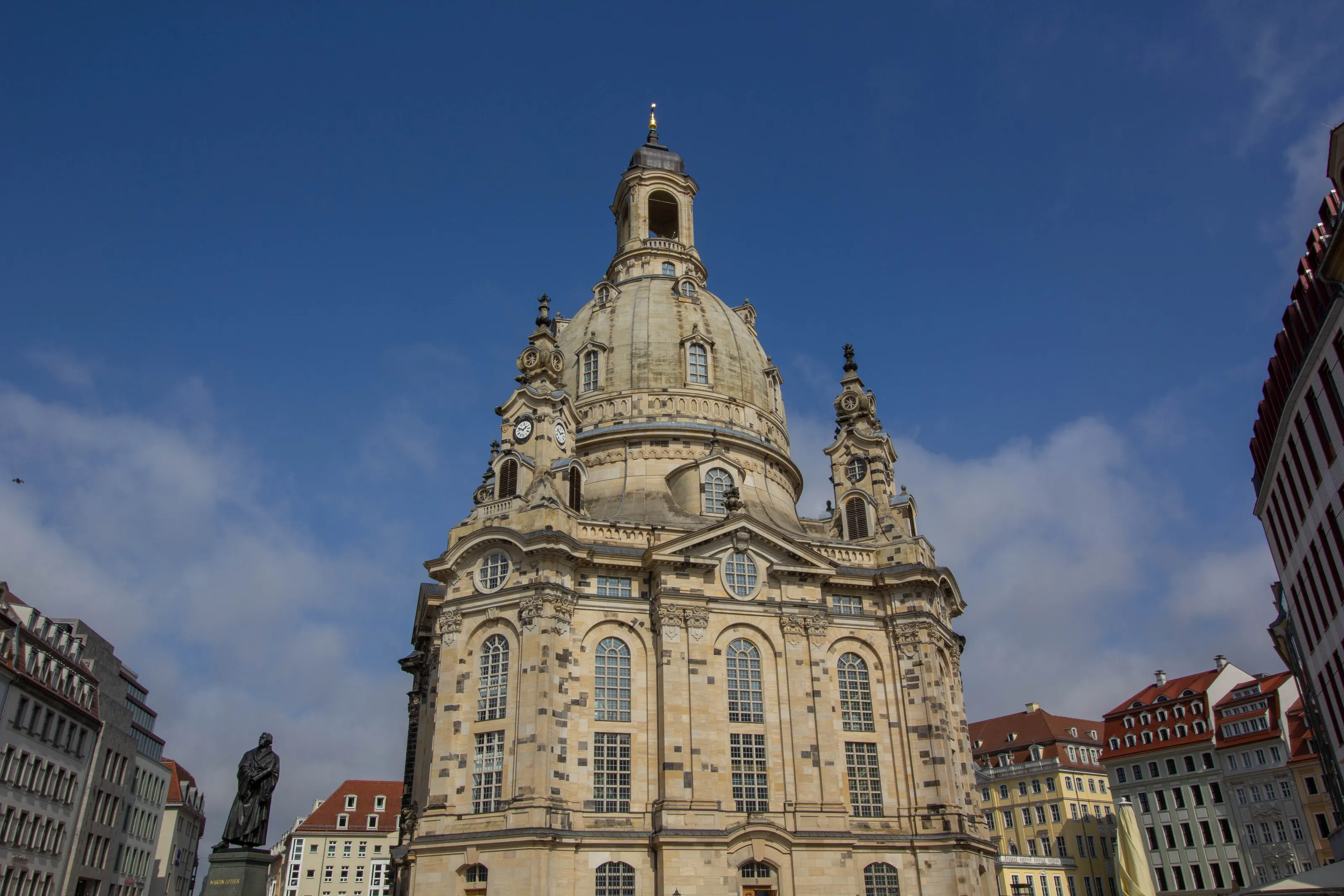
The Frauenkirche
The Church of Our Lady, the Frauenkirche, is Dresden's most famous monument: completely destroyed in 1945, it was rebuilt and reopened in 2005, according to Wikivoyage (EN, DE). The English city of Coventry, also bombed, donated the golden cross on the dome, says Wikivoyage (EN).
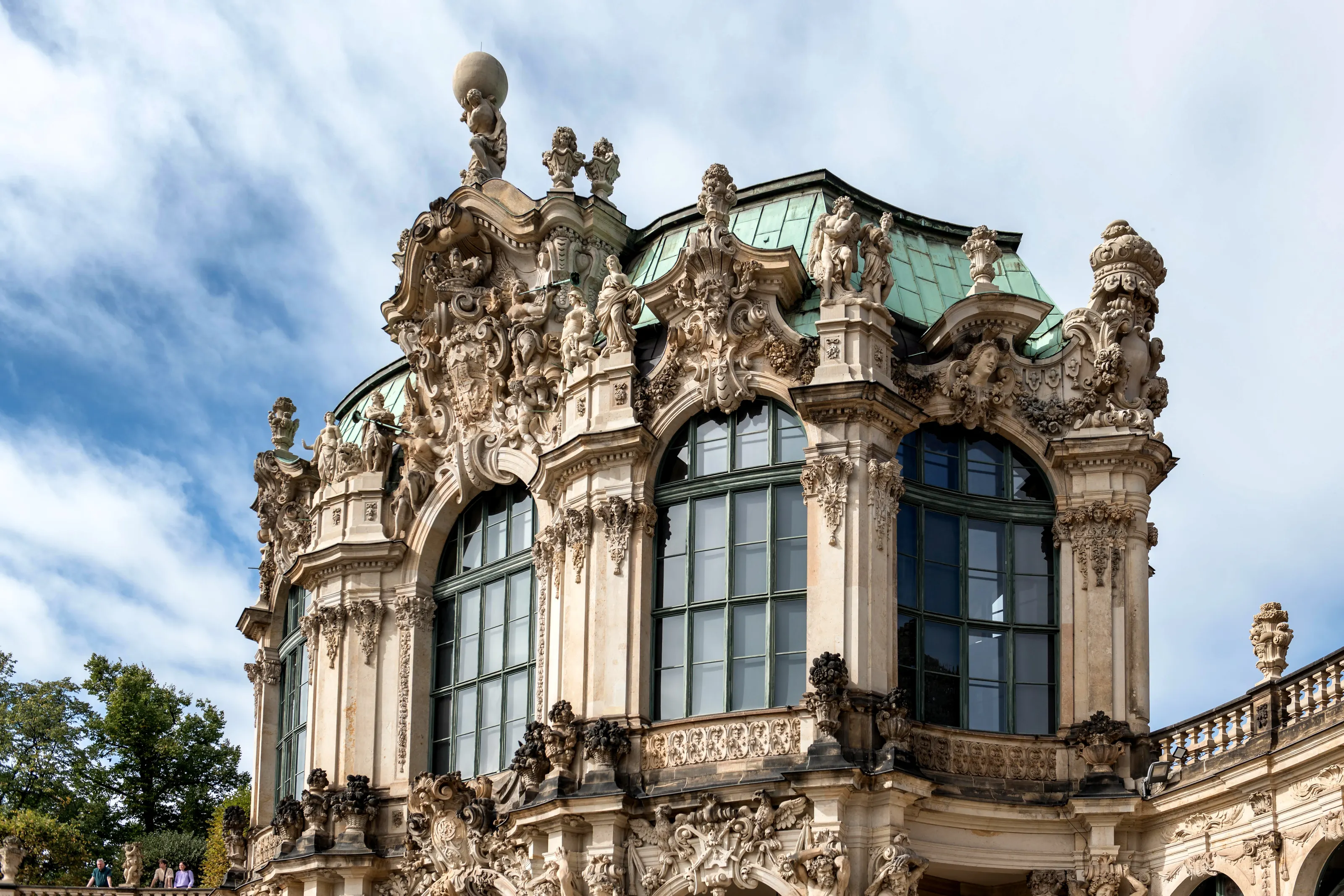
The Zwinger
The Zwinger is a Baroque palace with a nymphaeum, ponds and sculptures by Permoser; it houses major art collections, according to Wikivoyage (EN). Its most ornate pavilion, with tall arched windows, is one of the city's classic images.
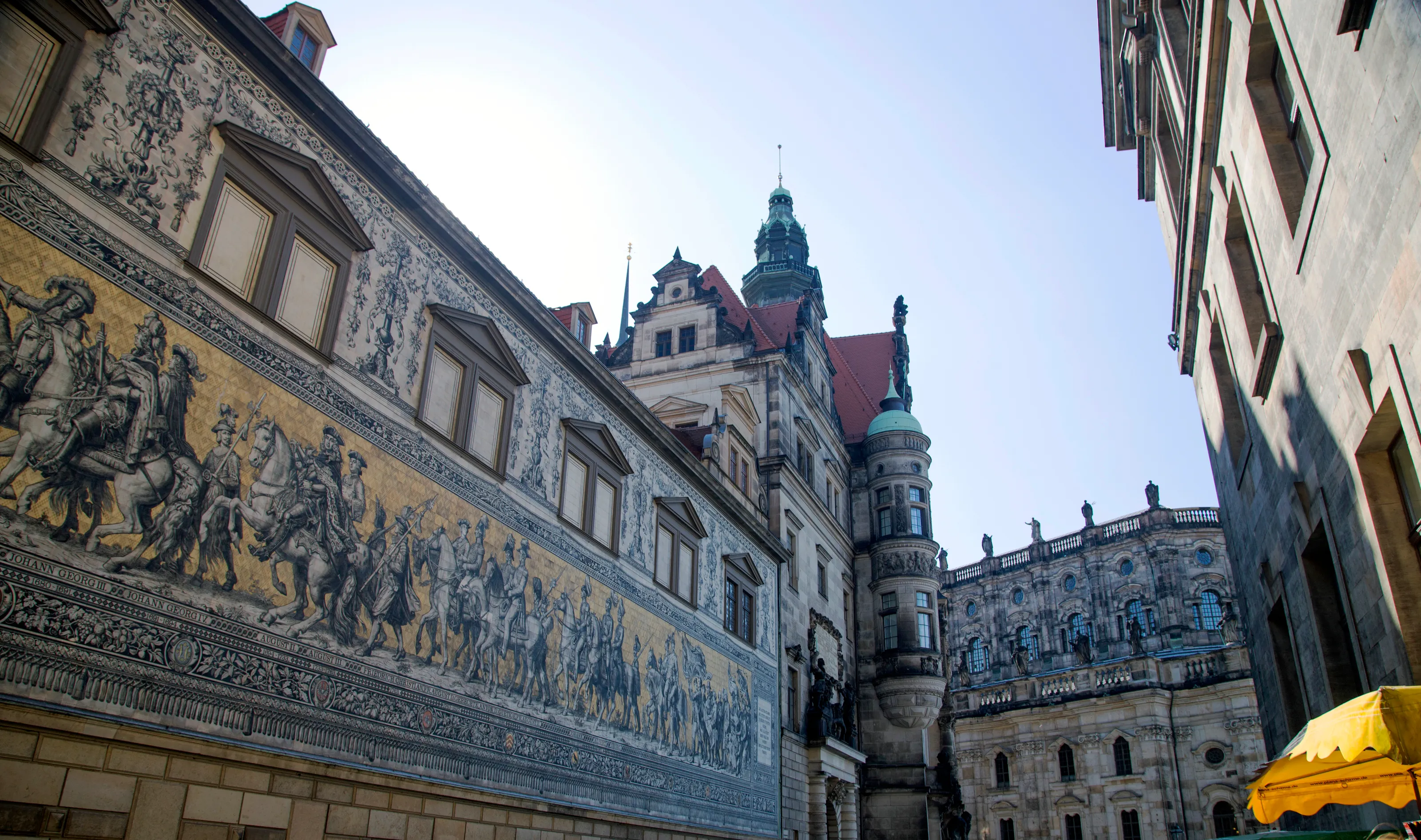
The Fürstenzug
The Fürstenzug, the "Procession of Princes", is described as the biggest porcelain painting in the world: it shows the princes, electors and kings of Saxony on horseback, says Wikivoyage (EN). It stands in the old town, near Brühl's Terrace.
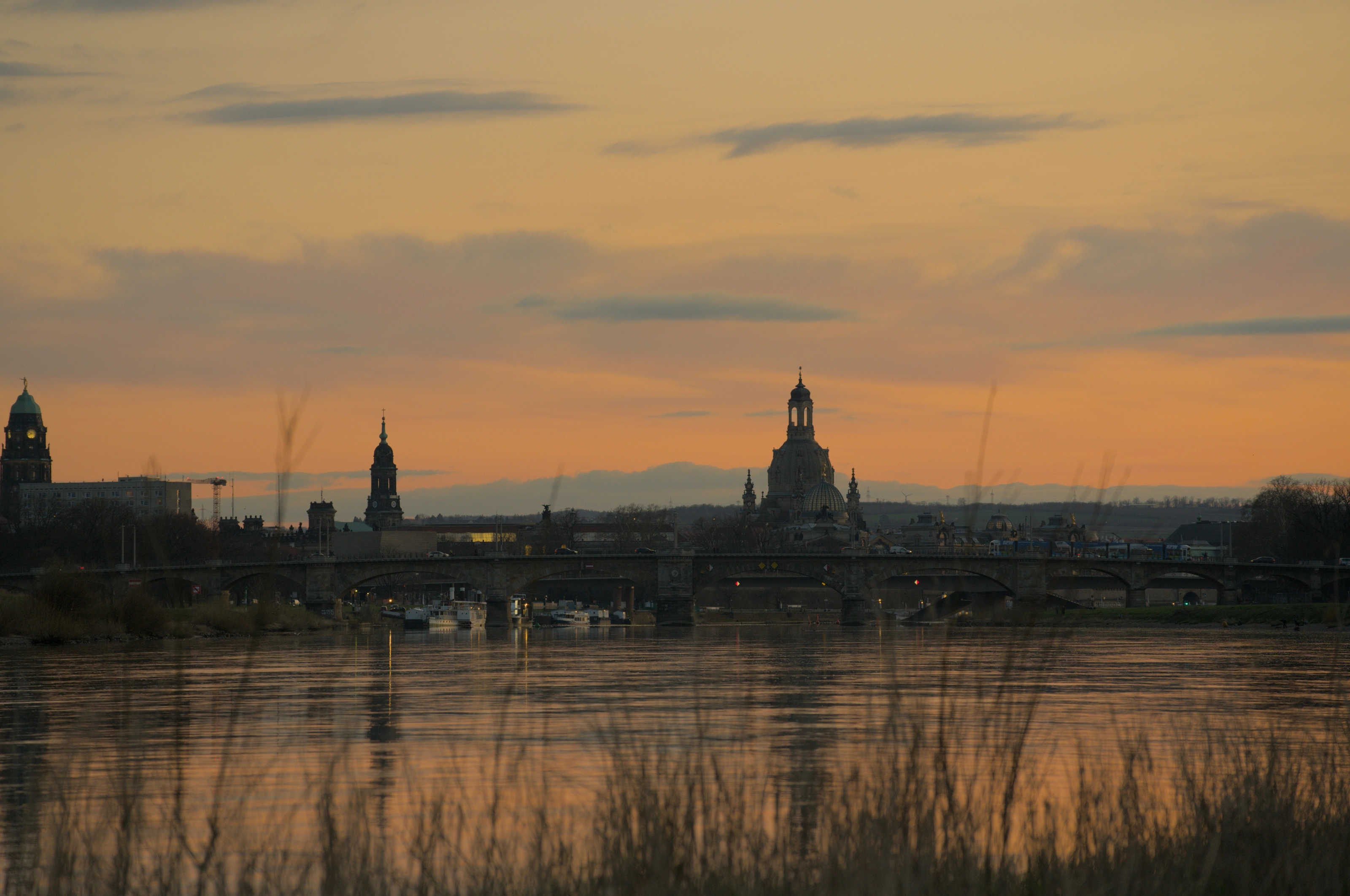
The Elbe and Brühl's Terrace
Brühl's Terrace, nicknamed the "Balcony of Europe", runs along the Elbe for about 500 m and has been open to the public since 1814, according to Wikivoyage (EN). At dusk the silhouette of the old town stands out above the river.
The city from above
From the heights, church towers, red roofs and the bridges of the Elbe make a typical panorama of the historic centre. Many sandstone buildings look blackened: this is not necessarily due to fire, as the local sandstone naturally darkens with time, says Wikivoyage (EN).
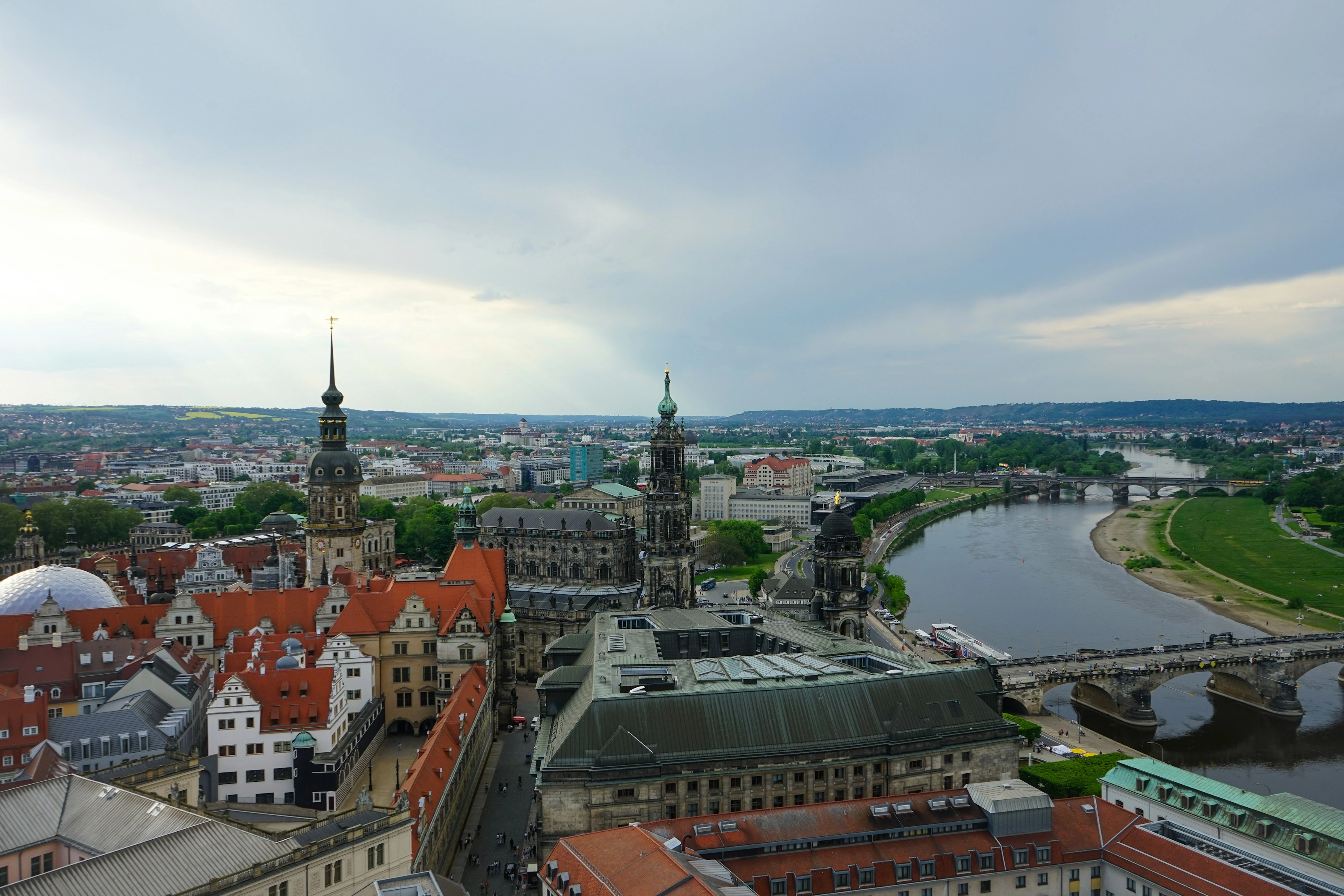
Semperoper, palace and Hofkirche
The Semperoper, home of the Staatskapelle orchestra, the Residenzschloss and the Hofkirche surround Theaterplatz, says Wikivoyage (EN). The Kulturpalast, completed in 1969, contrasts with the historic buildings around it.
Neustadt, the Großer Garten and excursions
The Neustadt is a lively, partly alternative district, with its Kunsthof and Pfund's dairy, listed in the Guinness book in 1998, according to Wikivoyage (EN). Radebeul, Meissen, Pillnitz and Saxon Switzerland are possible trips, says Wikivoyage (EN, DE).
Museums and culture
The Old Masters, the Green Vault and porcelain collections
Painting and decorative arts
The Gemäldegalerie Alte Meister holds about 700 European works from the 15th to the 18th century, says Wikivoyage (EN). The Grünes Gewölbe, the "Green Vault", keeps one of the largest collections of goldsmith's work and decorative arts in Europe, according to the same source.
Porcelain, arms and prints
The Porzellansammlung recalls the 18th-century craze for "white gold"; the Rüstkammer displays ceremonial arms and court costumes; the Kupferstich-Kabinett is one of the oldest print rooms, says Wikivoyage (EN). We do not give admission prices.
Music and the Christmas market
The Semperoper and the Staatskapelle make up one of the country's great musical stages, says Wikivoyage (EN). The Striezelmarkt, founded in 1434, is one of the oldest Christmas markets in Germany, according to Wikipedia (DE, ES); check the dates for the year.
Food and drink
Stollen, Eierschecke and Saxon dishes
Dresden pastries
Dresden is famous for its Stollen, a Christmas cake of yeast dough with raisins, butter and almonds, says Wikivoyage (EN). Dresdner Eierschecke is a three-layer cake with a layer of quark.
Savoury dishes
Dresdner Wiegebraten is a mixture of minced pork and beef, white bread, eggs and spices, usually served with potatoes and sauce, according to Wikivoyage (EN).
Where to eat
Restaurants around the Frauenkirche are numerous but often touristy and pricey; the Neustadt, north of Albertplatz, offers better value, according to Wikivoyage (EN). We do not name specific chains.
Getting around
Trams, S-Bahn, buses and Elbe ferries
An excellent network
Dresden is served by a reliable network of S-Bahn trains, trams and buses, according to Wikivoyage (EN). The tram system has 14 lines and about 200 km of track per Wikivoyage (EN), and half the lines run 24 hours a day per Wikivoyage (FR).
Ferries and cable cars
Three ferries cross the Elbe and two cable cars climb the Loschwitz heights, says Wikivoyage (EN). Night lines also reach Pillnitz, Radebeul and even Meissen.
On foot and by bike
The historic centre is easy on foot, according to Wikivoyage (EN); a cycle path follows the Elbe, says Wikivoyage (FR). Lock your bike well, as damage happens in the Neustadt.
Budget and precautions
Mid-range prices, with a dearer centre
Price level
Dresden is mid-range for Germany, but the area around the Frauenkirche is the most touristy and the priciest, according to Wikivoyage (EN). We do not give amounts because we could not confirm them on two independent sources.
Flying and precautions
SniperAir monitors prices to DRS and compares them with the route's history, but it does not sell or book tickets. Also keep an eye on Leipzig/Halle and Berlin. Germany is in the Schengen area: check entry requirements for your nationality and your government's official advice.
Safety
Keep an eye on your belongings in busy places, as in any large city. Bicycles left without a good lock risk damage in the Neustadt, says Wikivoyage (EN).
When to go
Contrasting seasons, and a pleasant city in summer
Winter (December to February)
A little colder than the German average, with a January close to 0 C, according to Wikipedia (EN, DE). The Striezelmarkt enlivens the city in December.
Spring (March to May)
Changeable; terraces and the Elbe banks fill up as temperatures rise.
Summer (June to August)
Mild to warm, with a July close to 19 C per Wikipedia (EN, DE); Wikivoyage (EN) describes Dresden as especially pleasant in summer.
Autumn (September to November)
Cool and often grey; the art collections are a good option in bad weather.
January and July averages are about 0 C and 19 C, but the Wikipedia editions give slightly different values (0.1 to 0.6 C and 19.0 to 19.4 C). We therefore do not give precise monthly averages.
By length of stay
What to do in Dresden depending on how long you stay
The essentials
The Frauenkirche, the Zwinger, the Fürstenzug, Brühl's Terrace and a walk along the Elbe.
Collections and districts
The Green Vault, the Old Masters, the Semperoper, the Neustadt and the Großer Garten.
Excursions
Meissen, Radebeul, Pillnitz and Saxon Switzerland.
In pictures
Dresden in pictures
You might also like
Similar destinations
FAQ
Frequently asked questions about flights to Dresden
How do I get from Dresden Airport to the centre?
DRS is in Klotzsche, to the north-east; the S2 S-Bahn reaches the main station in about 20 minutes. Check lines and timetables before you travel.
When is the best time to visit Dresden?
From April to September for walks along the Elbe; December for the Striezelmarkt, one of the oldest Christmas markets in Germany.
Is Dresden expensive?
It is mid-range, but the centre is dearer. We do not give amounts because we could not confirm them on two sources.
How long should I stay in Dresden?
Two days for the old town and collections; four days if you add the Neustadt, the Elbe and an excursion.
What should I try in Dresden?
Stollen, Eierschecke and Wiegebraten, according to the guides we consulted. It is better to eat in the Neustadt than right in front of the Frauenkirche.
Is the Frauenkirche old?
It was destroyed in 1945, then rebuilt and reopened in 2005, according to the guides we consulted; it remains the symbol of the city.
How much does a flight to Dresden usually cost?
The price depends mainly on your departure city, the time of year and how far ahead you book. The "opportunities" section above shows real examples of prices SniperAir has already detected to this destination.
How do I get alerted when a flight to Dresden drops below my budget?
Create an alert profile with your departure airport, Dresden as the destination and your maximum budget. You are notified automatically as soon as a matching price is detected.
Ready to head to Dresden?
Set your budget and let SniperAir monitor fares for you.
Create my alert