
Cheap flights to Munich
Set your departure airport and maximum budget: SniperAir tracks prices to Munich and alerts you the moment a deal matching your criteria appears.
Quick summary
Country
Germany
Continent
Europe
Airport
MUC
Currency
Euro (EUR)
Time zone
UTC+1 (UTC+2 during summer time)
Deals already spotted to Munich
Real flight examples detected by SniperAir, with their reference price.
Loading examples…
Why track Munich with SniperAir
You do not need to compare prices every day
Choose your departure
Enter your departure airport and your maximum budget for a flight to Munich (MUC).
SniperAir keeps watch
Our systems continuously compare new prices with the real price history of the route. SniperAir monitors prices and alerts you: it does not sell or book tickets.
You receive an alert
As soon as a price matches your criteria, you are notified, without having searched for anything yourself.
Airport and getting into town
An airport to the north-east, then the S-Bahn into the centre
Munich Franz Josef Strauss (MUC)
Munich Airport lies near Freising, north-east of the city, about 30 km from the centre according to Wikivoyage (EN, ES, FR) and up to about 40 km according to Wikivoyage (DE). The S1 and S8 S-Bahn lines reach the centre in roughly 40 to 50 minutes, running about every 15 minutes by day according to Wikivoyage (EN); an express bus to the main station takes around 45 minutes according to Wikivoyage (DE). Memmingen (FMM), used by low-cost airlines, is about 110 km west, with a 60 to 90 minute train or shuttle ride to Munich. Frankfurt and Nuremberg are other gateways worth watching.
Distances and times are approximate, based on Wikivoyage (EN, DE, ES, FR); sources differ by a few kilometres and timetables change, so check them before you travel. We do not quote fares.
Munich is the capital of Bavaria and the third-largest city in Germany: roughly 1.5 to 1.6 million people according to the English, German and Spanish Wikipedia, which give slightly different figures, and about six million in the wider metropolitan region. The city sits at about 520 m above sea level on the Isar. The historic Altstadt holds most of the landmarks, while Maxvorstadt (museums, university) and Schwabing (cafes, access to the English Garden) round out a stay, according to Wikivoyage (EN, DE).
Landmarks
Marienplatz, the Frauenkirche, Nymphenburg and the English Garden
Munich is first recorded in 1158 and became the capital of the Kingdom of Bavaria in 1806, according to Wikipedia (EN). Bavaria's kings left it monumental avenues, palaces and museums. The places below are illustrated; the Residenz, the Olympic Park and the churches of the centre are described at the end of the section.
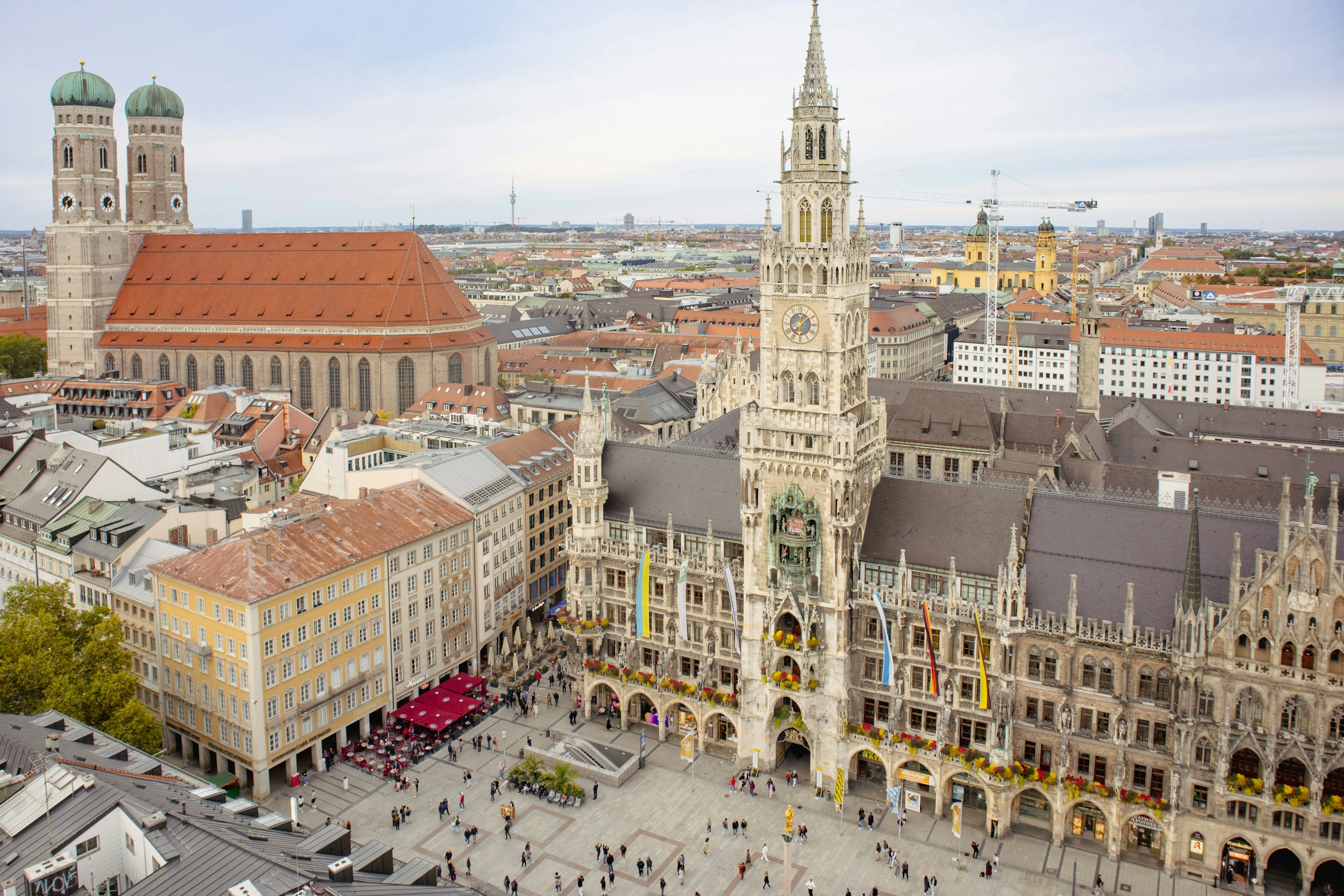
Marienplatz and the New Town Hall
Marienplatz is the heart of the city. The neo-Gothic Neues Rathaus spreads its ornate facade and carillon tower across the square, and its Glockenspiel draws crowds; Wikivoyage (DE) notes that it is very busy. Beside it stand the Old Town Hall, the Church of the Holy Spirit and St Peter's (Alter Peter), which Wikipedia (EN) says may be older than the official founding date.
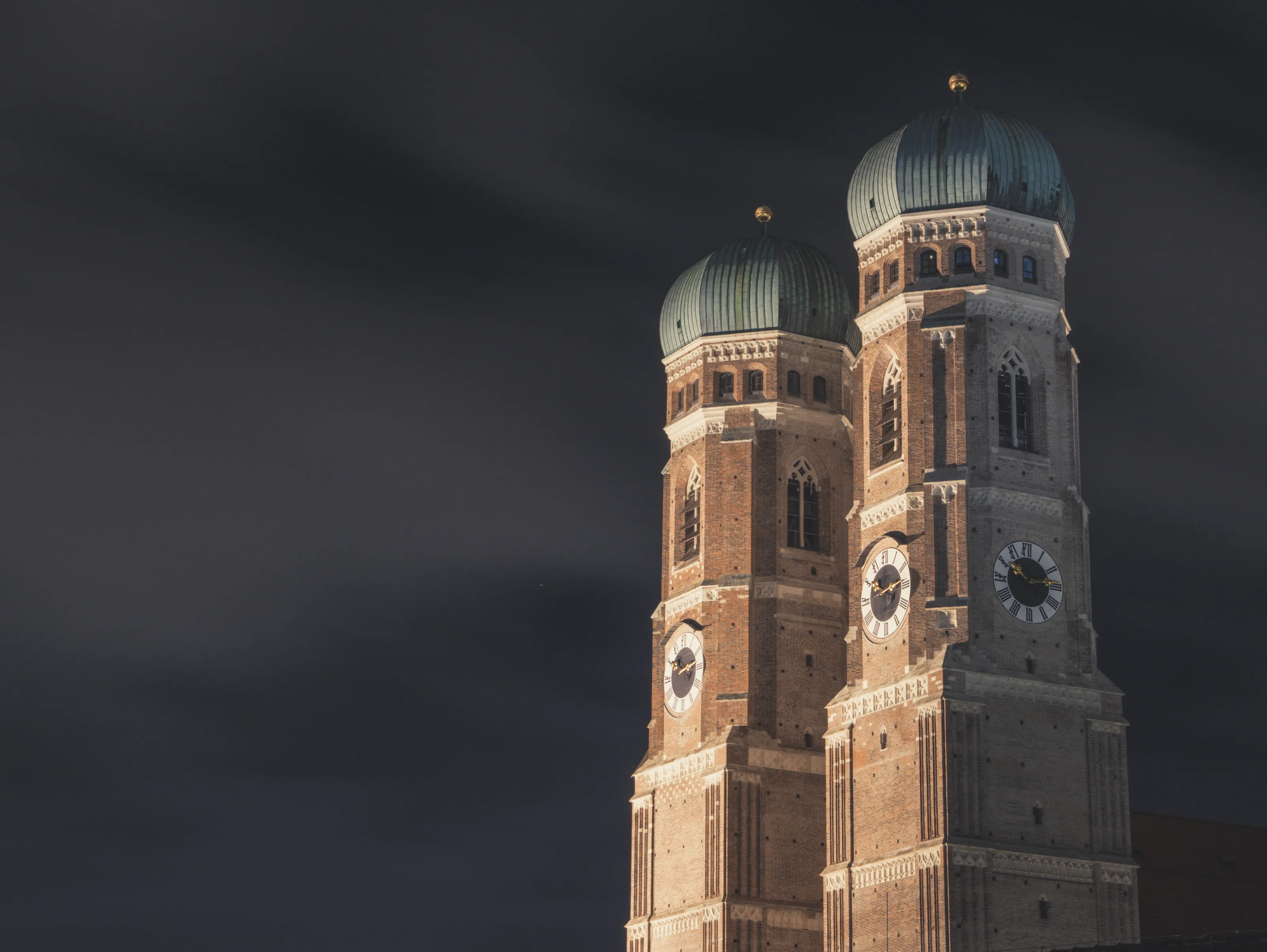
The Frauenkirche
The Cathedral of Our Lady, the Frauenkirche, is the emblem of the city: its two green-domed towers, about 99 m tall according to Wikipedia (ES), can be seen from much of the centre. The building is made of brick. In the evening the lit towers make for a pleasant stroll.
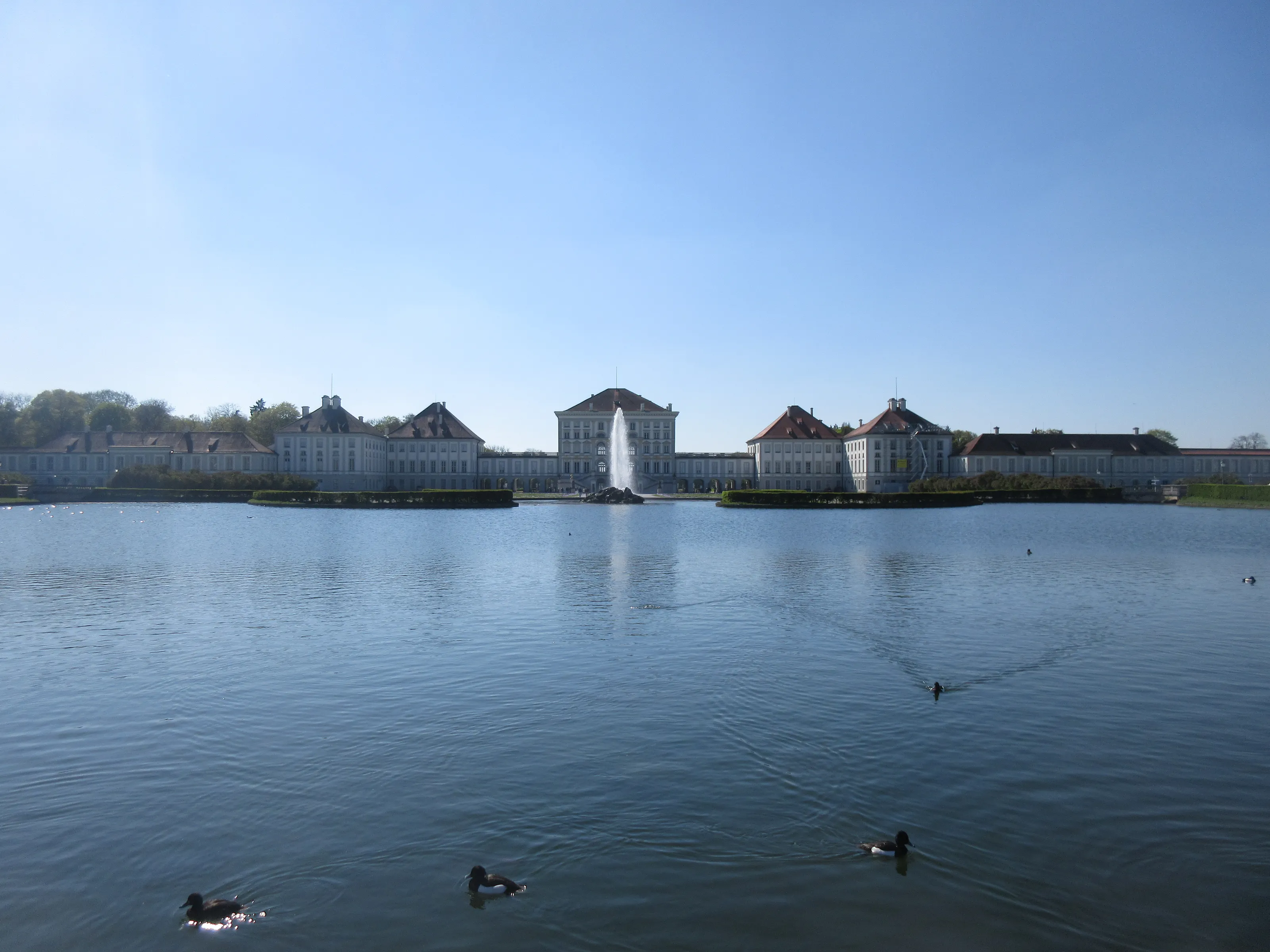
Nymphenburg Palace
The summer residence of the Wittelsbach family, this Baroque palace opens onto a long pond and a vast park west of the centre. Wikivoyage (DE) mentions the Rococo Amalienburg pavilion and the neighbouring botanical garden; there is also a carriage museum and a porcelain collection. Allow half a day, more if you enjoy parks.
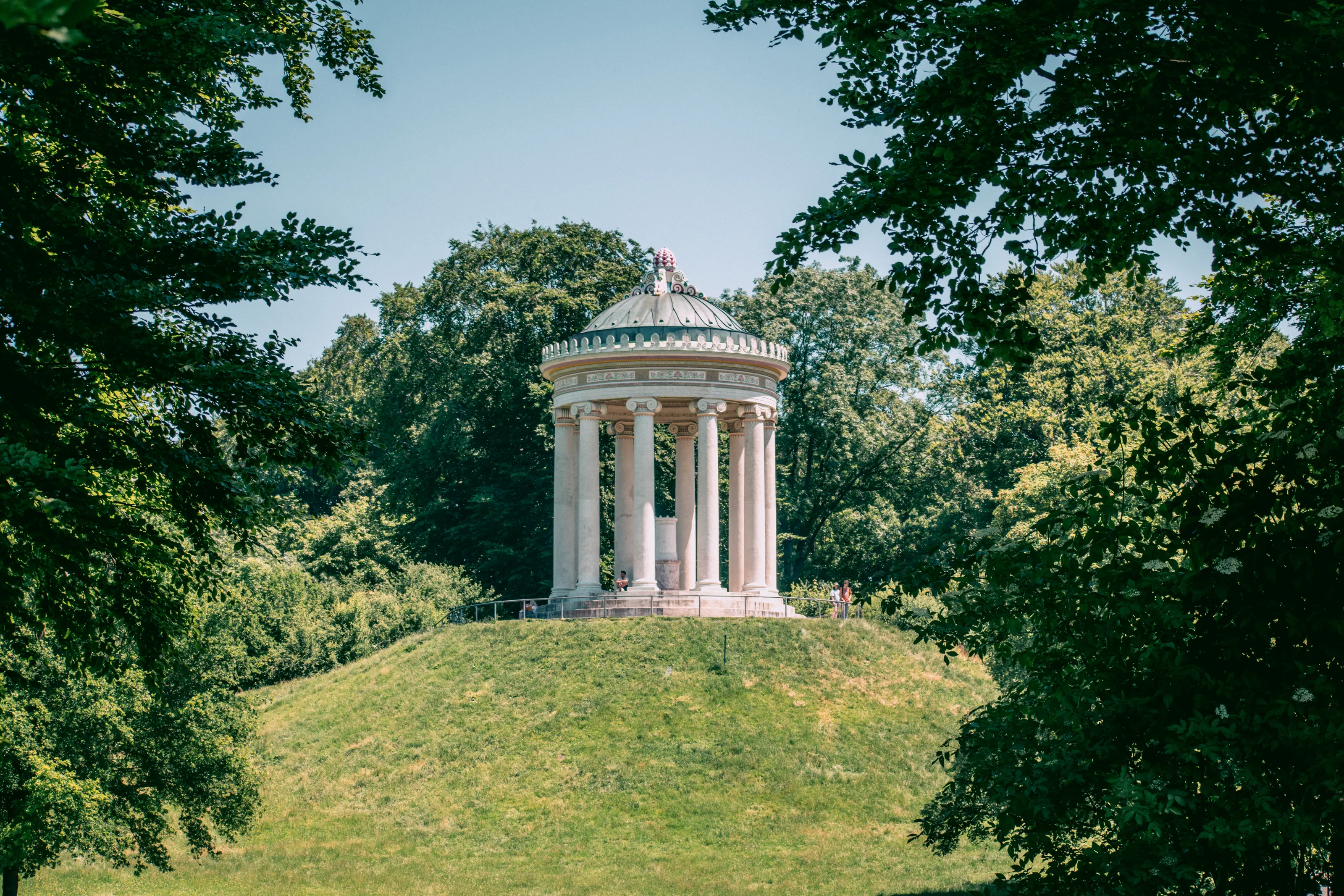
The English Garden
The Englischer Garten is one of the largest urban parks in the world according to Wikipedia (ES). Paths lead between meadows, streams and lakes; the Monopteros, a small neoclassical temple on a hill, offers a viewpoint, and the Chinese Tower has a well-known beer garden. On the Eisbach, a standing wave lets surfers practise in the middle of the city, according to Wikivoyage (EN) and muenchen.de.
Residenz, Olympic Park and churches
The Residenz, the former palace of the Bavarian kings, contains the Antiquarium, a Renaissance hall built in 1568 according to Wikipedia (EN). The Olympic Park, built for the 1972 Games, is dominated by the Olympiaturm, a 291 m tower according to Wikivoyage (DE); the Bavaria statue at Theresienhöhe also offers a view. St Michael's is a large Jesuit church where Ludwig II is buried according to muenchen.de, and the Theatinerkirche overlooks Odeonsplatz.
Day trips from Munich
The royal castles of Ludwig II (Neuschwanstein, Linderhof, Herrenchiemsee) were inscribed on the UNESCO World Heritage list in 2025, according to muenchen.de. The Dachau memorial is about 15 km north-west, Lake Starnberg is reached by S-Bahn, and Garmisch-Partenkirchen is about 90 km away by motorway, according to Wikivoyage (DE, ES).
Museums and culture
Pinakotheks, the Deutsches Museum, the Residenz museums and opera
The Kunstareal
The museum quarter in Maxvorstadt groups about 16 museums, including the three Pinakotheks: the Alte Pinakothek for Old Masters, the Neue Pinakothek for 19th-century art and the Pinakothek der Moderne for modern and contemporary art, design and architecture, according to Wikivoyage (EN, ES). The Lenbachhaus shows the Blue Rider school. Some buildings have been closed for renovation: check before you go.
Science, technology and palaces
The Deutsches Museum occupies an island in the Isar and receives more than a million visitors a year according to Wikipedia (ES); muenchen.de describes it as the largest technology museum. The BMW Museum and BMW Welt stand near the Olympic Park. On Königsplatz, the Glyptothek and the Antikensammlung hold Greek and Roman antiquities.
Opera, theatre and culture
The Bavarian State Opera and the Cuvilliés Theatre, a Rococo jewel inside the Residenz, are among the leading stages, according to Wikipedia (ES). Many museums close on Mondays and some Pinakotheks on Tuesdays; the Bavarian State museums offer a reduced Sunday rate according to Wikivoyage (EN, ES). We do not quote fares, because tickets and closing days change.
Food and drink
Weißwurst, pork knuckle, beer gardens and Munich beer
Bavarian specialities
Weißwurst, a poached white sausage, is traditionally eaten before noon with a pretzel, sweet mustard and a wheat beer, according to Wikivoyage (EN, ES). Other dishes include Schweinsbraten (roast pork), Schweinshaxe (pork knuckle) and Leberkäse, often served in a roll (Leberkässemmel), a cheap snack according to Wikivoyage (EN).
Beer and beer gardens
Munich beer comes as Helles (pale lager) or Weißbier (wheat beer); the one-litre mug is called a Maß, according to Wikipedia (ES). In beer gardens, for example at the Chinese Tower or the Viktualienmarkt, you may bring your own food but not your own drinks, notes Wikivoyage (EN). The Hofbräuhaus, founded in 1589 according to Wikipedia (EN), is very touristy.
Markets and Oktoberfest
The Viktualienmarkt in the centre and the Elisabethmarkt are the main food markets. Oktoberfest takes place on the Theresienwiese for 16 to 18 days, from late September to the first Sunday in October (to 3 October if needed); it drew a record 7.2 million visitors in 2023 according to Wikipedia (EN). Book early: accommodation is in high demand at this time.
Getting around
S-Bahn, U-Bahn, tram and one ticket for the MVV network
An integrated network
The MVV combines the S-Bahn, six U-Bahn lines, trams and buses under one ticket system, according to Wikivoyage (EN, ES). The centre is walkable and cycling is common. Tickets must be validated before you travel: checks are sometimes made by plain-clothes inspectors, and a fine applies.
Night, car and surroundings
Night service is limited: only some S-Bahn lines run through the night, according to Wikivoyage (EN). A low-emission zone covers the area inside the Mittlerer Ring and requires a green sticker, according to Wikivoyage (DE). Parking is expensive in the centre; park-and-ride at the edge of town is recommended.
Accessibility
The S-Bahn and U-Bahn stations connect to the main station, five minutes on foot from the centre, according to Wikivoyage (ES). The Stammstrecke, the central S-Bahn section, is a bottleneck and delays are possible.
Budget and precautions
An expensive city, especially during Oktoberfest and trade fairs
Price level
Munich is among the most expensive German cities, particularly for property and rents, according to Wikipedia (EN). Accommodation prices rise during Oktoberfest and trade fairs, according to Wikivoyage (EN). We do not quote amounts, as we could not confirm them from two independent sources.
Flights and precautions
SniperAir monitors prices to MUC and compares them with the route's price history, but it does not sell or book tickets. Also watch Memmingen (FMM) and Nuremberg. Germany is in the Schengen area: check entry requirements for your nationality and your government's official advice.
Safety
The city is regarded as safe; as in any large city, stay alert to pickpockets in crowded places and around the main station. Tipping and payment methods vary by venue: ask before you order.
When to go
Mild summers, cold winters, foehn winds and snow in winter
Winter (December to February)
Cold, with a January average of roughly 0 to 2 C depending on the Wikipedia edition. Snow is possible; German Wikipedia calls Munich the snowiest large city in Germany.
Spring (March to May)
Changeable and fairly cool at first, with increasingly mild days. Beer gardens reopen with the first fine weather.
Summer (June to August)
Mild to hot, with average highs near 24 to 25 C in July according to Wikipedia (EN) and sudden storms according to Wikivoyage (EN). Heatwaves above 30 C have become more frequent since the 2020s.
Autumn (September to November)
Pleasant in September, with Oktoberfest. Then days shorten and the weather turns grey and damp.
The climate is a transition between oceanic and continental according to Wikipedia (ES). Around 940 to 970 mm of rain fall each year, with a peak in summer according to Wikipedia (EN). The foehn, a warm, dry wind from the Alps, can lift temperatures within hours and gives exceptional visibility of the mountains, according to Wikivoyage (EN). We do not give monthly averages, because the Wikipedia editions differ by several degrees.
By length of stay
What to do in Munich depending on how long you stay
The essentials
Marienplatz and the Glockenspiel, the Frauenkirche, the Viktualienmarkt and a beer garden, with a walk in the English Garden.
Museums and palaces
The Kunstareal and the Pinakotheks, the Deutsches Museum, the Residenz and Nymphenburg Palace.
Day trips
The Olympic Park, Dachau, Lake Starnberg, Garmisch-Partenkirchen, Salzburg or the castles of Ludwig II.
In pictures
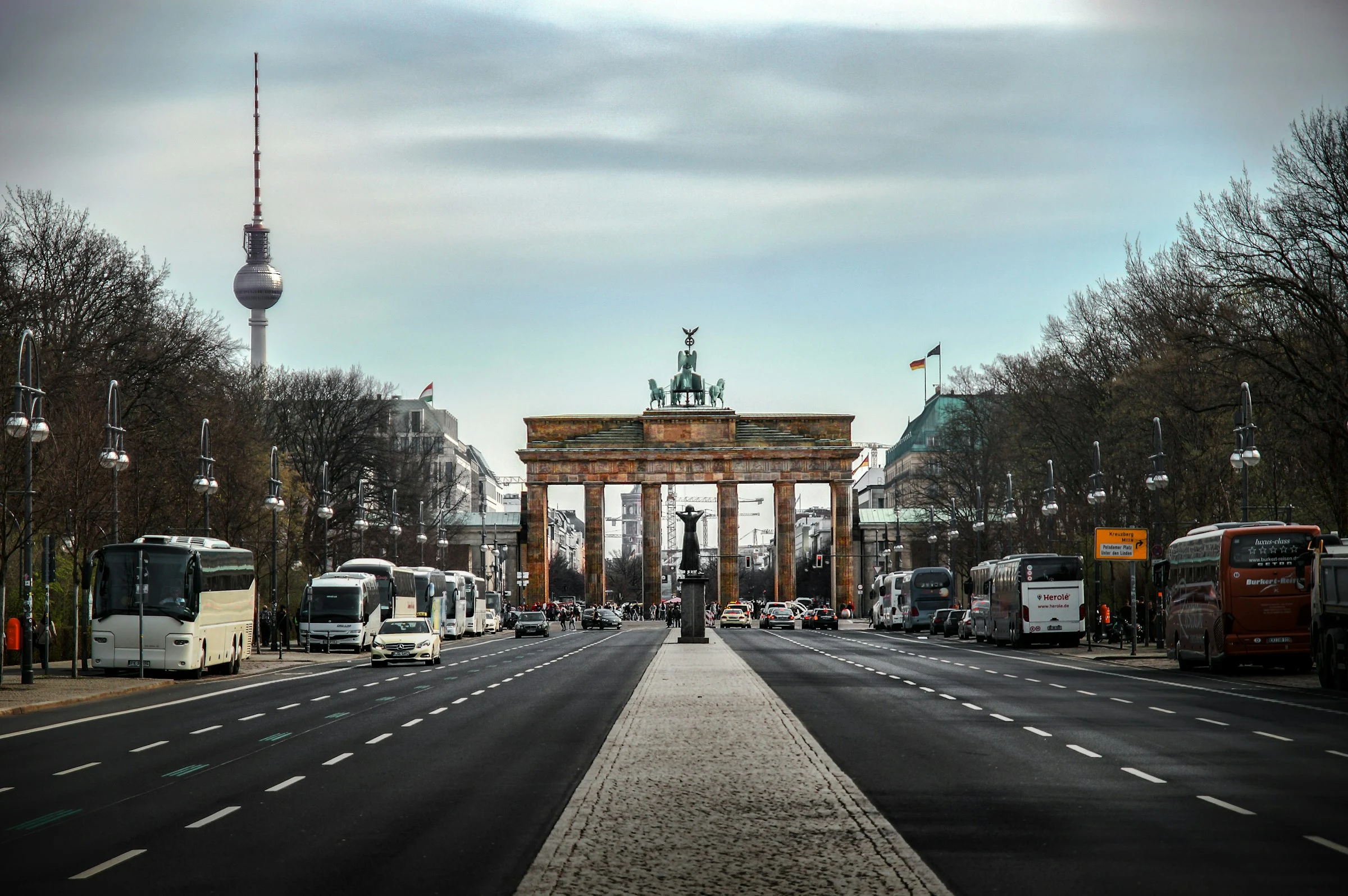
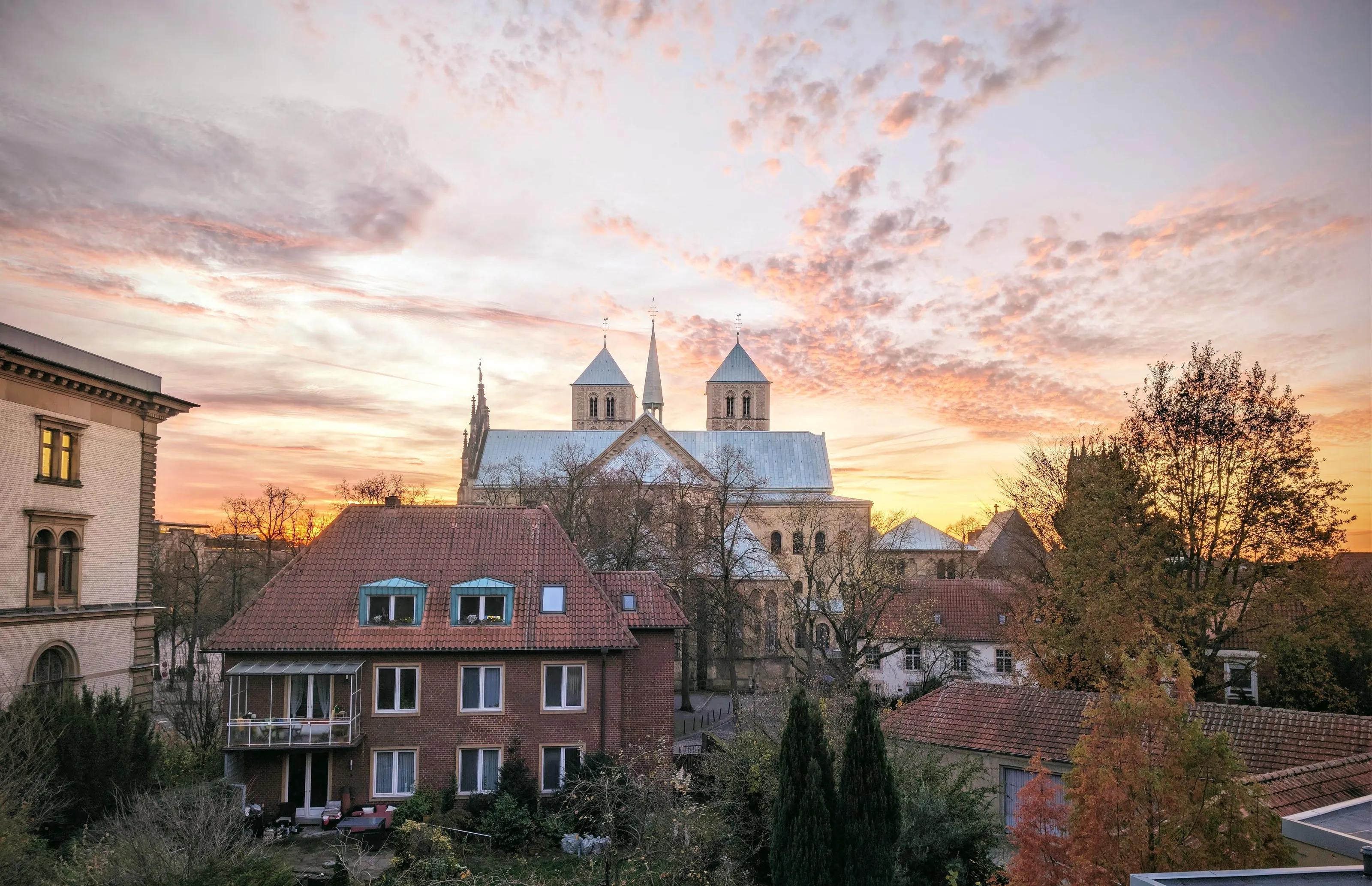
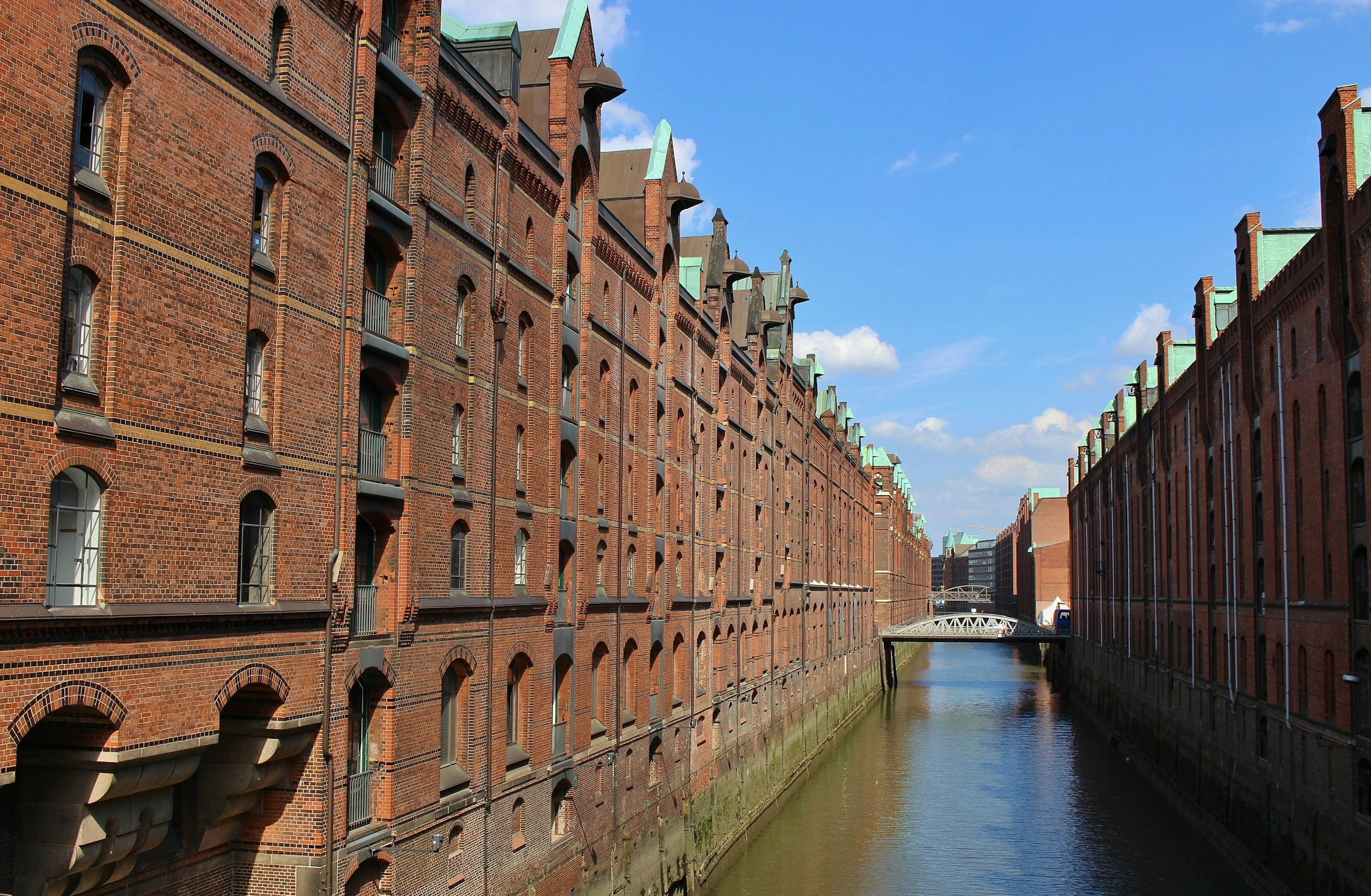
Munich in pictures
You might also like
Similar destinations
FAQ
Frequently asked questions about flights to Munich
How do I get from Munich airport to the city centre?
Munich Airport (MUC) is about 30 to 40 km from the centre depending on the source. The S1 and S8 S-Bahn lines take roughly 40 to 50 minutes, and an express bus reaches the main station. Check timetables before you go.
When is the best time to visit Munich?
May to September for beer gardens and parks, September and October for Oktoberfest, or December for a winter atmosphere. Accommodation prices rise during Oktoberfest.
When is Oktoberfest?
It lasts 16 to 18 days, from late September to the first Sunday in October, on the Theresienwiese. In 2025 it ran from 20 September to 5 October. Check the current year's dates on the official website.
Is Munich expensive?
It is one of Germany's most expensive cities, especially for housing. We do not quote amounts because we could not confirm them from two sources.
How long should I stay in Munich?
Two days for the centre and a beer garden; four days if you add the museums, Nymphenburg and a day trip.
What should I eat and drink in Munich?
Weißwurst with a pretzel before noon, Schweinsbraten or Schweinshaxe, a Leberkäse roll and a Helles or wheat beer in a beer garden.
How much does a flight to Munich usually cost?
The price depends mainly on your departure city, the time of year and how far ahead you book. The "opportunities" section above shows real examples of prices SniperAir has already detected to this destination.
How do I get alerted when a flight to Munich drops below my budget?
Create an alert profile with your departure airport, Munich as the destination and your maximum budget. You are notified automatically as soon as a matching price is detected.
Ready to head to Munich?
Set your budget and let SniperAir monitor fares for you.
Create my alert