
Cheap flights to Valletta
Set your departure airport and maximum budget: SniperAir tracks prices to Valletta and alerts you the moment a deal matching your criteria appears.
Quick summary
Country
Malta
Continent
Europe
Airport
MLA
Currency
Euro (EUR)
Time zone
UTC+1 (UTC+2 during daylight saving time)
Deals already spotted to Valletta
Real flight examples detected by SniperAir, with their reference price.
Loading examples…
Why track Valletta with SniperAir
The smallest capital in the European Union
Choose your departure
Enter your departure airport and your maximum budget for a flight to Valletta (MLA).
SniperAir keeps watch
Our systems continuously compare new prices with the real price history of the route. SniperAir monitors prices and alerts you: it does not sell or book tickets.
You receive an alert
As soon as a price matches your criteria, you are notified without having searched anything yourself.
Valletta is the capital of Malta. According to Wikipedia (EN) and Wikivoyage (EN), it has about 5,200 residents: it is the least populated capital in the European Union and also the smallest by area, under one square kilometre. It is named after Grand Master Jean Parisot de Valette, who defended the island in the Great Siege of 1565, and its foundation stone was laid on 28 March 1566 according to Wikipedia (EN). A UNESCO World Heritage Site since 1980, it was European Capital of Culture in 2018 and holds 320 monuments in roughly half a square kilometre, says Wikipedia (EN).
Between the Grand Harbour and Marsamxett Harbour, the Sciberras peninsula carries a fortress city laid out on a grid, with bastions, curtains and Baroque palaces. Flights to Malta often change price with the season and the departure city: a SniperAir alert saves you from comparing every day. You set your budget, we compare new prices with the real price history of the route and we let you know.
Airport and getting into town
Malta International Airport, in Luqa
Malta (MLA)
Malta International Airport (MLA, ICAO code LMML) is in the town of Luqa, 8 km from Valletta according to Wikipedia (EN) and Wikivoyage (EN); it is the island's only airport. The X4 express bus runs from the airport to the bus terminus just outside City Gate in about 20 minutes, with two buses an hour, according to Wikivoyage (EN). Taxis also serve the airport. No bus or taxi fare is published here: prices change and sources disagree.
Sources quote different fares for the X4 bus (2 or 2.50 euros), so none is published. The 8 km distance is the same in every source read.
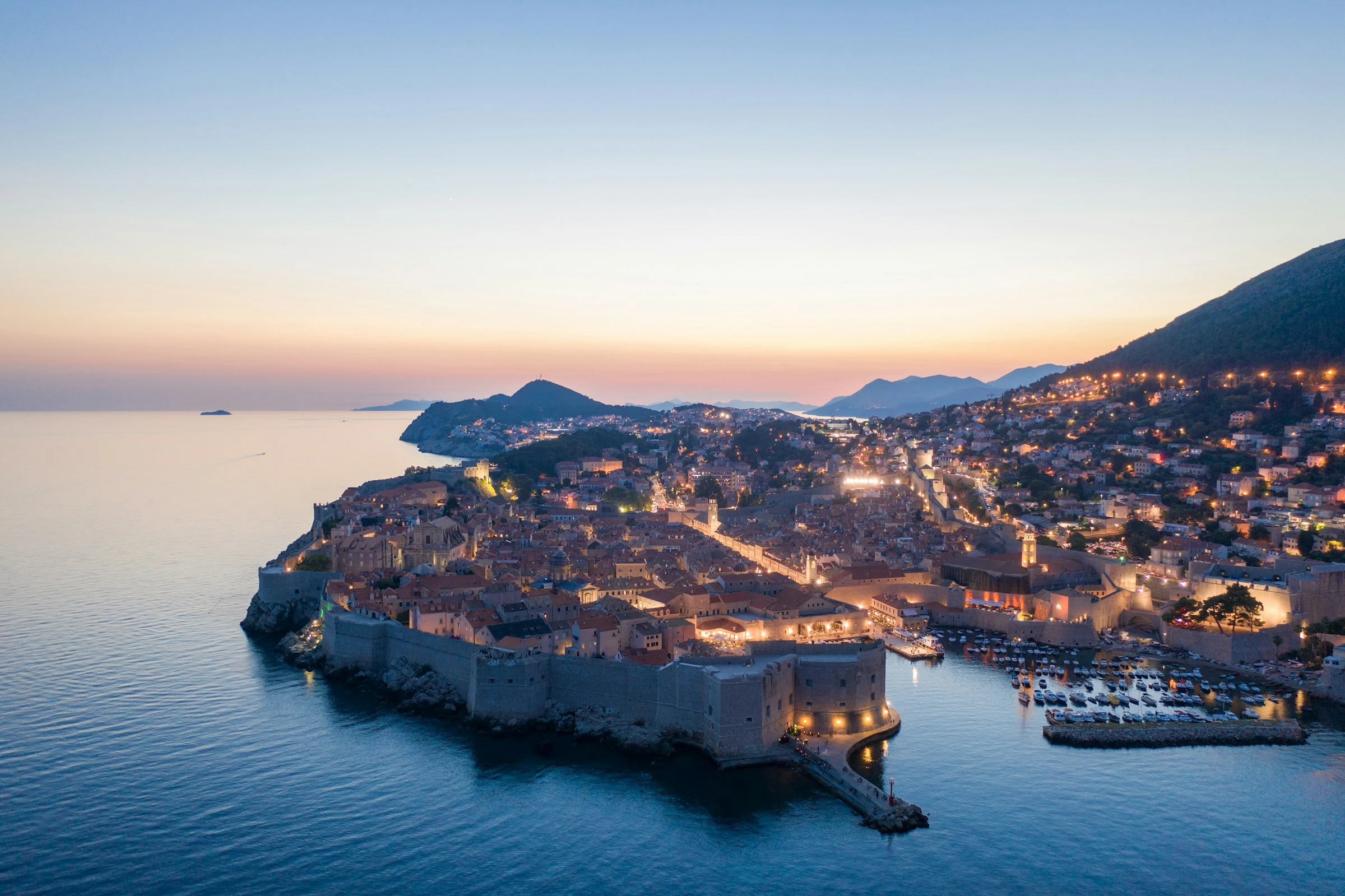
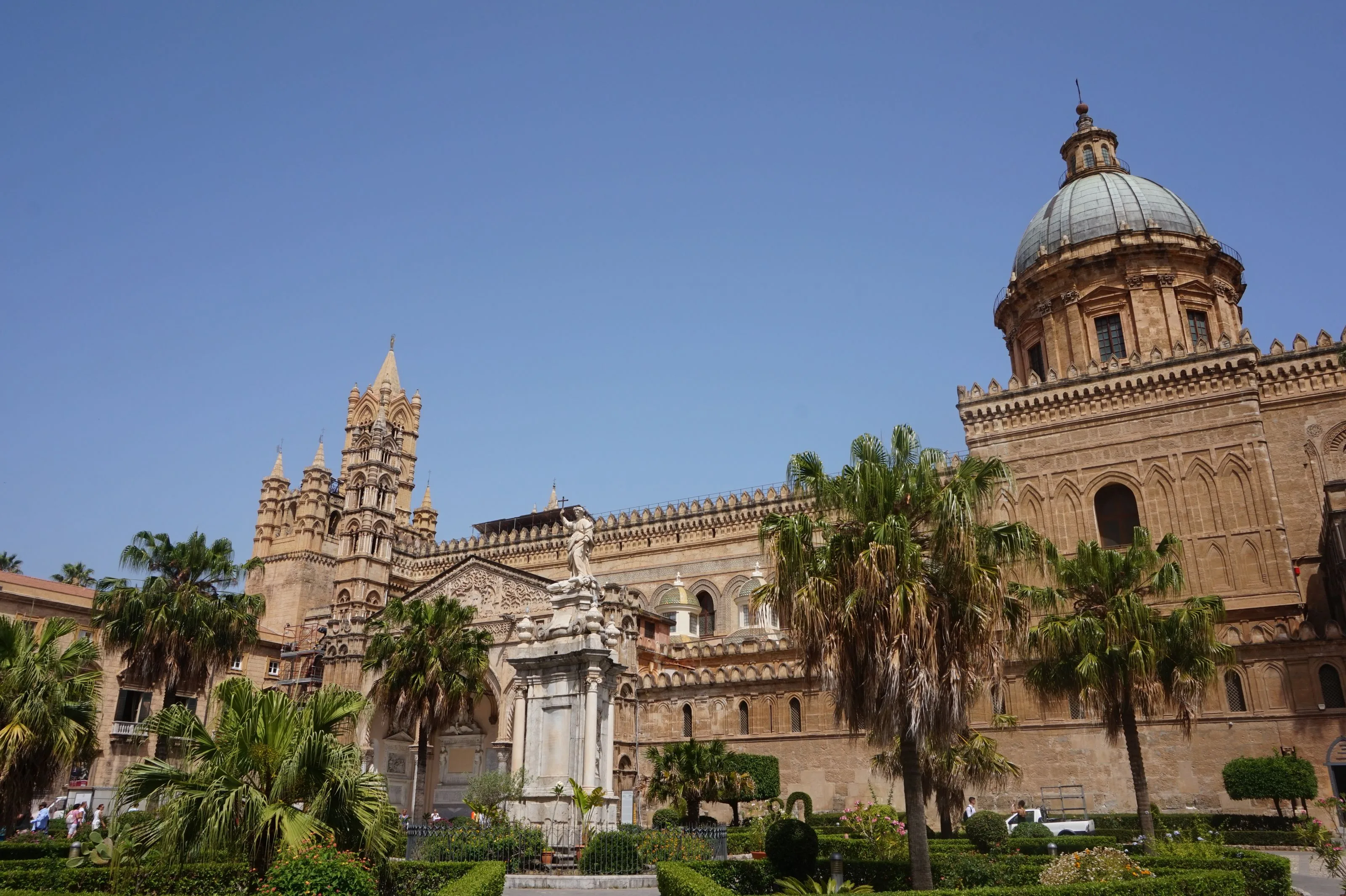
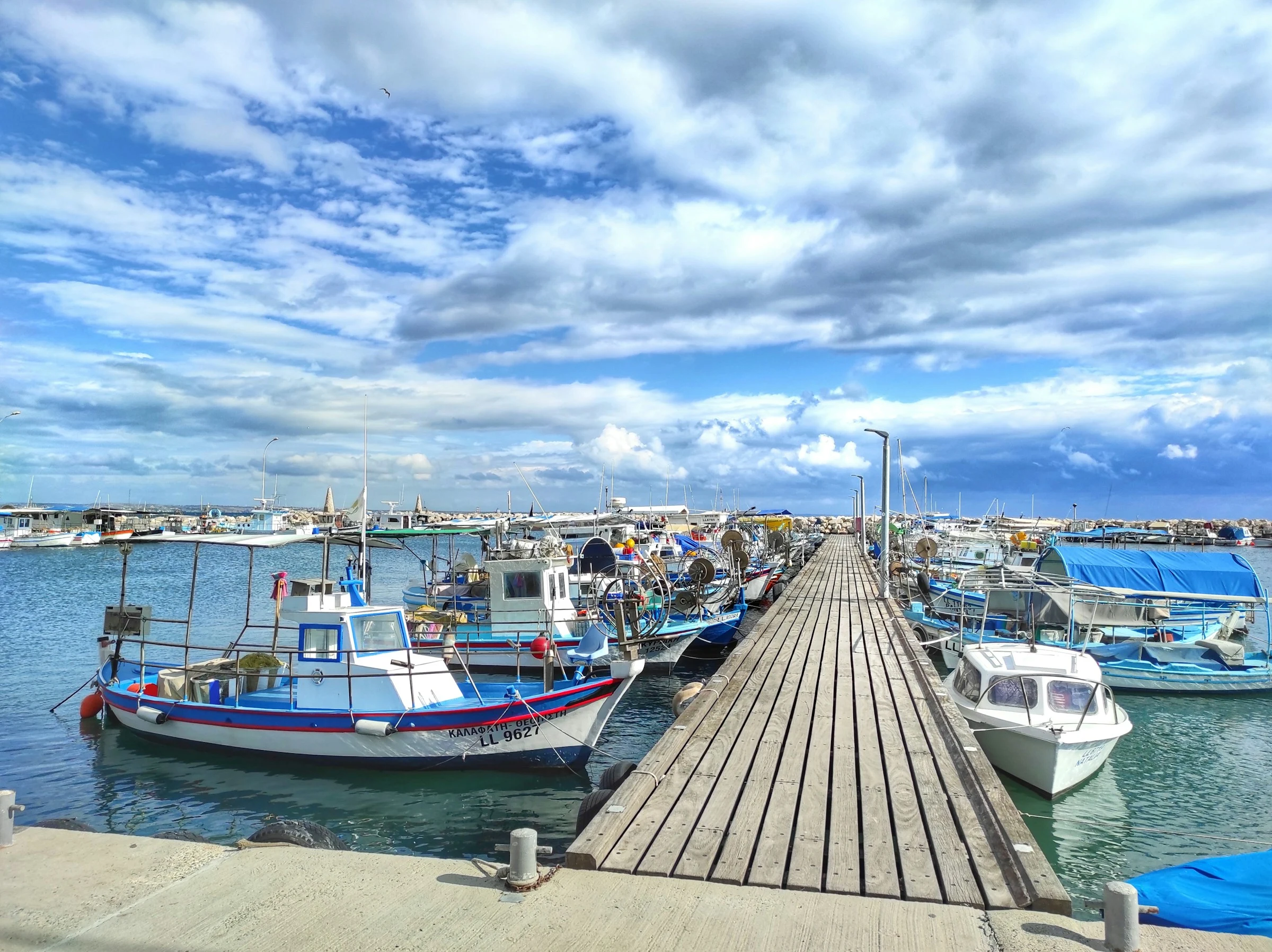
Wikivoyage (EN) also notes that Malta can be reached by sea from Sicily: Virtu Ferries sails between Pozzallo and Valletta. To compare Mediterranean breaks, you can also track Palermo (PMO), Larnaca (LCA) or Dubrovnik (DBV): these cities have their own SniperAir page and price alert.
Landmarks
Ramparts, a co-cathedral and gardens above the harbours
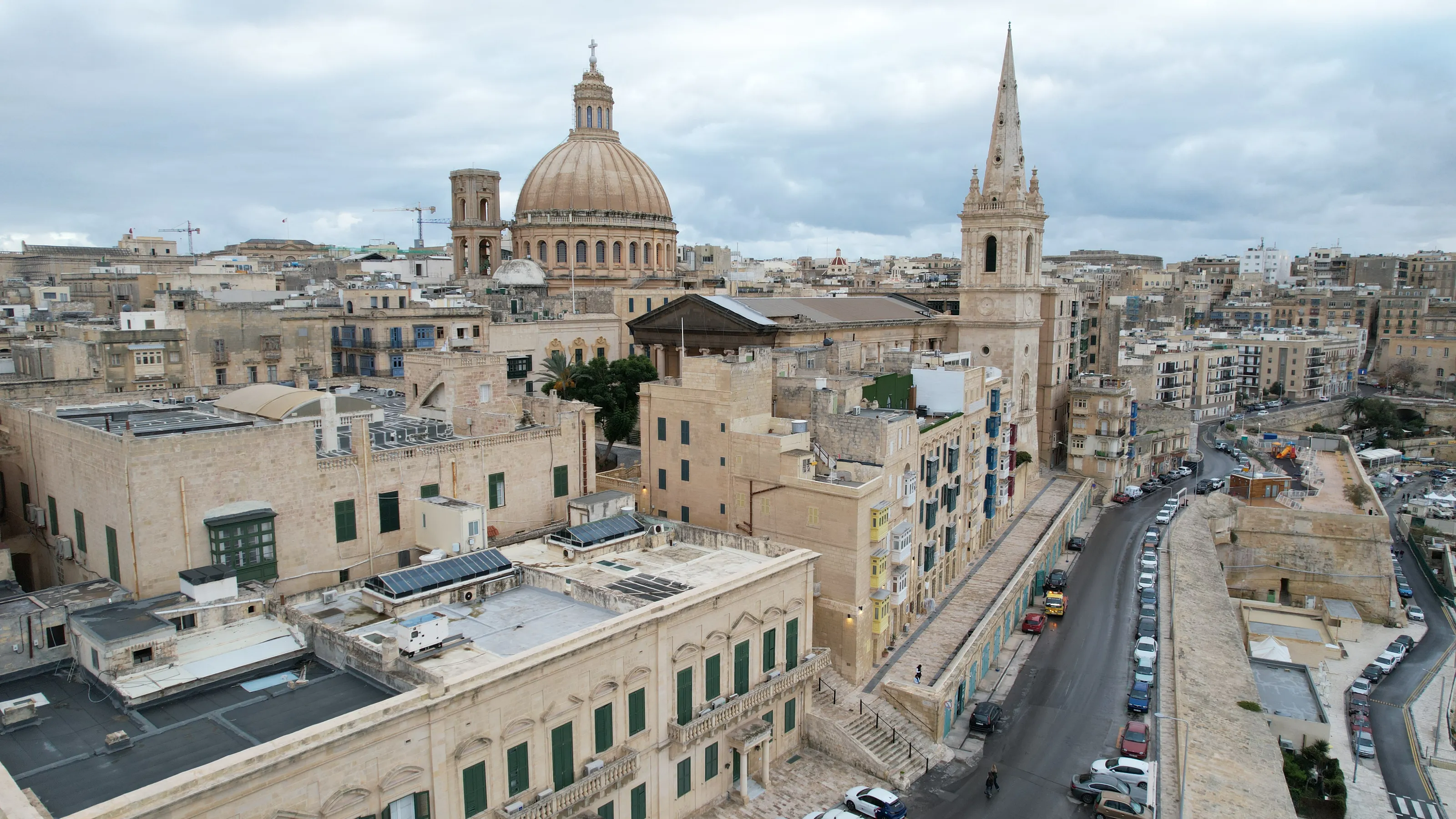
Valletta is explored on foot: the peninsula is only a few kilometres long and Republic Street runs from City Gate to Fort St Elmo. The five pictures below show views that come up again and again in travel accounts.
A grid plan and domes
Wikipedia (FR) notes that Valletta is one of the few Renaissance cities in Europe built on a grid. Wikipedia (EN) credits the design to the Italian engineer Francesco Laparelli, with the Maltese architect Girolamo Cassar taking over the works. From above, flat pale stone rooftops line up straight streets running down to the sea, under domes and bell towers.
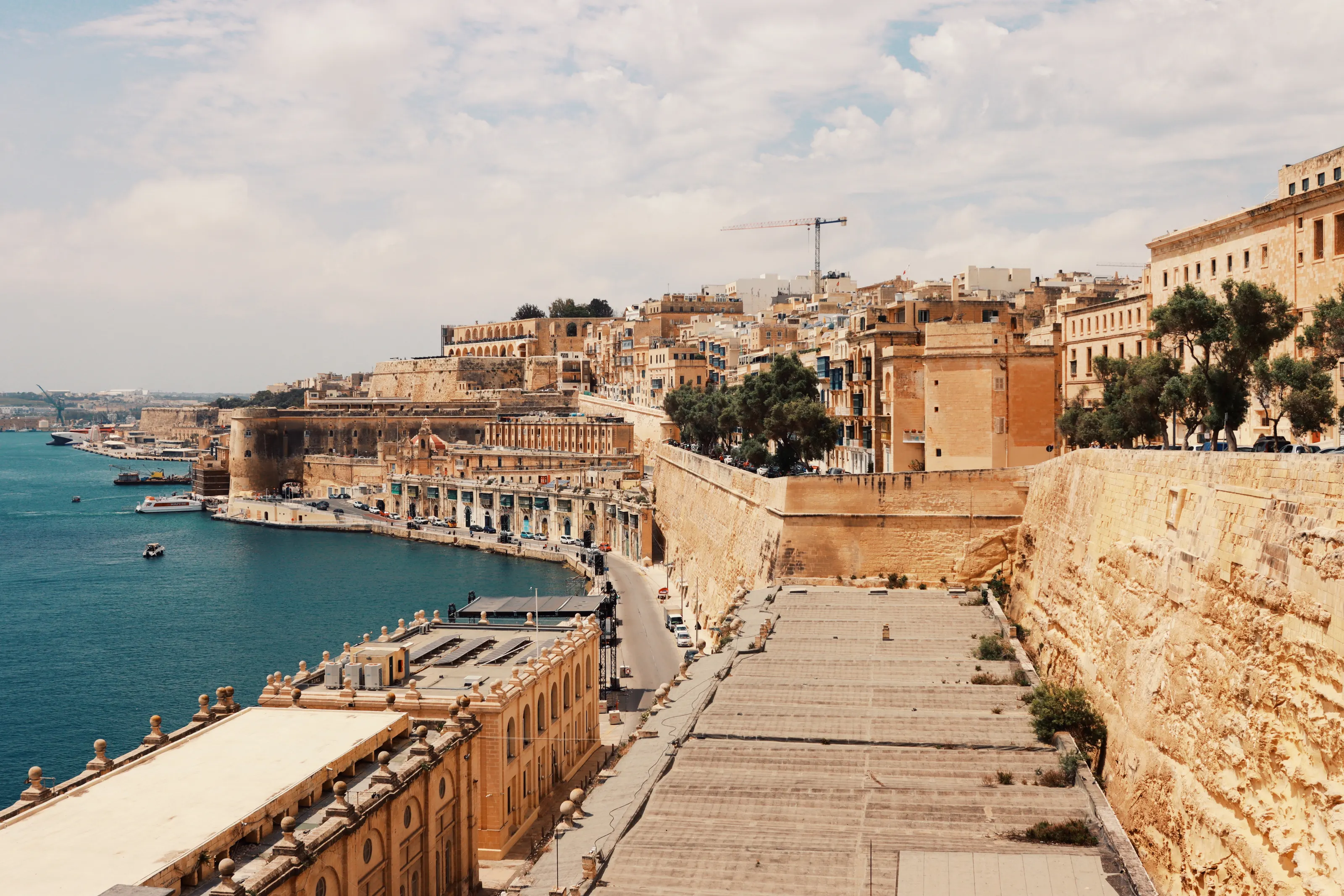
Ramparts and waterfront
Wikipedia (EN) describes a Baroque city ringed by bastions, curtains and cavaliers, badly scarred by the Second World War, including the Royal Opera House destroyed in 1942. Wikivoyage (EN) describes a coastal walk around the ramparts that takes about 30 minutes and calls for sturdy shoes because some stretches are rocky. Ferries to Sliema and to the Three Cities dock at the foot of the walls.
Sloping streets and wooden balconies
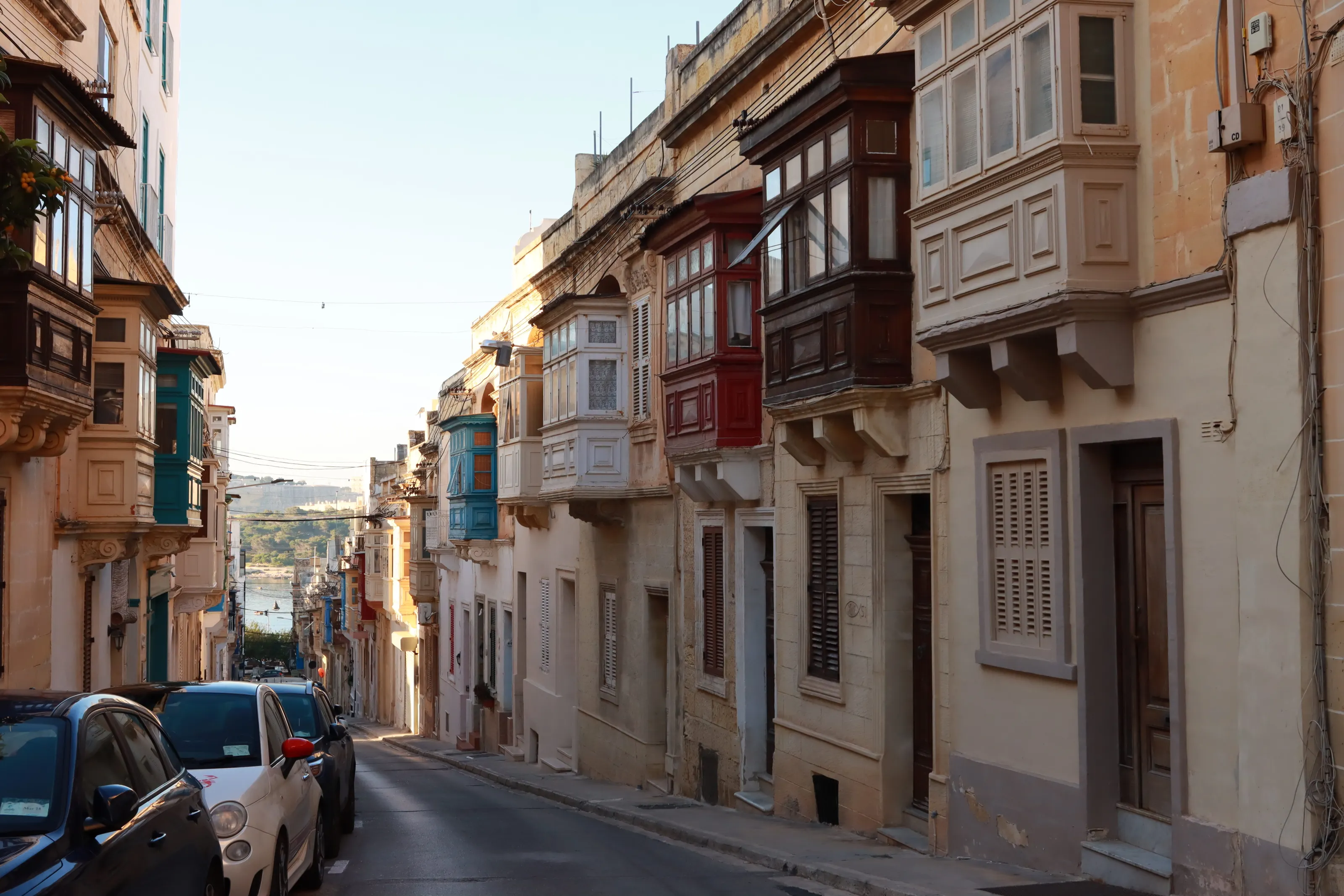
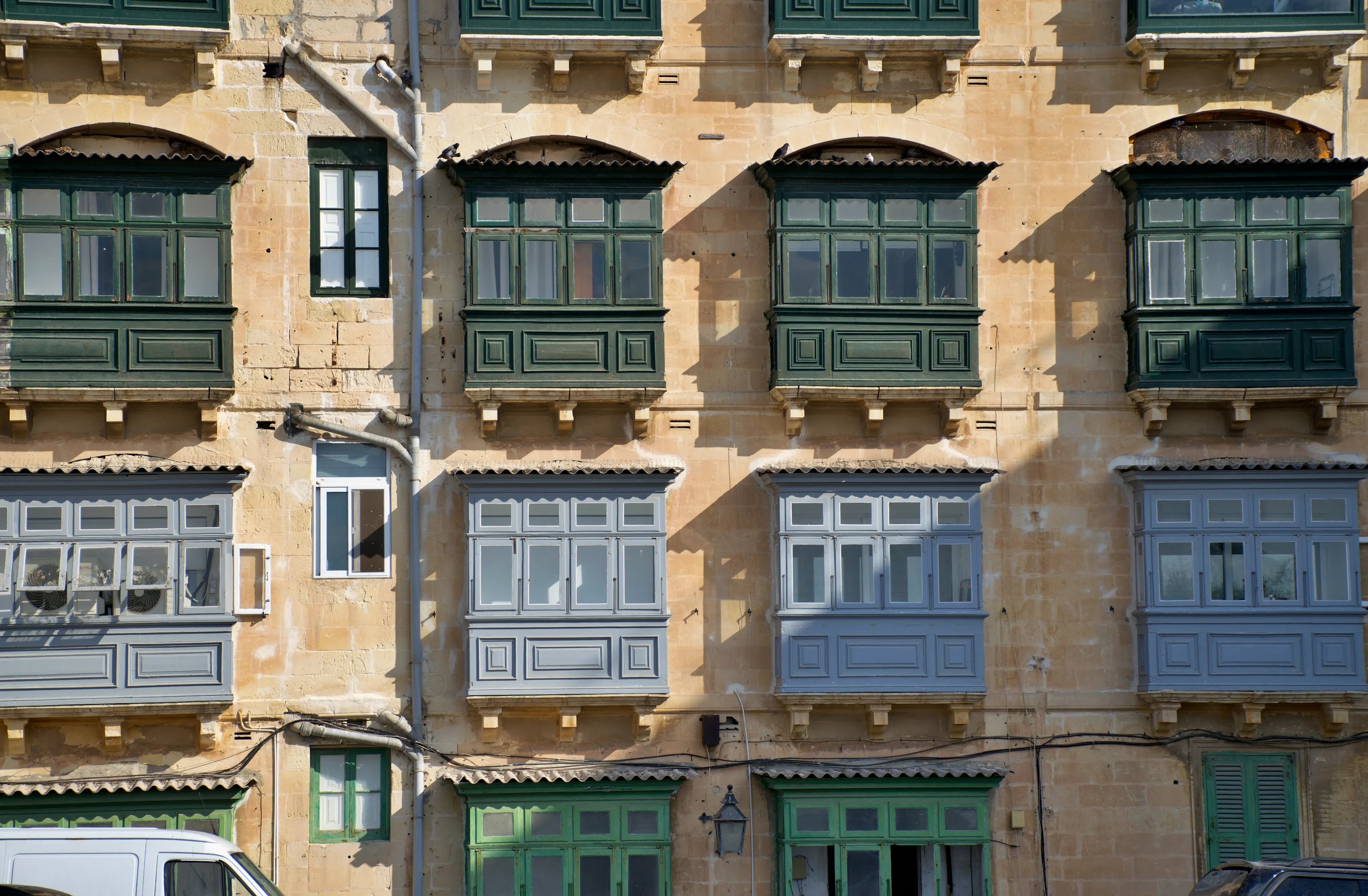
The gallarija, an ornate closed wooden balcony, is a typical element of traditional Maltese architecture according to Wikipedia (EN). Valletta's streets follow the ridge, and many include stairs, which makes walking more tiring than it looks according to Wikivoyage (EN).
St John's Co-Cathedral
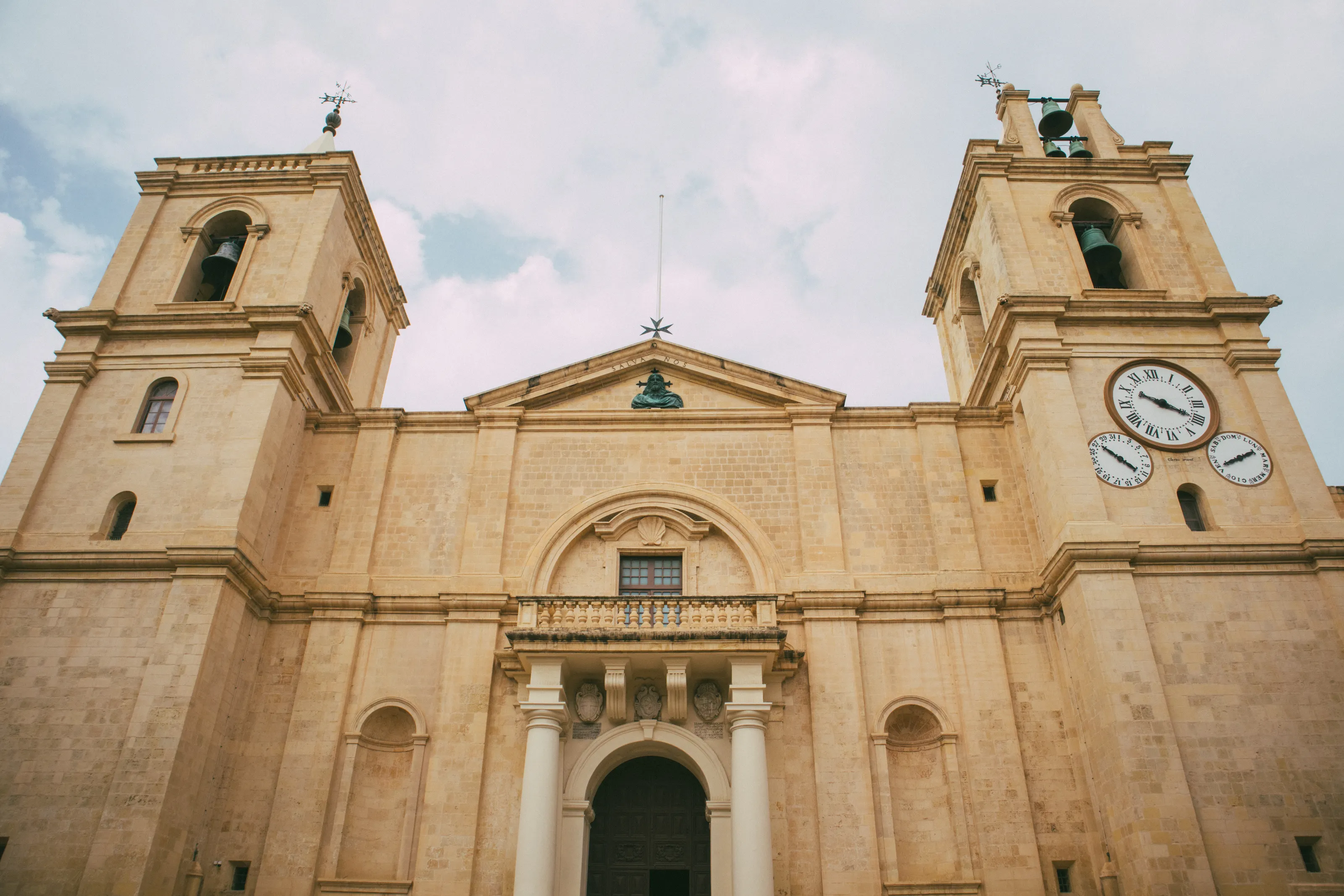
St John's Co-Cathedral was built between 1573 and 1578 to plans by Girolamo Cassar according to Wikipedia (EN). Plain outside and sumptuous inside, it has a Baroque interior by Mattia Preti from the 17th century, a floor of knights' tombstones and Caravaggio's Beheading of Saint John the Baptist, according to Wikivoyage (EN) and Wikipedia (FR).
Stone houses and their balconies
Pale stone facades pierced by closed balconies painted green, blue or brown make up the old town's skyline. The gallarija became widespread only in the 17th century according to Wikipedia (EN), and older views of Valletta show no covered balconies.
Other places are worth a detour: the Upper Barrakka Gardens, the highest point of the city walls with a view over the Grand Harbour and the Three Cities according to Wikipedia (EN); the Saluting Battery below; the Barrakka Lift, which links the wharf to the city level in 23 seconds according to Wikivoyage (EN); Fort St Elmo at the tip of the peninsula; the Grandmaster's Palace, now the President's office; City Gate and Parliament House, designed by Renzo Piano and built between 2011 and 2015; and the Manoel Theatre of 1731, one of the oldest working theatres in Europe.
Museums and culture
Museums: archaeology, fine art and war
The National Museum of Archaeology
Housed in the Auberge de Provence on Republic Street, it shows objects from the Maltese Neolithic period, from 5200 to 2500 BC according to Wikipedia (ES), including the Sleeping Lady from the Ħal Saflieni Hypogeum and the Venus of Malta. Wikivoyage (EN) mentioned partial renovation of the galleries: check what is open before you go.
MUŻA, the national art museum
It has occupied the Auberge d'Italie since 2018 according to Wikipedia (EN); before that, the collection was shown at Admiralty House from 1974 to 2016. It gathers works by Maltese and foreign artists illustrating the main European styles.
Fort St Elmo and the National War Museum
Built at the tip of the peninsula after the 1551 raid and rebuilt after the 1565 siege, the fort now houses the National War Museum according to Wikivoyage (EN). It is where the knights held back the Ottoman assault for a month.
The Lascaris War Rooms and Casa Rocca Piccola
The underground Lascaris War Rooms were the British headquarters during the defence of Malta in the Second World War according to Wikivoyage (EN). Casa Rocca Piccola, a noble residence, appears in the list of museums and civic monuments in Wikipedia (FR).
St James Cavalier and the cultural scene
A former gun platform, St James Cavalier became a creativity centre in 2000, with a theatre, a cinema and galleries, according to Wikipedia (EN). The city also hosts the Valletta International Baroque Festival every January according to Wikivoyage (EN). No admission price is published here.
Food and drink
Food and drink: pastizzi, rabbit, fish and ftira
An island and Mediterranean cuisine
According to Wikipedia (EN), Maltese cuisine shows strong Italian, especially Sicilian, influence, along with Arab, Spanish, French and later British touches, a result of the island's position on trade routes and its rulers, including the Knights of St John.
Dishes to try
Pastizzi, pastries filled with ricotta or peas, are sold at neighbourhood pastizzerie. Stuffat tal-fenek, a rabbit stew, is often called the national dish according to Wikipedia (EN). Lampuki, or dolphinfish, is a seasonal fish in summer and autumn according to Wikipedia (DE); aljotta, a fish broth with garlic and herbs, is the Maltese take on bouillabaisse. Ftira, a ring-shaped bread, comes with local toppings.
Markets, cafes and wine bars
A farmers market is held on Sunday in front of St James Cavalier, and fresh fish is sold in the morning next to the Castille Curtains according to Wikivoyage (EN). Wine bars occupy old cellars in the lanes of the centre, and terraces on the ramparts look out over the harbour.
Getting around
Getting around Valletta
On foot across the peninsula
The city is small and best explored on foot, but it is built on a ridge: expect stairs and wear good shoes according to Wikivoyage (EN) and (DE). Republic Street and Merchants Street are pedestrian according to Wikipedia (FR).
Buses, taxis and controlled access
Almost every bus on the island starts from the terminus outside City Gate. Traffic inside the walls is restricted to taxis and residents according to Wikivoyage (FR), with a controlled vehicle access scheme in place since 2007 according to Wikipedia (EN). A fleet of electric taxis serves the centre. Malta has no railway.
Ferries, dghajsa and the lift
A ferry crosses Marsamxett Harbour to Sliema and another reaches the Three Cities roughly every 30 minutes according to Wikivoyage (EN). The dghajsa, colourful traditional boats, also cross the Grand Harbour. The Barrakka Lift links the wharf to the upper level of the city.
Horse-drawn karozzin
Wikivoyage (EN) and (DE) mention the horse-drawn karozzin, whose price should be agreed before setting off. No fare is published here.
Budget and precautions
Budget and precautions
Price level
Malta uses the euro. According to Wikivoyage (EN), accommodation inside Valletta is rather expensive, and most visitors stay in Sliema or on the north coast; pastizzi and sandwiches remain cheap meals. No figures are published here: only one source gives any and prices change from year to year.
Precautions
Streets are steep and often stepped: wear walking shoes, especially on the rocky path along the ramparts, which Wikivoyage (EN) advises avoiding in wet weather. For safety and entry rules, check your own government's official advice before you travel.
When to go
When to go to Valletta
Spring (March to May)
Between the wet winter and the dry summer, temperatures rise gently, which suits walking the sloping streets. Exact figures vary between sources: check monthly averages before you book.
Summer (June to August)
Hot and dry according to Wikipedia (EN): highs of about 32 C and lows of about 23 C in August at the Luqa station. Wikipedia (DE) speaks of around 30 C. Rain is rare but humidity stays high by the sea.
Autumn (September to November)
Still mild, with rain returning: about 81 percent of the 519 mm annual total falls between October and March according to Wikipedia (DE).
Winter (December to February)
Mild but wetter: highs of about 16 C and lows of about 10 C in January according to Wikipedia (EN). Snow is almost unknown, the last measurable fall dating from the winter of 1963 according to the same source.
The climate is Mediterranean, with hot, dry summers according to Wikipedia (EN) and (DE). The city was even listed as the sunniest in Europe in 2016 according to Wikipedia (EN). For comfortable walks on the ramparts, spring and autumn are the most pleasant; summer suits those who want sea time.
By length of stay
How many days in Valletta
The centre in a day
One day is enough for City Gate, Republic Street, St John's Co-Cathedral, the Grandmaster's Palace and the Upper Barrakka Gardens.
Forts and museums
With two days, add Fort St Elmo, the archaeology museum, MUŻA and a ferry crossing to the Three Cities.
A base for the island
With three days, keep Valletta as a base and head to Mdina, the prehistoric temples or Gozo by bus and boat, then come back for a final evening on the ramparts.
In pictures
Valletta in pictures
You might also like
Similar destinations
FAQ
Frequently asked questions about flights to Valletta
Where is Valletta's airport?
Malta International Airport (MLA) is in Luqa, 8 km from the capital. The X4 express bus reaches City Gate in about 20 minutes according to Wikivoyage (EN).
What currency is used in Valletta?
Malta uses the euro. Cards are widely accepted, but keep a little cash for kiosks and markets.
What should I see first in Valletta?
St John's Co-Cathedral and its Caravaggio, the Grandmaster's Palace, the Upper Barrakka Gardens, Fort St Elmo and a walk along the ramparts.
When is the best time to go to Valletta?
Spring and autumn for walking without the heat, or summer for the sea. Winter is mild but wetter according to Wikipedia (EN) and (DE).
Is Valletta walkable?
Yes: the peninsula is only a few kilometres long and Republic Street is pedestrian, but stairs and slopes can be tiring according to Wikivoyage (EN).
Can I see the rest of Malta from Valletta?
Yes: most buses on the island start from the terminus outside City Gate, and ferries cross the harbour to Sliema and the Three Cities.
How much does a flight to Valletta usually cost?
The price depends mainly on your departure city, the time of year and how far ahead you book. The "opportunities" section above shows real examples of prices SniperAir has already detected to this destination.
How do I get alerted when a flight to Valletta drops below my budget?
Create an alert profile with your departure airport, Valletta (MLA) as the destination and your maximum budget. You are notified automatically as soon as a matching price is detected. SniperAir monitors and alerts, it does not sell or book tickets.
Ready to head to Valletta?
Set your budget and let SniperAir monitor fares for you.
Create my alert