
Cheap flights to Chișinău
Set your departure airport and maximum budget: SniperAir tracks prices to Chișinău and alerts you the moment a deal matching your criteria appears.
Quick summary
Country
Moldova
Continent
Europe
Airport
RMO
Currency
Moldovan leu (MDL)
Time zone
UTC+2 (UTC+3 during daylight saving time)
Deals already spotted to Chișinău
Real flight examples detected by SniperAir, with their reference price.
Loading examples…
Why track Chișinău with SniperAir
A green, post-Soviet capital with a wine culture
Choose your departure
Enter your departure airport and your maximum budget for a flight to Chișinău (RMO).
SniperAir keeps watch
Our systems continuously compare new prices with the real price history of the route. SniperAir monitors prices and alerts you: it does not sell or book tickets.
You receive an alert
As soon as a price matches your criteria, you are notified, without having searched for anything yourself.
Chișinău is the capital and largest city of Moldova. Founded in 1436 as a monastery village according to Wikipedia (EN) and (ES), it was reshaped in the 19th century under the Russian Empire, with broad avenues around a main boulevard named after Stephen the Great. The municipality has about 720,000 inhabitants at the 2024 census according to Wikipedia (EN) and (DE). Wikivoyage (EN) describes it as a very post-Soviet city, with modern buildings, parks, cafes and restaurants; it is also a base for exploring the country's vineyards and cellars. Flights to Chișinău change price with the season and the departure city, so a SniperAir alert saves you from checking every day. You set your budget, we compare new fares with the real price history of the route, and we let you know.
Airport and getting into town
Eugen Doga Airport, south-east of the city
Chișinău Eugen Doga (RMO)
Chișinău Eugen Doga International Airport (RMO) is Moldova's main airport and the only one with regular passenger flights according to Wikipedia (EN) and (FR). It lies about 13 km south-east of the centre. Its IATA code changed from KIV to RMO on 18 January 2024 according to Wikipedia (EN). To reach the centre, Wikivoyage (EN) mentions trolleybus 30, which leaves in front of the arrivals exit, and bus 33 to the railway station; taxis also run, and you should ask for the meter to be switched on or agree the price in advance. Lines and timetables change: check before you travel.
Sources disagree on the distance between the airport and the centre (13 or 14 km), so we write "about 13 km". No bus or taxi fare is published here.
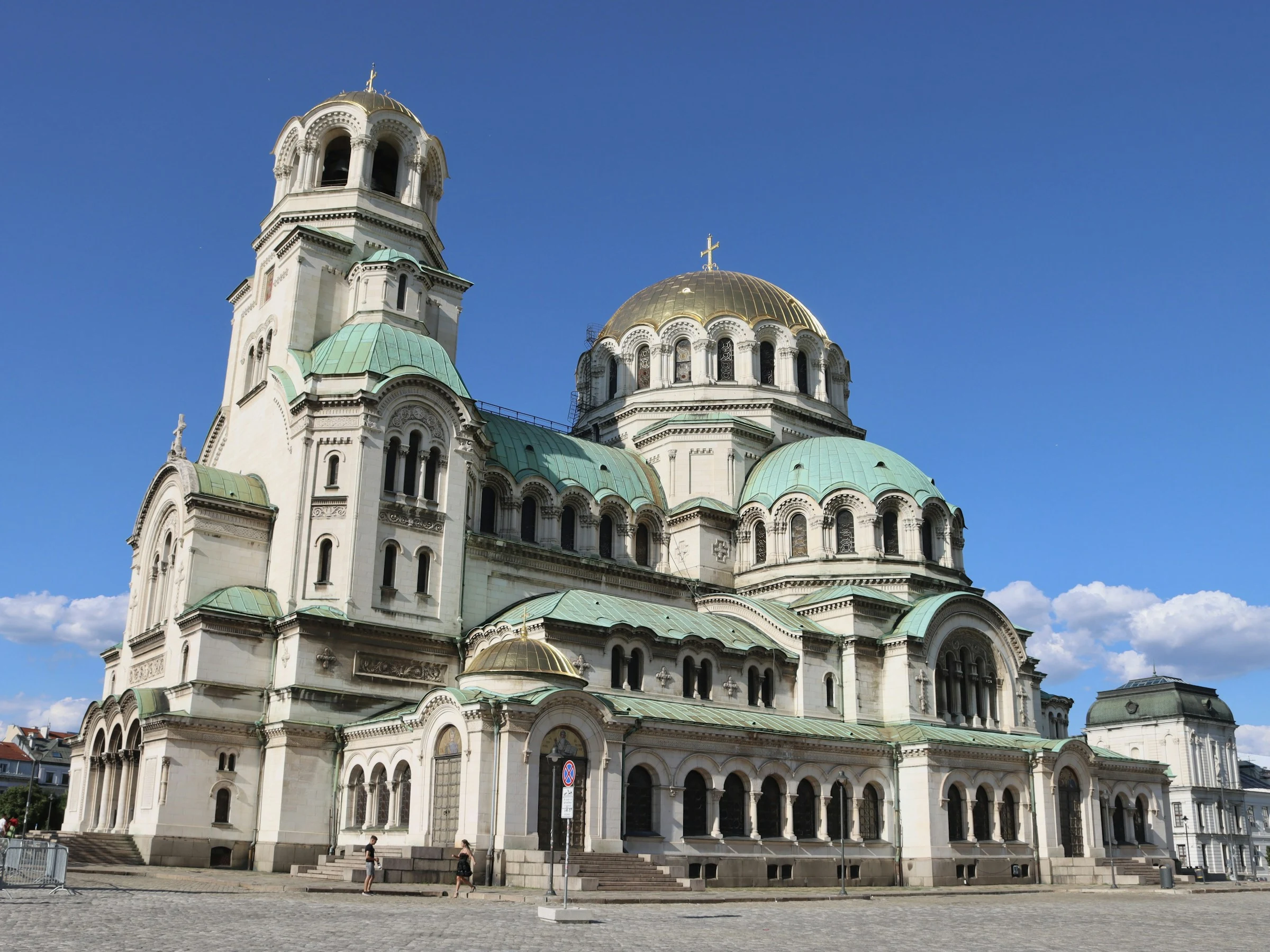
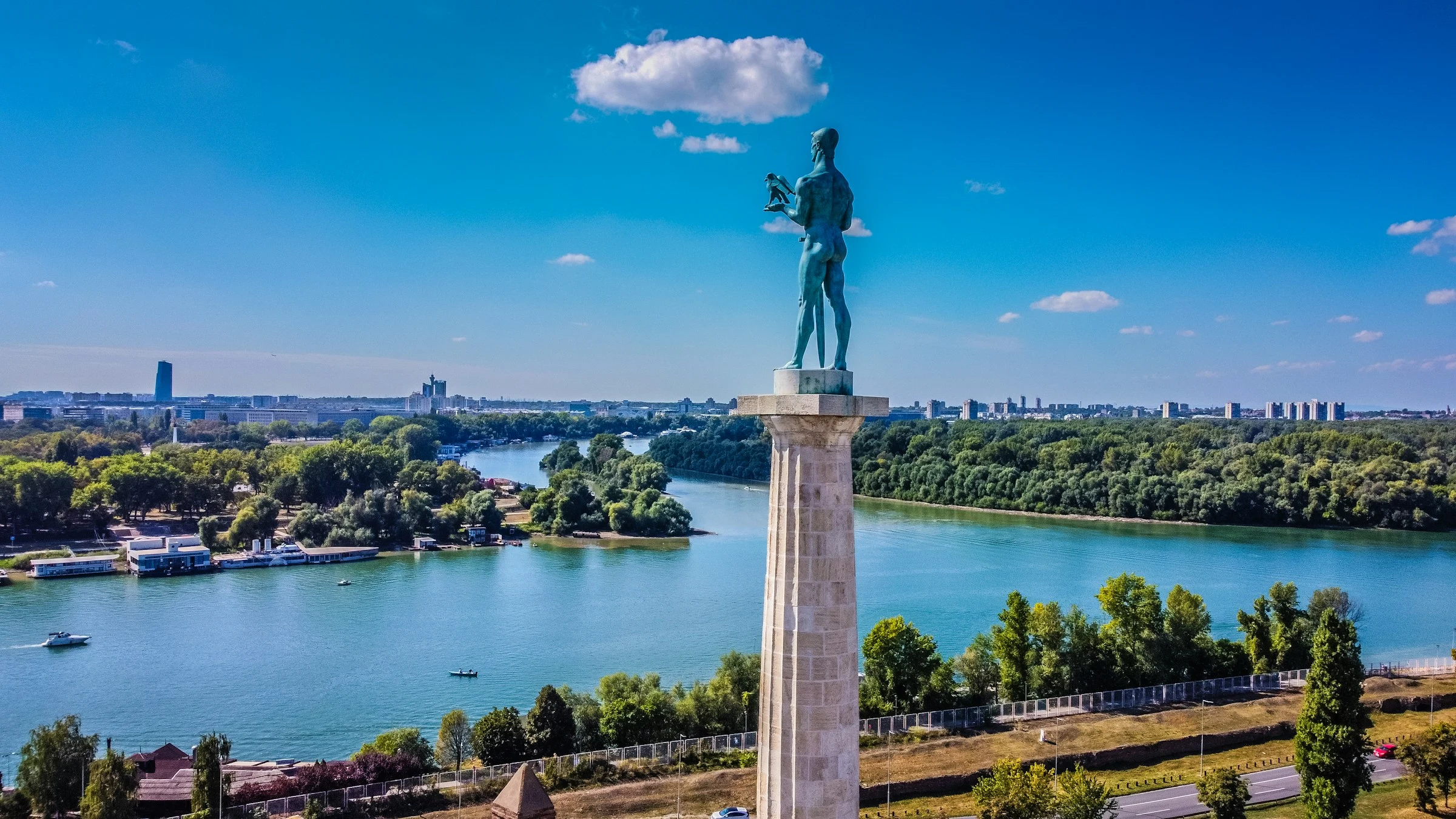
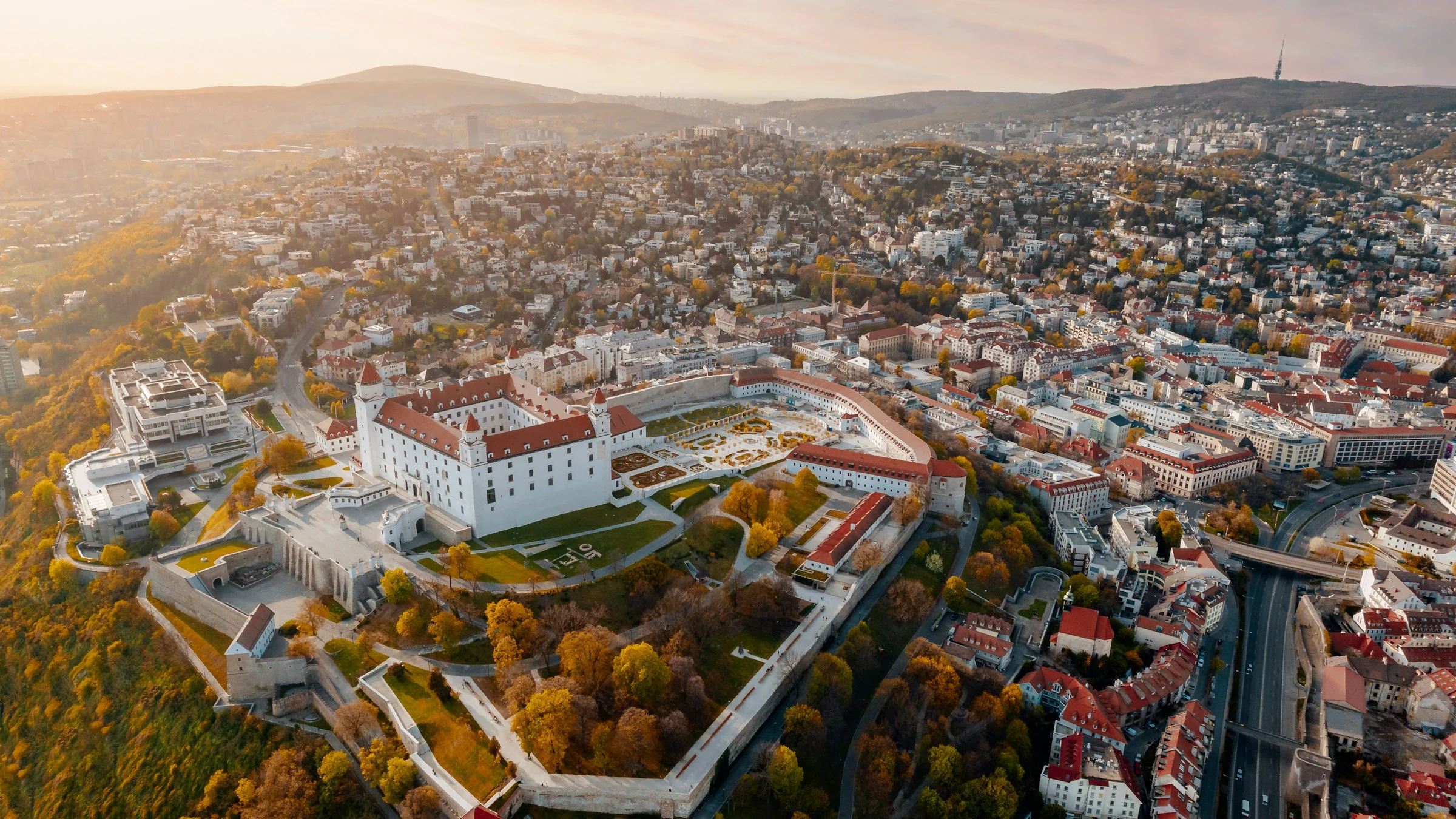
International links connect Chișinău with several European capitals. To compare with neighbouring cities in the region, you can also track Sofia (SOF), Belgrade (BEG) or Bratislava (BTS): these cities have their own SniperAir page and price alert.
Landmarks
Nativity Cathedral, Triumphal Arch and parks
Central Chișinău is best explored on foot around Stephen the Great Boulevard. The five pictures below show the places that come up most often in travel accounts.
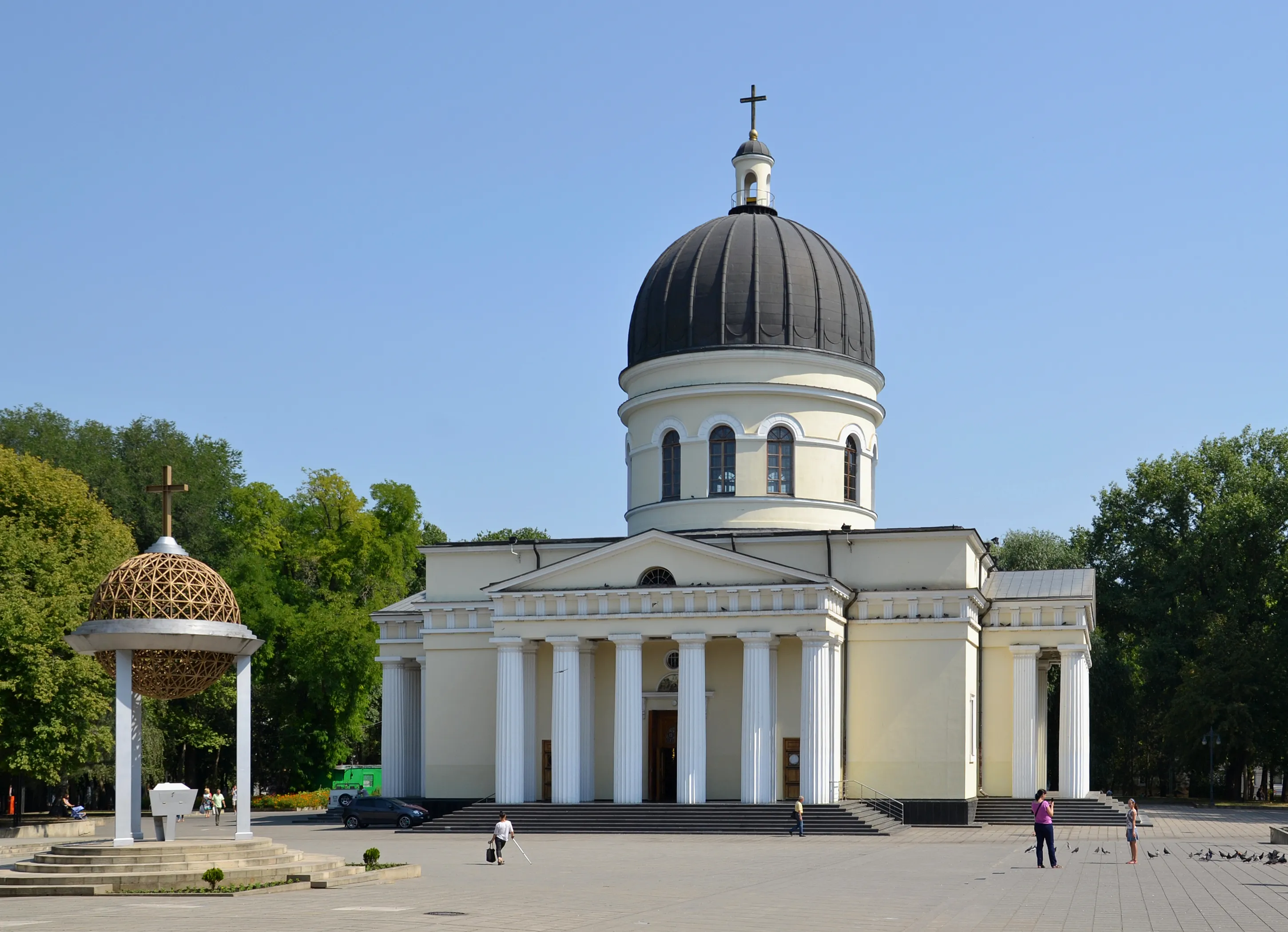
The Nativity Cathedral
The Nativity Cathedral, built between 1830 and 1836 according to Wikipedia (FR) and (DE), is the city's main church according to Wikivoyage (EN). It stands in Cathedral Park, in the very centre, and its neoclassical style contrasts with the modern buildings around.
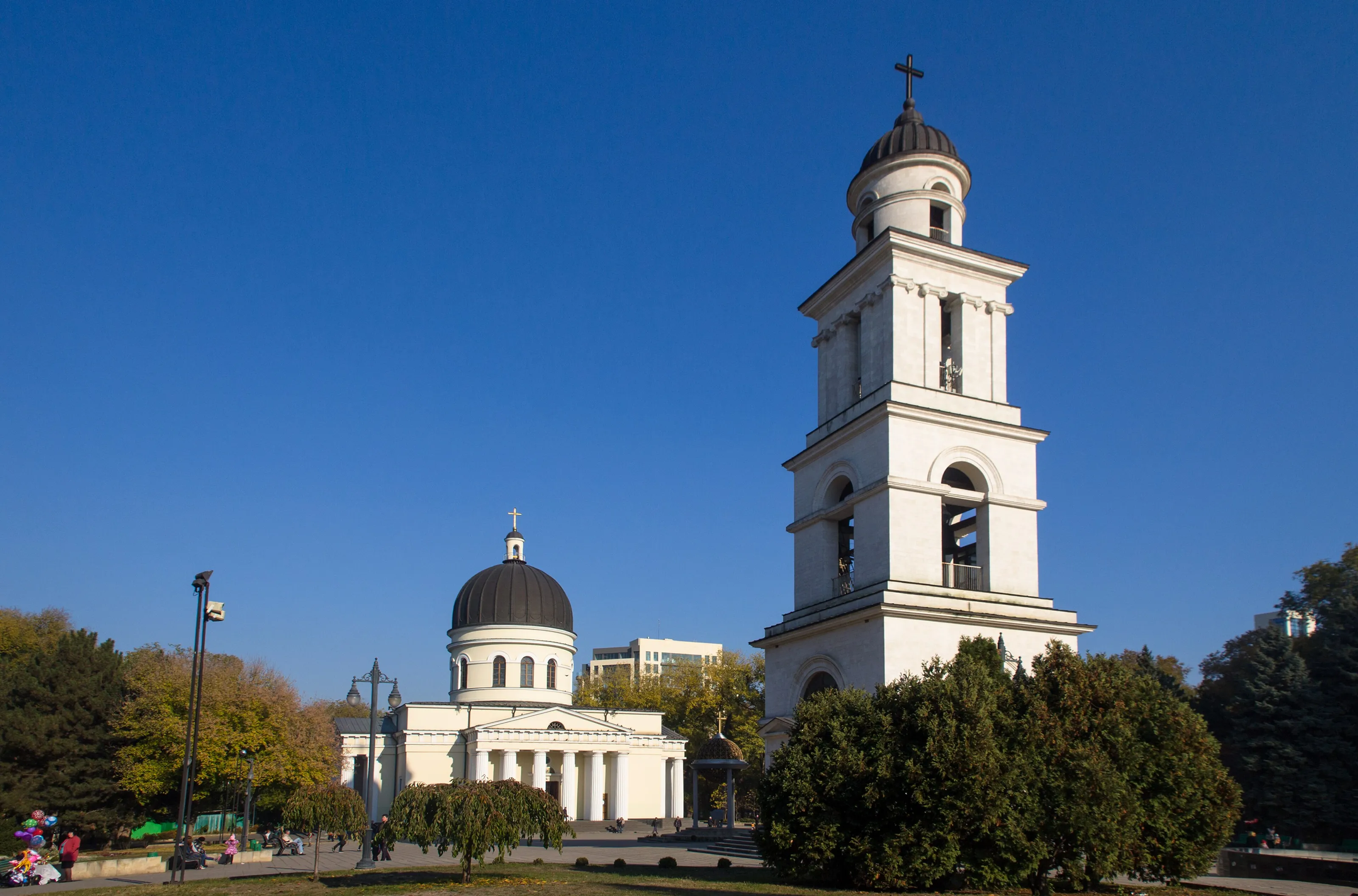
The bell tower and Cathedral Park
The bell tower was demolished in Soviet times and rebuilt in 1997 according to Wikipedia (EN). Cathedral Park also holds the flower market and, behind the cathedral, the craft souvenir bazaar according to Wikivoyage (EN).
Inside the cathedral
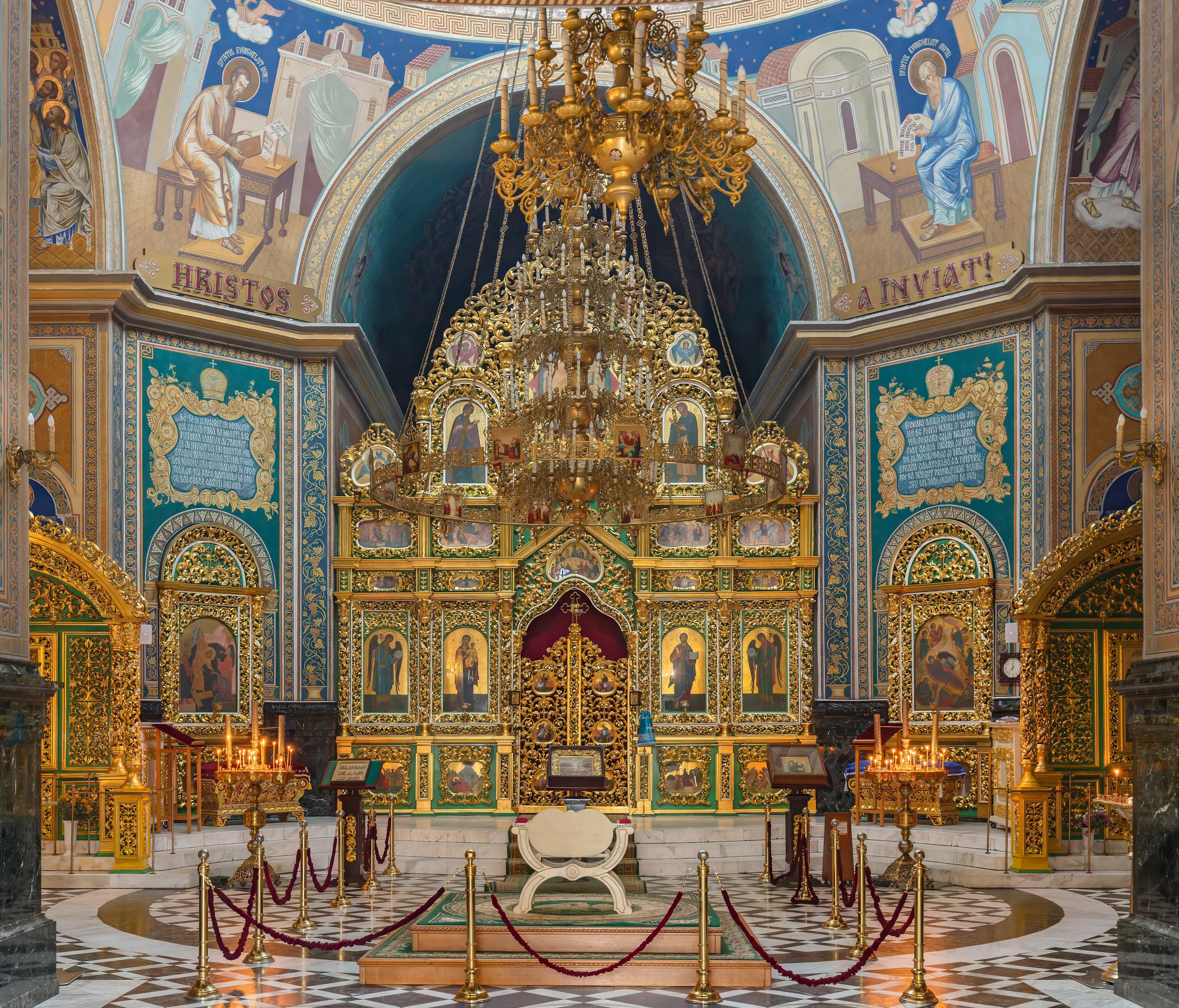
The interior is decorated with frescoes and a golden iconostasis under a large chandelier. It is a quiet visit, to be made in suitable dress, as in any Orthodox place of worship; service times may limit access.
Stephen the Great Park
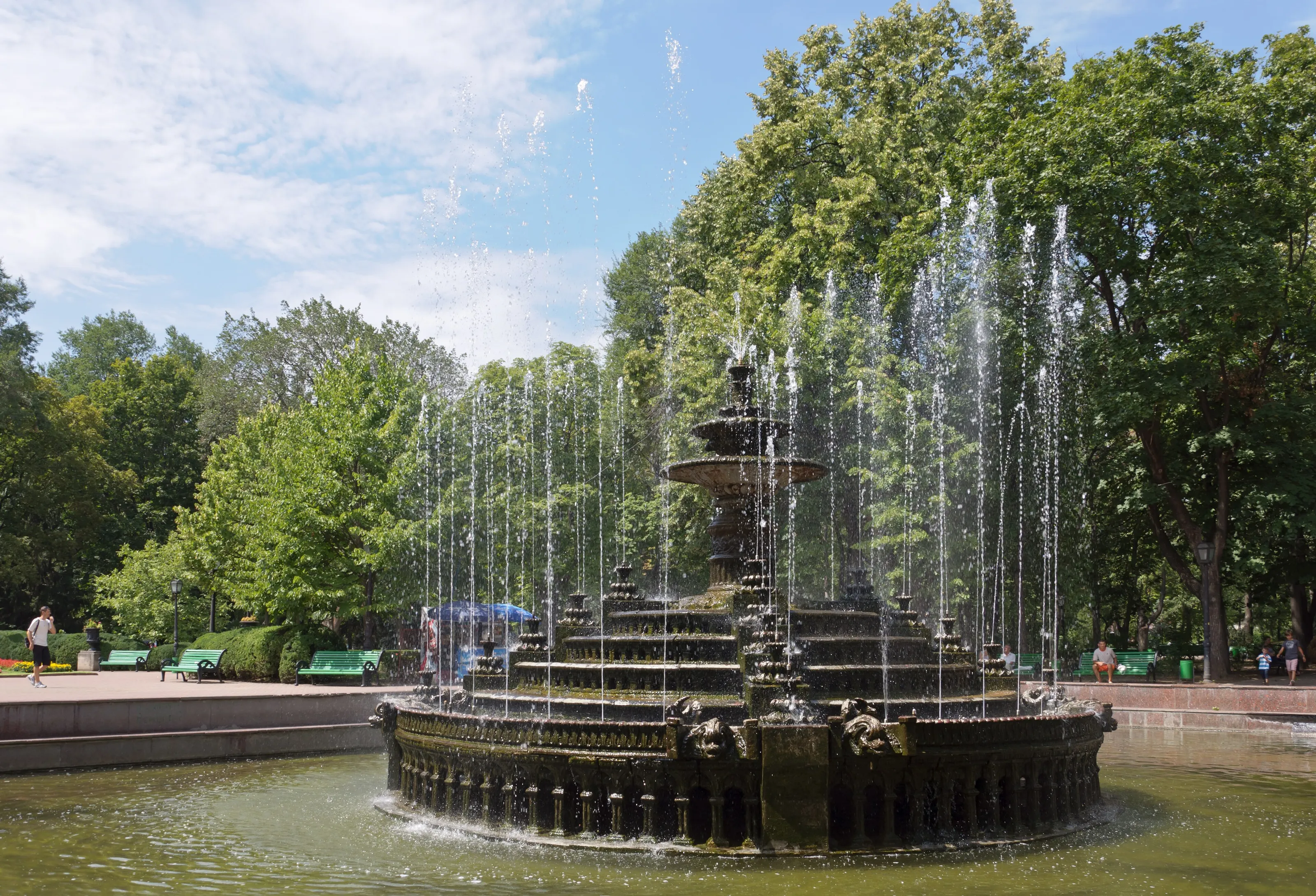
The monument to Stephen the Great, 15th-century prince of Moldavia, marks the entrance to the park of the same name according to Wikivoyage (EN). Its shaded paths and its fountain make it one of the centre's favourite places for a walk.
The Triumphal Arch
The Triumphal Arch, erected in 1841 by Luca Zaușkevici according to Wikipedia (FR) and (DE), stands in Cathedral Park, opposite the government building, at the centre of the Great National Assembly Square according to Wikivoyage (EN).
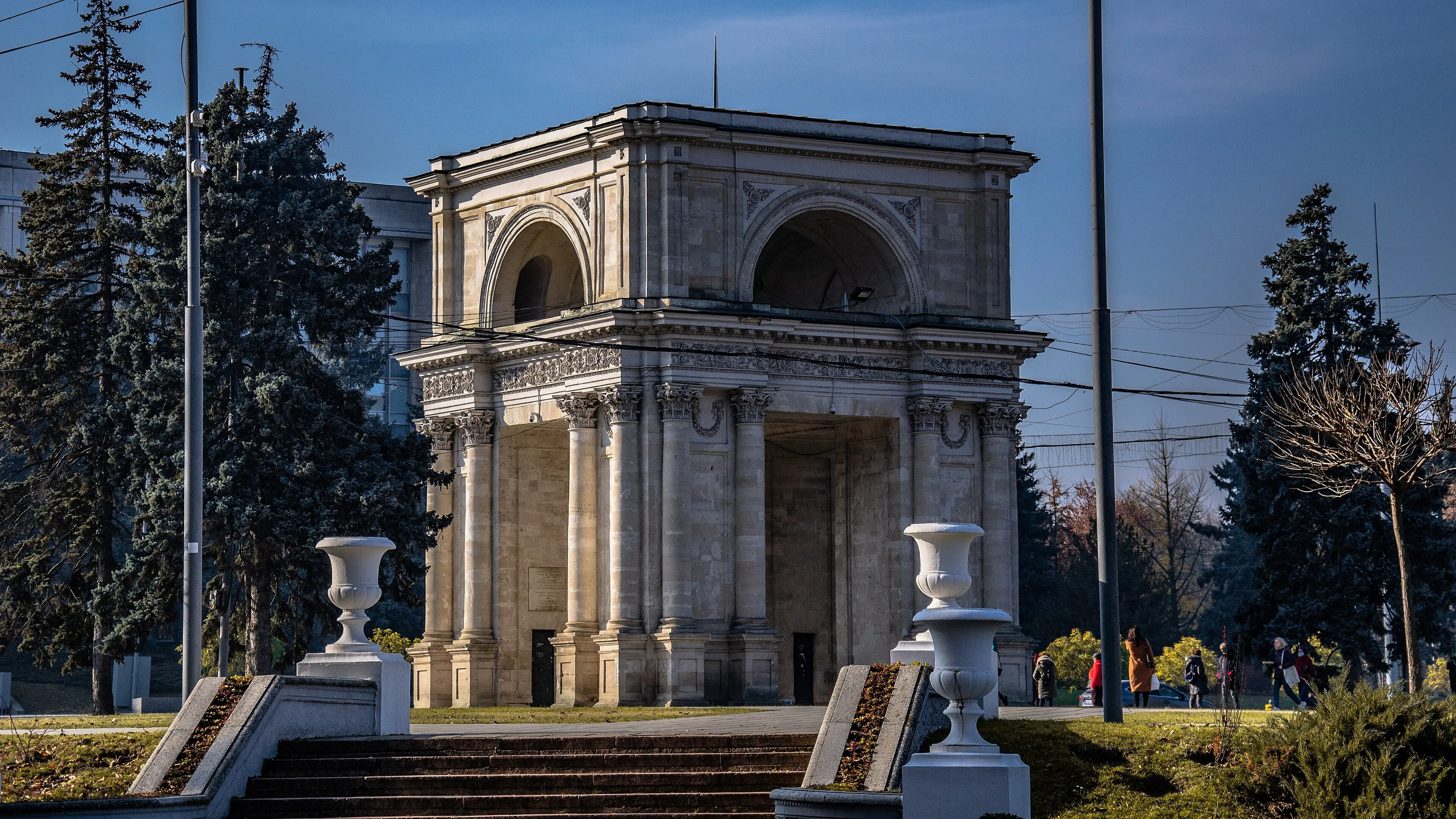
Other places are worth a detour: Valea Morilor Park, with its lake and a 2.5 km marked circuit for walking and cycling according to Wikivoyage (EN); the botanical garden, the largest park in the city according to the same source; the Village Museum with its wooden churches; wooded Râșcani Park; and the Old Town, a historic quarter mixing neoclassical buildings and cobbled streets.
Museums and culture
Museums: history, ethnography and fine arts
The National Museum of Archaeology and History
It traces the history of Moldova; Wikivoyage (EN) advises looking at the building's walls, floors and roofs too, and notes some explanations in English.
The National Museum of Ethnography and Natural History
Wikivoyage (EN) mentions a collection of traditional dress, a scale model of Moldova and a skeleton of a Deinotherium. The Islamic-inspired facade is striking in the late afternoon.
The National Museum of Fine Arts
It presents Moldovan art and other collections according to Wikivoyage (EN); check opening hours, which change with the season.
The Pushkin House Museum and the city history museum
The house where the Russian poet Alexander Pushkin lived in exile from 1820 to 1823 can be visited according to Wikivoyage (EN). A small local history museum occupies the city's water tower.
Food and drink
Food and drink: central market, cheeses, mămăligă and wine
Markets and cheeses
The Central Market (Piața Centrală) covers more than two city blocks in the centre and sells fruit, vegetables, honey and cheeses, according to Wikivoyage (EN); cheese sellers let you taste before buying. Caș is a fresh cheese, while the firmer, saltier brînza goes with mămăligă, corn polenta.
Street food and restaurants
Wikivoyage (EN) mentions langos (fried dough topped with potatoes, cheese, cabbage or liver), blini and zeamă. There are also more varied restaurants, cafes and bars, with prices that vary a lot from place to place.
Wine and brandy
Wikipedia (EN) recalls that Moldova has a long winemaking tradition and that the capital hosts a national wine festival every October; Wikivoyage (EN) also recommends local brandies. The Cricova cellars, close to the city, can be visited by reservation according to Wikivoyage (EN).
Getting around
Getting around Chișinău
Trolleybuses, buses and minibuses
The network of trolleybuses, buses and minibuses (maxi-taxis) is the cheapest way to get around according to Wikivoyage (EN); the fare does not depend on the mode of transport. Maxi-taxis are increasingly rare and unreliable: pay the driver as soon as you board.
Taxis and apps
Several taxi services and booking apps operate in the city according to Wikivoyage (EN). Few drivers speak English: ask your hotel or a restaurant to call a taxi if you speak neither Romanian nor Russian, and have the meter switched on.
Train and coach
There is only one railway station in Chișinău, linking Romania and Ukraine according to Wikivoyage (EN). Three bus stations serve destinations in the country and abroad, including Bucharest and Iași: check timetables, which change.
On foot
The centre, around Stephen the Great Boulevard, can be covered on foot. Wikivoyage (EN) advises staying alert when crossing streets, as driving sometimes shows little regard for the rules.
Budget and precautions
Budget, precautions and separate regions
Price level
Moldova uses the Moldovan leu (MDL), not the euro. According to Wikivoyage (EN), simple local food is cheap, while some restaurants have prices comparable to Western Europe. No figures are published here: prices vary and change every year.
Precautions
Wikivoyage (EN) describes relatively low crime, with the usual precautions. It notes poorly lit alleys at night, stray dogs and, rarely, abuses by police: keep a copy of your passport. Also check your own country's official travel advice before you leave.
Transnistria and regions in the east
Transnistria is a region in the east of the country whose status is disputed; Wikivoyage (EN) describes it as an unrecognised de facto republic that claims eastern Moldova. Do not assume that all of Moldova's territory is accessible on the same terms: ask the authorities of your home country before booking and before any trip outside Chișinău. This guide covers the capital only.
When to go
When to go to Chișinău
Spring (March to May)
Temperatures of 16 to 24 degrees C in spring and autumn according to Wikipedia (EN), with rain more frequent but milder than in summer.
Summer (June to August)
Hot, with average maximums of about 28 degrees C according to Wikipedia (EN) and peaks of 35 to 40 degrees C downtown; most of the rain falls in summer as storms.
Autumn (September to November)
The same mild weather as in spring, with the wine festival in October according to Wikipedia (EN) and (FR): one of the best periods for the city and the cellars.
Winter (December to February)
Cold and windy according to Wikipedia (EN), with a January average of about minus 3 degrees C according to Wikipedia (FR) and (DE); minimums rarely fall below minus 10.
The climate is humid continental, with hot summers and cold, windy winters according to Wikipedia (EN) and (DE). Aim for May-June or September-October for mild temperatures; July and August are hot and stormy.
By length of stay
How many days in Chișinău
Centre and parks
Two days are enough for Cathedral Park, the Triumphal Arch, Stephen the Great Park, the central market and a museum.
Museums and lakes
With three days, add the Museum of Archaeology and History, the botanical garden, Valea Morilor and the Village Museum.
Wine and history trips
With five days, head to Orheiul Vechi, about an hour by bus according to Wikivoyage (EN), or to the Cricova cellars (tour to be booked).
In pictures
Chișinău in pictures
You might also like
Similar destinations
FAQ
Frequently asked questions about flights to Chișinău
Where is Chișinău airport?
Eugen Doga Airport (RMO) is about 13 km south-east of the centre. Wikivoyage (EN) mentions trolleybus 30 from the arrivals exit.
What currency is used in Chișinău?
Moldova uses the Moldovan leu (MDL), not the euro. Bank cards are widely accepted according to Wikivoyage (EN); change money at an official exchange office.
What should I see first in Chișinău?
The Nativity Cathedral, the Triumphal Arch, Stephen the Great Park, the central market, Valea Morilor and a museum.
When is the best time to visit Chișinău?
May-June and September-October for mild weather and the wine festival. Summer is hot and stormy, winter cold and windy.
Can I travel everywhere in Moldova?
Do not assume so: Transnistria, in the east, is a region with a disputed status. Check your home country's official advice before booking and before travelling outside Chișinău.
Can I visit a wine cellar from Chișinău?
Yes, the Cricova cellars are close to the city; Wikivoyage (EN) says the tour must be booked before you arrive.
How much does a flight to Chișinău usually cost?
The price depends mainly on your departure city, the time of year and how far ahead you book. The "opportunities" section above shows real examples of prices SniperAir has already detected to this destination.
How do I get alerted when a flight to Chișinău drops below my budget?
Create an alert profile with your departure airport, Chișinău (RMO) as the destination and your maximum budget. You are notified automatically as soon as a matching price is detected. SniperAir monitors and alerts, it does not sell or book tickets.
Ready to head to Chișinău?
Set your budget and let SniperAir monitor fares for you.
Create my alert