
Cheap flights to Faro
Set your departure airport and maximum budget: SniperAir tracks prices to Faro and alerts you the moment a deal matching your criteria appears.
Quick summary
Country
Portugal
Continent
Europe
Airport
FAO
Currency
Euro (EUR)
Time zone
UTC+0 (UTC+1 during summer time)
Deals already spotted to Faro
Real flight examples detected by SniperAir, with their reference price.
Loading examples…
Why track Faro with SniperAir
You do not need to compare prices every day
Choose your departure
Enter your departure airport and your maximum budget for a flight to Faro (FAO).
SniperAir keeps watch
Our systems continuously compare new prices with the real price history of the route. SniperAir monitors prices and alerts you: it does not sell or book tickets.
You receive an alert
As soon as a price matches your criteria, you are notified, without having searched for anything yourself.
Airport and getting into town
An airport a few kilometres away and the main entrance to the whole Algarve
Faro (FAO)
Faro Airport is the principal route into the Algarve; it lies 7 km by road west of the town according to Wikivoyage (FR). It handled more than 10 million passengers in 2025 and counts 45 airlines, many of them low-cost, with European flights and a few long-haul routes, per Wikipedia (EN). Local buses 14 and 16 link the centre, the airport and Faro beach roughly every 30 minutes according to Wikivoyage (EN). The railway station is 500 m north-west of the centre: Lisbon is about 3 hours by train, Lagos 1 hour 45 and Tavira 40 minutes, per Wikivoyage (EN). Many northern European visitors head straight on to Portimao and the coastal resorts, notes Wikipedia (FR).
Distances and times are approximate, from Wikivoyage (EN, FR) and Wikipedia (EN); timetables change by season: check them before you travel. We do not quote fares.
Faro is the capital of the Algarve and the southernmost city on the Portuguese mainland, according to Wikipedia (EN). The municipality has about 67,650 residents in 2021 per Wikipedia (FR, DE); the urban area itself has fewer than 50,000, per Wikipedia (DE). Wikivoyage (EN) describes it as friendlier than many towns in the region: outside summer it reverts to a quiet small city, handy as a base or a stop between Lisbon and Seville.
Landmarks
Walled old town, cathedral, Bone Chapel and the Ria Formosa
Faro began as Ossonoba, a Phoenician then Roman settlement, before becoming a Moorish port; it joined the Kingdom of Portugal in 1249 and became a city in 1540, according to Wikipedia (EN). The 1755 earthquake damaged churches and convents; most of today's buildings date from the 18th century per Wikipedia (FR). The places below are illustrated; the section ends with the Bone Chapel.
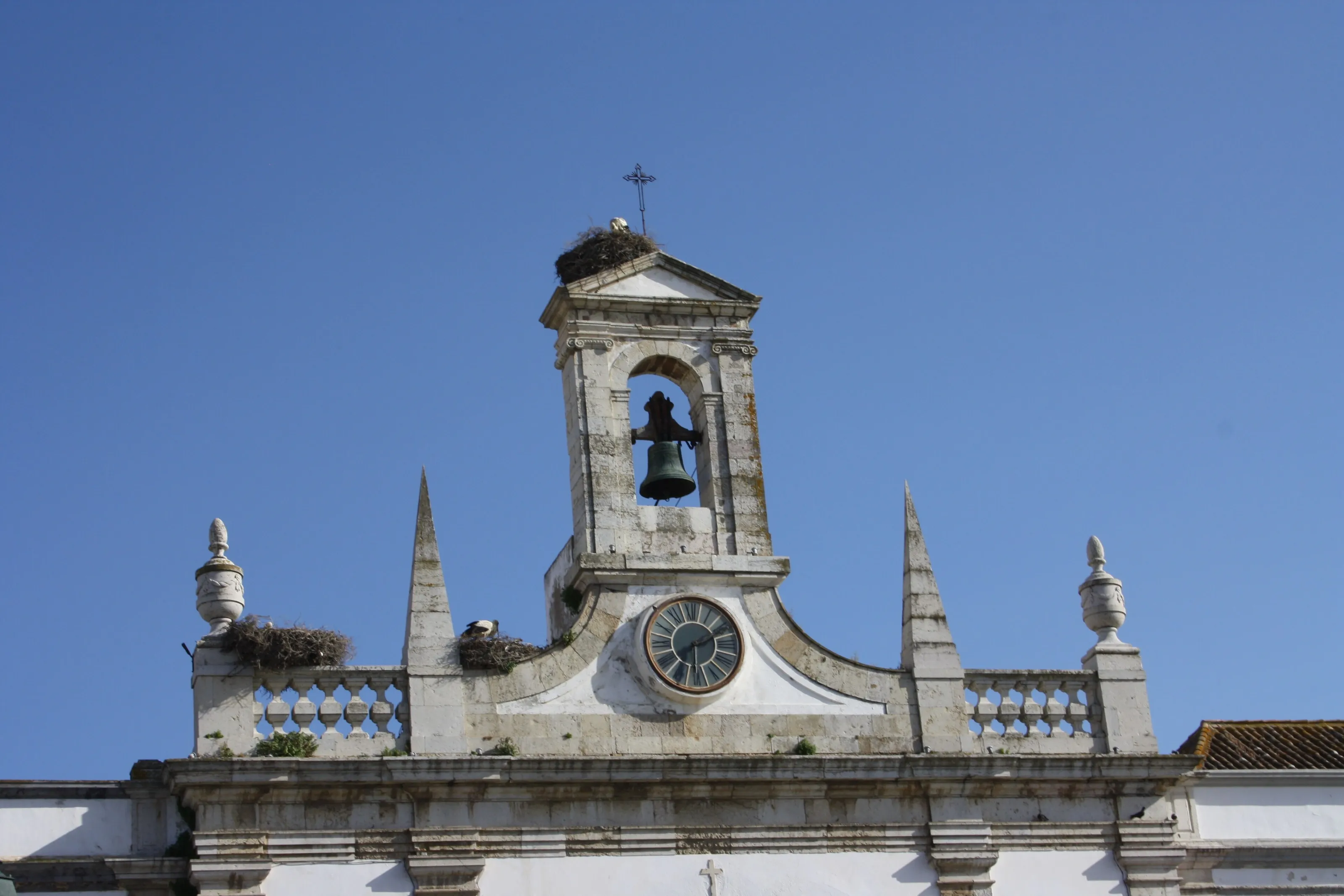
The Arco da Vila
The Arco da Vila is one of the gateways into the Vila Adentro, the walled old town, according to Wikipedia (DE). A white bell gable with a bell and a clock crowns the arch; the other entrance is the Arco do Repousado. The historic core is small and easily crossed on foot.
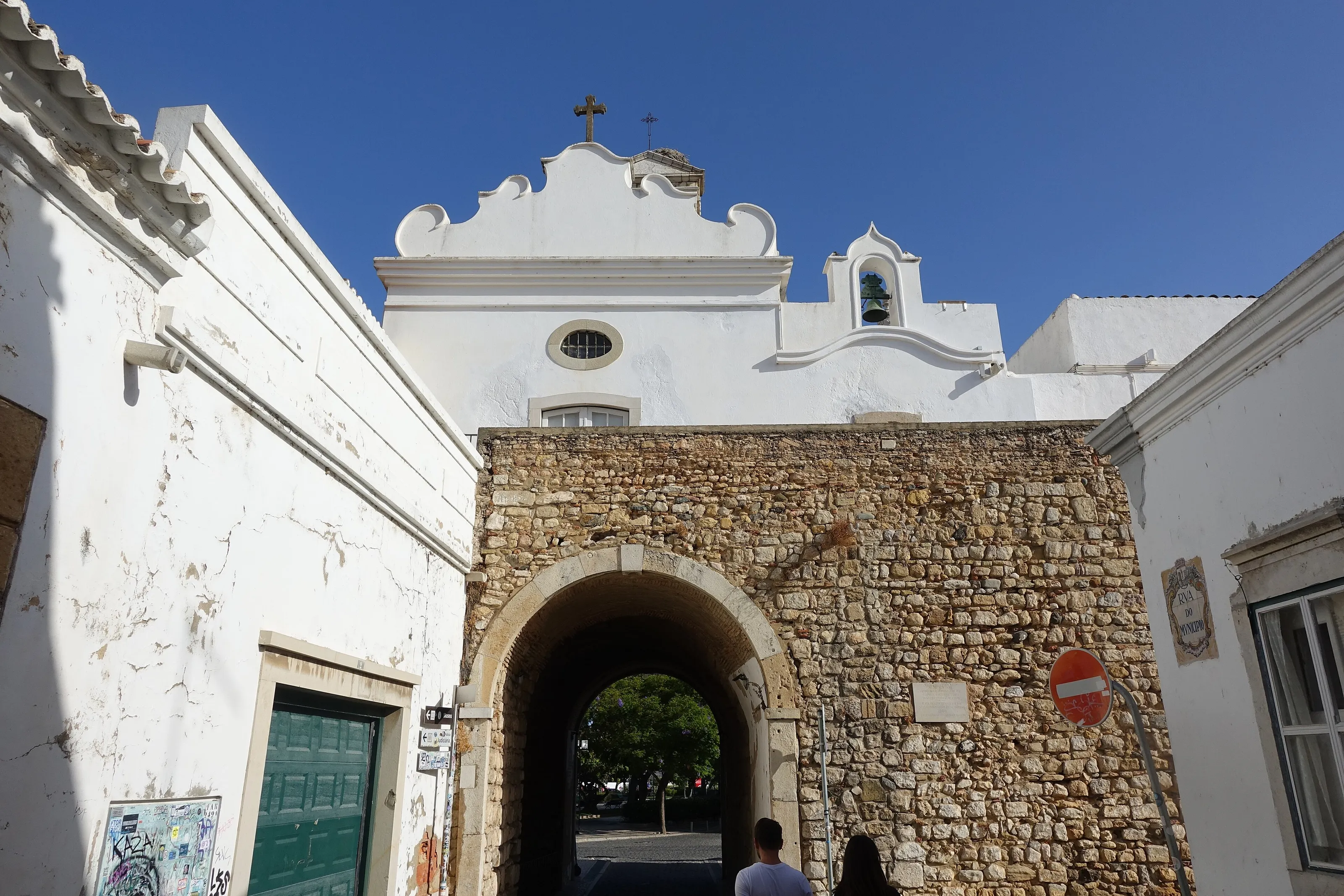
The old town
Inside the walls, cobbled lanes of 17th- and 18th-century houses, with Moorish-influenced architecture, lead to the Se cathedral, dating from the 13th and 18th centuries per Wikipedia (DE); Wikivoyage (EN) praises the view from its tower over the old town and the Ria Formosa. The area is quiet, though some houses are in poor condition, notes Wikipedia (DE).
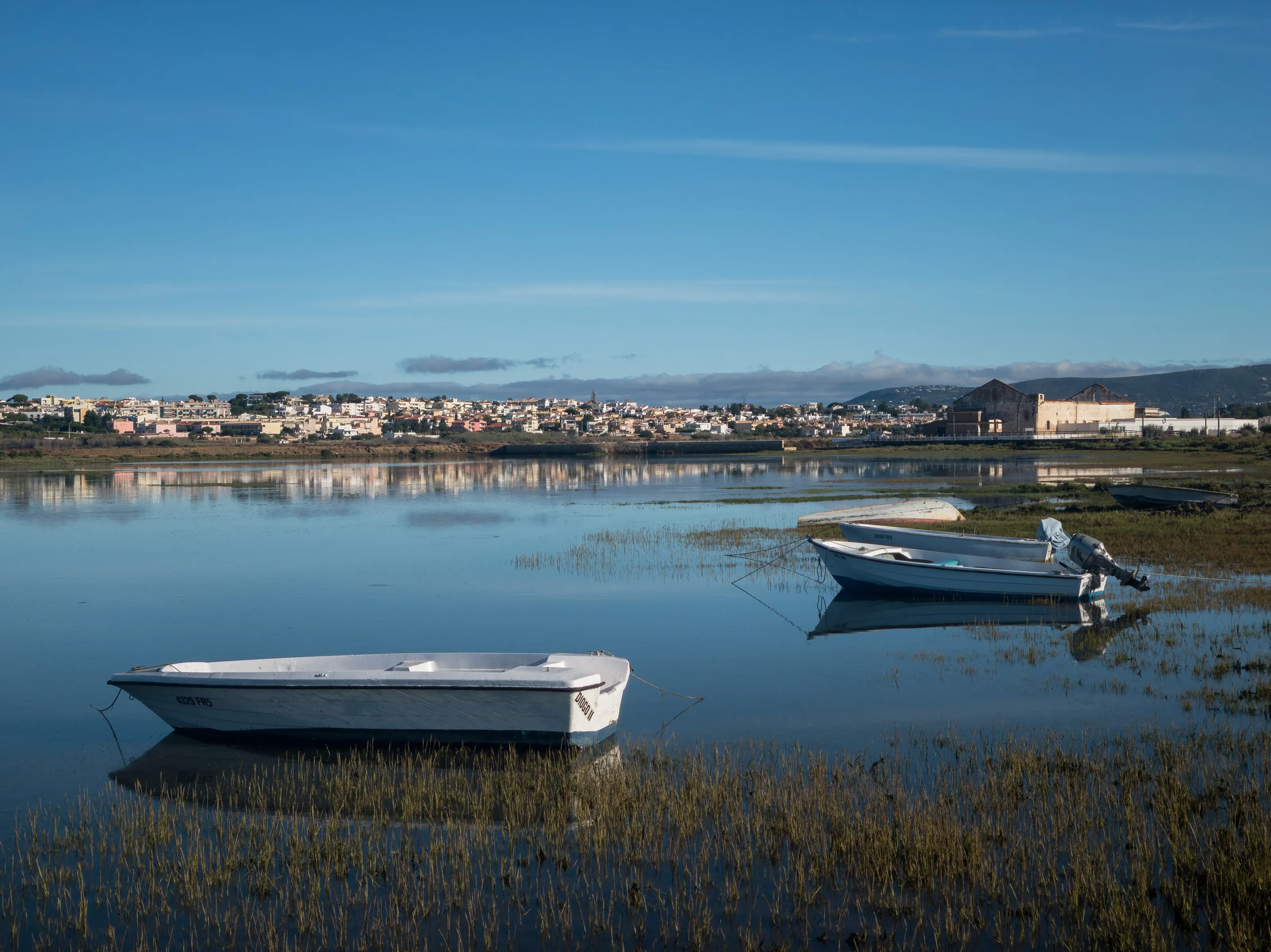
The Ria Formosa
The Ria Formosa is a lagoon fringed by barrier islands, a nature park since 1987 according to Wikipedia (EN, FR); it covers more than 170 sq km per Wikipedia (ES, FR) and is a stopover for hundreds of species of migrating birds. Boat trips, kayaking and birdwatching are on offer, per Wikivoyage (EN).
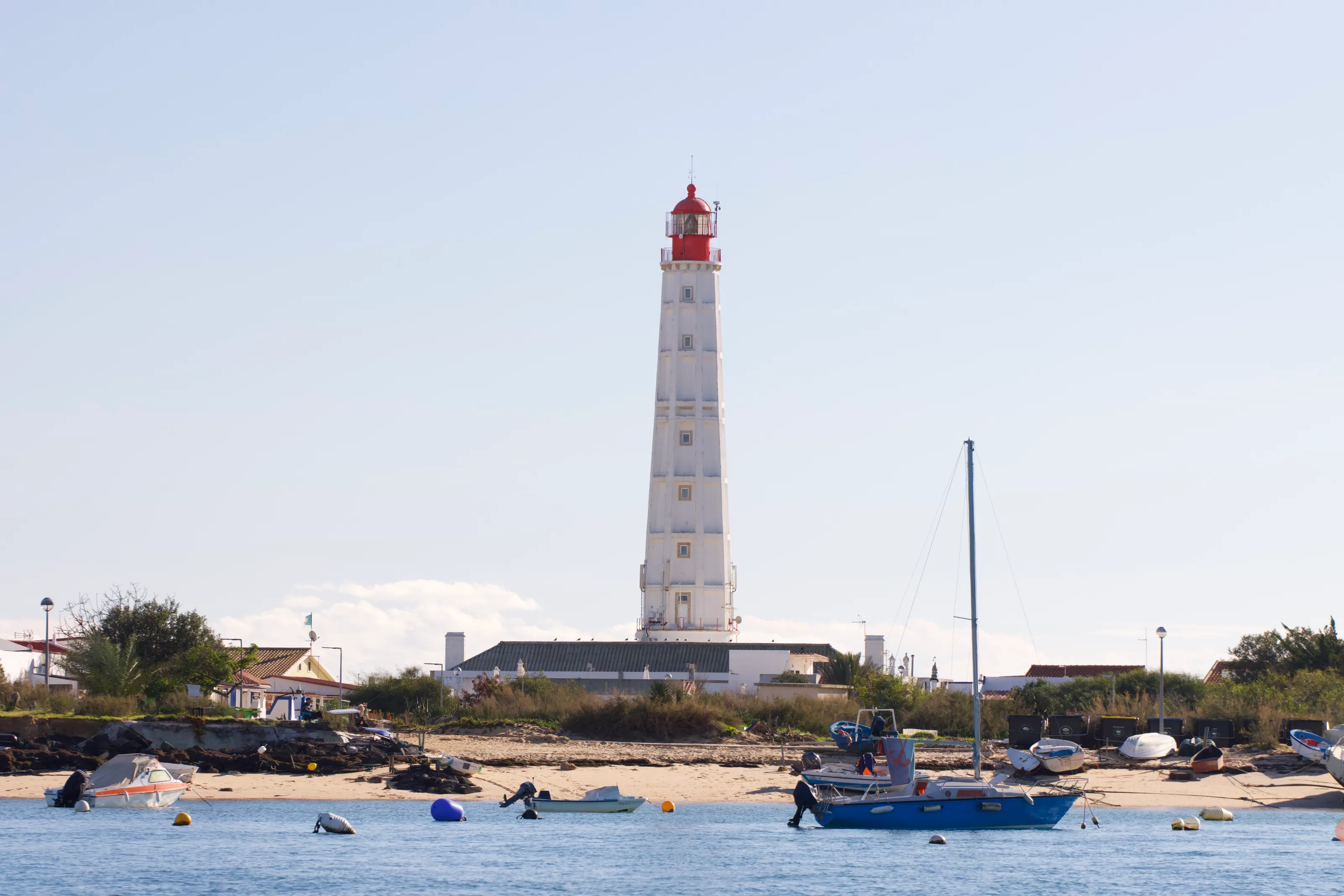
Ilha do Farol and the beaches
The lighthouse of Ilha do Farol, on Culatra island, can be reached by seasonal ferry from Faro, as can the beaches of Ilha Deserta and Culatra, per Wikivoyage (EN). Faro beach, on a sand spit linked by a bridge near the airport, is about 7 km from the centre according to Wikipedia (FR); it stretches for several kilometres and rarely gets crowded, according to Wikivoyage (EN).
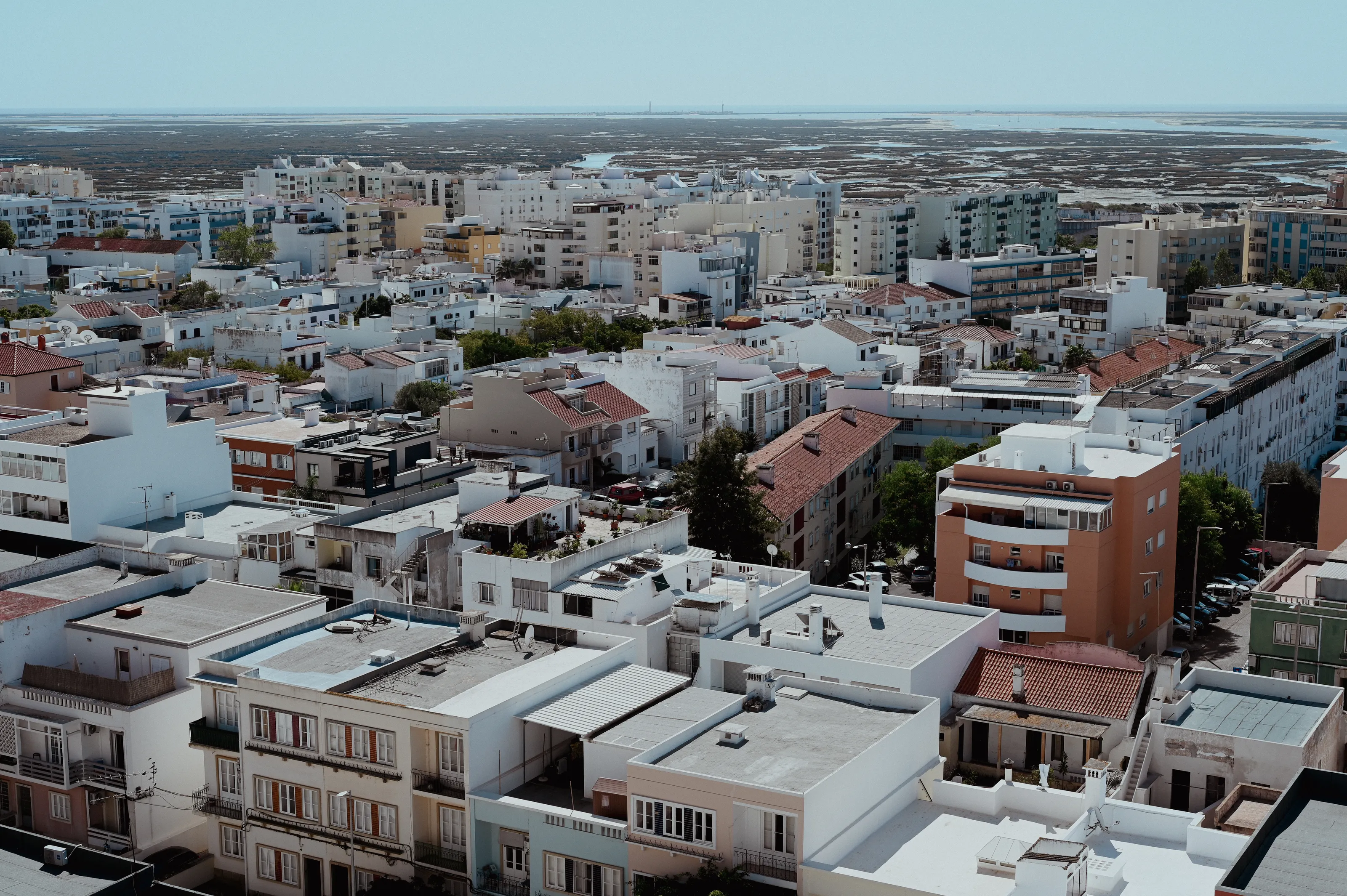
Faro from above
The town spreads between the lagoon and the hills of the barrocal, the inland zone. The coastline, part of the nature park, is shaped by the tides; much of the modern town is made up of apartment blocks, while the old town stays compact around the cathedral.
The Carmo Church and the Bone Chapel
The Capela dos Ossos, the Bone Chapel, is decorated with skulls and bones and stands inside the Baroque Carmo Church of the 18th century, per Wikipedia (DE) and Wikivoyage (EN). It is a short, striking visit that will not suit everyone.
Museums and culture
Archaeology, the sea, ethnography and Jewish heritage
A museum in a convent
The former convent of Nossa Senhora da Assuncao, from the 16th century with a Renaissance cloister, has housed the archaeological museum since 1973, with objects from Milreu, azulejos and sacred art, according to Wikipedia (DE).
The sea, the regions and Jewish memory
The maritime museum occupies the former harbour-master's building and shows ship models and Algarve fishing methods; the regional museum is devoted to ethnography, per Wikipedia (DE). The Jewish Heritage Centre and the cemetery founded in 1851 recall the 19th-century community, according to Wikivoyage (EN). We do not quote ticket prices: fares and hours change.
Cultural excursions and festivals
At Estoi, about 10 km away, Estoi Palace, in an eclectic style, and the Roman ruins of Milreu with their mosaics are classic stops according to Wikivoyage (EN). The city holiday is on 7 September; the University of the Algarve's student week is the other big event, per Wikipedia (EN).
Food and drink
Cataplana, grilled fish, calamari and almond sweets
Algarve cooking
Algarve cuisine reflects the flavours of the sea and the countryside, with Roman and Moorish roots, per Wikipedia (FR). The cataplana, a seafood and vegetable dish cooked in a special pot, is the best-known speciality; grilled fish, fried calamari and octopus are on most menus.
Market and sweets
The municipal market sells fresh produce and has small eateries, open Monday to Saturday per Wikivoyage (EN). Regional pastries, especially with almonds and figs, go with coffee, per Wikipedia (FR).
Where to eat
Small restaurants in the old town and near the station are easy to reach on foot; in summer, book popular places ahead, especially on the islands where choice is limited.
Getting around
On foot, by bus, regional train and ferry
In the centre
The centre is small and the railway and bus stations are within 250 m of each other per Wikivoyage (EN); walking covers most visits. Buses 14 and 16 go to the airport and the beach. Bolt and Uber also operate.
Regional trains and buses
The train along the Algarve line reaches Olhao in 10 minutes, Fuseta in 20 and Tavira in about 40, per Wikivoyage (EN). A bus rapid transit system is planned between Faro, Olhao and Loulé per Wikipedia (EN). For remote beaches and the hinterland, a rental car can make journeys easier.
To the islands
Private ferries serve Faro beach, Ilha Deserta, Culatra and Ilha do Farol; timetables vary by season and the trip to Ilha Deserta takes 45 minutes by ferry or 15 by fast shuttle, per Wikivoyage (EN, 2023). Always check the timetable.
Budget and precautions
Often a seasonal stay
Price level
Faro is one of Portugal's busiest tourist gateways; accommodation and car-hire prices vary widely between summer and winter. We do not give figures, since we could not cross-check them across two independent open sources.
Currency and payment
The currency is the euro. Some small restaurants do not accept cards, per Wikivoyage (EN); carry a little cash.
Flying and precautions
SniperAir monitors prices to FAO and compares them with the route's history, but it does not sell or book tickets. You can also watch Lisbon (LIS), Porto (OPO) or Seville (SVQ) to compare. Portugal is in the Schengen area: check the entry requirements for your nationality. Protect yourself from sun and heat, and keep an eye on belongings on crowded beaches.
When to go
Over 3,000 hours of sunshine a year, hot summers and mild winters
Winter (December to February)
Mild, with about 6 hours of sunshine a day and 8 to 16 C in January per Wikipedia (ES). The sea is at 16-17 C. December has the least sunshine, according to Wikipedia (EN).
Spring (March to May)
Pleasant for the town, the Ria Formosa and the spring migrating birds that stop in the lagoon, per Wikipedia (FR). Swimming is still cool.
Summer (June to August)
Hot and sunny, with daytime highs of 27 to 35 C per Wikipedia (EN, ES); July and August are the sunniest months. The sea reaches 22 to 24 C in August and September per Wikipedia (ES). Beaches are busiest.
Autumn (September to November)
Warmth can last into October according to Wikipedia (EN), and the sea stays pleasant in September. Autumn bird migration animates the lagoon.
Faro has a Mediterranean climate (Csa), moderated by the Portugal-Canary current, per Wikipedia (EN, ES). With over 3,000 hours of sunshine a year it ranks among the sunniest cities in Europe. We do not give precise monthly averages, since sources differ.
By length of stay
What to do in Faro depending on how long you stay
The essentials
The old town and cathedral, the Bone Chapel, a stroll around the harbour and a boat trip in the Ria Formosa.
Islands and lagoon
A day on Ilha Deserta or Culatra, the beaches of the peninsula, the archaeological museum and Olhao or Tavira by train.
The Algarve and beyond
Estoi and Milreu, Loulé, Portimao or Lagos, with Faro as a base; Seville is about 200 km away.
In pictures
Faro in pictures
You might also like
Similar destinations
FAQ
Frequently asked questions about flights to Faro
How do I get from Faro airport to the centre?
The airport (FAO) is 7 km by road west of the town; buses 14 and 16 link the airport with the centre roughly every 30 minutes. Timetables change: check them before you travel.
When is the best time to visit Faro?
From May to October for sunshine and swimming, with over 3,000 hours of sun a year. Winter is mild but the sea is cool.
Is Faro expensive?
Prices vary sharply between summer and winter, especially for accommodation. We do not quote amounts because we could not cross-check them.
How long should I stay in Faro?
One to two days for the old town and the Ria Formosa; four days if you add the island beaches and trips to Olhao, Tavira or Estoi.
How do I get around Faro?
On foot in the centre, by buses 14 and 16, by train along the coast and by ferry to the islands. A car helps for the hinterland.
What should I eat in Faro?
Seafood cataplana, grilled fish, fried calamari and sweets made with almonds and figs.
How much does a flight to Faro usually cost?
The price depends mainly on your departure city, the time of year and how far ahead you book. The "opportunities" section above shows real examples of prices SniperAir has already detected to this destination.
How do I get alerted when a flight to Faro drops below my budget?
Create an alert profile with your departure airport, Faro as the destination and your maximum budget. You are notified automatically as soon as a matching price is detected.
Ready to head to Faro?
Set your budget and let SniperAir monitor fares for you.
Create my alert