
Cheap flights to Porto
Set your departure airport and maximum budget: SniperAir tracks prices to Porto and alerts you the moment a deal matching your criteria appears.
Quick summary
Country
Portugal
Continent
Europe
Airport
OPO
Currency
Euro (EUR)
Time zone
UTC+0 (UTC+1 during summer time)
Deals already spotted to Porto
Real flight examples detected by SniperAir, with their reference price.
Loading examples…
Why track Porto with SniperAir
You do not need to compare prices every day
Choose your departure
Enter your departure airport and your maximum budget for a flight to Porto (OPO).
SniperAir keeps watch
Our systems continuously compare new prices with the real price history of the route. SniperAir monitors prices and alerts you: it does not sell or book tickets.
You receive an alert
As soon as a price matches your criteria, you are notified, without having searched for anything yourself.
Airport and getting into town
An airport north of the city, linked to the centre by metro
Porto - Francisco Sa Carneiro (OPO)
Porto's airport is at Pedras Rubras, north-west of the city; sources put it 11 km (Wikivoyage FR, DE) or 15 km (Wikipedia EN) from the centre. Metro line E leaves directly from the airport and takes about 35 minutes to Trindade, a hub in the centre, with a train at least every 30 minutes by day per Wikivoyage (DE). STCP buses, including lines 601, 602 and 604, also serve the centre roughly every 25 minutes according to Wikivoyage (ES). Lisbon is reached by train in about 2 hours 45 minutes on the Alfa Pendular, per Wikivoyage (DE). The airport has become a hub for low-cost carriers according to Wikipedia (EN).
Distances and times are approximate, from Wikivoyage (EN, FR, DE, ES) and Wikipedia (EN); timetables change by season: check them before you travel. We do not quote fares.
Porto is Portugal's second-largest city, with 231,500 residents in 2023 for the municipality and about 1.2 million in Greater Porto, according to Wikipedia (FR). It is built on hills facing the Douro estuary and its people like to say "Porto is a nation", per Wikivoyage (ES). The historic centre, the Luiz I Bridge and the Serra do Pilar monastery have been on the UNESCO World Heritage list since 1996, according to Wikipedia (EN, FR).
Landmarks
Ribeira, Dom Luis I Bridge, Clerigos Tower and azulejos
Porto rose in the 15th and 16th centuries through sea trade and the sale of wine to England, per Wikivoyage (FR); Prince Henry the Navigator launched the 1415 expedition to Ceuta from here, according to Wikipedia (EN, FR). The places below are illustrated; the section ends with Sao Bento station and the Stock Exchange Palace.
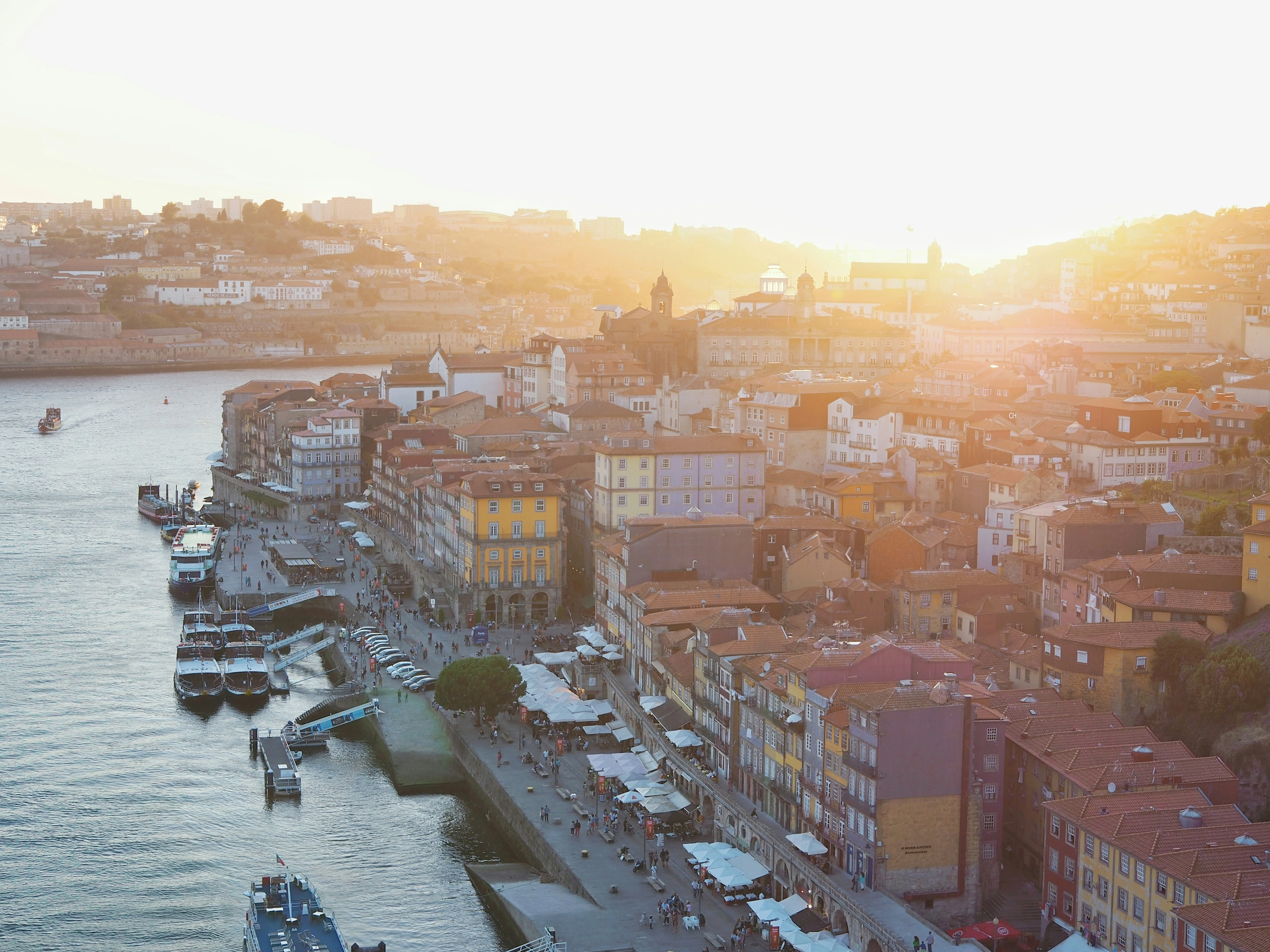
The Ribeira
The Ribeira is the old riverside district on the north bank of the Douro, a UNESCO site since 1996 according to Wikivoyage (DE, ES). Narrow lanes, colourful facades and quayside terraces make it the best-known image of the city, although Wikivoyage (DE) points out a worrying number of derelict houses. Evening light on the river is the best.
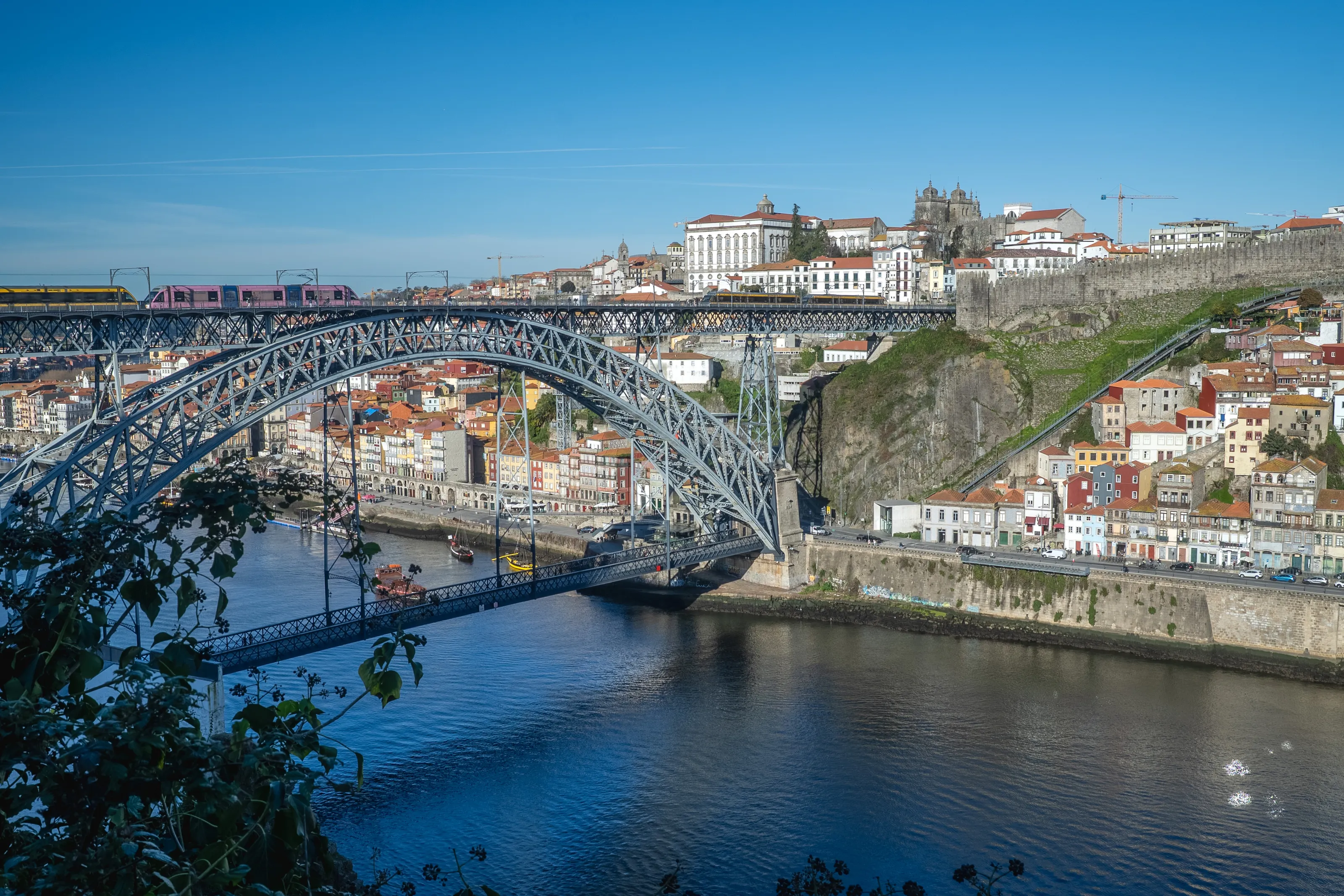
The Dom Luis I Bridge
This double-deck metal arch bridge, built in 1886, had a 172 m span that was the longest of its type in the world when it opened, according to Wikipedia (EN). The upper deck carries the metro and pedestrians, the lower one cars. It links the Ribeira to Vila Nova de Gaia, where the port wine lodges stand.
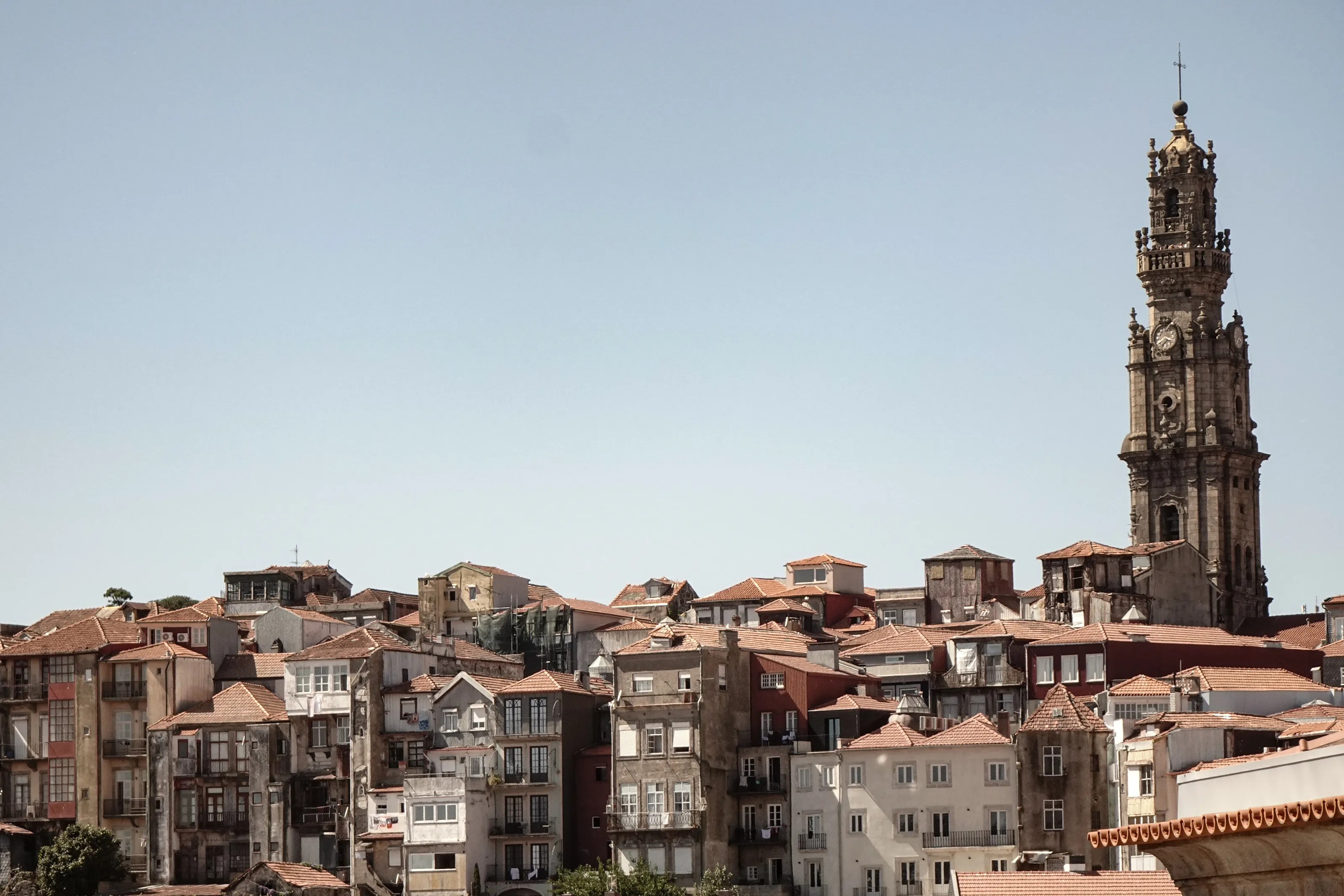
The Clerigos Tower
The Clerigos Church and Tower, designed by Nicolau Nasoni and built between 1732 and 1763 per Wikipedia (EN), dominate the skyline. Wikivoyage (EN) counts 226 steps to the top, which gives a panoramic view; go early, since the viewing platform is small.
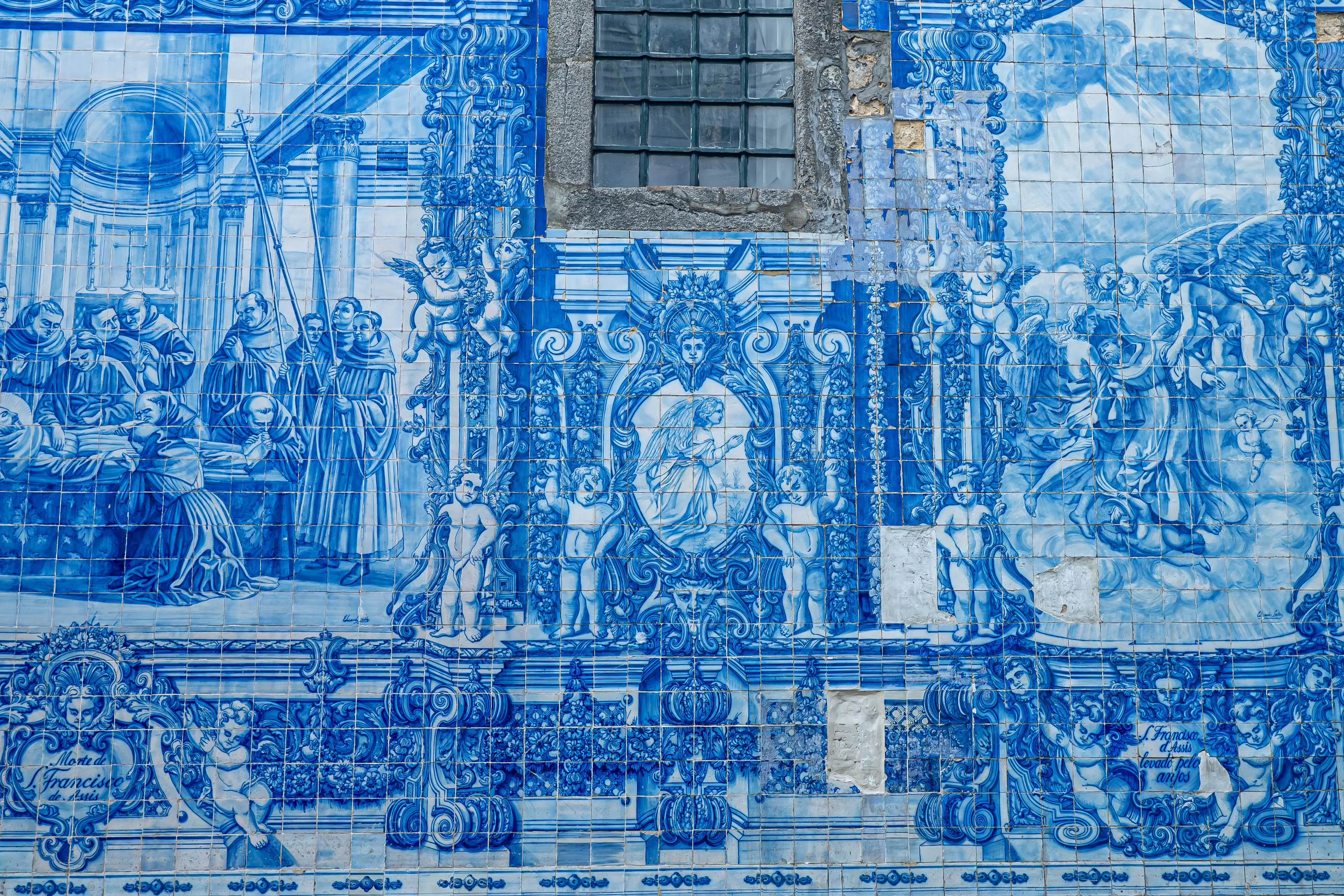
The azulejos
Blue-and-white glazed tiles, azulejos, cover the facades of churches and chapels, such as the Chapel of Souls on Rua de Santa Catarina, and the cathedral cloisters, according to Wikivoyage (ES). In the hall of Sao Bento station, large panels tell episodes of Portuguese history, per the same source.
Foz do Douro, breakwater and lighthouse
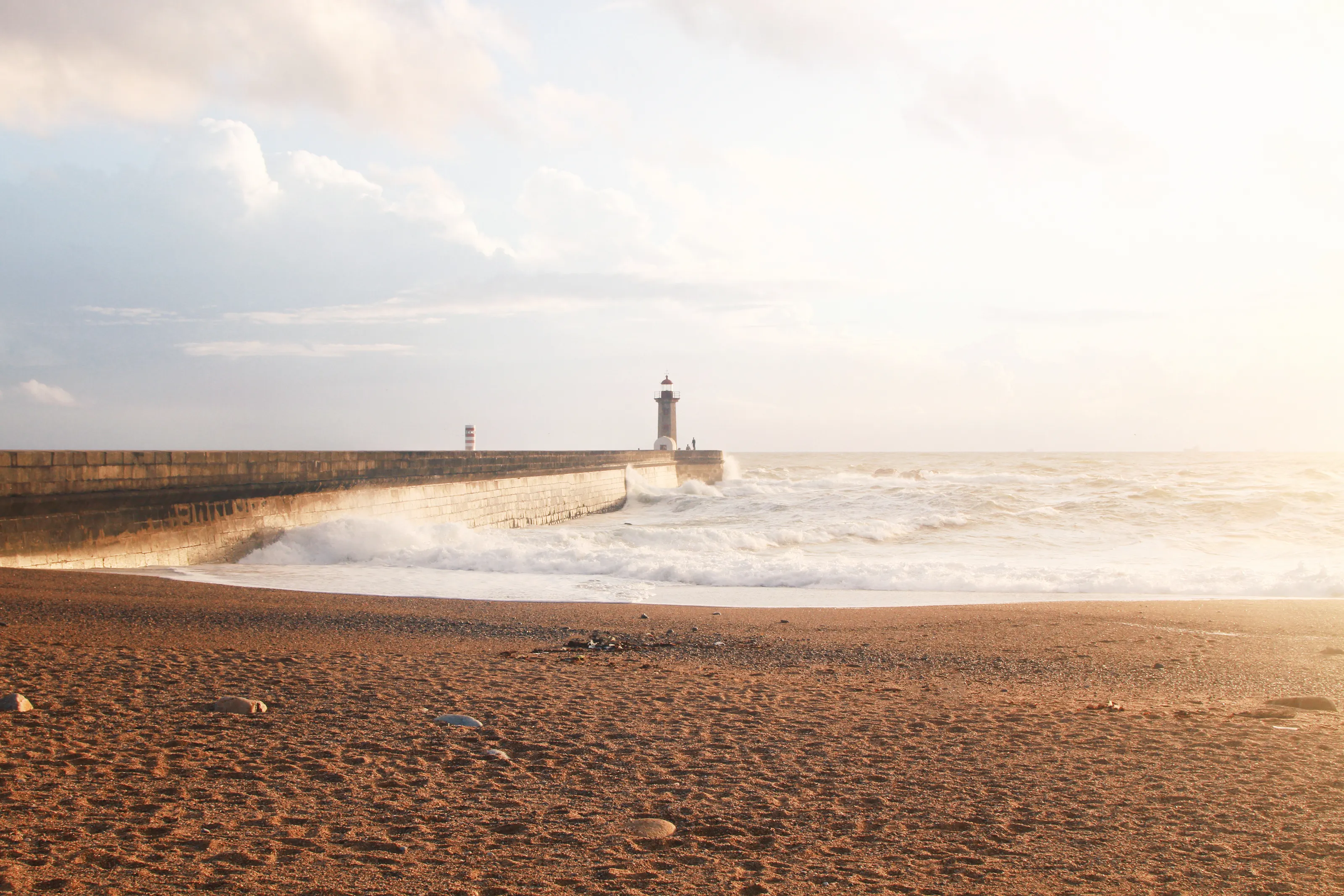
At the river mouth, Foz do Douro has a beach, a long breakwater and a lighthouse; Wikivoyage (FR) praises the beach and its arcaded promenade. In rough weather the waves break over the breakwater: an Atlantic scene a few bus stops from the centre.
Stock Exchange Palace, Sao Bento and Livraria Lello
The 19th-century Stock Exchange Palace, with its Arab Room, is one of the most visited monuments in town, per Wikivoyage (FR, EN). Sao Bento station and the Art Nouveau Livraria Lello bookshop are classic stops; the latter is often crowded, according to Wikivoyage (ES).
Museums and culture
Contemporary art, Casa da Musica and city museums
Serralves and the art museums
The Serralves Foundation, in a building by Siza Vieira set in a large park, is the city's main modern and contemporary art museum, per Wikivoyage (ES, FR). The Soares dos Reis National Museum, founded in 1833, presents Portuguese art according to Wikivoyage (EN).
Music and theatre
The Casa da Musica, by Rem Koolhaas and OMA, opened in 2005 per Wikipedia (EN); the Sao Joao National Theatre is the city's main stage for opera and drama. We do not quote ticket prices: fares and hours change.
Festivals and traditions
The Sao Joao festival on the night of 23 to 24 June is Porto's biggest street party according to Wikipedia (EN); the students' Queima das Fitas takes place in May. Locals have been nicknamed tripeiros, tripe-eaters, since the 15th century.
Food and drink
Francesinha, tripe, salt cod and port wine
The francesinha and other local dishes
The francesinha is Porto's signature dish: a sandwich with ham, linguica sausage and steak, covered in melted cheese and a thick beer-based sauce, per Wikivoyage (DE) and Wikipedia (EN). Tripe Porto style and bacalhau a Gomes de Sa are among the local classics.
Port wine
Port is grown in the Douro valley, then aged and shipped from the lodges of Vila Nova de Gaia, opposite the Ribeira. Most lodge visits include a short history of the house and a tasting, according to Wikivoyage (FR, ES). Ruby, tawny, white and vintage are the main families, per Wikivoyage (DE).
Markets and cafes
The Mercado do Bolhao, fully reopened after refurbishment in 2022 per Wikivoyage (EN), remains the main fresh-food market. The Cafe Majestic, opened in 1921, is an Art Nouveau landmark that also serves the francesinha, according to Wikivoyage (FR).
Getting around
Metro, buses, funicular and heritage trams
Metro and buses
The light-rail metro has six lines and STCP buses complete the network; the same tickets work on both, with a rechargeable Andante card, per Wikivoyage (EN, DE). The hills make walking tiring: bring comfortable shoes.
Funicular and cable car
The Funicular dos Guindais links the Ribeira with Batalha square at the top of town and gives a view of the Douro and the bridge, per Wikivoyage (ES). The Gaia cable car connects the Gaia quays with the upper part of Gaia.
Trams and beaches
Three heritage tram lines remain, including a tourist line on the Douro, according to Wikipedia (EN); the network began in 1895, the first in the Iberian Peninsula. Beaches lie to the north at Matosinhos, with better ones at Vila do Conde, about 35 km away, per Wikivoyage (ES).
Budget and precautions
A destination with fast-growing tourism
Price level
Tourism in Porto has risen sharply in recent years, helped by a low-cost carrier hub at the airport: 2.8 million overnight visitors between January and November 2017, according to Wikipedia (EN). Accommodation prices therefore depend heavily on the season and district. We do not give figures, since we could not cross-check them across two independent open sources.
Currency and payment
The currency is the euro. The metro accepts contactless payment at several major stations, including Aeroporto and Sao Bento, per Wikivoyage (EN).
Flying and precautions
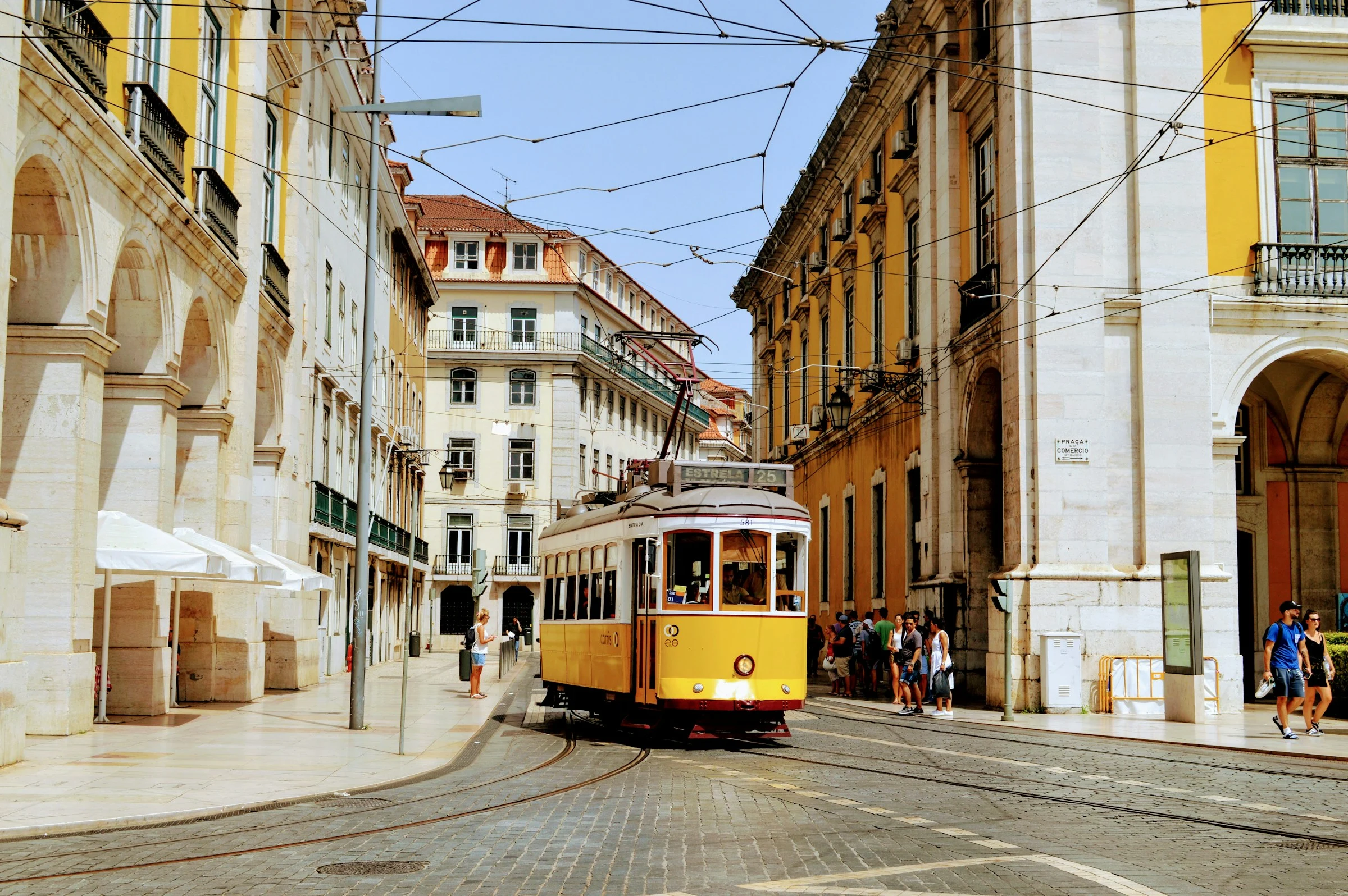
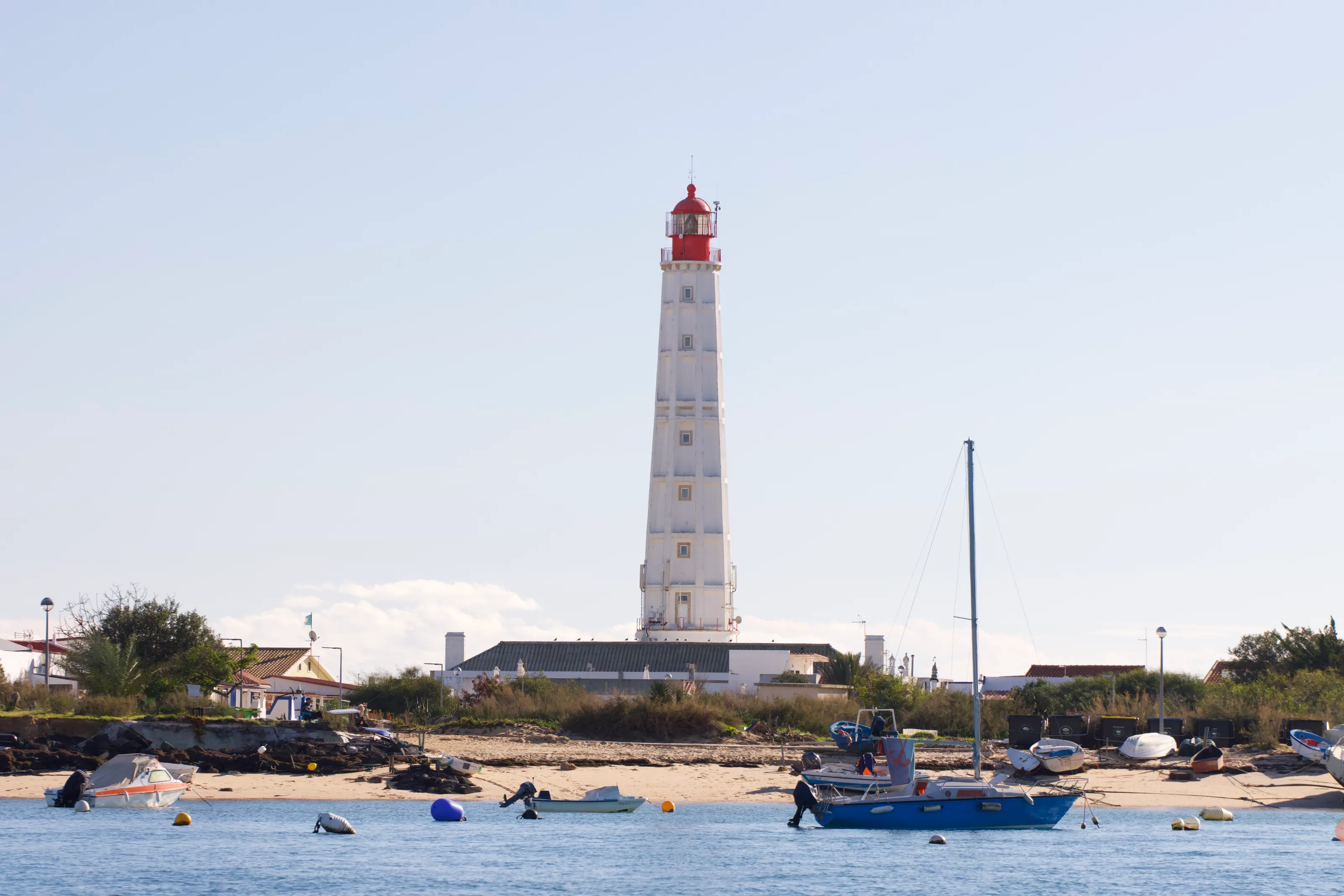
SniperAir monitors prices to OPO and compares them with the route's history, but it does not sell or book tickets. You can also watch Lisbon (LIS) and Faro (FAO) to compare. Portugal is in the Schengen area: check the entry requirements for your nationality. As in any tourist city, stay alert to pickpockets in busy places.
When to go
Mild sunny summers, wet winters
Winter (December to February)
Mild but damp: usually 5 to 6 C in the morning and 14 to 15 C in the afternoon, seldom below freezing, per Wikipedia (EN). Rain is frequent.
Spring (March to May)
Temperatures rise, but showers are still possible; the students' Queima das Fitas is held in May per Wikipedia (EN).
Summer (June to August)
Warm and sunny, 16 to 26 C on average with peaks around 30 C in heat waves according to Wikipedia (EN); Wikivoyage (ES) mentions spikes up to 40 C in August. Beaches are cooler and windier. The Sao Joao festival is on 23-24 June.
Autumn (September to November)
Often mild at first, then wetter: Porto is one of the wettest major cities in Europe, mostly in winter, per Wikipedia (EN).
Porto has a warm-summer Mediterranean climate (Csb) according to Wikipedia (EN, FR), with about 2,500 hours of sunshine a year per Wikipedia (FR). Northern Portugal is not comparable with the Algarve, Wikivoyage (DE) reminds readers: cloud and mist are common on the coast. We do not give precise monthly averages, since sources differ.
By length of stay
What to do in Porto depending on how long you stay
The essentials
The Ribeira, the Dom Luis I Bridge, the Clerigos Tower, Sao Bento station and a port wine tasting in Gaia.
Districts and culture
The Stock Exchange Palace, Serralves, the Casa da Musica, the Bolhao market, a walk along Foz do Douro and a francesinha.
The Douro and northern Portugal
A cruise in the Douro valley, Guimaraes, Braga or Vila do Conde, with Porto as your base.
In pictures
Porto in pictures
You might also like
Similar destinations
FAQ
Frequently asked questions about flights to Porto
How do I get from Porto airport to the centre?
Metro line E links the airport (OPO) with Trindade in about 35 minutes; STCP buses also serve the centre. The airport is 11 to 15 km away depending on the source. Timetables change: check them before you travel.
When is the best time to visit Porto?
From May to September for mild, sunny weather; summer can be hot. Winter is wet and Porto is one of the wettest major cities in Europe.
Is Porto expensive?
Tourism has grown a lot, so prices vary with the season. We do not quote amounts because we could not cross-check them.
How long should I stay in Porto?
Two days for the Ribeira, the bridge, the Clerigos Tower and the cellars; four days if you add Serralves, Foz and an excursion.
How do I get around Porto?
By metro, bus and on foot, with a funicular and a cable car to avoid the climbs. A heritage tram also runs.
What should I eat in Porto?
The francesinha, tripe Porto style, salt cod and, of course, port wine in Vila Nova de Gaia.
How much does a flight to Porto usually cost?
The price depends mainly on your departure city, the time of year and how far ahead you book. The "opportunities" section above shows real examples of prices SniperAir has already detected to this destination.
How do I get alerted when a flight to Porto drops below my budget?
Create an alert profile with your departure airport, Porto as the destination and your maximum budget. You are notified automatically as soon as a matching price is detected.
Ready to head to Porto?
Set your budget and let SniperAir monitor fares for you.
Create my alert